

REACH for the Polymer Industry - A Practical Guide


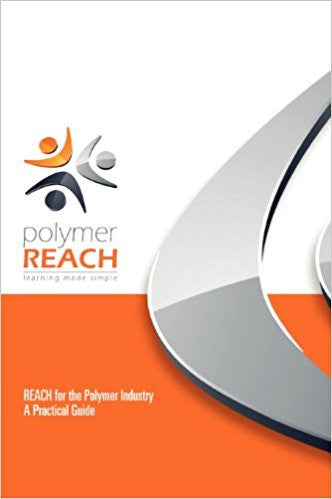
This book has been produced by the EU Leonardo Project called Polymer REACH. The overall objective of Polymer REACH was to develop an e-learning platform and training materials for the European polymer industry to learn and understand how to manage their obligations under the European legislation - Registration, Evaluation, Authorisation, and Restriction of Chemicals (REACH).
This book forms part of the training materials which will complement the industry-specific e-learning platform to enable the polymer industry to learn how to manage their obligations under REACH. The overall impact will be an increase in the knowledge base of the polymer industry on REACH, which will in turn help to increase competitiveness and sustainability of the sector.
This book will be useful to anyone who works with polymers or the chemicals that are used to make polymers, whether they are end-users or suppliers. REACH is affecting everyone concerned with the polymer industry and this book will help them to prepare for the impact and consequences of the REACH legislation.
This book forms part of the training materials which will complement the industry-specific e-learning platform to enable the polymer industry to learn how to manage their obligations under REACH. The overall impact will be an increase in the knowledge base of the polymer industry on REACH, which will in turn help to increase competitiveness and sustainability of the sector.
This book will be useful to anyone who works with polymers or the chemicals that are used to make polymers, whether they are end-users or suppliers. REACH is affecting everyone concerned with the polymer industry and this book will help them to prepare for the impact and consequences of the REACH legislation.
1 Mechanical Properties of Polymers
1.1 Introduction
1.2 Tensile Strength
1.2.1 Electronic Dynamometer Testing of Tensile Properties
1.3 Flexural Modulus (Modulus of Elasticity)
1.3.1 Torsion Test
1.3.2 Hand Test
1.4 Elongation at Break
1.4.1 Basic Creep Data
1.5 Strain at Yield
1.5.1 Isochronous Stress-strain Curves
1.5.2 Stress-time Curves
1.5.3 Stress-temperature Curves
1.5.4 Extrapolation Techniques
1.5.5 Basic Parameters
1.5.6 Recovery in Stress Phenomena
1.5.7 Stress Relaxation
1.5.8 Rupture Data
1.5.9 Long-term Strain-time Data
1.6 Impact Strength Characteristics of Polymers
1.6.1 Notched Izod Impact Strength
1.6.2 Falling Weight Impact Test
1.6.3 Notch Sensitivity
1.6.4 Falling Weight Impact Tests: Further Discussion
1.6.5 Effect of Molecular Parameters
1.7 Shear Strength
1.8 Elongation in Tension
1.9 Deformation Under Load
1.10 Compressive Set (Permanent Deformation)
1.11 Mould Shrinkage
1.12 Coefficient of Friction
1.13 Fatigue Index
1.14 Toughness
1.15 Abrasion Resistance or Wear
1.16 Effect of Reinforcing Agents and Fillers on Mechanical Properties
1.16.1 Glass Fibres
1.16.1.1 Poly Tetrafluoroethylene
1.16.2 Polyethylene Terephthalate
1.16.2.1 Polyether Ether Ketone
1.16.2.2 Polyimide
1.16.2.3 Polyamide Imide
1.16.3 Calcium Carbonate
1.16.4 Modified Clays
1.16.5 Polymer-silicon Nanocomposites
1.16.6 Carbon Fibres
1.16.7 Carbon Nanotubes
1.16.8 Miscellaneous Fillers/Reinforcing Agents.
1.16.9 Test Methods for Fibre Reinforced Plastics
1.17 Application of Dynamic Mechanical Analysis.
1.17.1 Theory
1.17.2 Instrumentation (Appendix 1)
1.17.3 Fixed Frequency Mode
1.17.3.1 Resonant Frequency Mode
1.17.3.2 Stress Relaxation Mode
1.17.3.3 Creep Mode
1.17.3.4 Projection of Material Behaviour using Superpositioning
1.17.3.5 Prediction of Polymer Impact Resistance
1.17.3.6 Effect of Processing on Loss Modulus
1.17.3.7 Material Selection for Elevated-temperature Applications
1.17.3.8 Storage Modulus
1.17.3.9 Frequency Dependence of Modulation and Elasticity
1.17.3.10 Elastomer Low-Temperature Properties
1.17.3.11 Tensile Modulus
1.17.3.12 Stress-strain Relationships
1.17.3.13 Viscosity
1.17.3.14 Miscellaneous Applications of Dynamic Mechanical Analysis
1.18 Rheology and Viscoelasticity
1.19 Physical Testing of Rubbers and Elastomers
1.19.1 Measurement of Rheological Properties
1.19.2 Viscosity and Elasticity
1.19.3 Brittleness Point (Low-temperature Crystallisation)
1.19.4 Flexing Test
1.19.5 Deformation
1.19.6 Tensile Properties
1.19.7 Mechanical Stability of Natural and Synthetic Lattices
1.19.8 Abrasion Test
1.19.9 Peel Adhesion Test
1.19.10 Ozone Resistance Test
1.20 Physical Testing of Polymer Powders
1.20.1 Ultraviolet and Outdoor Resistance
1.20.2 Artificial Weathering
1.20.3 Natural Weathering
1.20.4 Reactivity
1.20.5 Melt Viscosity
1.20.6 Loss on Stoving
1.20.7 True Density
1.20.8 Bulk Density
1.20.9 Powder Flow
1.20.10 Test for Cure
1.20.11 Electrical Properties
1.20.12 Thermal Analysis
1.20.13 Particle-size Distribution
1.20.13.1 Methods Based on Electrical Sensing Zone (Coulter Principle)
1.20.13.2 Laser Particle Size Analysers
1.20.13.3 Photon Correlation Spectroscopy (Autocorrelation Spectroscopy)
1.20.13.4 Sedimentation.
1.20.13.5 Acoustic Spectroscopy
1.20.13.6 Capillary Hydrodynamic Fractionation
1.20.13.7 Small-angle Light Scattering
1.21 Plastic Pipe Materials
1.22 Plastic Film
2 Thermal Properties of Polymers
2.1 Linear Co-efficient of Expansion
2.2 Mould Shrinkage
2.3 Distortion Temperature
2.3.1 Heat Distortion Temperature at 0.45 MPa (°C)
2.3.2 Heat Distortion Temperature at 1.80 MPa (°C)
2.4 Brittleness Temperature (Low-temperature Embrittlement Temperature)
2.5 Melting Temperature
2.6 Maximum Operating Temperature
2.7 Melt Flow Index
2.8 VICAT Softening Point
2.9 Thermal Conductivity
2.10 Specific Heat
2.10.1 Hot-wire Techniques
2.10.2 Transient Plane Source Technique
2.10.3 Laser Flash Technique
2.10.4 Thermal Diffusivity
2.11 Maximum Filming Temperature
2.12 Heat at Volatilisation
2.13 Glass Transition Temperature
2.13.1 Differential Scanning Calorimetry
2.13.1.1 Theory
2.14 Thermomechanical Analysis
2.14.1 Theory
2.15 Dynamic Mechanical Analysis
2.16 Differential Thermal Analysis and
Thermogravimetric Analysis
2.17 Nuclear Magnetic Resonance Spectroscopy
2.18 Dielectric Thermal Analysis
2.19 Inverse Gas Chromatography
2.20 Alpha, Beta and Gamma Transitions
2.20.1 Differential Thermal Analysis
2.20.2 Dynamic Mechanical Analysis
2.20.3 Dielectric Thermal Analysis
2.20.4 Thermomechanical Analysis
2.20.5 Infrared Spectroscopy
3 Electrical Properties
3.1 Volume Resistivity
3.2 Dielectric Strength
3.3 Dielectric Constant
3.4 Dissipation Factor
3.5 Surface Arc Resistance
3.6 Tracking Resistance
3.7 Electrical Resistance and Resistivity
3.8 Electrical Conductivity
3.9 Electronically Conducting Polymers
3.10 Applications of Dielectric Thermal Analysis
4 Other Physical Properties
4.1 Surface Hardness
4.2 Specific Gravity and Bulk Density
4.3 Gas Barrier Properties
4.4 Optical Properties
4.4.1 Haze, Glass and Surface Roughness
4.4.2 Light Scattering
4.4.3 Optical Properties
4.4.4 Electro-optical Effect
4.4.5 Infrared Optical Properties
4.5 Monitoring of Resin Cure
4.5.1 Thermally Cured Resins
4.5.1.1 Dynamic Mechanical Thermal
Analysis Application in Resin Curing
4.5.1.2 Dielectric Thermal Analysis
4.5.1.3 Differential Scanning Calorimetry
4.5.1.4 Fibreoptic Sensors to Monitor Resin Cure
4.5.1.5 Thermal Conductivity
4.5.2 Photo-chemically Cured Resins
4.5.2.1 Differential Photo-calorimetry
4.5.2.2 Infrared and Ultraviolet Spectroscopy
4.5.2.3 Dynamic Mechanical Analysis
4.5.2.4 Gas Chromatography-based Methods
4.6 Adhesion Studies
4.7 Viscoelastic and Rheological Properties
4.7.1 Dynamic Mechanical Analysis
4.7.2 Thermomechanical Analysis
5 Thermal Stability
5.1 Thermogravimetric Analysis
5.2 Differential Thermal Analysis
5.3 Differential Scanning Calorimetry
5.4 Thermal Volatilisation Analysis
5.5 Evolved Gas Analysis
5.6 Fourier-transform Infrared Spectroscopy and Differential Scanning Calorimetry Fourier-transform Infrared Spectroscopy
5.7 Mass Spectroscopy
5.8 Pyrolysis-Mass Spectrometry
5.9 Effect of Metals on Heat Stability
6 Thermo-oxidative Stability
6.1 Thermogravimetric Analysis
6.2 Differential Scanning Calorimetry
6.3 Evolved Gas Analysis
6.4 Infrared Spectroscopy
6.5 Electron Spin Resonance Spectroscopy
6.6 Matrix-assisted Laser Desorption/Ionisation Mass Spectrometry
6.7 Imaging Chemiluminescence
6.8 Pyrolysis-based Techniques
7 Assessment of Polymer Stability
7.1 Light Stability
7.1.1 Ultraviolet Light Weathering
7.1.2 Natural Weathering Tests
7.2 Protective Action of Pigments and Stabilisers
7.2.1 Effect of Pigments
7.2.2 Effect of Carbon Black
7.2.3 Effect of Sunlight on Impact Strength
7.2.4 Effect of Thickness
7.2.5 Effect of Stress during Exposure
7.3 Gamma Radiation
7.4 Electron Irradiation
7.5 Irradiation by Carbon Ion Beam
7.6 Irradiation by Alpha Particles and Protons
7.7 Prediction of the Service Lifetimes of Polymers
7.8 Water Absorption
7.9 Chemical Resistance
7.9.1 Detergent Resistance
7.10 Hydrolytic Stability
7.11 Resistance to Gases
7.12 Resistance to Solvents
8 Selecting a Suitable Polymer
8.1 Selection of a Polymer to be used in the Manufacture of a Battery Case
8.2 Selection of a Polymer that will be in Continuous use at High Temperatures
8.3 Selection of a Polymer with Excellent
Ultraviolet Stability
Appendix 1 – Instrument Suppliers
Appendix 2 – Mechanical properties of polymers
Appendix 3 – Thermal properties of polymers
Appendix 4 – Electrical properties of polymers
Appendix 5 – Other physical properties
Appendix 6 – Assessment of polymer stability
Abbreviations
Index
1.1 Introduction
1.2 Tensile Strength
1.2.1 Electronic Dynamometer Testing of Tensile Properties
1.3 Flexural Modulus (Modulus of Elasticity)
1.3.1 Torsion Test
1.3.2 Hand Test
1.4 Elongation at Break
1.4.1 Basic Creep Data
1.5 Strain at Yield
1.5.1 Isochronous Stress-strain Curves
1.5.2 Stress-time Curves
1.5.3 Stress-temperature Curves
1.5.4 Extrapolation Techniques
1.5.5 Basic Parameters
1.5.6 Recovery in Stress Phenomena
1.5.7 Stress Relaxation
1.5.8 Rupture Data
1.5.9 Long-term Strain-time Data
1.6 Impact Strength Characteristics of Polymers
1.6.1 Notched Izod Impact Strength
1.6.2 Falling Weight Impact Test
1.6.3 Notch Sensitivity
1.6.4 Falling Weight Impact Tests: Further Discussion
1.6.5 Effect of Molecular Parameters
1.7 Shear Strength
1.8 Elongation in Tension
1.9 Deformation Under Load
1.10 Compressive Set (Permanent Deformation)
1.11 Mould Shrinkage
1.12 Coefficient of Friction
1.13 Fatigue Index
1.14 Toughness
1.15 Abrasion Resistance or Wear
1.16 Effect of Reinforcing Agents and Fillers on Mechanical Properties
1.16.1 Glass Fibres
1.16.1.1 Poly Tetrafluoroethylene
1.16.2 Polyethylene Terephthalate
1.16.2.1 Polyether Ether Ketone
1.16.2.2 Polyimide
1.16.2.3 Polyamide Imide
1.16.3 Calcium Carbonate
1.16.4 Modified Clays
1.16.5 Polymer-silicon Nanocomposites
1.16.6 Carbon Fibres
1.16.7 Carbon Nanotubes
1.16.8 Miscellaneous Fillers/Reinforcing Agents.
1.16.9 Test Methods for Fibre Reinforced Plastics
1.17 Application of Dynamic Mechanical Analysis.
1.17.1 Theory
1.17.2 Instrumentation (Appendix 1)
1.17.3 Fixed Frequency Mode
1.17.3.1 Resonant Frequency Mode
1.17.3.2 Stress Relaxation Mode
1.17.3.3 Creep Mode
1.17.3.4 Projection of Material Behaviour using Superpositioning
1.17.3.5 Prediction of Polymer Impact Resistance
1.17.3.6 Effect of Processing on Loss Modulus
1.17.3.7 Material Selection for Elevated-temperature Applications
1.17.3.8 Storage Modulus
1.17.3.9 Frequency Dependence of Modulation and Elasticity
1.17.3.10 Elastomer Low-Temperature Properties
1.17.3.11 Tensile Modulus
1.17.3.12 Stress-strain Relationships
1.17.3.13 Viscosity
1.17.3.14 Miscellaneous Applications of Dynamic Mechanical Analysis
1.18 Rheology and Viscoelasticity
1.19 Physical Testing of Rubbers and Elastomers
1.19.1 Measurement of Rheological Properties
1.19.2 Viscosity and Elasticity
1.19.3 Brittleness Point (Low-temperature Crystallisation)
1.19.4 Flexing Test
1.19.5 Deformation
1.19.6 Tensile Properties
1.19.7 Mechanical Stability of Natural and Synthetic Lattices
1.19.8 Abrasion Test
1.19.9 Peel Adhesion Test
1.19.10 Ozone Resistance Test
1.20 Physical Testing of Polymer Powders
1.20.1 Ultraviolet and Outdoor Resistance
1.20.2 Artificial Weathering
1.20.3 Natural Weathering
1.20.4 Reactivity
1.20.5 Melt Viscosity
1.20.6 Loss on Stoving
1.20.7 True Density
1.20.8 Bulk Density
1.20.9 Powder Flow
1.20.10 Test for Cure
1.20.11 Electrical Properties
1.20.12 Thermal Analysis
1.20.13 Particle-size Distribution
1.20.13.1 Methods Based on Electrical Sensing Zone (Coulter Principle)
1.20.13.2 Laser Particle Size Analysers
1.20.13.3 Photon Correlation Spectroscopy (Autocorrelation Spectroscopy)
1.20.13.4 Sedimentation.
1.20.13.5 Acoustic Spectroscopy
1.20.13.6 Capillary Hydrodynamic Fractionation
1.20.13.7 Small-angle Light Scattering
1.21 Plastic Pipe Materials
1.22 Plastic Film
2 Thermal Properties of Polymers
2.1 Linear Co-efficient of Expansion
2.2 Mould Shrinkage
2.3 Distortion Temperature
2.3.1 Heat Distortion Temperature at 0.45 MPa (°C)
2.3.2 Heat Distortion Temperature at 1.80 MPa (°C)
2.4 Brittleness Temperature (Low-temperature Embrittlement Temperature)
2.5 Melting Temperature
2.6 Maximum Operating Temperature
2.7 Melt Flow Index
2.8 VICAT Softening Point
2.9 Thermal Conductivity
2.10 Specific Heat
2.10.1 Hot-wire Techniques
2.10.2 Transient Plane Source Technique
2.10.3 Laser Flash Technique
2.10.4 Thermal Diffusivity
2.11 Maximum Filming Temperature
2.12 Heat at Volatilisation
2.13 Glass Transition Temperature
2.13.1 Differential Scanning Calorimetry
2.13.1.1 Theory
2.14 Thermomechanical Analysis
2.14.1 Theory
2.15 Dynamic Mechanical Analysis
2.16 Differential Thermal Analysis and
Thermogravimetric Analysis
2.17 Nuclear Magnetic Resonance Spectroscopy
2.18 Dielectric Thermal Analysis
2.19 Inverse Gas Chromatography
2.20 Alpha, Beta and Gamma Transitions
2.20.1 Differential Thermal Analysis
2.20.2 Dynamic Mechanical Analysis
2.20.3 Dielectric Thermal Analysis
2.20.4 Thermomechanical Analysis
2.20.5 Infrared Spectroscopy
3 Electrical Properties
3.1 Volume Resistivity
3.2 Dielectric Strength
3.3 Dielectric Constant
3.4 Dissipation Factor
3.5 Surface Arc Resistance
3.6 Tracking Resistance
3.7 Electrical Resistance and Resistivity
3.8 Electrical Conductivity
3.9 Electronically Conducting Polymers
3.10 Applications of Dielectric Thermal Analysis
4 Other Physical Properties
4.1 Surface Hardness
4.2 Specific Gravity and Bulk Density
4.3 Gas Barrier Properties
4.4 Optical Properties
4.4.1 Haze, Glass and Surface Roughness
4.4.2 Light Scattering
4.4.3 Optical Properties
4.4.4 Electro-optical Effect
4.4.5 Infrared Optical Properties
4.5 Monitoring of Resin Cure
4.5.1 Thermally Cured Resins
4.5.1.1 Dynamic Mechanical Thermal
Analysis Application in Resin Curing
4.5.1.2 Dielectric Thermal Analysis
4.5.1.3 Differential Scanning Calorimetry
4.5.1.4 Fibreoptic Sensors to Monitor Resin Cure
4.5.1.5 Thermal Conductivity
4.5.2 Photo-chemically Cured Resins
4.5.2.1 Differential Photo-calorimetry
4.5.2.2 Infrared and Ultraviolet Spectroscopy
4.5.2.3 Dynamic Mechanical Analysis
4.5.2.4 Gas Chromatography-based Methods
4.6 Adhesion Studies
4.7 Viscoelastic and Rheological Properties
4.7.1 Dynamic Mechanical Analysis
4.7.2 Thermomechanical Analysis
5 Thermal Stability
5.1 Thermogravimetric Analysis
5.2 Differential Thermal Analysis
5.3 Differential Scanning Calorimetry
5.4 Thermal Volatilisation Analysis
5.5 Evolved Gas Analysis
5.6 Fourier-transform Infrared Spectroscopy and Differential Scanning Calorimetry Fourier-transform Infrared Spectroscopy
5.7 Mass Spectroscopy
5.8 Pyrolysis-Mass Spectrometry
5.9 Effect of Metals on Heat Stability
6 Thermo-oxidative Stability
6.1 Thermogravimetric Analysis
6.2 Differential Scanning Calorimetry
6.3 Evolved Gas Analysis
6.4 Infrared Spectroscopy
6.5 Electron Spin Resonance Spectroscopy
6.6 Matrix-assisted Laser Desorption/Ionisation Mass Spectrometry
6.7 Imaging Chemiluminescence
6.8 Pyrolysis-based Techniques
7 Assessment of Polymer Stability
7.1 Light Stability
7.1.1 Ultraviolet Light Weathering
7.1.2 Natural Weathering Tests
7.2 Protective Action of Pigments and Stabilisers
7.2.1 Effect of Pigments
7.2.2 Effect of Carbon Black
7.2.3 Effect of Sunlight on Impact Strength
7.2.4 Effect of Thickness
7.2.5 Effect of Stress during Exposure
7.3 Gamma Radiation
7.4 Electron Irradiation
7.5 Irradiation by Carbon Ion Beam
7.6 Irradiation by Alpha Particles and Protons
7.7 Prediction of the Service Lifetimes of Polymers
7.8 Water Absorption
7.9 Chemical Resistance
7.9.1 Detergent Resistance
7.10 Hydrolytic Stability
7.11 Resistance to Gases
7.12 Resistance to Solvents
8 Selecting a Suitable Polymer
8.1 Selection of a Polymer to be used in the Manufacture of a Battery Case
8.2 Selection of a Polymer that will be in Continuous use at High Temperatures
8.3 Selection of a Polymer with Excellent
Ultraviolet Stability
Appendix 1 – Instrument Suppliers
Appendix 2 – Mechanical properties of polymers
Appendix 3 – Thermal properties of polymers
Appendix 4 – Electrical properties of polymers
Appendix 5 – Other physical properties
Appendix 6 – Assessment of polymer stability
Abbreviations
Index
Related Products

Databook of Antioxidan...
$350.00
{"id":8822318268573,"title":"Databook of Antioxidants, 2nd Ed","handle":"databook-of-antioxidants-2nd-ed","description":"\u003ch5\u003eDescription\u003c\/h5\u003e\n\u003cp\u003eAuthor: Anna \u0026amp; George Wypych\u003cbr\u003eISBN 978-1-927885-53-6 \u003cbr\u003e\u003cbr\u003e\u003cmeta charset=\"utf-8\"\u003e\u003c\/p\u003e\n\u003cp\u003e\u003cspan\u003ePublication date: \u003c\/span\u003e January 2025\u003cbr\u003eFirst Edition\u003cbr\u003eNumber of pages: 572+xii\u003cbr\u003e\u003cbr\u003e\u003c\/p\u003e\n\u003ch5\u003eSummary\u003c\/h5\u003e\n\u003cp class=\"p1\"\u003e\u003cbr\u003e\u003c\/p\u003e\n\u003cp class=\"p2\"\u003eIn general terms, antioxidants are expected to protect the \u003ci\u003estatus quo\u003c\/i\u003e by preventing oxidation. Oxidation is a chain reaction involving free radicals and hydroperoxide intermediates. Antioxidants act by reacting and decomposing free radicals and hydroperoxide intermediate species.\u003c\/p\u003e\n\u003cp class=\"p3\"\u003e\u003cbr\u003e\u003c\/p\u003e\n\u003cp class=\"p2\"\u003eIn polymeric materials, the oxidative changes may lead to several undesirable effects, including discoloration, changes in melt viscosity, and deterioration of mechanical properties, impacting the useful life of a polymer or a final article. Plastics are susceptible to oxidative degradation during high-temperature melt processing operations, their end-use, and during long-term storage. Also, the oxidation processes are accelerated by exposure to UV radiation of sunlight.\u003c\/p\u003e\n\u003cp class=\"p3\"\u003e\u003cbr\u003e\u003c\/p\u003e\n\u003cp class=\"p2\"\u003eAntioxidants are likely to form the most crucial protective barrier for cells of living organisms against the effects of free radicals. If these processes are not adequately controlled, they lead to outcomes dangerous to well-being because the cancerous cells multiply at accelerating rates.\u003c\/p\u003e\n\u003cp class=\"p3\"\u003e\u003cbr\u003e\u003c\/p\u003e\n\u003cp class=\"p2\"\u003eRadical formation on ultraviolet light exposure leads to changes in human skin such as the formation of dark spots, lesions, and frequent skin cancer if preventive measures, such as UV radiation filtration and the use of antioxidants\u003cspan class=\"s1\"\u003e \u003c\/span\u003edo not stop radical processes.\u003c\/p\u003e\n\u003cp class=\"p3\"\u003e\u003cbr\u003e\u003c\/p\u003e\n\u003cp class=\"p2\"\u003eIn similar reactions to oxidation, food and pharmaceutical products deteriorate faster, which can be prevented by small additions of antioxidants. Food products lose their nutritional value and may drastically change color and flavor. Pharmaceutical products become inactive and potentially toxic.\u003c\/p\u003e\n\u003cp class=\"p3\"\u003e\u003cbr\u003e\u003c\/p\u003e\n\u003cp class=\"p2\"\u003eIn summary, antioxidants form the most important group of compounds aiming at retardation of deterioration of organic materials and keeping living cells in their original conditions, which is the most common means to a healthy life.\u003c\/p\u003e\n\u003cp class=\"p3\"\u003e\u003cbr\u003e\u003c\/p\u003e\n\u003cp class=\"p2\"\u003eAntioxidants are typically divided into primary and secondary antioxidants. Primary antioxidants, such as hindered phenols, function mainly by scavenging the peroxy radical intermediates formed in the oxidation processes. They are effective over a wide temperature range, improving materials' processing and long-term thermal stability.\u003cspan class=\"Apple-converted-space\"\u003e \u003c\/span\u003eSecondary antioxidants, such as phosphites and thioethers, function by the decomposition of hydroperoxides. Phosphites are most effective at the high temperatures of melt processing operations, while thioethers operate best in the solid phase at long-term use temperatures.\u003c\/p\u003e\n\u003cp class=\"p3\"\u003e\u003cbr\u003e\u003c\/p\u003e\n\u003cp class=\"p2\"\u003eIn modern applications, synthetic antioxidants are slowly being replaced by products obtained from renewable resources, mostly of plant origin. This conversion in cosmetics, medicine, pharmacy, food additives, and food protection is very advanced. In polymer processing, applying of natural antioxidants is still in the development stage.\u003c\/p\u003e\n\u003cp class=\"p3\"\u003e\u003cbr\u003e\u003c\/p\u003e\n\u003cp class=\"p2\"\u003eConsidering the importance of antioxidants in medicine, cosmetics, pharmacy, and food processing, this book provides a selection of both important synthetic and natural products, stressing the commercially viable additives and most recent interest in the application and use of natural products.\u003c\/p\u003e\n\u003cp class=\"p3\"\u003e\u003cbr\u003e\u003c\/p\u003e\n\u003cp class=\"p2\"\u003eThe antioxidants included in this book belong to many groups of chemical products including acids and their esters, amines, anthocyanidines, ascorbates, benzofuranones, benzoimidazoles, benzoquinones, biopolyphenols, carotenoids, coumarines, enzymes, flavonoids, hydrazide metal deactivators, hydroquinidines, hydroquinones, hydroxylamines, isoflavones, lignanamides, liposomes, peptides, phenolics, phosphites, phospholipides, polyphenols, polysaccharides, sterically hindered phenolics, sulfur-containing compounds, tannin derivatives, terpenoids, thioethers, tocopherols, and quinolines. This shows a wide variety of options and applications, which are emphasized in this book.\u003c\/p\u003e\n\u003cp class=\"p3\"\u003e\u003cbr\u003e\u003c\/p\u003e\n\u003cp class=\"p2\"\u003eThe data for each antioxidant are presented in a separate table. The information in the table is divided into five sections: General, Physical properties, Health \u0026amp; safety, Ecological, and Use. The contents of these five sections are given below.\u003c\/p\u003e\n\u003cp class=\"p3\"\u003e\u003cbr\u003e\u003c\/p\u003e\n\u003cp class=\"p2\"\u003e\u003cb\u003eGeneral\u003c\/b\u003e section contains the following fields: product name, CAS #, EC number, acronym, chemical name, chemical synonym, chemical formula, molecular weight, chemical class, moisture contents, bio-origin, mixture, product contents, other properties, concentration of arsenic, heavy metals, molybdenum, nitrogen, phosphorus, sulfur, and zinc, and RTECS #.\u003c\/p\u003e\n\u003cp class=\"p3\"\u003e\u003cbr\u003e\u003c\/p\u003e\n\u003cp class=\"p2\"\u003e\u003cb\u003ePhysical\u003c\/b\u003e section contains the following fields: acid #, ash, acid dissociation constant, base dissociation constant, boiling point, bulk density, color (description, Hazen scale), density, freezing\/melting point, kinematic viscosity, maximum UV absorbance, odor, particle size, pH, refractive index, solubility in solvents, specific gravity, state, specific optical rotation, thermogravimetric analysis, total plate count, transmittance, vapor density, vapor pressure, viscosity, volatility, and yeast \u0026amp; molds.\u003c\/p\u003e\n\u003cp class=\"p3\"\u003e\u003cbr\u003e\u003c\/p\u003e\n\u003cp class=\"p2\"\u003e\u003cb\u003eHealth \u0026amp; safety\u003c\/b\u003e section contains the following fields: ADR\/RID class, autoignition temperature, HMIS (fire, health, reactivity), carcinogenicity, chronic effects, DOT class, explosive LEL \u0026amp; UEL, eye irritation, flash point and method, first aid (eye, skin, inhalation), ICAO\/IATA class, IMDG class, ingestion, inhalation (rat LC50), LD50 (dermal rat and rabbit, and oral rat), mutagenicity, NFPA (flammability, health, reactivity), proper shipping name, reproduction\/developmental toxicity, route of entry, skin irritation, target organs, teratogenicity, TLV (ACGIH, NIOSH, OSHA), UN packaging group, UN risk and safety phrases, and UN\/NA class.\u003c\/p\u003e\n\u003cp class=\"p3\"\u003e\u003cbr\u003e\u003c\/p\u003e\n\u003cp class=\"p2\"\u003e\u003cb\u003eEcological\u003c\/b\u003e section contains the following fields: aquatic toxicity algae, LC50 (\u003ci\u003eBluegill sunfish, Daphnia magna, Fathead minnow, Rainbow trout, Zebra fish\u003c\/i\u003e), bioaccumulative and toxic assessment, bioconcentration factor, biodegradation probability, biological oxygen demand, chemical oxygen demand, hydroxyl rate constant, and partition coefficient.\u003c\/p\u003e\n\u003cp class=\"p3\"\u003e\u003cbr\u003e\u003c\/p\u003e\n\u003cp class=\"p2\"\u003e\u003cb\u003eUse\u003c\/b\u003e section contains the following fields: manufacturer, outstanding properties, potential substitute, recommended for products, recommended for resins, processing methods, concentrations used, guidelines for use, E-number, food approval, and costabilizers enhancing light stability.\u003c\/p\u003e\n\u003cp class=\"p3\"\u003e\u003cbr\u003e\u003c\/p\u003e\n\u003cp class=\"p2\"\u003eWe use the same set of units to achieve the compatibility of data. At the same time, data can only be made available if the manufacturing companies provide them.\u003c\/p\u003e","published_at":"2026-01-19T19:34:05-05:00","created_at":"2026-01-19T19:30:28-05:00","vendor":"Chemtec Publishing","type":"Book","tags":["2025","antioxidant","book","plastics"],"price":35000,"price_min":35000,"price_max":35000,"available":true,"price_varies":false,"compare_at_price":null,"compare_at_price_min":0,"compare_at_price_max":0,"compare_at_price_varies":false,"variants":[{"id":47579360526493,"title":"Default Title","option1":"Default Title","option2":null,"option3":null,"sku":null,"requires_shipping":true,"taxable":false,"featured_image":null,"available":true,"name":"Databook of Antioxidants, 2nd Ed","public_title":null,"options":["Default Title"],"price":35000,"weight":1000,"compare_at_price":null,"inventory_quantity":0,"inventory_management":null,"inventory_policy":"continue","barcode":"978-1-77467-052-1","requires_selling_plan":false,"selling_plan_allocations":[],"quantity_rule":{"min":1,"max":null,"increment":1}}],"images":["\/\/chemtec.org\/cdn\/shop\/files\/978-1-77467-052-1.png?v=1768869227"],"featured_image":"\/\/chemtec.org\/cdn\/shop\/files\/978-1-77467-052-1.png?v=1768869227","options":["Title"],"media":[{"alt":null,"id":32634527121565,"position":1,"preview_image":{"aspect_ratio":0.62,"height":450,"width":279,"src":"\/\/chemtec.org\/cdn\/shop\/files\/978-1-77467-052-1.png?v=1768869227"},"aspect_ratio":0.62,"height":450,"media_type":"image","src":"\/\/chemtec.org\/cdn\/shop\/files\/978-1-77467-052-1.png?v=1768869227","width":279}],"requires_selling_plan":false,"selling_plan_groups":[],"content":"\u003ch5\u003eDescription\u003c\/h5\u003e\n\u003cp\u003eAuthor: Anna \u0026amp; George Wypych\u003cbr\u003eISBN 978-1-927885-53-6 \u003cbr\u003e\u003cbr\u003e\u003cmeta charset=\"utf-8\"\u003e\u003c\/p\u003e\n\u003cp\u003e\u003cspan\u003ePublication date: \u003c\/span\u003e January 2025\u003cbr\u003eFirst Edition\u003cbr\u003eNumber of pages: 572+xii\u003cbr\u003e\u003cbr\u003e\u003c\/p\u003e\n\u003ch5\u003eSummary\u003c\/h5\u003e\n\u003cp class=\"p1\"\u003e\u003cbr\u003e\u003c\/p\u003e\n\u003cp class=\"p2\"\u003eIn general terms, antioxidants are expected to protect the \u003ci\u003estatus quo\u003c\/i\u003e by preventing oxidation. Oxidation is a chain reaction involving free radicals and hydroperoxide intermediates. Antioxidants act by reacting and decomposing free radicals and hydroperoxide intermediate species.\u003c\/p\u003e\n\u003cp class=\"p3\"\u003e\u003cbr\u003e\u003c\/p\u003e\n\u003cp class=\"p2\"\u003eIn polymeric materials, the oxidative changes may lead to several undesirable effects, including discoloration, changes in melt viscosity, and deterioration of mechanical properties, impacting the useful life of a polymer or a final article. Plastics are susceptible to oxidative degradation during high-temperature melt processing operations, their end-use, and during long-term storage. Also, the oxidation processes are accelerated by exposure to UV radiation of sunlight.\u003c\/p\u003e\n\u003cp class=\"p3\"\u003e\u003cbr\u003e\u003c\/p\u003e\n\u003cp class=\"p2\"\u003eAntioxidants are likely to form the most crucial protective barrier for cells of living organisms against the effects of free radicals. If these processes are not adequately controlled, they lead to outcomes dangerous to well-being because the cancerous cells multiply at accelerating rates.\u003c\/p\u003e\n\u003cp class=\"p3\"\u003e\u003cbr\u003e\u003c\/p\u003e\n\u003cp class=\"p2\"\u003eRadical formation on ultraviolet light exposure leads to changes in human skin such as the formation of dark spots, lesions, and frequent skin cancer if preventive measures, such as UV radiation filtration and the use of antioxidants\u003cspan class=\"s1\"\u003e \u003c\/span\u003edo not stop radical processes.\u003c\/p\u003e\n\u003cp class=\"p3\"\u003e\u003cbr\u003e\u003c\/p\u003e\n\u003cp class=\"p2\"\u003eIn similar reactions to oxidation, food and pharmaceutical products deteriorate faster, which can be prevented by small additions of antioxidants. Food products lose their nutritional value and may drastically change color and flavor. Pharmaceutical products become inactive and potentially toxic.\u003c\/p\u003e\n\u003cp class=\"p3\"\u003e\u003cbr\u003e\u003c\/p\u003e\n\u003cp class=\"p2\"\u003eIn summary, antioxidants form the most important group of compounds aiming at retardation of deterioration of organic materials and keeping living cells in their original conditions, which is the most common means to a healthy life.\u003c\/p\u003e\n\u003cp class=\"p3\"\u003e\u003cbr\u003e\u003c\/p\u003e\n\u003cp class=\"p2\"\u003eAntioxidants are typically divided into primary and secondary antioxidants. Primary antioxidants, such as hindered phenols, function mainly by scavenging the peroxy radical intermediates formed in the oxidation processes. They are effective over a wide temperature range, improving materials' processing and long-term thermal stability.\u003cspan class=\"Apple-converted-space\"\u003e \u003c\/span\u003eSecondary antioxidants, such as phosphites and thioethers, function by the decomposition of hydroperoxides. Phosphites are most effective at the high temperatures of melt processing operations, while thioethers operate best in the solid phase at long-term use temperatures.\u003c\/p\u003e\n\u003cp class=\"p3\"\u003e\u003cbr\u003e\u003c\/p\u003e\n\u003cp class=\"p2\"\u003eIn modern applications, synthetic antioxidants are slowly being replaced by products obtained from renewable resources, mostly of plant origin. This conversion in cosmetics, medicine, pharmacy, food additives, and food protection is very advanced. In polymer processing, applying of natural antioxidants is still in the development stage.\u003c\/p\u003e\n\u003cp class=\"p3\"\u003e\u003cbr\u003e\u003c\/p\u003e\n\u003cp class=\"p2\"\u003eConsidering the importance of antioxidants in medicine, cosmetics, pharmacy, and food processing, this book provides a selection of both important synthetic and natural products, stressing the commercially viable additives and most recent interest in the application and use of natural products.\u003c\/p\u003e\n\u003cp class=\"p3\"\u003e\u003cbr\u003e\u003c\/p\u003e\n\u003cp class=\"p2\"\u003eThe antioxidants included in this book belong to many groups of chemical products including acids and their esters, amines, anthocyanidines, ascorbates, benzofuranones, benzoimidazoles, benzoquinones, biopolyphenols, carotenoids, coumarines, enzymes, flavonoids, hydrazide metal deactivators, hydroquinidines, hydroquinones, hydroxylamines, isoflavones, lignanamides, liposomes, peptides, phenolics, phosphites, phospholipides, polyphenols, polysaccharides, sterically hindered phenolics, sulfur-containing compounds, tannin derivatives, terpenoids, thioethers, tocopherols, and quinolines. This shows a wide variety of options and applications, which are emphasized in this book.\u003c\/p\u003e\n\u003cp class=\"p3\"\u003e\u003cbr\u003e\u003c\/p\u003e\n\u003cp class=\"p2\"\u003eThe data for each antioxidant are presented in a separate table. The information in the table is divided into five sections: General, Physical properties, Health \u0026amp; safety, Ecological, and Use. The contents of these five sections are given below.\u003c\/p\u003e\n\u003cp class=\"p3\"\u003e\u003cbr\u003e\u003c\/p\u003e\n\u003cp class=\"p2\"\u003e\u003cb\u003eGeneral\u003c\/b\u003e section contains the following fields: product name, CAS #, EC number, acronym, chemical name, chemical synonym, chemical formula, molecular weight, chemical class, moisture contents, bio-origin, mixture, product contents, other properties, concentration of arsenic, heavy metals, molybdenum, nitrogen, phosphorus, sulfur, and zinc, and RTECS #.\u003c\/p\u003e\n\u003cp class=\"p3\"\u003e\u003cbr\u003e\u003c\/p\u003e\n\u003cp class=\"p2\"\u003e\u003cb\u003ePhysical\u003c\/b\u003e section contains the following fields: acid #, ash, acid dissociation constant, base dissociation constant, boiling point, bulk density, color (description, Hazen scale), density, freezing\/melting point, kinematic viscosity, maximum UV absorbance, odor, particle size, pH, refractive index, solubility in solvents, specific gravity, state, specific optical rotation, thermogravimetric analysis, total plate count, transmittance, vapor density, vapor pressure, viscosity, volatility, and yeast \u0026amp; molds.\u003c\/p\u003e\n\u003cp class=\"p3\"\u003e\u003cbr\u003e\u003c\/p\u003e\n\u003cp class=\"p2\"\u003e\u003cb\u003eHealth \u0026amp; safety\u003c\/b\u003e section contains the following fields: ADR\/RID class, autoignition temperature, HMIS (fire, health, reactivity), carcinogenicity, chronic effects, DOT class, explosive LEL \u0026amp; UEL, eye irritation, flash point and method, first aid (eye, skin, inhalation), ICAO\/IATA class, IMDG class, ingestion, inhalation (rat LC50), LD50 (dermal rat and rabbit, and oral rat), mutagenicity, NFPA (flammability, health, reactivity), proper shipping name, reproduction\/developmental toxicity, route of entry, skin irritation, target organs, teratogenicity, TLV (ACGIH, NIOSH, OSHA), UN packaging group, UN risk and safety phrases, and UN\/NA class.\u003c\/p\u003e\n\u003cp class=\"p3\"\u003e\u003cbr\u003e\u003c\/p\u003e\n\u003cp class=\"p2\"\u003e\u003cb\u003eEcological\u003c\/b\u003e section contains the following fields: aquatic toxicity algae, LC50 (\u003ci\u003eBluegill sunfish, Daphnia magna, Fathead minnow, Rainbow trout, Zebra fish\u003c\/i\u003e), bioaccumulative and toxic assessment, bioconcentration factor, biodegradation probability, biological oxygen demand, chemical oxygen demand, hydroxyl rate constant, and partition coefficient.\u003c\/p\u003e\n\u003cp class=\"p3\"\u003e\u003cbr\u003e\u003c\/p\u003e\n\u003cp class=\"p2\"\u003e\u003cb\u003eUse\u003c\/b\u003e section contains the following fields: manufacturer, outstanding properties, potential substitute, recommended for products, recommended for resins, processing methods, concentrations used, guidelines for use, E-number, food approval, and costabilizers enhancing light stability.\u003c\/p\u003e\n\u003cp class=\"p3\"\u003e\u003cbr\u003e\u003c\/p\u003e\n\u003cp class=\"p2\"\u003eWe use the same set of units to achieve the compatibility of data. At the same time, data can only be made available if the manufacturing companies provide them.\u003c\/p\u003e"}

Handbook of Antioxidan...
$350.00
{"id":8814769537181,"title":"Handbook of Antioxidants, 2nd Ed","handle":"handbook-of-antioxidants-2nd-ed","description":"\u003ch5\u003eDescription\u003c\/h5\u003e\n\u003cp\u003eAuthor: George Wypych\u003cbr\u003eISBN 978-1-927885-59-8 \u003cbr\u003e\u003cbr\u003e\u003cmeta charset=\"utf-8\"\u003e\u003c\/p\u003e\n\u003cp\u003ePublished January 2025\u003cbr\u003eSecond Edition\u003cbr\u003eNumber of pages 330+vi\u003cbr\u003eFigures: 154\u003cbr\u003eTables: 37\u003cbr\u003e\u003cbr\u003e\u003c\/p\u003e\n\u003ch5\u003eSummary\u003c\/h5\u003e\n\u003cp\u003eHandbook of Antioxidants contains information on both natural and man-made antioxidants available in natural products and added to numerous industrial applications. The book contains 5 chapters, each discussing different aspects of phenomena occurring when materials are exposed to ambient air which contains oxygen, ozone, singlet oxygen, and many other oxidizing species (radicals).\u003c\/p\u003e\n\u003cp\u003eThe introduction includes a discussion of general concepts related to antioxidants and their application. This is followed in Chapter 2 by information on existing natural and synthetic antioxidants which are presented in the form of tables characterizing their general properties and applications. \u003c\/p\u003e\n\u003cp\u003eChapter 3 contains information on the physics and chemistry of oxidation and antioxidation, including the influence of UV radiation. In this chapter, the peculiarities of oxidation and its prevention by antioxidants are discussed for different groups of antioxidants. In total, 25 groups of antioxidants are discussed in separate sections of this chapter. The focus of the evaluation of research findings is on the mechanism of action of antioxidants, their stability, and eventual methods of its improvement.\u003c\/p\u003e\n\u003cp\u003eA separate discussion of the effects of oxidation and photooxidation on living cells is included in Chapter 4. In the introduction, the differences and similarities between the behavior of polymers and living things and their use of antioxidants are briefly outlined. The opening is followed by separate sections discussing oxidation phenomena in microorganisms, plants, fish, animals, and humans.\u003c\/p\u003e\n\u003cp\u003eChapter 5 constitutes the technological part of the book, which includes the analysis of progress and applications of antioxidants in different polymers and rubbers. In total, 66 polymers are discussed in separate sections of this chapter. The main subjects of this discussion include mechanisms of degradation and its prevention by antioxidants. The selection of the most suitable antioxidants and methods of their use constitutes one of the main subjects of discussion. This part of the book heavily relies on patent literature in addition to the scientific findings. The emphasis is given to the most recent applications rather than a historical review of applications.\u003c\/p\u003e\n\u003cp\u003eThis book is an excellent companion to the Databook of Antioxidants which has also been published recently. Both books supplement each other without repeating the same information – one contains data another theory, mechanisms of action, practical effects, and implications of application.\u003c\/p\u003e\n\u003cp\u003eThe information contained in both books is essential in medicine, pharmaceutical science and technology, the automotive industry, aerospace, oil industry, polymers and plastics, rubber, food preservation, cosmetics, natural oil production, lubrication, and many product groups derived from polymers and rubber.\u003c\/p\u003e\n\u003ch5\u003eTable of Contents\u003cbr\u003e\n\u003c\/h5\u003e\n\u003cp\u003e1 Introduction\u003cbr\u003e2 Typical Groups of Antioxidants\u003cbr\u003e2.1 Acids and their esters\u003cbr\u003e2.2 Algae\u003cbr\u003e2.3 Amines\u003cbr\u003e2.4 Anthocyanidins\u003cbr\u003e2.5 Ascorbates\u003cbr\u003e2.6 Benzofuranones\u003cbr\u003e2.7 Benzimidazoles\u003cbr\u003e2.8 Benzoquinones\u003cbr\u003e2.9 Biopolyphenols\u003cbr\u003e2.10 Curcumin\u003cbr\u003e2.11 Coumarin\u003cbr\u003e2.12 Enzymes\u003cbr\u003e2.13 Extracts\u003cbr\u003e2.14 Flavonoids\u003cbr\u003e2.15 Graphene\u003cbr\u003e2.16 Hydrazide metal deactivators\u003cbr\u003e2.17 Hydroquinidines\u003cbr\u003e2.18 Hydroquinone\u003cbr\u003e2.19 Hydroxylamines\u003cbr\u003e2.20 Isoflavones\u003cbr\u003e2.21 Lignanamide\u003cbr\u003e2.22 Liposomes\u003cbr\u003e2.23 Mitochondria-targeted antioxidants\u003cbr\u003e2.24 Oil-derivatives\u003cbr\u003e2.25 Peptides\u003cbr\u003e2.26 Phenolics\u003cbr\u003e2.27 Phosphites, diphosphite, and diphosphonites\u003cbr\u003e2.28 Polyphenols\u003cbr\u003e2.29 Stilbene derivatives\u003cbr\u003e2.30 Sulfur-containing compounds\u003cbr\u003e2.31 Terpenoids\u003cbr\u003e2.32 Tocopherols\u003cbr\u003e3 Physics and Chemistry of Oxidation and Antioxidants \u003cbr\u003e3.1 Acids\u003cbr\u003e3.2 Amines\u003cbr\u003e3.3 Anthocyanidins\u003cbr\u003e3.4 Ascorbates\u003cbr\u003e3.5 Benzofuranones\u003cbr\u003e3.6 Benzimidazoles\u003cbr\u003e3.7 Benzoquinones\u003cbr\u003e3.8 Curcumin\u003cbr\u003e3.9 Coumarin\u003cbr\u003e3.10 Enzymes\u003cbr\u003e3.11 Flavonoids\u003cbr\u003e3.12 Graphene\u003cbr\u003e3.13 Hydroquinones\u003cbr\u003e3.14 Hydroxylamines\u003cbr\u003e3.15 Isoflavones\u003cbr\u003e3.16 Lignanamide\u003cbr\u003e3.17 Oil components\u003cbr\u003e3.18 Peptides\u003cbr\u003e3.19 Phenolics\u003cbr\u003e3.20 Phosphites\u003cbr\u003e3.21 Polyphenols\u003cbr\u003e3.22 Stilbene derivatives\u003cbr\u003e3.23 Sulfur-containing compounds\u003cbr\u003e3.24 Terpenoids\u003cbr\u003e3.25 Tocopherols\u003cbr\u003e4 Oxidation in Living Cells\u003cbr\u003e4.1 Introduction\u003cbr\u003e4.2 Microorganisms\u003cbr\u003e4.3 Plants\u003cbr\u003e4.4 Fish\u003cbr\u003e4.5 Animals\u003cbr\u003e4.6 Humans\u003cbr\u003e5 Prevention of Oxidation of Selected Polymers and Rubbers\u003cbr\u003e5.1 ABS (Acrylonitrile-butadiene-styrene)\u003cbr\u003e5.2 AK (alkyd resin)\u003cbr\u003e5.3 C (cellulose)\u003cbr\u003e5.4 CA (cellulose acetate)\u003cbr\u003e5.5 CAR (carrageenan)\u003cbr\u003e5.6 CHI (chitosan)\u003cbr\u003e5.7 CMC (carboxymethyl cellulose)\u003cbr\u003e5.8 CN (cellulose nitrate)\u003cbr\u003e5.9 COC (cyclic olefin copolymer)\u003cbr\u003e5.10 CPE (chlorinated polyethylene)\u003cbr\u003e5.11 CPVC (chlorinated poly(vinyl chloride))\u003cbr\u003e5.12 CR (polychloroprene)\u003cbr\u003e5.13 CY (cyanoacrylate)\u003cbr\u003e5.14 EC (ethyl cellulose)\u003cbr\u003e5.15 ECTFE (poly(ethylene-co-chlorotrifluoroethylene))\u003cbr\u003e5.16 EP (epoxy resin)\u003cbr\u003e5.17 EPDM (ethylene-propylene diene terpolymer)\u003cbr\u003e5.18 EPR (ethylene-propylene rubber)\u003cbr\u003e5.19 EVAc (ethylene-vinyl acetate copolymer)\u003cbr\u003e5.20 EVOH (ethylene-vinyl alcohol copolymer)\u003cbr\u003e5.21 GEL (gelatin)\u003cbr\u003e5.22 HDPE (high-density polyethylene)\u003cbr\u003e5.23 LDPE (low-density polyethylene)\u003cbr\u003e5.24 LLDPE (linear low-density polyethylene)\u003cbr\u003e5.25 NBR (acrylonitrile-butadiene elastomer)\u003cbr\u003e5.26 PA (polyamide)\u003cbr\u003e5.27 PANI (polyaniline)\u003cbr\u003e5.28 PB (polybutylene)\u003cbr\u003e5.29 PBD (polybutadiene)\u003cbr\u003e5.30 PC (polycarbonate)\u003cbr\u003e5.31 PCL (poly(ε-caprolactone))\u003cbr\u003e5.32 PDL (polylysine)\u003cbr\u003e5.33 PDMS (polydimethylsiloxane)\u003cbr\u003e5.34 PEEK (polyetheretherketone)\u003cbr\u003e5.35 PET (poly(ethylene terephthalate))\u003cbr\u003e5.36 PEX (silane-crosslinkable polyethylene)\u003cbr\u003e5.37 PFPE (perfluoropolyether)\u003cbr\u003e5.38 PHB (poly(3-hydroxybutyrate))\u003cbr\u003e5.39 pHEMA (poly(2-hydroxyethyl methacrylate))\u003cbr\u003e5.40 PI (polyimide)\u003cbr\u003e5.41 PIB (polyisobutylene)\u003cbr\u003e5.42 PIP (polyisoprene)\u003cbr\u003e5.43 PK (polyketone)\u003cbr\u003e5.44 PLA (poly(lactic acid))\u003cbr\u003e5.45 PMMA (polymethylmethacrylate)\u003cbr\u003e5.46 PP (polypropylene)\u003cbr\u003e5.47 PPG (poly(propylene glycol))\u003cbr\u003e5.48 PPS (poly(p-phenylene sulfide))\u003cbr\u003e5.49 PPy (polypyrrole)\u003cbr\u003e5.50 PR (proteins)\u003cbr\u003e5.51 PS (polystyrene)\u003cbr\u003e5.52 PSR (polysulfide)\u003cbr\u003e5.53 PSU (polysulfone)\u003cbr\u003e5.54 PU (polyurethane)\u003cbr\u003e5.55 PVAl (poly(vinyl alcohol))\u003cbr\u003e5.56 PVB (poly(vinyl butyrate))\u003cbr\u003e5.57 PVC (poly(vinyl chloride))\u003cbr\u003e5.58 PVP (poly(N-vinyl pyrrolidone))\u003cbr\u003e5.59 SBC (styrene-butadiene block copolymer)\u003cbr\u003e5.60 SBR (poly(styrene-co-butadiene))\u003cbr\u003e5.61 SBS (styrene-butadiene-styrene triblock copolymer)\u003cbr\u003e5.62 SEBS (styrene-ethylene-butylene-styrene triblock copolymer)\u003cbr\u003e5.63 SIS (styrene-isoprene-styrene block copolymer)\u003cbr\u003e5.64 ST (starch)\u003cbr\u003e5.65 UHMWPE (ultrahigh molecular weight polyethylene)\u003cbr\u003e5.66 XG (xanthan gum)\u003cbr\u003eIndex \u003cbr\u003e\u003cbr\u003e\u003cbr\u003e\u003cbr\u003e\u003c\/p\u003e","published_at":"2026-01-08T15:49:45-05:00","created_at":"2026-01-08T15:39:09-05:00","vendor":"Chemtec Publishing","type":"Book","tags":["2025","book","plastics"],"price":35000,"price_min":35000,"price_max":35000,"available":true,"price_varies":false,"compare_at_price":null,"compare_at_price_min":0,"compare_at_price_max":0,"compare_at_price_varies":false,"variants":[{"id":47538104271005,"title":"Default Title","option1":"Default Title","option2":null,"option3":null,"sku":null,"requires_shipping":true,"taxable":false,"featured_image":null,"available":true,"name":"Handbook of Antioxidants, 2nd Ed","public_title":null,"options":["Default Title"],"price":35000,"weight":1000,"compare_at_price":null,"inventory_quantity":0,"inventory_management":null,"inventory_policy":"continue","barcode":"978-1-77467-056-9","requires_selling_plan":false,"selling_plan_allocations":[],"quantity_rule":{"min":1,"max":null,"increment":1}}],"images":["\/\/chemtec.org\/cdn\/shop\/files\/9781774670569.png?v=1767905331"],"featured_image":"\/\/chemtec.org\/cdn\/shop\/files\/9781774670569.png?v=1767905331","options":["Title"],"media":[{"alt":null,"id":32606353817757,"position":1,"preview_image":{"aspect_ratio":0.662,"height":450,"width":298,"src":"\/\/chemtec.org\/cdn\/shop\/files\/9781774670569.png?v=1767905331"},"aspect_ratio":0.662,"height":450,"media_type":"image","src":"\/\/chemtec.org\/cdn\/shop\/files\/9781774670569.png?v=1767905331","width":298}],"requires_selling_plan":false,"selling_plan_groups":[],"content":"\u003ch5\u003eDescription\u003c\/h5\u003e\n\u003cp\u003eAuthor: George Wypych\u003cbr\u003eISBN 978-1-927885-59-8 \u003cbr\u003e\u003cbr\u003e\u003cmeta charset=\"utf-8\"\u003e\u003c\/p\u003e\n\u003cp\u003ePublished January 2025\u003cbr\u003eSecond Edition\u003cbr\u003eNumber of pages 330+vi\u003cbr\u003eFigures: 154\u003cbr\u003eTables: 37\u003cbr\u003e\u003cbr\u003e\u003c\/p\u003e\n\u003ch5\u003eSummary\u003c\/h5\u003e\n\u003cp\u003eHandbook of Antioxidants contains information on both natural and man-made antioxidants available in natural products and added to numerous industrial applications. The book contains 5 chapters, each discussing different aspects of phenomena occurring when materials are exposed to ambient air which contains oxygen, ozone, singlet oxygen, and many other oxidizing species (radicals).\u003c\/p\u003e\n\u003cp\u003eThe introduction includes a discussion of general concepts related to antioxidants and their application. This is followed in Chapter 2 by information on existing natural and synthetic antioxidants which are presented in the form of tables characterizing their general properties and applications. \u003c\/p\u003e\n\u003cp\u003eChapter 3 contains information on the physics and chemistry of oxidation and antioxidation, including the influence of UV radiation. In this chapter, the peculiarities of oxidation and its prevention by antioxidants are discussed for different groups of antioxidants. In total, 25 groups of antioxidants are discussed in separate sections of this chapter. The focus of the evaluation of research findings is on the mechanism of action of antioxidants, their stability, and eventual methods of its improvement.\u003c\/p\u003e\n\u003cp\u003eA separate discussion of the effects of oxidation and photooxidation on living cells is included in Chapter 4. In the introduction, the differences and similarities between the behavior of polymers and living things and their use of antioxidants are briefly outlined. The opening is followed by separate sections discussing oxidation phenomena in microorganisms, plants, fish, animals, and humans.\u003c\/p\u003e\n\u003cp\u003eChapter 5 constitutes the technological part of the book, which includes the analysis of progress and applications of antioxidants in different polymers and rubbers. In total, 66 polymers are discussed in separate sections of this chapter. The main subjects of this discussion include mechanisms of degradation and its prevention by antioxidants. The selection of the most suitable antioxidants and methods of their use constitutes one of the main subjects of discussion. This part of the book heavily relies on patent literature in addition to the scientific findings. The emphasis is given to the most recent applications rather than a historical review of applications.\u003c\/p\u003e\n\u003cp\u003eThis book is an excellent companion to the Databook of Antioxidants which has also been published recently. Both books supplement each other without repeating the same information – one contains data another theory, mechanisms of action, practical effects, and implications of application.\u003c\/p\u003e\n\u003cp\u003eThe information contained in both books is essential in medicine, pharmaceutical science and technology, the automotive industry, aerospace, oil industry, polymers and plastics, rubber, food preservation, cosmetics, natural oil production, lubrication, and many product groups derived from polymers and rubber.\u003c\/p\u003e\n\u003ch5\u003eTable of Contents\u003cbr\u003e\n\u003c\/h5\u003e\n\u003cp\u003e1 Introduction\u003cbr\u003e2 Typical Groups of Antioxidants\u003cbr\u003e2.1 Acids and their esters\u003cbr\u003e2.2 Algae\u003cbr\u003e2.3 Amines\u003cbr\u003e2.4 Anthocyanidins\u003cbr\u003e2.5 Ascorbates\u003cbr\u003e2.6 Benzofuranones\u003cbr\u003e2.7 Benzimidazoles\u003cbr\u003e2.8 Benzoquinones\u003cbr\u003e2.9 Biopolyphenols\u003cbr\u003e2.10 Curcumin\u003cbr\u003e2.11 Coumarin\u003cbr\u003e2.12 Enzymes\u003cbr\u003e2.13 Extracts\u003cbr\u003e2.14 Flavonoids\u003cbr\u003e2.15 Graphene\u003cbr\u003e2.16 Hydrazide metal deactivators\u003cbr\u003e2.17 Hydroquinidines\u003cbr\u003e2.18 Hydroquinone\u003cbr\u003e2.19 Hydroxylamines\u003cbr\u003e2.20 Isoflavones\u003cbr\u003e2.21 Lignanamide\u003cbr\u003e2.22 Liposomes\u003cbr\u003e2.23 Mitochondria-targeted antioxidants\u003cbr\u003e2.24 Oil-derivatives\u003cbr\u003e2.25 Peptides\u003cbr\u003e2.26 Phenolics\u003cbr\u003e2.27 Phosphites, diphosphite, and diphosphonites\u003cbr\u003e2.28 Polyphenols\u003cbr\u003e2.29 Stilbene derivatives\u003cbr\u003e2.30 Sulfur-containing compounds\u003cbr\u003e2.31 Terpenoids\u003cbr\u003e2.32 Tocopherols\u003cbr\u003e3 Physics and Chemistry of Oxidation and Antioxidants \u003cbr\u003e3.1 Acids\u003cbr\u003e3.2 Amines\u003cbr\u003e3.3 Anthocyanidins\u003cbr\u003e3.4 Ascorbates\u003cbr\u003e3.5 Benzofuranones\u003cbr\u003e3.6 Benzimidazoles\u003cbr\u003e3.7 Benzoquinones\u003cbr\u003e3.8 Curcumin\u003cbr\u003e3.9 Coumarin\u003cbr\u003e3.10 Enzymes\u003cbr\u003e3.11 Flavonoids\u003cbr\u003e3.12 Graphene\u003cbr\u003e3.13 Hydroquinones\u003cbr\u003e3.14 Hydroxylamines\u003cbr\u003e3.15 Isoflavones\u003cbr\u003e3.16 Lignanamide\u003cbr\u003e3.17 Oil components\u003cbr\u003e3.18 Peptides\u003cbr\u003e3.19 Phenolics\u003cbr\u003e3.20 Phosphites\u003cbr\u003e3.21 Polyphenols\u003cbr\u003e3.22 Stilbene derivatives\u003cbr\u003e3.23 Sulfur-containing compounds\u003cbr\u003e3.24 Terpenoids\u003cbr\u003e3.25 Tocopherols\u003cbr\u003e4 Oxidation in Living Cells\u003cbr\u003e4.1 Introduction\u003cbr\u003e4.2 Microorganisms\u003cbr\u003e4.3 Plants\u003cbr\u003e4.4 Fish\u003cbr\u003e4.5 Animals\u003cbr\u003e4.6 Humans\u003cbr\u003e5 Prevention of Oxidation of Selected Polymers and Rubbers\u003cbr\u003e5.1 ABS (Acrylonitrile-butadiene-styrene)\u003cbr\u003e5.2 AK (alkyd resin)\u003cbr\u003e5.3 C (cellulose)\u003cbr\u003e5.4 CA (cellulose acetate)\u003cbr\u003e5.5 CAR (carrageenan)\u003cbr\u003e5.6 CHI (chitosan)\u003cbr\u003e5.7 CMC (carboxymethyl cellulose)\u003cbr\u003e5.8 CN (cellulose nitrate)\u003cbr\u003e5.9 COC (cyclic olefin copolymer)\u003cbr\u003e5.10 CPE (chlorinated polyethylene)\u003cbr\u003e5.11 CPVC (chlorinated poly(vinyl chloride))\u003cbr\u003e5.12 CR (polychloroprene)\u003cbr\u003e5.13 CY (cyanoacrylate)\u003cbr\u003e5.14 EC (ethyl cellulose)\u003cbr\u003e5.15 ECTFE (poly(ethylene-co-chlorotrifluoroethylene))\u003cbr\u003e5.16 EP (epoxy resin)\u003cbr\u003e5.17 EPDM (ethylene-propylene diene terpolymer)\u003cbr\u003e5.18 EPR (ethylene-propylene rubber)\u003cbr\u003e5.19 EVAc (ethylene-vinyl acetate copolymer)\u003cbr\u003e5.20 EVOH (ethylene-vinyl alcohol copolymer)\u003cbr\u003e5.21 GEL (gelatin)\u003cbr\u003e5.22 HDPE (high-density polyethylene)\u003cbr\u003e5.23 LDPE (low-density polyethylene)\u003cbr\u003e5.24 LLDPE (linear low-density polyethylene)\u003cbr\u003e5.25 NBR (acrylonitrile-butadiene elastomer)\u003cbr\u003e5.26 PA (polyamide)\u003cbr\u003e5.27 PANI (polyaniline)\u003cbr\u003e5.28 PB (polybutylene)\u003cbr\u003e5.29 PBD (polybutadiene)\u003cbr\u003e5.30 PC (polycarbonate)\u003cbr\u003e5.31 PCL (poly(ε-caprolactone))\u003cbr\u003e5.32 PDL (polylysine)\u003cbr\u003e5.33 PDMS (polydimethylsiloxane)\u003cbr\u003e5.34 PEEK (polyetheretherketone)\u003cbr\u003e5.35 PET (poly(ethylene terephthalate))\u003cbr\u003e5.36 PEX (silane-crosslinkable polyethylene)\u003cbr\u003e5.37 PFPE (perfluoropolyether)\u003cbr\u003e5.38 PHB (poly(3-hydroxybutyrate))\u003cbr\u003e5.39 pHEMA (poly(2-hydroxyethyl methacrylate))\u003cbr\u003e5.40 PI (polyimide)\u003cbr\u003e5.41 PIB (polyisobutylene)\u003cbr\u003e5.42 PIP (polyisoprene)\u003cbr\u003e5.43 PK (polyketone)\u003cbr\u003e5.44 PLA (poly(lactic acid))\u003cbr\u003e5.45 PMMA (polymethylmethacrylate)\u003cbr\u003e5.46 PP (polypropylene)\u003cbr\u003e5.47 PPG (poly(propylene glycol))\u003cbr\u003e5.48 PPS (poly(p-phenylene sulfide))\u003cbr\u003e5.49 PPy (polypyrrole)\u003cbr\u003e5.50 PR (proteins)\u003cbr\u003e5.51 PS (polystyrene)\u003cbr\u003e5.52 PSR (polysulfide)\u003cbr\u003e5.53 PSU (polysulfone)\u003cbr\u003e5.54 PU (polyurethane)\u003cbr\u003e5.55 PVAl (poly(vinyl alcohol))\u003cbr\u003e5.56 PVB (poly(vinyl butyrate))\u003cbr\u003e5.57 PVC (poly(vinyl chloride))\u003cbr\u003e5.58 PVP (poly(N-vinyl pyrrolidone))\u003cbr\u003e5.59 SBC (styrene-butadiene block copolymer)\u003cbr\u003e5.60 SBR (poly(styrene-co-butadiene))\u003cbr\u003e5.61 SBS (styrene-butadiene-styrene triblock copolymer)\u003cbr\u003e5.62 SEBS (styrene-ethylene-butylene-styrene triblock copolymer)\u003cbr\u003e5.63 SIS (styrene-isoprene-styrene block copolymer)\u003cbr\u003e5.64 ST (starch)\u003cbr\u003e5.65 UHMWPE (ultrahigh molecular weight polyethylene)\u003cbr\u003e5.66 XG (xanthan gum)\u003cbr\u003eIndex \u003cbr\u003e\u003cbr\u003e\u003cbr\u003e\u003cbr\u003e\u003c\/p\u003e"}

Handbook of Curatives ...
$350.00
{"id":8814762295453,"title":"Handbook of Curatives and Crosslinkers, 2nd Ed","handle":"handbook-of-curatives-and-crosslinkers-2nd-ed","description":"\u003ch5\u003eDescription\u003c\/h5\u003e\n\u003cp\u003eAuthor: George Wypych \u003cbr\u003eISBN 978-1-77467-038-5\u003cbr\u003e\u003cbr\u003eEdition: 2nd \u003cbr\u003ePublished Jan 2024\u003cbr\u003ePages: 376+vi\u003cbr\u003e\u003c\/p\u003e\n\u003ch5\u003eSummary\u003c\/h5\u003e\n\u003cp class=\"p1\"\u003eHandbook of Curatives and Crosslinkers, Second Edition is a comprehensive reference that provides detailed information on the formulation and manufacture of plastics. This authoritative work presents everything needed to produce strong and durable elastomers, using the best curatives and crosslinkers on the market now.\u003c\/p\u003e\n\u003cp class=\"p2\"\u003e\u003cbr\u003e\u003c\/p\u003e\n\u003cp class=\"p1\"\u003eThis book contains the most up-to-date information on additives that convert soluble monomers, prepolymers, or polymers to insoluble polymer networks popularly known as thermosetting polymers. The additives that cause these changes include crosslinkers and curatives. Both types of additives are discussed in separate chapters of the book because they substantially differ in the substrates that they convert. Curatives usually react with low molecular monomers, prepolymers, or oligomers whereas crosslinkers are frequently used to convert polymers. Both sections of crosslinker and curatives have a similar structure in which the effect of additives is presented, including the evaluation of chemical and physical properties of curatives or crosslinkers, selection of crosslinkers and curatives for specific polymers, the mechanisms of their action, parameters of crosslinking or curing process, and their effect on the properties of the converted polymers.\u003cspan class=\"Apple-converted-space\"\u003e \u003c\/span\u003eThe crosslinkers contain are used in 73 polymers and a curative in 13 polymers.\u003c\/p\u003e\n\u003cp class=\"p2\"\u003e\u003cbr\u003e\u003c\/p\u003e\n\u003cp class=\"p1\"\u003eThere is a substantial difference in the application of both types of additives. Curatives are in common use in many industrial products manufactured on a large scale, such as for example adhesives, sealants, coatings, inks, explosives, propellants, or foams. They are also used in some emerging products such as optoelectronics, shape-memory applications, light-emitting diodes, liquid crystal displays, self-healing materials, etc. \u003c\/p\u003e\n\u003cp class=\"p2\"\u003e\u003cbr\u003e\u003c\/p\u003e\n\u003cp class=\"p1\"\u003eCrosslinkers are also used in typical industrial processing methods including encapsulation of solar cells, vulcanization, adhesives, foams, roofing, etc. But their strength and future are more focused on emerging applications such as drug release, artificial muscles in microdevices, autonomous shape-memory actuators, hygienic textiles, membranes, scaffolds, recycling, sensors, and tissue adhesives or wound dressing, just to mention some.\u003c\/p\u003e\n\u003cp class=\"p2\"\u003e\u003cbr\u003e\u003c\/p\u003e\n\u003cp class=\"p1\"\u003eBoth groups of additives are very important in industrial applications, and we are hoping that this volume will find a broad readership, especially considering that it is the first book ever published on this subject in English literature.\u003c\/p\u003e\n\u003cp class=\"p2\"\u003e\u003cbr\u003e\u003c\/p\u003e\n\u003cp class=\"p1\"\u003eReaders of this book may find it interesting that \u003cb\u003eDatabook of Curatives and Crosslinkers\u003c\/b\u003e is published at the same time to provide information on the properties of both commercial and generic chemical products used as curatives and crosslinkers. The two books offer comprehensive information on the subject not found in any other source.\u003c\/p\u003e\n\u003cp class=\"p2\"\u003e\u003cbr\u003e\u003c\/p\u003e\n\u003cp class=\"p1\"\u003eThe book contains an invaluable reference for industry professionals, such as research scientists, development chemists, polymer engineers, and project managers who work in related applications.\u003c\/p\u003e\n\u003cp class=\"p2\"\u003e\u003cbr\u003e\u003c\/p\u003e\n\u003cp class=\"p1\"\u003eThe table of contents includes more details of coverage.\u003c\/p\u003e\n\u003ch5\u003eTable of Contents \u003c\/h5\u003e\n\u003cp class=\"p1\"\u003e\u003cb\u003e1 \u003cspan class=\"Apple-tab-span\"\u003e \u003c\/span\u003eIntroduction\u003c\/b\u003e\u003c\/p\u003e\n\u003cp class=\"p2\"\u003e\u003cb\u003e\u003c\/b\u003e\u003cbr\u003e\u003c\/p\u003e\n\u003cp class=\"p1\"\u003e\u003cb\u003e2 \u003cspan class=\"Apple-tab-span\"\u003e \u003c\/span\u003eCrosslinkers. Chemical Composition and Properties\u003c\/b\u003e\u003c\/p\u003e\n\u003cp class=\"p2\"\u003e\u003cb\u003e\u003c\/b\u003e\u003cbr\u003e\u003c\/p\u003e\n\u003cp class=\"p1\"\u003e\u003cb\u003e3 \u003cspan class=\"Apple-tab-span\"\u003e \u003c\/span\u003ePolymers and Their Crosslinkers\u003c\/b\u003e\u003c\/p\u003e\n\u003cp class=\"p3\"\u003e\u003cb\u003e3.1 \u003cspan class=\"Apple-tab-span\"\u003e \u003c\/span\u003eAcrylamide \u003c\/b\u003e\u003c\/p\u003e\n\u003cp class=\"p3\"\u003e\u003cb\u003e3.2 \u003cspan class=\"Apple-tab-span\"\u003e \u003c\/span\u003eAcrylics \u003c\/b\u003e\u003c\/p\u003e\n\u003cp class=\"p3\"\u003e\u003cb\u003e3.3 \u003cspan class=\"Apple-tab-span\"\u003e \u003c\/span\u003eAcrylonitrile-butadiene rubber (nitrile rubber), NBR \u003c\/b\u003e\u003c\/p\u003e\n\u003cp class=\"p3\"\u003e\u003cb\u003e3.4 \u003cspan class=\"Apple-tab-span\"\u003e \u003c\/span\u003eAcrylonitrile-butadiene-styrene \u003c\/b\u003e\u003c\/p\u003e\n\u003cp class=\"p3\"\u003e\u003cb\u003e3.5 \u003cspan class=\"Apple-tab-span\"\u003e \u003c\/span\u003eAgar \u003c\/b\u003e\u003c\/p\u003e\n\u003cp class=\"p3\"\u003e\u003cb\u003e3.6 \u003cspan class=\"Apple-tab-span\"\u003e \u003c\/span\u003eAlkyd resin \u003c\/b\u003e\u003c\/p\u003e\n\u003cp class=\"p3\"\u003e\u003cb\u003e3.7 \u003cspan class=\"Apple-tab-span\"\u003e \u003c\/span\u003eAramid \u003c\/b\u003e\u003c\/p\u003e\n\u003cp class=\"p3\"\u003e\u003cb\u003e3.8 \u003cspan class=\"Apple-tab-span\"\u003e \u003c\/span\u003eBiopolymers \u003c\/b\u003e\u003c\/p\u003e\n\u003cp class=\"p3\"\u003e\u003cb\u003e3.9 \u003cspan class=\"Apple-tab-span\"\u003e \u003c\/span\u003eBromobutyl rubber \u003c\/b\u003e\u003c\/p\u003e\n\u003cp class=\"p3\"\u003e\u003cb\u003e3.10 \u003cspan class=\"Apple-tab-span\"\u003e \u003c\/span\u003eButyl rubber \u003c\/b\u003e\u003c\/p\u003e\n\u003cp class=\"p3\"\u003e\u003cb\u003e3.11 \u003cspan class=\"Apple-tab-span\"\u003e \u003c\/span\u003eCarboxymethylcellulose \u003c\/b\u003e\u003c\/p\u003e\n\u003cp class=\"p3\"\u003e\u003cb\u003e3.12 \u003cspan class=\"Apple-tab-span\"\u003e \u003c\/span\u003eCellulose \u003c\/b\u003e\u003c\/p\u003e\n\u003cp class=\"p3\"\u003e\u003cb\u003e3.13 \u003cspan class=\"Apple-tab-span\"\u003e \u003c\/span\u003eCellulose acetate butyrate \u003c\/b\u003e\u003c\/p\u003e\n\u003cp class=\"p3\"\u003e\u003cb\u003e3.14 \u003cspan class=\"Apple-tab-span\"\u003e \u003c\/span\u003eCellulose acetate propionate \u003c\/b\u003e\u003c\/p\u003e\n\u003cp class=\"p3\"\u003e\u003cb\u003e3.15 \u003cspan class=\"Apple-tab-span\"\u003e \u003c\/span\u003eChitosan \u003c\/b\u003e\u003c\/p\u003e\n\u003cp class=\"p3\"\u003e\u003cb\u003e3.16 \u003cspan class=\"Apple-tab-span\"\u003e \u003c\/span\u003eChlorinated and chlorosulfonated polyethylene \u003c\/b\u003e\u003c\/p\u003e\n\u003cp class=\"p3\"\u003e\u003cb\u003e3.17 \u003cspan class=\"Apple-tab-span\"\u003e \u003c\/span\u003eCyanoacrylate \u003c\/b\u003e\u003c\/p\u003e\n\u003cp class=\"p3\"\u003e\u003cb\u003e3.18 \u003cspan class=\"Apple-tab-span\"\u003e \u003c\/span\u003eEpoxidized natural rubber \u003c\/b\u003e\u003c\/p\u003e\n\u003cp class=\"p3\"\u003e\u003cb\u003e3.19 \u003cspan class=\"Apple-tab-span\"\u003e \u003c\/span\u003eEpoxy resin \u003c\/b\u003e\u003c\/p\u003e\n\u003cp class=\"p3\"\u003e\u003cb\u003e3.20 \u003cspan class=\"Apple-tab-span\"\u003e \u003c\/span\u003eEthylene-propylene diene monomer rubber \u003c\/b\u003e\u003c\/p\u003e\n\u003cp class=\"p3\"\u003e\u003cb\u003e3.21 \u003cspan class=\"Apple-tab-span\"\u003e \u003c\/span\u003eEthylene-propylene rubber \u003c\/b\u003e\u003c\/p\u003e\n\u003cp class=\"p3\"\u003e\u003cb\u003e3.22 \u003cspan class=\"Apple-tab-span\"\u003e \u003c\/span\u003eEthylene-vinyl acetate copolymer \u003c\/b\u003e\u003c\/p\u003e\n\u003cp class=\"p3\"\u003e\u003cb\u003e3.23 \u003cspan class=\"Apple-tab-span\"\u003e \u003c\/span\u003eFluoroelastomer \u003c\/b\u003e\u003c\/p\u003e\n\u003cp class=\"p3\"\u003e\u003cb\u003e3.24 \u003cspan class=\"Apple-tab-span\"\u003e \u003c\/span\u003eGelatin \u003c\/b\u003e\u003c\/p\u003e\n\u003cp class=\"p3\"\u003e\u003cb\u003e3.25 \u003cspan class=\"Apple-tab-span\"\u003e \u003c\/span\u003eGuar gum \u003c\/b\u003e\u003c\/p\u003e\n\u003cp class=\"p3\"\u003e\u003cb\u003e3.26 \u003cspan class=\"Apple-tab-span\"\u003e \u003c\/span\u003eHydrogenated nitrile rubber \u003c\/b\u003e\u003c\/p\u003e\n\u003cp class=\"p3\"\u003e\u003cb\u003e3.27 \u003cspan class=\"Apple-tab-span\"\u003e \u003c\/span\u003eHyperbranched polymer \u003c\/b\u003e\u003c\/p\u003e\n\u003cp class=\"p3\"\u003e\u003cb\u003e3.28 \u003cspan class=\"Apple-tab-span\"\u003e \u003c\/span\u003eLiquid crystalline elastomers \u003c\/b\u003e\u003c\/p\u003e\n\u003cp class=\"p3\"\u003e\u003cb\u003e3.29 \u003cspan class=\"Apple-tab-span\"\u003e \u003c\/span\u003eMelamine \u003c\/b\u003e\u003c\/p\u003e\n\u003cp class=\"p3\"\u003e\u003cb\u003e3.30 \u003cspan class=\"Apple-tab-span\"\u003e \u003c\/span\u003eMethyl vinyl silicone rubber \u003c\/b\u003e\u003c\/p\u003e\n\u003cp class=\"p3\"\u003e\u003cb\u003e3.31 \u003cspan class=\"Apple-tab-span\"\u003e \u003c\/span\u003eN-isopropylacrylamide \u003c\/b\u003e\u003c\/p\u003e\n\u003cp class=\"p3\"\u003e\u003cb\u003e3.32 \u003cspan class=\"Apple-tab-span\"\u003e \u003c\/span\u003eNatural rubber \u003c\/b\u003e\u003c\/p\u003e\n\u003cp class=\"p3\"\u003e\u003cb\u003e3.33 \u003cspan class=\"Apple-tab-span\"\u003e \u003c\/span\u003ePhenolic resin \u003c\/b\u003e\u003c\/p\u003e\n\u003cp class=\"p3\"\u003e\u003cb\u003e3.34 \u003cspan class=\"Apple-tab-span\"\u003e \u003c\/span\u003ePoly(2-oxazoline) \u003c\/b\u003e\u003c\/p\u003e\n\u003cp class=\"p3\"\u003e\u003cb\u003e3.35 \u003cspan class=\"Apple-tab-span\"\u003e \u003c\/span\u003ePolyacrylamide \u003c\/b\u003e\u003c\/p\u003e\n\u003cp class=\"p3\"\u003e\u003cb\u003e3.36 \u003cspan class=\"Apple-tab-span\"\u003e \u003c\/span\u003ePolyacrylate \u003c\/b\u003e\u003c\/p\u003e\n\u003cp class=\"p3\"\u003e\u003cb\u003e3.37 \u003cspan class=\"Apple-tab-span\"\u003e \u003c\/span\u003ePolyamide \u003c\/b\u003e\u003c\/p\u003e\n\u003cp class=\"p3\"\u003e\u003cb\u003e3.38 \u003cspan class=\"Apple-tab-span\"\u003e \u003c\/span\u003ePolybenzimidazole \u003c\/b\u003e\u003c\/p\u003e\n\u003cp class=\"p3\"\u003e\u003cb\u003e3.39 \u003cspan class=\"Apple-tab-span\"\u003e \u003c\/span\u003ePolybutadiene \u003c\/b\u003e\u003c\/p\u003e\n\u003cp class=\"p3\"\u003e\u003cb\u003e3.40 \u003cspan class=\"Apple-tab-span\"\u003e \u003c\/span\u003ePoly(butylene succinate-co-butylene fumarate) \u003c\/b\u003e\u003c\/p\u003e\n\u003cp class=\"p3\"\u003e\u003cb\u003e3.41 \u003cspan class=\"Apple-tab-span\"\u003e \u003c\/span\u003ePoly(butylene terephthalate) \u003c\/b\u003e\u003c\/p\u003e\n\u003cp class=\"p3\"\u003e\u003cb\u003e3.42 \u003cspan class=\"Apple-tab-span\"\u003e \u003c\/span\u003ePolycaprolactone \u003c\/b\u003e\u003c\/p\u003e\n\u003cp class=\"p3\"\u003e\u003cb\u003e3.43 \u003cspan class=\"Apple-tab-span\"\u003e \u003c\/span\u003ePolycarbonate \u003c\/b\u003e\u003c\/p\u003e\n\u003cp class=\"p3\"\u003e\u003cb\u003e3.44 \u003cspan class=\"Apple-tab-span\"\u003e \u003c\/span\u003ePolychloroprene \u003c\/b\u003e\u003c\/p\u003e\n\u003cp class=\"p3\"\u003e\u003cb\u003e3.45 \u003cspan class=\"Apple-tab-span\"\u003e \u003c\/span\u003ePolydimethylsiloxane \u003c\/b\u003e\u003c\/p\u003e\n\u003cp class=\"p3\"\u003e\u003cb\u003e3.46 \u003cspan class=\"Apple-tab-span\"\u003e \u003c\/span\u003ePolyetheretherketone \u003c\/b\u003e\u003c\/p\u003e\n\u003cp class=\"p3\"\u003e\u003cb\u003e3.47 \u003cspan class=\"Apple-tab-span\"\u003e \u003c\/span\u003ePolyetherketoneketone \u003c\/b\u003e\u003c\/p\u003e\n\u003cp class=\"p3\"\u003e\u003cb\u003e3.48 \u003cspan class=\"Apple-tab-span\"\u003e \u003c\/span\u003ePolyetherimide \u003c\/b\u003e\u003c\/p\u003e\n\u003cp class=\"p3\"\u003e\u003cb\u003e3.49 \u003cspan class=\"Apple-tab-span\"\u003e \u003c\/span\u003ePolyethylene \u003c\/b\u003e\u003c\/p\u003e\n\u003cp class=\"p3\"\u003e\u003cb\u003e3.50 \u003cspan class=\"Apple-tab-span\"\u003e \u003c\/span\u003ePoly(ethylene terephthalate) \u003c\/b\u003e\u003c\/p\u003e\n\u003cp class=\"p3\"\u003e\u003cb\u003e3.51 \u003cspan class=\"Apple-tab-span\"\u003e \u003c\/span\u003ePoly(hydroxyethyl methacrylate) \u003c\/b\u003e\u003c\/p\u003e\n\u003cp class=\"p3\"\u003e\u003cb\u003e3.52 \u003cspan class=\"Apple-tab-span\"\u003e \u003c\/span\u003ePolyimide \u003c\/b\u003e\u003c\/p\u003e\n\u003cp class=\"p3\"\u003e\u003cb\u003e3.53 \u003cspan class=\"Apple-tab-span\"\u003e \u003c\/span\u003ePolyisobutylene \u003c\/b\u003e\u003c\/p\u003e\n\u003cp class=\"p3\"\u003e\u003cb\u003e3.54 \u003cspan class=\"Apple-tab-span\"\u003e \u003c\/span\u003ePoly(lactic acid) \u003c\/b\u003e\u003c\/p\u003e\n\u003cp class=\"p3\"\u003e\u003cb\u003e3.55 \u003cspan class=\"Apple-tab-span\"\u003e \u003c\/span\u003ePolymethylmethacrylate \u003c\/b\u003e\u003c\/p\u003e\n\u003cp class=\"p3\"\u003e\u003cb\u003e3.56 \u003cspan class=\"Apple-tab-span\"\u003e \u003c\/span\u003ePoly(methylmethacrylate-co-hydroxyethyl acrylate) \u003c\/b\u003e\u003c\/p\u003e\n\u003cp class=\"p3\"\u003e\u003cb\u003e3.57 \u003cspan class=\"Apple-tab-span\"\u003e \u003c\/span\u003ePoly(N-isopropylacrylamide) \u003c\/b\u003e\u003c\/p\u003e\n\u003cp class=\"p3\"\u003e\u003cb\u003e3.58 \u003cspan class=\"Apple-tab-span\"\u003e \u003c\/span\u003ePoly(phenylene sulfide) \u003c\/b\u003e\u003c\/p\u003e\n\u003cp class=\"p3\"\u003e\u003cb\u003e3.59 \u003cspan class=\"Apple-tab-span\"\u003e \u003c\/span\u003ePolypropylene \u003c\/b\u003e\u003c\/p\u003e\n\u003cp class=\"p3\"\u003e\u003cb\u003e3.60 \u003cspan class=\"Apple-tab-span\"\u003e \u003c\/span\u003ePolystyrene \u003c\/b\u003e\u003c\/p\u003e\n\u003cp class=\"p3\"\u003e\u003cb\u003e3.61 \u003cspan class=\"Apple-tab-span\"\u003e \u003c\/span\u003ePolystyrene-co-poly(N-isopropylacrylamide) \u003c\/b\u003e\u003c\/p\u003e\n\u003cp class=\"p3\"\u003e\u003cb\u003e3.62 \u003cspan class=\"Apple-tab-span\"\u003e \u003c\/span\u003ePoly(sulfobetaine methacrylate) \u003c\/b\u003e\u003c\/p\u003e\n\u003cp class=\"p3\"\u003e\u003cb\u003e3.63 \u003cspan class=\"Apple-tab-span\"\u003e \u003c\/span\u003ePolysulfone \u003c\/b\u003e\u003c\/p\u003e\n\u003cp class=\"p3\"\u003e\u003cb\u003e3.64 \u003cspan class=\"Apple-tab-span\"\u003e \u003c\/span\u003ePolyurethane \u003c\/b\u003e\u003c\/p\u003e\n\u003cp class=\"p3\"\u003e\u003cb\u003e3.65 \u003cspan class=\"Apple-tab-span\"\u003e \u003c\/span\u003ePolyvinylalcohol \u003c\/b\u003e\u003c\/p\u003e\n\u003cp class=\"p3\"\u003e\u003cb\u003e3.66 \u003cspan class=\"Apple-tab-span\"\u003e \u003c\/span\u003ePolyvinylchloride \u003c\/b\u003e\u003c\/p\u003e\n\u003cp class=\"p3\"\u003e\u003cb\u003e3.67 \u003cspan class=\"Apple-tab-span\"\u003e \u003c\/span\u003eProteins \u003c\/b\u003e\u003c\/p\u003e\n\u003cp class=\"p3\"\u003e\u003cb\u003e368 \u003cspan class=\"Apple-tab-span\"\u003e \u003c\/span\u003eSilicone rubber \u003c\/b\u003e\u003c\/p\u003e\n\u003cp class=\"p3\"\u003e\u003cb\u003e3.69 \u003cspan class=\"Apple-tab-span\"\u003e \u003c\/span\u003eStarch \u003c\/b\u003e\u003c\/p\u003e\n\u003cp class=\"p3\"\u003e\u003cb\u003e3.70 \u003cspan class=\"Apple-tab-span\"\u003e \u003c\/span\u003eStyrene-butadiene rubber \u003c\/b\u003e\u003c\/p\u003e\n\u003cp class=\"p3\"\u003e\u003cb\u003e3.71 \u003cspan class=\"Apple-tab-span\"\u003e \u003c\/span\u003eSulfonated polyetheretherketone \u003c\/b\u003e\u003c\/p\u003e\n\u003cp class=\"p3\"\u003e\u003cb\u003e3.72 \u003cspan class=\"Apple-tab-span\"\u003e \u003c\/span\u003eSulfonated polysulfone \u003c\/b\u003e\u003c\/p\u003e\n\u003cp class=\"p3\"\u003e\u003cb\u003e3.73 \u003cspan class=\"Apple-tab-span\"\u003e \u003c\/span\u003eUnsaturated polyester \u003c\/b\u003e\u003c\/p\u003e\n\u003cp class=\"p4\"\u003e\u003cb\u003e\u003c\/b\u003e\u003cbr\u003e\u003c\/p\u003e\n\u003cp class=\"p1\"\u003e\u003cb\u003e4 \u003cspan class=\"Apple-tab-span\"\u003e \u003c\/span\u003eParameters of Crosslinking\u003c\/b\u003e\u003c\/p\u003e\n\u003cp class=\"p1\"\u003e4.1 \u003cspan class=\"Apple-tab-span\"\u003e \u003c\/span\u003eActivation energy\u003c\/p\u003e\n\u003cp class=\"p1\"\u003e4.2 \u003cspan class=\"Apple-tab-span\"\u003e \u003c\/span\u003eConcentration of crosslinker\u003c\/p\u003e\n\u003cp class=\"p1\"\u003e4.3 \u003cspan class=\"Apple-tab-span\"\u003e \u003c\/span\u003eConversion degree\u003c\/p\u003e\n\u003cp class=\"p1\"\u003e4.4 \u003cspan class=\"Apple-tab-span\"\u003e \u003c\/span\u003eGlass transition temperature\u003c\/p\u003e\n\u003cp class=\"p1\"\u003e4.5 \u003cspan class=\"Apple-tab-span\"\u003e \u003c\/span\u003eMelting temperature\u003c\/p\u003e\n\u003cp class=\"p1\"\u003e4.6 \u003cspan class=\"Apple-tab-span\"\u003e \u003c\/span\u003eRadiation dose\u003c\/p\u003e\n\u003cp class=\"p1\"\u003e4.7 \u003cspan class=\"Apple-tab-span\"\u003e \u003c\/span\u003eTemperature\u003c\/p\u003e\n\u003cp class=\"p1\"\u003e4.8 \u003cspan class=\"Apple-tab-span\"\u003e \u003c\/span\u003eThickness of a part\u003c\/p\u003e\n\u003cp class=\"p1\"\u003e4.9 \u003cspan class=\"Apple-tab-span\"\u003e \u003c\/span\u003eTime\u003c\/p\u003e\n\u003cp class=\"p1\"\u003e4.10 \u003cspan class=\"Apple-tab-span\"\u003e \u003c\/span\u003eViscosity\u003c\/p\u003e\n\u003cp class=\"p2\"\u003e\u003cbr\u003e\u003c\/p\u003e\n\u003cp class=\"p1\"\u003e\u003cb\u003e5 \u003cspan class=\"Apple-tab-span\"\u003e \u003c\/span\u003eEffect of Crosslinkers on Properties\u003c\/b\u003e\u003c\/p\u003e\n\u003cp class=\"p1\"\u003e5.1 \u003cspan class=\"Apple-tab-span\"\u003e \u003c\/span\u003eAdhesion\u003c\/p\u003e\n\u003cp class=\"p1\"\u003e5.2 \u003cspan class=\"Apple-tab-span\"\u003e \u003c\/span\u003eAntibacterial properties\u003c\/p\u003e\n\u003cp class=\"p1\"\u003e5.3 \u003cspan class=\"Apple-tab-span\"\u003e \u003c\/span\u003eBiocompatibility\u003c\/p\u003e\n\u003cp class=\"p1\"\u003e5.4 \u003cspan class=\"Apple-tab-span\"\u003e \u003c\/span\u003eCell size\u003c\/p\u003e\n\u003cp class=\"p1\"\u003e5.5 \u003cspan class=\"Apple-tab-span\"\u003e \u003c\/span\u003eCompression set\u003c\/p\u003e\n\u003cp class=\"p1\"\u003e5.6 \u003cspan class=\"Apple-tab-span\"\u003e \u003c\/span\u003eCompressive strength\u003c\/p\u003e\n\u003cp class=\"p1\"\u003e5.7 \u003cspan class=\"Apple-tab-span\"\u003e \u003c\/span\u003eContact angle and surface energy\u003c\/p\u003e\n\u003cp class=\"p1\"\u003e5.8 \u003cspan class=\"Apple-tab-span\"\u003e \u003c\/span\u003eCrosslink density\u003c\/p\u003e\n\u003cp class=\"p1\"\u003e5.9 \u003cspan class=\"Apple-tab-span\"\u003e \u003c\/span\u003eCrosslinking kinetics\u003c\/p\u003e\n\u003cp class=\"p1\"\u003e5.10 \u003cspan class=\"Apple-tab-span\"\u003e \u003c\/span\u003eCrystallization temperature\u003c\/p\u003e\n\u003cp class=\"p1\"\u003e5.11 \u003cspan class=\"Apple-tab-span\"\u003e \u003c\/span\u003eCrystalline structure\u003c\/p\u003e\n\u003cp class=\"p1\"\u003e5.12 \u003cspan class=\"Apple-tab-span\"\u003e \u003c\/span\u003eCrystallinity\u003c\/p\u003e\n\u003cp class=\"p1\"\u003e5.13 \u003cspan class=\"Apple-tab-span\"\u003e \u003c\/span\u003eCytotoxicity\u003c\/p\u003e\n\u003cp class=\"p1\"\u003e5.14 \u003cspan class=\"Apple-tab-span\"\u003e \u003c\/span\u003eFoam morphology\u003c\/p\u003e\n\u003cp class=\"p1\"\u003e5.15 \u003cspan class=\"Apple-tab-span\"\u003e \u003c\/span\u003eFriction\u003c\/p\u003e\n\u003cp class=\"p1\"\u003e5.16 \u003cspan class=\"Apple-tab-span\"\u003e \u003c\/span\u003eGel content\u003c\/p\u003e\n\u003cp class=\"p1\"\u003e5.17 \u003cspan class=\"Apple-tab-span\"\u003e \u003c\/span\u003eGrafting\u003c\/p\u003e\n\u003cp class=\"p1\"\u003e5.18 \u003cspan class=\"Apple-tab-span\"\u003e \u003c\/span\u003eHardness\u003c\/p\u003e\n\u003cp class=\"p1\"\u003e5.19 \u003cspan class=\"Apple-tab-span\"\u003e \u003c\/span\u003eHydrophilicity\u003c\/p\u003e\n\u003cp class=\"p1\"\u003e5.20 \u003cspan class=\"Apple-tab-span\"\u003e \u003c\/span\u003eImpact strength\u003c\/p\u003e\n\u003cp class=\"p1\"\u003e5.21 \u003cspan class=\"Apple-tab-span\"\u003e \u003c\/span\u003eMiscibility\u003c\/p\u003e\n\u003cp class=\"p1\"\u003e5.22 \u003cspan class=\"Apple-tab-span\"\u003e \u003c\/span\u003eMolecular weight\u003c\/p\u003e\n\u003cp class=\"p1\"\u003e5.23 \u003cspan class=\"Apple-tab-span\"\u003e \u003c\/span\u003eMorphology\u003c\/p\u003e\n\u003cp class=\"p1\"\u003e5.24 \u003cspan class=\"Apple-tab-span\"\u003e \u003c\/span\u003ePhoto and thermal actuation\u003c\/p\u003e\n\u003cp class=\"p1\"\u003e5.25 \u003cspan class=\"Apple-tab-span\"\u003e \u003c\/span\u003eRecycling\u003c\/p\u003e\n\u003cp class=\"p1\"\u003e5.26 \u003cspan class=\"Apple-tab-span\"\u003e \u003c\/span\u003eSwelling\u003c\/p\u003e\n\u003cp class=\"p1\"\u003e5.27 \u003cspan class=\"Apple-tab-span\"\u003e \u003c\/span\u003eTear strength\u003c\/p\u003e\n\u003cp class=\"p1\"\u003e5.28 \u003cspan class=\"Apple-tab-span\"\u003e \u003c\/span\u003eTensile strength\u003c\/p\u003e\n\u003cp class=\"p1\"\u003e5.29 \u003cspan class=\"Apple-tab-span\"\u003e \u003c\/span\u003eThermal conductivity\u003c\/p\u003e\n\u003cp class=\"p1\"\u003e5.30 \u003cspan class=\"Apple-tab-span\"\u003e \u003c\/span\u003eThermal stability\u003c\/p\u003e\n\u003cp class=\"p1\"\u003e5.31 \u003cspan class=\"Apple-tab-span\"\u003e \u003c\/span\u003eVulcanization rate\u003c\/p\u003e\n\u003cp class=\"p1\"\u003e5.32 \u003cspan class=\"Apple-tab-span\"\u003e \u003c\/span\u003eWater uptake\u003c\/p\u003e\n\u003cp class=\"p2\"\u003e\u003cbr\u003e\u003c\/p\u003e\n\u003cp class=\"p1\"\u003e\u003cb\u003e6 \u003cspan class=\"Apple-tab-span\"\u003e \u003c\/span\u003eCuratives. Chemical Composition and Properties\u003c\/b\u003e\u003c\/p\u003e\n\u003cp class=\"p2\"\u003e\u003cb\u003e\u003c\/b\u003e\u003cbr\u003e\u003c\/p\u003e\n\u003cp class=\"p1\"\u003e\u003cb\u003e7 \u003cspan class=\"Apple-tab-span\"\u003e \u003c\/span\u003ePolymers and Their Curatives\u003c\/b\u003e\u003c\/p\u003e\n\u003cp class=\"p1\"\u003e7.1 \u003cspan class=\"Apple-tab-span\"\u003e \u003c\/span\u003eAcrylics\u003c\/p\u003e\n\u003cp class=\"p1\"\u003e7.2 \u003cspan class=\"Apple-tab-span\"\u003e \u003c\/span\u003eAlginates\u003c\/p\u003e\n\u003cp class=\"p1\"\u003e7.3 \u003cspan class=\"Apple-tab-span\"\u003e \u003c\/span\u003eBromobutyl rubber\u003c\/p\u003e\n\u003cp class=\"p1\"\u003e7.4 \u003cspan class=\"Apple-tab-span\"\u003e \u003c\/span\u003eCyanate resin\u003c\/p\u003e\n\u003cp class=\"p1\"\u003e7.5 \u003cspan class=\"Apple-tab-span\"\u003e \u003c\/span\u003eEpoxy resins\u003c\/p\u003e\n\u003cp class=\"p1\"\u003e7.6 \u003cspan class=\"Apple-tab-span\"\u003e \u003c\/span\u003eEpoxy-novolac\u003c\/p\u003e\n\u003cp class=\"p1\"\u003e7.7 \u003cspan class=\"Apple-tab-span\"\u003e \u003c\/span\u003eHydroxyl terminated azido polymer\u003c\/p\u003e\n\u003cp class=\"p1\"\u003e7.8 \u003cspan class=\"Apple-tab-span\"\u003e \u003c\/span\u003eNonisocyanate polyhydroxyurethane\u003c\/p\u003e\n\u003cp class=\"p1\"\u003e7.9 \u003cspan class=\"Apple-tab-span\"\u003e \u003c\/span\u003ePhthalonitrile resin\u003c\/p\u003e\n\u003cp class=\"p1\"\u003e7.10 \u003cspan class=\"Apple-tab-span\"\u003e \u003c\/span\u003ePolyimide\u003c\/p\u003e\n\u003cp class=\"p1\"\u003e7.11 \u003cspan class=\"Apple-tab-span\"\u003e \u003c\/span\u003ePolysiloxane\u003c\/p\u003e\n\u003cp class=\"p1\"\u003e7.12 \u003cspan class=\"Apple-tab-span\"\u003e \u003c\/span\u003ePolyurethane\u003c\/p\u003e\n\u003cp class=\"p1\"\u003e7.13 \u003cspan class=\"Apple-tab-span\"\u003e \u003c\/span\u003eResorcinol\u003c\/p\u003e\n\u003cp class=\"p2\"\u003e\u003cbr\u003e\u003c\/p\u003e\n\u003cp class=\"p1\"\u003e\u003cb\u003e8 \u003cspan class=\"Apple-tab-span\"\u003e \u003c\/span\u003eParameters of Curing\u003c\/b\u003e\u003c\/p\u003e\n\u003cp class=\"p1\"\u003e8.1 \u003cspan class=\"Apple-tab-span\"\u003e \u003c\/span\u003eActivation energy\u003c\/p\u003e\n\u003cp class=\"p1\"\u003e8.2 \u003cspan class=\"Apple-tab-span\"\u003e \u003c\/span\u003eComponent ratio\u003c\/p\u003e\n\u003cp class=\"p1\"\u003e8.3 \u003cspan class=\"Apple-tab-span\"\u003e \u003c\/span\u003eConversion degree\u003c\/p\u003e\n\u003cp class=\"p1\"\u003e8.4 \u003cspan class=\"Apple-tab-span\"\u003e \u003c\/span\u003eGlass transition temperature\u003c\/p\u003e\n\u003cp class=\"p1\"\u003e8.5 \u003cspan class=\"Apple-tab-span\"\u003e \u003c\/span\u003eMelting point\u003c\/p\u003e\n\u003cp class=\"p1\"\u003e8.6 \u003cspan class=\"Apple-tab-span\"\u003e \u003c\/span\u003eTemperature\u003c\/p\u003e\n\u003cp class=\"p1\"\u003e8.7 \u003cspan class=\"Apple-tab-span\"\u003e \u003c\/span\u003eThickness\u003c\/p\u003e\n\u003cp class=\"p1\"\u003e8.8 \u003cspan class=\"Apple-tab-span\"\u003e \u003c\/span\u003eTime\u003c\/p\u003e\n\u003cp class=\"p1\"\u003e8.9 \u003cspan class=\"Apple-tab-span\"\u003e \u003c\/span\u003eViscosity\u003c\/p\u003e\n\u003cp class=\"p2\"\u003e\u003cbr\u003e\u003c\/p\u003e\n\u003cp class=\"p1\"\u003e\u003cb\u003e9 \u003cspan class=\"Apple-tab-span\"\u003e \u003c\/span\u003eEffect of Curatives on Properties\u003c\/b\u003e\u003c\/p\u003e\n\u003cp class=\"p1\"\u003e9.1 \u003cspan class=\"Apple-tab-span\"\u003e \u003c\/span\u003eAcid rain\u003c\/p\u003e\n\u003cp class=\"p1\"\u003e9.2 \u003cspan class=\"Apple-tab-span\"\u003e \u003c\/span\u003eAdhesion\u003c\/p\u003e\n\u003cp class=\"p1\"\u003e9.3 \u003cspan class=\"Apple-tab-span\"\u003e \u003c\/span\u003eCell morphology\u003c\/p\u003e\n\u003cp class=\"p1\"\u003e9.4 \u003cspan class=\"Apple-tab-span\"\u003e \u003c\/span\u003eDiffusion\u003c\/p\u003e\n\u003cp class=\"p1\"\u003e9.5 \u003cspan class=\"Apple-tab-span\"\u003e \u003c\/span\u003eElectrical resistivity\u003c\/p\u003e\n\u003cp class=\"p1\"\u003e9.6 \u003cspan class=\"Apple-tab-span\"\u003e \u003c\/span\u003eFlame retardancy\u003c\/p\u003e\n\u003cp class=\"p1\"\u003e9.7 \u003cspan class=\"Apple-tab-span\"\u003e \u003c\/span\u003eFlexibility\u003c\/p\u003e\n\u003cp class=\"p1\"\u003e9.8 \u003cspan class=\"Apple-tab-span\"\u003e \u003c\/span\u003eFlexural strength\u003c\/p\u003e\n\u003cp class=\"p1\"\u003e9.9 \u003cspan class=\"Apple-tab-span\"\u003e \u003c\/span\u003eFracture5\u003c\/p\u003e\n\u003cp class=\"p1\"\u003e9.10 \u003cspan class=\"Apple-tab-span\"\u003e \u003c\/span\u003eGel fraction and time\u003c\/p\u003e\n\u003cp class=\"p1\"\u003e9.11 \u003cspan class=\"Apple-tab-span\"\u003e \u003c\/span\u003eGlass transition temperature\u003c\/p\u003e\n\u003cp class=\"p1\"\u003e9.12 \u003cspan class=\"Apple-tab-span\"\u003e \u003c\/span\u003eHealing\u003c\/p\u003e\n\u003cp class=\"p1\"\u003e9.13 \u003cspan class=\"Apple-tab-span\"\u003e \u003c\/span\u003eImpact strength\u003c\/p\u003e\n\u003cp class=\"p1\"\u003e9.14 \u003cspan class=\"Apple-tab-span\"\u003e \u003c\/span\u003eMorphology\u003c\/p\u003e\n\u003cp class=\"p1\"\u003e9.15 \u003cspan class=\"Apple-tab-span\"\u003e \u003c\/span\u003eOptical properties\u003c\/p\u003e\n\u003cp class=\"p1\"\u003e9.16 \u003cspan class=\"Apple-tab-span\"\u003e \u003c\/span\u003eReaction order and rate\u003c\/p\u003e\n\u003cp class=\"p1\"\u003e9.17 \u003cspan class=\"Apple-tab-span\"\u003e \u003c\/span\u003eShape memory\u003c\/p\u003e\n\u003cp class=\"p1\"\u003e9.18 \u003cspan class=\"Apple-tab-span\"\u003e \u003c\/span\u003eStorage stability\u003c\/p\u003e\n\u003cp class=\"p1\"\u003e9.19 \u003cspan class=\"Apple-tab-span\"\u003e \u003c\/span\u003eStress relaxation\u003c\/p\u003e\n\u003cp class=\"p1\"\u003e9.20 \u003cspan class=\"Apple-tab-span\"\u003e \u003c\/span\u003eTensile strength\u003c\/p\u003e\n\u003cp class=\"p1\"\u003e9.21 \u003cspan class=\"Apple-tab-span\"\u003e \u003c\/span\u003eThermal conductivity\u003c\/p\u003e\n\u003cp class=\"p1\"\u003e9.22 \u003cspan class=\"Apple-tab-span\"\u003e \u003c\/span\u003eThermal stability\u003c\/p\u003e\n\u003cp class=\"p1\"\u003e9.23 \u003cspan class=\"Apple-tab-span\"\u003e \u003c\/span\u003eToughness\u003c\/p\u003e\n\u003cp class=\"p1\"\u003e9.24 \u003cspan class=\"Apple-tab-span\"\u003e \u003c\/span\u003eTransparency\u003c\/p\u003e\n\u003cp class=\"p1\"\u003e9.25 \u003cspan class=\"Apple-tab-span\"\u003e \u003c\/span\u003eWettability\u003c\/p\u003e\n\u003cp class=\"p2\"\u003e \u003c\/p\u003e\n\u003cp class=\"p1\"\u003e\u003cb\u003e\u003cspan class=\"Apple-tab-span\"\u003e \u003c\/span\u003eIndex\u003c\/b\u003e\u003c\/p\u003e","published_at":"2026-01-08T16:00:58-05:00","created_at":"2026-01-08T15:36:02-05:00","vendor":"Chemtec Publishing","type":"Book","tags":["2024","book"],"price":35000,"price_min":35000,"price_max":35000,"available":true,"price_varies":false,"compare_at_price":null,"compare_at_price_min":0,"compare_at_price_max":0,"compare_at_price_varies":false,"variants":[{"id":47538093949085,"title":"Default Title","option1":"Default Title","option2":null,"option3":null,"sku":null,"requires_shipping":true,"taxable":false,"featured_image":null,"available":true,"name":"Handbook of Curatives and Crosslinkers, 2nd Ed","public_title":null,"options":["Default Title"],"price":35000,"weight":1000,"compare_at_price":null,"inventory_quantity":0,"inventory_management":null,"inventory_policy":"continue","barcode":"978-1-77467-038-5","requires_selling_plan":false,"selling_plan_allocations":[],"quantity_rule":{"min":1,"max":null,"increment":1}}],"images":["\/\/chemtec.org\/cdn\/shop\/files\/9781774670385.png?v=1767906002"],"featured_image":"\/\/chemtec.org\/cdn\/shop\/files\/9781774670385.png?v=1767906002","options":["Title"],"media":[{"alt":null,"id":32606508646557,"position":1,"preview_image":{"aspect_ratio":0.671,"height":450,"width":302,"src":"\/\/chemtec.org\/cdn\/shop\/files\/9781774670385.png?v=1767906002"},"aspect_ratio":0.671,"height":450,"media_type":"image","src":"\/\/chemtec.org\/cdn\/shop\/files\/9781774670385.png?v=1767906002","width":302}],"requires_selling_plan":false,"selling_plan_groups":[],"content":"\u003ch5\u003eDescription\u003c\/h5\u003e\n\u003cp\u003eAuthor: George Wypych \u003cbr\u003eISBN 978-1-77467-038-5\u003cbr\u003e\u003cbr\u003eEdition: 2nd \u003cbr\u003ePublished Jan 2024\u003cbr\u003ePages: 376+vi\u003cbr\u003e\u003c\/p\u003e\n\u003ch5\u003eSummary\u003c\/h5\u003e\n\u003cp class=\"p1\"\u003eHandbook of Curatives and Crosslinkers, Second Edition is a comprehensive reference that provides detailed information on the formulation and manufacture of plastics. This authoritative work presents everything needed to produce strong and durable elastomers, using the best curatives and crosslinkers on the market now.\u003c\/p\u003e\n\u003cp class=\"p2\"\u003e\u003cbr\u003e\u003c\/p\u003e\n\u003cp class=\"p1\"\u003eThis book contains the most up-to-date information on additives that convert soluble monomers, prepolymers, or polymers to insoluble polymer networks popularly known as thermosetting polymers. The additives that cause these changes include crosslinkers and curatives. Both types of additives are discussed in separate chapters of the book because they substantially differ in the substrates that they convert. Curatives usually react with low molecular monomers, prepolymers, or oligomers whereas crosslinkers are frequently used to convert polymers. Both sections of crosslinker and curatives have a similar structure in which the effect of additives is presented, including the evaluation of chemical and physical properties of curatives or crosslinkers, selection of crosslinkers and curatives for specific polymers, the mechanisms of their action, parameters of crosslinking or curing process, and their effect on the properties of the converted polymers.\u003cspan class=\"Apple-converted-space\"\u003e \u003c\/span\u003eThe crosslinkers contain are used in 73 polymers and a curative in 13 polymers.\u003c\/p\u003e\n\u003cp class=\"p2\"\u003e\u003cbr\u003e\u003c\/p\u003e\n\u003cp class=\"p1\"\u003eThere is a substantial difference in the application of both types of additives. Curatives are in common use in many industrial products manufactured on a large scale, such as for example adhesives, sealants, coatings, inks, explosives, propellants, or foams. They are also used in some emerging products such as optoelectronics, shape-memory applications, light-emitting diodes, liquid crystal displays, self-healing materials, etc. \u003c\/p\u003e\n\u003cp class=\"p2\"\u003e\u003cbr\u003e\u003c\/p\u003e\n\u003cp class=\"p1\"\u003eCrosslinkers are also used in typical industrial processing methods including encapsulation of solar cells, vulcanization, adhesives, foams, roofing, etc. But their strength and future are more focused on emerging applications such as drug release, artificial muscles in microdevices, autonomous shape-memory actuators, hygienic textiles, membranes, scaffolds, recycling, sensors, and tissue adhesives or wound dressing, just to mention some.\u003c\/p\u003e\n\u003cp class=\"p2\"\u003e\u003cbr\u003e\u003c\/p\u003e\n\u003cp class=\"p1\"\u003eBoth groups of additives are very important in industrial applications, and we are hoping that this volume will find a broad readership, especially considering that it is the first book ever published on this subject in English literature.\u003c\/p\u003e\n\u003cp class=\"p2\"\u003e\u003cbr\u003e\u003c\/p\u003e\n\u003cp class=\"p1\"\u003eReaders of this book may find it interesting that \u003cb\u003eDatabook of Curatives and Crosslinkers\u003c\/b\u003e is published at the same time to provide information on the properties of both commercial and generic chemical products used as curatives and crosslinkers. The two books offer comprehensive information on the subject not found in any other source.\u003c\/p\u003e\n\u003cp class=\"p2\"\u003e\u003cbr\u003e\u003c\/p\u003e\n\u003cp class=\"p1\"\u003eThe book contains an invaluable reference for industry professionals, such as research scientists, development chemists, polymer engineers, and project managers who work in related applications.\u003c\/p\u003e\n\u003cp class=\"p2\"\u003e\u003cbr\u003e\u003c\/p\u003e\n\u003cp class=\"p1\"\u003eThe table of contents includes more details of coverage.\u003c\/p\u003e\n\u003ch5\u003eTable of Contents \u003c\/h5\u003e\n\u003cp class=\"p1\"\u003e\u003cb\u003e1 \u003cspan class=\"Apple-tab-span\"\u003e \u003c\/span\u003eIntroduction\u003c\/b\u003e\u003c\/p\u003e\n\u003cp class=\"p2\"\u003e\u003cb\u003e\u003c\/b\u003e\u003cbr\u003e\u003c\/p\u003e\n\u003cp class=\"p1\"\u003e\u003cb\u003e2 \u003cspan class=\"Apple-tab-span\"\u003e \u003c\/span\u003eCrosslinkers. Chemical Composition and Properties\u003c\/b\u003e\u003c\/p\u003e\n\u003cp class=\"p2\"\u003e\u003cb\u003e\u003c\/b\u003e\u003cbr\u003e\u003c\/p\u003e\n\u003cp class=\"p1\"\u003e\u003cb\u003e3 \u003cspan class=\"Apple-tab-span\"\u003e \u003c\/span\u003ePolymers and Their Crosslinkers\u003c\/b\u003e\u003c\/p\u003e\n\u003cp class=\"p3\"\u003e\u003cb\u003e3.1 \u003cspan class=\"Apple-tab-span\"\u003e \u003c\/span\u003eAcrylamide \u003c\/b\u003e\u003c\/p\u003e\n\u003cp class=\"p3\"\u003e\u003cb\u003e3.2 \u003cspan class=\"Apple-tab-span\"\u003e \u003c\/span\u003eAcrylics \u003c\/b\u003e\u003c\/p\u003e\n\u003cp class=\"p3\"\u003e\u003cb\u003e3.3 \u003cspan class=\"Apple-tab-span\"\u003e \u003c\/span\u003eAcrylonitrile-butadiene rubber (nitrile rubber), NBR \u003c\/b\u003e\u003c\/p\u003e\n\u003cp class=\"p3\"\u003e\u003cb\u003e3.4 \u003cspan class=\"Apple-tab-span\"\u003e \u003c\/span\u003eAcrylonitrile-butadiene-styrene \u003c\/b\u003e\u003c\/p\u003e\n\u003cp class=\"p3\"\u003e\u003cb\u003e3.5 \u003cspan class=\"Apple-tab-span\"\u003e \u003c\/span\u003eAgar \u003c\/b\u003e\u003c\/p\u003e\n\u003cp class=\"p3\"\u003e\u003cb\u003e3.6 \u003cspan class=\"Apple-tab-span\"\u003e \u003c\/span\u003eAlkyd resin \u003c\/b\u003e\u003c\/p\u003e\n\u003cp class=\"p3\"\u003e\u003cb\u003e3.7 \u003cspan class=\"Apple-tab-span\"\u003e \u003c\/span\u003eAramid \u003c\/b\u003e\u003c\/p\u003e\n\u003cp class=\"p3\"\u003e\u003cb\u003e3.8 \u003cspan class=\"Apple-tab-span\"\u003e \u003c\/span\u003eBiopolymers \u003c\/b\u003e\u003c\/p\u003e\n\u003cp class=\"p3\"\u003e\u003cb\u003e3.9 \u003cspan class=\"Apple-tab-span\"\u003e \u003c\/span\u003eBromobutyl rubber \u003c\/b\u003e\u003c\/p\u003e\n\u003cp class=\"p3\"\u003e\u003cb\u003e3.10 \u003cspan class=\"Apple-tab-span\"\u003e \u003c\/span\u003eButyl rubber \u003c\/b\u003e\u003c\/p\u003e\n\u003cp class=\"p3\"\u003e\u003cb\u003e3.11 \u003cspan class=\"Apple-tab-span\"\u003e \u003c\/span\u003eCarboxymethylcellulose \u003c\/b\u003e\u003c\/p\u003e\n\u003cp class=\"p3\"\u003e\u003cb\u003e3.12 \u003cspan class=\"Apple-tab-span\"\u003e \u003c\/span\u003eCellulose \u003c\/b\u003e\u003c\/p\u003e\n\u003cp class=\"p3\"\u003e\u003cb\u003e3.13 \u003cspan class=\"Apple-tab-span\"\u003e \u003c\/span\u003eCellulose acetate butyrate \u003c\/b\u003e\u003c\/p\u003e\n\u003cp class=\"p3\"\u003e\u003cb\u003e3.14 \u003cspan class=\"Apple-tab-span\"\u003e \u003c\/span\u003eCellulose acetate propionate \u003c\/b\u003e\u003c\/p\u003e\n\u003cp class=\"p3\"\u003e\u003cb\u003e3.15 \u003cspan class=\"Apple-tab-span\"\u003e \u003c\/span\u003eChitosan \u003c\/b\u003e\u003c\/p\u003e\n\u003cp class=\"p3\"\u003e\u003cb\u003e3.16 \u003cspan class=\"Apple-tab-span\"\u003e \u003c\/span\u003eChlorinated and chlorosulfonated polyethylene \u003c\/b\u003e\u003c\/p\u003e\n\u003cp class=\"p3\"\u003e\u003cb\u003e3.17 \u003cspan class=\"Apple-tab-span\"\u003e \u003c\/span\u003eCyanoacrylate \u003c\/b\u003e\u003c\/p\u003e\n\u003cp class=\"p3\"\u003e\u003cb\u003e3.18 \u003cspan class=\"Apple-tab-span\"\u003e \u003c\/span\u003eEpoxidized natural rubber \u003c\/b\u003e\u003c\/p\u003e\n\u003cp class=\"p3\"\u003e\u003cb\u003e3.19 \u003cspan class=\"Apple-tab-span\"\u003e \u003c\/span\u003eEpoxy resin \u003c\/b\u003e\u003c\/p\u003e\n\u003cp class=\"p3\"\u003e\u003cb\u003e3.20 \u003cspan class=\"Apple-tab-span\"\u003e \u003c\/span\u003eEthylene-propylene diene monomer rubber \u003c\/b\u003e\u003c\/p\u003e\n\u003cp class=\"p3\"\u003e\u003cb\u003e3.21 \u003cspan class=\"Apple-tab-span\"\u003e \u003c\/span\u003eEthylene-propylene rubber \u003c\/b\u003e\u003c\/p\u003e\n\u003cp class=\"p3\"\u003e\u003cb\u003e3.22 \u003cspan class=\"Apple-tab-span\"\u003e \u003c\/span\u003eEthylene-vinyl acetate copolymer \u003c\/b\u003e\u003c\/p\u003e\n\u003cp class=\"p3\"\u003e\u003cb\u003e3.23 \u003cspan class=\"Apple-tab-span\"\u003e \u003c\/span\u003eFluoroelastomer \u003c\/b\u003e\u003c\/p\u003e\n\u003cp class=\"p3\"\u003e\u003cb\u003e3.24 \u003cspan class=\"Apple-tab-span\"\u003e \u003c\/span\u003eGelatin \u003c\/b\u003e\u003c\/p\u003e\n\u003cp class=\"p3\"\u003e\u003cb\u003e3.25 \u003cspan class=\"Apple-tab-span\"\u003e \u003c\/span\u003eGuar gum \u003c\/b\u003e\u003c\/p\u003e\n\u003cp class=\"p3\"\u003e\u003cb\u003e3.26 \u003cspan class=\"Apple-tab-span\"\u003e \u003c\/span\u003eHydrogenated nitrile rubber \u003c\/b\u003e\u003c\/p\u003e\n\u003cp class=\"p3\"\u003e\u003cb\u003e3.27 \u003cspan class=\"Apple-tab-span\"\u003e \u003c\/span\u003eHyperbranched polymer \u003c\/b\u003e\u003c\/p\u003e\n\u003cp class=\"p3\"\u003e\u003cb\u003e3.28 \u003cspan class=\"Apple-tab-span\"\u003e \u003c\/span\u003eLiquid crystalline elastomers \u003c\/b\u003e\u003c\/p\u003e\n\u003cp class=\"p3\"\u003e\u003cb\u003e3.29 \u003cspan class=\"Apple-tab-span\"\u003e \u003c\/span\u003eMelamine \u003c\/b\u003e\u003c\/p\u003e\n\u003cp class=\"p3\"\u003e\u003cb\u003e3.30 \u003cspan class=\"Apple-tab-span\"\u003e \u003c\/span\u003eMethyl vinyl silicone rubber \u003c\/b\u003e\u003c\/p\u003e\n\u003cp class=\"p3\"\u003e\u003cb\u003e3.31 \u003cspan class=\"Apple-tab-span\"\u003e \u003c\/span\u003eN-isopropylacrylamide \u003c\/b\u003e\u003c\/p\u003e\n\u003cp class=\"p3\"\u003e\u003cb\u003e3.32 \u003cspan class=\"Apple-tab-span\"\u003e \u003c\/span\u003eNatural rubber \u003c\/b\u003e\u003c\/p\u003e\n\u003cp class=\"p3\"\u003e\u003cb\u003e3.33 \u003cspan class=\"Apple-tab-span\"\u003e \u003c\/span\u003ePhenolic resin \u003c\/b\u003e\u003c\/p\u003e\n\u003cp class=\"p3\"\u003e\u003cb\u003e3.34 \u003cspan class=\"Apple-tab-span\"\u003e \u003c\/span\u003ePoly(2-oxazoline) \u003c\/b\u003e\u003c\/p\u003e\n\u003cp class=\"p3\"\u003e\u003cb\u003e3.35 \u003cspan class=\"Apple-tab-span\"\u003e \u003c\/span\u003ePolyacrylamide \u003c\/b\u003e\u003c\/p\u003e\n\u003cp class=\"p3\"\u003e\u003cb\u003e3.36 \u003cspan class=\"Apple-tab-span\"\u003e \u003c\/span\u003ePolyacrylate \u003c\/b\u003e\u003c\/p\u003e\n\u003cp class=\"p3\"\u003e\u003cb\u003e3.37 \u003cspan class=\"Apple-tab-span\"\u003e \u003c\/span\u003ePolyamide \u003c\/b\u003e\u003c\/p\u003e\n\u003cp class=\"p3\"\u003e\u003cb\u003e3.38 \u003cspan class=\"Apple-tab-span\"\u003e \u003c\/span\u003ePolybenzimidazole \u003c\/b\u003e\u003c\/p\u003e\n\u003cp class=\"p3\"\u003e\u003cb\u003e3.39 \u003cspan class=\"Apple-tab-span\"\u003e \u003c\/span\u003ePolybutadiene \u003c\/b\u003e\u003c\/p\u003e\n\u003cp class=\"p3\"\u003e\u003cb\u003e3.40 \u003cspan class=\"Apple-tab-span\"\u003e \u003c\/span\u003ePoly(butylene succinate-co-butylene fumarate) \u003c\/b\u003e\u003c\/p\u003e\n\u003cp class=\"p3\"\u003e\u003cb\u003e3.41 \u003cspan class=\"Apple-tab-span\"\u003e \u003c\/span\u003ePoly(butylene terephthalate) \u003c\/b\u003e\u003c\/p\u003e\n\u003cp class=\"p3\"\u003e\u003cb\u003e3.42 \u003cspan class=\"Apple-tab-span\"\u003e \u003c\/span\u003ePolycaprolactone \u003c\/b\u003e\u003c\/p\u003e\n\u003cp class=\"p3\"\u003e\u003cb\u003e3.43 \u003cspan class=\"Apple-tab-span\"\u003e \u003c\/span\u003ePolycarbonate \u003c\/b\u003e\u003c\/p\u003e\n\u003cp class=\"p3\"\u003e\u003cb\u003e3.44 \u003cspan class=\"Apple-tab-span\"\u003e \u003c\/span\u003ePolychloroprene \u003c\/b\u003e\u003c\/p\u003e\n\u003cp class=\"p3\"\u003e\u003cb\u003e3.45 \u003cspan class=\"Apple-tab-span\"\u003e \u003c\/span\u003ePolydimethylsiloxane \u003c\/b\u003e\u003c\/p\u003e\n\u003cp class=\"p3\"\u003e\u003cb\u003e3.46 \u003cspan class=\"Apple-tab-span\"\u003e \u003c\/span\u003ePolyetheretherketone \u003c\/b\u003e\u003c\/p\u003e\n\u003cp class=\"p3\"\u003e\u003cb\u003e3.47 \u003cspan class=\"Apple-tab-span\"\u003e \u003c\/span\u003ePolyetherketoneketone \u003c\/b\u003e\u003c\/p\u003e\n\u003cp class=\"p3\"\u003e\u003cb\u003e3.48 \u003cspan class=\"Apple-tab-span\"\u003e \u003c\/span\u003ePolyetherimide \u003c\/b\u003e\u003c\/p\u003e\n\u003cp class=\"p3\"\u003e\u003cb\u003e3.49 \u003cspan class=\"Apple-tab-span\"\u003e \u003c\/span\u003ePolyethylene \u003c\/b\u003e\u003c\/p\u003e\n\u003cp class=\"p3\"\u003e\u003cb\u003e3.50 \u003cspan class=\"Apple-tab-span\"\u003e \u003c\/span\u003ePoly(ethylene terephthalate) \u003c\/b\u003e\u003c\/p\u003e\n\u003cp class=\"p3\"\u003e\u003cb\u003e3.51 \u003cspan class=\"Apple-tab-span\"\u003e \u003c\/span\u003ePoly(hydroxyethyl methacrylate) \u003c\/b\u003e\u003c\/p\u003e\n\u003cp class=\"p3\"\u003e\u003cb\u003e3.52 \u003cspan class=\"Apple-tab-span\"\u003e \u003c\/span\u003ePolyimide \u003c\/b\u003e\u003c\/p\u003e\n\u003cp class=\"p3\"\u003e\u003cb\u003e3.53 \u003cspan class=\"Apple-tab-span\"\u003e \u003c\/span\u003ePolyisobutylene \u003c\/b\u003e\u003c\/p\u003e\n\u003cp class=\"p3\"\u003e\u003cb\u003e3.54 \u003cspan class=\"Apple-tab-span\"\u003e \u003c\/span\u003ePoly(lactic acid) \u003c\/b\u003e\u003c\/p\u003e\n\u003cp class=\"p3\"\u003e\u003cb\u003e3.55 \u003cspan class=\"Apple-tab-span\"\u003e \u003c\/span\u003ePolymethylmethacrylate \u003c\/b\u003e\u003c\/p\u003e\n\u003cp class=\"p3\"\u003e\u003cb\u003e3.56 \u003cspan class=\"Apple-tab-span\"\u003e \u003c\/span\u003ePoly(methylmethacrylate-co-hydroxyethyl acrylate) \u003c\/b\u003e\u003c\/p\u003e\n\u003cp class=\"p3\"\u003e\u003cb\u003e3.57 \u003cspan class=\"Apple-tab-span\"\u003e \u003c\/span\u003ePoly(N-isopropylacrylamide) \u003c\/b\u003e\u003c\/p\u003e\n\u003cp class=\"p3\"\u003e\u003cb\u003e3.58 \u003cspan class=\"Apple-tab-span\"\u003e \u003c\/span\u003ePoly(phenylene sulfide) \u003c\/b\u003e\u003c\/p\u003e\n\u003cp class=\"p3\"\u003e\u003cb\u003e3.59 \u003cspan class=\"Apple-tab-span\"\u003e \u003c\/span\u003ePolypropylene \u003c\/b\u003e\u003c\/p\u003e\n\u003cp class=\"p3\"\u003e\u003cb\u003e3.60 \u003cspan class=\"Apple-tab-span\"\u003e \u003c\/span\u003ePolystyrene \u003c\/b\u003e\u003c\/p\u003e\n\u003cp class=\"p3\"\u003e\u003cb\u003e3.61 \u003cspan class=\"Apple-tab-span\"\u003e \u003c\/span\u003ePolystyrene-co-poly(N-isopropylacrylamide) \u003c\/b\u003e\u003c\/p\u003e\n\u003cp class=\"p3\"\u003e\u003cb\u003e3.62 \u003cspan class=\"Apple-tab-span\"\u003e \u003c\/span\u003ePoly(sulfobetaine methacrylate) \u003c\/b\u003e\u003c\/p\u003e\n\u003cp class=\"p3\"\u003e\u003cb\u003e3.63 \u003cspan class=\"Apple-tab-span\"\u003e \u003c\/span\u003ePolysulfone \u003c\/b\u003e\u003c\/p\u003e\n\u003cp class=\"p3\"\u003e\u003cb\u003e3.64 \u003cspan class=\"Apple-tab-span\"\u003e \u003c\/span\u003ePolyurethane \u003c\/b\u003e\u003c\/p\u003e\n\u003cp class=\"p3\"\u003e\u003cb\u003e3.65 \u003cspan class=\"Apple-tab-span\"\u003e \u003c\/span\u003ePolyvinylalcohol \u003c\/b\u003e\u003c\/p\u003e\n\u003cp class=\"p3\"\u003e\u003cb\u003e3.66 \u003cspan class=\"Apple-tab-span\"\u003e \u003c\/span\u003ePolyvinylchloride \u003c\/b\u003e\u003c\/p\u003e\n\u003cp class=\"p3\"\u003e\u003cb\u003e3.67 \u003cspan class=\"Apple-tab-span\"\u003e \u003c\/span\u003eProteins \u003c\/b\u003e\u003c\/p\u003e\n\u003cp class=\"p3\"\u003e\u003cb\u003e368 \u003cspan class=\"Apple-tab-span\"\u003e \u003c\/span\u003eSilicone rubber \u003c\/b\u003e\u003c\/p\u003e\n\u003cp class=\"p3\"\u003e\u003cb\u003e3.69 \u003cspan class=\"Apple-tab-span\"\u003e \u003c\/span\u003eStarch \u003c\/b\u003e\u003c\/p\u003e\n\u003cp class=\"p3\"\u003e\u003cb\u003e3.70 \u003cspan class=\"Apple-tab-span\"\u003e \u003c\/span\u003eStyrene-butadiene rubber \u003c\/b\u003e\u003c\/p\u003e\n\u003cp class=\"p3\"\u003e\u003cb\u003e3.71 \u003cspan class=\"Apple-tab-span\"\u003e \u003c\/span\u003eSulfonated polyetheretherketone \u003c\/b\u003e\u003c\/p\u003e\n\u003cp class=\"p3\"\u003e\u003cb\u003e3.72 \u003cspan class=\"Apple-tab-span\"\u003e \u003c\/span\u003eSulfonated polysulfone \u003c\/b\u003e\u003c\/p\u003e\n\u003cp class=\"p3\"\u003e\u003cb\u003e3.73 \u003cspan class=\"Apple-tab-span\"\u003e \u003c\/span\u003eUnsaturated polyester \u003c\/b\u003e\u003c\/p\u003e\n\u003cp class=\"p4\"\u003e\u003cb\u003e\u003c\/b\u003e\u003cbr\u003e\u003c\/p\u003e\n\u003cp class=\"p1\"\u003e\u003cb\u003e4 \u003cspan class=\"Apple-tab-span\"\u003e \u003c\/span\u003eParameters of Crosslinking\u003c\/b\u003e\u003c\/p\u003e\n\u003cp class=\"p1\"\u003e4.1 \u003cspan class=\"Apple-tab-span\"\u003e \u003c\/span\u003eActivation energy\u003c\/p\u003e\n\u003cp class=\"p1\"\u003e4.2 \u003cspan class=\"Apple-tab-span\"\u003e \u003c\/span\u003eConcentration of crosslinker\u003c\/p\u003e\n\u003cp class=\"p1\"\u003e4.3 \u003cspan class=\"Apple-tab-span\"\u003e \u003c\/span\u003eConversion degree\u003c\/p\u003e\n\u003cp class=\"p1\"\u003e4.4 \u003cspan class=\"Apple-tab-span\"\u003e \u003c\/span\u003eGlass transition temperature\u003c\/p\u003e\n\u003cp class=\"p1\"\u003e4.5 \u003cspan class=\"Apple-tab-span\"\u003e \u003c\/span\u003eMelting temperature\u003c\/p\u003e\n\u003cp class=\"p1\"\u003e4.6 \u003cspan class=\"Apple-tab-span\"\u003e \u003c\/span\u003eRadiation dose\u003c\/p\u003e\n\u003cp class=\"p1\"\u003e4.7 \u003cspan class=\"Apple-tab-span\"\u003e \u003c\/span\u003eTemperature\u003c\/p\u003e\n\u003cp class=\"p1\"\u003e4.8 \u003cspan class=\"Apple-tab-span\"\u003e \u003c\/span\u003eThickness of a part\u003c\/p\u003e\n\u003cp class=\"p1\"\u003e4.9 \u003cspan class=\"Apple-tab-span\"\u003e \u003c\/span\u003eTime\u003c\/p\u003e\n\u003cp class=\"p1\"\u003e4.10 \u003cspan class=\"Apple-tab-span\"\u003e \u003c\/span\u003eViscosity\u003c\/p\u003e\n\u003cp class=\"p2\"\u003e\u003cbr\u003e\u003c\/p\u003e\n\u003cp class=\"p1\"\u003e\u003cb\u003e5 \u003cspan class=\"Apple-tab-span\"\u003e \u003c\/span\u003eEffect of Crosslinkers on Properties\u003c\/b\u003e\u003c\/p\u003e\n\u003cp class=\"p1\"\u003e5.1 \u003cspan class=\"Apple-tab-span\"\u003e \u003c\/span\u003eAdhesion\u003c\/p\u003e\n\u003cp class=\"p1\"\u003e5.2 \u003cspan class=\"Apple-tab-span\"\u003e \u003c\/span\u003eAntibacterial properties\u003c\/p\u003e\n\u003cp class=\"p1\"\u003e5.3 \u003cspan class=\"Apple-tab-span\"\u003e \u003c\/span\u003eBiocompatibility\u003c\/p\u003e\n\u003cp class=\"p1\"\u003e5.4 \u003cspan class=\"Apple-tab-span\"\u003e \u003c\/span\u003eCell size\u003c\/p\u003e\n\u003cp class=\"p1\"\u003e5.5 \u003cspan class=\"Apple-tab-span\"\u003e \u003c\/span\u003eCompression set\u003c\/p\u003e\n\u003cp class=\"p1\"\u003e5.6 \u003cspan class=\"Apple-tab-span\"\u003e \u003c\/span\u003eCompressive strength\u003c\/p\u003e\n\u003cp class=\"p1\"\u003e5.7 \u003cspan class=\"Apple-tab-span\"\u003e \u003c\/span\u003eContact angle and surface energy\u003c\/p\u003e\n\u003cp class=\"p1\"\u003e5.8 \u003cspan class=\"Apple-tab-span\"\u003e \u003c\/span\u003eCrosslink density\u003c\/p\u003e\n\u003cp class=\"p1\"\u003e5.9 \u003cspan class=\"Apple-tab-span\"\u003e \u003c\/span\u003eCrosslinking kinetics\u003c\/p\u003e\n\u003cp class=\"p1\"\u003e5.10 \u003cspan class=\"Apple-tab-span\"\u003e \u003c\/span\u003eCrystallization temperature\u003c\/p\u003e\n\u003cp class=\"p1\"\u003e5.11 \u003cspan class=\"Apple-tab-span\"\u003e \u003c\/span\u003eCrystalline structure\u003c\/p\u003e\n\u003cp class=\"p1\"\u003e5.12 \u003cspan class=\"Apple-tab-span\"\u003e \u003c\/span\u003eCrystallinity\u003c\/p\u003e\n\u003cp class=\"p1\"\u003e5.13 \u003cspan class=\"Apple-tab-span\"\u003e \u003c\/span\u003eCytotoxicity\u003c\/p\u003e\n\u003cp class=\"p1\"\u003e5.14 \u003cspan class=\"Apple-tab-span\"\u003e \u003c\/span\u003eFoam morphology\u003c\/p\u003e\n\u003cp class=\"p1\"\u003e5.15 \u003cspan class=\"Apple-tab-span\"\u003e \u003c\/span\u003eFriction\u003c\/p\u003e\n\u003cp class=\"p1\"\u003e5.16 \u003cspan class=\"Apple-tab-span\"\u003e \u003c\/span\u003eGel content\u003c\/p\u003e\n\u003cp class=\"p1\"\u003e5.17 \u003cspan class=\"Apple-tab-span\"\u003e \u003c\/span\u003eGrafting\u003c\/p\u003e\n\u003cp class=\"p1\"\u003e5.18 \u003cspan class=\"Apple-tab-span\"\u003e \u003c\/span\u003eHardness\u003c\/p\u003e\n\u003cp class=\"p1\"\u003e5.19 \u003cspan class=\"Apple-tab-span\"\u003e \u003c\/span\u003eHydrophilicity\u003c\/p\u003e\n\u003cp class=\"p1\"\u003e5.20 \u003cspan class=\"Apple-tab-span\"\u003e \u003c\/span\u003eImpact strength\u003c\/p\u003e\n\u003cp class=\"p1\"\u003e5.21 \u003cspan class=\"Apple-tab-span\"\u003e \u003c\/span\u003eMiscibility\u003c\/p\u003e\n\u003cp class=\"p1\"\u003e5.22 \u003cspan class=\"Apple-tab-span\"\u003e \u003c\/span\u003eMolecular weight\u003c\/p\u003e\n\u003cp class=\"p1\"\u003e5.23 \u003cspan class=\"Apple-tab-span\"\u003e \u003c\/span\u003eMorphology\u003c\/p\u003e\n\u003cp class=\"p1\"\u003e5.24 \u003cspan class=\"Apple-tab-span\"\u003e \u003c\/span\u003ePhoto and thermal actuation\u003c\/p\u003e\n\u003cp class=\"p1\"\u003e5.25 \u003cspan class=\"Apple-tab-span\"\u003e \u003c\/span\u003eRecycling\u003c\/p\u003e\n\u003cp class=\"p1\"\u003e5.26 \u003cspan class=\"Apple-tab-span\"\u003e \u003c\/span\u003eSwelling\u003c\/p\u003e\n\u003cp class=\"p1\"\u003e5.27 \u003cspan class=\"Apple-tab-span\"\u003e \u003c\/span\u003eTear strength\u003c\/p\u003e\n\u003cp class=\"p1\"\u003e5.28 \u003cspan class=\"Apple-tab-span\"\u003e \u003c\/span\u003eTensile strength\u003c\/p\u003e\n\u003cp class=\"p1\"\u003e5.29 \u003cspan class=\"Apple-tab-span\"\u003e \u003c\/span\u003eThermal conductivity\u003c\/p\u003e\n\u003cp class=\"p1\"\u003e5.30 \u003cspan class=\"Apple-tab-span\"\u003e \u003c\/span\u003eThermal stability\u003c\/p\u003e\n\u003cp class=\"p1\"\u003e5.31 \u003cspan class=\"Apple-tab-span\"\u003e \u003c\/span\u003eVulcanization rate\u003c\/p\u003e\n\u003cp class=\"p1\"\u003e5.32 \u003cspan class=\"Apple-tab-span\"\u003e \u003c\/span\u003eWater uptake\u003c\/p\u003e\n\u003cp class=\"p2\"\u003e\u003cbr\u003e\u003c\/p\u003e\n\u003cp class=\"p1\"\u003e\u003cb\u003e6 \u003cspan class=\"Apple-tab-span\"\u003e \u003c\/span\u003eCuratives. Chemical Composition and Properties\u003c\/b\u003e\u003c\/p\u003e\n\u003cp class=\"p2\"\u003e\u003cb\u003e\u003c\/b\u003e\u003cbr\u003e\u003c\/p\u003e\n\u003cp class=\"p1\"\u003e\u003cb\u003e7 \u003cspan class=\"Apple-tab-span\"\u003e \u003c\/span\u003ePolymers and Their Curatives\u003c\/b\u003e\u003c\/p\u003e\n\u003cp class=\"p1\"\u003e7.1 \u003cspan class=\"Apple-tab-span\"\u003e \u003c\/span\u003eAcrylics\u003c\/p\u003e\n\u003cp class=\"p1\"\u003e7.2 \u003cspan class=\"Apple-tab-span\"\u003e \u003c\/span\u003eAlginates\u003c\/p\u003e\n\u003cp class=\"p1\"\u003e7.3 \u003cspan class=\"Apple-tab-span\"\u003e \u003c\/span\u003eBromobutyl rubber\u003c\/p\u003e\n\u003cp class=\"p1\"\u003e7.4 \u003cspan class=\"Apple-tab-span\"\u003e \u003c\/span\u003eCyanate resin\u003c\/p\u003e\n\u003cp class=\"p1\"\u003e7.5 \u003cspan class=\"Apple-tab-span\"\u003e \u003c\/span\u003eEpoxy resins\u003c\/p\u003e\n\u003cp class=\"p1\"\u003e7.6 \u003cspan class=\"Apple-tab-span\"\u003e \u003c\/span\u003eEpoxy-novolac\u003c\/p\u003e\n\u003cp class=\"p1\"\u003e7.7 \u003cspan class=\"Apple-tab-span\"\u003e \u003c\/span\u003eHydroxyl terminated azido polymer\u003c\/p\u003e\n\u003cp class=\"p1\"\u003e7.8 \u003cspan class=\"Apple-tab-span\"\u003e \u003c\/span\u003eNonisocyanate polyhydroxyurethane\u003c\/p\u003e\n\u003cp class=\"p1\"\u003e7.9 \u003cspan class=\"Apple-tab-span\"\u003e \u003c\/span\u003ePhthalonitrile resin\u003c\/p\u003e\n\u003cp class=\"p1\"\u003e7.10 \u003cspan class=\"Apple-tab-span\"\u003e \u003c\/span\u003ePolyimide\u003c\/p\u003e\n\u003cp class=\"p1\"\u003e7.11 \u003cspan class=\"Apple-tab-span\"\u003e \u003c\/span\u003ePolysiloxane\u003c\/p\u003e\n\u003cp class=\"p1\"\u003e7.12 \u003cspan class=\"Apple-tab-span\"\u003e \u003c\/span\u003ePolyurethane\u003c\/p\u003e\n\u003cp class=\"p1\"\u003e7.13 \u003cspan class=\"Apple-tab-span\"\u003e \u003c\/span\u003eResorcinol\u003c\/p\u003e\n\u003cp class=\"p2\"\u003e\u003cbr\u003e\u003c\/p\u003e\n\u003cp class=\"p1\"\u003e\u003cb\u003e8 \u003cspan class=\"Apple-tab-span\"\u003e \u003c\/span\u003eParameters of Curing\u003c\/b\u003e\u003c\/p\u003e\n\u003cp class=\"p1\"\u003e8.1 \u003cspan class=\"Apple-tab-span\"\u003e \u003c\/span\u003eActivation energy\u003c\/p\u003e\n\u003cp class=\"p1\"\u003e8.2 \u003cspan class=\"Apple-tab-span\"\u003e \u003c\/span\u003eComponent ratio\u003c\/p\u003e\n\u003cp class=\"p1\"\u003e8.3 \u003cspan class=\"Apple-tab-span\"\u003e \u003c\/span\u003eConversion degree\u003c\/p\u003e\n\u003cp class=\"p1\"\u003e8.4 \u003cspan class=\"Apple-tab-span\"\u003e \u003c\/span\u003eGlass transition temperature\u003c\/p\u003e\n\u003cp class=\"p1\"\u003e8.5 \u003cspan class=\"Apple-tab-span\"\u003e \u003c\/span\u003eMelting point\u003c\/p\u003e\n\u003cp class=\"p1\"\u003e8.6 \u003cspan class=\"Apple-tab-span\"\u003e \u003c\/span\u003eTemperature\u003c\/p\u003e\n\u003cp class=\"p1\"\u003e8.7 \u003cspan class=\"Apple-tab-span\"\u003e \u003c\/span\u003eThickness\u003c\/p\u003e\n\u003cp class=\"p1\"\u003e8.8 \u003cspan class=\"Apple-tab-span\"\u003e \u003c\/span\u003eTime\u003c\/p\u003e\n\u003cp class=\"p1\"\u003e8.9 \u003cspan class=\"Apple-tab-span\"\u003e \u003c\/span\u003eViscosity\u003c\/p\u003e\n\u003cp class=\"p2\"\u003e\u003cbr\u003e\u003c\/p\u003e\n\u003cp class=\"p1\"\u003e\u003cb\u003e9 \u003cspan class=\"Apple-tab-span\"\u003e \u003c\/span\u003eEffect of Curatives on Properties\u003c\/b\u003e\u003c\/p\u003e\n\u003cp class=\"p1\"\u003e9.1 \u003cspan class=\"Apple-tab-span\"\u003e \u003c\/span\u003eAcid rain\u003c\/p\u003e\n\u003cp class=\"p1\"\u003e9.2 \u003cspan class=\"Apple-tab-span\"\u003e \u003c\/span\u003eAdhesion\u003c\/p\u003e\n\u003cp class=\"p1\"\u003e9.3 \u003cspan class=\"Apple-tab-span\"\u003e \u003c\/span\u003eCell morphology\u003c\/p\u003e\n\u003cp class=\"p1\"\u003e9.4 \u003cspan class=\"Apple-tab-span\"\u003e \u003c\/span\u003eDiffusion\u003c\/p\u003e\n\u003cp class=\"p1\"\u003e9.5 \u003cspan class=\"Apple-tab-span\"\u003e \u003c\/span\u003eElectrical resistivity\u003c\/p\u003e\n\u003cp class=\"p1\"\u003e9.6 \u003cspan class=\"Apple-tab-span\"\u003e \u003c\/span\u003eFlame retardancy\u003c\/p\u003e\n\u003cp class=\"p1\"\u003e9.7 \u003cspan class=\"Apple-tab-span\"\u003e \u003c\/span\u003eFlexibility\u003c\/p\u003e\n\u003cp class=\"p1\"\u003e9.8 \u003cspan class=\"Apple-tab-span\"\u003e \u003c\/span\u003eFlexural strength\u003c\/p\u003e\n\u003cp class=\"p1\"\u003e9.9 \u003cspan class=\"Apple-tab-span\"\u003e \u003c\/span\u003eFracture5\u003c\/p\u003e\n\u003cp class=\"p1\"\u003e9.10 \u003cspan class=\"Apple-tab-span\"\u003e \u003c\/span\u003eGel fraction and time\u003c\/p\u003e\n\u003cp class=\"p1\"\u003e9.11 \u003cspan class=\"Apple-tab-span\"\u003e \u003c\/span\u003eGlass transition temperature\u003c\/p\u003e\n\u003cp class=\"p1\"\u003e9.12 \u003cspan class=\"Apple-tab-span\"\u003e \u003c\/span\u003eHealing\u003c\/p\u003e\n\u003cp class=\"p1\"\u003e9.13 \u003cspan class=\"Apple-tab-span\"\u003e \u003c\/span\u003eImpact strength\u003c\/p\u003e\n\u003cp class=\"p1\"\u003e9.14 \u003cspan class=\"Apple-tab-span\"\u003e \u003c\/span\u003eMorphology\u003c\/p\u003e\n\u003cp class=\"p1\"\u003e9.15 \u003cspan class=\"Apple-tab-span\"\u003e \u003c\/span\u003eOptical properties\u003c\/p\u003e\n\u003cp class=\"p1\"\u003e9.16 \u003cspan class=\"Apple-tab-span\"\u003e \u003c\/span\u003eReaction order and rate\u003c\/p\u003e\n\u003cp class=\"p1\"\u003e9.17 \u003cspan class=\"Apple-tab-span\"\u003e \u003c\/span\u003eShape memory\u003c\/p\u003e\n\u003cp class=\"p1\"\u003e9.18 \u003cspan class=\"Apple-tab-span\"\u003e \u003c\/span\u003eStorage stability\u003c\/p\u003e\n\u003cp class=\"p1\"\u003e9.19 \u003cspan class=\"Apple-tab-span\"\u003e \u003c\/span\u003eStress relaxation\u003c\/p\u003e\n\u003cp class=\"p1\"\u003e9.20 \u003cspan class=\"Apple-tab-span\"\u003e \u003c\/span\u003eTensile strength\u003c\/p\u003e\n\u003cp class=\"p1\"\u003e9.21 \u003cspan class=\"Apple-tab-span\"\u003e \u003c\/span\u003eThermal conductivity\u003c\/p\u003e\n\u003cp class=\"p1\"\u003e9.22 \u003cspan class=\"Apple-tab-span\"\u003e \u003c\/span\u003eThermal stability\u003c\/p\u003e\n\u003cp class=\"p1\"\u003e9.23 \u003cspan class=\"Apple-tab-span\"\u003e \u003c\/span\u003eToughness\u003c\/p\u003e\n\u003cp class=\"p1\"\u003e9.24 \u003cspan class=\"Apple-tab-span\"\u003e \u003c\/span\u003eTransparency\u003c\/p\u003e\n\u003cp class=\"p1\"\u003e9.25 \u003cspan class=\"Apple-tab-span\"\u003e \u003c\/span\u003eWettability\u003c\/p\u003e\n\u003cp class=\"p2\"\u003e \u003c\/p\u003e\n\u003cp class=\"p1\"\u003e\u003cb\u003e\u003cspan class=\"Apple-tab-span\"\u003e \u003c\/span\u003eIndex\u003c\/b\u003e\u003c\/p\u003e"}