

Chemtec Publishing offers a large collection of books on polymers, plastics, and rubber.
- Grid List
Filter
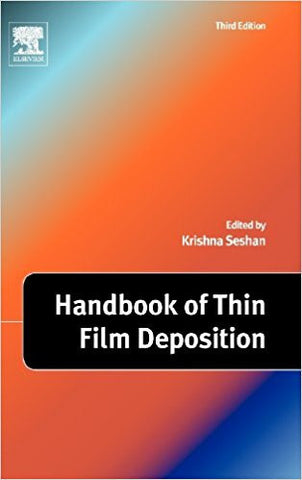
Handbook of Thin Film ...
$199.00
{"id":11242203780,"title":"Handbook of Thin Film Deposition, 3rd Edition","handle":"9781437778731","description":"\u003ch5\u003eDescription\u003c\/h5\u003e\nAuthor: K Seshan \u003cbr\u003eISBN 9781437778731 \u003cbr\u003e\u003cbr\u003ePages: 408\n\u003ch5\u003eSummary\u003c\/h5\u003e\n\u003cb\u003eKey Features\u003c\/b\u003e\u003cbr\u003e\u003cbr\u003e- A practical survey of thin film technologies aimed at engineers and managers involved in all stages of the process: design, fabrication, quality assurance and applications.\u003cbr\u003e\u003cbr\u003e- Covers core processes and applications in the semiconductor industry and new developments in the photovoltaic and optical thin film industries.\u003cbr\u003e\u003cbr\u003e- The new edition takes covers the transition taking place in the semiconductor world from Al\/SiO2 to copper interconnects with low-k dielectrics.\u003cbr\u003e\u003cbr\u003e- Written by acknowledged industry experts from key companies in the semiconductor industry including Intel and IBM.\u003cbr\u003e\u003cbr\u003e- Foreword by Gordon E. Moore, co-founder of Intel and formulator of the renowned ‘Moore’s Law’ relating to the technology development cycle in the semiconductor industry.\u003cbr\u003e\u003cbr\u003e\u003cb\u003eDescription\u003c\/b\u003e\u003cbr\u003e\u003cbr\u003eThe Handbook of Thin Film Deposition is a comprehensive reference focusing on thin film technologies and applications used in the semiconductor industry and the closely related areas of thin film deposition, thin film micro properties, photovoltaic solar energy applications, new materials for memory applications and methods for thin film optical processes. In a major restructuring, this edition of the handbook lays the foundations for an up-to-date treatment of lithography, contamination and yield management, and reliability of thin films. The established physical and chemical deposition processes and technologies are then covered, the last section of the book being devoted to more recent technological developments such as microelectromechanical systems, photovoltaic applications, digital cameras, CCD arrays, and optical thin films.\n\u003ch5\u003eTable of Contents\u003c\/h5\u003e\nForeword to the Third Edition\u003cbr\u003eScaling of Devices and Thermal Scaling\u003cbr\u003ePVD - Special Topics\u003cbr\u003eCVD New Developments\u003cbr\u003eCVD Equipment\u003cbr\u003eCMP Method and Practice\u003cbr\u003eProcess Technology for Copper Interconnects\u003cbr\u003eOptical Thin Films\u003cbr\u003eThin Films in Photovoltaics\u003cbr\u003eThin Films in Memory Applications\u003cbr\u003eIndex\n\u003ch5\u003eAbout Author\u003c\/h5\u003e\n\u003cdiv\u003eKrishna Seshan was formerly Assistant Professor in Materials Science at the University of Arizona and has extensive professional experience as a technologist with both the IBM and Intel Corporations.\u003c\/div\u003e","published_at":"2017-06-22T21:12:49-04:00","created_at":"2017-06-22T21:12:49-04:00","vendor":"Chemtec Publishing","type":"Book","tags":["2012","book","p-applications","polymer","quality assurance","technologies and applications in the semiconductors","thin films"],"price":19900,"price_min":19900,"price_max":19900,"available":true,"price_varies":false,"compare_at_price":null,"compare_at_price_min":0,"compare_at_price_max":0,"compare_at_price_varies":false,"variants":[{"id":43378316612,"title":"Default Title","option1":"Default Title","option2":null,"option3":null,"sku":"","requires_shipping":true,"taxable":true,"featured_image":null,"available":true,"name":"Handbook of Thin Film Deposition, 3rd Edition","public_title":null,"options":["Default Title"],"price":19900,"weight":1000,"compare_at_price":null,"inventory_quantity":1,"inventory_management":null,"inventory_policy":"continue","barcode":"9781437778731","requires_selling_plan":false,"selling_plan_allocations":[],"quantity_rule":{"min":1,"max":null,"increment":1}}],"images":["\/\/chemtec.org\/cdn\/shop\/products\/9781437778731.jpg?v=1499472868"],"featured_image":"\/\/chemtec.org\/cdn\/shop\/products\/9781437778731.jpg?v=1499472868","options":["Title"],"media":[{"alt":null,"id":356343414877,"position":1,"preview_image":{"aspect_ratio":0.629,"height":499,"width":314,"src":"\/\/chemtec.org\/cdn\/shop\/products\/9781437778731.jpg?v=1499472868"},"aspect_ratio":0.629,"height":499,"media_type":"image","src":"\/\/chemtec.org\/cdn\/shop\/products\/9781437778731.jpg?v=1499472868","width":314}],"requires_selling_plan":false,"selling_plan_groups":[],"content":"\u003ch5\u003eDescription\u003c\/h5\u003e\nAuthor: K Seshan \u003cbr\u003eISBN 9781437778731 \u003cbr\u003e\u003cbr\u003ePages: 408\n\u003ch5\u003eSummary\u003c\/h5\u003e\n\u003cb\u003eKey Features\u003c\/b\u003e\u003cbr\u003e\u003cbr\u003e- A practical survey of thin film technologies aimed at engineers and managers involved in all stages of the process: design, fabrication, quality assurance and applications.\u003cbr\u003e\u003cbr\u003e- Covers core processes and applications in the semiconductor industry and new developments in the photovoltaic and optical thin film industries.\u003cbr\u003e\u003cbr\u003e- The new edition takes covers the transition taking place in the semiconductor world from Al\/SiO2 to copper interconnects with low-k dielectrics.\u003cbr\u003e\u003cbr\u003e- Written by acknowledged industry experts from key companies in the semiconductor industry including Intel and IBM.\u003cbr\u003e\u003cbr\u003e- Foreword by Gordon E. Moore, co-founder of Intel and formulator of the renowned ‘Moore’s Law’ relating to the technology development cycle in the semiconductor industry.\u003cbr\u003e\u003cbr\u003e\u003cb\u003eDescription\u003c\/b\u003e\u003cbr\u003e\u003cbr\u003eThe Handbook of Thin Film Deposition is a comprehensive reference focusing on thin film technologies and applications used in the semiconductor industry and the closely related areas of thin film deposition, thin film micro properties, photovoltaic solar energy applications, new materials for memory applications and methods for thin film optical processes. In a major restructuring, this edition of the handbook lays the foundations for an up-to-date treatment of lithography, contamination and yield management, and reliability of thin films. The established physical and chemical deposition processes and technologies are then covered, the last section of the book being devoted to more recent technological developments such as microelectromechanical systems, photovoltaic applications, digital cameras, CCD arrays, and optical thin films.\n\u003ch5\u003eTable of Contents\u003c\/h5\u003e\nForeword to the Third Edition\u003cbr\u003eScaling of Devices and Thermal Scaling\u003cbr\u003ePVD - Special Topics\u003cbr\u003eCVD New Developments\u003cbr\u003eCVD Equipment\u003cbr\u003eCMP Method and Practice\u003cbr\u003eProcess Technology for Copper Interconnects\u003cbr\u003eOptical Thin Films\u003cbr\u003eThin Films in Photovoltaics\u003cbr\u003eThin Films in Memory Applications\u003cbr\u003eIndex\n\u003ch5\u003eAbout Author\u003c\/h5\u003e\n\u003cdiv\u003eKrishna Seshan was formerly Assistant Professor in Materials Science at the University of Arizona and has extensive professional experience as a technologist with both the IBM and Intel Corporations.\u003c\/div\u003e"}
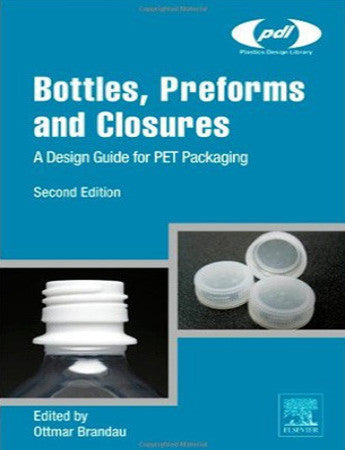
Bottles, Preforms and ...
$149.00
{"id":11242203908,"title":"Bottles, Preforms and Closures, 2nd Edition - A Design Guide for PET Packaging","handle":"978-1-4377-3526-0","description":"\u003ch5\u003eDescription\u003c\/h5\u003e\nAuthor: Ottmar Brandau \u003cbr\u003eISBN 978-1-4377-3526-0 \u003cbr\u003e\u003cbr\u003e180 pages\n\u003ch5\u003eSummary\u003c\/h5\u003e\n\u003cp\u003eThe book is a thoroughly practical handbook that provides engineers and managers with the toolkit to improve production and engineering aspects in their own businesses - saving money, increasing output and improving competitiveness by adopting new technologies.\u003c\/p\u003e\n\u003cp\u003eIn this book, Brandau covers the engineering aspects of bottle production and the relevant production processes (focusing on blow molding), along with plant layout and organization and production management. \u003c\/p\u003e\n\u003ch5\u003eTable of Contents\u003c\/h5\u003e\nPart One: PET Preforms (Ottmar Brandau, Dr. Laura Martin):\u003cbr\u003e\u003cbr\u003e1 Introduction;\u003cbr\u003e\u003cbr\u003e2 Manufacture and States of PET;\u003cbr\u003e\u003cbr\u003e3 Behaviour in the Blow Mould; 4 Manufacture of PET Preforms;\u003cbr\u003e\u003cbr\u003e5 Preform Design Methodology;\u003cbr\u003e\u003cbr\u003e6 Preform Design Examples;\u003cbr\u003e\u003cbr\u003ePart 2: PET Beverage Bottles (Dr. Christian DeTrois, Thomas Steinbauer):\u003cbr\u003e\u003cbr\u003e1 From the First Idea to the Finished Bottle;\u003cbr\u003e\u003cbr\u003e2 Determination of Bottle Properties;\u003cbr\u003e\u003cbr\u003e3 Generating the First Design in CAD;\u003cbr\u003e\u003cbr\u003e4 From Shape to Fully-Fledged Design for a Safe Process;\u003cbr\u003e\u003cbr\u003e5 Verification of the 3D Design through FE Simulation;\u003cbr\u003e\u003cbr\u003e6 Selection of the Mould Concept to Meet Customer-Specific Criteria;\u003cbr\u003e\u003cbr\u003e7 Mould Design and Mould Manufacture;\u003cbr\u003e\u003cbr\u003e8 Mould Trials and Examination of Sample Bottles;\u003cbr\u003e\u003cbr\u003ePart 3 Closures for PET Bottles (Ottmar Brandau, Romeo Corvaglia):\u003cbr\u003e\u003cbr\u003e1 Introduction;\u003cbr\u003e\u003cbr\u003e2 Neck Finishes for Various Bottle Types;\u003cbr\u003e\u003cbr\u003e3 Closure Types;\u003cbr\u003e\u003cbr\u003e4 Tamper Evident Bands;\u003cbr\u003e\u003cbr\u003e5 Resins;\u003cbr\u003e\u003cbr\u003e6 Manufacturing Methods;\u003cbr\u003e\u003cbr\u003e7 Economic Guidelines;\u003cbr\u003e\u003cbr\u003e8 Test Procedures;\u003cbr\u003e\u003cbr\u003e9 Process Control during Injection Moulding; Light-weigh caps, new standards\n\u003ch5\u003eAbout Author\u003c\/h5\u003e\n\u003cdiv\u003eOttmar Brandau\u003c\/div\u003e\n\u003cdiv\u003e\u003c\/div\u003e\n\u003cdiv\u003eOB Plastics Consulting, Ontario, Canada\u003c\/div\u003e\n\u003cdiv\u003ePresident, OB Plastics Consulting, Ontario, Canada Process troubleshooting and training of plant and office personnel. Formerly VP Operations, Magic North America (Packaging \u0026amp; Containers). Member of the Omnexus (SpecialChem Plastics \u0026amp; Elastomers) Expert Team.\u003c\/div\u003e","published_at":"2017-06-22T21:12:49-04:00","created_at":"2017-06-22T21:12:49-04:00","vendor":"Chemtec Publishing","type":"Book","tags":["2012","blow molding","book","bottles","fault analysis","p-applications","packaging","PET","PET packaging","plastics processing","polymer","troubleshooting"],"price":14900,"price_min":14900,"price_max":14900,"available":true,"price_varies":false,"compare_at_price":null,"compare_at_price_min":0,"compare_at_price_max":0,"compare_at_price_varies":false,"variants":[{"id":43378316740,"title":"Default Title","option1":"Default Title","option2":null,"option3":null,"sku":"","requires_shipping":true,"taxable":true,"featured_image":null,"available":true,"name":"Bottles, Preforms and Closures, 2nd Edition - A Design Guide for PET Packaging","public_title":null,"options":["Default Title"],"price":14900,"weight":1000,"compare_at_price":null,"inventory_quantity":1,"inventory_management":null,"inventory_policy":"continue","barcode":"978-1-4377-3526-0","requires_selling_plan":false,"selling_plan_allocations":[],"quantity_rule":{"min":1,"max":null,"increment":1}}],"images":["\/\/chemtec.org\/cdn\/shop\/products\/978-1-4377-3526-0.jpg?v=1499724204"],"featured_image":"\/\/chemtec.org\/cdn\/shop\/products\/978-1-4377-3526-0.jpg?v=1499724204","options":["Title"],"media":[{"alt":null,"id":353925529693,"position":1,"preview_image":{"aspect_ratio":0.767,"height":450,"width":345,"src":"\/\/chemtec.org\/cdn\/shop\/products\/978-1-4377-3526-0.jpg?v=1499724204"},"aspect_ratio":0.767,"height":450,"media_type":"image","src":"\/\/chemtec.org\/cdn\/shop\/products\/978-1-4377-3526-0.jpg?v=1499724204","width":345}],"requires_selling_plan":false,"selling_plan_groups":[],"content":"\u003ch5\u003eDescription\u003c\/h5\u003e\nAuthor: Ottmar Brandau \u003cbr\u003eISBN 978-1-4377-3526-0 \u003cbr\u003e\u003cbr\u003e180 pages\n\u003ch5\u003eSummary\u003c\/h5\u003e\n\u003cp\u003eThe book is a thoroughly practical handbook that provides engineers and managers with the toolkit to improve production and engineering aspects in their own businesses - saving money, increasing output and improving competitiveness by adopting new technologies.\u003c\/p\u003e\n\u003cp\u003eIn this book, Brandau covers the engineering aspects of bottle production and the relevant production processes (focusing on blow molding), along with plant layout and organization and production management. \u003c\/p\u003e\n\u003ch5\u003eTable of Contents\u003c\/h5\u003e\nPart One: PET Preforms (Ottmar Brandau, Dr. Laura Martin):\u003cbr\u003e\u003cbr\u003e1 Introduction;\u003cbr\u003e\u003cbr\u003e2 Manufacture and States of PET;\u003cbr\u003e\u003cbr\u003e3 Behaviour in the Blow Mould; 4 Manufacture of PET Preforms;\u003cbr\u003e\u003cbr\u003e5 Preform Design Methodology;\u003cbr\u003e\u003cbr\u003e6 Preform Design Examples;\u003cbr\u003e\u003cbr\u003ePart 2: PET Beverage Bottles (Dr. Christian DeTrois, Thomas Steinbauer):\u003cbr\u003e\u003cbr\u003e1 From the First Idea to the Finished Bottle;\u003cbr\u003e\u003cbr\u003e2 Determination of Bottle Properties;\u003cbr\u003e\u003cbr\u003e3 Generating the First Design in CAD;\u003cbr\u003e\u003cbr\u003e4 From Shape to Fully-Fledged Design for a Safe Process;\u003cbr\u003e\u003cbr\u003e5 Verification of the 3D Design through FE Simulation;\u003cbr\u003e\u003cbr\u003e6 Selection of the Mould Concept to Meet Customer-Specific Criteria;\u003cbr\u003e\u003cbr\u003e7 Mould Design and Mould Manufacture;\u003cbr\u003e\u003cbr\u003e8 Mould Trials and Examination of Sample Bottles;\u003cbr\u003e\u003cbr\u003ePart 3 Closures for PET Bottles (Ottmar Brandau, Romeo Corvaglia):\u003cbr\u003e\u003cbr\u003e1 Introduction;\u003cbr\u003e\u003cbr\u003e2 Neck Finishes for Various Bottle Types;\u003cbr\u003e\u003cbr\u003e3 Closure Types;\u003cbr\u003e\u003cbr\u003e4 Tamper Evident Bands;\u003cbr\u003e\u003cbr\u003e5 Resins;\u003cbr\u003e\u003cbr\u003e6 Manufacturing Methods;\u003cbr\u003e\u003cbr\u003e7 Economic Guidelines;\u003cbr\u003e\u003cbr\u003e8 Test Procedures;\u003cbr\u003e\u003cbr\u003e9 Process Control during Injection Moulding; Light-weigh caps, new standards\n\u003ch5\u003eAbout Author\u003c\/h5\u003e\n\u003cdiv\u003eOttmar Brandau\u003c\/div\u003e\n\u003cdiv\u003e\u003c\/div\u003e\n\u003cdiv\u003eOB Plastics Consulting, Ontario, Canada\u003c\/div\u003e\n\u003cdiv\u003ePresident, OB Plastics Consulting, Ontario, Canada Process troubleshooting and training of plant and office personnel. Formerly VP Operations, Magic North America (Packaging \u0026amp; Containers). Member of the Omnexus (SpecialChem Plastics \u0026amp; Elastomers) Expert Team.\u003c\/div\u003e"}
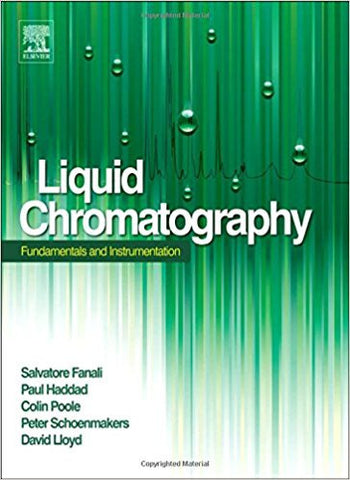
Liquid Chromatography
$165.00
{"id":11242203460,"title":"Liquid Chromatography","handle":"978-0-12-415807-8","description":"\u003ch5\u003eDescription\u003c\/h5\u003e\nAuthor: Eds; Fanali; Haddad; Poole; Schoenmakers; Lloyd \u003cbr\u003eISBN 978-0-12-415807-8 \u003cbr\u003e\u003cbr\u003eHardbound, 516 Pages\n\u003ch5\u003eSummary\u003c\/h5\u003e\n\u003cp\u003eA single source of authoritative information on all aspects of the practice of modern liquid chromatography suitable for advanced students and professionals working in a laboratory or managerial capacity\u003c\/p\u003e\n\u003cp\u003e\u003cb\u003eAudience\u003c\/b\u003e\u003c\/p\u003e\n\u003cp\u003ePractitioners of distillation and separation science looking for a quick access to the newest knowledge; graduate students searching for special applications; chemists; professional scientists in academia, industry and government laboratories; environmental engineers; mechanical engineers\u003c\/p\u003e\n\u003cp\u003e \u003c\/p\u003e\n\u003ch5\u003eTable of Contents\u003c\/h5\u003e\nMilestones in the Development of Liquid Chromatography\u003cbr\u003e\u003cbr\u003eKinetic Theory of Liquid Chromatography\u003cbr\u003e\u003cbr\u003eColumn Technology in Liquid Chromatography\u003cbr\u003e\u003cbr\u003eReversed-phase Liquid Chromatography\u003cbr\u003e\u003cbr\u003eSecondary Chemical Equilibria in Reversed-Phase Liquid Chromatography\u003cbr\u003e\u003cbr\u003eHydrophilic Interaction Liquid Chromatography\u003cbr\u003e\u003cbr\u003eHydrophobic Interaction Liquid Chromatography\u003cbr\u003e\u003cbr\u003eLiquid-Solid Chromatography\u003cbr\u003e\u003cbr\u003eIon Chromatography\u003cbr\u003e\u003cbr\u003eSize-exclusion chromatography\u003cbr\u003e\u003cbr\u003eSolvent Selection for Liquid Chromatography\u003cbr\u003e\u003cbr\u003eMethod development in Liquid Chromatography\u003cbr\u003e\u003cbr\u003eTheory and Practice of Gradient Elution Liquid Chromatography\u003cbr\u003e\u003cbr\u003eCoupled-Column Liquid Chromatography\u003cbr\u003e\u003cbr\u003eGeneral Instrumentation\u003cbr\u003e\u003cbr\u003eAdvanced Spectroscopic Detectors for Identification and Quantification: Mass Spectrometry\u003cbr\u003e\u003cbr\u003eAdvanced Spectroscopic Detectors for Identification and Quantification: FTIR and Raman\u003cbr\u003e\u003cbr\u003eAdvanced Spectroscopic Detectors for Identification and Quantification: Nuclear Magnetic Resonance\u003cbr\u003e\u003cbr\u003eData Analysis Methods\u003cbr\u003e\u003cbr\u003eQuantitative Structure-Retention and Property Relationships\u003cbr\u003e\u003cbr\u003eModeling of Preparative Liquid Chromatography\u003cbr\u003e\u003cbr\u003eProcess Concepts in Preparative Liquid Chromatography\u003cbr\u003e\u003cbr\u003ePreparative Chromatography of Biopolymers\u003cbr\u003e\u003cbr\u003eMiniaturization and Microfluidics\u003cbr\u003e\u003cbr\u003eCapillary Electrochromatography\n\u003ch5\u003eAbout Author\u003c\/h5\u003e\n\u003cdiv\u003eEdited by\u003c\/div\u003e\n\u003cdiv\u003eSalvatore Fanali, Istituto di Metodologie, CNR, Rome, Italy\u003c\/div\u003e\n\u003cdiv\u003ePaul R. Haddad, School of Chemistry, Univ. of Tasmania, Hobart, Australia\u003c\/div\u003e\n\u003cdiv\u003eColin Poole, Wayne State University, Detroit, MI, USA\u003c\/div\u003e\n\u003cdiv\u003ePeter Schoenmakers, University of Amsterdam, The Netherlands\u003c\/div\u003e\n\u003cdiv\u003eDavid Lloyd, Bristol-Myers Squibb, New Brunswick, NJ, USA\u003c\/div\u003e","published_at":"2017-06-22T21:12:48-04:00","created_at":"2017-06-22T21:12:48-04:00","vendor":"Chemtec Publishing","type":"Book","tags":["2013","advanced apectroscopic detectors","biopolymers","book","electrochromatography","liquid chromatography","p-chemical","polymer"],"price":16500,"price_min":16500,"price_max":16500,"available":true,"price_varies":false,"compare_at_price":null,"compare_at_price_min":0,"compare_at_price_max":0,"compare_at_price_varies":false,"variants":[{"id":43378316292,"title":"Default Title","option1":"Default Title","option2":null,"option3":null,"sku":"","requires_shipping":true,"taxable":true,"featured_image":null,"available":true,"name":"Liquid Chromatography","public_title":null,"options":["Default Title"],"price":16500,"weight":1000,"compare_at_price":null,"inventory_quantity":1,"inventory_management":null,"inventory_policy":"continue","barcode":"978-0-12-415807-8","requires_selling_plan":false,"selling_plan_allocations":[],"quantity_rule":{"min":1,"max":null,"increment":1}}],"images":["\/\/chemtec.org\/cdn\/shop\/products\/978-0-12-415807-8.jpg?v=1499624163"],"featured_image":"\/\/chemtec.org\/cdn\/shop\/products\/978-0-12-415807-8.jpg?v=1499624163","options":["Title"],"media":[{"alt":null,"id":358509019229,"position":1,"preview_image":{"aspect_ratio":0.729,"height":499,"width":364,"src":"\/\/chemtec.org\/cdn\/shop\/products\/978-0-12-415807-8.jpg?v=1499624163"},"aspect_ratio":0.729,"height":499,"media_type":"image","src":"\/\/chemtec.org\/cdn\/shop\/products\/978-0-12-415807-8.jpg?v=1499624163","width":364}],"requires_selling_plan":false,"selling_plan_groups":[],"content":"\u003ch5\u003eDescription\u003c\/h5\u003e\nAuthor: Eds; Fanali; Haddad; Poole; Schoenmakers; Lloyd \u003cbr\u003eISBN 978-0-12-415807-8 \u003cbr\u003e\u003cbr\u003eHardbound, 516 Pages\n\u003ch5\u003eSummary\u003c\/h5\u003e\n\u003cp\u003eA single source of authoritative information on all aspects of the practice of modern liquid chromatography suitable for advanced students and professionals working in a laboratory or managerial capacity\u003c\/p\u003e\n\u003cp\u003e\u003cb\u003eAudience\u003c\/b\u003e\u003c\/p\u003e\n\u003cp\u003ePractitioners of distillation and separation science looking for a quick access to the newest knowledge; graduate students searching for special applications; chemists; professional scientists in academia, industry and government laboratories; environmental engineers; mechanical engineers\u003c\/p\u003e\n\u003cp\u003e \u003c\/p\u003e\n\u003ch5\u003eTable of Contents\u003c\/h5\u003e\nMilestones in the Development of Liquid Chromatography\u003cbr\u003e\u003cbr\u003eKinetic Theory of Liquid Chromatography\u003cbr\u003e\u003cbr\u003eColumn Technology in Liquid Chromatography\u003cbr\u003e\u003cbr\u003eReversed-phase Liquid Chromatography\u003cbr\u003e\u003cbr\u003eSecondary Chemical Equilibria in Reversed-Phase Liquid Chromatography\u003cbr\u003e\u003cbr\u003eHydrophilic Interaction Liquid Chromatography\u003cbr\u003e\u003cbr\u003eHydrophobic Interaction Liquid Chromatography\u003cbr\u003e\u003cbr\u003eLiquid-Solid Chromatography\u003cbr\u003e\u003cbr\u003eIon Chromatography\u003cbr\u003e\u003cbr\u003eSize-exclusion chromatography\u003cbr\u003e\u003cbr\u003eSolvent Selection for Liquid Chromatography\u003cbr\u003e\u003cbr\u003eMethod development in Liquid Chromatography\u003cbr\u003e\u003cbr\u003eTheory and Practice of Gradient Elution Liquid Chromatography\u003cbr\u003e\u003cbr\u003eCoupled-Column Liquid Chromatography\u003cbr\u003e\u003cbr\u003eGeneral Instrumentation\u003cbr\u003e\u003cbr\u003eAdvanced Spectroscopic Detectors for Identification and Quantification: Mass Spectrometry\u003cbr\u003e\u003cbr\u003eAdvanced Spectroscopic Detectors for Identification and Quantification: FTIR and Raman\u003cbr\u003e\u003cbr\u003eAdvanced Spectroscopic Detectors for Identification and Quantification: Nuclear Magnetic Resonance\u003cbr\u003e\u003cbr\u003eData Analysis Methods\u003cbr\u003e\u003cbr\u003eQuantitative Structure-Retention and Property Relationships\u003cbr\u003e\u003cbr\u003eModeling of Preparative Liquid Chromatography\u003cbr\u003e\u003cbr\u003eProcess Concepts in Preparative Liquid Chromatography\u003cbr\u003e\u003cbr\u003ePreparative Chromatography of Biopolymers\u003cbr\u003e\u003cbr\u003eMiniaturization and Microfluidics\u003cbr\u003e\u003cbr\u003eCapillary Electrochromatography\n\u003ch5\u003eAbout Author\u003c\/h5\u003e\n\u003cdiv\u003eEdited by\u003c\/div\u003e\n\u003cdiv\u003eSalvatore Fanali, Istituto di Metodologie, CNR, Rome, Italy\u003c\/div\u003e\n\u003cdiv\u003ePaul R. Haddad, School of Chemistry, Univ. of Tasmania, Hobart, Australia\u003c\/div\u003e\n\u003cdiv\u003eColin Poole, Wayne State University, Detroit, MI, USA\u003c\/div\u003e\n\u003cdiv\u003ePeter Schoenmakers, University of Amsterdam, The Netherlands\u003c\/div\u003e\n\u003cdiv\u003eDavid Lloyd, Bristol-Myers Squibb, New Brunswick, NJ, USA\u003c\/div\u003e"}
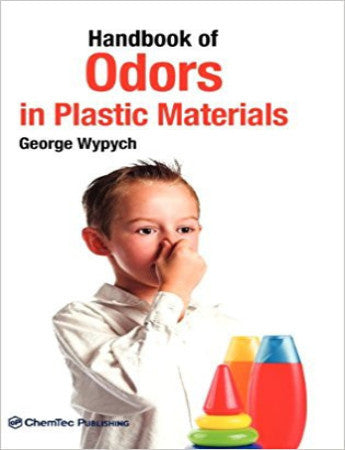
Handbook of Odors in P...
$275.00
{"id":11242203652,"title":"Handbook of Odors in Plastic Materials","handle":"978-1-895198-51-5","description":"\u003ch5\u003eDescription\u003c\/h5\u003e\nAuthor: George Wypych \u003cbr\u003eISBN 978-1-895198-51-5 \u003cbr\u003e\u003cbr\u003e\n\u003cdiv\u003ePages: 214 + viii\u003c\/div\u003e\n\u003cdiv\u003eFigures: 52\u003c\/div\u003e\n\u003cdiv\u003eTables: 23\u003c\/div\u003e\n\u003cdiv\u003e\u003c\/div\u003e\n\u003ch5\u003eSummary\u003c\/h5\u003e\nIt is the first book ever written on this important subject. Odor of product may decide whether a product is purchased by customer or not. Odor can also be important reason for customer complaints and product return. Many leading companies have recognized this as an opportunity and they actively study and modify odors of their products.\u003cbr\u003e\u003cbr\u003eSeveral reasons are behind formation of odors in plastic materials, including \u003cbr\u003e\u003cbr\u003e1. Properties of polymer\u003cbr\u003e\u003cbr\u003e2. Use of other materials than polymer, especially materials required in processing (additives)\u003cbr\u003e\u003cbr\u003e3. Process parameters and their effect on severity of degradation of components of formulation\u003cbr\u003e\u003cbr\u003e4. Exposure to different forms of radiation and oxygen\u003cbr\u003e\u003cbr\u003e5. Recycling of polymeric materials\u003cbr\u003e\u003cbr\u003e6. Contact with other products\u003cbr\u003e\u003cbr\u003e7. Storage\u003cbr\u003e\u003cbr\u003ea. Diffusion-related properties\u003cbr\u003e\u003cbr\u003eb. Migration-evaporation\u003cbr\u003e\u003cbr\u003ec. Storage in the same space\u003cbr\u003e\u003cbr\u003eThe above reasons are analyzed for different materials to find out the best methods to prevent unwanted odor formation. Three chapters are devoted to the analysis of odor-related matters in different polymers, products, and methods of processing. Thirty seven polymers and forty one product groups are analyzed based on research publications and patents.\u003cbr\u003e\u003cbr\u003eOther important chapters discuss mechanism of odor formation and its transport within a material, distinctive odors found in plastic materials, taste, and fogging.\u003cbr\u003e\u003cbr\u003eThe book also contains information on testing of odor changes, relationship between odor and toxicity, as well as selection of raw materials for fog-free products.\u003cbr\u003e\u003cbr\u003eThe book also contains information on 17 methods of odor removal (the list of these methods is included in Table of Contents below).\u003cbr\u003e\u003cbr\u003eThe last three chapters discuss regulations related to odor in products, effects of odors on health and safety, and effect of odors from plastic materials on indoor air quality.\u003cbr\u003e\u003cbr\u003eHandbook of Odors in Plastic Materials is needed by anyone interested in plastic materials. The book contains complete information based on hard to find source publications and numerous patents.\u003cbr\u003e\u003cbr\u003e\n\u003ch5\u003eTable of Contents\u003c\/h5\u003e\n1 Introduction \u003cbr\u003e\u003cbr\u003e2 Mechanisms of odor formation and transport\u003cbr\u003e\u003cbr\u003e2.1 Volatile chemicals\u003cbr\u003e\u003cbr\u003e2.2 Biodegradation\u003cbr\u003e\u003cbr\u003e2.3 Effect of temperature and time\u003cbr\u003e\u003cbr\u003e2.4 Effect of light exposure\u003cbr\u003e\u003cbr\u003e2.5 Effect of gamma-irradiation\u003cbr\u003e\u003cbr\u003e2.6 Migration\u003cbr\u003e\u003cbr\u003e2.7 Leaching\u003cbr\u003e\u003cbr\u003e2.8 Partitioning\u003cbr\u003e\u003cbr\u003e2.9 Odor-releasing devices\u003cbr\u003e\u003cbr\u003e3 Distinctive odors\u003cbr\u003e\u003cbr\u003e3.1 Sweet blossom-like (fruity)\u003cbr\u003e\u003cbr\u003e3.2 Grassy\u003cbr\u003e\u003cbr\u003e3.3 Liquorice\u003cbr\u003e\u003cbr\u003e3.4 Petroleum\/phenolic\u003cbr\u003e\u003cbr\u003e3.5 “Plastic”\u003cbr\u003e\u003cbr\u003e3.6 Medicinal\u003cbr\u003e\u003cbr\u003e3.7 Chemical\u003cbr\u003e\u003cbr\u003e3.8 Ethanol with fusel oil\u003cbr\u003e\u003cbr\u003e3.9 Fatty\/Waxy\u003cbr\u003e\u003cbr\u003e3.10 Moldy\/musty\u003cbr\u003e\u003cbr\u003e3.11 Sewer\/rotten\u003cbr\u003e\u003cbr\u003e3.12 Animal\u003cbr\u003e\u003cbr\u003e3.13 Cheesy\/buttery\u003cbr\u003e\u003cbr\u003e3.14 Smoky, burnt\u003cbr\u003e\u003cbr\u003e3.15 Metallic\u003cbr\u003e\u003cbr\u003e3.16 Sour or acrid\u003cbr\u003e\u003cbr\u003e3.17 Minty\u003cbr\u003e\u003cbr\u003e3.18 Coconut\u003cbr\u003e\u003cbr\u003e3.19 Cardboard-like\u003cbr\u003e\u003cbr\u003e3.20 Mushroom-like\u003cbr\u003e\u003cbr\u003e4 Taste \u003cbr\u003e\u003cbr\u003e5 Fogging \u003cbr\u003e\u003cbr\u003e6 Reasons for odor formation in plastic materials\u003cbr\u003e\u003cbr\u003e6.1 Effect of polymer\u003cbr\u003e\u003cbr\u003e6.2 Effect of additives\u003cbr\u003e\u003cbr\u003e6.3 Effect of processing conditions\u003cbr\u003e\u003cbr\u003e6.4 Recycling\u003cbr\u003e\u003cbr\u003e6.5 Contact with other materials\u003cbr\u003e\u003cbr\u003e6.6 Effect of storage conditions\u003cbr\u003e\u003cbr\u003e6.7 Effect of humidity \u003cbr\u003e\u003cbr\u003e7 Methods of testing in odor analysis\u003cbr\u003e\u003cbr\u003e7.1 Mechanism of smell 208\u003cbr\u003e\u003cbr\u003e7.2 Sampling\u003cbr\u003e\u003cbr\u003e7.3 Active odor sensing\u003cbr\u003e\u003cbr\u003e7.4 Electronic nose\u003cbr\u003e\u003cbr\u003e7.5 Odor digitization\u003cbr\u003e\u003cbr\u003e7.6 Sensory analysis (Test panel evaluation)\u003cbr\u003e\u003cbr\u003e7.7 GC\/MS\u003cbr\u003e\u003cbr\u003e7.8 GC\/olfactometry\u003cbr\u003e\u003cbr\u003e7.9 Threshold odor number\u003cbr\u003e\u003cbr\u003e7.10 Sensors\u003cbr\u003e\u003cbr\u003e7.11 Visualization \u003cbr\u003e\u003cbr\u003e8 Odor in relation to different polymers\u003cbr\u003e\u003cbr\u003e8.1 ABS\u003cbr\u003e\u003cbr\u003e8.2 Acrylics\u003cbr\u003e\u003cbr\u003e8.3 Cellulosic polymers\u003cbr\u003e\u003cbr\u003e8.4 Chitosan\u003cbr\u003e\u003cbr\u003e8.5 Cyanoacrylate\u003cbr\u003e\u003cbr\u003e8.6 Epoxy resin\u003cbr\u003e\u003cbr\u003e8.7 Ethylene-propylene diene terpolymer, EPDM\u003cbr\u003e\u003cbr\u003e8.8 Ethylene-propylene rubber, EPR\u003cbr\u003e\u003cbr\u003e8.9 Ethylene-vinyl acetate, EVA\u003cbr\u003e\u003cbr\u003e8.10 Ionomers\u003cbr\u003e\u003cbr\u003e8.11 Nitrile rubber\u003cbr\u003e\u003cbr\u003e8.12 Polyacrylate\u003cbr\u003e\u003cbr\u003e8.13 Polyamide-66\u003cbr\u003e\u003cbr\u003e8.14 Polyamine\u003cbr\u003e\u003cbr\u003e8.15 Polyaniline\u003cbr\u003e\u003cbr\u003e8.16 Polybutadiene\u003cbr\u003e\u003cbr\u003e8.17 Polycarbonate\u003cbr\u003e\u003cbr\u003e8.18 Polychloroprene\u003cbr\u003e\u003cbr\u003e8.19 Polyethylene\u003cbr\u003e\u003cbr\u003e8.20 Polyethylene, crosslinked\u003cbr\u003e\u003cbr\u003e8.21 Poly(ethylene terephthalate)\u003cbr\u003e\u003cbr\u003e8.22 Polyisoprene\u003cbr\u003e\u003cbr\u003e8.23 Polyimide\u003cbr\u003e\u003cbr\u003e8.24 Polyoxymethylene\u003cbr\u003e\u003cbr\u003e8.25 Polyphenylene ether\u003cbr\u003e\u003cbr\u003e8.26 Polypropylene\u003cbr\u003e\u003cbr\u003e8.27 Polystyrene\u003cbr\u003e\u003cbr\u003e8.28 Polysulfide\u003cbr\u003e\u003cbr\u003e8.29 Polyurethane\u003cbr\u003e\u003cbr\u003e8.30 Polyvinylacetate\u003cbr\u003e\u003cbr\u003e8.31 Polyvinylalcohol\u003cbr\u003e\u003cbr\u003e8.32 Polyvinylbutyral\u003cbr\u003e\u003cbr\u003e8.33 Polyvinylchloride\u003cbr\u003e\u003cbr\u003e8.34 Polyvinylchloride, chlorinated\u003cbr\u003e\u003cbr\u003e8.35 Polyvinylpyrrolidone\u003cbr\u003e\u003cbr\u003e8.36 Rubber\u003cbr\u003e\u003cbr\u003e8.37 Silicone \u003cbr\u003e\u003cbr\u003e9 Odor in relation to various products\u003cbr\u003e\u003cbr\u003e9.1 Adhesives\u003cbr\u003e\u003cbr\u003e9.2 Aerospace\u003cbr\u003e\u003cbr\u003e9.3 Alcoholic beverages\u003cbr\u003e\u003cbr\u003e9.4 Agriculture\u003cbr\u003e\u003cbr\u003e9.5 Automotive materials\u003cbr\u003e\u003cbr\u003e9.6 Bottles\u003cbr\u003e\u003cbr\u003e9.7 Cementitious materials\u003cbr\u003e\u003cbr\u003e9.8 Coated fabrics\u003cbr\u003e\u003cbr\u003e9.9 Composites\u003cbr\u003e\u003cbr\u003e9.10 Cosmetics\u003cbr\u003e\u003cbr\u003e9.11 Defence materials\u003cbr\u003e\u003cbr\u003e9.12 Dental materials\u003cbr\u003e\u003cbr\u003e9.13 Electronics\u003cbr\u003e\u003cbr\u003e9.14 Fibers\u003cbr\u003e\u003cbr\u003e9.15 Films\u003cbr\u003e\u003cbr\u003e9.16 Flooring\u003cbr\u003e\u003cbr\u003e9.17 Foam\u003cbr\u003e\u003cbr\u003e9.18 Food\u003cbr\u003e\u003cbr\u003e9.19 Footwear\u003cbr\u003e\u003cbr\u003e9.20 Fruits\u003cbr\u003e\u003cbr\u003e9.21 Gaskets\u003cbr\u003e\u003cbr\u003e9.22 Inks\u003cbr\u003e\u003cbr\u003e9.23 Landfills\u003cbr\u003e\u003cbr\u003e9.24 Laminates\u003cbr\u003e\u003cbr\u003e9.25 Medical\u003cbr\u003e\u003cbr\u003e9.26 Membranes\u003cbr\u003e\u003cbr\u003e9.27 Oil sands\u003cbr\u003e\u003cbr\u003e9.28 Paints and coatings\u003cbr\u003e\u003cbr\u003e9.29 Pavement\u003cbr\u003e\u003cbr\u003e9.30 Pharmaceutical products\u003cbr\u003e\u003cbr\u003e9.31 Photographic materials\u003cbr\u003e\u003cbr\u003e9.32 Pipes\u003cbr\u003e\u003cbr\u003e9.33 Plumbing materials\u003cbr\u003e\u003cbr\u003e9.34 Roofing\u003cbr\u003e\u003cbr\u003e9.35 Sealants\u003cbr\u003e\u003cbr\u003e9.36 Soft drinks\u003cbr\u003e\u003cbr\u003e9.37 Tires\u003cbr\u003e\u003cbr\u003e9.38 Tubing\u003cbr\u003e\u003cbr\u003e9.39 Water\u003cbr\u003e\u003cbr\u003e9.40 Wine\u003cbr\u003e\u003cbr\u003e9.41 Wire and cable \u003cbr\u003e\u003cbr\u003e10 Effect of processing method\u003cbr\u003e\u003cbr\u003e10.1 Blow molding\u003cbr\u003e\u003cbr\u003e10.2 Calendering\u003cbr\u003e\u003cbr\u003e10.3 Coil coating\u003cbr\u003e\u003cbr\u003e10.4 Compression molding\u003cbr\u003e\u003cbr\u003e10.5 Dry blending\u003cbr\u003e\u003cbr\u003e10.6 Extrusion\u003cbr\u003e\u003cbr\u003e10.7 Extrusion coating\u003cbr\u003e\u003cbr\u003e10.8 Injection molding\u003cbr\u003e\u003cbr\u003e10.9 Jointing\u003cbr\u003e\u003cbr\u003e10.10 Rubber processing \u003cbr\u003e\u003cbr\u003e11 Methods of odor removal\u003cbr\u003e\u003cbr\u003e11.1 Ozonation\u003cbr\u003e\u003cbr\u003e11.2 Oxidation\u003cbr\u003e\u003cbr\u003e11.3 Microoxygenation\u003cbr\u003e\u003cbr\u003e11.4 Complex formation\u003cbr\u003e\u003cbr\u003e11.5 Coagulation\u003cbr\u003e\u003cbr\u003e11.6 Degasification\u003cbr\u003e\u003cbr\u003e11.7 Biodegradation\u003cbr\u003e\u003cbr\u003e11.8 Microorganism enzyme\u003cbr\u003e\u003cbr\u003e11.9 Biofiltration\u003cbr\u003e\u003cbr\u003e11.10 Photocatalysis\u003cbr\u003e\u003cbr\u003e11.11 Activated carbon\u003cbr\u003e\u003cbr\u003e11.12 Absecents\u003cbr\u003e\u003cbr\u003e11.13 Adsorbents\u003cbr\u003e\u003cbr\u003e11.14 Filters\u003cbr\u003e\u003cbr\u003e11.15 Scavengers \u003cbr\u003e\u003cbr\u003e11.16 Odor-masking\u003cbr\u003e\u003cbr\u003e11.17 Odor-stripping \u003cbr\u003e\u003cbr\u003e12 Regulations\u003cbr\u003e\u003cbr\u003e13 Health and safety \u003cbr\u003e\u003cbr\u003e14 Indoor air quality\u003cbr\u003e\u003cbr\u003eIndex\n\u003ch5\u003eAbout Author\u003c\/h5\u003e\n\u003cdiv\u003eGeorge Wypych studied chemical engineering and obtained Ph. D. in chemical engineering. The professional expertise includes both university teaching (full professor) and research \u0026amp;development. He has published 19 books (PVC Plastisols, University Press; Polyvinylchloride Degradation, Elsevier; Polyvinylchloride Stabilization, Elsevier; Polymer Modified Textile Materials, Wiley \u0026amp; Sons; Handbook of Material Weathering, 1st, 2nd, 3rd, 4th Edition, ChemTec Publishing; Handbook of Fillers, 1st and 2nd Edition, ChemTec Publishing; Recycling of PVC, ChemTec Publishing; Weathering of Plastics. Testing to Mirror Real Life Performance, Plastics Design Library, Handbook of Solvents, ChemTec Publishing, Handbook of Plasticizers, 1st and 2nd Edition, ChemTec Publishing, Handbook of Antistatics, ChemTec Publishing, Handbook of Antiblocking, Release and Slip Additives, 1st and 2nd Edition, ChemTec Publishing, PVC Degradation \u0026amp; Stabilization, ChemTec Publishing, The PVC Formulary, ChemTec Publishing), Handbook of Material Biodegradation, Biodeterioration, and Biostabilization, ChemTec Publishing, Handbook of UV Degradation and Stabilization, ChemTec Publishing, Handbook of Polymers, ChemTec Publishing, Atlas of Material Damage, ChemTec Publishing, Handbook of Odors in Plastic Materials, ChemTec Publishing), 2databases (Solvents Database, 1st and 2nd Edition and Database of Antistatics, both by ChemTec Publishing), and 47 scientific papers and obtained 16 patents. He specializes in PVC, polymer additives, material durability and the development of sealants and coatings. He is included in Dictionary of International Biography, Who's Who in Plastics and Polymers, Who's Who in Engineering and was selected International Man of the Year 1996-1997 in recognition of services to education.\u003c\/div\u003e\n\u003cdiv\u003e\u003c\/div\u003e\n\u003cdiv\u003e\u003c\/div\u003e","published_at":"2017-06-22T21:12:48-04:00","created_at":"2017-06-22T21:12:48-04:00","vendor":"Chemtec Publishing","type":"Book","tags":["2013","book","environment","general","odor","odor formation","plastics","storage","testning methods"],"price":27500,"price_min":27500,"price_max":27500,"available":true,"price_varies":false,"compare_at_price":null,"compare_at_price_min":0,"compare_at_price_max":0,"compare_at_price_varies":false,"variants":[{"id":43378316484,"title":"Default Title","option1":"Default Title","option2":null,"option3":null,"sku":"","requires_shipping":true,"taxable":true,"featured_image":null,"available":true,"name":"Handbook of Odors in Plastic Materials","public_title":null,"options":["Default Title"],"price":27500,"weight":1000,"compare_at_price":null,"inventory_quantity":1,"inventory_management":null,"inventory_policy":"continue","barcode":"978-1-895198-51-5","requires_selling_plan":false,"selling_plan_allocations":[],"quantity_rule":{"min":1,"max":null,"increment":1}}],"images":["\/\/chemtec.org\/cdn\/shop\/products\/978-1-895198-51-5.jpg?v=1499719819"],"featured_image":"\/\/chemtec.org\/cdn\/shop\/products\/978-1-895198-51-5.jpg?v=1499719819","options":["Title"],"media":[{"alt":null,"id":355730423901,"position":1,"preview_image":{"aspect_ratio":0.767,"height":450,"width":345,"src":"\/\/chemtec.org\/cdn\/shop\/products\/978-1-895198-51-5.jpg?v=1499719819"},"aspect_ratio":0.767,"height":450,"media_type":"image","src":"\/\/chemtec.org\/cdn\/shop\/products\/978-1-895198-51-5.jpg?v=1499719819","width":345}],"requires_selling_plan":false,"selling_plan_groups":[],"content":"\u003ch5\u003eDescription\u003c\/h5\u003e\nAuthor: George Wypych \u003cbr\u003eISBN 978-1-895198-51-5 \u003cbr\u003e\u003cbr\u003e\n\u003cdiv\u003ePages: 214 + viii\u003c\/div\u003e\n\u003cdiv\u003eFigures: 52\u003c\/div\u003e\n\u003cdiv\u003eTables: 23\u003c\/div\u003e\n\u003cdiv\u003e\u003c\/div\u003e\n\u003ch5\u003eSummary\u003c\/h5\u003e\nIt is the first book ever written on this important subject. Odor of product may decide whether a product is purchased by customer or not. Odor can also be important reason for customer complaints and product return. Many leading companies have recognized this as an opportunity and they actively study and modify odors of their products.\u003cbr\u003e\u003cbr\u003eSeveral reasons are behind formation of odors in plastic materials, including \u003cbr\u003e\u003cbr\u003e1. Properties of polymer\u003cbr\u003e\u003cbr\u003e2. Use of other materials than polymer, especially materials required in processing (additives)\u003cbr\u003e\u003cbr\u003e3. Process parameters and their effect on severity of degradation of components of formulation\u003cbr\u003e\u003cbr\u003e4. Exposure to different forms of radiation and oxygen\u003cbr\u003e\u003cbr\u003e5. Recycling of polymeric materials\u003cbr\u003e\u003cbr\u003e6. Contact with other products\u003cbr\u003e\u003cbr\u003e7. Storage\u003cbr\u003e\u003cbr\u003ea. Diffusion-related properties\u003cbr\u003e\u003cbr\u003eb. Migration-evaporation\u003cbr\u003e\u003cbr\u003ec. Storage in the same space\u003cbr\u003e\u003cbr\u003eThe above reasons are analyzed for different materials to find out the best methods to prevent unwanted odor formation. Three chapters are devoted to the analysis of odor-related matters in different polymers, products, and methods of processing. Thirty seven polymers and forty one product groups are analyzed based on research publications and patents.\u003cbr\u003e\u003cbr\u003eOther important chapters discuss mechanism of odor formation and its transport within a material, distinctive odors found in plastic materials, taste, and fogging.\u003cbr\u003e\u003cbr\u003eThe book also contains information on testing of odor changes, relationship between odor and toxicity, as well as selection of raw materials for fog-free products.\u003cbr\u003e\u003cbr\u003eThe book also contains information on 17 methods of odor removal (the list of these methods is included in Table of Contents below).\u003cbr\u003e\u003cbr\u003eThe last three chapters discuss regulations related to odor in products, effects of odors on health and safety, and effect of odors from plastic materials on indoor air quality.\u003cbr\u003e\u003cbr\u003eHandbook of Odors in Plastic Materials is needed by anyone interested in plastic materials. The book contains complete information based on hard to find source publications and numerous patents.\u003cbr\u003e\u003cbr\u003e\n\u003ch5\u003eTable of Contents\u003c\/h5\u003e\n1 Introduction \u003cbr\u003e\u003cbr\u003e2 Mechanisms of odor formation and transport\u003cbr\u003e\u003cbr\u003e2.1 Volatile chemicals\u003cbr\u003e\u003cbr\u003e2.2 Biodegradation\u003cbr\u003e\u003cbr\u003e2.3 Effect of temperature and time\u003cbr\u003e\u003cbr\u003e2.4 Effect of light exposure\u003cbr\u003e\u003cbr\u003e2.5 Effect of gamma-irradiation\u003cbr\u003e\u003cbr\u003e2.6 Migration\u003cbr\u003e\u003cbr\u003e2.7 Leaching\u003cbr\u003e\u003cbr\u003e2.8 Partitioning\u003cbr\u003e\u003cbr\u003e2.9 Odor-releasing devices\u003cbr\u003e\u003cbr\u003e3 Distinctive odors\u003cbr\u003e\u003cbr\u003e3.1 Sweet blossom-like (fruity)\u003cbr\u003e\u003cbr\u003e3.2 Grassy\u003cbr\u003e\u003cbr\u003e3.3 Liquorice\u003cbr\u003e\u003cbr\u003e3.4 Petroleum\/phenolic\u003cbr\u003e\u003cbr\u003e3.5 “Plastic”\u003cbr\u003e\u003cbr\u003e3.6 Medicinal\u003cbr\u003e\u003cbr\u003e3.7 Chemical\u003cbr\u003e\u003cbr\u003e3.8 Ethanol with fusel oil\u003cbr\u003e\u003cbr\u003e3.9 Fatty\/Waxy\u003cbr\u003e\u003cbr\u003e3.10 Moldy\/musty\u003cbr\u003e\u003cbr\u003e3.11 Sewer\/rotten\u003cbr\u003e\u003cbr\u003e3.12 Animal\u003cbr\u003e\u003cbr\u003e3.13 Cheesy\/buttery\u003cbr\u003e\u003cbr\u003e3.14 Smoky, burnt\u003cbr\u003e\u003cbr\u003e3.15 Metallic\u003cbr\u003e\u003cbr\u003e3.16 Sour or acrid\u003cbr\u003e\u003cbr\u003e3.17 Minty\u003cbr\u003e\u003cbr\u003e3.18 Coconut\u003cbr\u003e\u003cbr\u003e3.19 Cardboard-like\u003cbr\u003e\u003cbr\u003e3.20 Mushroom-like\u003cbr\u003e\u003cbr\u003e4 Taste \u003cbr\u003e\u003cbr\u003e5 Fogging \u003cbr\u003e\u003cbr\u003e6 Reasons for odor formation in plastic materials\u003cbr\u003e\u003cbr\u003e6.1 Effect of polymer\u003cbr\u003e\u003cbr\u003e6.2 Effect of additives\u003cbr\u003e\u003cbr\u003e6.3 Effect of processing conditions\u003cbr\u003e\u003cbr\u003e6.4 Recycling\u003cbr\u003e\u003cbr\u003e6.5 Contact with other materials\u003cbr\u003e\u003cbr\u003e6.6 Effect of storage conditions\u003cbr\u003e\u003cbr\u003e6.7 Effect of humidity \u003cbr\u003e\u003cbr\u003e7 Methods of testing in odor analysis\u003cbr\u003e\u003cbr\u003e7.1 Mechanism of smell 208\u003cbr\u003e\u003cbr\u003e7.2 Sampling\u003cbr\u003e\u003cbr\u003e7.3 Active odor sensing\u003cbr\u003e\u003cbr\u003e7.4 Electronic nose\u003cbr\u003e\u003cbr\u003e7.5 Odor digitization\u003cbr\u003e\u003cbr\u003e7.6 Sensory analysis (Test panel evaluation)\u003cbr\u003e\u003cbr\u003e7.7 GC\/MS\u003cbr\u003e\u003cbr\u003e7.8 GC\/olfactometry\u003cbr\u003e\u003cbr\u003e7.9 Threshold odor number\u003cbr\u003e\u003cbr\u003e7.10 Sensors\u003cbr\u003e\u003cbr\u003e7.11 Visualization \u003cbr\u003e\u003cbr\u003e8 Odor in relation to different polymers\u003cbr\u003e\u003cbr\u003e8.1 ABS\u003cbr\u003e\u003cbr\u003e8.2 Acrylics\u003cbr\u003e\u003cbr\u003e8.3 Cellulosic polymers\u003cbr\u003e\u003cbr\u003e8.4 Chitosan\u003cbr\u003e\u003cbr\u003e8.5 Cyanoacrylate\u003cbr\u003e\u003cbr\u003e8.6 Epoxy resin\u003cbr\u003e\u003cbr\u003e8.7 Ethylene-propylene diene terpolymer, EPDM\u003cbr\u003e\u003cbr\u003e8.8 Ethylene-propylene rubber, EPR\u003cbr\u003e\u003cbr\u003e8.9 Ethylene-vinyl acetate, EVA\u003cbr\u003e\u003cbr\u003e8.10 Ionomers\u003cbr\u003e\u003cbr\u003e8.11 Nitrile rubber\u003cbr\u003e\u003cbr\u003e8.12 Polyacrylate\u003cbr\u003e\u003cbr\u003e8.13 Polyamide-66\u003cbr\u003e\u003cbr\u003e8.14 Polyamine\u003cbr\u003e\u003cbr\u003e8.15 Polyaniline\u003cbr\u003e\u003cbr\u003e8.16 Polybutadiene\u003cbr\u003e\u003cbr\u003e8.17 Polycarbonate\u003cbr\u003e\u003cbr\u003e8.18 Polychloroprene\u003cbr\u003e\u003cbr\u003e8.19 Polyethylene\u003cbr\u003e\u003cbr\u003e8.20 Polyethylene, crosslinked\u003cbr\u003e\u003cbr\u003e8.21 Poly(ethylene terephthalate)\u003cbr\u003e\u003cbr\u003e8.22 Polyisoprene\u003cbr\u003e\u003cbr\u003e8.23 Polyimide\u003cbr\u003e\u003cbr\u003e8.24 Polyoxymethylene\u003cbr\u003e\u003cbr\u003e8.25 Polyphenylene ether\u003cbr\u003e\u003cbr\u003e8.26 Polypropylene\u003cbr\u003e\u003cbr\u003e8.27 Polystyrene\u003cbr\u003e\u003cbr\u003e8.28 Polysulfide\u003cbr\u003e\u003cbr\u003e8.29 Polyurethane\u003cbr\u003e\u003cbr\u003e8.30 Polyvinylacetate\u003cbr\u003e\u003cbr\u003e8.31 Polyvinylalcohol\u003cbr\u003e\u003cbr\u003e8.32 Polyvinylbutyral\u003cbr\u003e\u003cbr\u003e8.33 Polyvinylchloride\u003cbr\u003e\u003cbr\u003e8.34 Polyvinylchloride, chlorinated\u003cbr\u003e\u003cbr\u003e8.35 Polyvinylpyrrolidone\u003cbr\u003e\u003cbr\u003e8.36 Rubber\u003cbr\u003e\u003cbr\u003e8.37 Silicone \u003cbr\u003e\u003cbr\u003e9 Odor in relation to various products\u003cbr\u003e\u003cbr\u003e9.1 Adhesives\u003cbr\u003e\u003cbr\u003e9.2 Aerospace\u003cbr\u003e\u003cbr\u003e9.3 Alcoholic beverages\u003cbr\u003e\u003cbr\u003e9.4 Agriculture\u003cbr\u003e\u003cbr\u003e9.5 Automotive materials\u003cbr\u003e\u003cbr\u003e9.6 Bottles\u003cbr\u003e\u003cbr\u003e9.7 Cementitious materials\u003cbr\u003e\u003cbr\u003e9.8 Coated fabrics\u003cbr\u003e\u003cbr\u003e9.9 Composites\u003cbr\u003e\u003cbr\u003e9.10 Cosmetics\u003cbr\u003e\u003cbr\u003e9.11 Defence materials\u003cbr\u003e\u003cbr\u003e9.12 Dental materials\u003cbr\u003e\u003cbr\u003e9.13 Electronics\u003cbr\u003e\u003cbr\u003e9.14 Fibers\u003cbr\u003e\u003cbr\u003e9.15 Films\u003cbr\u003e\u003cbr\u003e9.16 Flooring\u003cbr\u003e\u003cbr\u003e9.17 Foam\u003cbr\u003e\u003cbr\u003e9.18 Food\u003cbr\u003e\u003cbr\u003e9.19 Footwear\u003cbr\u003e\u003cbr\u003e9.20 Fruits\u003cbr\u003e\u003cbr\u003e9.21 Gaskets\u003cbr\u003e\u003cbr\u003e9.22 Inks\u003cbr\u003e\u003cbr\u003e9.23 Landfills\u003cbr\u003e\u003cbr\u003e9.24 Laminates\u003cbr\u003e\u003cbr\u003e9.25 Medical\u003cbr\u003e\u003cbr\u003e9.26 Membranes\u003cbr\u003e\u003cbr\u003e9.27 Oil sands\u003cbr\u003e\u003cbr\u003e9.28 Paints and coatings\u003cbr\u003e\u003cbr\u003e9.29 Pavement\u003cbr\u003e\u003cbr\u003e9.30 Pharmaceutical products\u003cbr\u003e\u003cbr\u003e9.31 Photographic materials\u003cbr\u003e\u003cbr\u003e9.32 Pipes\u003cbr\u003e\u003cbr\u003e9.33 Plumbing materials\u003cbr\u003e\u003cbr\u003e9.34 Roofing\u003cbr\u003e\u003cbr\u003e9.35 Sealants\u003cbr\u003e\u003cbr\u003e9.36 Soft drinks\u003cbr\u003e\u003cbr\u003e9.37 Tires\u003cbr\u003e\u003cbr\u003e9.38 Tubing\u003cbr\u003e\u003cbr\u003e9.39 Water\u003cbr\u003e\u003cbr\u003e9.40 Wine\u003cbr\u003e\u003cbr\u003e9.41 Wire and cable \u003cbr\u003e\u003cbr\u003e10 Effect of processing method\u003cbr\u003e\u003cbr\u003e10.1 Blow molding\u003cbr\u003e\u003cbr\u003e10.2 Calendering\u003cbr\u003e\u003cbr\u003e10.3 Coil coating\u003cbr\u003e\u003cbr\u003e10.4 Compression molding\u003cbr\u003e\u003cbr\u003e10.5 Dry blending\u003cbr\u003e\u003cbr\u003e10.6 Extrusion\u003cbr\u003e\u003cbr\u003e10.7 Extrusion coating\u003cbr\u003e\u003cbr\u003e10.8 Injection molding\u003cbr\u003e\u003cbr\u003e10.9 Jointing\u003cbr\u003e\u003cbr\u003e10.10 Rubber processing \u003cbr\u003e\u003cbr\u003e11 Methods of odor removal\u003cbr\u003e\u003cbr\u003e11.1 Ozonation\u003cbr\u003e\u003cbr\u003e11.2 Oxidation\u003cbr\u003e\u003cbr\u003e11.3 Microoxygenation\u003cbr\u003e\u003cbr\u003e11.4 Complex formation\u003cbr\u003e\u003cbr\u003e11.5 Coagulation\u003cbr\u003e\u003cbr\u003e11.6 Degasification\u003cbr\u003e\u003cbr\u003e11.7 Biodegradation\u003cbr\u003e\u003cbr\u003e11.8 Microorganism enzyme\u003cbr\u003e\u003cbr\u003e11.9 Biofiltration\u003cbr\u003e\u003cbr\u003e11.10 Photocatalysis\u003cbr\u003e\u003cbr\u003e11.11 Activated carbon\u003cbr\u003e\u003cbr\u003e11.12 Absecents\u003cbr\u003e\u003cbr\u003e11.13 Adsorbents\u003cbr\u003e\u003cbr\u003e11.14 Filters\u003cbr\u003e\u003cbr\u003e11.15 Scavengers \u003cbr\u003e\u003cbr\u003e11.16 Odor-masking\u003cbr\u003e\u003cbr\u003e11.17 Odor-stripping \u003cbr\u003e\u003cbr\u003e12 Regulations\u003cbr\u003e\u003cbr\u003e13 Health and safety \u003cbr\u003e\u003cbr\u003e14 Indoor air quality\u003cbr\u003e\u003cbr\u003eIndex\n\u003ch5\u003eAbout Author\u003c\/h5\u003e\n\u003cdiv\u003eGeorge Wypych studied chemical engineering and obtained Ph. D. in chemical engineering. The professional expertise includes both university teaching (full professor) and research \u0026amp;development. He has published 19 books (PVC Plastisols, University Press; Polyvinylchloride Degradation, Elsevier; Polyvinylchloride Stabilization, Elsevier; Polymer Modified Textile Materials, Wiley \u0026amp; Sons; Handbook of Material Weathering, 1st, 2nd, 3rd, 4th Edition, ChemTec Publishing; Handbook of Fillers, 1st and 2nd Edition, ChemTec Publishing; Recycling of PVC, ChemTec Publishing; Weathering of Plastics. Testing to Mirror Real Life Performance, Plastics Design Library, Handbook of Solvents, ChemTec Publishing, Handbook of Plasticizers, 1st and 2nd Edition, ChemTec Publishing, Handbook of Antistatics, ChemTec Publishing, Handbook of Antiblocking, Release and Slip Additives, 1st and 2nd Edition, ChemTec Publishing, PVC Degradation \u0026amp; Stabilization, ChemTec Publishing, The PVC Formulary, ChemTec Publishing), Handbook of Material Biodegradation, Biodeterioration, and Biostabilization, ChemTec Publishing, Handbook of UV Degradation and Stabilization, ChemTec Publishing, Handbook of Polymers, ChemTec Publishing, Atlas of Material Damage, ChemTec Publishing, Handbook of Odors in Plastic Materials, ChemTec Publishing), 2databases (Solvents Database, 1st and 2nd Edition and Database of Antistatics, both by ChemTec Publishing), and 47 scientific papers and obtained 16 patents. He specializes in PVC, polymer additives, material durability and the development of sealants and coatings. He is included in Dictionary of International Biography, Who's Who in Plastics and Polymers, Who's Who in Engineering and was selected International Man of the Year 1996-1997 in recognition of services to education.\u003c\/div\u003e\n\u003cdiv\u003e\u003c\/div\u003e\n\u003cdiv\u003e\u003c\/div\u003e"}
Chemical Resistance of...
$530.00
{"id":11242203524,"title":"Chemical Resistance of Thermoplastics","handle":"978-1-4557-7896-6","description":"\u003ch5\u003eDescription\u003c\/h5\u003e\nAuthor: William Woishnis and Sina Ebnesajjad \u003cbr\u003eISBN 978-1-4557-7896-6 \u003cbr\u003e\u003cbr\u003e\n\u003cp\u003eHardbound, 3526 Pages\u003c\/p\u003e\n\u003cp\u003e2 Volumes \u003c\/p\u003e\n\u003ch5\u003eSummary\u003c\/h5\u003e\nChemical Resistance of Thermoplastics is a unique reference work, providing a comprehensive cross-referenced compilation of chemical resistance data that explains the effect of thousands of exposure media on the properties and characteristics of commodity thermoplastics. The two volumes cover thermoplastics grouped within the following parts:\u003cbr\u003e- Acrylic Polymers and Copolymers \u003cbr\u003e- Acrylonitrile Polymers\u003cbr\u003e- Cellulosics Polymers\u003cbr\u003e- Ionomers\u003cbr\u003e- Olefinic Polymers\u003cbr\u003e- Polyacetals\u003cbr\u003e- Polyacetals\u003cbr\u003e- Polyamides\u003cbr\u003e- Polycarbonates \u003cbr\u003e- Polyesters \u003cbr\u003e- Polyurethanes\u003cbr\u003e- Polycarbonates\u003cbr\u003e- Styrene Copolymers\u003cbr\u003e- Styrene Copolymers\u003cbr\u003e- Vinyl Chloride Polymers\u003cbr\u003e- Vinyl Polymers\n\u003ch5\u003eTable of Contents\u003c\/h5\u003e\n\u003cb\u003eVolume 1\u003c\/b\u003e\u003cbr\u003eMaterial Index\u003cbr\u003ePreface\u003cbr\u003eHow to Use this Book\u003cbr\u003eAbbreviations \u003cbr\u003eIntroduction to Plastics and Elastomers\u003cbr\u003eEffect of Chemicals on Plastics and Elastomers \u003cbr\u003ePart 1: Acrylic Polymers and Copolymers\u003cbr\u003eChapter 1: Acrylic Polymers and Copolymers\u003cbr\u003ePart 2: Acrylonitrile Polymers\u003cbr\u003eChapter 2: Acrylonitrile Polymers\u003cbr\u003ePart 3: Cellulosics Polymers\u003cbr\u003eChapter 3: Cellulosics Polymers\u003cbr\u003ePart 4: Ionomers\u003cbr\u003eChapter 4: Ionomers\u003cbr\u003ePart 5: Olefinic Polymers\u003cbr\u003eChapter 5: Linear Low Density Polyethylenes (LLDPE)\u003cbr\u003eChapter 6: Low Density Polyethylenes (LDPE) \u003cbr\u003eChapter 7: Polyethylene, HDPE\u003cbr\u003eChapter 8: Polyethylene, MDPE\u003cbr\u003eChapter 9: Polypropylene \u003cbr\u003eChapter 10: Other Olefinic Polymers\u003cbr\u003ePart 6: Polyacetals \u003cbr\u003eChapter 11: Acetal, Copolymer (POM Copolymer)\u003cbr\u003e\u003cbr\u003e\u003cbr\u003e\u003cb\u003eVolume 2\u003c\/b\u003e\u003cbr\u003eMaterial Index \u003cbr\u003ePreface\u003cbr\u003eHow to Use this Book\u003cbr\u003eAbbreviations \u003cbr\u003ePart 6: Polyacetals \u003cbr\u003eChapter 12: Acetal, Homopolymer (POM Homopolymer) \u003cbr\u003ePart 7: Polyamides\u003cbr\u003eChapter 13: Nylon 11 (PA 11)\u003cbr\u003eChapter 14: Nylon 12 (PA 12)\u003cbr\u003eChapter 15: Nylon 46 (PA 46)\u003cbr\u003eChapter 16: Nylon 6 (PA 6)\u003cbr\u003eChapter 17: Nylon 610 (PA 610)\u003cbr\u003eChapter 18: Nylon 612 (PA 612)\u003cbr\u003eChapter 19: Nylon 66 (PA 66)\u003cbr\u003eChapter 20: Nylon, amorphous (PA, amorphous) \u003cbr\u003eChapter 21: PoIycaprolactones \u003cbr\u003eChapter 22: Polyamide, Nylon \u003cbr\u003eChapter 23: Other Polyamides\u003cbr\u003ePart 8: Polycarbonates\u003cbr\u003eChapter 24: PoIycarbonates\u003cbr\u003ePart 9: Polyesters\u003cbr\u003eChapter 25: Polyester, PET\u003cbr\u003eChapter 26: Other PoIyesters \u003cbr\u003ePart 10: Polyurethanes \u003cbr\u003eChapter 27: Polyurethanes \u003cbr\u003ePart 11: Styrene Copolymers \u003cbr\u003eChapter 28: ABS \u003cbr\u003eChapter 29: Styrene Acrylonitrile (SAN) and Other Copolymers \u003cbr\u003ePart 12: Styrene Polymers \u003cbr\u003eChapter 30: Polystyrene's (PS)\u003cbr\u003eChapter 31: Polystyrene, Impact\u003cbr\u003ePart 13: Vinyl Chloride Polymers\u003cbr\u003eChapter 32: Polyvinyl Chlorides (PVC) \u003cbr\u003ePart 14: Vinyl Polymers \u003cbr\u003eChapter 33: Vinyl Polymers\u003cbr\u003eAlphabetical List of Exposure Media \u003cbr\u003eCAS Registry Numbers ] Chemical Sort\u003cbr\u003eCAS Registry Numbers ] Numeric Sort\n\u003ch5\u003eAbout Author\u003c\/h5\u003e\n\u003cdiv\u003eEdited by\u003c\/div\u003e\n\u003cdiv\u003eWilliam Woishnis, Founder, William Andrew Publishing \u0026amp; Plastics Design Library\u003c\/div\u003e\n\u003cdiv\u003eSina Ebnesajjad, Fluoroconsultants Group, Chadds Ford, Pennsylvania, U.S.A; formerly DuPont\u003c\/div\u003e","published_at":"2017-06-22T21:12:48-04:00","created_at":"2017-06-22T21:12:48-04:00","vendor":"Chemtec Publishing","type":"Book","tags":["2011","ABS","acrylic polymers","book","cellulosics polymers","chemical resistance data","material","olefinic polymers","polyamides","polyurethanes","PVC","styrene copolymers","vinyl polymers"],"price":53000,"price_min":53000,"price_max":53000,"available":true,"price_varies":false,"compare_at_price":null,"compare_at_price_min":0,"compare_at_price_max":0,"compare_at_price_varies":false,"variants":[{"id":43378316356,"title":"Default Title","option1":"Default Title","option2":null,"option3":null,"sku":"","requires_shipping":true,"taxable":true,"featured_image":null,"available":true,"name":"Chemical Resistance of Thermoplastics","public_title":null,"options":["Default Title"],"price":53000,"weight":1000,"compare_at_price":null,"inventory_quantity":1,"inventory_management":null,"inventory_policy":"continue","barcode":"978-1-4557-7896-6","requires_selling_plan":false,"selling_plan_allocations":[],"quantity_rule":{"min":1,"max":null,"increment":1}}],"images":["\/\/chemtec.org\/cdn\/shop\/products\/978-1-4557-7896-6.jpg?v=1499203238"],"featured_image":"\/\/chemtec.org\/cdn\/shop\/products\/978-1-4557-7896-6.jpg?v=1499203238","options":["Title"],"media":[{"alt":null,"id":353926742109,"position":1,"preview_image":{"aspect_ratio":0.767,"height":450,"width":345,"src":"\/\/chemtec.org\/cdn\/shop\/products\/978-1-4557-7896-6.jpg?v=1499203238"},"aspect_ratio":0.767,"height":450,"media_type":"image","src":"\/\/chemtec.org\/cdn\/shop\/products\/978-1-4557-7896-6.jpg?v=1499203238","width":345}],"requires_selling_plan":false,"selling_plan_groups":[],"content":"\u003ch5\u003eDescription\u003c\/h5\u003e\nAuthor: William Woishnis and Sina Ebnesajjad \u003cbr\u003eISBN 978-1-4557-7896-6 \u003cbr\u003e\u003cbr\u003e\n\u003cp\u003eHardbound, 3526 Pages\u003c\/p\u003e\n\u003cp\u003e2 Volumes \u003c\/p\u003e\n\u003ch5\u003eSummary\u003c\/h5\u003e\nChemical Resistance of Thermoplastics is a unique reference work, providing a comprehensive cross-referenced compilation of chemical resistance data that explains the effect of thousands of exposure media on the properties and characteristics of commodity thermoplastics. The two volumes cover thermoplastics grouped within the following parts:\u003cbr\u003e- Acrylic Polymers and Copolymers \u003cbr\u003e- Acrylonitrile Polymers\u003cbr\u003e- Cellulosics Polymers\u003cbr\u003e- Ionomers\u003cbr\u003e- Olefinic Polymers\u003cbr\u003e- Polyacetals\u003cbr\u003e- Polyacetals\u003cbr\u003e- Polyamides\u003cbr\u003e- Polycarbonates \u003cbr\u003e- Polyesters \u003cbr\u003e- Polyurethanes\u003cbr\u003e- Polycarbonates\u003cbr\u003e- Styrene Copolymers\u003cbr\u003e- Styrene Copolymers\u003cbr\u003e- Vinyl Chloride Polymers\u003cbr\u003e- Vinyl Polymers\n\u003ch5\u003eTable of Contents\u003c\/h5\u003e\n\u003cb\u003eVolume 1\u003c\/b\u003e\u003cbr\u003eMaterial Index\u003cbr\u003ePreface\u003cbr\u003eHow to Use this Book\u003cbr\u003eAbbreviations \u003cbr\u003eIntroduction to Plastics and Elastomers\u003cbr\u003eEffect of Chemicals on Plastics and Elastomers \u003cbr\u003ePart 1: Acrylic Polymers and Copolymers\u003cbr\u003eChapter 1: Acrylic Polymers and Copolymers\u003cbr\u003ePart 2: Acrylonitrile Polymers\u003cbr\u003eChapter 2: Acrylonitrile Polymers\u003cbr\u003ePart 3: Cellulosics Polymers\u003cbr\u003eChapter 3: Cellulosics Polymers\u003cbr\u003ePart 4: Ionomers\u003cbr\u003eChapter 4: Ionomers\u003cbr\u003ePart 5: Olefinic Polymers\u003cbr\u003eChapter 5: Linear Low Density Polyethylenes (LLDPE)\u003cbr\u003eChapter 6: Low Density Polyethylenes (LDPE) \u003cbr\u003eChapter 7: Polyethylene, HDPE\u003cbr\u003eChapter 8: Polyethylene, MDPE\u003cbr\u003eChapter 9: Polypropylene \u003cbr\u003eChapter 10: Other Olefinic Polymers\u003cbr\u003ePart 6: Polyacetals \u003cbr\u003eChapter 11: Acetal, Copolymer (POM Copolymer)\u003cbr\u003e\u003cbr\u003e\u003cbr\u003e\u003cb\u003eVolume 2\u003c\/b\u003e\u003cbr\u003eMaterial Index \u003cbr\u003ePreface\u003cbr\u003eHow to Use this Book\u003cbr\u003eAbbreviations \u003cbr\u003ePart 6: Polyacetals \u003cbr\u003eChapter 12: Acetal, Homopolymer (POM Homopolymer) \u003cbr\u003ePart 7: Polyamides\u003cbr\u003eChapter 13: Nylon 11 (PA 11)\u003cbr\u003eChapter 14: Nylon 12 (PA 12)\u003cbr\u003eChapter 15: Nylon 46 (PA 46)\u003cbr\u003eChapter 16: Nylon 6 (PA 6)\u003cbr\u003eChapter 17: Nylon 610 (PA 610)\u003cbr\u003eChapter 18: Nylon 612 (PA 612)\u003cbr\u003eChapter 19: Nylon 66 (PA 66)\u003cbr\u003eChapter 20: Nylon, amorphous (PA, amorphous) \u003cbr\u003eChapter 21: PoIycaprolactones \u003cbr\u003eChapter 22: Polyamide, Nylon \u003cbr\u003eChapter 23: Other Polyamides\u003cbr\u003ePart 8: Polycarbonates\u003cbr\u003eChapter 24: PoIycarbonates\u003cbr\u003ePart 9: Polyesters\u003cbr\u003eChapter 25: Polyester, PET\u003cbr\u003eChapter 26: Other PoIyesters \u003cbr\u003ePart 10: Polyurethanes \u003cbr\u003eChapter 27: Polyurethanes \u003cbr\u003ePart 11: Styrene Copolymers \u003cbr\u003eChapter 28: ABS \u003cbr\u003eChapter 29: Styrene Acrylonitrile (SAN) and Other Copolymers \u003cbr\u003ePart 12: Styrene Polymers \u003cbr\u003eChapter 30: Polystyrene's (PS)\u003cbr\u003eChapter 31: Polystyrene, Impact\u003cbr\u003ePart 13: Vinyl Chloride Polymers\u003cbr\u003eChapter 32: Polyvinyl Chlorides (PVC) \u003cbr\u003ePart 14: Vinyl Polymers \u003cbr\u003eChapter 33: Vinyl Polymers\u003cbr\u003eAlphabetical List of Exposure Media \u003cbr\u003eCAS Registry Numbers ] Chemical Sort\u003cbr\u003eCAS Registry Numbers ] Numeric Sort\n\u003ch5\u003eAbout Author\u003c\/h5\u003e\n\u003cdiv\u003eEdited by\u003c\/div\u003e\n\u003cdiv\u003eWilliam Woishnis, Founder, William Andrew Publishing \u0026amp; Plastics Design Library\u003c\/div\u003e\n\u003cdiv\u003eSina Ebnesajjad, Fluoroconsultants Group, Chadds Ford, Pennsylvania, U.S.A; formerly DuPont\u003c\/div\u003e"}
Nanobiotechnology
$175.00
{"id":11242203332,"title":"Nanobiotechnology","handle":"978-0-12-415769-9","description":"\u003ch5\u003eDescription\u003c\/h5\u003e\nAuthor: Jesus M. de la Fuente and V. Grazu \u003cbr\u003eISBN 978-0-12-415769-9 \u003cbr\u003e\u003cbr\u003eInorganic Nanoparticles vs Organic Nanoparticles\n\u003cdiv\u003eHardbound, 538 Pages\u003c\/div\u003e\n\u003cdiv\u003eVolume 4, 1st Edition\u003c\/div\u003e\n\u003ch5\u003eSummary\u003c\/h5\u003e\nNanotechnology is considered the next big revolution in medicine and biology. For the past 20 years, research groups have been involved in the development of new applications of novel nanomaterials for biotechnological applications. Nanomaterials are also becoming increasingly important in medical applications, with new drugs and diagnostic tools based on nanotechnology. Every year, hundreds of new ideas using nanomaterials are applied in the development of biosensors. An increasing number of new enterprises are also searching for market opportunities using these technologies.\u003cbr\u003e\u003cbr\u003e\u003cbr\u003eNanomaterials for biotechnological applications is a very complex field. Thousands of different nanoparticles could potentially be used for these purposes. Some of them are very different; their synthesis, characterization, and potentiality are very diverse. This book aims to establish a route guide for non-erudite researchers in the field, showing the advantages and disadvantages of the different kind of nanomaterials. Particular attention is given to the differences, advantages, and disadvantages of inorganic nanoparticles versus organic nanoparticles when used for biotechnological applications. A tutorial introduction provides the basis for understanding the subsequent specialized chapters.\n\u003ch5\u003eTable of Contents\u003c\/h5\u003e\n\u003cb\u003ePreface: Jesus M de la Fuente \u003c\/b\u003e\u003cbr\u003e\u003cbr\u003e\u003cb\u003eChapter 1.-Synthesis and Characterization of Nanoparticles\u003c\/b\u003e\u003cbr\u003e\u003cbr\u003e1.1.- Synthesis and Applications of Gold Nanoparticles, Beatriz Pelaz, and Pablo del Pino\u003cbr\u003e\u003cbr\u003e1.2.- Magnetic Nanoparticles, Gorka Salas, R. Costo and M. Puerto Morales \u003cbr\u003e\u003cbr\u003e1.3.- Synthesis of inorganic nanocrystals for biological fluorescence imaging, Cécile Philippot, and Peter Reiss \u003cbr\u003e\u003cbr\u003e1.4.- Synthesis of Organic Nanoparticles, Gabriela Romero and Sergio E. Moya\u003cbr\u003e\u003cbr\u003e1.5.- Synthetic Strategies to create Dendrimers: Advantages and Drawbacks, Macarena Sánchez-Navarro and Javier Rojo \u003cbr\u003e\u003cbr\u003e\u003cb\u003eChapter 2.-Biotechnological Applications\u003c\/b\u003e\u003cbr\u003e\u003cbr\u003e2.1.- Applications of Inorganic Nanoparticles for Biotechnology, Catherine Berry \u003cbr\u003e\u003cbr\u003e2.2.- Investigating Nanoparticle Internalization Patterns by Quantitative Correlation Analysis of Microscopy Imaging Data, Raimo Hartmann, Susana Carregal-Romero, Wolfgang J. Parak, Pilar Rivera Gil \u003cbr\u003e\u003cbr\u003e2.3 - Organic Nanoparticles, Helene Feracci, Berta Saez Gutierrez, William Hempel, Isabel Segura Gil\u003cbr\u003e\u003cbr\u003e\u003cb\u003eChapter 3.-Applications in Diagnostics and Biosensing\u003c\/b\u003e\u003cbr\u003e\u003cbr\u003e3.1.- Application of Inorganic Nanoparticles for Diagnosis based on MRI, Pedro M Enriquez-Navas and Maria L Garcia-Martin \u003cbr\u003e\u003cbr\u003e3.2.- Biosensors Based on Nanoparticles and Electrochemical Detection, Ester Polo, Sara Puertas and Pilar Batalla\u003cbr\u003e\u003cbr\u003e3.3.- Magnetic Nanoparticles for Application in Biomedical Sensing, David Alcantara and Lee Josephson\u003cbr\u003e\u003cbr\u003e3.4.- Quantum Dot Nanoparticles for In Vitro Sensing, Zongwen Jin and Niko Hildebrandt \u003cbr\u003e\u003cbr\u003e\u003cb\u003eChapter 4.- Nanoparticles for Therapy \u003c\/b\u003e\u003cbr\u003e\u003cbr\u003e 4.1.- Hyperthermia using Inorganic Nanoparticles, Pablo del Pino and Beatriz Pelaz \u003cbr\u003e\u003cbr\u003e4.2.- Nanocarriers as Nanomedicines: Design Concepts and Recent Advances, Valeria Grazú, Christian Sánchez-Espinel and María Moros \u003cbr\u003e\u003cbr\u003e\u003cb\u003eChapter 5.-Toxicity and Regulation\u003c\/b\u003e\u003cbr\u003e\u003cbr\u003e5.1.- Nanotoxicology, Rosana Simón-Vázquez, Mercedes Peleteiro, Tamara Lozano, Amparo Casal, África González-Fernández \u003cbr\u003e\u003cbr\u003e5.2.- Overview of Nanomedicines Regulation in the European Union, Ignasi Gispert\n\u003ch5\u003eAbout Author\u003c\/h5\u003e\n\u003cdiv\u003eEdited by\u003c\/div\u003e\n\u003cdiv\u003eJesus M. de la Fuente, Instituto de Nanociencia de Aragon, Zaragoza, Spain\u003c\/div\u003e\n\u003cdiv\u003eV. Grazu, Instituto de Nanociencia de Aragon, Zaragoza, Spain\u003c\/div\u003e","published_at":"2017-06-22T21:12:47-04:00","created_at":"2017-06-22T21:12:47-04:00","vendor":"Chemtec Publishing","type":"Book","tags":["2012","biosensors","biotechnological applications","book","inorganic nanoparticles","magnetic nanopartices","medical applications","nano","nanocrystals","organic nanoparticles","synthesis"],"price":17500,"price_min":17500,"price_max":17500,"available":true,"price_varies":false,"compare_at_price":null,"compare_at_price_min":0,"compare_at_price_max":0,"compare_at_price_varies":false,"variants":[{"id":43378316164,"title":"Default Title","option1":"Default Title","option2":null,"option3":null,"sku":"","requires_shipping":true,"taxable":true,"featured_image":null,"available":true,"name":"Nanobiotechnology","public_title":null,"options":["Default Title"],"price":17500,"weight":1000,"compare_at_price":null,"inventory_quantity":1,"inventory_management":null,"inventory_policy":"continue","barcode":"978-0-12-415769-9","requires_selling_plan":false,"selling_plan_allocations":[],"quantity_rule":{"min":1,"max":null,"increment":1}}],"images":["\/\/chemtec.org\/cdn\/shop\/products\/978-0-12-415769-9.jpg?v=1499951587"],"featured_image":"\/\/chemtec.org\/cdn\/shop\/products\/978-0-12-415769-9.jpg?v=1499951587","options":["Title"],"media":[{"alt":null,"id":358516686941,"position":1,"preview_image":{"aspect_ratio":0.767,"height":450,"width":345,"src":"\/\/chemtec.org\/cdn\/shop\/products\/978-0-12-415769-9.jpg?v=1499951587"},"aspect_ratio":0.767,"height":450,"media_type":"image","src":"\/\/chemtec.org\/cdn\/shop\/products\/978-0-12-415769-9.jpg?v=1499951587","width":345}],"requires_selling_plan":false,"selling_plan_groups":[],"content":"\u003ch5\u003eDescription\u003c\/h5\u003e\nAuthor: Jesus M. de la Fuente and V. Grazu \u003cbr\u003eISBN 978-0-12-415769-9 \u003cbr\u003e\u003cbr\u003eInorganic Nanoparticles vs Organic Nanoparticles\n\u003cdiv\u003eHardbound, 538 Pages\u003c\/div\u003e\n\u003cdiv\u003eVolume 4, 1st Edition\u003c\/div\u003e\n\u003ch5\u003eSummary\u003c\/h5\u003e\nNanotechnology is considered the next big revolution in medicine and biology. For the past 20 years, research groups have been involved in the development of new applications of novel nanomaterials for biotechnological applications. Nanomaterials are also becoming increasingly important in medical applications, with new drugs and diagnostic tools based on nanotechnology. Every year, hundreds of new ideas using nanomaterials are applied in the development of biosensors. An increasing number of new enterprises are also searching for market opportunities using these technologies.\u003cbr\u003e\u003cbr\u003e\u003cbr\u003eNanomaterials for biotechnological applications is a very complex field. Thousands of different nanoparticles could potentially be used for these purposes. Some of them are very different; their synthesis, characterization, and potentiality are very diverse. This book aims to establish a route guide for non-erudite researchers in the field, showing the advantages and disadvantages of the different kind of nanomaterials. Particular attention is given to the differences, advantages, and disadvantages of inorganic nanoparticles versus organic nanoparticles when used for biotechnological applications. A tutorial introduction provides the basis for understanding the subsequent specialized chapters.\n\u003ch5\u003eTable of Contents\u003c\/h5\u003e\n\u003cb\u003ePreface: Jesus M de la Fuente \u003c\/b\u003e\u003cbr\u003e\u003cbr\u003e\u003cb\u003eChapter 1.-Synthesis and Characterization of Nanoparticles\u003c\/b\u003e\u003cbr\u003e\u003cbr\u003e1.1.- Synthesis and Applications of Gold Nanoparticles, Beatriz Pelaz, and Pablo del Pino\u003cbr\u003e\u003cbr\u003e1.2.- Magnetic Nanoparticles, Gorka Salas, R. Costo and M. Puerto Morales \u003cbr\u003e\u003cbr\u003e1.3.- Synthesis of inorganic nanocrystals for biological fluorescence imaging, Cécile Philippot, and Peter Reiss \u003cbr\u003e\u003cbr\u003e1.4.- Synthesis of Organic Nanoparticles, Gabriela Romero and Sergio E. Moya\u003cbr\u003e\u003cbr\u003e1.5.- Synthetic Strategies to create Dendrimers: Advantages and Drawbacks, Macarena Sánchez-Navarro and Javier Rojo \u003cbr\u003e\u003cbr\u003e\u003cb\u003eChapter 2.-Biotechnological Applications\u003c\/b\u003e\u003cbr\u003e\u003cbr\u003e2.1.- Applications of Inorganic Nanoparticles for Biotechnology, Catherine Berry \u003cbr\u003e\u003cbr\u003e2.2.- Investigating Nanoparticle Internalization Patterns by Quantitative Correlation Analysis of Microscopy Imaging Data, Raimo Hartmann, Susana Carregal-Romero, Wolfgang J. Parak, Pilar Rivera Gil \u003cbr\u003e\u003cbr\u003e2.3 - Organic Nanoparticles, Helene Feracci, Berta Saez Gutierrez, William Hempel, Isabel Segura Gil\u003cbr\u003e\u003cbr\u003e\u003cb\u003eChapter 3.-Applications in Diagnostics and Biosensing\u003c\/b\u003e\u003cbr\u003e\u003cbr\u003e3.1.- Application of Inorganic Nanoparticles for Diagnosis based on MRI, Pedro M Enriquez-Navas and Maria L Garcia-Martin \u003cbr\u003e\u003cbr\u003e3.2.- Biosensors Based on Nanoparticles and Electrochemical Detection, Ester Polo, Sara Puertas and Pilar Batalla\u003cbr\u003e\u003cbr\u003e3.3.- Magnetic Nanoparticles for Application in Biomedical Sensing, David Alcantara and Lee Josephson\u003cbr\u003e\u003cbr\u003e3.4.- Quantum Dot Nanoparticles for In Vitro Sensing, Zongwen Jin and Niko Hildebrandt \u003cbr\u003e\u003cbr\u003e\u003cb\u003eChapter 4.- Nanoparticles for Therapy \u003c\/b\u003e\u003cbr\u003e\u003cbr\u003e 4.1.- Hyperthermia using Inorganic Nanoparticles, Pablo del Pino and Beatriz Pelaz \u003cbr\u003e\u003cbr\u003e4.2.- Nanocarriers as Nanomedicines: Design Concepts and Recent Advances, Valeria Grazú, Christian Sánchez-Espinel and María Moros \u003cbr\u003e\u003cbr\u003e\u003cb\u003eChapter 5.-Toxicity and Regulation\u003c\/b\u003e\u003cbr\u003e\u003cbr\u003e5.1.- Nanotoxicology, Rosana Simón-Vázquez, Mercedes Peleteiro, Tamara Lozano, Amparo Casal, África González-Fernández \u003cbr\u003e\u003cbr\u003e5.2.- Overview of Nanomedicines Regulation in the European Union, Ignasi Gispert\n\u003ch5\u003eAbout Author\u003c\/h5\u003e\n\u003cdiv\u003eEdited by\u003c\/div\u003e\n\u003cdiv\u003eJesus M. de la Fuente, Instituto de Nanociencia de Aragon, Zaragoza, Spain\u003c\/div\u003e\n\u003cdiv\u003eV. Grazu, Instituto de Nanociencia de Aragon, Zaragoza, Spain\u003c\/div\u003e"}

Introduction to Fluoro...
$169.00
{"id":11242203268,"title":"Introduction to Fluoropolymers, 1st Edition","handle":"9781455774425","description":"\u003ch5\u003eDescription\u003c\/h5\u003e\nAuthor: S Ebnesajjad \u003cbr\u003eISBN 9781455774425 \u003cbr\u003e\u003cbr\u003e\n\u003cp\u003eMaterials, Technology, and Applications\u003c\/p\u003e\n\u003cp\u003ePages: 336 \u003c\/p\u003e\n\u003ch5\u003eSummary\u003c\/h5\u003e\n\u003cb\u003eKey Features\u003c\/b\u003e\u003cbr\u003e\u003cbr\u003e- Demystifies fluoropolymers for a broad audience of engineers in areas such as product design and manufacturing.\u003cbr\u003e\u003cbr\u003e- Unlocks the potential of fluoropolymers for a wide range of applications across sectors such as aerospace, energy, and medical devices.\u003cbr\u003e\u003cbr\u003e- Ideal for both recently qualified engineers, and experienced engineers with limited experience of fluoropolymers. Also provides background knowledge for non-engineers requiring a grounding in fluoropolymers, e.g. technical management, technical sales, and support.\u003cbr\u003e\u003cbr\u003e\u003cb\u003eDescription\u003c\/b\u003e\u003cbr\u003e\u003cbr\u003eDr. Ebnesajjad demystifies fluoropolymers for a wide audience of designers, engineers and product designers--providing them with the toolkit required to unlock the potential of this important group of high performance polymers for applications across a wide range of market sectors: automotive, aerospace, medical devices, high performance apparel, oil \u0026amp; gas, renewable energy \/ solar photovoltaics, electronics \/ semiconductor, pharmaceuticals, chemical processing, etc.\u003cbr\u003e\u003cbr\u003eProperties and applications are illustrated by real-world examples as diverse as waterproof clothing, vascular grafts, and coatings for aircraft interiors. The different applications of fluoropolymers show the benefits of a group of materials that are highly water-repellent and flame-retardant, with unrivaled lubrication properties and a high level of biocompatibility. Health and safety and environmental aspects are also covered throughout the book.\u003cbr\u003e\u003cbr\u003eThis practical guide to fluoropolymers is ideal for both recently qualified engineers and experienced engineers with limited experience of the polymer group. The material on the development of fluoropolymers and their applications will provide an easy entry point for technicians and technical sales and will also be of interest to those for whom fluoropolymers are their specialty.\n\u003ch5\u003eTable of Contents\u003c\/h5\u003e\nChapter 1 A Day with the Smiths: Fluoropolymers in Daily Life\u003cbr\u003eChapter 2 Fluorine and Fluorocarbons\u003cbr\u003eChapter 3 History and Applications of Fluoropolymers\u003cbr\u003eChapter 4 History and Applications of Expanded Polytetrafluoroethylene (aka Gore-Tex® Membranes\u003cbr\u003eChapter 5 History and Applications of Polyvinyl Fluoride\u003cbr\u003eChapter 6 Introduction to Tetrafluoroethylene Polymers (incl. APFO and its Replacements)\u003cbr\u003eChapter 7 Manufacturing of Polytetrafluoroethylene\u003cbr\u003eChapter 8 Fluorinated Additives\u003cbr\u003eChapter 9 Introduction to Vinylidene Fluoride Polymers\u003cbr\u003eChapter 10 Introduction to Fluoroelastomers\u003cbr\u003eChapter 11 History and Applications of Non-Stick Coatings\u003cbr\u003eChapter 12 History and Applications of Fluorinated Ionomers\n\u003ch5\u003eAbout Author\u003c\/h5\u003e\n\u003cdiv\u003eDr. Sina Ebnesajjad\u003c\/div\u003e\n\u003cdiv\u003eFluoroconsultants Group, Chadds Ford, Pennsylvania, U.S.A; formerly DuPont\u003c\/div\u003e\n\u003cdiv\u003e\u003c\/div\u003e","published_at":"2017-06-22T21:12:47-04:00","created_at":"2017-06-22T21:12:47-04:00","vendor":"Chemtec Publishing","type":"Book","tags":["2013","aerospace","applications of fluoropolymers","book","energy","fluoropolymers","medical","p-chemistry","polymer"],"price":16900,"price_min":16900,"price_max":16900,"available":true,"price_varies":false,"compare_at_price":null,"compare_at_price_min":0,"compare_at_price_max":0,"compare_at_price_varies":false,"variants":[{"id":43378316100,"title":"Default Title","option1":"Default Title","option2":null,"option3":null,"sku":"","requires_shipping":true,"taxable":true,"featured_image":null,"available":true,"name":"Introduction to Fluoropolymers, 1st Edition","public_title":null,"options":["Default Title"],"price":16900,"weight":1000,"compare_at_price":null,"inventory_quantity":1,"inventory_management":null,"inventory_policy":"continue","barcode":"9781455774425","requires_selling_plan":false,"selling_plan_allocations":[],"quantity_rule":{"min":1,"max":null,"increment":1}}],"images":[],"featured_image":null,"options":["Title"],"requires_selling_plan":false,"selling_plan_groups":[],"content":"\u003ch5\u003eDescription\u003c\/h5\u003e\nAuthor: S Ebnesajjad \u003cbr\u003eISBN 9781455774425 \u003cbr\u003e\u003cbr\u003e\n\u003cp\u003eMaterials, Technology, and Applications\u003c\/p\u003e\n\u003cp\u003ePages: 336 \u003c\/p\u003e\n\u003ch5\u003eSummary\u003c\/h5\u003e\n\u003cb\u003eKey Features\u003c\/b\u003e\u003cbr\u003e\u003cbr\u003e- Demystifies fluoropolymers for a broad audience of engineers in areas such as product design and manufacturing.\u003cbr\u003e\u003cbr\u003e- Unlocks the potential of fluoropolymers for a wide range of applications across sectors such as aerospace, energy, and medical devices.\u003cbr\u003e\u003cbr\u003e- Ideal for both recently qualified engineers, and experienced engineers with limited experience of fluoropolymers. Also provides background knowledge for non-engineers requiring a grounding in fluoropolymers, e.g. technical management, technical sales, and support.\u003cbr\u003e\u003cbr\u003e\u003cb\u003eDescription\u003c\/b\u003e\u003cbr\u003e\u003cbr\u003eDr. Ebnesajjad demystifies fluoropolymers for a wide audience of designers, engineers and product designers--providing them with the toolkit required to unlock the potential of this important group of high performance polymers for applications across a wide range of market sectors: automotive, aerospace, medical devices, high performance apparel, oil \u0026amp; gas, renewable energy \/ solar photovoltaics, electronics \/ semiconductor, pharmaceuticals, chemical processing, etc.\u003cbr\u003e\u003cbr\u003eProperties and applications are illustrated by real-world examples as diverse as waterproof clothing, vascular grafts, and coatings for aircraft interiors. The different applications of fluoropolymers show the benefits of a group of materials that are highly water-repellent and flame-retardant, with unrivaled lubrication properties and a high level of biocompatibility. Health and safety and environmental aspects are also covered throughout the book.\u003cbr\u003e\u003cbr\u003eThis practical guide to fluoropolymers is ideal for both recently qualified engineers and experienced engineers with limited experience of the polymer group. The material on the development of fluoropolymers and their applications will provide an easy entry point for technicians and technical sales and will also be of interest to those for whom fluoropolymers are their specialty.\n\u003ch5\u003eTable of Contents\u003c\/h5\u003e\nChapter 1 A Day with the Smiths: Fluoropolymers in Daily Life\u003cbr\u003eChapter 2 Fluorine and Fluorocarbons\u003cbr\u003eChapter 3 History and Applications of Fluoropolymers\u003cbr\u003eChapter 4 History and Applications of Expanded Polytetrafluoroethylene (aka Gore-Tex® Membranes\u003cbr\u003eChapter 5 History and Applications of Polyvinyl Fluoride\u003cbr\u003eChapter 6 Introduction to Tetrafluoroethylene Polymers (incl. APFO and its Replacements)\u003cbr\u003eChapter 7 Manufacturing of Polytetrafluoroethylene\u003cbr\u003eChapter 8 Fluorinated Additives\u003cbr\u003eChapter 9 Introduction to Vinylidene Fluoride Polymers\u003cbr\u003eChapter 10 Introduction to Fluoroelastomers\u003cbr\u003eChapter 11 History and Applications of Non-Stick Coatings\u003cbr\u003eChapter 12 History and Applications of Fluorinated Ionomers\n\u003ch5\u003eAbout Author\u003c\/h5\u003e\n\u003cdiv\u003eDr. Sina Ebnesajjad\u003c\/div\u003e\n\u003cdiv\u003eFluoroconsultants Group, Chadds Ford, Pennsylvania, U.S.A; formerly DuPont\u003c\/div\u003e\n\u003cdiv\u003e\u003c\/div\u003e"}

Biological and Biomedi...
$220.00
{"id":11242203140,"title":"Biological and Biomedical Coatings Handbook, Two-Volume Set","handle":"978-1-43-982125-1","description":"\u003ch5\u003eDescription\u003c\/h5\u003e\nAuthor: Edited by Sam Zhang \u003cbr\u003eISBN 978-1-43-982125-1 \u003cbr\u003e\u003cbr\u003e976 pages\n\u003ch5\u003eSummary\u003c\/h5\u003e\nWritten in a versatile, contemporary style that will benefit both novice and expert alike, Biological and Biomedical Coatings Handbook, Two-Volume Set explores the state of the art in the development and implementation of advanced thin films and coatings in the biological field.\u003cbr\u003eThe set covers advances in the latest understanding, design, and performance of biological and biomedical coatings for a vast array of material types, including sol-gel, bio-ceramics, polymers, glass, chitosan, and nanomaterials. Contributors delve into a wide range of novel techniques used in the manufacture and testing of clinical applications for coatings in the medical field, particularly in the field of regenerative medicine.\u003cbr\u003eTopics include:\u003cbr\u003e\n\u003cli\u003eImplants and implanted devices\u003c\/li\u003e\n\u003cli\u003eOrganically modified coatings\u003c\/li\u003e\n\u003cli\u003eOrthopedic and dental implants\u003c\/li\u003e\n\u003cli\u003eControl of drug release\u003c\/li\u003e\n\u003cli\u003eBiosensing and bioactive coatings\u003c\/li\u003e\n\u003cli\u003eThermal and plasma spraying\u003c\/li\u003e\n\u003cli\u003eHydrothermal, physical, and chemical vapor deposition\u003c\/li\u003e\n\u003cli\u003eImpedance spectroscopy\u003c\/li\u003e\n\u003cli\u003eHydroxyapatite nanocoatings\u003cbr\u003e\u003cbr\u003eWith chapters authored by world experts at the forefront of research in their respective areas, this timely set consists of two volumes—Processing and Characterization and Applications—to cover a subject that is truly fundamental to the success of biotechnological pursuits.\n\u003ch5\u003eTable of Contents\u003c\/h5\u003e\n\u003cb\u003eVOLUME 1: Processing and Characterization (K12269)\u003c\/b\u003e\u003cbr\u003e\u003cbr\u003eBonelike Mineral and Organically Modified Bonelike Mineral Coatings, J. Ramaswamy, H. Ramaraju, and D.H. Kohn\u003cbr\u003e\u003cbr\u003eSynthesis and Characterization of Hydroxyapatite Nanocoatings by Sol–Gel Method for Clinical Applications, B. Ben-Nissan, A.H. Choi, D.W. Green, B.A. Latella, J. Chou, and A. Bendavid\u003cbr\u003e\u003cbr\u003eHydroxyapatite and Other Biomedical Coatings by Electrophoretic Deposition, C.C. Sorrell, H. Taib, T.C. Palmer, F. Peng, Z. Xia, and M. Wei\u003cbr\u003e\u003cbr\u003eThermal Sprayed Bioceramic Coatings: Nanostructured Hydroxyapatite (HA) and HA-Based Composites, H. Li\u003cbr\u003e\u003cbr\u003eNanostructured Titania Coatings for Biological Applications: Fabrication an Characterization, Y. Xin and P.K. Chu\u003cbr\u003e\u003cbr\u003eHydrothermal Crystallization with Microstructural Self-Healing Effect on Mechanical and Failure Behaviors of Plasma-Sprayed Hydroxyapatite Coatings, C.-W. Yang and T.-S. Lui\u003cbr\u003e\u003cbr\u003eBioceramic Coating on Titanium by Physical and Chemical Vapor Deposition, T. Goto, T. Narushima, and K. Ueda\u003cbr\u003e\u003cbr\u003eCoating of Material Surfaces with Layer-by- Layer Assembled Polyelectrolyte Films, T. Crouzier, T. Boudou, K. Ren, and C. Picart\u003cbr\u003e\u003cbr\u003eBioactive Glass-Based Coatings and Modified Surfaces: Strategies for the Manufacture, Testing, and Clinical Applications for Regenerative Medicine, J. Maroothynaden\u003cbr\u003e\u003cbr\u003e\u003cb\u003eVOLUME 2: Applications (K12270)\u003c\/b\u003e\u003cbr\u003e\u003cbr\u003eSol-Gel Derived Hydroxyapatite Coatings on Metallic Implants: Characterization, In Vitro and In Vivo Analysis, W. Yongsheng\u003cbr\u003e\u003cbr\u003eAmorphous Carbon Coatings for Biological Applications, S.-E. Ong and S. Zhang\u003cbr\u003e\u003cbr\u003eBiomedical Applications of Carbon-Based Materials, S. Alwarappan, S.R. Singh, and A. Kumar\u003cbr\u003e\u003cbr\u003eImpedance Spectroscopy on Carbon-Based Materials for Biological Application, H. Ye and S. Su\u003cbr\u003e\u003cbr\u003eControl of Drug Release from Coatings: Theories and Methodologies, L. Shang, S. Zhang, S.S. Venkatraman, and H. Du\u003cbr\u003e\u003cbr\u003eRelease-Controlled Coatings, J.Z. Tang and N.P. Rhodes\u003cbr\u003e\u003cbr\u003eOrthopedic and Dental Implant Surfaces and Coatings, R.Z. LeGeros, P.G. Coelho, D. Holmes, F. Dimaano, and J.P. LeGeros\u003cbr\u003e\u003cbr\u003ePiezoelectric Zinc Oxide and Aluminum Nitride Films for Microfluidic and Biosensing Applications, Y. Q. Fu, J.K. Luo, A.J. Flewitt, A.J. Walton, M.P.Y. Desmulliez, and W.I. Milne\u003cbr\u003e\u003cbr\u003eMedical Applications of Sputter-Deposited Shape Memory Alloy Thin Films, Y.Q. Fu, W.M. Huang, and S. Miyazaki\u003cbr\u003e\u003cbr\u003eBioactive Coatings for Implanted Devices, S. Venkatraman, X. Yun, H. Yingying, D. Mondal, and L.K. Lin\n\u003ch5\u003eAbout Author\u003c\/h5\u003e\n\u003cdiv\u003e\n\u003cdiv\u003e\n\u003cb\u003eSam Zhang\u003c\/b\u003e is editor-in-chief of the CRC Press Advances in Materials Science and Engineering series, which includes this handbook. A full professor at the School of Mechanical and Aerospace Engineering, Nanyang Technological University, Singapore, Professor Zhang is active in international journals, also serving as editor-in-chief for Nanoscience and Nanotechnology Letters (United States) and principal editor for Journal of Materials Research (United States).\u003c\/div\u003e\n\u003cdiv\u003e\u003c\/div\u003e\n\u003cdiv\u003eAmong his other accomplishments:\u003c\/div\u003e\n\u003cdiv\u003e\u003c\/div\u003e\n\u003cdiv\u003e\n\u003cspan style=\"white-space: pre;\" class=\"Apple-tab-span\"\u003e\u003c\/span\u003e•\u003cspan style=\"white-space: pre;\" class=\"Apple-tab-span\"\u003e \u003c\/span\u003ePresident of the Thin Films Society\u003c\/div\u003e\n\u003cdiv\u003e\n\u003cspan style=\"white-space: pre;\" class=\"Apple-tab-span\"\u003e\u003c\/span\u003e•\u003cspan style=\"white-space: pre;\" class=\"Apple-tab-span\"\u003e \u003c\/span\u003eA Fellow of the Institute of Materials, Minerals and Mining (UK)\u003c\/div\u003e\n\u003cdiv\u003e\n\u003cspan style=\"white-space: pre;\" class=\"Apple-tab-span\"\u003e\u003c\/span\u003e•\u003cspan style=\"white-space: pre;\" class=\"Apple-tab-span\"\u003e \u003c\/span\u003eAn honorary professor of the Institute of Solid State Physics, Chinese Academy of Sciences\u003c\/div\u003e\n\u003cdiv\u003e\n\u003cspan style=\"white-space: pre;\" class=\"Apple-tab-span\"\u003e\u003c\/span\u003e•\u003cspan style=\"white-space: pre;\" class=\"Apple-tab-span\"\u003e \u003c\/span\u003eGuest professor at Zhejiang University and Harbin Institute of Technology\u003c\/div\u003e\n\u003cdiv\u003e\n\u003cspan style=\"white-space: pre;\" class=\"Apple-tab-span\"\u003e\u003c\/span\u003e•\u003cspan style=\"white-space: pre;\" class=\"Apple-tab-span\"\u003e \u003c\/span\u003eDistinguished professor at the Central Iron and Steel Research Institute\u003c\/div\u003e\n\u003c\/div\u003e\n\u003c\/li\u003e","published_at":"2017-06-22T21:12:47-04:00","created_at":"2017-06-22T21:12:47-04:00","vendor":"Chemtec Publishing","type":"Book","tags":["2011","bioactive coatings","biomedical coatings","biopolymers","book","controldrug release","nanocoatings","thin films"],"price":22000,"price_min":22000,"price_max":22000,"available":true,"price_varies":false,"compare_at_price":null,"compare_at_price_min":0,"compare_at_price_max":0,"compare_at_price_varies":false,"variants":[{"id":43378315908,"title":"Default Title","option1":"Default Title","option2":null,"option3":null,"sku":"","requires_shipping":true,"taxable":true,"featured_image":null,"available":true,"name":"Biological and Biomedical Coatings Handbook, Two-Volume Set","public_title":null,"options":["Default Title"],"price":22000,"weight":1000,"compare_at_price":null,"inventory_quantity":1,"inventory_management":null,"inventory_policy":"continue","barcode":"978-1-43-982125-1","requires_selling_plan":false,"selling_plan_allocations":[],"quantity_rule":{"min":1,"max":null,"increment":1}}],"images":["\/\/chemtec.org\/cdn\/shop\/products\/978-1-43-982125-1.jpg?v=1499724251"],"featured_image":"\/\/chemtec.org\/cdn\/shop\/products\/978-1-43-982125-1.jpg?v=1499724251","options":["Title"],"media":[{"alt":null,"id":350157340765,"position":1,"preview_image":{"aspect_ratio":0.767,"height":450,"width":345,"src":"\/\/chemtec.org\/cdn\/shop\/products\/978-1-43-982125-1.jpg?v=1499724251"},"aspect_ratio":0.767,"height":450,"media_type":"image","src":"\/\/chemtec.org\/cdn\/shop\/products\/978-1-43-982125-1.jpg?v=1499724251","width":345}],"requires_selling_plan":false,"selling_plan_groups":[],"content":"\u003ch5\u003eDescription\u003c\/h5\u003e\nAuthor: Edited by Sam Zhang \u003cbr\u003eISBN 978-1-43-982125-1 \u003cbr\u003e\u003cbr\u003e976 pages\n\u003ch5\u003eSummary\u003c\/h5\u003e\nWritten in a versatile, contemporary style that will benefit both novice and expert alike, Biological and Biomedical Coatings Handbook, Two-Volume Set explores the state of the art in the development and implementation of advanced thin films and coatings in the biological field.\u003cbr\u003eThe set covers advances in the latest understanding, design, and performance of biological and biomedical coatings for a vast array of material types, including sol-gel, bio-ceramics, polymers, glass, chitosan, and nanomaterials. Contributors delve into a wide range of novel techniques used in the manufacture and testing of clinical applications for coatings in the medical field, particularly in the field of regenerative medicine.\u003cbr\u003eTopics include:\u003cbr\u003e\n\u003cli\u003eImplants and implanted devices\u003c\/li\u003e\n\u003cli\u003eOrganically modified coatings\u003c\/li\u003e\n\u003cli\u003eOrthopedic and dental implants\u003c\/li\u003e\n\u003cli\u003eControl of drug release\u003c\/li\u003e\n\u003cli\u003eBiosensing and bioactive coatings\u003c\/li\u003e\n\u003cli\u003eThermal and plasma spraying\u003c\/li\u003e\n\u003cli\u003eHydrothermal, physical, and chemical vapor deposition\u003c\/li\u003e\n\u003cli\u003eImpedance spectroscopy\u003c\/li\u003e\n\u003cli\u003eHydroxyapatite nanocoatings\u003cbr\u003e\u003cbr\u003eWith chapters authored by world experts at the forefront of research in their respective areas, this timely set consists of two volumes—Processing and Characterization and Applications—to cover a subject that is truly fundamental to the success of biotechnological pursuits.\n\u003ch5\u003eTable of Contents\u003c\/h5\u003e\n\u003cb\u003eVOLUME 1: Processing and Characterization (K12269)\u003c\/b\u003e\u003cbr\u003e\u003cbr\u003eBonelike Mineral and Organically Modified Bonelike Mineral Coatings, J. Ramaswamy, H. Ramaraju, and D.H. Kohn\u003cbr\u003e\u003cbr\u003eSynthesis and Characterization of Hydroxyapatite Nanocoatings by Sol–Gel Method for Clinical Applications, B. Ben-Nissan, A.H. Choi, D.W. Green, B.A. Latella, J. Chou, and A. Bendavid\u003cbr\u003e\u003cbr\u003eHydroxyapatite and Other Biomedical Coatings by Electrophoretic Deposition, C.C. Sorrell, H. Taib, T.C. Palmer, F. Peng, Z. Xia, and M. Wei\u003cbr\u003e\u003cbr\u003eThermal Sprayed Bioceramic Coatings: Nanostructured Hydroxyapatite (HA) and HA-Based Composites, H. Li\u003cbr\u003e\u003cbr\u003eNanostructured Titania Coatings for Biological Applications: Fabrication an Characterization, Y. Xin and P.K. Chu\u003cbr\u003e\u003cbr\u003eHydrothermal Crystallization with Microstructural Self-Healing Effect on Mechanical and Failure Behaviors of Plasma-Sprayed Hydroxyapatite Coatings, C.-W. Yang and T.-S. Lui\u003cbr\u003e\u003cbr\u003eBioceramic Coating on Titanium by Physical and Chemical Vapor Deposition, T. Goto, T. Narushima, and K. Ueda\u003cbr\u003e\u003cbr\u003eCoating of Material Surfaces with Layer-by- Layer Assembled Polyelectrolyte Films, T. Crouzier, T. Boudou, K. Ren, and C. Picart\u003cbr\u003e\u003cbr\u003eBioactive Glass-Based Coatings and Modified Surfaces: Strategies for the Manufacture, Testing, and Clinical Applications for Regenerative Medicine, J. Maroothynaden\u003cbr\u003e\u003cbr\u003e\u003cb\u003eVOLUME 2: Applications (K12270)\u003c\/b\u003e\u003cbr\u003e\u003cbr\u003eSol-Gel Derived Hydroxyapatite Coatings on Metallic Implants: Characterization, In Vitro and In Vivo Analysis, W. Yongsheng\u003cbr\u003e\u003cbr\u003eAmorphous Carbon Coatings for Biological Applications, S.-E. Ong and S. Zhang\u003cbr\u003e\u003cbr\u003eBiomedical Applications of Carbon-Based Materials, S. Alwarappan, S.R. Singh, and A. Kumar\u003cbr\u003e\u003cbr\u003eImpedance Spectroscopy on Carbon-Based Materials for Biological Application, H. Ye and S. Su\u003cbr\u003e\u003cbr\u003eControl of Drug Release from Coatings: Theories and Methodologies, L. Shang, S. Zhang, S.S. Venkatraman, and H. Du\u003cbr\u003e\u003cbr\u003eRelease-Controlled Coatings, J.Z. Tang and N.P. Rhodes\u003cbr\u003e\u003cbr\u003eOrthopedic and Dental Implant Surfaces and Coatings, R.Z. LeGeros, P.G. Coelho, D. Holmes, F. Dimaano, and J.P. LeGeros\u003cbr\u003e\u003cbr\u003ePiezoelectric Zinc Oxide and Aluminum Nitride Films for Microfluidic and Biosensing Applications, Y. Q. Fu, J.K. Luo, A.J. Flewitt, A.J. Walton, M.P.Y. Desmulliez, and W.I. Milne\u003cbr\u003e\u003cbr\u003eMedical Applications of Sputter-Deposited Shape Memory Alloy Thin Films, Y.Q. Fu, W.M. Huang, and S. Miyazaki\u003cbr\u003e\u003cbr\u003eBioactive Coatings for Implanted Devices, S. Venkatraman, X. Yun, H. Yingying, D. Mondal, and L.K. Lin\n\u003ch5\u003eAbout Author\u003c\/h5\u003e\n\u003cdiv\u003e\n\u003cdiv\u003e\n\u003cb\u003eSam Zhang\u003c\/b\u003e is editor-in-chief of the CRC Press Advances in Materials Science and Engineering series, which includes this handbook. A full professor at the School of Mechanical and Aerospace Engineering, Nanyang Technological University, Singapore, Professor Zhang is active in international journals, also serving as editor-in-chief for Nanoscience and Nanotechnology Letters (United States) and principal editor for Journal of Materials Research (United States).\u003c\/div\u003e\n\u003cdiv\u003e\u003c\/div\u003e\n\u003cdiv\u003eAmong his other accomplishments:\u003c\/div\u003e\n\u003cdiv\u003e\u003c\/div\u003e\n\u003cdiv\u003e\n\u003cspan style=\"white-space: pre;\" class=\"Apple-tab-span\"\u003e\u003c\/span\u003e•\u003cspan style=\"white-space: pre;\" class=\"Apple-tab-span\"\u003e \u003c\/span\u003ePresident of the Thin Films Society\u003c\/div\u003e\n\u003cdiv\u003e\n\u003cspan style=\"white-space: pre;\" class=\"Apple-tab-span\"\u003e\u003c\/span\u003e•\u003cspan style=\"white-space: pre;\" class=\"Apple-tab-span\"\u003e \u003c\/span\u003eA Fellow of the Institute of Materials, Minerals and Mining (UK)\u003c\/div\u003e\n\u003cdiv\u003e\n\u003cspan style=\"white-space: pre;\" class=\"Apple-tab-span\"\u003e\u003c\/span\u003e•\u003cspan style=\"white-space: pre;\" class=\"Apple-tab-span\"\u003e \u003c\/span\u003eAn honorary professor of the Institute of Solid State Physics, Chinese Academy of Sciences\u003c\/div\u003e\n\u003cdiv\u003e\n\u003cspan style=\"white-space: pre;\" class=\"Apple-tab-span\"\u003e\u003c\/span\u003e•\u003cspan style=\"white-space: pre;\" class=\"Apple-tab-span\"\u003e \u003c\/span\u003eGuest professor at Zhejiang University and Harbin Institute of Technology\u003c\/div\u003e\n\u003cdiv\u003e\n\u003cspan style=\"white-space: pre;\" class=\"Apple-tab-span\"\u003e\u003c\/span\u003e•\u003cspan style=\"white-space: pre;\" class=\"Apple-tab-span\"\u003e \u003c\/span\u003eDistinguished professor at the Central Iron and Steel Research Institute\u003c\/div\u003e\n\u003c\/div\u003e\n\u003c\/li\u003e"}
Handbook of Biopolymer...
$249.00
{"id":11242202820,"title":"Handbook of Biopolymers and Biodegradable Plastics, Properties, Processing and Applications","handle":"978-1-4557-2834-3","description":"\u003ch5\u003eDescription\u003c\/h5\u003e\nAuthor: S Ebnesajjad \u003cbr\u003eISBN 978-1-4557-2834-3 \u003cbr\u003e\u003cbr\u003e\n\u003cp\u003e448 Pages \u003c\/p\u003e\n\u003cp\u003e1st edition\u003c\/p\u003e\n\u003ch5\u003eSummary\u003c\/h5\u003e\n\u003cb\u003eKey Features\u003c\/b\u003e\u003cbr\u003e\u003cbr\u003eEssential information and practical guidance for engineers and scientists working with bioplastics, or evaluating a migration to bioplastics.\u003cbr\u003eIncludes key published material on biopolymers, updated specifically for this Handbook, and new material including coverage of PLA and Tissue Engineering Scaffolds.\u003cbr\u003eCoverage of materials and applications together in one handbook enables engineers and scientists to make informed design decisions.\u003cbr\u003e\u003cbr\u003e\u003cb\u003e\u003cbr\u003e\u003c\/b\u003e\u003cbr\u003e\u003cb\u003eDescription\u003c\/b\u003e\u003cbr\u003e\u003cbr\u003eBiopolymers and Biodegradable Plastics are a hot issue across the Plastics industry and for many of the industry sectors that use plastic, from packaging to medical devices and from the construction industry to the automotive sector.\u003cbr\u003eThis book brings together a number of key biopolymer and biodegradable plastics topics in one place for a broad audience of engineers and scientists, especially those designing with biopolymers and biodegradable plastics, or evaluating the options for switching from traditional plastics to biopolymers.\u003cbr\u003eTopics covered include preparation, fabrication, applications, and recycling (including biodegradability and compostability). Applications in key areas such as films, coatings controlled release and tissue engineering are discussed.\u003cbr\u003eDr. Ebnesajjad provides readers with an in-depth reference for the plastics industry - material suppliers and processors, bio-polymer producers, bio-polymer processors and fabricators - and for industry sectors utilizing biopolymers - automotive, packaging, construction, wind turbine manufacturers, film manufacturers, adhesive and coating industries, medical device manufacturers, biomedical engineers, and the recycling industry.\u003cbr\u003e\u003cbr\u003e\u003cb\u003e\u003cbr\u003e\u003c\/b\u003e\u003cbr\u003e\u003cb\u003eReadership\u003c\/b\u003e\u003cbr\u003e\u003cbr\u003ePlastics engineers, product designers, packaging engineers and materials scientists, medical device and packaging designers and users; polymer and coatings chemists; producers and users of biopolymers; Sectors: food, beverage and pharmaceutical packaging, medical devices, chemical processing, construction, automotive\n\u003ch5\u003eTable of Contents\u003c\/h5\u003e\nChapter 1: Overview of Plant Polymers - Resources, Demands, and Sustainability\u003cbr\u003e\u003cbr\u003eby: Xiuzhi S. Sun\u003cbr\u003e\u003cbr\u003ePART I. MATERIALS\u003cbr\u003e\u003cbr\u003eChapter 2: The State of the Art of Renewable Resources\u003cbr\u003e\u003cbr\u003eby: A. Gandini and M. N. Belgacem\u003cbr\u003e\u003cbr\u003eChapter 3: Polymeric Biomaterials\u003cbr\u003e\u003cbr\u003eby: W. He and R. Benson\u003cbr\u003e\u003cbr\u003eChapter 4: Biodegradable and Biobased Polymers\u003cbr\u003e\u003cbr\u003eby: L. Jiang, X. Liu and J. Zhang\u003cbr\u003e\u003cbr\u003eChapter 5: Starch: Major Sources, Properties, and Applications of Thermoplastic Materials\u003cbr\u003e\u003cbr\u003eby: A. J.F. Carvalho\u003cbr\u003e\u003cbr\u003eChapter 6: Cellulose-Based Composites and Nanocomposites\u003cbr\u003e\u003cbr\u003eby: A. Dufresne\u003cbr\u003e\u003cbr\u003eChapter 7: Polylactic Acid: Synthesis, Properties, and Applications\u003cbr\u003e\u003cbr\u003eby: L. Avérous\u003cbr\u003e\u003cbr\u003eChapter 8: Properties of Poly(lactic acid)\u003cbr\u003e\u003cbr\u003eby: A. R. Rahmat et al\u003cbr\u003e\u003cbr\u003eChapter 9: Compostable polymer materials definitions, structures, and methods of preparation\u003cbr\u003e\u003cbr\u003eby: E. Rudnik\u003cbr\u003e\u003cbr\u003eChapter 10: Biodegradability testing of compostable polymer materials\u003cbr\u003e\u003cbr\u003eby: E. Rudnik\u003cbr\u003e\u003cbr\u003ePART II. APPLICATIONS\u003cbr\u003e\u003cbr\u003eChapter 11: Pressure-Sensitive Adhesives, Elastomers, and Coatings from plant Oil\u003cbr\u003e\u003cbr\u003eby: R. P. Wool\u003cbr\u003e\u003cbr\u003eChapter 12: Biopolymer Films and Composite Coatings\u003cbr\u003e\u003cbr\u003eby: A. Nussinovitch\u003cbr\u003e\u003cbr\u003eChapter 13: Biopolymers in Controlled-Release Delivery Systems\u003cbr\u003e\u003cbr\u003eby: K. Pal\u003cbr\u003e\u003cbr\u003eChapter 14: Hydrocolloids and Medicinal Chemistry Applications\u003cbr\u003e\u003cbr\u003eby: L. M. Grover and A. M. Smith\u003cbr\u003e\u003cbr\u003eChapter 15: Natural Polymers in tissue engineering applications\u003cbr\u003e\u003cbr\u003eby: Gomez et al.\u003cbr\u003e\u003cbr\u003eChapter 16: Fabrication of Tissue Engineering Scaffolds\u003cbr\u003e\u003cbr\u003eby: A. Kramschuster \u0026amp; L.S. Turng\n\u003ch5\u003eAbout Author\u003c\/h5\u003e\n\u003cdiv\u003e\u003cb\u003eSina Ebnesajjad\u003c\/b\u003e\u003c\/div\u003e\n\u003cdiv\u003e\u003c\/div\u003e\n\u003cdiv\u003eAreas of Expertise\u003c\/div\u003e\n\u003cdiv\u003eFluoroconsultants Group, Chadds Ford, Pennsylvania, U.S.A; formerly DuPont\u003c\/div\u003e\n\u003cdiv\u003e\u003c\/div\u003e","published_at":"2017-06-22T21:12:45-04:00","created_at":"2017-06-22T21:12:45-04:00","vendor":"Chemtec Publishing","type":"Book","tags":["2012","biodegradable polymers","biopolymer films","biopolymers","book","coating","composite","films","nanocomposite","p-applications","polymers"],"price":24900,"price_min":24900,"price_max":24900,"available":true,"price_varies":false,"compare_at_price":null,"compare_at_price_min":0,"compare_at_price_max":0,"compare_at_price_varies":false,"variants":[{"id":43378313476,"title":"Default Title","option1":"Default Title","option2":null,"option3":null,"sku":"","requires_shipping":true,"taxable":true,"featured_image":null,"available":true,"name":"Handbook of Biopolymers and Biodegradable Plastics, Properties, Processing and Applications","public_title":null,"options":["Default Title"],"price":24900,"weight":1000,"compare_at_price":null,"inventory_quantity":1,"inventory_management":null,"inventory_policy":"continue","barcode":"978-1-4557-2834-3","requires_selling_plan":false,"selling_plan_allocations":[],"quantity_rule":{"min":1,"max":null,"increment":1}}],"images":["\/\/chemtec.org\/cdn\/shop\/products\/978-1-4557-2834-3.jpg?v=1499387728"],"featured_image":"\/\/chemtec.org\/cdn\/shop\/products\/978-1-4557-2834-3.jpg?v=1499387728","options":["Title"],"media":[{"alt":null,"id":354809839709,"position":1,"preview_image":{"aspect_ratio":0.784,"height":499,"width":391,"src":"\/\/chemtec.org\/cdn\/shop\/products\/978-1-4557-2834-3.jpg?v=1499387728"},"aspect_ratio":0.784,"height":499,"media_type":"image","src":"\/\/chemtec.org\/cdn\/shop\/products\/978-1-4557-2834-3.jpg?v=1499387728","width":391}],"requires_selling_plan":false,"selling_plan_groups":[],"content":"\u003ch5\u003eDescription\u003c\/h5\u003e\nAuthor: S Ebnesajjad \u003cbr\u003eISBN 978-1-4557-2834-3 \u003cbr\u003e\u003cbr\u003e\n\u003cp\u003e448 Pages \u003c\/p\u003e\n\u003cp\u003e1st edition\u003c\/p\u003e\n\u003ch5\u003eSummary\u003c\/h5\u003e\n\u003cb\u003eKey Features\u003c\/b\u003e\u003cbr\u003e\u003cbr\u003eEssential information and practical guidance for engineers and scientists working with bioplastics, or evaluating a migration to bioplastics.\u003cbr\u003eIncludes key published material on biopolymers, updated specifically for this Handbook, and new material including coverage of PLA and Tissue Engineering Scaffolds.\u003cbr\u003eCoverage of materials and applications together in one handbook enables engineers and scientists to make informed design decisions.\u003cbr\u003e\u003cbr\u003e\u003cb\u003e\u003cbr\u003e\u003c\/b\u003e\u003cbr\u003e\u003cb\u003eDescription\u003c\/b\u003e\u003cbr\u003e\u003cbr\u003eBiopolymers and Biodegradable Plastics are a hot issue across the Plastics industry and for many of the industry sectors that use plastic, from packaging to medical devices and from the construction industry to the automotive sector.\u003cbr\u003eThis book brings together a number of key biopolymer and biodegradable plastics topics in one place for a broad audience of engineers and scientists, especially those designing with biopolymers and biodegradable plastics, or evaluating the options for switching from traditional plastics to biopolymers.\u003cbr\u003eTopics covered include preparation, fabrication, applications, and recycling (including biodegradability and compostability). Applications in key areas such as films, coatings controlled release and tissue engineering are discussed.\u003cbr\u003eDr. Ebnesajjad provides readers with an in-depth reference for the plastics industry - material suppliers and processors, bio-polymer producers, bio-polymer processors and fabricators - and for industry sectors utilizing biopolymers - automotive, packaging, construction, wind turbine manufacturers, film manufacturers, adhesive and coating industries, medical device manufacturers, biomedical engineers, and the recycling industry.\u003cbr\u003e\u003cbr\u003e\u003cb\u003e\u003cbr\u003e\u003c\/b\u003e\u003cbr\u003e\u003cb\u003eReadership\u003c\/b\u003e\u003cbr\u003e\u003cbr\u003ePlastics engineers, product designers, packaging engineers and materials scientists, medical device and packaging designers and users; polymer and coatings chemists; producers and users of biopolymers; Sectors: food, beverage and pharmaceutical packaging, medical devices, chemical processing, construction, automotive\n\u003ch5\u003eTable of Contents\u003c\/h5\u003e\nChapter 1: Overview of Plant Polymers - Resources, Demands, and Sustainability\u003cbr\u003e\u003cbr\u003eby: Xiuzhi S. Sun\u003cbr\u003e\u003cbr\u003ePART I. MATERIALS\u003cbr\u003e\u003cbr\u003eChapter 2: The State of the Art of Renewable Resources\u003cbr\u003e\u003cbr\u003eby: A. Gandini and M. N. Belgacem\u003cbr\u003e\u003cbr\u003eChapter 3: Polymeric Biomaterials\u003cbr\u003e\u003cbr\u003eby: W. He and R. Benson\u003cbr\u003e\u003cbr\u003eChapter 4: Biodegradable and Biobased Polymers\u003cbr\u003e\u003cbr\u003eby: L. Jiang, X. Liu and J. Zhang\u003cbr\u003e\u003cbr\u003eChapter 5: Starch: Major Sources, Properties, and Applications of Thermoplastic Materials\u003cbr\u003e\u003cbr\u003eby: A. J.F. Carvalho\u003cbr\u003e\u003cbr\u003eChapter 6: Cellulose-Based Composites and Nanocomposites\u003cbr\u003e\u003cbr\u003eby: A. Dufresne\u003cbr\u003e\u003cbr\u003eChapter 7: Polylactic Acid: Synthesis, Properties, and Applications\u003cbr\u003e\u003cbr\u003eby: L. Avérous\u003cbr\u003e\u003cbr\u003eChapter 8: Properties of Poly(lactic acid)\u003cbr\u003e\u003cbr\u003eby: A. R. Rahmat et al\u003cbr\u003e\u003cbr\u003eChapter 9: Compostable polymer materials definitions, structures, and methods of preparation\u003cbr\u003e\u003cbr\u003eby: E. Rudnik\u003cbr\u003e\u003cbr\u003eChapter 10: Biodegradability testing of compostable polymer materials\u003cbr\u003e\u003cbr\u003eby: E. Rudnik\u003cbr\u003e\u003cbr\u003ePART II. APPLICATIONS\u003cbr\u003e\u003cbr\u003eChapter 11: Pressure-Sensitive Adhesives, Elastomers, and Coatings from plant Oil\u003cbr\u003e\u003cbr\u003eby: R. P. Wool\u003cbr\u003e\u003cbr\u003eChapter 12: Biopolymer Films and Composite Coatings\u003cbr\u003e\u003cbr\u003eby: A. Nussinovitch\u003cbr\u003e\u003cbr\u003eChapter 13: Biopolymers in Controlled-Release Delivery Systems\u003cbr\u003e\u003cbr\u003eby: K. Pal\u003cbr\u003e\u003cbr\u003eChapter 14: Hydrocolloids and Medicinal Chemistry Applications\u003cbr\u003e\u003cbr\u003eby: L. M. Grover and A. M. Smith\u003cbr\u003e\u003cbr\u003eChapter 15: Natural Polymers in tissue engineering applications\u003cbr\u003e\u003cbr\u003eby: Gomez et al.\u003cbr\u003e\u003cbr\u003eChapter 16: Fabrication of Tissue Engineering Scaffolds\u003cbr\u003e\u003cbr\u003eby: A. Kramschuster \u0026amp; L.S. Turng\n\u003ch5\u003eAbout Author\u003c\/h5\u003e\n\u003cdiv\u003e\u003cb\u003eSina Ebnesajjad\u003c\/b\u003e\u003c\/div\u003e\n\u003cdiv\u003e\u003c\/div\u003e\n\u003cdiv\u003eAreas of Expertise\u003c\/div\u003e\n\u003cdiv\u003eFluoroconsultants Group, Chadds Ford, Pennsylvania, U.S.A; formerly DuPont\u003c\/div\u003e\n\u003cdiv\u003e\u003c\/div\u003e"}
Fluoropolymer Additive...
$249.00
{"id":11242202628,"title":"Fluoropolymer Additives, 1st Edition","handle":"978-1-4377-3461-4","description":"\u003ch5\u003eDescription\u003c\/h5\u003e\nAuthor: Ebnesajjad \u0026amp; Morgan \u003cbr\u003eISBN 978-1-4377-3461-4 \u003cbr\u003e\u003cbr\u003e\n\u003ch5\u003eSummary\u003c\/h5\u003e\n\u003cb\u003eKey Features\u003c\/b\u003e\u003cbr\u003e\n\u003cli\u003eFluoropolymer additives are becoming more widely used with key applications including use as a polymer processing aid (increasing speed and reducing faults) and as an additive to lubricants, inks and coatings. This book is the only practical guide available to the selection and use of fluoropolymer additives and will help readers to optimize existing fluoropolymer applications and implement new ones.\u003c\/li\u003e\n\u003cli\u003eFluoropolymers are known as an area where detailed information is hard to come by. In this book, two former DuPont employees provide a wide range of industry sectors with the essential practical information and data they need to realize the full benefits of fluoropolymer additives. \u003c\/li\u003e\n\u003cli\u003eWritten for practicing engineers, Ebnesajjad and Morgan take a highly practical approach to the subject, based on real-world experience and case studies.\u003cbr\u003e\u003cbr\u003e\u003cb\u003eDescription\u003c\/b\u003e\u003cbr\u003e\u003cbr\u003eIn recent years, the applications of fluoropolymer additives have expanded significantly, with even the meaning of 'fluoropolymer additives' expanding from relatively the narrow definition of PTFE powder fillers to a wide variety of fluoropolymer elastomers, used as a processing aid for plastics processing such as extrusion, injection molding, and film blowing. The benefits of fluoropolymer additives used in plastics are the elimination of sharkskin defects, increases in process speed and output (up to 20%), the reduction of die build up, the reduction of gels and optical defects, etc.In addition, fluropolymer additives are being increasingly used in inks, lubricants, and coatings.For example, in the coating industry fluoropolymer additives can increase the life cycle of exterior coatings due to their excellent weatherability and subsequently increase the time between recoats.Engineers and scientists involved in polymer processing need practical information about these additives, their applications, and proper and safe handling. Until now much of this information has been difficult to obtain because of commercial secrecy.Existing books on polymer additives only include the briefest of coverage of fluoropolymer additives. In this first book on an additive group of growing importance, the authors review the commercial additives available on the market. The applications chapters provide readers with a step by step description of techniques to select and incorporate these additives in various products.\u003cbr\u003e\u003cbr\u003e\u003cb\u003eUNIQUE FEATURES AND BENEFITS:\u003c\/b\u003e\n\u003c\/li\u003e\n\u003cli\u003eFluoropolymer additives are becoming more widely used with key applications including use as a polymer processing aid (increasing speed and reducing faults) and as an additive to lubricants, inks and coatings. This book is the only practical guide available to the selection and use of fluoropolymer additives and will help readers to optimize existing fluoropolymer applications and implement new ones.\u003c\/li\u003e\n\u003cli\u003eFluoropolymers are known as an area where detailed information is hard to come by. In this book, two former DuPont employees provide a wide range of industry sectors with the essential practical information and data they need to realize the full benefits of fluoropolymer additives.\u003c\/li\u003e\n\u003cli\u003eWritten for practicing engineers, Ebnesajjad and Morgan take a highly practical approach to the subject, based on real-world experience and case studies.\u003cbr\u003e\u003cbr\u003e\u003cb\u003eReadership\u003c\/b\u003e\u003cbr\u003e\u003cbr\u003ePrimary: Plastics Engineers and Product Design Engineers across a wide range of industrial sectors: automotive, aerospace, electronic, pharmaceutical, consumer, furniture, printing\/publishing, lubricants, oil\u0026amp;gas, medical devices; Plastics Compounders.Secondary: University researchers and graduate students, purchasing managers, fluoropolymer manufacturers, fluoropolymer additive manufacturers.\u003cbr\u003e\n\u003ch5\u003eTable of Contents\u003c\/h5\u003e\n1. Introduction\u0026lt;\u003cbr\u003e2. Description of Additives\u0026lt;\u003cbr\u003ePART I MANUFACTURING AND PROPERTIES\u0026lt;\u003cbr\u003e3. Manufacturing and Properties of High Molecular Weight fluoropolymer Additives\u0026lt;\u003cbr\u003e4. Manufacturing and Properties of Low Molecular Weight fluoropolymer Additives\u0026lt;\u003cbr\u003e\u0026lt;\u003cbr\u003e5. Manufacturing and Properties of Fluoroelastomer-based Additives\u0026lt;\u003cbr\u003ePART II APPLICATIONS\u0026lt;\u003cbr\u003e6. Applications of fluoropolymer-based Additives: Lubrication\u0026lt;\u003cbr\u003e7. Applications of fluoropolymer-based Additives: Plastics\u0026lt;\u003cbr\u003e8. Applications of fluoropolymer-based Additives: Inks\u0026lt;\u003cbr\u003e9. Applications of fluoropolymer-based Additives: Coatings, Paints, and Finishes\u0026lt;\u003cbr\u003e10. Applications of fluoropolymer-based Additives: Elastomers\u0026lt;\u003cbr\u003e11. Applications of Processing Aid Additives (fluoroelastomers and FLPR) - Extrusion, Film Blowing, Blow Molding, Injection Molding, and Others\u0026lt;\u003cbr\u003ePART III COMPLIANCE AND ECONOMICS\u0026lt;\u003cbr\u003e12. Compliance with Regulations and Standards\u0026lt;\u003cbr\u003e13. Safety, Health, Environmental, Disposal, and Recycling\u0026lt;\u003cbr\u003eAppendix I Chemical Resistance of PTFE\u0026lt;\u003cbr\u003eAppendix II FDA 21CFR1550\n\u003ch5\u003eAbout Author\u003c\/h5\u003e\n\u003cdiv\u003e\u003cb\u003eSina Ebnesajjad\u003c\/b\u003e\u003c\/div\u003e\n\u003cdiv\u003e\u003c\/div\u003e\n\u003cdiv\u003eAreas of Expertise\u003c\/div\u003e\n\u003cdiv\u003eFluoroconsultants Group, Chadds Ford, Pennsylvania, U.S.A; formerly DuPont\u003c\/div\u003e\n\u003cdiv\u003e\u003c\/div\u003e\n\u003c\/li\u003e","published_at":"2017-06-22T21:12:45-04:00","created_at":"2017-06-22T21:12:45-04:00","vendor":"Chemtec Publishing","type":"Book","tags":["2011","Aaplications of fluoropolymer-based additives","book","flouoropolymer additives","fluoropolymers","p-chemistry","polymer"],"price":24900,"price_min":24900,"price_max":24900,"available":true,"price_varies":false,"compare_at_price":null,"compare_at_price_min":0,"compare_at_price_max":0,"compare_at_price_varies":false,"variants":[{"id":43378312708,"title":"Default Title","option1":"Default Title","option2":null,"option3":null,"sku":"","requires_shipping":true,"taxable":true,"featured_image":null,"available":true,"name":"Fluoropolymer Additives, 1st Edition","public_title":null,"options":["Default Title"],"price":24900,"weight":1000,"compare_at_price":null,"inventory_quantity":1,"inventory_management":null,"inventory_policy":"continue","barcode":"978-1-4377-3461-4","requires_selling_plan":false,"selling_plan_allocations":[],"quantity_rule":{"min":1,"max":null,"increment":1}}],"images":["\/\/chemtec.org\/cdn\/shop\/products\/978-1-4377-3461-4.jpg?v=1499386556"],"featured_image":"\/\/chemtec.org\/cdn\/shop\/products\/978-1-4377-3461-4.jpg?v=1499386556","options":["Title"],"media":[{"alt":null,"id":354808004701,"position":1,"preview_image":{"aspect_ratio":0.78,"height":450,"width":351,"src":"\/\/chemtec.org\/cdn\/shop\/products\/978-1-4377-3461-4.jpg?v=1499386556"},"aspect_ratio":0.78,"height":450,"media_type":"image","src":"\/\/chemtec.org\/cdn\/shop\/products\/978-1-4377-3461-4.jpg?v=1499386556","width":351}],"requires_selling_plan":false,"selling_plan_groups":[],"content":"\u003ch5\u003eDescription\u003c\/h5\u003e\nAuthor: Ebnesajjad \u0026amp; Morgan \u003cbr\u003eISBN 978-1-4377-3461-4 \u003cbr\u003e\u003cbr\u003e\n\u003ch5\u003eSummary\u003c\/h5\u003e\n\u003cb\u003eKey Features\u003c\/b\u003e\u003cbr\u003e\n\u003cli\u003eFluoropolymer additives are becoming more widely used with key applications including use as a polymer processing aid (increasing speed and reducing faults) and as an additive to lubricants, inks and coatings. This book is the only practical guide available to the selection and use of fluoropolymer additives and will help readers to optimize existing fluoropolymer applications and implement new ones.\u003c\/li\u003e\n\u003cli\u003eFluoropolymers are known as an area where detailed information is hard to come by. In this book, two former DuPont employees provide a wide range of industry sectors with the essential practical information and data they need to realize the full benefits of fluoropolymer additives. \u003c\/li\u003e\n\u003cli\u003eWritten for practicing engineers, Ebnesajjad and Morgan take a highly practical approach to the subject, based on real-world experience and case studies.\u003cbr\u003e\u003cbr\u003e\u003cb\u003eDescription\u003c\/b\u003e\u003cbr\u003e\u003cbr\u003eIn recent years, the applications of fluoropolymer additives have expanded significantly, with even the meaning of 'fluoropolymer additives' expanding from relatively the narrow definition of PTFE powder fillers to a wide variety of fluoropolymer elastomers, used as a processing aid for plastics processing such as extrusion, injection molding, and film blowing. The benefits of fluoropolymer additives used in plastics are the elimination of sharkskin defects, increases in process speed and output (up to 20%), the reduction of die build up, the reduction of gels and optical defects, etc.In addition, fluropolymer additives are being increasingly used in inks, lubricants, and coatings.For example, in the coating industry fluoropolymer additives can increase the life cycle of exterior coatings due to their excellent weatherability and subsequently increase the time between recoats.Engineers and scientists involved in polymer processing need practical information about these additives, their applications, and proper and safe handling. Until now much of this information has been difficult to obtain because of commercial secrecy.Existing books on polymer additives only include the briefest of coverage of fluoropolymer additives. In this first book on an additive group of growing importance, the authors review the commercial additives available on the market. The applications chapters provide readers with a step by step description of techniques to select and incorporate these additives in various products.\u003cbr\u003e\u003cbr\u003e\u003cb\u003eUNIQUE FEATURES AND BENEFITS:\u003c\/b\u003e\n\u003c\/li\u003e\n\u003cli\u003eFluoropolymer additives are becoming more widely used with key applications including use as a polymer processing aid (increasing speed and reducing faults) and as an additive to lubricants, inks and coatings. This book is the only practical guide available to the selection and use of fluoropolymer additives and will help readers to optimize existing fluoropolymer applications and implement new ones.\u003c\/li\u003e\n\u003cli\u003eFluoropolymers are known as an area where detailed information is hard to come by. In this book, two former DuPont employees provide a wide range of industry sectors with the essential practical information and data they need to realize the full benefits of fluoropolymer additives.\u003c\/li\u003e\n\u003cli\u003eWritten for practicing engineers, Ebnesajjad and Morgan take a highly practical approach to the subject, based on real-world experience and case studies.\u003cbr\u003e\u003cbr\u003e\u003cb\u003eReadership\u003c\/b\u003e\u003cbr\u003e\u003cbr\u003ePrimary: Plastics Engineers and Product Design Engineers across a wide range of industrial sectors: automotive, aerospace, electronic, pharmaceutical, consumer, furniture, printing\/publishing, lubricants, oil\u0026amp;gas, medical devices; Plastics Compounders.Secondary: University researchers and graduate students, purchasing managers, fluoropolymer manufacturers, fluoropolymer additive manufacturers.\u003cbr\u003e\n\u003ch5\u003eTable of Contents\u003c\/h5\u003e\n1. Introduction\u0026lt;\u003cbr\u003e2. Description of Additives\u0026lt;\u003cbr\u003ePART I MANUFACTURING AND PROPERTIES\u0026lt;\u003cbr\u003e3. Manufacturing and Properties of High Molecular Weight fluoropolymer Additives\u0026lt;\u003cbr\u003e4. Manufacturing and Properties of Low Molecular Weight fluoropolymer Additives\u0026lt;\u003cbr\u003e\u0026lt;\u003cbr\u003e5. Manufacturing and Properties of Fluoroelastomer-based Additives\u0026lt;\u003cbr\u003ePART II APPLICATIONS\u0026lt;\u003cbr\u003e6. Applications of fluoropolymer-based Additives: Lubrication\u0026lt;\u003cbr\u003e7. Applications of fluoropolymer-based Additives: Plastics\u0026lt;\u003cbr\u003e8. Applications of fluoropolymer-based Additives: Inks\u0026lt;\u003cbr\u003e9. Applications of fluoropolymer-based Additives: Coatings, Paints, and Finishes\u0026lt;\u003cbr\u003e10. Applications of fluoropolymer-based Additives: Elastomers\u0026lt;\u003cbr\u003e11. Applications of Processing Aid Additives (fluoroelastomers and FLPR) - Extrusion, Film Blowing, Blow Molding, Injection Molding, and Others\u0026lt;\u003cbr\u003ePART III COMPLIANCE AND ECONOMICS\u0026lt;\u003cbr\u003e12. Compliance with Regulations and Standards\u0026lt;\u003cbr\u003e13. Safety, Health, Environmental, Disposal, and Recycling\u0026lt;\u003cbr\u003eAppendix I Chemical Resistance of PTFE\u0026lt;\u003cbr\u003eAppendix II FDA 21CFR1550\n\u003ch5\u003eAbout Author\u003c\/h5\u003e\n\u003cdiv\u003e\u003cb\u003eSina Ebnesajjad\u003c\/b\u003e\u003c\/div\u003e\n\u003cdiv\u003e\u003c\/div\u003e\n\u003cdiv\u003eAreas of Expertise\u003c\/div\u003e\n\u003cdiv\u003eFluoroconsultants Group, Chadds Ford, Pennsylvania, U.S.A; formerly DuPont\u003c\/div\u003e\n\u003cdiv\u003e\u003c\/div\u003e\n\u003c\/li\u003e"}
Film Properties of Pla...
$275.00
{"id":11242202244,"title":"Film Properties of Plastics and Elastomers, 3rd Edition","handle":"978-1-4557-2551-9","description":"\u003ch5\u003eDescription\u003c\/h5\u003e\nAuthor: Laurence W McKeen \u003cbr\u003eISBN 978-1-4557-2551-9 \u003cbr\u003e\u003cbr\u003e320 pages\n\u003ch5\u003eSummary\u003c\/h5\u003e\nThis extensively revised second edition is the only data handbook available on the engineering properties of commercial polymeric films details many physical, mechanical, optical, electrical, and permeation properties within the context of specific test parameters, providing a ready reference for comparing materials in the same family as well as materials in different families. Data are presented on the characteristics of 47 major plastic and elastomer packaging materials. New to this edition, the resin chapters each contain textual summary information including category, general description, processing methods, applications, and other facts as appropriate, such as reliability, weatherability, and regulatory approval considerations for use in food and medical packaging. Extensive references are provided.\n\u003cp\u003e \u003c\/p\u003e\n\u003cp\u003e\u003cb\u003eReadership\u003c\/b\u003e\u003c\/p\u003e\n\u003cp\u003eEngineers, chemists, manufacturers, suppliers, designers and other technical professionals who want a comprehensive reference guide to film properties of plastics and elastomers.\u003c\/p\u003e\n\u003ch5\u003eTable of Contents\u003c\/h5\u003e\nPreface\u003cbr\u003e1. Introduction to Plastics and Polymers \u003cbr\u003e1.1. Polymerization\u003cbr\u003e1.1.1. Addition Polymerization\u003cbr\u003e1.1.2. Condensation Polymerization\u003cbr\u003e1.2. Copolymers\u003cbr\u003e1.3. Linear, Branched, and Crosslinked Polymers\u003cbr\u003e1.4. Polarity\u003cbr\u003e1.5. Unsaturation\u003cbr\u003e1.6. Steric Hindrance\u003cbr\u003e1.7. Isomers\u003cbr\u003e1.7.1. Structural isomers\u003cbr\u003e1.7.2. Geometric Isomers\u003cbr\u003e1.7.3. Stereosiomers - Syndiotactic, Isotactic, Atactic\u003cbr\u003e1.8. Inter and Intramolecular attractions in polymers\u003cbr\u003e1.8.1. Hydrogen Bonding\u003cbr\u003e1.8.2. Van der waals Forces\u003cbr\u003e1.8.3. Chain Entanglement\u003cbr\u003e1.9. General Classifications\u003cbr\u003e1.9.1. Molecular Weight\u003cbr\u003e1.9.2. Thermosets vs. Thermoplastics\u003cbr\u003e1.9.3. Crystalline vs. Amorphous\u003cbr\u003e1.9.4. Orientation\u003cbr\u003e1.10. Plastic Compositions\u003cbr\u003e1.10.1. Polymer Blends\u003cbr\u003e1.10.2. Elastomers\u003cbr\u003e1.10.3. Additives\u003cbr\u003e1.10.3.1. Fillers, Reinforcement, Composites \u003cbr\u003e1.10.3.2. Combustion Modifiers, Fire and Flame Retardants, and Smoke Suppressants\u003cbr\u003e1.10.3.3. Release Agents\u003cbr\u003e1.10.3.4. Slip additives\/Internal Lubricants \u003cbr\u003e1.10.3.5. Antiblock Additives\u003cbr\u003e1.10.3.6. Catalysts\u003cbr\u003e1.10.3.7. Impact Modifiers and Tougheners\u003cbr\u003e1.10.3.8. UV Stabilizers\u003cbr\u003e1.10.3.9. Optical Brighteners\u003cbr\u003e1.10.3.10. Plasticizers\u003cbr\u003e1.10.3.11. Pigments, Extenders, Dyes, Mica\u003cbr\u003e1.10.3.12. Coupling Agents\u003cbr\u003e1.10.3.13. Thermal Stabilizers\u003cbr\u003e1.10.3.14. Antistats\u003cbr\u003e1.11. Summary\u003cbr\u003e2. Chapter 2 - Introduction to the Mechanical, Thermal and Permeation Properties of Plastics and Elastomers\u003cbr\u003e2.1. Physical property testing of plastic films\u003cbr\u003e2.1.1. Specific gravity, density\u003cbr\u003e2.1.2. Dimensional stability\u003cbr\u003e2.1.3. Hygroscopic expansion\u003cbr\u003e2.1.4. Residual shrinkage\u003cbr\u003e2.1.5. Coefficient of Thermal Expansion\u003cbr\u003e2.1.6. Appearance: Color, Haze, and Gloss\u003cbr\u003e2.1.6.1. Color\u003cbr\u003e2.1.6.2. Gloss measurement\u003cbr\u003e2.1.6.3. Haze measurement\u003cbr\u003e2.1.7. Coefficient of friction\u003cbr\u003e2.2. Mechanical Property Testing of Plastic films\u003cbr\u003e2.2.1. Tensile Properties\u003cbr\u003e2.2.2. Flexural Properties\u003cbr\u003e2.2.3. Folding endurance (MIT)\u003cbr\u003e2.2.4. Puncture properties\u003cbr\u003e2.2.4.1. High speed puncture test\u003cbr\u003e2.2.4.2. Drop Dart Impact Test for Plastics Film\u003cbr\u003e2.2.5. Tear Properties\u003cbr\u003e2.2.5.1. Elmendorf Tear Strength\u003cbr\u003e2.2.5.2. Trouser Tear Resistance\u003cbr\u003e2.3. Thermal Property Testing of Plastic films\u003cbr\u003e2.3.1. Melt Flow Index\u003cbr\u003e2.3.2. melting point\u003cbr\u003e2.3.3. Glass Transition Temperature, Tg\u003cbr\u003e2.3.4. Other Thermal Tests\u003cbr\u003e2.4. Electrical Properties of Films\u003cbr\u003e2.4.1. Dielectric constant (or Relative Permittivity)\u003cbr\u003e2.4.2. Dissipation factor\u003cbr\u003e2.4.3. Dielectric Strength\u003cbr\u003e2.4.4. Surface Resistivity\u003cbr\u003e2.4.5. Volume Resistivity\u003cbr\u003e2.5. Permeation of films\u003cbr\u003e2.5.1. History\u003cbr\u003e2.5.2. Transport of Gases and Vapors through solid materials- \u003cbr\u003e2.5.3. Effusion\u003cbr\u003e2.5.4. Solution-Diffusion and Pore-flow Models\u003cbr\u003e2.5.4.1. Dependence of Permeability, Diffusion and Solubility Pressure\u003cbr\u003e2.5.4.2. Dependence of Permeability, Diffusion and Solubility on Temperature - The Arrhenius Equation \u003cbr\u003e2.5.5. Multiple layered films \u003cbr\u003e2.5.6. Permeation and Vapor Transmission Testing \u003cbr\u003e2.5.6.1. Units of Measurement\u003cbr\u003e2.5.6.2. Gas Permeation test cells\u003cbr\u003e2.5.6.3. Vapor Permeation Cup testing\u003cbr\u003e2.5.6.4. Standard Tests for permeation and vapor transmission\u003cbr\u003e3. Production of films\u003cbr\u003e3.1. Extrusion\u003cbr\u003e3.2. Blown Film\u003cbr\u003e3.3. Calendaring\u003cbr\u003e3.4. Casting film lines\u003cbr\u003e3.5. Post film formation processing \u003cbr\u003e3.6. Web coating\u003cbr\u003e3.6.1. Gravure Coating\u003cbr\u003e3.6.2. Reverse Roll Coating\u003cbr\u003e3.6.3. Knife On Roll Coating\u003cbr\u003e3.6.4. Metering Rod (Meyer Rod) Coating\u003cbr\u003e3.6.5. Slot Die (Slot, Extrusion) Coating\u003cbr\u003e3.6.6. Immersion (Dip) Coating\u003cbr\u003e3.6.7. Vacuum deposition\u003cbr\u003e3.6.8. Web Coating process summary\u003cbr\u003e3.7. Lamination\u003cbr\u003e3.7.1. Hot Roll\/Belt Lamination\u003cbr\u003e3.7.2. Flame Lamination\u003cbr\u003e3.8. Orientation\u003cbr\u003e3.8.1. Machine Direction Orientation\u003cbr\u003e3.8.2. Biaxial orientation\u003cbr\u003e3.8.3. Blown Film Orientation\u003cbr\u003e3.9. Skiving\u003cbr\u003e3.10. Coatings\u003cbr\u003e3.11. Summary\u003cbr\u003e4. Markets and Applications for films\u003cbr\u003e4.1. Barrier Films in packaging \u003cbr\u003e4.1.1. Water Vapor\u003cbr\u003e4.1.2. Atmospheric Gases\u003cbr\u003e4.1.3. Odors and Flavors\u003cbr\u003e4.1.4. Markets and Applications of barrier films\u003cbr\u003e4.1.5. Some illustrated applications of multiple layered films\u003cbr\u003e5. Styrenic Plastics\u003cbr\u003e5.1. Acrylonitrile-Butadiene-Styrene Copolymer (ABS) \u003cbr\u003e5.2. Acrylonitrile-Styrene-Acrylate Copolymer (ASA)\u003cbr\u003e5.3. Polystyrene (PS) \u003cbr\u003e5.4. Styrene-Acrylonitrile Copolymer (SAN)\u003cbr\u003e6. Polyesters\u003cbr\u003e6.1. Liquid Crystal Polymer (LCP) \u003cbr\u003e6.2. Polybutylene Terephthalate (PBT)\u003cbr\u003e6.3. Polycarbonate (PC)\u003cbr\u003e6.4. Polycyclohexylene-dimethylene Terephthalate (PCT)\u003cbr\u003e6.5. Polyethylene Napthalate (PEN)\u003cbr\u003e6.6. Polyethylene Terephthalate (PET)\u003cbr\u003e7. Polyimides \u003cbr\u003e7.1. Polyamide-imide\u003cbr\u003e7.2. Polyetherimide\u003cbr\u003e7.3. Polyimide \u003cbr\u003e8. Polyamides (Nylons)\u003cbr\u003e8.1. Polyamide 6 (Nylon 6)\u003cbr\u003e8.2. Polyamide 12 (Nylon 12)\u003cbr\u003e8.3. Polyamide 66 (Nylon 66) \u003cbr\u003e8.4. Polyamide 66\/610 (Nylon 66\/610)\u003cbr\u003e8.5. Polyamide 6\/12 (Nylon 6\/12)\u003cbr\u003e8.6. Polyamide 666 (Nylon 666 or 6\/66)\u003cbr\u003e8.7. Polyamide 6\/69 (Nylon 6\/6.9)\u003cbr\u003e8.8. Nylon 1010\u003cbr\u003e8.9. Specialty Polyamides\u003cbr\u003e8.9.1. Amorphous Polyamides\u003cbr\u003e8.9.2. Nylon PACM-12\u003cbr\u003e8.9.3. PAA - Polyarylamide\u003cbr\u003e9. Polyolefins \u003cbr\u003e9.1. Polyethylene (PE)\u003cbr\u003e9.1.1. Unclassified polyethylene\u003cbr\u003e9.1.2. Ultralow Density polyethylene (ULDPE)\u003cbr\u003e9.1.3. Linear low density polyethylene (LLDPE)\u003cbr\u003e9.1.4. Low density polyethylene (LDPE)\u003cbr\u003e9.1.5. Medium density polyethylene (MDPE)\u003cbr\u003e9.1.6. High density polyethylene (HDPE)\u003cbr\u003e9.2. Polypropylene (PP)\u003cbr\u003e9.3. Polybutene-1 - PB-1\u003cbr\u003e9.4. Polymethyl Pentene (PMP) \u003cbr\u003e9.5. Cyclic Olefin Copolymer (COC)\u003cbr\u003e9.6. Plastomers\u003cbr\u003e10. Polyvinyls \u0026amp; Acrylics\u003cbr\u003e10.1. Ethylene-Vinyl Acetate Copolymer (EVA)\u003cbr\u003e10.2. Ethylene - Vinyl Alcohol Copolymer (EVOH)\u003cbr\u003e10.3. Polyvinyl Alcohol (PVOH)\u003cbr\u003e10.4. Polyvinyl Chloride (PVC)\u003cbr\u003e10.5. Polyvinylidene Chloride (PVDC)\u003cbr\u003e10.6. Polyacrylics\u003cbr\u003e10.7. Acrylonitrile-Methyl Acrylate Copolymer (AMA)\u003cbr\u003e10.8. Ionomers\u003cbr\u003e11. Fluoropolymers\u003cbr\u003e11.1. Polytetrafluoroethylene (PTFE)\u003cbr\u003e11.2. Fluorinated Ethylene Propylene (FEP)\u003cbr\u003e11.3. Perfluoro Alkoxy (PFA)\u003cbr\u003e11.3.1. PFA\u003cbr\u003e11.3.2. MFA\u003cbr\u003e11.4. Amorphous fluoropolymer - Teflon AF®\u003cbr\u003e11.5. Polyvinyl Fluoride (PVF)\u003cbr\u003e11.6. Polychlorotrifluoroethylene (PCTFE)\u003cbr\u003e11.7. Polyvinylidene Fluoride (PVDF)\u003cbr\u003e11.8. Ethylene-Tetrafluoroethylene Copolymer (ETFE)\u003cbr\u003e11.9. Ethylene-Chlorotrifluoroethylene Copolymer (ECTFE)\u003cbr\u003e12. High Temperature\/High Performance Polymers\u003cbr\u003e12.1. Polyether ether ketone (PEEK\u003cbr\u003e12.2. Polysiloxane\u003cbr\u003e12.3. Polyphenylene Sulfide (PPS)\u003cbr\u003e12.4. Polysulfone (PSU)\u003cbr\u003e12.5. Polyethersulfone (PES)\u003cbr\u003e12.6. Polybenzimidazole (PBI)\u003cbr\u003e12.7. Parylene (poly(p-xylylene))\u003cbr\u003e12.8. Polyphenylene sulfone (PPSU)\u003cbr\u003e13. Elastomers and rubbers\u003cbr\u003e13.1. Thermoplastic Polyurethane Elastomers (TPU)\u003cbr\u003e13.2. Olefinic Thermoplastic Elastomers (TPO)\u003cbr\u003e13.3. Thermoplastic Copolyester Elastomers (TPE-E or COPE)\u003cbr\u003e13.4. Thermoplastic Polyether Block Amide Elastomers (PEBA)\u003cbr\u003e13.5. Styrenic Block Copolymer (SBS) Thermoplastic Elastomers\u003cbr\u003e13.6. Syndiotactic 1,2 polybutadiene \u003cbr\u003e14. Renewable Resource or biodegradable polymers \u003cbr\u003e14.1. Cellophane™\u003cbr\u003e14.2. Nitrocellulose\u003cbr\u003e14.3. Cellulose acetate\u003cbr\u003e14.4. Cellulose acetate butyrate\u003cbr\u003e14.5. Ethylcellulose\u003cbr\u003e14.6. Polycaprolactone (PCL)\u003cbr\u003e14.7. Poly (Lactic Acid) (PLA)\u003cbr\u003e14.8. Poly-3-hydroxybutyrate (PHB or PH3B)\u003cbr\u003eAppendices\u003cbr\u003ePermeation Unit Conversion Factors\u003cbr\u003eVapor Transmission rate Conversion factors\u003cbr\u003eIndices\n\u003ch5\u003eAbout Author\u003c\/h5\u003e\n\u003cdiv\u003e\u003cb\u003eLaurence W McKeen\u003c\/b\u003e\u003c\/div\u003e\n\u003cdiv\u003eSenior Research Associate, DuPont, Wilmington, DE, USA\u003c\/div\u003e","published_at":"2017-06-22T21:12:44-04:00","created_at":"2017-06-22T21:12:44-04:00","vendor":"Chemtec Publishing","type":"Book","tags":["2012","additives","book","electrical","film","Films","lamination","material","mechanical","optical","p-applications","plastics","polymer","properties"],"price":27500,"price_min":27500,"price_max":27500,"available":true,"price_varies":false,"compare_at_price":null,"compare_at_price_min":0,"compare_at_price_max":0,"compare_at_price_varies":false,"variants":[{"id":43378310468,"title":"Default Title","option1":"Default Title","option2":null,"option3":null,"sku":"","requires_shipping":true,"taxable":true,"featured_image":null,"available":true,"name":"Film Properties of Plastics and Elastomers, 3rd Edition","public_title":null,"options":["Default Title"],"price":27500,"weight":1000,"compare_at_price":null,"inventory_quantity":1,"inventory_management":null,"inventory_policy":"continue","barcode":"978-1-4557-2551-9","requires_selling_plan":false,"selling_plan_allocations":[],"quantity_rule":{"min":1,"max":null,"increment":1}}],"images":["\/\/chemtec.org\/cdn\/shop\/products\/978-1-4557-2551-9.jpg?v=1499386111"],"featured_image":"\/\/chemtec.org\/cdn\/shop\/products\/978-1-4557-2551-9.jpg?v=1499386111","options":["Title"],"media":[{"alt":null,"id":354806726749,"position":1,"preview_image":{"aspect_ratio":0.771,"height":450,"width":347,"src":"\/\/chemtec.org\/cdn\/shop\/products\/978-1-4557-2551-9.jpg?v=1499386111"},"aspect_ratio":0.771,"height":450,"media_type":"image","src":"\/\/chemtec.org\/cdn\/shop\/products\/978-1-4557-2551-9.jpg?v=1499386111","width":347}],"requires_selling_plan":false,"selling_plan_groups":[],"content":"\u003ch5\u003eDescription\u003c\/h5\u003e\nAuthor: Laurence W McKeen \u003cbr\u003eISBN 978-1-4557-2551-9 \u003cbr\u003e\u003cbr\u003e320 pages\n\u003ch5\u003eSummary\u003c\/h5\u003e\nThis extensively revised second edition is the only data handbook available on the engineering properties of commercial polymeric films details many physical, mechanical, optical, electrical, and permeation properties within the context of specific test parameters, providing a ready reference for comparing materials in the same family as well as materials in different families. Data are presented on the characteristics of 47 major plastic and elastomer packaging materials. New to this edition, the resin chapters each contain textual summary information including category, general description, processing methods, applications, and other facts as appropriate, such as reliability, weatherability, and regulatory approval considerations for use in food and medical packaging. Extensive references are provided.\n\u003cp\u003e \u003c\/p\u003e\n\u003cp\u003e\u003cb\u003eReadership\u003c\/b\u003e\u003c\/p\u003e\n\u003cp\u003eEngineers, chemists, manufacturers, suppliers, designers and other technical professionals who want a comprehensive reference guide to film properties of plastics and elastomers.\u003c\/p\u003e\n\u003ch5\u003eTable of Contents\u003c\/h5\u003e\nPreface\u003cbr\u003e1. Introduction to Plastics and Polymers \u003cbr\u003e1.1. Polymerization\u003cbr\u003e1.1.1. Addition Polymerization\u003cbr\u003e1.1.2. Condensation Polymerization\u003cbr\u003e1.2. Copolymers\u003cbr\u003e1.3. Linear, Branched, and Crosslinked Polymers\u003cbr\u003e1.4. Polarity\u003cbr\u003e1.5. Unsaturation\u003cbr\u003e1.6. Steric Hindrance\u003cbr\u003e1.7. Isomers\u003cbr\u003e1.7.1. Structural isomers\u003cbr\u003e1.7.2. Geometric Isomers\u003cbr\u003e1.7.3. Stereosiomers - Syndiotactic, Isotactic, Atactic\u003cbr\u003e1.8. Inter and Intramolecular attractions in polymers\u003cbr\u003e1.8.1. Hydrogen Bonding\u003cbr\u003e1.8.2. Van der waals Forces\u003cbr\u003e1.8.3. Chain Entanglement\u003cbr\u003e1.9. General Classifications\u003cbr\u003e1.9.1. Molecular Weight\u003cbr\u003e1.9.2. Thermosets vs. Thermoplastics\u003cbr\u003e1.9.3. Crystalline vs. Amorphous\u003cbr\u003e1.9.4. Orientation\u003cbr\u003e1.10. Plastic Compositions\u003cbr\u003e1.10.1. Polymer Blends\u003cbr\u003e1.10.2. Elastomers\u003cbr\u003e1.10.3. Additives\u003cbr\u003e1.10.3.1. Fillers, Reinforcement, Composites \u003cbr\u003e1.10.3.2. Combustion Modifiers, Fire and Flame Retardants, and Smoke Suppressants\u003cbr\u003e1.10.3.3. Release Agents\u003cbr\u003e1.10.3.4. Slip additives\/Internal Lubricants \u003cbr\u003e1.10.3.5. Antiblock Additives\u003cbr\u003e1.10.3.6. Catalysts\u003cbr\u003e1.10.3.7. Impact Modifiers and Tougheners\u003cbr\u003e1.10.3.8. UV Stabilizers\u003cbr\u003e1.10.3.9. Optical Brighteners\u003cbr\u003e1.10.3.10. Plasticizers\u003cbr\u003e1.10.3.11. Pigments, Extenders, Dyes, Mica\u003cbr\u003e1.10.3.12. Coupling Agents\u003cbr\u003e1.10.3.13. Thermal Stabilizers\u003cbr\u003e1.10.3.14. Antistats\u003cbr\u003e1.11. Summary\u003cbr\u003e2. Chapter 2 - Introduction to the Mechanical, Thermal and Permeation Properties of Plastics and Elastomers\u003cbr\u003e2.1. Physical property testing of plastic films\u003cbr\u003e2.1.1. Specific gravity, density\u003cbr\u003e2.1.2. Dimensional stability\u003cbr\u003e2.1.3. Hygroscopic expansion\u003cbr\u003e2.1.4. Residual shrinkage\u003cbr\u003e2.1.5. Coefficient of Thermal Expansion\u003cbr\u003e2.1.6. Appearance: Color, Haze, and Gloss\u003cbr\u003e2.1.6.1. Color\u003cbr\u003e2.1.6.2. Gloss measurement\u003cbr\u003e2.1.6.3. Haze measurement\u003cbr\u003e2.1.7. Coefficient of friction\u003cbr\u003e2.2. Mechanical Property Testing of Plastic films\u003cbr\u003e2.2.1. Tensile Properties\u003cbr\u003e2.2.2. Flexural Properties\u003cbr\u003e2.2.3. Folding endurance (MIT)\u003cbr\u003e2.2.4. Puncture properties\u003cbr\u003e2.2.4.1. High speed puncture test\u003cbr\u003e2.2.4.2. Drop Dart Impact Test for Plastics Film\u003cbr\u003e2.2.5. Tear Properties\u003cbr\u003e2.2.5.1. Elmendorf Tear Strength\u003cbr\u003e2.2.5.2. Trouser Tear Resistance\u003cbr\u003e2.3. Thermal Property Testing of Plastic films\u003cbr\u003e2.3.1. Melt Flow Index\u003cbr\u003e2.3.2. melting point\u003cbr\u003e2.3.3. Glass Transition Temperature, Tg\u003cbr\u003e2.3.4. Other Thermal Tests\u003cbr\u003e2.4. Electrical Properties of Films\u003cbr\u003e2.4.1. Dielectric constant (or Relative Permittivity)\u003cbr\u003e2.4.2. Dissipation factor\u003cbr\u003e2.4.3. Dielectric Strength\u003cbr\u003e2.4.4. Surface Resistivity\u003cbr\u003e2.4.5. Volume Resistivity\u003cbr\u003e2.5. Permeation of films\u003cbr\u003e2.5.1. History\u003cbr\u003e2.5.2. Transport of Gases and Vapors through solid materials- \u003cbr\u003e2.5.3. Effusion\u003cbr\u003e2.5.4. Solution-Diffusion and Pore-flow Models\u003cbr\u003e2.5.4.1. Dependence of Permeability, Diffusion and Solubility Pressure\u003cbr\u003e2.5.4.2. Dependence of Permeability, Diffusion and Solubility on Temperature - The Arrhenius Equation \u003cbr\u003e2.5.5. Multiple layered films \u003cbr\u003e2.5.6. Permeation and Vapor Transmission Testing \u003cbr\u003e2.5.6.1. Units of Measurement\u003cbr\u003e2.5.6.2. Gas Permeation test cells\u003cbr\u003e2.5.6.3. Vapor Permeation Cup testing\u003cbr\u003e2.5.6.4. Standard Tests for permeation and vapor transmission\u003cbr\u003e3. Production of films\u003cbr\u003e3.1. Extrusion\u003cbr\u003e3.2. Blown Film\u003cbr\u003e3.3. Calendaring\u003cbr\u003e3.4. Casting film lines\u003cbr\u003e3.5. Post film formation processing \u003cbr\u003e3.6. Web coating\u003cbr\u003e3.6.1. Gravure Coating\u003cbr\u003e3.6.2. Reverse Roll Coating\u003cbr\u003e3.6.3. Knife On Roll Coating\u003cbr\u003e3.6.4. Metering Rod (Meyer Rod) Coating\u003cbr\u003e3.6.5. Slot Die (Slot, Extrusion) Coating\u003cbr\u003e3.6.6. Immersion (Dip) Coating\u003cbr\u003e3.6.7. Vacuum deposition\u003cbr\u003e3.6.8. Web Coating process summary\u003cbr\u003e3.7. Lamination\u003cbr\u003e3.7.1. Hot Roll\/Belt Lamination\u003cbr\u003e3.7.2. Flame Lamination\u003cbr\u003e3.8. Orientation\u003cbr\u003e3.8.1. Machine Direction Orientation\u003cbr\u003e3.8.2. Biaxial orientation\u003cbr\u003e3.8.3. Blown Film Orientation\u003cbr\u003e3.9. Skiving\u003cbr\u003e3.10. Coatings\u003cbr\u003e3.11. Summary\u003cbr\u003e4. Markets and Applications for films\u003cbr\u003e4.1. Barrier Films in packaging \u003cbr\u003e4.1.1. Water Vapor\u003cbr\u003e4.1.2. Atmospheric Gases\u003cbr\u003e4.1.3. Odors and Flavors\u003cbr\u003e4.1.4. Markets and Applications of barrier films\u003cbr\u003e4.1.5. Some illustrated applications of multiple layered films\u003cbr\u003e5. Styrenic Plastics\u003cbr\u003e5.1. Acrylonitrile-Butadiene-Styrene Copolymer (ABS) \u003cbr\u003e5.2. Acrylonitrile-Styrene-Acrylate Copolymer (ASA)\u003cbr\u003e5.3. Polystyrene (PS) \u003cbr\u003e5.4. Styrene-Acrylonitrile Copolymer (SAN)\u003cbr\u003e6. Polyesters\u003cbr\u003e6.1. Liquid Crystal Polymer (LCP) \u003cbr\u003e6.2. Polybutylene Terephthalate (PBT)\u003cbr\u003e6.3. Polycarbonate (PC)\u003cbr\u003e6.4. Polycyclohexylene-dimethylene Terephthalate (PCT)\u003cbr\u003e6.5. Polyethylene Napthalate (PEN)\u003cbr\u003e6.6. Polyethylene Terephthalate (PET)\u003cbr\u003e7. Polyimides \u003cbr\u003e7.1. Polyamide-imide\u003cbr\u003e7.2. Polyetherimide\u003cbr\u003e7.3. Polyimide \u003cbr\u003e8. Polyamides (Nylons)\u003cbr\u003e8.1. Polyamide 6 (Nylon 6)\u003cbr\u003e8.2. Polyamide 12 (Nylon 12)\u003cbr\u003e8.3. Polyamide 66 (Nylon 66) \u003cbr\u003e8.4. Polyamide 66\/610 (Nylon 66\/610)\u003cbr\u003e8.5. Polyamide 6\/12 (Nylon 6\/12)\u003cbr\u003e8.6. Polyamide 666 (Nylon 666 or 6\/66)\u003cbr\u003e8.7. Polyamide 6\/69 (Nylon 6\/6.9)\u003cbr\u003e8.8. Nylon 1010\u003cbr\u003e8.9. Specialty Polyamides\u003cbr\u003e8.9.1. Amorphous Polyamides\u003cbr\u003e8.9.2. Nylon PACM-12\u003cbr\u003e8.9.3. PAA - Polyarylamide\u003cbr\u003e9. Polyolefins \u003cbr\u003e9.1. Polyethylene (PE)\u003cbr\u003e9.1.1. Unclassified polyethylene\u003cbr\u003e9.1.2. Ultralow Density polyethylene (ULDPE)\u003cbr\u003e9.1.3. Linear low density polyethylene (LLDPE)\u003cbr\u003e9.1.4. Low density polyethylene (LDPE)\u003cbr\u003e9.1.5. Medium density polyethylene (MDPE)\u003cbr\u003e9.1.6. High density polyethylene (HDPE)\u003cbr\u003e9.2. Polypropylene (PP)\u003cbr\u003e9.3. Polybutene-1 - PB-1\u003cbr\u003e9.4. Polymethyl Pentene (PMP) \u003cbr\u003e9.5. Cyclic Olefin Copolymer (COC)\u003cbr\u003e9.6. Plastomers\u003cbr\u003e10. Polyvinyls \u0026amp; Acrylics\u003cbr\u003e10.1. Ethylene-Vinyl Acetate Copolymer (EVA)\u003cbr\u003e10.2. Ethylene - Vinyl Alcohol Copolymer (EVOH)\u003cbr\u003e10.3. Polyvinyl Alcohol (PVOH)\u003cbr\u003e10.4. Polyvinyl Chloride (PVC)\u003cbr\u003e10.5. Polyvinylidene Chloride (PVDC)\u003cbr\u003e10.6. Polyacrylics\u003cbr\u003e10.7. Acrylonitrile-Methyl Acrylate Copolymer (AMA)\u003cbr\u003e10.8. Ionomers\u003cbr\u003e11. Fluoropolymers\u003cbr\u003e11.1. Polytetrafluoroethylene (PTFE)\u003cbr\u003e11.2. Fluorinated Ethylene Propylene (FEP)\u003cbr\u003e11.3. Perfluoro Alkoxy (PFA)\u003cbr\u003e11.3.1. PFA\u003cbr\u003e11.3.2. MFA\u003cbr\u003e11.4. Amorphous fluoropolymer - Teflon AF®\u003cbr\u003e11.5. Polyvinyl Fluoride (PVF)\u003cbr\u003e11.6. Polychlorotrifluoroethylene (PCTFE)\u003cbr\u003e11.7. Polyvinylidene Fluoride (PVDF)\u003cbr\u003e11.8. Ethylene-Tetrafluoroethylene Copolymer (ETFE)\u003cbr\u003e11.9. Ethylene-Chlorotrifluoroethylene Copolymer (ECTFE)\u003cbr\u003e12. High Temperature\/High Performance Polymers\u003cbr\u003e12.1. Polyether ether ketone (PEEK\u003cbr\u003e12.2. Polysiloxane\u003cbr\u003e12.3. Polyphenylene Sulfide (PPS)\u003cbr\u003e12.4. Polysulfone (PSU)\u003cbr\u003e12.5. Polyethersulfone (PES)\u003cbr\u003e12.6. Polybenzimidazole (PBI)\u003cbr\u003e12.7. Parylene (poly(p-xylylene))\u003cbr\u003e12.8. Polyphenylene sulfone (PPSU)\u003cbr\u003e13. Elastomers and rubbers\u003cbr\u003e13.1. Thermoplastic Polyurethane Elastomers (TPU)\u003cbr\u003e13.2. Olefinic Thermoplastic Elastomers (TPO)\u003cbr\u003e13.3. Thermoplastic Copolyester Elastomers (TPE-E or COPE)\u003cbr\u003e13.4. Thermoplastic Polyether Block Amide Elastomers (PEBA)\u003cbr\u003e13.5. Styrenic Block Copolymer (SBS) Thermoplastic Elastomers\u003cbr\u003e13.6. Syndiotactic 1,2 polybutadiene \u003cbr\u003e14. Renewable Resource or biodegradable polymers \u003cbr\u003e14.1. Cellophane™\u003cbr\u003e14.2. Nitrocellulose\u003cbr\u003e14.3. Cellulose acetate\u003cbr\u003e14.4. Cellulose acetate butyrate\u003cbr\u003e14.5. Ethylcellulose\u003cbr\u003e14.6. Polycaprolactone (PCL)\u003cbr\u003e14.7. Poly (Lactic Acid) (PLA)\u003cbr\u003e14.8. Poly-3-hydroxybutyrate (PHB or PH3B)\u003cbr\u003eAppendices\u003cbr\u003ePermeation Unit Conversion Factors\u003cbr\u003eVapor Transmission rate Conversion factors\u003cbr\u003eIndices\n\u003ch5\u003eAbout Author\u003c\/h5\u003e\n\u003cdiv\u003e\u003cb\u003eLaurence W McKeen\u003c\/b\u003e\u003c\/div\u003e\n\u003cdiv\u003eSenior Research Associate, DuPont, Wilmington, DE, USA\u003c\/div\u003e"}
Biological and Biomedi...
$139.95
{"id":11242202436,"title":"Biological and Biomedical Coatings Handbook, Processing and Characterization, Volume 1","handle":"978-1-43-984995-8","description":"\u003ch5\u003eDescription\u003c\/h5\u003e\nAuthor: Edited by Sam Zhang \u003cbr\u003eISBN 978-1-43-984995-8 \u003cbr\u003e\u003cbr\u003e456 pages\n\u003ch5\u003eSummary\u003c\/h5\u003e\nWritten in a versatile, contemporary style that will benefit both novice and expert alike, Biological and Biomedical Coatings Handbook, Two-Volume Set covers the state of the art in the development and implementation of advanced thin films and coatings in the biological field.\u003cbr\u003e\u003cbr\u003eConsisting of two volumes—Processing and Characterization and Applications—this handbook details the latest understanding of advances in the design and performance of biological and biomedical coatings, covering a vast array of material types, including bio-ceramics, polymers, glass, chitosan, and nanomaterials. Contributors delve into a wide range of novel techniques used in the manufacture and testing of clinical applications for coatings in the medical field, particularly in the emerging area of regenerative medicine.\u003cbr\u003e\u003cbr\u003eAn exploration of the fundamentals elements of biological and biomedical coatings, the first volume, Processing and Characterization, addresses:\u003cbr\u003e\n\u003cli\u003eSynthesis, fabrication, and characterization of nanocoatings\u003c\/li\u003e\n\u003cli\u003eThe sol-gel method and electrophoretic deposition\u003c\/li\u003e\n\u003cli\u003eThermal and plasma spraying\u003c\/li\u003e\n\u003cli\u003eHydroxyapatite and organically modified coatings\u003c\/li\u003e\n\u003cli\u003eBioceramics and bioactive glass-based coatings\u003c\/li\u003e\n\u003cli\u003eHydrothermal crystallization and self-healing effects\u003c\/li\u003e\n\u003cli\u003ePhysical and chemical vapor deposition\u003c\/li\u003e\n\u003cli\u003eLayered assembled polyelectrolyte filmsWith chapters authored by world experts at the forefront of research in their respective areas, this timely set provides searing insights and practical information to explore a subject that is fundamental to the success of biotechnological pursuits.\n\u003ch5\u003eTable of Contents\u003c\/h5\u003e\n\u003cb\u003eVOLUME 1: Processing and Characterization (K12269)\u003c\/b\u003e\u003cbr\u003e\u003cbr\u003eBonelike Mineral and Organically Modified Bonelike Mineral Coatings, J. Ramaswamy, H. Ramaraju, and D.H. Kohn\u003cbr\u003e\u003cbr\u003eSynthesis and Characterization of Hydroxyapatite Nanocoatings by Sol–Gel Method for Clinical Applications, B. Ben-Nissan, A.H. Choi, D.W. Green, B.A. Latella, J. Chou, and A. Bendavid\u003cbr\u003e\u003cbr\u003eHydroxyapatite and Other Biomedical Coatings by Electrophoretic Deposition, C.C. Sorrell, H. Taib, T.C. Palmer, F. Peng, Z. Xia, and M. Wei\u003cbr\u003e\u003cbr\u003eThermal Sprayed Bioceramic Coatings: Nanostructured Hydroxyapatite (HA) and HA-Based Composites, H. Li\u003cbr\u003e\u003cbr\u003eNanostructured Titania Coatings for Biological Applications: Fabrication an Characterization, Y. Xin and P.K. Chu\u003cbr\u003e\u003cbr\u003eHydrothermal Crystallization with Microstructural Self-Healing Effect on Mechanical and Failure Behaviors of Plasma-Sprayed Hydroxyapatite Coatings, C.-W. Yang and T.-S. Lui\u003cbr\u003e\u003cbr\u003eBioceramic Coating on Titanium by Physical and Chemical Vapor Deposition, T. Goto, T. Narushima, and K. Ueda\u003cbr\u003e\u003cbr\u003eCoating of Material Surfaces with Layer-by- Layer Assembled Polyelectrolyte Films, T. Crouzier, T. Boudou, K. Ren, and C. Picart\u003cbr\u003e\u003cbr\u003eBioactive Glass-Based Coatings and Modified Surfaces: Strategies for the Manufacture, Testing, and Clinical Applications for Regenerative Medicine, J. Maroothynaden\n\u003ch5\u003eAbout Author\u003c\/h5\u003e\n\u003cdiv\u003e\n\u003cb\u003eSam Zhang\u003c\/b\u003e is editor-in-chief of the CRC Press Advances in Materials Science and Engineering series, which includes this handbook. A full professor at the School of Mechanical and Aerospace Engineering, Nanyang Technological University, Singapore, Professor Zhang is active in international journals, also serving as editor-in-chief for Nanoscience and Nanotechnology Letters (United States) and principal editor for Journal of Materials Research (United States).\u003c\/div\u003e\n\u003cdiv\u003e\u003c\/div\u003e\n\u003cdiv\u003eAmong his other accomplishments:\u003c\/div\u003e\n\u003cdiv\u003e\u003c\/div\u003e\n\u003cdiv\u003e\n\u003cspan style=\"white-space: pre;\" class=\"Apple-tab-span\"\u003e\u003c\/span\u003e•\u003cspan style=\"white-space: pre;\" class=\"Apple-tab-span\"\u003e \u003c\/span\u003ePresident of the Thin Films Society\u003c\/div\u003e\n\u003cdiv\u003e\n\u003cspan style=\"white-space: pre;\" class=\"Apple-tab-span\"\u003e\u003c\/span\u003e•\u003cspan style=\"white-space: pre;\" class=\"Apple-tab-span\"\u003e \u003c\/span\u003eA Fellow of the Institute of Materials, Minerals and Mining (UK)\u003c\/div\u003e\n\u003cdiv\u003e\n\u003cspan style=\"white-space: pre;\" class=\"Apple-tab-span\"\u003e\u003c\/span\u003e•\u003cspan style=\"white-space: pre;\" class=\"Apple-tab-span\"\u003e \u003c\/span\u003eAn honorary professor of the Institute of Solid State Physics, Chinese Academy of Sciences\u003c\/div\u003e\n\u003cdiv\u003e\n\u003cspan style=\"white-space: pre;\" class=\"Apple-tab-span\"\u003e\u003c\/span\u003e•\u003cspan style=\"white-space: pre;\" class=\"Apple-tab-span\"\u003e \u003c\/span\u003eGuest professor at Zhejiang University and Harbin Institute of Technology\u003c\/div\u003e\n\u003cdiv\u003e\n\u003cspan style=\"white-space: pre;\" class=\"Apple-tab-span\"\u003e\u003c\/span\u003e•\u003cspan style=\"white-space: pre;\" class=\"Apple-tab-span\"\u003e \u003c\/span\u003eDistinguished professor at the Central Iron and Steel Research Institute\u003c\/div\u003e\n\u003c\/li\u003e","published_at":"2017-06-22T21:12:44-04:00","created_at":"2017-06-22T21:12:44-04:00","vendor":"Chemtec Publishing","type":"Book","tags":["2011","bioceramic coating","biomedical coatings","biopolymers","book","coatings","nanocoatings","thin films"],"price":13995,"price_min":13995,"price_max":13995,"available":true,"price_varies":false,"compare_at_price":null,"compare_at_price_min":0,"compare_at_price_max":0,"compare_at_price_varies":false,"variants":[{"id":43378311172,"title":"Default Title","option1":"Default Title","option2":null,"option3":null,"sku":"","requires_shipping":true,"taxable":true,"featured_image":null,"available":true,"name":"Biological and Biomedical Coatings Handbook, Processing and Characterization, Volume 1","public_title":null,"options":["Default Title"],"price":13995,"weight":1000,"compare_at_price":null,"inventory_quantity":1,"inventory_management":null,"inventory_policy":"continue","barcode":"978-1-43-984995-8","requires_selling_plan":false,"selling_plan_allocations":[],"quantity_rule":{"min":1,"max":null,"increment":1}}],"images":["\/\/chemtec.org\/cdn\/shop\/products\/978-1-43-984995-8.jpg?v=1498191242"],"featured_image":"\/\/chemtec.org\/cdn\/shop\/products\/978-1-43-984995-8.jpg?v=1498191242","options":["Title"],"media":[{"alt":null,"id":350157242461,"position":1,"preview_image":{"aspect_ratio":0.767,"height":450,"width":345,"src":"\/\/chemtec.org\/cdn\/shop\/products\/978-1-43-984995-8.jpg?v=1498191242"},"aspect_ratio":0.767,"height":450,"media_type":"image","src":"\/\/chemtec.org\/cdn\/shop\/products\/978-1-43-984995-8.jpg?v=1498191242","width":345}],"requires_selling_plan":false,"selling_plan_groups":[],"content":"\u003ch5\u003eDescription\u003c\/h5\u003e\nAuthor: Edited by Sam Zhang \u003cbr\u003eISBN 978-1-43-984995-8 \u003cbr\u003e\u003cbr\u003e456 pages\n\u003ch5\u003eSummary\u003c\/h5\u003e\nWritten in a versatile, contemporary style that will benefit both novice and expert alike, Biological and Biomedical Coatings Handbook, Two-Volume Set covers the state of the art in the development and implementation of advanced thin films and coatings in the biological field.\u003cbr\u003e\u003cbr\u003eConsisting of two volumes—Processing and Characterization and Applications—this handbook details the latest understanding of advances in the design and performance of biological and biomedical coatings, covering a vast array of material types, including bio-ceramics, polymers, glass, chitosan, and nanomaterials. Contributors delve into a wide range of novel techniques used in the manufacture and testing of clinical applications for coatings in the medical field, particularly in the emerging area of regenerative medicine.\u003cbr\u003e\u003cbr\u003eAn exploration of the fundamentals elements of biological and biomedical coatings, the first volume, Processing and Characterization, addresses:\u003cbr\u003e\n\u003cli\u003eSynthesis, fabrication, and characterization of nanocoatings\u003c\/li\u003e\n\u003cli\u003eThe sol-gel method and electrophoretic deposition\u003c\/li\u003e\n\u003cli\u003eThermal and plasma spraying\u003c\/li\u003e\n\u003cli\u003eHydroxyapatite and organically modified coatings\u003c\/li\u003e\n\u003cli\u003eBioceramics and bioactive glass-based coatings\u003c\/li\u003e\n\u003cli\u003eHydrothermal crystallization and self-healing effects\u003c\/li\u003e\n\u003cli\u003ePhysical and chemical vapor deposition\u003c\/li\u003e\n\u003cli\u003eLayered assembled polyelectrolyte filmsWith chapters authored by world experts at the forefront of research in their respective areas, this timely set provides searing insights and practical information to explore a subject that is fundamental to the success of biotechnological pursuits.\n\u003ch5\u003eTable of Contents\u003c\/h5\u003e\n\u003cb\u003eVOLUME 1: Processing and Characterization (K12269)\u003c\/b\u003e\u003cbr\u003e\u003cbr\u003eBonelike Mineral and Organically Modified Bonelike Mineral Coatings, J. Ramaswamy, H. Ramaraju, and D.H. Kohn\u003cbr\u003e\u003cbr\u003eSynthesis and Characterization of Hydroxyapatite Nanocoatings by Sol–Gel Method for Clinical Applications, B. Ben-Nissan, A.H. Choi, D.W. Green, B.A. Latella, J. Chou, and A. Bendavid\u003cbr\u003e\u003cbr\u003eHydroxyapatite and Other Biomedical Coatings by Electrophoretic Deposition, C.C. Sorrell, H. Taib, T.C. Palmer, F. Peng, Z. Xia, and M. Wei\u003cbr\u003e\u003cbr\u003eThermal Sprayed Bioceramic Coatings: Nanostructured Hydroxyapatite (HA) and HA-Based Composites, H. Li\u003cbr\u003e\u003cbr\u003eNanostructured Titania Coatings for Biological Applications: Fabrication an Characterization, Y. Xin and P.K. Chu\u003cbr\u003e\u003cbr\u003eHydrothermal Crystallization with Microstructural Self-Healing Effect on Mechanical and Failure Behaviors of Plasma-Sprayed Hydroxyapatite Coatings, C.-W. Yang and T.-S. Lui\u003cbr\u003e\u003cbr\u003eBioceramic Coating on Titanium by Physical and Chemical Vapor Deposition, T. Goto, T. Narushima, and K. Ueda\u003cbr\u003e\u003cbr\u003eCoating of Material Surfaces with Layer-by- Layer Assembled Polyelectrolyte Films, T. Crouzier, T. Boudou, K. Ren, and C. Picart\u003cbr\u003e\u003cbr\u003eBioactive Glass-Based Coatings and Modified Surfaces: Strategies for the Manufacture, Testing, and Clinical Applications for Regenerative Medicine, J. Maroothynaden\n\u003ch5\u003eAbout Author\u003c\/h5\u003e\n\u003cdiv\u003e\n\u003cb\u003eSam Zhang\u003c\/b\u003e is editor-in-chief of the CRC Press Advances in Materials Science and Engineering series, which includes this handbook. A full professor at the School of Mechanical and Aerospace Engineering, Nanyang Technological University, Singapore, Professor Zhang is active in international journals, also serving as editor-in-chief for Nanoscience and Nanotechnology Letters (United States) and principal editor for Journal of Materials Research (United States).\u003c\/div\u003e\n\u003cdiv\u003e\u003c\/div\u003e\n\u003cdiv\u003eAmong his other accomplishments:\u003c\/div\u003e\n\u003cdiv\u003e\u003c\/div\u003e\n\u003cdiv\u003e\n\u003cspan style=\"white-space: pre;\" class=\"Apple-tab-span\"\u003e\u003c\/span\u003e•\u003cspan style=\"white-space: pre;\" class=\"Apple-tab-span\"\u003e \u003c\/span\u003ePresident of the Thin Films Society\u003c\/div\u003e\n\u003cdiv\u003e\n\u003cspan style=\"white-space: pre;\" class=\"Apple-tab-span\"\u003e\u003c\/span\u003e•\u003cspan style=\"white-space: pre;\" class=\"Apple-tab-span\"\u003e \u003c\/span\u003eA Fellow of the Institute of Materials, Minerals and Mining (UK)\u003c\/div\u003e\n\u003cdiv\u003e\n\u003cspan style=\"white-space: pre;\" class=\"Apple-tab-span\"\u003e\u003c\/span\u003e•\u003cspan style=\"white-space: pre;\" class=\"Apple-tab-span\"\u003e \u003c\/span\u003eAn honorary professor of the Institute of Solid State Physics, Chinese Academy of Sciences\u003c\/div\u003e\n\u003cdiv\u003e\n\u003cspan style=\"white-space: pre;\" class=\"Apple-tab-span\"\u003e\u003c\/span\u003e•\u003cspan style=\"white-space: pre;\" class=\"Apple-tab-span\"\u003e \u003c\/span\u003eGuest professor at Zhejiang University and Harbin Institute of Technology\u003c\/div\u003e\n\u003cdiv\u003e\n\u003cspan style=\"white-space: pre;\" class=\"Apple-tab-span\"\u003e\u003c\/span\u003e•\u003cspan style=\"white-space: pre;\" class=\"Apple-tab-span\"\u003e \u003c\/span\u003eDistinguished professor at the Central Iron and Steel Research Institute\u003c\/div\u003e\n\u003c\/li\u003e"}

Adhesives Technology f...
$169.00
{"id":11242202180,"title":"Adhesives Technology for Electronic Applications, 2nd Edition - Materials, Processing, Reliability","handle":"978-1-4377-7889-2","description":"\u003ch5\u003eDescription\u003c\/h5\u003e\nAuthor: James J. Licari \u0026amp; Dale W. Swanson \u003cbr\u003eISBN 978-1-4377-7889-2 \u003cbr\u003e\u003cbr\u003e512 pages\n\u003ch5\u003eSummary\u003c\/h5\u003e\n\u003cb\u003eKey Features\u003c\/b\u003e\n\u003cli\u003eA complete guide for the electronics industry to adhesive types, their properties, and applications - this book is an essential reference for a wide range of specialists including electrical engineers, adhesion chemists, and other engineering professionals.\u003c\/li\u003e\n\u003cli\u003eProvides specifications of adhesives for particular uses and outlines the processes for application and curing - coverage that is of particular benefit to design engineers, who are charged with creating the interface between the adhesive material and the microelectronic device.\u003c\/li\u003e\n\u003cli\u003eDiscusses the respective advantages and limitations of different adhesives for varying applications, thereby addressing reliability issues before they occur and offering useful information to both design engineers and Quality Assurance personnel.\u003c\/li\u003e\n\u003cp\u003e\u003cb\u003eDescription\u003c\/b\u003e\u003cbr\u003e\u003cbr\u003e\u003cbr\u003eAdhesives are widely used in the manufacture and assembly of electronic circuits and products. Generally, electronics design engineers and manufacturing engineers are not well versed in adhesives, while adhesion chemists have a limited knowledge of electronics. This book bridges these knowledge gaps and is useful to both groups.\u003cbr\u003e\u003cbr\u003e\u003cbr\u003eThe book includes chapters covering types of adhesive, the chemistry on which they are based, and their properties, applications, processes, specifications, and reliability. Coverage of toxicity, environmental impacts, and the regulatory framework make this book particularly important for engineers and managers alike.\u003cbr\u003e\u003cbr\u003e\u003cbr\u003eThe third edition has been updated throughout and includes new sections on nanomaterials, environmental impacts and new environmentally friendly ‘green’ adhesives. Information about regulations and compliance has been brought fully up-to-date.\u003cbr\u003e\u003cbr\u003eAs well as providing full coverage of standard adhesive types, Licari explores the most recent developments in fields such as:\u003cbr\u003e\u003cbr\u003e• Tamper-proof adhesives for electronic security devices.\u003cbr\u003e\u003cbr\u003e• Bio-compatible adhesives for implantable medical devices.\u003cbr\u003e\u003cbr\u003e• Electrically conductive adhesives to replace toxic tin-lead solders in printed circuit assembly - as required by regulatory regimes, e.g. the EU’s Restriction of Hazardous Substances Directive or RoHS (compliance is required for all products placed on the European market).\u003cbr\u003e\u003cbr\u003e• Nano-fillers in adhesives used to increase the thermal conductivity of current adhesives for cooling electronic devices.\u003cbr\u003e\u003cbr\u003e\u003cb\u003eReadership\u003c\/b\u003e\u003cbr\u003e\u003cbr\u003eElectronics and materials engineers in the automotive, medical, semiconductors, space, plastics, and military industries.\u003cbr\u003e\u003cbr\u003e\u003cb\u003eQuotes\u003c\/b\u003e\u003cbr\u003e\u003cbr\u003e\"I recommend this book without reservation to everyone in electronics who must understand adhesives, or make decisions about adhesives, or both.\" - George Riley\u003c\/p\u003e\n\u003ch5\u003eTable of Contents\u003c\/h5\u003e\n1. Introduction\u003cbr\u003e1.1 Adhesives Types and Definitions\u003cbr\u003e1.2 Summary of Packaging Technologies\u003cbr\u003e1.3 History of Adhesives in Electronic Applications\u003cbr\u003e1.4 Comparison of Polymer Adhesives with Metallurgical and Vitreous Attachment Materials\u003cbr\u003e1.5 Specifications\u003cbr\u003e1.6 The Market \u003cbr\u003e2. Functions and Theory of Adhesives\u003cbr\u003e2.1 Mechanical Attachment\u003cbr\u003e2.2 Electrical Connections\u003cbr\u003e2.3 Thermal Dissipation\u003cbr\u003e2.4 Stress Dissipation \u003cbr\u003e3. Chemistry, Formulation, and Properties of Adhesives\u003cbr\u003e3.1 Chemistry\u003cbr\u003e3.2 Formulation of Adhesives\u003cbr\u003e3.3 Properties \u003cbr\u003e4. Adhesive Bonding Properties\u003cbr\u003e4.1 Cleaning\u003cbr\u003e4.2 Surface Treatments\u003cbr\u003e4.3 Adhesive Dispensing\u003cbr\u003e4.4 Placement of Devices and Components\u003cbr\u003e4.5 Curing\u003cbr\u003e4.6 Rework \u003cbr\u003e5. Applications\u003cbr\u003e5.1 General Applications\u003cbr\u003e5.2 Specific Applications \u003cbr\u003e6. Reliability\u003cbr\u003e6.1 Failure Modes and Mechanisms\u003cbr\u003e6.2 Specifications \u003cbr\u003e7. Test and Inspection Methods\u003cbr\u003e7.1 Physical Tests\u003cbr\u003e7.2 Electrical Tests\u003cbr\u003e7.3 Environmental Tests\u003cbr\u003e7.4 Thermal Tests\u003cbr\u003e7.5 Mechanical and Thermomechanical Tests\u003cbr\u003e7.6 Chemical Analysis\u003cbr\u003eAppendix\u003cbr\u003eConversion Factors\u003cbr\u003eAbbreviations and Acronyms\u003cbr\u003eIndex\n\u003ch5\u003eAbout Author\u003c\/h5\u003e\n\u003cdiv\u003e\u003cb\u003eJames J. Licari\u003c\/b\u003e\u003c\/div\u003e\n\u003cdiv\u003e\u003c\/div\u003e\n\u003cdiv\u003eAvanTeco, Whittier, CA, USA\u003c\/div\u003e\n\u003cdiv\u003ehas his own consulting firm, AvanTeco, specializing in materials and processes for electronics. He holds a BS in Chemistry from Fordham University and a Ph.D. in Chemistry from Princeton University, where he was a DuPont Senior Fellow. His areas of expertise include materials and processes for electronic applications, primarily for high-reliability systems, hybrid microcircuits, printed wiring circuits, and other interconnect packaging technologies. He is an expert on polymeric materials including adhesives, coatings, encapsulants, insulation, reliability based on failure modes and mechanisms. Dr. Licari has had a forty-year career dedicated to the study and advancement of microelectronic materials and processes. Notable achievements throughout this career include conducting the first studies on the reliability and use of die-attach adhesives for microcircuits, which he did in the mid-1970s through the early 1980s, making industry and the government aware of the degrading effects of trace amounts of ionic contaminants in epoxy resins. He conducted early exploratory development on the use of non-noble metal (Cu) thick-film conductor pastes for thick-film ceramic circuits. He carried out the first studies on the use of Parylene as a dielectric and passivation coating for MOS devices and as a particle immobilizer for hybrid microcircuits. He developed the first photo-definable thick-film conductor and resistor pastes that were the forerunners of DuPont’s Fodel process, for which he received a patent was granted in England. And he developed the first photocurable epoxy coating using cationic photoinitiation by employing a diazonium salt as the catalytic agent (U.S. 3205157). The work was referenced as pioneering work in a review article by J.V. Crivello “The Discovery and Development of Onium Salt Cationic Photoinitiators,” J. Polymer Chemistry (1999)\u003c\/div\u003e\n\u003cdiv\u003e\u003c\/div\u003e\n\u003cdiv\u003e\n\u003cb\u003eDale W. Swanson \u003c\/b\u003ehas over 29 years experience in Materials and process engineering\u003c\/div\u003e\n\u003cdiv\u003e\u003c\/div\u003e\n\u003cdiv\u003e\u003c\/div\u003e","published_at":"2017-06-22T21:12:44-04:00","created_at":"2017-06-22T21:12:44-04:00","vendor":"Chemtec Publishing","type":"Book","tags":["2011","adhesives","book","electronic","mechanical testing","p-applications","physical testing","plastic","polymer","surface","thermal testing"],"price":16900,"price_min":16900,"price_max":16900,"available":true,"price_varies":false,"compare_at_price":null,"compare_at_price_min":0,"compare_at_price_max":0,"compare_at_price_varies":false,"variants":[{"id":43378310404,"title":"Default Title","option1":"Default Title","option2":null,"option3":null,"sku":"","requires_shipping":true,"taxable":true,"featured_image":null,"available":true,"name":"Adhesives Technology for Electronic Applications, 2nd Edition - Materials, Processing, Reliability","public_title":null,"options":["Default Title"],"price":16900,"weight":1000,"compare_at_price":null,"inventory_quantity":1,"inventory_management":null,"inventory_policy":"continue","barcode":"978-1-4377-7889-2","requires_selling_plan":false,"selling_plan_allocations":[],"quantity_rule":{"min":1,"max":null,"increment":1}}],"images":["\/\/chemtec.org\/cdn\/shop\/products\/978-1-4377-7889-2_cc1a9f07-b661-41cc-bfb1-5ab1ffa1d865.jpg?v=1498185491"],"featured_image":"\/\/chemtec.org\/cdn\/shop\/products\/978-1-4377-7889-2_cc1a9f07-b661-41cc-bfb1-5ab1ffa1d865.jpg?v=1498185491","options":["Title"],"media":[{"alt":null,"id":350140825693,"position":1,"preview_image":{"aspect_ratio":0.767,"height":450,"width":345,"src":"\/\/chemtec.org\/cdn\/shop\/products\/978-1-4377-7889-2_cc1a9f07-b661-41cc-bfb1-5ab1ffa1d865.jpg?v=1498185491"},"aspect_ratio":0.767,"height":450,"media_type":"image","src":"\/\/chemtec.org\/cdn\/shop\/products\/978-1-4377-7889-2_cc1a9f07-b661-41cc-bfb1-5ab1ffa1d865.jpg?v=1498185491","width":345}],"requires_selling_plan":false,"selling_plan_groups":[],"content":"\u003ch5\u003eDescription\u003c\/h5\u003e\nAuthor: James J. Licari \u0026amp; Dale W. Swanson \u003cbr\u003eISBN 978-1-4377-7889-2 \u003cbr\u003e\u003cbr\u003e512 pages\n\u003ch5\u003eSummary\u003c\/h5\u003e\n\u003cb\u003eKey Features\u003c\/b\u003e\n\u003cli\u003eA complete guide for the electronics industry to adhesive types, their properties, and applications - this book is an essential reference for a wide range of specialists including electrical engineers, adhesion chemists, and other engineering professionals.\u003c\/li\u003e\n\u003cli\u003eProvides specifications of adhesives for particular uses and outlines the processes for application and curing - coverage that is of particular benefit to design engineers, who are charged with creating the interface between the adhesive material and the microelectronic device.\u003c\/li\u003e\n\u003cli\u003eDiscusses the respective advantages and limitations of different adhesives for varying applications, thereby addressing reliability issues before they occur and offering useful information to both design engineers and Quality Assurance personnel.\u003c\/li\u003e\n\u003cp\u003e\u003cb\u003eDescription\u003c\/b\u003e\u003cbr\u003e\u003cbr\u003e\u003cbr\u003eAdhesives are widely used in the manufacture and assembly of electronic circuits and products. Generally, electronics design engineers and manufacturing engineers are not well versed in adhesives, while adhesion chemists have a limited knowledge of electronics. This book bridges these knowledge gaps and is useful to both groups.\u003cbr\u003e\u003cbr\u003e\u003cbr\u003eThe book includes chapters covering types of adhesive, the chemistry on which they are based, and their properties, applications, processes, specifications, and reliability. Coverage of toxicity, environmental impacts, and the regulatory framework make this book particularly important for engineers and managers alike.\u003cbr\u003e\u003cbr\u003e\u003cbr\u003eThe third edition has been updated throughout and includes new sections on nanomaterials, environmental impacts and new environmentally friendly ‘green’ adhesives. Information about regulations and compliance has been brought fully up-to-date.\u003cbr\u003e\u003cbr\u003eAs well as providing full coverage of standard adhesive types, Licari explores the most recent developments in fields such as:\u003cbr\u003e\u003cbr\u003e• Tamper-proof adhesives for electronic security devices.\u003cbr\u003e\u003cbr\u003e• Bio-compatible adhesives for implantable medical devices.\u003cbr\u003e\u003cbr\u003e• Electrically conductive adhesives to replace toxic tin-lead solders in printed circuit assembly - as required by regulatory regimes, e.g. the EU’s Restriction of Hazardous Substances Directive or RoHS (compliance is required for all products placed on the European market).\u003cbr\u003e\u003cbr\u003e• Nano-fillers in adhesives used to increase the thermal conductivity of current adhesives for cooling electronic devices.\u003cbr\u003e\u003cbr\u003e\u003cb\u003eReadership\u003c\/b\u003e\u003cbr\u003e\u003cbr\u003eElectronics and materials engineers in the automotive, medical, semiconductors, space, plastics, and military industries.\u003cbr\u003e\u003cbr\u003e\u003cb\u003eQuotes\u003c\/b\u003e\u003cbr\u003e\u003cbr\u003e\"I recommend this book without reservation to everyone in electronics who must understand adhesives, or make decisions about adhesives, or both.\" - George Riley\u003c\/p\u003e\n\u003ch5\u003eTable of Contents\u003c\/h5\u003e\n1. Introduction\u003cbr\u003e1.1 Adhesives Types and Definitions\u003cbr\u003e1.2 Summary of Packaging Technologies\u003cbr\u003e1.3 History of Adhesives in Electronic Applications\u003cbr\u003e1.4 Comparison of Polymer Adhesives with Metallurgical and Vitreous Attachment Materials\u003cbr\u003e1.5 Specifications\u003cbr\u003e1.6 The Market \u003cbr\u003e2. Functions and Theory of Adhesives\u003cbr\u003e2.1 Mechanical Attachment\u003cbr\u003e2.2 Electrical Connections\u003cbr\u003e2.3 Thermal Dissipation\u003cbr\u003e2.4 Stress Dissipation \u003cbr\u003e3. Chemistry, Formulation, and Properties of Adhesives\u003cbr\u003e3.1 Chemistry\u003cbr\u003e3.2 Formulation of Adhesives\u003cbr\u003e3.3 Properties \u003cbr\u003e4. Adhesive Bonding Properties\u003cbr\u003e4.1 Cleaning\u003cbr\u003e4.2 Surface Treatments\u003cbr\u003e4.3 Adhesive Dispensing\u003cbr\u003e4.4 Placement of Devices and Components\u003cbr\u003e4.5 Curing\u003cbr\u003e4.6 Rework \u003cbr\u003e5. Applications\u003cbr\u003e5.1 General Applications\u003cbr\u003e5.2 Specific Applications \u003cbr\u003e6. Reliability\u003cbr\u003e6.1 Failure Modes and Mechanisms\u003cbr\u003e6.2 Specifications \u003cbr\u003e7. Test and Inspection Methods\u003cbr\u003e7.1 Physical Tests\u003cbr\u003e7.2 Electrical Tests\u003cbr\u003e7.3 Environmental Tests\u003cbr\u003e7.4 Thermal Tests\u003cbr\u003e7.5 Mechanical and Thermomechanical Tests\u003cbr\u003e7.6 Chemical Analysis\u003cbr\u003eAppendix\u003cbr\u003eConversion Factors\u003cbr\u003eAbbreviations and Acronyms\u003cbr\u003eIndex\n\u003ch5\u003eAbout Author\u003c\/h5\u003e\n\u003cdiv\u003e\u003cb\u003eJames J. Licari\u003c\/b\u003e\u003c\/div\u003e\n\u003cdiv\u003e\u003c\/div\u003e\n\u003cdiv\u003eAvanTeco, Whittier, CA, USA\u003c\/div\u003e\n\u003cdiv\u003ehas his own consulting firm, AvanTeco, specializing in materials and processes for electronics. He holds a BS in Chemistry from Fordham University and a Ph.D. in Chemistry from Princeton University, where he was a DuPont Senior Fellow. His areas of expertise include materials and processes for electronic applications, primarily for high-reliability systems, hybrid microcircuits, printed wiring circuits, and other interconnect packaging technologies. He is an expert on polymeric materials including adhesives, coatings, encapsulants, insulation, reliability based on failure modes and mechanisms. Dr. Licari has had a forty-year career dedicated to the study and advancement of microelectronic materials and processes. Notable achievements throughout this career include conducting the first studies on the reliability and use of die-attach adhesives for microcircuits, which he did in the mid-1970s through the early 1980s, making industry and the government aware of the degrading effects of trace amounts of ionic contaminants in epoxy resins. He conducted early exploratory development on the use of non-noble metal (Cu) thick-film conductor pastes for thick-film ceramic circuits. He carried out the first studies on the use of Parylene as a dielectric and passivation coating for MOS devices and as a particle immobilizer for hybrid microcircuits. He developed the first photo-definable thick-film conductor and resistor pastes that were the forerunners of DuPont’s Fodel process, for which he received a patent was granted in England. And he developed the first photocurable epoxy coating using cationic photoinitiation by employing a diazonium salt as the catalytic agent (U.S. 3205157). The work was referenced as pioneering work in a review article by J.V. Crivello “The Discovery and Development of Onium Salt Cationic Photoinitiators,” J. Polymer Chemistry (1999)\u003c\/div\u003e\n\u003cdiv\u003e\u003c\/div\u003e\n\u003cdiv\u003e\n\u003cb\u003eDale W. Swanson \u003c\/b\u003ehas over 29 years experience in Materials and process engineering\u003c\/div\u003e\n\u003cdiv\u003e\u003c\/div\u003e\n\u003cdiv\u003e\u003c\/div\u003e"}
Multilayer Thin Films:...
$494.00
{"id":11242201988,"title":"Multilayer Thin Films: Sequential Assembly of Nanocomposite Materials, 2nd Edition","handle":"978-3-527-31648-9","description":"\u003ch5\u003eDescription\u003c\/h5\u003e\nAuthor: Gero Decher (Editor), Joe Schlenoff (Editor) \u003cbr\u003eISBN 978-3-527-31648-9 \u003cbr\u003e\u003cbr\u003e\n\u003cdiv\u003eHardcover\u003c\/div\u003e\n\u003cdiv\u003e1122 pages\u003c\/div\u003e\n\u003cdiv\u003e\u003c\/div\u003e\n\u003ch5\u003eSummary\u003c\/h5\u003e\nThis second, comprehensive edition of the pioneering book in this field has been completely revised and extended, now stretching to two volumes.\u003cbr\u003e\u003cbr\u003eThe result is a comprehensive summary of layer-by-layer assembled, truly hybrid nanomaterials and thin films, covering organic, inorganic, colloidal, macromolecular and biological components, plus the assembly of nanoscale films derived from them on surfaces.\u003cbr\u003e\u003cbr\u003e\u003cb\u003ePraise for the first edition:\u003c\/b\u003e\u003cbr\u003e\u003cbr\u003e\"... highly recommended to anyone interested in the field... and to scientists and researchers active in materials development...\" –Polymer News \u003cbr\u003e\u003cbr\u003eWith contributions by:\u003cbr\u003e\u003cbr\u003eRigoberto Advincula\u003cbr\u003e\u003cbr\u003eMitsuru Akashi\u003cbr\u003e\u003cbr\u003eJun-ichi Anzai\u003cbr\u003e\u003cbr\u003eKatsuhiko Ariga\u003cbr\u003e\u003cbr\u003eMerlin Bruening\u003cbr\u003e\u003cbr\u003eErnesto J. Calvo\u003cbr\u003e\u003cbr\u003eFrank Caruso\u003cbr\u003e\u003cbr\u003eRobert Cohen\u003cbr\u003e\u003cbr\u003eCornelia Cramer-Kellers\u003cbr\u003e\u003cbr\u003eLars Dähne\u003cbr\u003e\u003cbr\u003eGero Decher\u003cbr\u003e\u003cbr\u003eBruno De Geest\u003cbr\u003e\u003cbr\u003eStefaan de Smedt\u003cbr\u003e\u003cbr\u003eAndreas Fery\u003cbr\u003e\u003cbr\u003eKarine Glinel\u003cbr\u003e\u003cbr\u003eJaime Grunlan\u003cbr\u003e\u003cbr\u003eLara Halaoui\u003cbr\u003e\u003cbr\u003ePaula Hammond\u003cbr\u003e\u003cbr\u003eChristiane A. Helm\u003cbr\u003e\u003cbr\u003eRandy Heflin\u003cbr\u003e\u003cbr\u003eJurriaan Huskens\u003cbr\u003e\u003cbr\u003eChaoyang Jiang\u003cbr\u003e\u003cbr\u003eAlain M. Jonas\u003cbr\u003e\u003cbr\u003eRegine von Klitzing\u003cbr\u003e\u003cbr\u003eNicholas Kotov\u003cbr\u003e\u003cbr\u003eIllsoon Lee\u003cbr\u003e\u003cbr\u003eJunbai Li\u003cbr\u003e\u003cbr\u003eYuri Lvov\u003cbr\u003e\u003cbr\u003eDavid M. Lynn\u003cbr\u003e\u003cbr\u003eMarc Michel\u003cbr\u003e\u003cbr\u003eHelmuth Möhwald\u003cbr\u003e\u003cbr\u003eOsvaldo Novais de Oliveira Junior\u003cbr\u003e\u003cbr\u003eCatherine Picart\u003cbr\u003e\u003cbr\u003eDavid Reinhoudt\u003cbr\u003e\u003cbr\u003eMichael Rubner\u003cbr\u003e\u003cbr\u003eMikko Salomaki\u003cbr\u003e\u003cbr\u003eJouko Kankare\u003cbr\u003e\u003cbr\u003eJoseph B. Schlenoff\u003cbr\u003e\u003cbr\u003eMonika Schönhoff\u003cbr\u003e\u003cbr\u003eDmitry Shchukin\u003cbr\u003e\u003cbr\u003eJiacong Shen\u003cbr\u003e\u003cbr\u003eAndré G. Skirtach\u003cbr\u003e\u003cbr\u003eSvetlana Sukhishvili\u003cbr\u003e\u003cbr\u003eGleb Sukhorukov\u003cbr\u003e\u003cbr\u003eJunqi Sun\u003cbr\u003e\u003cbr\u003eBernd Tieke\u003cbr\u003e\u003cbr\u003eDieter Trau\u003cbr\u003e\u003cbr\u003eVladimir Tsukruk\u003cbr\u003e\u003cbr\u003eDmitry V. Volodkin\u003cbr\u003e\u003cbr\u003eLars Wagberg\u003cbr\u003e\u003cbr\u003eFrançoise Winnik\u003cbr\u003e\u003cbr\u003eXi Zhang \n\u003ch5\u003eTable of Contents\u003c\/h5\u003e\nSurface-Initiated Polymerization and Layer-by-Layer Films\n\u003cdiv\u003eStimuli-sensitive Layer-by-Layer Films for Controlled Delivery of Proteins and Drugs\u003cbr\u003eHierarchic Multilayer Thin Films\u003cbr\u003eEngineered Thin Films and Capsules for Biomedical Applications\u003cbr\u003eBiological Active Surfaces on Colloids by Means of the Layer-by-Layer Technology\u003cbr\u003eDegradable Polyelectrolyte Capsules\u003cbr\u003eControlling Mechanics of Freestanding\u003cbr\u003eMultilayers - Towards Programmed Deformation Properties\u003cbr\u003eDomain-Containing Polyelectrolyte Films for the Entrapment of Active Compounds\u003cbr\u003eCarbon Nanotube Based Assemblies\u003cbr\u003eNanostructured Electrodes Assembled from Metal Nanoparticles\u003cbr\u003eMolecular Conformation in and Structural Properties of Polyelectrolyte Multilayers Optoelectronic Materials and Devices\u003cbr\u003eIncorporating Polyelectrolyte Multilayers\u003cbr\u003eNanoconfined Polyelectrolyte Multilayers\u003cbr\u003eAdvanced Nanoscale Composite Materials with Record Properties\u003cbr\u003ePatterned Multilayer Systems and Directed\u003cbr\u003eSelf-assembly of Functional Nano-Bio Materials\u003cbr\u003eAssembly of Multilayer Capsules for Drug Encapsulation and Controlled Release\u003cbr\u003eConverting Poorly Soluble Materials into Stable Aqueous Nanocolloids\u003cbr\u003eSelfrepairing Coatings\u003cbr\u003eRemote Release from Multilayer Capsules and Films\u003cbr\u003eControlled Architectures in Layer-by-Layser Films for Sensing and Biosensing\u003cbr\u003eQuartz Crystal Resonator as a Tool for Following the Buildup of Polyelectrolyte Multilayers\u003cbr\u003eClick Layer-by-Layer \u0026amp; Exponential Growth Mechanism\u003cbr\u003eIons and Small Guest Molecules in Polyelectrolyte Multilayers: Conductivity Spectra, Swelling Properties, and Nanoporosity\u003cbr\u003eLayer-by-layer Assemblies of pH- and Temperature-Responsive Polymers: Molecular Interactions, Exchange with Solution, Film Structure, and Response\u003cbr\u003eStimuli-Responsive Layer-by-Layer Capsules\u003cbr\u003eLayer-by-Layer Assembly of Polymeric Complexes\u003cbr\u003eElectrostatic and Coordinative Supramolecular Assembly of Functional Films for Electronic Applications and Materials Separation\u003cbr\u003eAssembly of Polymer Multilayers from Organic Solvents for Biomolecule Encapsulation\u003cbr\u003eLayer-by-Layer Engineering of Cellulose Surfaces\u003cbr\u003eFrom Conventional to Unconventional Layer-by-Layer Assembly Methods\n\u003ch5\u003eAbout Author\u003c\/h5\u003e\n\u003cdiv\u003e\n\u003cb\u003eGero Decher\u003c\/b\u003e is Distinguished Professor of Chemistry at the University of Strasbourg, France, a senior member of the Institut Universitaire de France (IUF) and member of the International Center for Frontier Research in Chemistry. His research team is located at CNRS Institut Charles Sadron in Strasbourg where he continues to develop the layer-by-layer assembly method in collaboration with his colleagues Pierre Schaaf and Jean-Claude Voegel. This method is applied in many laboratories world-wide in various scientific disciplines including chemistry, materials science and biotechnology. Gero Decher received numerous awards, including the ECIS-Rhodia prize in 2010 and the Grand Prix of the French \"Académie des Sciences\" for Nanobiotechnology in 2009. \u003c\/div\u003e\n\u003cdiv\u003e\u003c\/div\u003e\n\u003cdiv\u003e\n\u003cb\u003eJoseph B. Schlenoff\u003c\/b\u003e is Mandelkern Professor of Polymer Science and Chair of the Department of Chemistry and Biochemistry at the Florida State University, USA. His laboratory is engaged in multidisciplinary research centered on the use of novel structures made from polyelectrolytes that are deposited using the layer-by-layer technique. In 2010 he won an award within the Florida State University Grant Assistance Program aimed at research close to commercialization and is currently working on a large NIH-financed research project to make medical implants safer for in-vivo use by coating with biocompatible polymer layers. In 2011 Joseph Schlenoff received a Gutenberg Chair at the University of Strasbourg.\u003c\/div\u003e\n\u003c\/div\u003e","published_at":"2017-06-22T21:12:43-04:00","created_at":"2017-06-22T21:12:43-04:00","vendor":"Chemtec Publishing","type":"Book","tags":["2012","biological active surfaces","biomedical application","book","Controlled Release","multilayer thin films","multilayers","nano","nanomaterials","Nanoscale Composite Materials","nanotube","polyelectolite","thin films"],"price":49400,"price_min":49400,"price_max":49400,"available":true,"price_varies":false,"compare_at_price":null,"compare_at_price_min":0,"compare_at_price_max":0,"compare_at_price_varies":false,"variants":[{"id":43378309956,"title":"Default Title","option1":"Default Title","option2":null,"option3":null,"sku":"","requires_shipping":true,"taxable":true,"featured_image":null,"available":true,"name":"Multilayer Thin Films: Sequential Assembly of Nanocomposite Materials, 2nd Edition","public_title":null,"options":["Default Title"],"price":49400,"weight":1000,"compare_at_price":null,"inventory_quantity":1,"inventory_management":null,"inventory_policy":"continue","barcode":"978-3-527-31648-9","requires_selling_plan":false,"selling_plan_allocations":[],"quantity_rule":{"min":1,"max":null,"increment":1}}],"images":["\/\/chemtec.org\/cdn\/shop\/products\/978-3-527-31648-9.jpg?v=1499951539"],"featured_image":"\/\/chemtec.org\/cdn\/shop\/products\/978-3-527-31648-9.jpg?v=1499951539","options":["Title"],"media":[{"alt":null,"id":358516654173,"position":1,"preview_image":{"aspect_ratio":0.767,"height":450,"width":345,"src":"\/\/chemtec.org\/cdn\/shop\/products\/978-3-527-31648-9.jpg?v=1499951539"},"aspect_ratio":0.767,"height":450,"media_type":"image","src":"\/\/chemtec.org\/cdn\/shop\/products\/978-3-527-31648-9.jpg?v=1499951539","width":345}],"requires_selling_plan":false,"selling_plan_groups":[],"content":"\u003ch5\u003eDescription\u003c\/h5\u003e\nAuthor: Gero Decher (Editor), Joe Schlenoff (Editor) \u003cbr\u003eISBN 978-3-527-31648-9 \u003cbr\u003e\u003cbr\u003e\n\u003cdiv\u003eHardcover\u003c\/div\u003e\n\u003cdiv\u003e1122 pages\u003c\/div\u003e\n\u003cdiv\u003e\u003c\/div\u003e\n\u003ch5\u003eSummary\u003c\/h5\u003e\nThis second, comprehensive edition of the pioneering book in this field has been completely revised and extended, now stretching to two volumes.\u003cbr\u003e\u003cbr\u003eThe result is a comprehensive summary of layer-by-layer assembled, truly hybrid nanomaterials and thin films, covering organic, inorganic, colloidal, macromolecular and biological components, plus the assembly of nanoscale films derived from them on surfaces.\u003cbr\u003e\u003cbr\u003e\u003cb\u003ePraise for the first edition:\u003c\/b\u003e\u003cbr\u003e\u003cbr\u003e\"... highly recommended to anyone interested in the field... and to scientists and researchers active in materials development...\" –Polymer News \u003cbr\u003e\u003cbr\u003eWith contributions by:\u003cbr\u003e\u003cbr\u003eRigoberto Advincula\u003cbr\u003e\u003cbr\u003eMitsuru Akashi\u003cbr\u003e\u003cbr\u003eJun-ichi Anzai\u003cbr\u003e\u003cbr\u003eKatsuhiko Ariga\u003cbr\u003e\u003cbr\u003eMerlin Bruening\u003cbr\u003e\u003cbr\u003eErnesto J. Calvo\u003cbr\u003e\u003cbr\u003eFrank Caruso\u003cbr\u003e\u003cbr\u003eRobert Cohen\u003cbr\u003e\u003cbr\u003eCornelia Cramer-Kellers\u003cbr\u003e\u003cbr\u003eLars Dähne\u003cbr\u003e\u003cbr\u003eGero Decher\u003cbr\u003e\u003cbr\u003eBruno De Geest\u003cbr\u003e\u003cbr\u003eStefaan de Smedt\u003cbr\u003e\u003cbr\u003eAndreas Fery\u003cbr\u003e\u003cbr\u003eKarine Glinel\u003cbr\u003e\u003cbr\u003eJaime Grunlan\u003cbr\u003e\u003cbr\u003eLara Halaoui\u003cbr\u003e\u003cbr\u003ePaula Hammond\u003cbr\u003e\u003cbr\u003eChristiane A. Helm\u003cbr\u003e\u003cbr\u003eRandy Heflin\u003cbr\u003e\u003cbr\u003eJurriaan Huskens\u003cbr\u003e\u003cbr\u003eChaoyang Jiang\u003cbr\u003e\u003cbr\u003eAlain M. Jonas\u003cbr\u003e\u003cbr\u003eRegine von Klitzing\u003cbr\u003e\u003cbr\u003eNicholas Kotov\u003cbr\u003e\u003cbr\u003eIllsoon Lee\u003cbr\u003e\u003cbr\u003eJunbai Li\u003cbr\u003e\u003cbr\u003eYuri Lvov\u003cbr\u003e\u003cbr\u003eDavid M. Lynn\u003cbr\u003e\u003cbr\u003eMarc Michel\u003cbr\u003e\u003cbr\u003eHelmuth Möhwald\u003cbr\u003e\u003cbr\u003eOsvaldo Novais de Oliveira Junior\u003cbr\u003e\u003cbr\u003eCatherine Picart\u003cbr\u003e\u003cbr\u003eDavid Reinhoudt\u003cbr\u003e\u003cbr\u003eMichael Rubner\u003cbr\u003e\u003cbr\u003eMikko Salomaki\u003cbr\u003e\u003cbr\u003eJouko Kankare\u003cbr\u003e\u003cbr\u003eJoseph B. Schlenoff\u003cbr\u003e\u003cbr\u003eMonika Schönhoff\u003cbr\u003e\u003cbr\u003eDmitry Shchukin\u003cbr\u003e\u003cbr\u003eJiacong Shen\u003cbr\u003e\u003cbr\u003eAndré G. Skirtach\u003cbr\u003e\u003cbr\u003eSvetlana Sukhishvili\u003cbr\u003e\u003cbr\u003eGleb Sukhorukov\u003cbr\u003e\u003cbr\u003eJunqi Sun\u003cbr\u003e\u003cbr\u003eBernd Tieke\u003cbr\u003e\u003cbr\u003eDieter Trau\u003cbr\u003e\u003cbr\u003eVladimir Tsukruk\u003cbr\u003e\u003cbr\u003eDmitry V. Volodkin\u003cbr\u003e\u003cbr\u003eLars Wagberg\u003cbr\u003e\u003cbr\u003eFrançoise Winnik\u003cbr\u003e\u003cbr\u003eXi Zhang \n\u003ch5\u003eTable of Contents\u003c\/h5\u003e\nSurface-Initiated Polymerization and Layer-by-Layer Films\n\u003cdiv\u003eStimuli-sensitive Layer-by-Layer Films for Controlled Delivery of Proteins and Drugs\u003cbr\u003eHierarchic Multilayer Thin Films\u003cbr\u003eEngineered Thin Films and Capsules for Biomedical Applications\u003cbr\u003eBiological Active Surfaces on Colloids by Means of the Layer-by-Layer Technology\u003cbr\u003eDegradable Polyelectrolyte Capsules\u003cbr\u003eControlling Mechanics of Freestanding\u003cbr\u003eMultilayers - Towards Programmed Deformation Properties\u003cbr\u003eDomain-Containing Polyelectrolyte Films for the Entrapment of Active Compounds\u003cbr\u003eCarbon Nanotube Based Assemblies\u003cbr\u003eNanostructured Electrodes Assembled from Metal Nanoparticles\u003cbr\u003eMolecular Conformation in and Structural Properties of Polyelectrolyte Multilayers Optoelectronic Materials and Devices\u003cbr\u003eIncorporating Polyelectrolyte Multilayers\u003cbr\u003eNanoconfined Polyelectrolyte Multilayers\u003cbr\u003eAdvanced Nanoscale Composite Materials with Record Properties\u003cbr\u003ePatterned Multilayer Systems and Directed\u003cbr\u003eSelf-assembly of Functional Nano-Bio Materials\u003cbr\u003eAssembly of Multilayer Capsules for Drug Encapsulation and Controlled Release\u003cbr\u003eConverting Poorly Soluble Materials into Stable Aqueous Nanocolloids\u003cbr\u003eSelfrepairing Coatings\u003cbr\u003eRemote Release from Multilayer Capsules and Films\u003cbr\u003eControlled Architectures in Layer-by-Layser Films for Sensing and Biosensing\u003cbr\u003eQuartz Crystal Resonator as a Tool for Following the Buildup of Polyelectrolyte Multilayers\u003cbr\u003eClick Layer-by-Layer \u0026amp; Exponential Growth Mechanism\u003cbr\u003eIons and Small Guest Molecules in Polyelectrolyte Multilayers: Conductivity Spectra, Swelling Properties, and Nanoporosity\u003cbr\u003eLayer-by-layer Assemblies of pH- and Temperature-Responsive Polymers: Molecular Interactions, Exchange with Solution, Film Structure, and Response\u003cbr\u003eStimuli-Responsive Layer-by-Layer Capsules\u003cbr\u003eLayer-by-Layer Assembly of Polymeric Complexes\u003cbr\u003eElectrostatic and Coordinative Supramolecular Assembly of Functional Films for Electronic Applications and Materials Separation\u003cbr\u003eAssembly of Polymer Multilayers from Organic Solvents for Biomolecule Encapsulation\u003cbr\u003eLayer-by-Layer Engineering of Cellulose Surfaces\u003cbr\u003eFrom Conventional to Unconventional Layer-by-Layer Assembly Methods\n\u003ch5\u003eAbout Author\u003c\/h5\u003e\n\u003cdiv\u003e\n\u003cb\u003eGero Decher\u003c\/b\u003e is Distinguished Professor of Chemistry at the University of Strasbourg, France, a senior member of the Institut Universitaire de France (IUF) and member of the International Center for Frontier Research in Chemistry. His research team is located at CNRS Institut Charles Sadron in Strasbourg where he continues to develop the layer-by-layer assembly method in collaboration with his colleagues Pierre Schaaf and Jean-Claude Voegel. This method is applied in many laboratories world-wide in various scientific disciplines including chemistry, materials science and biotechnology. Gero Decher received numerous awards, including the ECIS-Rhodia prize in 2010 and the Grand Prix of the French \"Académie des Sciences\" for Nanobiotechnology in 2009. \u003c\/div\u003e\n\u003cdiv\u003e\u003c\/div\u003e\n\u003cdiv\u003e\n\u003cb\u003eJoseph B. Schlenoff\u003c\/b\u003e is Mandelkern Professor of Polymer Science and Chair of the Department of Chemistry and Biochemistry at the Florida State University, USA. His laboratory is engaged in multidisciplinary research centered on the use of novel structures made from polyelectrolytes that are deposited using the layer-by-layer technique. In 2010 he won an award within the Florida State University Grant Assistance Program aimed at research close to commercialization and is currently working on a large NIH-financed research project to make medical implants safer for in-vivo use by coating with biocompatible polymer layers. In 2011 Joseph Schlenoff received a Gutenberg Chair at the University of Strasbourg.\u003c\/div\u003e\n\u003c\/div\u003e"}
Edible Coatings and Fi...
$210.00
{"id":11242201924,"title":"Edible Coatings and Films to Improve Food Quality, 2nd Edition","handle":"978-1-42-005962-5","description":"\u003ch5\u003eDescription\u003c\/h5\u003e\nAuthor: Edited by Elizabeth A. Baldwin, Robert Hagenmaier, Jinhe Bai \u003cbr\u003eISBN \u003cspan\u003e9781138198937 \u003c\/span\u003e\u003cbr\u003eHard cover\u003cbr\u003eNumber of pages 460\n\u003ch5\u003eSummary\u003c\/h5\u003e\nSince the publication of the first edition of this text, ever-increasing coatings research has led to many developments in the field. Updated and completely revised with the latest discoveries, Edible Coatings and Films to Improve Food Quality, Second Edition is a critical resource for all those involved in buying, selling, regulating, developing, or using coatings to improve the quality and safety of foods. Topics discussed in this volume include:\u003cbr\u003e\u003cbr\u003e• The materials used in edible coatings and films\u003cbr\u003e• The chemical and physical properties of coatings and how the coating or film ingredients affect these properties\u003cbr\u003e• How coatings and films present barriers to gases and water vapors\u003cbr\u003e• How coatings and films can improve appearance, or conversely, result in discoloration and cause other visual defects, as well as how to avoid these problems\u003cbr\u003e• The use of coatings and films on fresh fruit and vegetables, fresh-cut produce, and processed foods\u003cbr\u003e• How to apply coatings to various commodities\u003cbr\u003e• How coatings can function as carriers of useful additives, including color, antioxidants, and flavorings\u003cbr\u003e• Regulation of coatings and coating ingredients by various governing bodies\u003cbr\u003eThe information contained in this volume is destined to encourage further advances in this field for food and pharmaceutical products. Aggressive research into these products can help to reduce plastic waste, improve applications, lead to greater efficacy, and make regulatory decisions easier in a global climate—ultimately resulting in economical, heightened quality of food and pharmaceutical products.\n\u003ch5\u003eTable of Contents\u003c\/h5\u003e\nIntroduction; Elizabeth Baldwin and Robert Hagenmaier\u003cbr\u003e\u003cbr\u003eProtein-based films and coatings; Maria B. Pérez-Gago\u003cbr\u003e\u003cbr\u003eEdible coatings from lipids, waxes, and resins; David J. Hall\u003cbr\u003e\u003cbr\u003ePolysaccharide coatings; Robert Soliva-Fortuny, María Alejandra Rojas-Graü, and Olga Martín-Belloso\u003cbr\u003e\u003cbr\u003eGas-exchange properties of edible films and coatings; Robert D. Hagenmaier\u003cbr\u003e\u003cbr\u003eRole of edible film and coating additives; Roberto de Jesús Avena-Bustillos and Tara H. McHugh\u003cbr\u003e\u003cbr\u003eCoatings for fresh fruits and vegetables; Jinhe Bai and Anne Plotto\u003cbr\u003e\u003cbr\u003eCoatings for minimally processed fruits and vegetables; Sharon Dea, Christian Ghidelli, Maria B. Pérez-Gago, and Anne Plotto\u003cbr\u003e\u003cbr\u003eApplications of edible films and coatings to processed foods; Tara H. McHugh and Roberto de Jesús Avena-Bustillos\u003cbr\u003e\u003cbr\u003eApplication of commercial coatings; Yanyun Zhao\u003cbr\u003e\u003cbr\u003eEncapsulation of flavors, nutraceuticals, and antibacterials; Stéphane Desobry and Frédéric Debeaufort\u003cbr\u003e\u003cbr\u003eOverview of pharmaceutical coatings; Anthony Palmieri\u003cbr\u003e\u003cbr\u003eRegulatory aspects of coatings; Guiwen A. Cheng and Elizabeth A. Baldwin\n\u003ch5\u003eAbout Author\u003c\/h5\u003e\n\u003cdiv\u003e\n\u003cb\u003eElizabeth E. Baldwin\u003c\/b\u003e is currently research leader and research horticulturist of the U.S. Department of Agriculture, Agricultural Research Service (USDA\/ARS), Citrus and Subtropical Products Laboratory in Winter Haven, Florida. Her research interests include postharvest physiology and overall quality of fresh, fresh-cut, and processed fruits and vegetables, with an emphasis on the use of edible coatings and flavor quality of citrus, tomatoes, and tropical\/subtropical products. She received a BA in anthropology from Hunter College, City University of New York; a BS in plant and soil science from Middle Tennessee State University, and a MS and PhD in horticulture from the University of Florida.\u003c\/div\u003e\n\u003cdiv\u003e\u003c\/div\u003e\n\u003cdiv\u003e\n\u003cb\u003eRobert D. Hagenmaier\u003c\/b\u003e worked until retirement as a research chemist for USDA\/ARS, Citrus and Subtropical Products Laboratory at Winter Haven, Florida. He holds a PhD in physical chemistry from Purdue University. His research interests focused first on coconut food products and later on how the quality of fresh fruit depends on permeability properties of coatings.\u003c\/div\u003e\n\u003cdiv\u003e\u003c\/div\u003e\n\u003cdiv\u003e\n\u003cb\u003eJinhe Bai\u003c\/b\u003e is a food technologist at USDA\/ARS, Citrus and Subtropical Products Laboratory at Winter Haven, Florida. He received a BS from Shanxi Agriculture University, China; MS from Northwest Agriculture University, China; and a PhD from Osaka Prefecture University, Japan, on the effects of modified atmosphere (MA) packaging on volatile production of fruits. His current research interests are focused on development of controlled atmosphere (CA) storage, MA packaging and edible coating technologies, and discovery of how internal and environmental factors influence metabolism and further impact flavor and nutritional quality of fruits and vegetables.\u003c\/div\u003e","published_at":"2017-06-22T21:12:43-04:00","created_at":"2017-06-22T21:12:43-04:00","vendor":"Chemtec Publishing","type":"Book","tags":["2011","applications of coatings","book","edible coatings","edible films","fresh fruits and vegetables","p-applications","pharmaceutical coatings","Polysaccharide coatings","protein-based films and coatings"],"price":21000,"price_min":21000,"price_max":21000,"available":true,"price_varies":false,"compare_at_price":null,"compare_at_price_min":0,"compare_at_price_max":0,"compare_at_price_varies":false,"variants":[{"id":43378309892,"title":"Default Title","option1":"Default Title","option2":null,"option3":null,"sku":"","requires_shipping":true,"taxable":true,"featured_image":null,"available":true,"name":"Edible Coatings and Films to Improve Food Quality, 2nd Edition","public_title":null,"options":["Default Title"],"price":21000,"weight":1000,"compare_at_price":null,"inventory_quantity":1,"inventory_management":null,"inventory_policy":"continue","barcode":"978-1-42-005962-5","requires_selling_plan":false,"selling_plan_allocations":[],"quantity_rule":{"min":1,"max":null,"increment":1}}],"images":["\/\/chemtec.org\/cdn\/shop\/products\/978-1-42-005962-5.jpg?v=1499281104"],"featured_image":"\/\/chemtec.org\/cdn\/shop\/products\/978-1-42-005962-5.jpg?v=1499281104","options":["Title"],"media":[{"alt":null,"id":354453717085,"position":1,"preview_image":{"aspect_ratio":0.767,"height":450,"width":345,"src":"\/\/chemtec.org\/cdn\/shop\/products\/978-1-42-005962-5.jpg?v=1499281104"},"aspect_ratio":0.767,"height":450,"media_type":"image","src":"\/\/chemtec.org\/cdn\/shop\/products\/978-1-42-005962-5.jpg?v=1499281104","width":345}],"requires_selling_plan":false,"selling_plan_groups":[],"content":"\u003ch5\u003eDescription\u003c\/h5\u003e\nAuthor: Edited by Elizabeth A. Baldwin, Robert Hagenmaier, Jinhe Bai \u003cbr\u003eISBN \u003cspan\u003e9781138198937 \u003c\/span\u003e\u003cbr\u003eHard cover\u003cbr\u003eNumber of pages 460\n\u003ch5\u003eSummary\u003c\/h5\u003e\nSince the publication of the first edition of this text, ever-increasing coatings research has led to many developments in the field. Updated and completely revised with the latest discoveries, Edible Coatings and Films to Improve Food Quality, Second Edition is a critical resource for all those involved in buying, selling, regulating, developing, or using coatings to improve the quality and safety of foods. Topics discussed in this volume include:\u003cbr\u003e\u003cbr\u003e• The materials used in edible coatings and films\u003cbr\u003e• The chemical and physical properties of coatings and how the coating or film ingredients affect these properties\u003cbr\u003e• How coatings and films present barriers to gases and water vapors\u003cbr\u003e• How coatings and films can improve appearance, or conversely, result in discoloration and cause other visual defects, as well as how to avoid these problems\u003cbr\u003e• The use of coatings and films on fresh fruit and vegetables, fresh-cut produce, and processed foods\u003cbr\u003e• How to apply coatings to various commodities\u003cbr\u003e• How coatings can function as carriers of useful additives, including color, antioxidants, and flavorings\u003cbr\u003e• Regulation of coatings and coating ingredients by various governing bodies\u003cbr\u003eThe information contained in this volume is destined to encourage further advances in this field for food and pharmaceutical products. Aggressive research into these products can help to reduce plastic waste, improve applications, lead to greater efficacy, and make regulatory decisions easier in a global climate—ultimately resulting in economical, heightened quality of food and pharmaceutical products.\n\u003ch5\u003eTable of Contents\u003c\/h5\u003e\nIntroduction; Elizabeth Baldwin and Robert Hagenmaier\u003cbr\u003e\u003cbr\u003eProtein-based films and coatings; Maria B. Pérez-Gago\u003cbr\u003e\u003cbr\u003eEdible coatings from lipids, waxes, and resins; David J. Hall\u003cbr\u003e\u003cbr\u003ePolysaccharide coatings; Robert Soliva-Fortuny, María Alejandra Rojas-Graü, and Olga Martín-Belloso\u003cbr\u003e\u003cbr\u003eGas-exchange properties of edible films and coatings; Robert D. Hagenmaier\u003cbr\u003e\u003cbr\u003eRole of edible film and coating additives; Roberto de Jesús Avena-Bustillos and Tara H. McHugh\u003cbr\u003e\u003cbr\u003eCoatings for fresh fruits and vegetables; Jinhe Bai and Anne Plotto\u003cbr\u003e\u003cbr\u003eCoatings for minimally processed fruits and vegetables; Sharon Dea, Christian Ghidelli, Maria B. Pérez-Gago, and Anne Plotto\u003cbr\u003e\u003cbr\u003eApplications of edible films and coatings to processed foods; Tara H. McHugh and Roberto de Jesús Avena-Bustillos\u003cbr\u003e\u003cbr\u003eApplication of commercial coatings; Yanyun Zhao\u003cbr\u003e\u003cbr\u003eEncapsulation of flavors, nutraceuticals, and antibacterials; Stéphane Desobry and Frédéric Debeaufort\u003cbr\u003e\u003cbr\u003eOverview of pharmaceutical coatings; Anthony Palmieri\u003cbr\u003e\u003cbr\u003eRegulatory aspects of coatings; Guiwen A. Cheng and Elizabeth A. Baldwin\n\u003ch5\u003eAbout Author\u003c\/h5\u003e\n\u003cdiv\u003e\n\u003cb\u003eElizabeth E. Baldwin\u003c\/b\u003e is currently research leader and research horticulturist of the U.S. Department of Agriculture, Agricultural Research Service (USDA\/ARS), Citrus and Subtropical Products Laboratory in Winter Haven, Florida. Her research interests include postharvest physiology and overall quality of fresh, fresh-cut, and processed fruits and vegetables, with an emphasis on the use of edible coatings and flavor quality of citrus, tomatoes, and tropical\/subtropical products. She received a BA in anthropology from Hunter College, City University of New York; a BS in plant and soil science from Middle Tennessee State University, and a MS and PhD in horticulture from the University of Florida.\u003c\/div\u003e\n\u003cdiv\u003e\u003c\/div\u003e\n\u003cdiv\u003e\n\u003cb\u003eRobert D. Hagenmaier\u003c\/b\u003e worked until retirement as a research chemist for USDA\/ARS, Citrus and Subtropical Products Laboratory at Winter Haven, Florida. He holds a PhD in physical chemistry from Purdue University. His research interests focused first on coconut food products and later on how the quality of fresh fruit depends on permeability properties of coatings.\u003c\/div\u003e\n\u003cdiv\u003e\u003c\/div\u003e\n\u003cdiv\u003e\n\u003cb\u003eJinhe Bai\u003c\/b\u003e is a food technologist at USDA\/ARS, Citrus and Subtropical Products Laboratory at Winter Haven, Florida. He received a BS from Shanxi Agriculture University, China; MS from Northwest Agriculture University, China; and a PhD from Osaka Prefecture University, Japan, on the effects of modified atmosphere (MA) packaging on volatile production of fruits. His current research interests are focused on development of controlled atmosphere (CA) storage, MA packaging and edible coating technologies, and discovery of how internal and environmental factors influence metabolism and further impact flavor and nutritional quality of fruits and vegetables.\u003c\/div\u003e"}
Coatings Technology Ha...
$297.00
{"id":11242201860,"title":"Coatings Technology Handbook, Third Edition","handle":"978-1-57444-649-4","description":"\u003ch5\u003eDescription\u003c\/h5\u003e\nAuthor: Edited by Arthur A . Tracton \u003cbr\u003eISBN 978-1-57444-649-4 \u003cbr\u003e\u003cbr\u003e936 pages\n\u003ch5\u003eSummary\u003c\/h5\u003e\nCompletely revised and updated, the Coatings Technology Handbook, Third Edition supplies a broad cross-index of the different aspects involved in the discipline.\u003cbr\u003e\u003cbr\u003eContaining 14 new chapters, the book covers the composition of both organic and inorganic resins, pigments or fillers, and additives, from polymeric fluorocarbons to water borne, solvent-borne, and one hundred percent non-volatile compounds. It examines the testing of raw materials and products and shows dyes used in inks with formulation data. This edition includes a new chapter on specialty pigments for high temperature unique to this book, a chapter on statistical experimentation, a chapter on regulations, and a chapter on formulations with a spreadsheet of formulation calculations. This resource expands your awareness and knowledge of coatings, inks, and adhesives, aids you in problem-solving, and increases your level of familiarity with the technology.\n\u003ch5\u003eTable of Contents\u003c\/h5\u003e\nFUNDAMENTALS AND TESTING\u003cbr\u003e\u003cbr\u003eRheology and Surface Chemistry, K.B. Gilleo\u003cbr\u003e\u003cbr\u003eCoating Rheology, C.-M. Chan and S. Venkatraman\u003cbr\u003e\u003cbr\u003eStructure-Property Relationships in Polymers, S. Venkatraman\u003cbr\u003e\u003cbr\u003eThe Theory of Adhesion, C.A. Dahlquist\u003cbr\u003e\u003cbr\u003eAdhesion Testing, U. Zorll\u003cbr\u003e\u003cbr\u003eCoating Calculations, A.A. Tracton\u003cbr\u003e\u003cbr\u003eInfrared Spectroscopy of Coatings, D.S. Kendall\u003cbr\u003e\u003cbr\u003eThermal Analysis for Coatings Characterizations, W.S. Gilman\u003cbr\u003e\u003cbr\u003eColor Measurement for the Coatings Industry, H. Van Aken\u003cbr\u003e\u003cbr\u003eThe Use of X-ray Fluorescence for Coat Weight Determinations, W.E. Mozer\u003cbr\u003e\u003cbr\u003eSunlight, Ultraviolet, and Accelerated Weathering, P. Brennan and C. Fedor\u003cbr\u003e\u003cbr\u003eCure Monitoring: Microdielectric Techniques, D.R. Day\u003cbr\u003e\u003cbr\u003eTest Panels, D. Grossman and P. Patton\u003cbr\u003e\u003cbr\u003eNew! Design of Experiments for Coatings, M.J. Anderson and P.J. Whitcomb\u003cbr\u003e\u003cbr\u003eNew! Top 10 Reasons Not to Base Service Life Predictions upon Accelerated Lab Light Stability Tests, E.T. Everett\u003cbr\u003e\u003cbr\u003eNew! Under What Regulation? A.A. Tracton\u003cbr\u003e\u003cbr\u003eCOATING AND PROCESSING TECHNIQUES\u003cbr\u003e\u003cbr\u003eWire-Wound Rod Coating, D.M. MacLeod\u003cbr\u003e\u003cbr\u003eSlot Die Coating for Low Viscosity Fluids, H.G. Lippert\u003cbr\u003e\u003cbr\u003ePorous Roll Coater, F.S. McIntyre\u003cbr\u003e\u003cbr\u003eRotary Screen Coating, F.A. Goossens\u003cbr\u003e\u003cbr\u003eScreen Printing, T.B. McSweeney\u003cbr\u003e\u003cbr\u003eFlexography, R. Neumann\u003cbr\u003e\u003cbr\u003eInk-Jet Printing, N.L. Cameron\u003cbr\u003e\u003cbr\u003eElectrodeposition of Polymers, G.E.F. Brewer\u003cbr\u003e\u003cbr\u003eElectroless Plating, A. Vakelis\u003cbr\u003e\u003cbr\u003eThe Electrolizing Thin, Dense, Chromium Process, M. O'Mary\u003cbr\u003e\u003cbr\u003eThe Armoloy Chromium Process, M. O'Mary\u003cbr\u003e\u003cbr\u003eSputtered Thin Film Coatings, B.E. Aufderheide\u003cbr\u003e\u003cbr\u003eNew! Vapor Deposition Coating Technologies, L. Pranevicius\u003cbr\u003e\u003cbr\u003eCathodic Arc Plasma Deposition, H. Randhawa\u003cbr\u003e\u003cbr\u003eIndustrial Diamond and Diamondlike Films, A.H. Deutchman and R.J. Partyka\u003cbr\u003e\u003cbr\u003eTribological Synergistic Coatings, W. Alina\u003cbr\u003e\u003cbr\u003eChemical Vapor Deposition, D. G. Bhat\u003cbr\u003e\u003cbr\u003eSolvent Vapor Emission Control, R. Rathmell\u003cbr\u003e\u003cbr\u003eSurface Treatment of Plastics, W.F. Harrington, Jr.\u003cbr\u003e\u003cbr\u003eFlame Surface Treatment, H.T. Lindland\u003cbr\u003e\u003cbr\u003ePlasma Surface Treatment, S.L. Kaplan and P.W. Rose\u003cbr\u003e\u003cbr\u003eSurface Pretreatment of Polymer Webs by Fluorine, R. Milker and A. Koch\u003cbr\u003e\u003cbr\u003e\u003cspan\u003eCalendering \u003c\/span\u003e of Magnetic Media, J.A. McClenathan\u003cbr\u003e\u003cbr\u003eEmbossing, J.A. Pasquale III\u003cbr\u003e\u003cbr\u003eIn-Mold Finishing, R.W. Carpenter\u003cbr\u003e\u003cbr\u003eHVLP: The Science of High-Volume, Low-Pressure Finishing, S. Stalker\u003cbr\u003e\u003cbr\u003eNew! A Practical Guide to High-Speed Dispersion, H. Hockmeyer\u003cbr\u003e\u003cbr\u003eMATERIALS\u003cbr\u003e\u003cbr\u003eAcrylic Polymers, R.A. Lombardi and J.D. Gasper\u003cbr\u003e\u003cbr\u003eVinyl Ether Polymers, H.W. J. Müller\u003cbr\u003e\u003cbr\u003ePoly(Styrene-Butadiene), R.W. Zempel\u003cbr\u003e\u003cbr\u003eLiquid Polymers for Coatings, R.D. Athey, Jr.\u003cbr\u003e\u003cbr\u003ePolyesters, H.F. Huber and D. Stoye\u003cbr\u003e\u003cbr\u003eAlkyd Resins, K. Holmberg\u003cbr\u003e\u003cbr\u003eThe Polyurea Revolution: Protective Coatings for the 21st Century, B.R. Baxter\u003cbr\u003e\u003cbr\u003ePhenolic Resins, K. Bourlier\u003cbr\u003e\u003cbr\u003eCoal Tar and Asphalt Coatings, H.R. Stoner\u003cbr\u003e\u003cbr\u003eVulcanizate Thermoplastic Elastomers, C.P. Rader\u003cbr\u003e\u003cbr\u003eOlefinic Thermoplastic Elastomers, J. Edenbaum\u003cbr\u003e\u003cbr\u003eEthylene Vinyl Alcohol Copolymer (EVOH) Resins, R.H. Foster\u003cbr\u003e\u003cbr\u003eElastomeric Alloy Thermoplastic Elastomers, C.P. Rader\u003cbr\u003e\u003cbr\u003ePolyvinyl Chloride and Its Copolymers in Plastisol Coatings, J. Edenbaum\u003cbr\u003e\u003cbr\u003ePolyvinyl Acetal Resins, T.P. Blomstrom\u003cbr\u003e\u003cbr\u003ePolyimides, B.H. Lee\u003cbr\u003e\u003cbr\u003eParylene Coating, W.F. Beach\u003cbr\u003e\u003cbr\u003eNitrocellulose, D.M. Zavisza\u003cbr\u003e\u003cbr\u003eSoybean, Blood, and Casein Glues, A. Lambuth\u003cbr\u003e\u003cbr\u003eFish Gelatin and Fish Glue, R.E. Norland\u003cbr\u003e\u003cbr\u003eWaxes, J.D. Bower\u003cbr\u003e\u003cbr\u003eCarboxymethylcellulose, R.M. Davis\u003cbr\u003e\u003cbr\u003eHydroxyethylcellulose, L.A. Burmeister\u003cbr\u003e\u003cbr\u003eAntistatic and Conductive Additives, B. Davis\u003cbr\u003e\u003cbr\u003eSilane Adhesion Promoters, E.P. Plueddemann\u003cbr\u003e\u003cbr\u003eChromium Complexes, J.R. Harrison\u003cbr\u003e\u003cbr\u003eNonmetallic Fatty Chemicals as Internal Mold Release Agents in Polymers, K.S. Percell, H.H. Tomlinson, and L.E. Walp\u003cbr\u003e\u003cbr\u003eOrganic Peroxides, P.A. Callais\u003cbr\u003e\u003cbr\u003eSurfactants for Waterborne Coatings Applications, S.P. Morell\u003cbr\u003e\u003cbr\u003eSurfactants, Dispersants, and Defoamers for the Coatings, Inks, and Adhesives Industries, J.W. Du\u003cbr\u003e\u003cbr\u003ePigment Dispersion, T.G. Vernardakis\u003cbr\u003e\u003cbr\u003eColored Inorganic Pigments, P.A. Lewis\u003cbr\u003e\u003cbr\u003eOrganic Pigments, P.A. Lewis\u003cbr\u003e\u003cbr\u003eAmino Resins, G.D. Vaughn\u003cbr\u003e\u003cbr\u003eNew! Driers, M. Nowak\u003cbr\u003e\u003cbr\u003eNew! Biocides for the Coatings Industry, K. Winkowski\u003cbr\u003e\u003cbr\u003eNew! Clays, A. Khokhani\u003cbr\u003e\u003cbr\u003eNew! Fluorocarbon Resins for Coatings and Inks, K.A. Wood\u003cbr\u003e\u003cbr\u003eNew! High Temperature Pigments, H. Hatcher\u003cbr\u003e\u003cbr\u003eNew! Polyurethane Associative Thickeners for Waterborne Coatings, D.N. Smith and D. van Peij\u003cbr\u003e\u003cbr\u003eSURFACE COATINGS\u003cbr\u003e\u003cbr\u003eFlexographic Inks, S. Gilbert\u003cbr\u003e\u003cbr\u003eMulticolor Coatings, R.D. Athey, Jr.\u003cbr\u003e\u003cbr\u003ePaintings Conservation Varnish, C.W. McGlinchey\u003cbr\u003e\u003cbr\u003eThermoset Powder Coatings, L.R. Waelde\u003cbr\u003e\u003cbr\u003ePeelable Medical Coatings, D.A. Reinke\u003cbr\u003e\u003cbr\u003eConductive Coatings, R. Liepins\u003cbr\u003e\u003cbr\u003eSilicone Release Coatings, R.P. Eckberg\u003cbr\u003e\u003cbr\u003eSilicone Hard Coatings, E.A. Bernheim\u003cbr\u003e\u003cbr\u003ePressure-Sensitive Adhesives and Adhesive Products, D. Satas\u003cbr\u003e\u003cbr\u003eSelf-Seal Adhesives, L.S. Timm\u003cbr\u003e\u003cbr\u003eSolgel Coatings, L.C. Klein\u003cbr\u003e\u003cbr\u003eRadiation-Cured Coatings, J.V. Koleske\u003cbr\u003e\u003cbr\u003eNonwoven Fabric Binders, A.G. Hoyle\u003cbr\u003e\u003cbr\u003eFire-Retardant\/Fire-Resistive Coatings, J. Green\u003cbr\u003e\u003cbr\u003eLeather Coatings, V. Rajeckas\u003cbr\u003e\u003cbr\u003eMetal Coatings, R.D. Athey, Jr.\u003cbr\u003e\u003cbr\u003eCorrosion and Its Control by Coatings, C.H. Hare\u003cbr\u003e\u003cbr\u003eMarine Coatings Industry, J. Hickey\u003cbr\u003e\u003cbr\u003eDecorative Surface Protection Products, J.J. Shah\u003cbr\u003e\u003cbr\u003eCoated Fabrics for Protective Clothing, N.J. Abbott\u003cbr\u003e\u003cbr\u003eCoated Fabrics for Apparel Use: The Problem of Comfort, N.J. Abbott\u003cbr\u003e\u003cbr\u003eArchitectural Fabrics, M. Dery\u003cbr\u003e\u003cbr\u003eGummed Tape, M.C. Schmit\u003cbr\u003e\u003cbr\u003eTransdermal Drug Delivery Systems, G.W. Cleary\u003cbr\u003e\u003cbr\u003eOptical Fiber Coatings, K. Lawson\u003cbr\u003e\u003cbr\u003eExterior Wood Finishes, W.C. Feist\u003cbr\u003e\u003cbr\u003ePharmaceutical Tablet Coating, J.L. Johnson\u003cbr\u003e\u003cbr\u003eTextiles for Coating, A. Matukonis\u003cbr\u003e\u003cbr\u003eNonwovens as Coating and Laminating Substrates, A.G. Hoyle\u003cbr\u003e\u003cbr\u003eNew! General Use of Inks and the Dyes Used to Make Them, C.D. Klein\u003cbr\u003e\u003cbr\u003eNew! Gravure Inks, S. Gilbert\u003cbr\u003e\u003cbr\u003eNew! Artist's Paints: Their Composition and History, M. Iskowitz\u003cbr\u003e\u003cbr\u003eNew! Fade Resistance of Lithographic Inks - A New Path Forward: Real World Exposures in Florida and Arizona Compared to Accelerated Xenon Arc Exposures, E.T. Everett, J. Lind, and J. Stack.\n\u003ch5\u003eAbout Author\u003c\/h5\u003e\n\u003cdiv\u003e\n\u003cb\u003eEdited by\u003c\/b\u003e Arthur A. Tracton\u003c\/div\u003e\n\u003cdiv\u003e\u003c\/div\u003e\n\u003cdiv\u003e\n\u003cb\u003eContributors:\u003c\/b\u003e Subbu Venkatraman, Krister Holmberg, Mark J. Anderson, Eric T. Everett, Sam Gilbert, Helen Hatcher, Herman Hockmeyer, Douglas Kendall, Ashok Khokhani, Lisa Klein, Milton Nowak, Liudvikas Pranevicius, Donald Reinke, Douglas Smith, Geroge Vaughn, Theodore Vernarakis, Lawrence Wealde, Karen Winkowski, Kurt Wood, Carol D. Klein, Paul Brennan, John W. Du, Michael Iskowitz, Patrick J. Whitcomb, Detlef van Peij, Carol Fedor\u003c\/div\u003e\n\u003cdiv\u003e\u003c\/div\u003e","published_at":"2017-06-22T21:12:42-04:00","created_at":"2017-06-22T21:12:42-04:00","vendor":"Chemtec Publishing","type":"Book","tags":["2010","book","coating formulation","coating rheology","coating technology","compounding","drug delivery systems","p-applications","poly"],"price":29700,"price_min":29700,"price_max":29700,"available":true,"price_varies":false,"compare_at_price":null,"compare_at_price_min":0,"compare_at_price_max":0,"compare_at_price_varies":false,"variants":[{"id":43378309828,"title":"Default Title","option1":"Default Title","option2":null,"option3":null,"sku":"","requires_shipping":true,"taxable":true,"featured_image":null,"available":true,"name":"Coatings Technology Handbook, Third Edition","public_title":null,"options":["Default Title"],"price":29700,"weight":1000,"compare_at_price":null,"inventory_quantity":1,"inventory_management":null,"inventory_policy":"continue","barcode":"978-1-57444-649-4","requires_selling_plan":false,"selling_plan_allocations":[],"quantity_rule":{"min":1,"max":null,"increment":1}}],"images":["\/\/chemtec.org\/cdn\/shop\/products\/978-1-57444-649-4.jpg?v=1499724290"],"featured_image":"\/\/chemtec.org\/cdn\/shop\/products\/978-1-57444-649-4.jpg?v=1499724290","options":["Title"],"media":[{"alt":null,"id":353961050205,"position":1,"preview_image":{"aspect_ratio":0.767,"height":450,"width":345,"src":"\/\/chemtec.org\/cdn\/shop\/products\/978-1-57444-649-4.jpg?v=1499724290"},"aspect_ratio":0.767,"height":450,"media_type":"image","src":"\/\/chemtec.org\/cdn\/shop\/products\/978-1-57444-649-4.jpg?v=1499724290","width":345}],"requires_selling_plan":false,"selling_plan_groups":[],"content":"\u003ch5\u003eDescription\u003c\/h5\u003e\nAuthor: Edited by Arthur A . Tracton \u003cbr\u003eISBN 978-1-57444-649-4 \u003cbr\u003e\u003cbr\u003e936 pages\n\u003ch5\u003eSummary\u003c\/h5\u003e\nCompletely revised and updated, the Coatings Technology Handbook, Third Edition supplies a broad cross-index of the different aspects involved in the discipline.\u003cbr\u003e\u003cbr\u003eContaining 14 new chapters, the book covers the composition of both organic and inorganic resins, pigments or fillers, and additives, from polymeric fluorocarbons to water borne, solvent-borne, and one hundred percent non-volatile compounds. It examines the testing of raw materials and products and shows dyes used in inks with formulation data. This edition includes a new chapter on specialty pigments for high temperature unique to this book, a chapter on statistical experimentation, a chapter on regulations, and a chapter on formulations with a spreadsheet of formulation calculations. This resource expands your awareness and knowledge of coatings, inks, and adhesives, aids you in problem-solving, and increases your level of familiarity with the technology.\n\u003ch5\u003eTable of Contents\u003c\/h5\u003e\nFUNDAMENTALS AND TESTING\u003cbr\u003e\u003cbr\u003eRheology and Surface Chemistry, K.B. Gilleo\u003cbr\u003e\u003cbr\u003eCoating Rheology, C.-M. Chan and S. Venkatraman\u003cbr\u003e\u003cbr\u003eStructure-Property Relationships in Polymers, S. Venkatraman\u003cbr\u003e\u003cbr\u003eThe Theory of Adhesion, C.A. Dahlquist\u003cbr\u003e\u003cbr\u003eAdhesion Testing, U. Zorll\u003cbr\u003e\u003cbr\u003eCoating Calculations, A.A. Tracton\u003cbr\u003e\u003cbr\u003eInfrared Spectroscopy of Coatings, D.S. Kendall\u003cbr\u003e\u003cbr\u003eThermal Analysis for Coatings Characterizations, W.S. Gilman\u003cbr\u003e\u003cbr\u003eColor Measurement for the Coatings Industry, H. Van Aken\u003cbr\u003e\u003cbr\u003eThe Use of X-ray Fluorescence for Coat Weight Determinations, W.E. Mozer\u003cbr\u003e\u003cbr\u003eSunlight, Ultraviolet, and Accelerated Weathering, P. Brennan and C. Fedor\u003cbr\u003e\u003cbr\u003eCure Monitoring: Microdielectric Techniques, D.R. Day\u003cbr\u003e\u003cbr\u003eTest Panels, D. Grossman and P. Patton\u003cbr\u003e\u003cbr\u003eNew! Design of Experiments for Coatings, M.J. Anderson and P.J. Whitcomb\u003cbr\u003e\u003cbr\u003eNew! Top 10 Reasons Not to Base Service Life Predictions upon Accelerated Lab Light Stability Tests, E.T. Everett\u003cbr\u003e\u003cbr\u003eNew! Under What Regulation? A.A. Tracton\u003cbr\u003e\u003cbr\u003eCOATING AND PROCESSING TECHNIQUES\u003cbr\u003e\u003cbr\u003eWire-Wound Rod Coating, D.M. MacLeod\u003cbr\u003e\u003cbr\u003eSlot Die Coating for Low Viscosity Fluids, H.G. Lippert\u003cbr\u003e\u003cbr\u003ePorous Roll Coater, F.S. McIntyre\u003cbr\u003e\u003cbr\u003eRotary Screen Coating, F.A. Goossens\u003cbr\u003e\u003cbr\u003eScreen Printing, T.B. McSweeney\u003cbr\u003e\u003cbr\u003eFlexography, R. Neumann\u003cbr\u003e\u003cbr\u003eInk-Jet Printing, N.L. Cameron\u003cbr\u003e\u003cbr\u003eElectrodeposition of Polymers, G.E.F. Brewer\u003cbr\u003e\u003cbr\u003eElectroless Plating, A. Vakelis\u003cbr\u003e\u003cbr\u003eThe Electrolizing Thin, Dense, Chromium Process, M. O'Mary\u003cbr\u003e\u003cbr\u003eThe Armoloy Chromium Process, M. O'Mary\u003cbr\u003e\u003cbr\u003eSputtered Thin Film Coatings, B.E. Aufderheide\u003cbr\u003e\u003cbr\u003eNew! Vapor Deposition Coating Technologies, L. Pranevicius\u003cbr\u003e\u003cbr\u003eCathodic Arc Plasma Deposition, H. Randhawa\u003cbr\u003e\u003cbr\u003eIndustrial Diamond and Diamondlike Films, A.H. Deutchman and R.J. Partyka\u003cbr\u003e\u003cbr\u003eTribological Synergistic Coatings, W. Alina\u003cbr\u003e\u003cbr\u003eChemical Vapor Deposition, D. G. Bhat\u003cbr\u003e\u003cbr\u003eSolvent Vapor Emission Control, R. Rathmell\u003cbr\u003e\u003cbr\u003eSurface Treatment of Plastics, W.F. Harrington, Jr.\u003cbr\u003e\u003cbr\u003eFlame Surface Treatment, H.T. Lindland\u003cbr\u003e\u003cbr\u003ePlasma Surface Treatment, S.L. Kaplan and P.W. Rose\u003cbr\u003e\u003cbr\u003eSurface Pretreatment of Polymer Webs by Fluorine, R. Milker and A. Koch\u003cbr\u003e\u003cbr\u003e\u003cspan\u003eCalendering \u003c\/span\u003e of Magnetic Media, J.A. McClenathan\u003cbr\u003e\u003cbr\u003eEmbossing, J.A. Pasquale III\u003cbr\u003e\u003cbr\u003eIn-Mold Finishing, R.W. Carpenter\u003cbr\u003e\u003cbr\u003eHVLP: The Science of High-Volume, Low-Pressure Finishing, S. Stalker\u003cbr\u003e\u003cbr\u003eNew! A Practical Guide to High-Speed Dispersion, H. Hockmeyer\u003cbr\u003e\u003cbr\u003eMATERIALS\u003cbr\u003e\u003cbr\u003eAcrylic Polymers, R.A. Lombardi and J.D. Gasper\u003cbr\u003e\u003cbr\u003eVinyl Ether Polymers, H.W. J. Müller\u003cbr\u003e\u003cbr\u003ePoly(Styrene-Butadiene), R.W. Zempel\u003cbr\u003e\u003cbr\u003eLiquid Polymers for Coatings, R.D. Athey, Jr.\u003cbr\u003e\u003cbr\u003ePolyesters, H.F. Huber and D. Stoye\u003cbr\u003e\u003cbr\u003eAlkyd Resins, K. Holmberg\u003cbr\u003e\u003cbr\u003eThe Polyurea Revolution: Protective Coatings for the 21st Century, B.R. Baxter\u003cbr\u003e\u003cbr\u003ePhenolic Resins, K. Bourlier\u003cbr\u003e\u003cbr\u003eCoal Tar and Asphalt Coatings, H.R. Stoner\u003cbr\u003e\u003cbr\u003eVulcanizate Thermoplastic Elastomers, C.P. Rader\u003cbr\u003e\u003cbr\u003eOlefinic Thermoplastic Elastomers, J. Edenbaum\u003cbr\u003e\u003cbr\u003eEthylene Vinyl Alcohol Copolymer (EVOH) Resins, R.H. Foster\u003cbr\u003e\u003cbr\u003eElastomeric Alloy Thermoplastic Elastomers, C.P. Rader\u003cbr\u003e\u003cbr\u003ePolyvinyl Chloride and Its Copolymers in Plastisol Coatings, J. Edenbaum\u003cbr\u003e\u003cbr\u003ePolyvinyl Acetal Resins, T.P. Blomstrom\u003cbr\u003e\u003cbr\u003ePolyimides, B.H. Lee\u003cbr\u003e\u003cbr\u003eParylene Coating, W.F. Beach\u003cbr\u003e\u003cbr\u003eNitrocellulose, D.M. Zavisza\u003cbr\u003e\u003cbr\u003eSoybean, Blood, and Casein Glues, A. Lambuth\u003cbr\u003e\u003cbr\u003eFish Gelatin and Fish Glue, R.E. Norland\u003cbr\u003e\u003cbr\u003eWaxes, J.D. Bower\u003cbr\u003e\u003cbr\u003eCarboxymethylcellulose, R.M. Davis\u003cbr\u003e\u003cbr\u003eHydroxyethylcellulose, L.A. Burmeister\u003cbr\u003e\u003cbr\u003eAntistatic and Conductive Additives, B. Davis\u003cbr\u003e\u003cbr\u003eSilane Adhesion Promoters, E.P. Plueddemann\u003cbr\u003e\u003cbr\u003eChromium Complexes, J.R. Harrison\u003cbr\u003e\u003cbr\u003eNonmetallic Fatty Chemicals as Internal Mold Release Agents in Polymers, K.S. Percell, H.H. Tomlinson, and L.E. Walp\u003cbr\u003e\u003cbr\u003eOrganic Peroxides, P.A. Callais\u003cbr\u003e\u003cbr\u003eSurfactants for Waterborne Coatings Applications, S.P. Morell\u003cbr\u003e\u003cbr\u003eSurfactants, Dispersants, and Defoamers for the Coatings, Inks, and Adhesives Industries, J.W. Du\u003cbr\u003e\u003cbr\u003ePigment Dispersion, T.G. Vernardakis\u003cbr\u003e\u003cbr\u003eColored Inorganic Pigments, P.A. Lewis\u003cbr\u003e\u003cbr\u003eOrganic Pigments, P.A. Lewis\u003cbr\u003e\u003cbr\u003eAmino Resins, G.D. Vaughn\u003cbr\u003e\u003cbr\u003eNew! Driers, M. Nowak\u003cbr\u003e\u003cbr\u003eNew! Biocides for the Coatings Industry, K. Winkowski\u003cbr\u003e\u003cbr\u003eNew! Clays, A. Khokhani\u003cbr\u003e\u003cbr\u003eNew! Fluorocarbon Resins for Coatings and Inks, K.A. Wood\u003cbr\u003e\u003cbr\u003eNew! High Temperature Pigments, H. Hatcher\u003cbr\u003e\u003cbr\u003eNew! Polyurethane Associative Thickeners for Waterborne Coatings, D.N. Smith and D. van Peij\u003cbr\u003e\u003cbr\u003eSURFACE COATINGS\u003cbr\u003e\u003cbr\u003eFlexographic Inks, S. Gilbert\u003cbr\u003e\u003cbr\u003eMulticolor Coatings, R.D. Athey, Jr.\u003cbr\u003e\u003cbr\u003ePaintings Conservation Varnish, C.W. McGlinchey\u003cbr\u003e\u003cbr\u003eThermoset Powder Coatings, L.R. Waelde\u003cbr\u003e\u003cbr\u003ePeelable Medical Coatings, D.A. Reinke\u003cbr\u003e\u003cbr\u003eConductive Coatings, R. Liepins\u003cbr\u003e\u003cbr\u003eSilicone Release Coatings, R.P. Eckberg\u003cbr\u003e\u003cbr\u003eSilicone Hard Coatings, E.A. Bernheim\u003cbr\u003e\u003cbr\u003ePressure-Sensitive Adhesives and Adhesive Products, D. Satas\u003cbr\u003e\u003cbr\u003eSelf-Seal Adhesives, L.S. Timm\u003cbr\u003e\u003cbr\u003eSolgel Coatings, L.C. Klein\u003cbr\u003e\u003cbr\u003eRadiation-Cured Coatings, J.V. Koleske\u003cbr\u003e\u003cbr\u003eNonwoven Fabric Binders, A.G. Hoyle\u003cbr\u003e\u003cbr\u003eFire-Retardant\/Fire-Resistive Coatings, J. Green\u003cbr\u003e\u003cbr\u003eLeather Coatings, V. Rajeckas\u003cbr\u003e\u003cbr\u003eMetal Coatings, R.D. Athey, Jr.\u003cbr\u003e\u003cbr\u003eCorrosion and Its Control by Coatings, C.H. Hare\u003cbr\u003e\u003cbr\u003eMarine Coatings Industry, J. Hickey\u003cbr\u003e\u003cbr\u003eDecorative Surface Protection Products, J.J. Shah\u003cbr\u003e\u003cbr\u003eCoated Fabrics for Protective Clothing, N.J. Abbott\u003cbr\u003e\u003cbr\u003eCoated Fabrics for Apparel Use: The Problem of Comfort, N.J. Abbott\u003cbr\u003e\u003cbr\u003eArchitectural Fabrics, M. Dery\u003cbr\u003e\u003cbr\u003eGummed Tape, M.C. Schmit\u003cbr\u003e\u003cbr\u003eTransdermal Drug Delivery Systems, G.W. Cleary\u003cbr\u003e\u003cbr\u003eOptical Fiber Coatings, K. Lawson\u003cbr\u003e\u003cbr\u003eExterior Wood Finishes, W.C. Feist\u003cbr\u003e\u003cbr\u003ePharmaceutical Tablet Coating, J.L. Johnson\u003cbr\u003e\u003cbr\u003eTextiles for Coating, A. Matukonis\u003cbr\u003e\u003cbr\u003eNonwovens as Coating and Laminating Substrates, A.G. Hoyle\u003cbr\u003e\u003cbr\u003eNew! General Use of Inks and the Dyes Used to Make Them, C.D. Klein\u003cbr\u003e\u003cbr\u003eNew! Gravure Inks, S. Gilbert\u003cbr\u003e\u003cbr\u003eNew! Artist's Paints: Their Composition and History, M. Iskowitz\u003cbr\u003e\u003cbr\u003eNew! Fade Resistance of Lithographic Inks - A New Path Forward: Real World Exposures in Florida and Arizona Compared to Accelerated Xenon Arc Exposures, E.T. Everett, J. Lind, and J. Stack.\n\u003ch5\u003eAbout Author\u003c\/h5\u003e\n\u003cdiv\u003e\n\u003cb\u003eEdited by\u003c\/b\u003e Arthur A. Tracton\u003c\/div\u003e\n\u003cdiv\u003e\u003c\/div\u003e\n\u003cdiv\u003e\n\u003cb\u003eContributors:\u003c\/b\u003e Subbu Venkatraman, Krister Holmberg, Mark J. Anderson, Eric T. Everett, Sam Gilbert, Helen Hatcher, Herman Hockmeyer, Douglas Kendall, Ashok Khokhani, Lisa Klein, Milton Nowak, Liudvikas Pranevicius, Donald Reinke, Douglas Smith, Geroge Vaughn, Theodore Vernarakis, Lawrence Wealde, Karen Winkowski, Kurt Wood, Carol D. Klein, Paul Brennan, John W. Du, Michael Iskowitz, Patrick J. Whitcomb, Detlef van Peij, Carol Fedor\u003c\/div\u003e\n\u003cdiv\u003e\u003c\/div\u003e"}
Handbook of Biodegrada...
$215.00
{"id":11242201604,"title":"Handbook of Biodegradable Polymers: Synthesis, Characterization and Applications","handle":"978-3-527-32441-5","description":"\u003ch5\u003eDescription\u003c\/h5\u003e\nAuthor: Andreas Lendlein (Editor), Adam Sisson (Editor) \u003cbr\u003eISBN 978-3-527-32441-5 \u003cbr\u003e\u003cbr\u003e426 pages\n\u003ch5\u003eSummary\u003c\/h5\u003e\nA comprehensive overview of biodegradable polymers, covering everything from synthesis, characterization, and degradation mechanisms while also introducing useful applications, such as drug delivery systems and biomaterial-based regenerative therapies. An introductory section deals with such fundamentals as basic chemical reactions during degradation, the complexity of biological environments and experimental methods for monitoring degradation processes.\u003cbr\u003e\u003cbr\u003eThe result is a reliable reference source for those wanting to learn more about this important class of polymer materials, as well as scientists in the field seeking a deeper insight.\n\u003ch5\u003eTable of Contents\u003c\/h5\u003e\nPreface.\u003cbr\u003eList of Contributors.\u003cbr\u003e\u003cb\u003e1 Polyesters (Adam L. Sisson, Michael Schroeter, and Andreas Lendlein).\u003c\/b\u003e\u003cbr\u003e1.1 Historical Background.\u003cbr\u003e1.2 Preparative Methods.\u003cbr\u003e1.3 Physical Properties.\u003cbr\u003e1.4 Degradation Mechanisms.\u003cbr\u003e1.5 Beyond Classical Poly(Hydroxycarboxylic Acids).\u003cbr\u003e\u003cb\u003e2 Biotechnologically Produced Biodegradable Polyesters (Jaciane Lutz Ienczak and Gláucia Maria Falcão de Aragão).\u003c\/b\u003e\u003cbr\u003e2.1 Introduction.\u003cbr\u003e2.2 History.\u003cbr\u003e2.3 Polyhydroxyalkanoates – Granules Morphology.\u003cbr\u003e2.4 Biosynthesis and Biodegradability of Poly(3-Hydroxybutyrate) and Other Polyhydroxyalkanoates.\u003cbr\u003e2.5 Extraction and Recovery.\u003cbr\u003e2.6 Physical, Mechanical, and Thermal Properties of Polyhydroxyalkanoates.\u003cbr\u003e2.7 Future Directions.\u003cbr\u003e\u003cb\u003e3 Polyanhydrides (Avi Domb, Jay Prakash Jain, and Neeraj Kumar).\u003c\/b\u003e\u003cbr\u003e3.1 Introduction.\u003cbr\u003e3.2 Types of Polyanhydride.\u003cbr\u003e3.3 Synthesis.\u003cbr\u003e3.4 Properties.\u003cbr\u003e3.5 In Vitro Degradation and Erosion of Polyanhydrides.\u003cbr\u003e3.6 In Vivo Degradation and Elimination of Polyanhydrides.\u003cbr\u003e3.7 Toxicological Aspects of Polyanhydrides.\u003cbr\u003e3.8 Fabrication of Delivery Systems.\u003cbr\u003e3.9 Production and World Market.\u003cbr\u003e3.10 Biomedical Applications.\u003cbr\u003e\u003cb\u003e4 Poly(Ortho Esters) (Jorge Heller).\u003c\/b\u003e\u003cbr\u003e4.1 Introduction.\u003cbr\u003e4.2 POE II.\u003cbr\u003e4.3 POE IV.\u003cbr\u003e4.4 Solid Polymers.\u003cbr\u003e4.5 Gel-Like Materials.\u003cbr\u003e4.6 Polymers Based on an Alternate Diketene Acetal.\u003cbr\u003e4.7 Conclusions.\u003cbr\u003e\u003cb\u003e5 Biodegradable Polymers Composed of Naturally Occurring α-Amino Acids (Ramaz Katsarava and Zaza Gomurashvili).\u003c\/b\u003e\u003cbr\u003e5.1 Introduction.\u003cbr\u003e5.2 Amino Acid-Based Biodegradable Polymers (AABBPs).\u003cbr\u003e5.3 Conclusion and Perspectives.\u003cbr\u003eReferences.\u003cbr\u003e\u003cb\u003e6 Biodegradable Polyurethanes and Poly(ester amide)s (Alfonso Rodríguez-Galán, Lourdes Franco, and Jordi Puiggalí).\u003c\/b\u003e\u003cbr\u003eAbbreviations.\u003cbr\u003e6.1 Chemistry and Properties of Biodegradable Polyurethanes.\u003cbr\u003e6.2 Biodegradation Mechanisms of Polyurethanes.\u003cbr\u003e6.3 Applications of Biodegradable Polyurethanes.\u003cbr\u003e6.4 New Polymerization Trends to Obtain Degradable Polyurethanes.\u003cbr\u003e6.5 Aliphatic Poly(ester amide)s: A Family of Biodegradable Thermoplastics with Interest as New Biomaterials.\u003cbr\u003eAcknowledgments.\u003cbr\u003eReferences.\u003cbr\u003e\u003cb\u003e7 Carbohydrates (Gerald Dräger, Andreas Krause, Lena Möller, and Severian Dumitriu).\u003c\/b\u003e\u003cbr\u003e7.1 Introduction.\u003cbr\u003e7.2 Alginate.\u003cbr\u003e7.3 Carrageenan.\u003cbr\u003e7.4 Cellulose and Its Derivatives.\u003cbr\u003e7.5 Microbial Cellulose.\u003cbr\u003e7.6 Chitin and Chitosan.\u003cbr\u003e7.7 Dextran.\u003cbr\u003e7.8 Gellan.\u003cbr\u003e7.9 Guar Gum.\u003cbr\u003e7.10 Hyaluronic Acid (Hyaluronan).\u003cbr\u003e7.11 Pullulan.\u003cbr\u003e7.12 Scleroglucan.\u003cbr\u003e7.13 Xanthan.\u003cbr\u003e7.14 Summary.\u003cbr\u003eAcknowledgments.\u003cbr\u003eIn Memoriam.\u003cbr\u003eReferences.\u003cbr\u003e\u003cb\u003e8 Biodegradable Shape-Memory Polymers (Marc Behl, Jörg Zotzmann, Michael Schroeter, and Andreas Lendlein).\u003c\/b\u003e\u003cbr\u003e8.1 Introduction.\u003cbr\u003e8.2 General Concept of SMPs.\u003cbr\u003e8.3 Classes of Degradable SMPs.\u003cbr\u003e8.4 Applications of Biodegradable SMPs.\u003cbr\u003e\u003cb\u003e9 Biodegradable Elastic Hydrogels for Tissue Expander Application (Thanh Huyen Tran, John Garner, Yourong Fu, Kinam Park, and Kang Moo Huh).\u003c\/b\u003e\u003cbr\u003e9.1 Introduction.\u003cbr\u003e9.2 Synthesis of Elastic Hydrogels.\u003cbr\u003e9.3 Physical Properties of Elastic Hydrogels.\u003cbr\u003e9.4 Applications of Elastic Hydrogels.\u003cbr\u003e9.5 Elastic Hydrogels for Tissue Expander Applications.\u003cbr\u003e9.6 Conclusion.\u003cbr\u003e\u003cb\u003e\u003cbr\u003e\u003c\/b\u003e\u003cbr\u003e\u003cb\u003e10 Biodegradable Dendrimers and Dendritic Polymers (Jayant Khandare and Sanjay Kumar).\u003c\/b\u003e\u003cbr\u003e10.1 Introduction.\u003cbr\u003e10.2 Challenges for Designing Biodegradable Dendrimers.\u003cbr\u003e10.3 Design of Self-Immolative Biodegradable Dendrimers.\u003cbr\u003e10.4 Biological Implications of Biodegradable Dendrimers.\u003cbr\u003e10.5 Future Perspectives of Biodegradable Dendrimers.\u003cbr\u003e10.6 Concluding Remarks.\u003cbr\u003e\u003cb\u003e11 Analytical Methods for Monitoring Biodegradation Processes of Environmentally Degradable Polymers (Maarten van der Zee).\u003c\/b\u003e\u003cbr\u003e11.1 Introduction.\u003cbr\u003e11.2 Some Background.\u003cbr\u003e11.3 Defining Biodegradability.\u003cbr\u003e11.4 Mechanisms of Polymer Degradation.\u003cbr\u003e11.5 Measuring Biodegradation of Polymers.\u003cbr\u003e11.6 Conclusions.\u003cbr\u003e\u003cb\u003e12 Modeling and Simulation of Microbial Depolymerization Processes of Xenobiotic Polymers (Masaji Watanabe and Fusako Kawai).\u003c\/b\u003e\u003cbr\u003e12.1 Introduction.\u003cbr\u003e12.2 Analysis of Exogenous Depolymerization.\u003cbr\u003e12.3 Materials and Methods.\u003cbr\u003e12.4 Analysis of Endogenous Depolymerization.\u003cbr\u003e12.5 Discussion.\u003cbr\u003eAcknowledgments.\u003cbr\u003eReferences.\u003cbr\u003e\u003cb\u003e13 Regenerative Medicine: Reconstruction of Tracheal and Pharyngeal Mucosal Defects in Head and Neck Surgery (Dorothee Rickert, Bernhard Hiebl, Rosemarie Fuhrmann, Friedrich Jung, Andreas Lendlein, and Ralf-Peter Franke).\u003c\/b\u003e\u003cbr\u003e13.1 Introduction.\u003cbr\u003e13.2 Regenerative Medicine for the Reconstruction of the Upper Aerodigestive Tract.\u003cbr\u003e13.3 Methods and Novel Therapeutical Options in Head and Neck Surgery.\u003cbr\u003e13.4 Vascularization of Tissue-Engineered Constructs.\u003cbr\u003e13.5 Application of Stem Cells in Regenerative Medicine.\u003cbr\u003e13.6 Conclusion.\u003cbr\u003e\u003cb\u003e14 Biodegradable Polymers as Scaffolds for Tissue Engineering (Yoshito Ikada).\u003c\/b\u003e\u003cbr\u003eAbbreviations.\u003cbr\u003e14.1 Introduction.\u003cbr\u003e14.2 Short Overview of Regenerative Biology.\u003cbr\u003e14.3 Minimum Requirements for Tissue Engineering.\u003cbr\u003e14.4 Structure of Scaffolds.\u003cbr\u003e14.5 Biodegradable Polymers for Tissue Engineering.\u003cbr\u003e14.6 Some Examples of Clinical Application of Scaffold.\u003cbr\u003e\u003cb\u003e15 Drug Delivery Systems (Kevin M. Shakesheff).\u003c\/b\u003e\u003cbr\u003e15.1 Introduction.\u003cbr\u003e15.2 The Clinical Need for Drug Delivery Systems.\u003cbr\u003e15.3 Poly(α-Hydroxyl Acids).\u003cbr\u003e15.4 Polyanhydrides.\u003cbr\u003e15.5 Manufacturing Routes.\u003cbr\u003e15.6 Examples of Biodegradable Polymer Drug Delivery Systems Under Development.\u003cbr\u003e15.7 Concluding Remarks.\u003cbr\u003e\u003cb\u003e16 Oxo-biodegradable Polymers: Present Status and Future Perspectives (Emo Chiellini, Andrea Corti, Salvatore D’Antone, and David Mckeen Wiles).\u003c\/b\u003e\u003cbr\u003e16.1 Introduction.\u003cbr\u003e16.2 Controlled – Lifetime Plastics.\u003cbr\u003e16.3 The Abiotic Oxidation of Polyolefins.\u003cbr\u003e16.4 Enhanced Oxo-biodegradation of Polyolefins.\u003cbr\u003e16.5 Processability and Recovery of Oxo-biodegradable Polyolefins.\u003cbr\u003e16.6 Concluding Remarks.\u003cbr\u003eReferences.\u003cbr\u003e\u003cb\u003eIndex.\u003c\/b\u003e\n\u003ch5\u003eAbout Author\u003c\/h5\u003e\n\u003cdiv\u003e\n\u003cb\u003eAndreas Lendlein\u003c\/b\u003e is Director of the Institute of Polymer Research at Helmholtz-Zentrum\u003c\/div\u003e\n\u003cdiv\u003eGeesthacht in Teltow, Germany, and serves on the Board of Directors of the Berlin-Brandenburg\u003c\/div\u003e\n\u003cdiv\u003eCenter for Regenerative Therapies, Berlin. He is Professor of Materials in Life Sciences\u003c\/div\u003e\n\u003cdiv\u003eat University of Potsdam and Professor in Chemistry at the Freie Universitat Berlin as well as\u003c\/div\u003e\n\u003cdiv\u003ethe member of the medical faculty of Charite University Medicine Berlin. His research interests in\u003c\/div\u003e\n\u003cdiv\u003emacromolecular chemistry and material science are polymer-based biomaterials with special\u003c\/div\u003e\n\u003cdiv\u003eemphasis given to multifunctional materials, stimuli-sensitive polymers, especially shape-memory\u003c\/div\u003e\n\u003cdiv\u003epolymers, and biomimetic polymers. Furthermore, he explores potential applications of\u003c\/div\u003e\n\u003cdiv\u003esuch biomaterials in biofunctional implants, controlled drug delivery systems, and regenerative\u003c\/div\u003e\n\u003cdiv\u003etherapies. He completed his habilitation in Macromolecular Chemistry in 2002 at the RWTH\u003c\/div\u003e\n\u003cdiv\u003eAachen University worked as a visiting scientist at the Massachusetts Institute of Technology\u003c\/div\u003e\n\u003cdiv\u003eand received his doctoral degree in Materials Science from Swiss Federal Institute of Technology\u003c\/div\u003e\n\u003cdiv\u003e(ETH) in Zurich in 1996. Andreas Lendlein received more than 20 awards for his scientific\u003c\/div\u003e\n\u003cdiv\u003ework, and his achievements as an entrepreneur including the BioFUTURE Award in 1998, the\u003c\/div\u003e\n\u003cdiv\u003e2000 Hermann-Schnell Award and the World Technology Network Award in the category\u003c\/div\u003e\n\u003cdiv\u003eHealth \u0026amp; Medicine in 2005. He has published more than 220 papers in journals and books,\u003c\/div\u003e\n\u003cdiv\u003eand is an inventor of more than 250 published patents and patent applications.\u003c\/div\u003e\n\u003cdiv\u003e\u003c\/div\u003e\n\u003cdiv\u003e\u003c\/div\u003e\n\u003cdiv\u003e\n\u003cb\u003eAdam Sisson\u003c\/b\u003e received his PhD in Supramolecular Chemistry in 2005 under the guidance of\u003c\/div\u003e\n\u003cdiv\u003eProfessor Anthony Davis at the University of Bristol, UK. Following this, he moved into the\u003c\/div\u003e\n\u003cdiv\u003egroup of Professor Stefan Matile at the University of Geneva, Switzerland, to conduct postdoctoral\u003c\/div\u003e\n\u003cdiv\u003eresearch in self-assembling nanomaterials. In 2007 he embarked upon research into\u003c\/div\u003e\n\u003cdiv\u003epolymeric nanogels as an Alexander von Humboldt Stiftung sponsored research fellow with\u003c\/div\u003e\n\u003cdiv\u003eProfessor Rainer Haag at the Free University of Berlin, Germany. Since 2010 he is leading a\u003c\/div\u003e\n\u003cdiv\u003eJunior research group ?Cell and Tissue Specifi c Materials? at the Berlin-Brandenburg Center\u003c\/div\u003e\n\u003cdiv\u003efor Regenerative Therapies, Helmholtz-Zentrum Geesthacht in Teltow, Germany. His research\u003c\/div\u003e\n\u003cdiv\u003einterests focus on studying and manipulating the interactions of synthetic materials with various\u003c\/div\u003e\n\u003cdiv\u003ebiological moieties in a range of applications.\u003c\/div\u003e\n\u003cdiv\u003e\u003c\/div\u003e","published_at":"2017-06-22T21:12:41-04:00","created_at":"2017-06-22T21:12:41-04:00","vendor":"Chemtec Publishing","type":"Book","tags":["2011","biodegradable polymers","biodegradation processes","biomaterials","biopolymers","biopolymers in drug delivery system","book","degradation","drug delivery systems","polymers"],"price":21500,"price_min":21500,"price_max":21500,"available":true,"price_varies":false,"compare_at_price":null,"compare_at_price_min":0,"compare_at_price_max":0,"compare_at_price_varies":false,"variants":[{"id":43378309124,"title":"Default Title","option1":"Default Title","option2":null,"option3":null,"sku":"","requires_shipping":true,"taxable":true,"featured_image":null,"available":true,"name":"Handbook of Biodegradable Polymers: Synthesis, Characterization and Applications","public_title":null,"options":["Default Title"],"price":21500,"weight":1000,"compare_at_price":null,"inventory_quantity":1,"inventory_management":null,"inventory_policy":"continue","barcode":"978-3-527-32441-5","requires_selling_plan":false,"selling_plan_allocations":[],"quantity_rule":{"min":1,"max":null,"increment":1}}],"images":["\/\/chemtec.org\/cdn\/shop\/products\/978-3-527-32441-5.jpg?v=1499387604"],"featured_image":"\/\/chemtec.org\/cdn\/shop\/products\/978-3-527-32441-5.jpg?v=1499387604","options":["Title"],"media":[{"alt":null,"id":354809774173,"position":1,"preview_image":{"aspect_ratio":0.711,"height":499,"width":355,"src":"\/\/chemtec.org\/cdn\/shop\/products\/978-3-527-32441-5.jpg?v=1499387604"},"aspect_ratio":0.711,"height":499,"media_type":"image","src":"\/\/chemtec.org\/cdn\/shop\/products\/978-3-527-32441-5.jpg?v=1499387604","width":355}],"requires_selling_plan":false,"selling_plan_groups":[],"content":"\u003ch5\u003eDescription\u003c\/h5\u003e\nAuthor: Andreas Lendlein (Editor), Adam Sisson (Editor) \u003cbr\u003eISBN 978-3-527-32441-5 \u003cbr\u003e\u003cbr\u003e426 pages\n\u003ch5\u003eSummary\u003c\/h5\u003e\nA comprehensive overview of biodegradable polymers, covering everything from synthesis, characterization, and degradation mechanisms while also introducing useful applications, such as drug delivery systems and biomaterial-based regenerative therapies. An introductory section deals with such fundamentals as basic chemical reactions during degradation, the complexity of biological environments and experimental methods for monitoring degradation processes.\u003cbr\u003e\u003cbr\u003eThe result is a reliable reference source for those wanting to learn more about this important class of polymer materials, as well as scientists in the field seeking a deeper insight.\n\u003ch5\u003eTable of Contents\u003c\/h5\u003e\nPreface.\u003cbr\u003eList of Contributors.\u003cbr\u003e\u003cb\u003e1 Polyesters (Adam L. Sisson, Michael Schroeter, and Andreas Lendlein).\u003c\/b\u003e\u003cbr\u003e1.1 Historical Background.\u003cbr\u003e1.2 Preparative Methods.\u003cbr\u003e1.3 Physical Properties.\u003cbr\u003e1.4 Degradation Mechanisms.\u003cbr\u003e1.5 Beyond Classical Poly(Hydroxycarboxylic Acids).\u003cbr\u003e\u003cb\u003e2 Biotechnologically Produced Biodegradable Polyesters (Jaciane Lutz Ienczak and Gláucia Maria Falcão de Aragão).\u003c\/b\u003e\u003cbr\u003e2.1 Introduction.\u003cbr\u003e2.2 History.\u003cbr\u003e2.3 Polyhydroxyalkanoates – Granules Morphology.\u003cbr\u003e2.4 Biosynthesis and Biodegradability of Poly(3-Hydroxybutyrate) and Other Polyhydroxyalkanoates.\u003cbr\u003e2.5 Extraction and Recovery.\u003cbr\u003e2.6 Physical, Mechanical, and Thermal Properties of Polyhydroxyalkanoates.\u003cbr\u003e2.7 Future Directions.\u003cbr\u003e\u003cb\u003e3 Polyanhydrides (Avi Domb, Jay Prakash Jain, and Neeraj Kumar).\u003c\/b\u003e\u003cbr\u003e3.1 Introduction.\u003cbr\u003e3.2 Types of Polyanhydride.\u003cbr\u003e3.3 Synthesis.\u003cbr\u003e3.4 Properties.\u003cbr\u003e3.5 In Vitro Degradation and Erosion of Polyanhydrides.\u003cbr\u003e3.6 In Vivo Degradation and Elimination of Polyanhydrides.\u003cbr\u003e3.7 Toxicological Aspects of Polyanhydrides.\u003cbr\u003e3.8 Fabrication of Delivery Systems.\u003cbr\u003e3.9 Production and World Market.\u003cbr\u003e3.10 Biomedical Applications.\u003cbr\u003e\u003cb\u003e4 Poly(Ortho Esters) (Jorge Heller).\u003c\/b\u003e\u003cbr\u003e4.1 Introduction.\u003cbr\u003e4.2 POE II.\u003cbr\u003e4.3 POE IV.\u003cbr\u003e4.4 Solid Polymers.\u003cbr\u003e4.5 Gel-Like Materials.\u003cbr\u003e4.6 Polymers Based on an Alternate Diketene Acetal.\u003cbr\u003e4.7 Conclusions.\u003cbr\u003e\u003cb\u003e5 Biodegradable Polymers Composed of Naturally Occurring α-Amino Acids (Ramaz Katsarava and Zaza Gomurashvili).\u003c\/b\u003e\u003cbr\u003e5.1 Introduction.\u003cbr\u003e5.2 Amino Acid-Based Biodegradable Polymers (AABBPs).\u003cbr\u003e5.3 Conclusion and Perspectives.\u003cbr\u003eReferences.\u003cbr\u003e\u003cb\u003e6 Biodegradable Polyurethanes and Poly(ester amide)s (Alfonso Rodríguez-Galán, Lourdes Franco, and Jordi Puiggalí).\u003c\/b\u003e\u003cbr\u003eAbbreviations.\u003cbr\u003e6.1 Chemistry and Properties of Biodegradable Polyurethanes.\u003cbr\u003e6.2 Biodegradation Mechanisms of Polyurethanes.\u003cbr\u003e6.3 Applications of Biodegradable Polyurethanes.\u003cbr\u003e6.4 New Polymerization Trends to Obtain Degradable Polyurethanes.\u003cbr\u003e6.5 Aliphatic Poly(ester amide)s: A Family of Biodegradable Thermoplastics with Interest as New Biomaterials.\u003cbr\u003eAcknowledgments.\u003cbr\u003eReferences.\u003cbr\u003e\u003cb\u003e7 Carbohydrates (Gerald Dräger, Andreas Krause, Lena Möller, and Severian Dumitriu).\u003c\/b\u003e\u003cbr\u003e7.1 Introduction.\u003cbr\u003e7.2 Alginate.\u003cbr\u003e7.3 Carrageenan.\u003cbr\u003e7.4 Cellulose and Its Derivatives.\u003cbr\u003e7.5 Microbial Cellulose.\u003cbr\u003e7.6 Chitin and Chitosan.\u003cbr\u003e7.7 Dextran.\u003cbr\u003e7.8 Gellan.\u003cbr\u003e7.9 Guar Gum.\u003cbr\u003e7.10 Hyaluronic Acid (Hyaluronan).\u003cbr\u003e7.11 Pullulan.\u003cbr\u003e7.12 Scleroglucan.\u003cbr\u003e7.13 Xanthan.\u003cbr\u003e7.14 Summary.\u003cbr\u003eAcknowledgments.\u003cbr\u003eIn Memoriam.\u003cbr\u003eReferences.\u003cbr\u003e\u003cb\u003e8 Biodegradable Shape-Memory Polymers (Marc Behl, Jörg Zotzmann, Michael Schroeter, and Andreas Lendlein).\u003c\/b\u003e\u003cbr\u003e8.1 Introduction.\u003cbr\u003e8.2 General Concept of SMPs.\u003cbr\u003e8.3 Classes of Degradable SMPs.\u003cbr\u003e8.4 Applications of Biodegradable SMPs.\u003cbr\u003e\u003cb\u003e9 Biodegradable Elastic Hydrogels for Tissue Expander Application (Thanh Huyen Tran, John Garner, Yourong Fu, Kinam Park, and Kang Moo Huh).\u003c\/b\u003e\u003cbr\u003e9.1 Introduction.\u003cbr\u003e9.2 Synthesis of Elastic Hydrogels.\u003cbr\u003e9.3 Physical Properties of Elastic Hydrogels.\u003cbr\u003e9.4 Applications of Elastic Hydrogels.\u003cbr\u003e9.5 Elastic Hydrogels for Tissue Expander Applications.\u003cbr\u003e9.6 Conclusion.\u003cbr\u003e\u003cb\u003e\u003cbr\u003e\u003c\/b\u003e\u003cbr\u003e\u003cb\u003e10 Biodegradable Dendrimers and Dendritic Polymers (Jayant Khandare and Sanjay Kumar).\u003c\/b\u003e\u003cbr\u003e10.1 Introduction.\u003cbr\u003e10.2 Challenges for Designing Biodegradable Dendrimers.\u003cbr\u003e10.3 Design of Self-Immolative Biodegradable Dendrimers.\u003cbr\u003e10.4 Biological Implications of Biodegradable Dendrimers.\u003cbr\u003e10.5 Future Perspectives of Biodegradable Dendrimers.\u003cbr\u003e10.6 Concluding Remarks.\u003cbr\u003e\u003cb\u003e11 Analytical Methods for Monitoring Biodegradation Processes of Environmentally Degradable Polymers (Maarten van der Zee).\u003c\/b\u003e\u003cbr\u003e11.1 Introduction.\u003cbr\u003e11.2 Some Background.\u003cbr\u003e11.3 Defining Biodegradability.\u003cbr\u003e11.4 Mechanisms of Polymer Degradation.\u003cbr\u003e11.5 Measuring Biodegradation of Polymers.\u003cbr\u003e11.6 Conclusions.\u003cbr\u003e\u003cb\u003e12 Modeling and Simulation of Microbial Depolymerization Processes of Xenobiotic Polymers (Masaji Watanabe and Fusako Kawai).\u003c\/b\u003e\u003cbr\u003e12.1 Introduction.\u003cbr\u003e12.2 Analysis of Exogenous Depolymerization.\u003cbr\u003e12.3 Materials and Methods.\u003cbr\u003e12.4 Analysis of Endogenous Depolymerization.\u003cbr\u003e12.5 Discussion.\u003cbr\u003eAcknowledgments.\u003cbr\u003eReferences.\u003cbr\u003e\u003cb\u003e13 Regenerative Medicine: Reconstruction of Tracheal and Pharyngeal Mucosal Defects in Head and Neck Surgery (Dorothee Rickert, Bernhard Hiebl, Rosemarie Fuhrmann, Friedrich Jung, Andreas Lendlein, and Ralf-Peter Franke).\u003c\/b\u003e\u003cbr\u003e13.1 Introduction.\u003cbr\u003e13.2 Regenerative Medicine for the Reconstruction of the Upper Aerodigestive Tract.\u003cbr\u003e13.3 Methods and Novel Therapeutical Options in Head and Neck Surgery.\u003cbr\u003e13.4 Vascularization of Tissue-Engineered Constructs.\u003cbr\u003e13.5 Application of Stem Cells in Regenerative Medicine.\u003cbr\u003e13.6 Conclusion.\u003cbr\u003e\u003cb\u003e14 Biodegradable Polymers as Scaffolds for Tissue Engineering (Yoshito Ikada).\u003c\/b\u003e\u003cbr\u003eAbbreviations.\u003cbr\u003e14.1 Introduction.\u003cbr\u003e14.2 Short Overview of Regenerative Biology.\u003cbr\u003e14.3 Minimum Requirements for Tissue Engineering.\u003cbr\u003e14.4 Structure of Scaffolds.\u003cbr\u003e14.5 Biodegradable Polymers for Tissue Engineering.\u003cbr\u003e14.6 Some Examples of Clinical Application of Scaffold.\u003cbr\u003e\u003cb\u003e15 Drug Delivery Systems (Kevin M. Shakesheff).\u003c\/b\u003e\u003cbr\u003e15.1 Introduction.\u003cbr\u003e15.2 The Clinical Need for Drug Delivery Systems.\u003cbr\u003e15.3 Poly(α-Hydroxyl Acids).\u003cbr\u003e15.4 Polyanhydrides.\u003cbr\u003e15.5 Manufacturing Routes.\u003cbr\u003e15.6 Examples of Biodegradable Polymer Drug Delivery Systems Under Development.\u003cbr\u003e15.7 Concluding Remarks.\u003cbr\u003e\u003cb\u003e16 Oxo-biodegradable Polymers: Present Status and Future Perspectives (Emo Chiellini, Andrea Corti, Salvatore D’Antone, and David Mckeen Wiles).\u003c\/b\u003e\u003cbr\u003e16.1 Introduction.\u003cbr\u003e16.2 Controlled – Lifetime Plastics.\u003cbr\u003e16.3 The Abiotic Oxidation of Polyolefins.\u003cbr\u003e16.4 Enhanced Oxo-biodegradation of Polyolefins.\u003cbr\u003e16.5 Processability and Recovery of Oxo-biodegradable Polyolefins.\u003cbr\u003e16.6 Concluding Remarks.\u003cbr\u003eReferences.\u003cbr\u003e\u003cb\u003eIndex.\u003c\/b\u003e\n\u003ch5\u003eAbout Author\u003c\/h5\u003e\n\u003cdiv\u003e\n\u003cb\u003eAndreas Lendlein\u003c\/b\u003e is Director of the Institute of Polymer Research at Helmholtz-Zentrum\u003c\/div\u003e\n\u003cdiv\u003eGeesthacht in Teltow, Germany, and serves on the Board of Directors of the Berlin-Brandenburg\u003c\/div\u003e\n\u003cdiv\u003eCenter for Regenerative Therapies, Berlin. He is Professor of Materials in Life Sciences\u003c\/div\u003e\n\u003cdiv\u003eat University of Potsdam and Professor in Chemistry at the Freie Universitat Berlin as well as\u003c\/div\u003e\n\u003cdiv\u003ethe member of the medical faculty of Charite University Medicine Berlin. His research interests in\u003c\/div\u003e\n\u003cdiv\u003emacromolecular chemistry and material science are polymer-based biomaterials with special\u003c\/div\u003e\n\u003cdiv\u003eemphasis given to multifunctional materials, stimuli-sensitive polymers, especially shape-memory\u003c\/div\u003e\n\u003cdiv\u003epolymers, and biomimetic polymers. Furthermore, he explores potential applications of\u003c\/div\u003e\n\u003cdiv\u003esuch biomaterials in biofunctional implants, controlled drug delivery systems, and regenerative\u003c\/div\u003e\n\u003cdiv\u003etherapies. He completed his habilitation in Macromolecular Chemistry in 2002 at the RWTH\u003c\/div\u003e\n\u003cdiv\u003eAachen University worked as a visiting scientist at the Massachusetts Institute of Technology\u003c\/div\u003e\n\u003cdiv\u003eand received his doctoral degree in Materials Science from Swiss Federal Institute of Technology\u003c\/div\u003e\n\u003cdiv\u003e(ETH) in Zurich in 1996. Andreas Lendlein received more than 20 awards for his scientific\u003c\/div\u003e\n\u003cdiv\u003ework, and his achievements as an entrepreneur including the BioFUTURE Award in 1998, the\u003c\/div\u003e\n\u003cdiv\u003e2000 Hermann-Schnell Award and the World Technology Network Award in the category\u003c\/div\u003e\n\u003cdiv\u003eHealth \u0026amp; Medicine in 2005. He has published more than 220 papers in journals and books,\u003c\/div\u003e\n\u003cdiv\u003eand is an inventor of more than 250 published patents and patent applications.\u003c\/div\u003e\n\u003cdiv\u003e\u003c\/div\u003e\n\u003cdiv\u003e\u003c\/div\u003e\n\u003cdiv\u003e\n\u003cb\u003eAdam Sisson\u003c\/b\u003e received his PhD in Supramolecular Chemistry in 2005 under the guidance of\u003c\/div\u003e\n\u003cdiv\u003eProfessor Anthony Davis at the University of Bristol, UK. Following this, he moved into the\u003c\/div\u003e\n\u003cdiv\u003egroup of Professor Stefan Matile at the University of Geneva, Switzerland, to conduct postdoctoral\u003c\/div\u003e\n\u003cdiv\u003eresearch in self-assembling nanomaterials. In 2007 he embarked upon research into\u003c\/div\u003e\n\u003cdiv\u003epolymeric nanogels as an Alexander von Humboldt Stiftung sponsored research fellow with\u003c\/div\u003e\n\u003cdiv\u003eProfessor Rainer Haag at the Free University of Berlin, Germany. Since 2010 he is leading a\u003c\/div\u003e\n\u003cdiv\u003eJunior research group ?Cell and Tissue Specifi c Materials? at the Berlin-Brandenburg Center\u003c\/div\u003e\n\u003cdiv\u003efor Regenerative Therapies, Helmholtz-Zentrum Geesthacht in Teltow, Germany. His research\u003c\/div\u003e\n\u003cdiv\u003einterests focus on studying and manipulating the interactions of synthetic materials with various\u003c\/div\u003e\n\u003cdiv\u003ebiological moieties in a range of applications.\u003c\/div\u003e\n\u003cdiv\u003e\u003c\/div\u003e"}
Handbook of Adhesives ...
$265.00
{"id":11242201412,"title":"Handbook of Adhesives and Surface Preparation, Technology, Applications and Manufacturing","handle":"978-1-4377-4461-3","description":"\u003ch5\u003eDescription\u003c\/h5\u003e\nAuthor: Sina Ebnesajjad \u003cbr\u003eISBN 978-1-4377-4461-3 \u003cbr\u003e\u003cbr\u003e448 pages\n\u003ch5\u003eSummary\u003c\/h5\u003e\n\u003cp\u003eThe Applied Handbook of Adhesives provides a thoroughly practical survey of all aspects of adhesives technology from selection and surface preparation to industrial applications and health and environmental factors. The resulting handbook is a hard-working reference for a wide range of engineers and technicians working in the adhesives industry and a variety of industry sectors that make considerable use of adhesives. Particular attention is given to adhesives applications in the automotive, aerospace, medical, dental and electronics sectors.\u003c\/p\u003e\n\u003cp\u003e\u003cb\u003eKey Features\u003c\/b\u003e\u003cbr\u003e\u003cbr\u003e\u003c\/p\u003e\n\u003cul\u003e\n\u003cli\u003eA handbook that truly focuses on the applied aspects of adhesives selection and applications: this is a book that won't gather dust on the shelf\u003c\/li\u003e\n\u003cli\u003eProvides practical techniques for rendering materials surfaces adhearable\u003c\/li\u003e\n\u003cli\u003eSector-based studies explore the specific issues for automotive \u0026amp; aerospace, medical, dental and electronics\u003cbr\u003e\u003cbr\u003e\n\u003c\/li\u003e\n\u003c\/ul\u003e\n\u003ch5\u003eTable of Contents\u003c\/h5\u003e\nPreface\u003cbr\u003e\u003cbr\u003ePART I INTRODUCTION\u003cbr\u003e\u003cbr\u003ePART II SURFACE PREPARATION\u003cbr\u003e\u003cbr\u003ePART III ADHESIVE CHARACTERISTICS\u003cbr\u003e\u003cbr\u003ePART IV ADHESIVES FOR APPLICATIONS\u003cbr\u003e\u003cbr\u003eGlossary (From Adhesives Technology, 25 pages)\u003cbr\u003e\u003cbr\u003eIndex\u003cbr\u003e\u003cbr\u003e\n\u003ch5\u003eAbout Author\u003c\/h5\u003e\n\u003cb\u003eSina Ebnesajjad\u003c\/b\u003e, Fluoroconsultants Group; (former DuPont), Chadds Ford, Pennsylvania, U.S.A.","published_at":"2017-06-22T21:12:41-04:00","created_at":"2017-06-22T21:12:41-04:00","vendor":"Chemtec Publishing","type":"Book","tags":["2010","adhesives","aerospace applications","automotive applications","book","electronics","material","medical and dental applications","surface preparation"],"price":26500,"price_min":26500,"price_max":26500,"available":true,"price_varies":false,"compare_at_price":null,"compare_at_price_min":0,"compare_at_price_max":0,"compare_at_price_varies":false,"variants":[{"id":43378308740,"title":"Default Title","option1":"Default Title","option2":null,"option3":null,"sku":"","requires_shipping":true,"taxable":true,"featured_image":null,"available":true,"name":"Handbook of Adhesives and Surface Preparation, Technology, Applications and Manufacturing","public_title":null,"options":["Default Title"],"price":26500,"weight":1000,"compare_at_price":null,"inventory_quantity":1,"inventory_management":null,"inventory_policy":"continue","barcode":"978-1-4377-4461-3","requires_selling_plan":false,"selling_plan_allocations":[],"quantity_rule":{"min":1,"max":null,"increment":1}}],"images":["\/\/chemtec.org\/cdn\/shop\/products\/978-1-4377-4461-3.jpg?v=1499387243"],"featured_image":"\/\/chemtec.org\/cdn\/shop\/products\/978-1-4377-4461-3.jpg?v=1499387243","options":["Title"],"media":[{"alt":null,"id":354809053277,"position":1,"preview_image":{"aspect_ratio":0.78,"height":450,"width":351,"src":"\/\/chemtec.org\/cdn\/shop\/products\/978-1-4377-4461-3.jpg?v=1499387243"},"aspect_ratio":0.78,"height":450,"media_type":"image","src":"\/\/chemtec.org\/cdn\/shop\/products\/978-1-4377-4461-3.jpg?v=1499387243","width":351}],"requires_selling_plan":false,"selling_plan_groups":[],"content":"\u003ch5\u003eDescription\u003c\/h5\u003e\nAuthor: Sina Ebnesajjad \u003cbr\u003eISBN 978-1-4377-4461-3 \u003cbr\u003e\u003cbr\u003e448 pages\n\u003ch5\u003eSummary\u003c\/h5\u003e\n\u003cp\u003eThe Applied Handbook of Adhesives provides a thoroughly practical survey of all aspects of adhesives technology from selection and surface preparation to industrial applications and health and environmental factors. The resulting handbook is a hard-working reference for a wide range of engineers and technicians working in the adhesives industry and a variety of industry sectors that make considerable use of adhesives. Particular attention is given to adhesives applications in the automotive, aerospace, medical, dental and electronics sectors.\u003c\/p\u003e\n\u003cp\u003e\u003cb\u003eKey Features\u003c\/b\u003e\u003cbr\u003e\u003cbr\u003e\u003c\/p\u003e\n\u003cul\u003e\n\u003cli\u003eA handbook that truly focuses on the applied aspects of adhesives selection and applications: this is a book that won't gather dust on the shelf\u003c\/li\u003e\n\u003cli\u003eProvides practical techniques for rendering materials surfaces adhearable\u003c\/li\u003e\n\u003cli\u003eSector-based studies explore the specific issues for automotive \u0026amp; aerospace, medical, dental and electronics\u003cbr\u003e\u003cbr\u003e\n\u003c\/li\u003e\n\u003c\/ul\u003e\n\u003ch5\u003eTable of Contents\u003c\/h5\u003e\nPreface\u003cbr\u003e\u003cbr\u003ePART I INTRODUCTION\u003cbr\u003e\u003cbr\u003ePART II SURFACE PREPARATION\u003cbr\u003e\u003cbr\u003ePART III ADHESIVE CHARACTERISTICS\u003cbr\u003e\u003cbr\u003ePART IV ADHESIVES FOR APPLICATIONS\u003cbr\u003e\u003cbr\u003eGlossary (From Adhesives Technology, 25 pages)\u003cbr\u003e\u003cbr\u003eIndex\u003cbr\u003e\u003cbr\u003e\n\u003ch5\u003eAbout Author\u003c\/h5\u003e\n\u003cb\u003eSina Ebnesajjad\u003c\/b\u003e, Fluoroconsultants Group; (former DuPont), Chadds Ford, Pennsylvania, U.S.A."}

Developments in Surfac...
$220.00
{"id":11242201220,"title":"Developments in Surface Contamination and Cleaning, Vol. 3 Methods for Removal of Particle Contaminants","handle":"978-1-4377-7885-4","description":"\u003ch5\u003eDescription\u003c\/h5\u003e\nAuthor: Rajiv Kohli and Kashmiri L. Mittal \u003cbr\u003eISBN 978-1-4377-7885-4 \u003cbr\u003eVolume 3\u003cbr\u003e264 pages\n\u003ch5\u003eSummary\u003c\/h5\u003e\nThe contributions in this volume cover methods for removal of particle contaminants on surfaces. Several of these methods are well established and have been employed in industrial applications for a long time. However, the ever- higher demand for removal of smaller particles on newer substrate materials is driving continuous development of the established cleaning methods and alternative innovative methods for particle removal. This book provides information on the latest developments in this topic area. Feature: Comprehensive coverage of innovations in surface contamination and cleaning Benefit: One-stop series where a wide range of readers will be sure to find a solution to their cleaning problem, saving the time involved in consulting a range of disparate sources. Feature: Written by established experts in the contamination and cleaning field Benefit: Provides an authoritative resource Feature: Each chapter is a comprehensive review of the state of the art. Benefit: Can be relied on to provide insight, clarity and real expertise on up-to-the-minute innovations. Feature: Case studies included Benefit: Case studies help the reader see theory applied to the solution of real-world practical cleaning and contamination problems.\n\u003ch5\u003eTable of Contents\u003c\/h5\u003e\nAqueous Methods;\u003cbr\u003eMegasonic Cleaning; Hydrodynamic Removal of Particles; \u003cbr\u003eBrush Cleaning; Laser Methods for Cleaning; \u003cbr\u003eCO2 Pellet Cleaning; Cleaning Using Acoustic Fields; \u003cbr\u003ePrecision Cleaning Using Cluster Beams; Electrostatic Methods for Cleaning; Wipers for Cleaning; \u003cbr\u003eProjectile Cleaning\n\u003ch5\u003eAbout Author\u003c\/h5\u003e\n\u003cb\u003eRajiv Kohli\u003c\/b\u003e is a leading expert with The Aerospace Corporation in contaminant particle behavior, surface cleaning, and contamination control. At the NASA Johnson Space Center in Houston, Texas, he provides technical support for contamination control related to ground-based and manned spaceflight hardware for the Space Shuttle, the International Space Station, and the new Constellation Program that is designed to meet the United States Vision for Space Exploration.\u003cbr\u003e\u003cb\u003eKashmiri Lal \";Kash\"\u003c\/b\u003e; Mittal was associated with IBM from 1972 to 1994. Currently, he is teaching and consulting in the areas of surface contamination and cleaning, and in adhesion science and technology. He is the Editor-in-Chief of the Journal of Adhesion Science and Technology and is the editor of 98 published books, many of them dealing with surface contamination and cleaning.\u003cbr\u003e\u003cbr\u003e\u003cbr\u003e","published_at":"2017-06-22T21:12:41-04:00","created_at":"2017-06-22T21:12:41-04:00","vendor":"Chemtec Publishing","type":"Book","tags":["2011","book","cleaning methods","general","laser methods for cleaning","removal of particle contaminants"],"price":22000,"price_min":22000,"price_max":22000,"available":true,"price_varies":false,"compare_at_price":null,"compare_at_price_min":0,"compare_at_price_max":0,"compare_at_price_varies":false,"variants":[{"id":43378308548,"title":"Default Title","option1":"Default Title","option2":null,"option3":null,"sku":"","requires_shipping":true,"taxable":true,"featured_image":null,"available":true,"name":"Developments in Surface Contamination and Cleaning, Vol. 3 Methods for Removal of Particle Contaminants","public_title":null,"options":["Default Title"],"price":22000,"weight":1000,"compare_at_price":null,"inventory_quantity":1,"inventory_management":null,"inventory_policy":"continue","barcode":"978-1-4377-7885-4","requires_selling_plan":false,"selling_plan_allocations":[],"quantity_rule":{"min":1,"max":null,"increment":1}}],"images":["\/\/chemtec.org\/cdn\/shop\/products\/978-1-4377-7885-4.jpg?v=1499913627"],"featured_image":"\/\/chemtec.org\/cdn\/shop\/products\/978-1-4377-7885-4.jpg?v=1499913627","options":["Title"],"media":[{"alt":null,"id":353973600349,"position":1,"preview_image":{"aspect_ratio":0.767,"height":450,"width":345,"src":"\/\/chemtec.org\/cdn\/shop\/products\/978-1-4377-7885-4.jpg?v=1499913627"},"aspect_ratio":0.767,"height":450,"media_type":"image","src":"\/\/chemtec.org\/cdn\/shop\/products\/978-1-4377-7885-4.jpg?v=1499913627","width":345}],"requires_selling_plan":false,"selling_plan_groups":[],"content":"\u003ch5\u003eDescription\u003c\/h5\u003e\nAuthor: Rajiv Kohli and Kashmiri L. Mittal \u003cbr\u003eISBN 978-1-4377-7885-4 \u003cbr\u003eVolume 3\u003cbr\u003e264 pages\n\u003ch5\u003eSummary\u003c\/h5\u003e\nThe contributions in this volume cover methods for removal of particle contaminants on surfaces. Several of these methods are well established and have been employed in industrial applications for a long time. However, the ever- higher demand for removal of smaller particles on newer substrate materials is driving continuous development of the established cleaning methods and alternative innovative methods for particle removal. This book provides information on the latest developments in this topic area. Feature: Comprehensive coverage of innovations in surface contamination and cleaning Benefit: One-stop series where a wide range of readers will be sure to find a solution to their cleaning problem, saving the time involved in consulting a range of disparate sources. Feature: Written by established experts in the contamination and cleaning field Benefit: Provides an authoritative resource Feature: Each chapter is a comprehensive review of the state of the art. Benefit: Can be relied on to provide insight, clarity and real expertise on up-to-the-minute innovations. Feature: Case studies included Benefit: Case studies help the reader see theory applied to the solution of real-world practical cleaning and contamination problems.\n\u003ch5\u003eTable of Contents\u003c\/h5\u003e\nAqueous Methods;\u003cbr\u003eMegasonic Cleaning; Hydrodynamic Removal of Particles; \u003cbr\u003eBrush Cleaning; Laser Methods for Cleaning; \u003cbr\u003eCO2 Pellet Cleaning; Cleaning Using Acoustic Fields; \u003cbr\u003ePrecision Cleaning Using Cluster Beams; Electrostatic Methods for Cleaning; Wipers for Cleaning; \u003cbr\u003eProjectile Cleaning\n\u003ch5\u003eAbout Author\u003c\/h5\u003e\n\u003cb\u003eRajiv Kohli\u003c\/b\u003e is a leading expert with The Aerospace Corporation in contaminant particle behavior, surface cleaning, and contamination control. At the NASA Johnson Space Center in Houston, Texas, he provides technical support for contamination control related to ground-based and manned spaceflight hardware for the Space Shuttle, the International Space Station, and the new Constellation Program that is designed to meet the United States Vision for Space Exploration.\u003cbr\u003e\u003cb\u003eKashmiri Lal \";Kash\"\u003c\/b\u003e; Mittal was associated with IBM from 1972 to 1994. Currently, he is teaching and consulting in the areas of surface contamination and cleaning, and in adhesion science and technology. He is the Editor-in-Chief of the Journal of Adhesion Science and Technology and is the editor of 98 published books, many of them dealing with surface contamination and cleaning.\u003cbr\u003e\u003cbr\u003e\u003cbr\u003e"}

Comprehensive Semicond...
$2,430.00
{"id":11242201028,"title":"Comprehensive Semiconductor Science and Technology, Six-Volume Set","handle":"978-0-444-53143-8","description":"\u003ch5\u003eDescription\u003c\/h5\u003e\nAuthor: Pallab Bhattacharya, Roberto Fornari and Hiroshi Kamimura \u003cbr\u003eISBN 978-0-444-53143-8 \u003cbr\u003e\u003cbr\u003e\n\u003cp\u003eApprox. 3608 pages\u003c\/p\u003e\n\u003cp\u003eHardcover, Reference\u003c\/p\u003e\n\u003ch5\u003eSummary\u003c\/h5\u003e\nSemiconductors are at the heart of modern living. Almost everything we do, be it work, travel, communication, or entertainment, all depend on some feature of semiconductor technology. Comprehensive Semiconductor Science and Technology captures the breadth of this important field, and presents it in a single source to the large audience who study, make, and exploit semiconductors. Previous attempts at this achievement have been abbreviated, and have omitted important topics. Written and Edited by a truly international team of experts, this work delivers an objective yet cohesive global review of the semiconductor world.\u003cbr\u003e\u003cbr\u003eThe work is divided into three sections. The first section is concerned with the fundamental physics of semiconductors, showing how the electronic features and the lattice dynamics change drastically when systems vary from bulk to a low-dimensional structure and further to a nanometer size. Throughout this section there is an emphasis on the full understanding of the underlying physics. The second section deals largely with the transformation of the conceptual framework of solid state physics into devices and systems which require the growth of extremely high purity, nearly defect-free bulk and epitaxial materials. The last section is devoted to exploitation of the knowledge described in the previous sections to highlight the spectrum of devices we see all around us.\u003cbr\u003e\n\u003cp\u003e\u003cb\u003eKey Features\u003c\/b\u003e\u003cbr\u003e\u003cbr\u003e\u003c\/p\u003e\n\u003cul\u003e\n\u003cli\u003eProvides a comprehensive global picture of the semiconductor world \u003c\/li\u003e\n\u003cli\u003eEach of the work's three sections presents a complete description of one aspect of the whole\u003c\/li\u003e\n\u003cli\u003eWritten and Edited by a truly international team of experts\u003cbr\u003e\u003cbr\u003e\n\u003c\/li\u003e\n\u003c\/ul\u003e\n\u003ch5\u003eTable of Contents\u003c\/h5\u003e\nElectrons in semiconductors: Empirical and ab initio theories\u003cbr\u003e\u003cbr\u003eAb initio theories of the structural, electronic and optical properties of semiconductors: bulk crystals to nanostructures\u003cbr\u003e\u003cbr\u003eImpurity Bands in Group-IV Semiconductors\u003cbr\u003e\u003cbr\u003eInteger Quantum Hall Effect\u003cbr\u003e\u003cbr\u003eComposite fermion theory of the fractional quantum Hall effect\u003cbr\u003e\u003cbr\u003eBallistic Transport in GaAs\/AlGaAs Heterostructures\u003cbr\u003e\u003cbr\u003eSpin-Hall effect: Theoretical\u003cbr\u003e\u003cbr\u003eThermal conduction \/ thermoelectric power\u003cbr\u003e\u003cbr\u003eElectronic structures of Quantum Dots\u003cbr\u003e\u003cbr\u003eControl over single electron spins in quantum dots\u003cbr\u003e\u003cbr\u003eAtomic structures and electronic properties of semiconductor interfaces\u003cbr\u003e\u003cbr\u003eContact hyperfine interactions in semiconductor heterostructures\u003cbr\u003e\u003cbr\u003eOptical properties of semiconductors\u003cbr\u003e\u003cbr\u003eBloch oscillation and ultrafast coherent optical phenomena\u003cbr\u003e\u003cbr\u003eOptical properties of Si semiconductor nanocrystals\u003cbr\u003e\u003cbr\u003eExcitons and polaritons in semiconductors\u003cbr\u003e\u003cbr\u003eMagneto-spectroscopy of semiconductors\u003cbr\u003e\u003cbr\u003eMicrocavities of semiconductor quantum structures\u003cbr\u003e\u003cbr\u003eSemimagnetic semiconductors\u003cbr\u003e\u003cbr\u003eElectronic states and properties of carbon crystalline from graphene to carbon nanotubes\u003cbr\u003e\u003cbr\u003eAngle-Resolved Photoemission Spectroscopy of Graphen, Graphite, and Related Compounds\u003cbr\u003e\u003cbr\u003eTheory of Superconductivity in Graphite Intercalation Compounds\u003cbr\u003e\u003cbr\u003eCrystal Growth: an Overview\u003cbr\u003e\u003cbr\u003eMolecular Beam Epitaxy: An Overview\u003cbr\u003e\u003cbr\u003eBulk Growth of Crystals of III-V Compound Semiconductors\u003cbr\u003e\u003cbr\u003eNew Developments in Czochralski Silicon\u003cbr\u003e\u003cbr\u003eGrowth of CdZnTe Bulk Crystal\u003cbr\u003e\u003cbr\u003eGrowth of bulk SiC with Low Defect Densities and SiC epitaxy\u003cbr\u003e\u003cbr\u003eGrowth of Bulk GaN Crystals\u003cbr\u003e\u003cbr\u003eGrowth of bulk A1N Crystals\u003cbr\u003e\u003cbr\u003eGrowth of Bulk ZnO\u003cbr\u003e\u003cbr\u003eOrganometallic Vapor Phase Growth of Group III Nitrides\u003cbr\u003e\u003cbr\u003eZnO epitaxial growth\u003cbr\u003e\u003cbr\u003eNanostructures of metal oxides\u003cbr\u003e\u003cbr\u003eGrowth of Low Dimensional Semiconductors Structures\u003cbr\u003e\u003cbr\u003eIntegration of Dissimilar Materials\u003cbr\u003e\u003cbr\u003eIon Implantation in Group III Nitrides\u003cbr\u003e\u003cbr\u003eContacts to Wide Band Gap Semiconductors\u003cbr\u003e\u003cbr\u003eFormation of Ultra-shallow Junctions\u003cbr\u003e\u003cbr\u003eNew High-K Materials for C-MOS Applications\u003cbr\u003e\u003cbr\u003eFerroelectric thin layers\u003cbr\u003e\u003cbr\u003eAmorphous chalcogenides\u003cbr\u003e\u003cbr\u003eScanning tunneling microscopy and spectroscopy of semiconductor materials\u003cbr\u003e\u003cbr\u003eStudy of Semiconductors by High Resolution Microscopy and Aberration Corrected Microscopy\u003cbr\u003e\u003cbr\u003eAssessment of semiconductors by Scanning Electron Microscopy Techniques\u003cbr\u003e\u003cbr\u003eCharacterization of Semiconductors by X-Ray Diffraction and Topography\u003cbr\u003e\u003cbr\u003eElectronic Energy Levels in Group III Nitrides\u003cbr\u003e\u003cbr\u003eOrganic Semiconductors\u003cbr\u003e\u003cbr\u003eSiGe\/Si Heterojunction Bipolar Transistors and Circuits\u003cbr\u003e\u003cbr\u003eSi MOSFETs for VLSI: Scaling Issues and Limits\u003cbr\u003e\u003cbr\u003eHigh Electron Mobility Transistors and Their Applications\u003cbr\u003e\u003cbr\u003eHigh-Frequency and High-Speed InP-Based Heterojunction Bipolar Transistors\u003cbr\u003e\u003cbr\u003eNegative Differential Resistance Devices and Circuits\u003cbr\u003e\u003cbr\u003eHigh-Frequency Nitride-Based Field Effect Transistors\u003cbr\u003e\u003cbr\u003eWide band Gap Semiconductor Power Devices\u003cbr\u003e\u003cbr\u003eSingle Electron Transistors and Their Applications\u003cbr\u003e\u003cbr\u003eMolecular Electronics\u003cbr\u003e\u003cbr\u003eElectronic and Optoelectronic Properties and Applications of Carbon Nanotubes\u003cbr\u003e\u003cbr\u003eFlexible Electronics\u003cbr\u003e\u003cbr\u003eMEMS Based Sensors\u003cbr\u003e\u003cbr\u003eAvalanche Photodiodes\u003cbr\u003e\u003cbr\u003eOptoelectronic Devices and Their Integration By Disordering\u003cbr\u003e\u003cbr\u003eQuantum Well Lasers and Their Applications\u003cbr\u003e\u003cbr\u003eQuantum Cascade Lasers\u003cbr\u003e\u003cbr\u003eSlow Light Devices and Applications\u003cbr\u003e\u003cbr\u003eShort Wavelength Light Sources\u003cbr\u003e\u003cbr\u003eNitride-Based LEDs and Superluminescent LEDs\u003cbr\u003e\u003cbr\u003eZnO Based Materials and Devices\u003cbr\u003e\u003cbr\u003eMCT Materials and Detectors\u003cbr\u003e\u003cbr\u003eQuantum Well Infrared Detectors\u003cbr\u003e\u003cbr\u003eType II Superlattice Detectors\u003cbr\u003e\u003cbr\u003eTerahertz Detection Devices\u003cbr\u003e\u003cbr\u003eAmorphous and Nanocrystal Silicon Solar Cells\u003cbr\u003e\u003cbr\u003eQuantum Dot Lasers: Physics and Applications\u003cbr\u003e\u003cbr\u003eHigh-Performance Quantum Dot Lasers\u003cbr\u003e\u003cbr\u003eQuantum Dot Infrared Photodetectors\u003cbr\u003e\u003cbr\u003ePhotonic Crystal Microcavity Light Sources\u003cbr\u003e\u003cbr\u003ePhotonic Crystal Waveguides and Filters\u003cbr\u003e\u003cbr\u003eSpintronic Devices\u003cbr\u003e\u003cbr\u003eSpin-Based Semiconductor Heterostructure Devices\u003cbr\u003e\u003cbr\u003eSpin-Polarized Transport and Spintronic Devices\u003cbr\u003e\u003cbr\u003e\n\u003ch5\u003eAbout Author\u003c\/h5\u003e\n\u003cb\u003ePallab Bhattacharya\u003c\/b\u003e, College of Engineering, University of Michigan, USA.; \u003cb\u003eRoberto Fornari\u003c\/b\u003e, Institute of Physics, humboldt University, Berlin, Germany. and \u003cb\u003eHiroshi Kamimura\u003c\/b\u003e, Department of Applied Physics, Tokyo University of Science, Japan.","published_at":"2017-06-22T21:12:40-04:00","created_at":"2017-06-22T21:12:40-04:00","vendor":"Chemtec Publishing","type":"Book","tags":["2011","book","electronic and optical properties","nanocrystals","p-applications","polymer","polymers","semiconductor","technology"],"price":243000,"price_min":243000,"price_max":243000,"available":true,"price_varies":false,"compare_at_price":null,"compare_at_price_min":0,"compare_at_price_max":0,"compare_at_price_varies":false,"variants":[{"id":43378308356,"title":"Default Title","option1":"Default Title","option2":null,"option3":null,"sku":"","requires_shipping":true,"taxable":true,"featured_image":null,"available":true,"name":"Comprehensive Semiconductor Science and Technology, Six-Volume Set","public_title":null,"options":["Default Title"],"price":243000,"weight":1000,"compare_at_price":null,"inventory_quantity":1,"inventory_management":null,"inventory_policy":"continue","barcode":"978-0-444-53143-8","requires_selling_plan":false,"selling_plan_allocations":[],"quantity_rule":{"min":1,"max":null,"increment":1}}],"images":["\/\/chemtec.org\/cdn\/shop\/products\/978-0-444-53143-8.jpg?v=1499211518"],"featured_image":"\/\/chemtec.org\/cdn\/shop\/products\/978-0-444-53143-8.jpg?v=1499211518","options":["Title"],"media":[{"alt":null,"id":353965113437,"position":1,"preview_image":{"aspect_ratio":0.767,"height":450,"width":345,"src":"\/\/chemtec.org\/cdn\/shop\/products\/978-0-444-53143-8.jpg?v=1499211518"},"aspect_ratio":0.767,"height":450,"media_type":"image","src":"\/\/chemtec.org\/cdn\/shop\/products\/978-0-444-53143-8.jpg?v=1499211518","width":345}],"requires_selling_plan":false,"selling_plan_groups":[],"content":"\u003ch5\u003eDescription\u003c\/h5\u003e\nAuthor: Pallab Bhattacharya, Roberto Fornari and Hiroshi Kamimura \u003cbr\u003eISBN 978-0-444-53143-8 \u003cbr\u003e\u003cbr\u003e\n\u003cp\u003eApprox. 3608 pages\u003c\/p\u003e\n\u003cp\u003eHardcover, Reference\u003c\/p\u003e\n\u003ch5\u003eSummary\u003c\/h5\u003e\nSemiconductors are at the heart of modern living. Almost everything we do, be it work, travel, communication, or entertainment, all depend on some feature of semiconductor technology. Comprehensive Semiconductor Science and Technology captures the breadth of this important field, and presents it in a single source to the large audience who study, make, and exploit semiconductors. Previous attempts at this achievement have been abbreviated, and have omitted important topics. Written and Edited by a truly international team of experts, this work delivers an objective yet cohesive global review of the semiconductor world.\u003cbr\u003e\u003cbr\u003eThe work is divided into three sections. The first section is concerned with the fundamental physics of semiconductors, showing how the electronic features and the lattice dynamics change drastically when systems vary from bulk to a low-dimensional structure and further to a nanometer size. Throughout this section there is an emphasis on the full understanding of the underlying physics. The second section deals largely with the transformation of the conceptual framework of solid state physics into devices and systems which require the growth of extremely high purity, nearly defect-free bulk and epitaxial materials. The last section is devoted to exploitation of the knowledge described in the previous sections to highlight the spectrum of devices we see all around us.\u003cbr\u003e\n\u003cp\u003e\u003cb\u003eKey Features\u003c\/b\u003e\u003cbr\u003e\u003cbr\u003e\u003c\/p\u003e\n\u003cul\u003e\n\u003cli\u003eProvides a comprehensive global picture of the semiconductor world \u003c\/li\u003e\n\u003cli\u003eEach of the work's three sections presents a complete description of one aspect of the whole\u003c\/li\u003e\n\u003cli\u003eWritten and Edited by a truly international team of experts\u003cbr\u003e\u003cbr\u003e\n\u003c\/li\u003e\n\u003c\/ul\u003e\n\u003ch5\u003eTable of Contents\u003c\/h5\u003e\nElectrons in semiconductors: Empirical and ab initio theories\u003cbr\u003e\u003cbr\u003eAb initio theories of the structural, electronic and optical properties of semiconductors: bulk crystals to nanostructures\u003cbr\u003e\u003cbr\u003eImpurity Bands in Group-IV Semiconductors\u003cbr\u003e\u003cbr\u003eInteger Quantum Hall Effect\u003cbr\u003e\u003cbr\u003eComposite fermion theory of the fractional quantum Hall effect\u003cbr\u003e\u003cbr\u003eBallistic Transport in GaAs\/AlGaAs Heterostructures\u003cbr\u003e\u003cbr\u003eSpin-Hall effect: Theoretical\u003cbr\u003e\u003cbr\u003eThermal conduction \/ thermoelectric power\u003cbr\u003e\u003cbr\u003eElectronic structures of Quantum Dots\u003cbr\u003e\u003cbr\u003eControl over single electron spins in quantum dots\u003cbr\u003e\u003cbr\u003eAtomic structures and electronic properties of semiconductor interfaces\u003cbr\u003e\u003cbr\u003eContact hyperfine interactions in semiconductor heterostructures\u003cbr\u003e\u003cbr\u003eOptical properties of semiconductors\u003cbr\u003e\u003cbr\u003eBloch oscillation and ultrafast coherent optical phenomena\u003cbr\u003e\u003cbr\u003eOptical properties of Si semiconductor nanocrystals\u003cbr\u003e\u003cbr\u003eExcitons and polaritons in semiconductors\u003cbr\u003e\u003cbr\u003eMagneto-spectroscopy of semiconductors\u003cbr\u003e\u003cbr\u003eMicrocavities of semiconductor quantum structures\u003cbr\u003e\u003cbr\u003eSemimagnetic semiconductors\u003cbr\u003e\u003cbr\u003eElectronic states and properties of carbon crystalline from graphene to carbon nanotubes\u003cbr\u003e\u003cbr\u003eAngle-Resolved Photoemission Spectroscopy of Graphen, Graphite, and Related Compounds\u003cbr\u003e\u003cbr\u003eTheory of Superconductivity in Graphite Intercalation Compounds\u003cbr\u003e\u003cbr\u003eCrystal Growth: an Overview\u003cbr\u003e\u003cbr\u003eMolecular Beam Epitaxy: An Overview\u003cbr\u003e\u003cbr\u003eBulk Growth of Crystals of III-V Compound Semiconductors\u003cbr\u003e\u003cbr\u003eNew Developments in Czochralski Silicon\u003cbr\u003e\u003cbr\u003eGrowth of CdZnTe Bulk Crystal\u003cbr\u003e\u003cbr\u003eGrowth of bulk SiC with Low Defect Densities and SiC epitaxy\u003cbr\u003e\u003cbr\u003eGrowth of Bulk GaN Crystals\u003cbr\u003e\u003cbr\u003eGrowth of bulk A1N Crystals\u003cbr\u003e\u003cbr\u003eGrowth of Bulk ZnO\u003cbr\u003e\u003cbr\u003eOrganometallic Vapor Phase Growth of Group III Nitrides\u003cbr\u003e\u003cbr\u003eZnO epitaxial growth\u003cbr\u003e\u003cbr\u003eNanostructures of metal oxides\u003cbr\u003e\u003cbr\u003eGrowth of Low Dimensional Semiconductors Structures\u003cbr\u003e\u003cbr\u003eIntegration of Dissimilar Materials\u003cbr\u003e\u003cbr\u003eIon Implantation in Group III Nitrides\u003cbr\u003e\u003cbr\u003eContacts to Wide Band Gap Semiconductors\u003cbr\u003e\u003cbr\u003eFormation of Ultra-shallow Junctions\u003cbr\u003e\u003cbr\u003eNew High-K Materials for C-MOS Applications\u003cbr\u003e\u003cbr\u003eFerroelectric thin layers\u003cbr\u003e\u003cbr\u003eAmorphous chalcogenides\u003cbr\u003e\u003cbr\u003eScanning tunneling microscopy and spectroscopy of semiconductor materials\u003cbr\u003e\u003cbr\u003eStudy of Semiconductors by High Resolution Microscopy and Aberration Corrected Microscopy\u003cbr\u003e\u003cbr\u003eAssessment of semiconductors by Scanning Electron Microscopy Techniques\u003cbr\u003e\u003cbr\u003eCharacterization of Semiconductors by X-Ray Diffraction and Topography\u003cbr\u003e\u003cbr\u003eElectronic Energy Levels in Group III Nitrides\u003cbr\u003e\u003cbr\u003eOrganic Semiconductors\u003cbr\u003e\u003cbr\u003eSiGe\/Si Heterojunction Bipolar Transistors and Circuits\u003cbr\u003e\u003cbr\u003eSi MOSFETs for VLSI: Scaling Issues and Limits\u003cbr\u003e\u003cbr\u003eHigh Electron Mobility Transistors and Their Applications\u003cbr\u003e\u003cbr\u003eHigh-Frequency and High-Speed InP-Based Heterojunction Bipolar Transistors\u003cbr\u003e\u003cbr\u003eNegative Differential Resistance Devices and Circuits\u003cbr\u003e\u003cbr\u003eHigh-Frequency Nitride-Based Field Effect Transistors\u003cbr\u003e\u003cbr\u003eWide band Gap Semiconductor Power Devices\u003cbr\u003e\u003cbr\u003eSingle Electron Transistors and Their Applications\u003cbr\u003e\u003cbr\u003eMolecular Electronics\u003cbr\u003e\u003cbr\u003eElectronic and Optoelectronic Properties and Applications of Carbon Nanotubes\u003cbr\u003e\u003cbr\u003eFlexible Electronics\u003cbr\u003e\u003cbr\u003eMEMS Based Sensors\u003cbr\u003e\u003cbr\u003eAvalanche Photodiodes\u003cbr\u003e\u003cbr\u003eOptoelectronic Devices and Their Integration By Disordering\u003cbr\u003e\u003cbr\u003eQuantum Well Lasers and Their Applications\u003cbr\u003e\u003cbr\u003eQuantum Cascade Lasers\u003cbr\u003e\u003cbr\u003eSlow Light Devices and Applications\u003cbr\u003e\u003cbr\u003eShort Wavelength Light Sources\u003cbr\u003e\u003cbr\u003eNitride-Based LEDs and Superluminescent LEDs\u003cbr\u003e\u003cbr\u003eZnO Based Materials and Devices\u003cbr\u003e\u003cbr\u003eMCT Materials and Detectors\u003cbr\u003e\u003cbr\u003eQuantum Well Infrared Detectors\u003cbr\u003e\u003cbr\u003eType II Superlattice Detectors\u003cbr\u003e\u003cbr\u003eTerahertz Detection Devices\u003cbr\u003e\u003cbr\u003eAmorphous and Nanocrystal Silicon Solar Cells\u003cbr\u003e\u003cbr\u003eQuantum Dot Lasers: Physics and Applications\u003cbr\u003e\u003cbr\u003eHigh-Performance Quantum Dot Lasers\u003cbr\u003e\u003cbr\u003eQuantum Dot Infrared Photodetectors\u003cbr\u003e\u003cbr\u003ePhotonic Crystal Microcavity Light Sources\u003cbr\u003e\u003cbr\u003ePhotonic Crystal Waveguides and Filters\u003cbr\u003e\u003cbr\u003eSpintronic Devices\u003cbr\u003e\u003cbr\u003eSpin-Based Semiconductor Heterostructure Devices\u003cbr\u003e\u003cbr\u003eSpin-Polarized Transport and Spintronic Devices\u003cbr\u003e\u003cbr\u003e\n\u003ch5\u003eAbout Author\u003c\/h5\u003e\n\u003cb\u003ePallab Bhattacharya\u003c\/b\u003e, College of Engineering, University of Michigan, USA.; \u003cb\u003eRoberto Fornari\u003c\/b\u003e, Institute of Physics, humboldt University, Berlin, Germany. and \u003cb\u003eHiroshi Kamimura\u003c\/b\u003e, Department of Applied Physics, Tokyo University of Science, Japan."}