Handbook of Material Weathering, 5th Edition
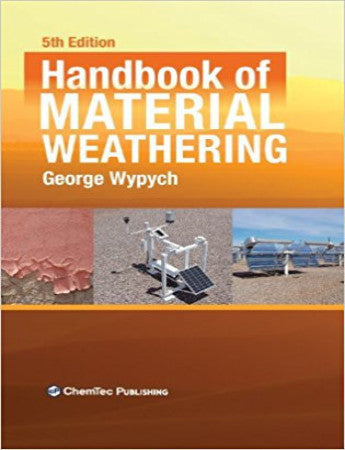
This 5th edition of Handbook of Material Weathering contains systematic updates of knowledge generated in more than last 25 years when the 1st edition was prepared.
The information required for professional use has been growing so rapidly that additional books had to be written to accommodate essential knowledge for implementation in technological processes used to manufacture products, which deteriorate on exposure to weathering stress factors.
This edition contains 20 chapters, which can be divided into the following groups:
• Theory (photophysics and photochemistry)
• Stress factors (parameters of exposure, measurements in assessment of weathering conditions, and climatic conditions)
• Methods of weathering (laboratory degradation studies, weathering cycles, sample preparation, weathering data interpretation, lifetime prediction, and artificial weathering versus natural exposure)
• Methods of testing of weathered samples (effect of weathering on material properties and testing methods of weathered specimens)
• Weathering of polymers (data on 52 most important polymers, including mechanisms of degradation, effect of thermal history, characteristic changes in properties with graphical illustrations, and tables with numerical data)
• Weathering of products (data on 42 groups of industrial products, including their required durability, lifetime expectation, relevant degradation mechanisms, and characteristic changes with graphical illustrations)
• Effect of additives on weathering (12 groups of additives are discussed)
• Effect of environmental stress cracking (parameters controlling ESC, mechanisms, methods of testing, and effect on materials)
• Specific topics (suitability of weathered materials for recycling, interrelation between corrosion and weathering, and methods of study and prevention of deterioration of historical monuments made out of stone)
The above information is based on the thorough review of published papers, patents, and other relevant sources updated to the most recent data and information.
In addition to this book, 3 additional volumes contain supplementary information:
Handbook of Material Biodegradation, Biodeterioration, and Biostabilization by Falkiewicz-Dulik, M, Janda, K, and Wypych, G., 2010
Handbook of UV Degradation and Stabilization by Wypych, G, 2011
Atlas of Material Damage, Wypych, G, 2012
The first two books contain information relevant for protection of materials against biological and environmental stress factors. The Atlas of Material Damage has focus on structure and morphology of commercial materials and methods of damage prevention by tailoring morphology.
This set of monographic sources was prepared for research chemists in the photochemistry field, chemists and material scientists designing new materials, users of manufactured products, those who control the quality of manufactured products, and students who want to apply their knowledge to real materials. The books are invaluable for regulating agencies and patent and litigating attorneys.
Handbook of Material Weathering is now used in about 100 countries, although frequently old editions (as seen from citations) are still in use, which do not contain up-to-date information.
Preface
The first edition of this book was published by ChemTec Publishing in 1990. The book had 18 chapters and 518 pages filled with the most up-to-date information on the subject of material weathering available in 1990.
Considering the size of the book and typesetting, the present edition is at least 3 times larger, in spite of the fact that two chapters were omitted from the fourth edition: Chapter 17. Stabilization and Stabilizers and Chapter 18. Biodegradation. Even without these two chapters the present 5th edition is larger than the previous edition. The reason is quite obvious − the field is systematically growing with new data, methods, and discoveries happening every day.
The reasons for eliminating the two chapters are as follows:
• If these two chapters would still be included in the book, the book would need to have two volumes which makes a book more difficult to use (separate table of contents and indices).
• In anticipation of the need for specialized monographic sources, the two chapters mentioned above were not updated in the previous edition, so information was already lacking novelty.
• Short chapters can only present brief review of the subject, whereas in applications detailed information is needed
• Two handbooks were published by ChemTec Publishing on the subjects of the omitted chapters:
Handbook of Material Biodegradation, Biodeterioration, and Biostabilization by
Falkiewicz-Dulik, M, Janda, K, and Wypych, G., 2010
Handbook of UV Degradation and Stabilization by Wypych, G, 2011
These two books give much broader and comprehensive information, such as it is required today, especially considering rapid changes which occurred recently because of health and safety concerns (biostabilization) and new discoveries (UV stabilization).
In addition, to present volume and the above two books, there is also a new book:
Atlas of Material Damage, Wypych, G, 2012
This book was written to emphasize importance of the material structure in photodegradation and photostabilization and also to account for the morphological changes which occur when materials degrade. This addition makes narrative of material degradation more comprehensive, showing new ways to deal with unstable materials.
I hope that the information provided in these four books will help readers to advance their studies on particular subjects of their research and that the results of these studies will be implemented in the future editions of these books, since we try to report current developments to foster future discoveries.
The information required for professional use has been growing so rapidly that additional books had to be written to accommodate essential knowledge for implementation in technological processes used to manufacture products, which deteriorate on exposure to weathering stress factors.
This edition contains 20 chapters, which can be divided into the following groups:
• Theory (photophysics and photochemistry)
• Stress factors (parameters of exposure, measurements in assessment of weathering conditions, and climatic conditions)
• Methods of weathering (laboratory degradation studies, weathering cycles, sample preparation, weathering data interpretation, lifetime prediction, and artificial weathering versus natural exposure)
• Methods of testing of weathered samples (effect of weathering on material properties and testing methods of weathered specimens)
• Weathering of polymers (data on 52 most important polymers, including mechanisms of degradation, effect of thermal history, characteristic changes in properties with graphical illustrations, and tables with numerical data)
• Weathering of products (data on 42 groups of industrial products, including their required durability, lifetime expectation, relevant degradation mechanisms, and characteristic changes with graphical illustrations)
• Effect of additives on weathering (12 groups of additives are discussed)
• Effect of environmental stress cracking (parameters controlling ESC, mechanisms, methods of testing, and effect on materials)
• Specific topics (suitability of weathered materials for recycling, interrelation between corrosion and weathering, and methods of study and prevention of deterioration of historical monuments made out of stone)
The above information is based on the thorough review of published papers, patents, and other relevant sources updated to the most recent data and information.
In addition to this book, 3 additional volumes contain supplementary information:
Handbook of Material Biodegradation, Biodeterioration, and Biostabilization by Falkiewicz-Dulik, M, Janda, K, and Wypych, G., 2010
Handbook of UV Degradation and Stabilization by Wypych, G, 2011
Atlas of Material Damage, Wypych, G, 2012
The first two books contain information relevant for protection of materials against biological and environmental stress factors. The Atlas of Material Damage has focus on structure and morphology of commercial materials and methods of damage prevention by tailoring morphology.
This set of monographic sources was prepared for research chemists in the photochemistry field, chemists and material scientists designing new materials, users of manufactured products, those who control the quality of manufactured products, and students who want to apply their knowledge to real materials. The books are invaluable for regulating agencies and patent and litigating attorneys.
Handbook of Material Weathering is now used in about 100 countries, although frequently old editions (as seen from citations) are still in use, which do not contain up-to-date information.
Preface
The first edition of this book was published by ChemTec Publishing in 1990. The book had 18 chapters and 518 pages filled with the most up-to-date information on the subject of material weathering available in 1990.
Considering the size of the book and typesetting, the present edition is at least 3 times larger, in spite of the fact that two chapters were omitted from the fourth edition: Chapter 17. Stabilization and Stabilizers and Chapter 18. Biodegradation. Even without these two chapters the present 5th edition is larger than the previous edition. The reason is quite obvious − the field is systematically growing with new data, methods, and discoveries happening every day.
The reasons for eliminating the two chapters are as follows:
• If these two chapters would still be included in the book, the book would need to have two volumes which makes a book more difficult to use (separate table of contents and indices).
• In anticipation of the need for specialized monographic sources, the two chapters mentioned above were not updated in the previous edition, so information was already lacking novelty.
• Short chapters can only present brief review of the subject, whereas in applications detailed information is needed
• Two handbooks were published by ChemTec Publishing on the subjects of the omitted chapters:
Handbook of Material Biodegradation, Biodeterioration, and Biostabilization by
Falkiewicz-Dulik, M, Janda, K, and Wypych, G., 2010
Handbook of UV Degradation and Stabilization by Wypych, G, 2011
These two books give much broader and comprehensive information, such as it is required today, especially considering rapid changes which occurred recently because of health and safety concerns (biostabilization) and new discoveries (UV stabilization).
In addition, to present volume and the above two books, there is also a new book:
Atlas of Material Damage, Wypych, G, 2012
This book was written to emphasize importance of the material structure in photodegradation and photostabilization and also to account for the morphological changes which occur when materials degrade. This addition makes narrative of material degradation more comprehensive, showing new ways to deal with unstable materials.
I hope that the information provided in these four books will help readers to advance their studies on particular subjects of their research and that the results of these studies will be implemented in the future editions of these books, since we try to report current developments to foster future discoveries.
1 Photophysics
1.1 Nature of radiation
1.1.1 Radiative energy
1.1.2 Radiation intensity
1.1.3 Radiation incidence
1.2 Absorption of radiation by materials
1.2.1 General principles
1.3 Fate and utilization of absorbed energy
1.3.1 Deactivation
1.3.2 Intramolecular energy transfer
1.3.3 Intermolecular energy transfer
1.3.4 Luminescence
1.4 Radiative processes involving dimers
1.5 Modeling and photophysical data
References
2 Photochemistry
2.1 Typical routes of photochemical reactions
2.1.1 Photodissociation
2.1.2 Photooxidation
2.1.3 Peroxide and hydroperoxide conversions
2.1.4 Norrish type I and II reactions
2.1.5 Photo-Fries rearrangement
2.1.6 Photo-Fenton
2.1.7 Photosubstitution
2.1.8 Photoaddition
2.1.9 Photoelimination
2.1.10 Photodimerization
2.1.11 Photocondensation
2.1.12 Photoisomerization
2.2 Photochemical reactivity and quantum yield
2.3 Excitation of excited state
2.4 Parameters of photochemical reactions
2.6 Quenchers and photosensitizers
References
3 Parameters of Exposure
3.1 Radiation
3.1.1 The source
3.1.2 Solar radiative emission
3.1.3 Effect of orbital variations on energy supply
3.1.4 Interplanetary and near Earth space
3.1.5 Stratosphere
3.1.6 Troposphere
3.2 Temperature
3.3 Water
3.4 Atmosphere composition
3.5 Pollutants
3.5.1 Nitrogen compounds
3.5.2 Oxygen species
3.5.3 Hydrogen species
3.5.4 Carbon oxides
3.5.5 Sulfur-containing components
3.5.6 Chlorine-containing components
3.5.7 Particulate materials
3.6 Biological substances
3.7 Water pollutants
3.8 Stress
3.7 Cooperative action of different parameters
References
4 Measurements in Assessment of Weathering Conditions
4.1 Radiation
4.1.1 Measuring equipment and methods of measurement
4.1.2 Standards
4.2 Sunshine duration
4.3 Temperature
4.4 Relative humidity
4.5 Time of wetness
4.5 Rain
4.6 Pollutants
4.6.1 Carbon dioxide
4.6.2 Particulate matter
4.6.3 Sulfur dioxide
4.6.4 Nitrogen oxides
4.6.5 Carbon monoxide
4.6.6 Ozone
References
5 Climatic Conditions
5.1 Introduction
5.2 Radiation
5.3 Sunshine duration
5.4 Temperature
5.5 Precipitation
5.6 Relative humidity
5.7 Wetness time
5.8 Pollutants
5.9 Surface soiling
References
6 Methods of Outdoor Exposure
6.1 Introduction
6.2 Climatic conditions and degradation rate
6.3 Variability of weather conditions and its impact on the strategy in outdoor
exposures
6.4 Influence of specimen properties
6.5 Typical methods of outdoor exposure
6.5.1 Exposure sites
6.5.2 Exposure racks
6.5.3 Exposure of products and components
6.6 Other parameters of exposure
6.7 Relevant standards
References
7 Laboratory Degradation Studies
7.1 Introduction
7.2 Light sources
7.3 Filters
7.4 Radiation: delivery, monitoring and control
7.5 Temperature control
7.6 Humidity control
7.7 Specimen spraying
7.8 Specimen racks and holders
7.9 Weathering equipment
7.10 Correlation between different devices
7.11 Pollutants
7.12 Precision of studies
References
8 Weathering Cycles
References
9 Sample Preparation
References
10 Weathering Data Interpretation. Lifetime Prediction
References
11 Artificial Weathering Versus Natural Exposure
References
12 Effect of Weathering on Material Properties
12.1 Mass loss
12.2 Depth of degradation
12.3 Mechanical properties
12.4 Changes of color and optical properties
12.5 Surface changes
12.6 Molecular weight
12.7 Chemical composition of surface and bulk
12.8 Morphology and structure of surface layers
12.9 Glass transition temperature
12.10 Self-healing
References
13 Testing Methods of Weathered Specimen
13.1 Visual evaluation
13.2 Microscopy
13.3 Imaging techniques
13.4 Gloss
13.5 Color changes
13.6 Visible spectrophotometry
13.7 UV spectrophotometry
13.8 Infrared spectrophotometry
13.9 Near infrared spectroscopy
13.10 Raman spectroscopy
13.11 Nuclear magnetic resonance
13.12 Electron spin resonance
13.13 Mass spectrometry
13.14 Positron annihilation lifetime spectroscopy
13.15 Chemiluminescence, fluorescence, and phosphorescence
13.16 Atomic absorption spectroscopy
13.17 WAXS and SAXS
13.18 X-ray photoelectron spectroscopy, XPS
13.19 X-ray microtomography
13.20 Mass change
13.21 Density
13.22 Contact angle
13.23 Diffusion of gases and water transport in polymer
13.24 Electrical properties
13.25 Ultrasonic measurements
13.26 Thermal analysis
13.27 Rheological properties of materials
13.28 Other physical parameters
13.29 Tensile strength
13.30 Elongation
13.31 Flexural strength
13.32 Impact strength
13.33 Creep and constant strain tests
13.34 Residual stress
13.35 Scratch and mar resistance
13.36 Other mechanical properties
13.37 Surface roughness
13.38 Molecular weight
13.39 Gas and liquid chromatography
13.40 Titrimetry
13.41 Dehydrochlorination rate
13.42 Gel fraction
13.43 Oxygen uptake
13.44 Water absorption, porosity
13.45 Microorganism growth test
13.46 Environmental stress cracking resistance
References
14 Data on Specific Polymers
14.1 Acrylonitrile butadiene styrene, ABS
14.2 Acrylonitrile styrene acrylate, ASA
14.3 Alkyd resins
14.4 Acrylic resins
14.5 Cellulose
14.6 Chitosan
14.7 Epoxy resins
14.8 Ethylene propylene rubber, EPR
14.9 Ethylene vinyl acetate copolymer, EVAc
14.10 Ethylene propylene diene monomer, EPDM
14.11 Fluoropolymers
14.12 Melamine resins
14.13 Phenoxy resins
14.14 Polyacrylamide
14.15 Polyacrylonitrile
14.16 Polyamides
14.17 Polyaniline
14.18 Polycarbonates
14.19 Polyesters
14.20 Polyethylene
14.21 Polyethylene, chlorinated
14.22 Poly(ethylene glycol)
14.23 Polyfluorene
14.24 Polyimides
14.25 Poly(lactic acid)
14.26 Polymethylmethacrylate
14.27 Polyoxyethylene
14.28 Polyoxymethylene
14.29 Poly(phenylene oxide)
14.30 Poly(phenylene sulfide)
14.31 Poly(p-phenylene terephthalamide)
14.32 Poly(p-phenylene vinylene)
14.33 Polypropylene
14.34 Polystyrenes
14.35 Polysulfones
14.36 Polytetrafluoroethylene
14.37 Polythiophene
14.38 Polyurethanes
14.39 Polyvinylalcohol
14.40 Polyvinylchloride
14.41 Poly(vinylidene fluoride
14.42 Poly(vinyl methyl ether)
14.43 Styrene acrylonitrile copolymer
14.44 Silicones
14.45 Polymer blends
14.46 Rubbers
14.46.1 Natural rubber
14.46.1 Polybutadiene
14.46.2 Polychloroprene
14.46.3 Polyisoprene
14.46.4 Polyisobutylene
14.46.5 Styrene butadiene rubber
14.46.6 Styrene butadiene styrene rubber
References
15 Effect of Additives on Weathering
15.1 Fillers and reinforcing fibers
15.2 Pigments
15.3 Plasticizers
15.4 Solvents and diluents
15.5 Flame retardants
15.6 Impact modifiers
15.7 Thermal stabilizers
15.8 Antioxidants
15.9 Antimicrobial additives
15.10 Curatives, crosslinkers, initiators
15.11 Catalysts
15.12 Compatibilizer
15.12 Impurities
15.13 Summary
References
16 Weathering of Compounded Products
16.1 Adhesives
16.2 Aerospace
16.3 Agriculture
16.4 Appliances
16.5 Automotive parts
16.6 Automotive coatings
16.7 Coated fabrics
16.8 Coil coated materials
16.9 Composites
16.10 Concrete
16.11 Conservation
16.12 Construction materials
16.13 Cosmetics
16.14 Dental materials
16.15 Electronics and electrical materials
16.16 Environmental pollutants
16.17 Foams
16.18 Food
16.19 Gel coats
16.20 Geosynthetics
16.21 Glass and glazing materials
16.22 Greenhouse film
16.23 Hair
16.24 Laminates
16.25 Medical equipment and supplies
16.26 Military applications
16.27 Molded materials
16.28 Packaging materials
16.28.1 Bottles
16.28.2 Containers
16.28.3 Crates and trays
16.28.4 Films
16.29 Paints and coatings
16.30 Pavements
16.31 Pharmaceutical products
16.32 Pipes and tubing
16.33 Pulp and paper
16.34 Roofing materials
16.35 Sealants
16.36 Sheet
16.37 Siding
16.38 Solar cells and collectors
16.39 Textiles
16.40 Windows
16.41 Wire and cable
16.42 Wood
References
17 Recycling
17.1 Effect of degradation on recycling
17.2 Re-stabilization of material for recycling
17.3 Multilayer materials
17.4 Removable paint
17.5 Chemical recycling
References
18 Environmental Stress Cracking
18.1 Definitions
18.2 Parameters controlling ESC
18.2.1 Material composition
18.2.2 Morphology and dimensions
18.2.3 Processing and performance conditions
18.2.4 Solubility parameters of solvents and polymers
18.2.5 Diffusion
18.2.6 Load and internal stress
18.2.7 Time
18.2.8 Temperature
18.3 Mechanisms of environmental stress cracking
18.4 Kinetics of environmental stress cracking
18.5 Effect of ESC on material durability
18.6 Methods of testing
References
19 Interrelation Between Corrosion and Weathering
References
20 Weathering of Stones
References
Index
1.1 Nature of radiation
1.1.1 Radiative energy
1.1.2 Radiation intensity
1.1.3 Radiation incidence
1.2 Absorption of radiation by materials
1.2.1 General principles
1.3 Fate and utilization of absorbed energy
1.3.1 Deactivation
1.3.2 Intramolecular energy transfer
1.3.3 Intermolecular energy transfer
1.3.4 Luminescence
1.4 Radiative processes involving dimers
1.5 Modeling and photophysical data
References
2 Photochemistry
2.1 Typical routes of photochemical reactions
2.1.1 Photodissociation
2.1.2 Photooxidation
2.1.3 Peroxide and hydroperoxide conversions
2.1.4 Norrish type I and II reactions
2.1.5 Photo-Fries rearrangement
2.1.6 Photo-Fenton
2.1.7 Photosubstitution
2.1.8 Photoaddition
2.1.9 Photoelimination
2.1.10 Photodimerization
2.1.11 Photocondensation
2.1.12 Photoisomerization
2.2 Photochemical reactivity and quantum yield
2.3 Excitation of excited state
2.4 Parameters of photochemical reactions
2.6 Quenchers and photosensitizers
References
3 Parameters of Exposure
3.1 Radiation
3.1.1 The source
3.1.2 Solar radiative emission
3.1.3 Effect of orbital variations on energy supply
3.1.4 Interplanetary and near Earth space
3.1.5 Stratosphere
3.1.6 Troposphere
3.2 Temperature
3.3 Water
3.4 Atmosphere composition
3.5 Pollutants
3.5.1 Nitrogen compounds
3.5.2 Oxygen species
3.5.3 Hydrogen species
3.5.4 Carbon oxides
3.5.5 Sulfur-containing components
3.5.6 Chlorine-containing components
3.5.7 Particulate materials
3.6 Biological substances
3.7 Water pollutants
3.8 Stress
3.7 Cooperative action of different parameters
References
4 Measurements in Assessment of Weathering Conditions
4.1 Radiation
4.1.1 Measuring equipment and methods of measurement
4.1.2 Standards
4.2 Sunshine duration
4.3 Temperature
4.4 Relative humidity
4.5 Time of wetness
4.5 Rain
4.6 Pollutants
4.6.1 Carbon dioxide
4.6.2 Particulate matter
4.6.3 Sulfur dioxide
4.6.4 Nitrogen oxides
4.6.5 Carbon monoxide
4.6.6 Ozone
References
5 Climatic Conditions
5.1 Introduction
5.2 Radiation
5.3 Sunshine duration
5.4 Temperature
5.5 Precipitation
5.6 Relative humidity
5.7 Wetness time
5.8 Pollutants
5.9 Surface soiling
References
6 Methods of Outdoor Exposure
6.1 Introduction
6.2 Climatic conditions and degradation rate
6.3 Variability of weather conditions and its impact on the strategy in outdoor
exposures
6.4 Influence of specimen properties
6.5 Typical methods of outdoor exposure
6.5.1 Exposure sites
6.5.2 Exposure racks
6.5.3 Exposure of products and components
6.6 Other parameters of exposure
6.7 Relevant standards
References
7 Laboratory Degradation Studies
7.1 Introduction
7.2 Light sources
7.3 Filters
7.4 Radiation: delivery, monitoring and control
7.5 Temperature control
7.6 Humidity control
7.7 Specimen spraying
7.8 Specimen racks and holders
7.9 Weathering equipment
7.10 Correlation between different devices
7.11 Pollutants
7.12 Precision of studies
References
8 Weathering Cycles
References
9 Sample Preparation
References
10 Weathering Data Interpretation. Lifetime Prediction
References
11 Artificial Weathering Versus Natural Exposure
References
12 Effect of Weathering on Material Properties
12.1 Mass loss
12.2 Depth of degradation
12.3 Mechanical properties
12.4 Changes of color and optical properties
12.5 Surface changes
12.6 Molecular weight
12.7 Chemical composition of surface and bulk
12.8 Morphology and structure of surface layers
12.9 Glass transition temperature
12.10 Self-healing
References
13 Testing Methods of Weathered Specimen
13.1 Visual evaluation
13.2 Microscopy
13.3 Imaging techniques
13.4 Gloss
13.5 Color changes
13.6 Visible spectrophotometry
13.7 UV spectrophotometry
13.8 Infrared spectrophotometry
13.9 Near infrared spectroscopy
13.10 Raman spectroscopy
13.11 Nuclear magnetic resonance
13.12 Electron spin resonance
13.13 Mass spectrometry
13.14 Positron annihilation lifetime spectroscopy
13.15 Chemiluminescence, fluorescence, and phosphorescence
13.16 Atomic absorption spectroscopy
13.17 WAXS and SAXS
13.18 X-ray photoelectron spectroscopy, XPS
13.19 X-ray microtomography
13.20 Mass change
13.21 Density
13.22 Contact angle
13.23 Diffusion of gases and water transport in polymer
13.24 Electrical properties
13.25 Ultrasonic measurements
13.26 Thermal analysis
13.27 Rheological properties of materials
13.28 Other physical parameters
13.29 Tensile strength
13.30 Elongation
13.31 Flexural strength
13.32 Impact strength
13.33 Creep and constant strain tests
13.34 Residual stress
13.35 Scratch and mar resistance
13.36 Other mechanical properties
13.37 Surface roughness
13.38 Molecular weight
13.39 Gas and liquid chromatography
13.40 Titrimetry
13.41 Dehydrochlorination rate
13.42 Gel fraction
13.43 Oxygen uptake
13.44 Water absorption, porosity
13.45 Microorganism growth test
13.46 Environmental stress cracking resistance
References
14 Data on Specific Polymers
14.1 Acrylonitrile butadiene styrene, ABS
14.2 Acrylonitrile styrene acrylate, ASA
14.3 Alkyd resins
14.4 Acrylic resins
14.5 Cellulose
14.6 Chitosan
14.7 Epoxy resins
14.8 Ethylene propylene rubber, EPR
14.9 Ethylene vinyl acetate copolymer, EVAc
14.10 Ethylene propylene diene monomer, EPDM
14.11 Fluoropolymers
14.12 Melamine resins
14.13 Phenoxy resins
14.14 Polyacrylamide
14.15 Polyacrylonitrile
14.16 Polyamides
14.17 Polyaniline
14.18 Polycarbonates
14.19 Polyesters
14.20 Polyethylene
14.21 Polyethylene, chlorinated
14.22 Poly(ethylene glycol)
14.23 Polyfluorene
14.24 Polyimides
14.25 Poly(lactic acid)
14.26 Polymethylmethacrylate
14.27 Polyoxyethylene
14.28 Polyoxymethylene
14.29 Poly(phenylene oxide)
14.30 Poly(phenylene sulfide)
14.31 Poly(p-phenylene terephthalamide)
14.32 Poly(p-phenylene vinylene)
14.33 Polypropylene
14.34 Polystyrenes
14.35 Polysulfones
14.36 Polytetrafluoroethylene
14.37 Polythiophene
14.38 Polyurethanes
14.39 Polyvinylalcohol
14.40 Polyvinylchloride
14.41 Poly(vinylidene fluoride
14.42 Poly(vinyl methyl ether)
14.43 Styrene acrylonitrile copolymer
14.44 Silicones
14.45 Polymer blends
14.46 Rubbers
14.46.1 Natural rubber
14.46.1 Polybutadiene
14.46.2 Polychloroprene
14.46.3 Polyisoprene
14.46.4 Polyisobutylene
14.46.5 Styrene butadiene rubber
14.46.6 Styrene butadiene styrene rubber
References
15 Effect of Additives on Weathering
15.1 Fillers and reinforcing fibers
15.2 Pigments
15.3 Plasticizers
15.4 Solvents and diluents
15.5 Flame retardants
15.6 Impact modifiers
15.7 Thermal stabilizers
15.8 Antioxidants
15.9 Antimicrobial additives
15.10 Curatives, crosslinkers, initiators
15.11 Catalysts
15.12 Compatibilizer
15.12 Impurities
15.13 Summary
References
16 Weathering of Compounded Products
16.1 Adhesives
16.2 Aerospace
16.3 Agriculture
16.4 Appliances
16.5 Automotive parts
16.6 Automotive coatings
16.7 Coated fabrics
16.8 Coil coated materials
16.9 Composites
16.10 Concrete
16.11 Conservation
16.12 Construction materials
16.13 Cosmetics
16.14 Dental materials
16.15 Electronics and electrical materials
16.16 Environmental pollutants
16.17 Foams
16.18 Food
16.19 Gel coats
16.20 Geosynthetics
16.21 Glass and glazing materials
16.22 Greenhouse film
16.23 Hair
16.24 Laminates
16.25 Medical equipment and supplies
16.26 Military applications
16.27 Molded materials
16.28 Packaging materials
16.28.1 Bottles
16.28.2 Containers
16.28.3 Crates and trays
16.28.4 Films
16.29 Paints and coatings
16.30 Pavements
16.31 Pharmaceutical products
16.32 Pipes and tubing
16.33 Pulp and paper
16.34 Roofing materials
16.35 Sealants
16.36 Sheet
16.37 Siding
16.38 Solar cells and collectors
16.39 Textiles
16.40 Windows
16.41 Wire and cable
16.42 Wood
References
17 Recycling
17.1 Effect of degradation on recycling
17.2 Re-stabilization of material for recycling
17.3 Multilayer materials
17.4 Removable paint
17.5 Chemical recycling
References
18 Environmental Stress Cracking
18.1 Definitions
18.2 Parameters controlling ESC
18.2.1 Material composition
18.2.2 Morphology and dimensions
18.2.3 Processing and performance conditions
18.2.4 Solubility parameters of solvents and polymers
18.2.5 Diffusion
18.2.6 Load and internal stress
18.2.7 Time
18.2.8 Temperature
18.3 Mechanisms of environmental stress cracking
18.4 Kinetics of environmental stress cracking
18.5 Effect of ESC on material durability
18.6 Methods of testing
References
19 Interrelation Between Corrosion and Weathering
References
20 Weathering of Stones
References
Index
George Wypych has a Ph. D. in chemical engineering. His professional expertise includes both university teaching (full professor) and research & development. He has published 17 books: PVC Plastisols, (University Press); Polyvinylchloride Degradation, (Elsevier); Polyvinylchloride Stabilization, (Elsevier); Polymer Modified Textile Materials, (Wiley & Sons); Handbook of Material Weathering, 1st, 2nd, 3rd, and 4th Editions, (ChemTec Publishing); Handbook of Fillers, 1st, 2nd and 3rd Editions, (ChemTec Publishing); Recycling of PVC, (ChemTec Publishing); Weathering of Plastics. Testing to Mirror Real Life Performance, (Plastics Design Library), Handbook of Solvents, Handbook of Plasticizers, Handbook of Antistatics, Handbook of Antiblocking, Release, and Slip Additives (1st and 2nd Editions), PVC Degradation & Stabilization, PVC Formulary, Handbook of UV Degradation and Stabilization, Handbook of Biodeterioration, Biodegradation and Biostabilization, and Handbook of Polymers (all by ChemTec Publishing), 47 scientific papers, and he has obtained 16 patents. He specializes in polymer additives, polymer processing and formulation, material durability, and the development of sealants and coatings. He is included in the Dictionary of International Biography, Who's Who in Plastics and Polymers, Who's Who in Engineering, and was selected International Man of the Year 1996-1997 in recognition for his services to education.
Related Products
Handbook of UV Degrada...
$350.00
{"id":8694780461213,"title":"Handbook of UV Degradation and Stabilization, 4th Edition","handle":"handbook-of-uv-degradation-and-stabilization-4th-edition","description":"\u003ch5\u003eDescription\u003c\/h5\u003e\n\u003cp\u003eAuthor: George Wypych\u003cbr\u003eISBN 978-1- 77467-078-1\u003cbr\u003e\u003cbr\u003e\u003cmeta charset=\"utf-8\"\u003e\u003c\/p\u003e\n\u003cp\u003e\u003cspan\u003ePublication date: \u003c\/span\u003e January 2026\u003cbr\u003eFourth Edition\u003cbr\u003ePages: 636+x\u003cbr\u003eFigures 300\u003cbr\u003eTables 260\u003cbr\u003e\u003cbr\u003e\u003c\/p\u003e\n\u003ch5\u003eSummary\u003c\/h5\u003e\n\u003cp class=\"MsoNoSpacing\"\u003e\u003cspan lang=\"EN-CA\" style=\"mso-fareast-language: EN-CA;\"\u003eThis book is a completely updated version of the previous edition, with the most recent literature and patents. It has 12 chapters, each discussing a different aspect of UV-related phenomena that occur when materials are exposed to UV radiation.\u003c\/span\u003e\u003c\/p\u003e\n\u003cp class=\"MsoNoSpacing\"\u003e\u003cspan lang=\"EN-CA\" style=\"mso-fareast-language: EN-CA;\"\u003e \u003c\/span\u003e\u003c\/p\u003e\n\u003cp class=\"MsoNoSpacing\"\u003e\u003cspan lang=\"EN-CA\" style=\"mso-fareast-language: EN-CA;\"\u003eThe introduction reviews the existing literature to determine how plants, animals, and humans protect themselves against UV radiation. This review permits comparing mechanisms of protection against UV used by living things and the effect of UV radiation on materials derived from natural products, polymers, and rubber. \u003c\/span\u003e\u003c\/p\u003e\n\u003cp class=\"MsoNoSpacing\"\u003e\u003cspan lang=\"EN-CA\" style=\"mso-fareast-language: EN-CA;\"\u003e \u003c\/span\u003e\u003c\/p\u003e\n\u003cp class=\"MsoNoSpacing\"\u003e\u003cspan lang=\"EN-CA\" style=\"mso-fareast-language: EN-CA;\"\u003ePhotophysics, discussed in the second chapter, helps to build an understanding of physical phenomena occurring in materials when they are exposed to UV radiation. Potentially useful stabilization methods become obvious from the analysis of the process's photophysics. \u003c\/span\u003e\u003c\/p\u003e\n\u003cp class=\"MsoNoSpacing\"\u003e\u003cspan lang=\"EN-CA\" style=\"mso-fareast-language: EN-CA;\"\u003e \u003c\/span\u003e\u003c\/p\u003e\n\u003cp class=\"MsoNoSpacing\"\u003e\u003cspan lang=\"EN-CA\" style=\"mso-fareast-language: EN-CA;\"\u003eThese effects are combined with the photochemical properties of stabilizers and their mechanisms of stabilization, which is the subject of Chapter 3.\u003c\/span\u003e\u003c\/p\u003e\n\u003cp class=\"MsoNoSpacing\"\u003e\u003cspan lang=\"EN-CA\" style=\"mso-fareast-language: EN-CA;\"\u003e \u003c\/span\u003e\u003c\/p\u003e\n\u003cp class=\"MsoNoSpacing\"\u003e\u003cspan lang=\"EN-CA\" style=\"mso-fareast-language: EN-CA;\"\u003eChapter 4 contains information on available UV stabilizers. It contains data prepared according to a systematic outline, as listed in the Table of Contents. \u003c\/span\u003e\u003c\/p\u003e\n\u003cp class=\"MsoNoSpacing\"\u003e\u003cspan lang=\"EN-CA\" style=\"mso-fareast-language: EN-CA;\"\u003e \u003c\/span\u003e\u003c\/p\u003e\n\u003cp class=\"MsoNoSpacing\"\u003e\u003cspan lang=\"EN-CA\" style=\"mso-fareast-language: EN-CA;\"\u003eChapter 5 discusses the stability of UV stabilizers, which is important for predicting the lifetime of their protection. The evaluation points out different reasons for instability.\u003c\/span\u003e\u003c\/p\u003e\n\u003cp class=\"MsoNoSpacing\"\u003e\u003cspan lang=\"EN-CA\" style=\"mso-fareast-language: EN-CA;\"\u003e \u003c\/span\u003e\u003c\/p\u003e\n\u003cp class=\"MsoNoSpacing\"\u003e\u003cspan lang=\"EN-CA\" style=\"mso-fareast-language: EN-CA;\"\u003eChapter 6 provides the principles of stabilizer selection. This chapter discusses ten areas of influence of stabilizer properties and expectations from the final products. \u003c\/span\u003e\u003c\/p\u003e\n\u003cp class=\"MsoNoSpacing\"\u003e\u003cspan lang=\"EN-CA\" style=\"mso-fareast-language: EN-CA;\"\u003e \u003c\/span\u003e\u003c\/p\u003e\n\u003cp class=\"MsoNoSpacing\"\u003e\u003cspan lang=\"EN-CA\" style=\"mso-fareast-language: EN-CA;\"\u003eChapters 7 and 8 give specific information on the degradation and stabilization of different polymers \u0026amp; rubbers and the final products manufactured from them, respectively. Over 50 polymers and rubbers are discussed in different sections of Chapter 7, and over 40 groups of final products, which use the majority of UV stabilizers, are discussed in Chapter 8. In addition, more focused information is provided in Chapter 9 for sunscreens. This is an example of new developments in technology. The subjects discussed in each individual case of polymer or group of products are given in the Table of Contents.\u003c\/span\u003e\u003c\/p\u003e\n\u003cp class=\"MsoNoSpacing\"\u003e\u003cspan lang=\"EN-CA\" style=\"mso-fareast-language: EN-CA;\"\u003e \u003c\/span\u003e\u003c\/p\u003e\n\u003cp class=\"MsoNoSpacing\"\u003e\u003cspan lang=\"EN-CA\" style=\"mso-fareast-language: EN-CA;\"\u003eChapter 10 discusses specific effects of UV stabilizers that may affect formulation because of interactions between UV stabilizers and other formulation components. Chapter 11 discusses analytical methods, which are most frequently used in UV stabilization, to show their potential in further understanding UV degradation and stabilization.\u003c\/span\u003e\u003c\/p\u003e\n\u003cp class=\"MsoNoSpacing\"\u003e\u003cspan lang=\"EN-CA\" style=\"mso-fareast-language: EN-CA;\"\u003e \u003c\/span\u003e\u003c\/p\u003e\n\u003cp class=\"MsoNoSpacing\"\u003e\u003cspan lang=\"EN-CA\" style=\"mso-fareast-language: EN-CA;\"\u003eThe book concludes with the effect of UV stabilizers on the health and safety of workers involved in the processing and commercial use of the products (Chapter 12).\u003c\/span\u003e\u003c\/p\u003e\n\u003cp class=\"MsoNoSpacing\"\u003e\u003cspan lang=\"EN-CA\" style=\"mso-fareast-language: EN-CA;\"\u003e \u003c\/span\u003e\u003c\/p\u003e\n\u003cp class=\"MsoNoSpacing\"\u003e\u003cspan lang=\"EN-CA\"\u003eThis book is an excellent companion to the \u003cb style=\"mso-bidi-font-weight: normal;\"\u003eDatabook of UV Stabilizers\u003c\/b\u003e, which was also recently published. Both books supplement each other without repeating the same information—one contains data, another theory, mechanisms of action, practical effects, and implications of application.\u003c\/span\u003e\u003c\/p\u003e\n\u003cp class=\"MsoNoSpacing\"\u003e\u003cspan lang=\"EN-CA\"\u003e \u003c\/span\u003e\u003c\/p\u003e\n\u003cp class=\"MsoNoSpacing\"\u003e\u003cspan lang=\"EN-CA\"\u003eThe information contained in both books is essential for the automotive industry, aerospace, polymers and plastics, rubber, cosmetics, preservation of food products, and the large number of industries that derive their products from polymers and rubber (e.g., adhesives, appliances, coatings, coil coated materials, construction, extruded profiles and their final products, greenhouse films, medical equipment, packaging materials, paints, pharmaceutical products, pipes and tubing, roofing materials, sealants, solar cells and collectors, siding, wire and cable, and wood).\u003c\/span\u003e\u003c\/p\u003e\n\u003cp class=\"MsoNoSpacing\"\u003e\u003cspan lang=\"EN-CA\" style=\"mso-fareast-language: EN-CA;\"\u003e \u003c\/span\u003e\u003c\/p\u003e\n\u003ch5\u003eTable of Contents\u003cbr\u003e\n\u003c\/h5\u003e\n\u003cp\u003e1. Introduction\u003cbr\u003e2. Photophysics and photochemistry\u003cbr\u003e3. Mechanisms of UV stabilization\u003cbr\u003e4. UV stabilizers (chemical composition, physical-chemical properties, UV absorption, forms, applications – polymers and final products, concentrations used)\u003cbr\u003e5. Stability of UV stabilizers\u003cbr\u003e6. Principles of stabilizer selection\u003cbr\u003e7. UV degradation and stabilization of polymers and rubbers (description according to the following outline: mechanisms and results of degradation, mechanisms, and results of stabilization, and data on activation wavelength (spectral sensitivity), products of degradation, typical results of photodegradation, most important stabilizers, the concentration of stabilizers in formulation, and examples of a lifetime of typical polymeric materials)\u003cbr\u003e8. UV degradation and stabilization of industrial products (description according to the following outline: requirements, lifetime expectations, important changes and mechanisms, stabilization methods)\u003cbr\u003e9 Focus on technology - Sunscreen \u003cbr\u003e10 UV stabilizers and other components of the formulation \u003cbr\u003e11 Analytical methods in UV degradation and stabilization studies\u003cbr\u003e12 UV stabilizers – health, safety, and environment\u003cbr\u003e\u003cbr\u003e\u003cbr\u003e\u003cbr\u003e\u003cbr\u003e\u003cbr\u003e\u003c\/p\u003e","published_at":"2025-11-14T09:29:17-05:00","created_at":"2025-08-27T11:57:22-04:00","vendor":"Chemtec Publishing","type":"Book","tags":["2026","book","new","UV stabilizers"],"price":35000,"price_min":35000,"price_max":35000,"available":true,"price_varies":false,"compare_at_price":null,"compare_at_price_min":0,"compare_at_price_max":0,"compare_at_price_varies":false,"variants":[{"id":47159619223709,"title":"Default Title","option1":"Default Title","option2":null,"option3":null,"sku":null,"requires_shipping":true,"taxable":true,"featured_image":null,"available":true,"name":"Handbook of UV Degradation and Stabilization, 4th Edition","public_title":null,"options":["Default Title"],"price":35000,"weight":1000,"compare_at_price":null,"inventory_quantity":0,"inventory_management":null,"inventory_policy":"continue","barcode":"978-1- 77467-078-1","requires_selling_plan":false,"selling_plan_allocations":[]}],"images":["\/\/chemtec.org\/cdn\/shop\/files\/9781774670781-Case.jpg?v=1763130783"],"featured_image":"\/\/chemtec.org\/cdn\/shop\/files\/9781774670781-Case.jpg?v=1763130783","options":["Title"],"media":[{"alt":null,"id":32417810055325,"position":1,"preview_image":{"aspect_ratio":0.658,"height":450,"width":296,"src":"\/\/chemtec.org\/cdn\/shop\/files\/9781774670781-Case.jpg?v=1763130783"},"aspect_ratio":0.658,"height":450,"media_type":"image","src":"\/\/chemtec.org\/cdn\/shop\/files\/9781774670781-Case.jpg?v=1763130783","width":296}],"requires_selling_plan":false,"selling_plan_groups":[],"content":"\u003ch5\u003eDescription\u003c\/h5\u003e\n\u003cp\u003eAuthor: George Wypych\u003cbr\u003eISBN 978-1- 77467-078-1\u003cbr\u003e\u003cbr\u003e\u003cmeta charset=\"utf-8\"\u003e\u003c\/p\u003e\n\u003cp\u003e\u003cspan\u003ePublication date: \u003c\/span\u003e January 2026\u003cbr\u003eFourth Edition\u003cbr\u003ePages: 636+x\u003cbr\u003eFigures 300\u003cbr\u003eTables 260\u003cbr\u003e\u003cbr\u003e\u003c\/p\u003e\n\u003ch5\u003eSummary\u003c\/h5\u003e\n\u003cp class=\"MsoNoSpacing\"\u003e\u003cspan lang=\"EN-CA\" style=\"mso-fareast-language: EN-CA;\"\u003eThis book is a completely updated version of the previous edition, with the most recent literature and patents. It has 12 chapters, each discussing a different aspect of UV-related phenomena that occur when materials are exposed to UV radiation.\u003c\/span\u003e\u003c\/p\u003e\n\u003cp class=\"MsoNoSpacing\"\u003e\u003cspan lang=\"EN-CA\" style=\"mso-fareast-language: EN-CA;\"\u003e \u003c\/span\u003e\u003c\/p\u003e\n\u003cp class=\"MsoNoSpacing\"\u003e\u003cspan lang=\"EN-CA\" style=\"mso-fareast-language: EN-CA;\"\u003eThe introduction reviews the existing literature to determine how plants, animals, and humans protect themselves against UV radiation. This review permits comparing mechanisms of protection against UV used by living things and the effect of UV radiation on materials derived from natural products, polymers, and rubber. \u003c\/span\u003e\u003c\/p\u003e\n\u003cp class=\"MsoNoSpacing\"\u003e\u003cspan lang=\"EN-CA\" style=\"mso-fareast-language: EN-CA;\"\u003e \u003c\/span\u003e\u003c\/p\u003e\n\u003cp class=\"MsoNoSpacing\"\u003e\u003cspan lang=\"EN-CA\" style=\"mso-fareast-language: EN-CA;\"\u003ePhotophysics, discussed in the second chapter, helps to build an understanding of physical phenomena occurring in materials when they are exposed to UV radiation. Potentially useful stabilization methods become obvious from the analysis of the process's photophysics. \u003c\/span\u003e\u003c\/p\u003e\n\u003cp class=\"MsoNoSpacing\"\u003e\u003cspan lang=\"EN-CA\" style=\"mso-fareast-language: EN-CA;\"\u003e \u003c\/span\u003e\u003c\/p\u003e\n\u003cp class=\"MsoNoSpacing\"\u003e\u003cspan lang=\"EN-CA\" style=\"mso-fareast-language: EN-CA;\"\u003eThese effects are combined with the photochemical properties of stabilizers and their mechanisms of stabilization, which is the subject of Chapter 3.\u003c\/span\u003e\u003c\/p\u003e\n\u003cp class=\"MsoNoSpacing\"\u003e\u003cspan lang=\"EN-CA\" style=\"mso-fareast-language: EN-CA;\"\u003e \u003c\/span\u003e\u003c\/p\u003e\n\u003cp class=\"MsoNoSpacing\"\u003e\u003cspan lang=\"EN-CA\" style=\"mso-fareast-language: EN-CA;\"\u003eChapter 4 contains information on available UV stabilizers. It contains data prepared according to a systematic outline, as listed in the Table of Contents. \u003c\/span\u003e\u003c\/p\u003e\n\u003cp class=\"MsoNoSpacing\"\u003e\u003cspan lang=\"EN-CA\" style=\"mso-fareast-language: EN-CA;\"\u003e \u003c\/span\u003e\u003c\/p\u003e\n\u003cp class=\"MsoNoSpacing\"\u003e\u003cspan lang=\"EN-CA\" style=\"mso-fareast-language: EN-CA;\"\u003eChapter 5 discusses the stability of UV stabilizers, which is important for predicting the lifetime of their protection. The evaluation points out different reasons for instability.\u003c\/span\u003e\u003c\/p\u003e\n\u003cp class=\"MsoNoSpacing\"\u003e\u003cspan lang=\"EN-CA\" style=\"mso-fareast-language: EN-CA;\"\u003e \u003c\/span\u003e\u003c\/p\u003e\n\u003cp class=\"MsoNoSpacing\"\u003e\u003cspan lang=\"EN-CA\" style=\"mso-fareast-language: EN-CA;\"\u003eChapter 6 provides the principles of stabilizer selection. This chapter discusses ten areas of influence of stabilizer properties and expectations from the final products. \u003c\/span\u003e\u003c\/p\u003e\n\u003cp class=\"MsoNoSpacing\"\u003e\u003cspan lang=\"EN-CA\" style=\"mso-fareast-language: EN-CA;\"\u003e \u003c\/span\u003e\u003c\/p\u003e\n\u003cp class=\"MsoNoSpacing\"\u003e\u003cspan lang=\"EN-CA\" style=\"mso-fareast-language: EN-CA;\"\u003eChapters 7 and 8 give specific information on the degradation and stabilization of different polymers \u0026amp; rubbers and the final products manufactured from them, respectively. Over 50 polymers and rubbers are discussed in different sections of Chapter 7, and over 40 groups of final products, which use the majority of UV stabilizers, are discussed in Chapter 8. In addition, more focused information is provided in Chapter 9 for sunscreens. This is an example of new developments in technology. The subjects discussed in each individual case of polymer or group of products are given in the Table of Contents.\u003c\/span\u003e\u003c\/p\u003e\n\u003cp class=\"MsoNoSpacing\"\u003e\u003cspan lang=\"EN-CA\" style=\"mso-fareast-language: EN-CA;\"\u003e \u003c\/span\u003e\u003c\/p\u003e\n\u003cp class=\"MsoNoSpacing\"\u003e\u003cspan lang=\"EN-CA\" style=\"mso-fareast-language: EN-CA;\"\u003eChapter 10 discusses specific effects of UV stabilizers that may affect formulation because of interactions between UV stabilizers and other formulation components. Chapter 11 discusses analytical methods, which are most frequently used in UV stabilization, to show their potential in further understanding UV degradation and stabilization.\u003c\/span\u003e\u003c\/p\u003e\n\u003cp class=\"MsoNoSpacing\"\u003e\u003cspan lang=\"EN-CA\" style=\"mso-fareast-language: EN-CA;\"\u003e \u003c\/span\u003e\u003c\/p\u003e\n\u003cp class=\"MsoNoSpacing\"\u003e\u003cspan lang=\"EN-CA\" style=\"mso-fareast-language: EN-CA;\"\u003eThe book concludes with the effect of UV stabilizers on the health and safety of workers involved in the processing and commercial use of the products (Chapter 12).\u003c\/span\u003e\u003c\/p\u003e\n\u003cp class=\"MsoNoSpacing\"\u003e\u003cspan lang=\"EN-CA\" style=\"mso-fareast-language: EN-CA;\"\u003e \u003c\/span\u003e\u003c\/p\u003e\n\u003cp class=\"MsoNoSpacing\"\u003e\u003cspan lang=\"EN-CA\"\u003eThis book is an excellent companion to the \u003cb style=\"mso-bidi-font-weight: normal;\"\u003eDatabook of UV Stabilizers\u003c\/b\u003e, which was also recently published. Both books supplement each other without repeating the same information—one contains data, another theory, mechanisms of action, practical effects, and implications of application.\u003c\/span\u003e\u003c\/p\u003e\n\u003cp class=\"MsoNoSpacing\"\u003e\u003cspan lang=\"EN-CA\"\u003e \u003c\/span\u003e\u003c\/p\u003e\n\u003cp class=\"MsoNoSpacing\"\u003e\u003cspan lang=\"EN-CA\"\u003eThe information contained in both books is essential for the automotive industry, aerospace, polymers and plastics, rubber, cosmetics, preservation of food products, and the large number of industries that derive their products from polymers and rubber (e.g., adhesives, appliances, coatings, coil coated materials, construction, extruded profiles and their final products, greenhouse films, medical equipment, packaging materials, paints, pharmaceutical products, pipes and tubing, roofing materials, sealants, solar cells and collectors, siding, wire and cable, and wood).\u003c\/span\u003e\u003c\/p\u003e\n\u003cp class=\"MsoNoSpacing\"\u003e\u003cspan lang=\"EN-CA\" style=\"mso-fareast-language: EN-CA;\"\u003e \u003c\/span\u003e\u003c\/p\u003e\n\u003ch5\u003eTable of Contents\u003cbr\u003e\n\u003c\/h5\u003e\n\u003cp\u003e1. Introduction\u003cbr\u003e2. Photophysics and photochemistry\u003cbr\u003e3. Mechanisms of UV stabilization\u003cbr\u003e4. UV stabilizers (chemical composition, physical-chemical properties, UV absorption, forms, applications – polymers and final products, concentrations used)\u003cbr\u003e5. Stability of UV stabilizers\u003cbr\u003e6. Principles of stabilizer selection\u003cbr\u003e7. UV degradation and stabilization of polymers and rubbers (description according to the following outline: mechanisms and results of degradation, mechanisms, and results of stabilization, and data on activation wavelength (spectral sensitivity), products of degradation, typical results of photodegradation, most important stabilizers, the concentration of stabilizers in formulation, and examples of a lifetime of typical polymeric materials)\u003cbr\u003e8. UV degradation and stabilization of industrial products (description according to the following outline: requirements, lifetime expectations, important changes and mechanisms, stabilization methods)\u003cbr\u003e9 Focus on technology - Sunscreen \u003cbr\u003e10 UV stabilizers and other components of the formulation \u003cbr\u003e11 Analytical methods in UV degradation and stabilization studies\u003cbr\u003e12 UV stabilizers – health, safety, and environment\u003cbr\u003e\u003cbr\u003e\u003cbr\u003e\u003cbr\u003e\u003cbr\u003e\u003cbr\u003e\u003c\/p\u003e"}
Handbook of Polyuretha...
$350.00
{"id":8694779642013,"title":"Handbook of Polyurethanes, Polyureas, and Polyisocyanurates","handle":"handbook-of-polyurethanes-polyureas-and-polyisocyanurates","description":"\u003ch5\u003eDescription\u003c\/h5\u003e\n\u003cp\u003eAuthor: George Wypych\u003cbr\u003eISBN 978-1-77467-092-7 \u003cbr\u003e\u003cbr\u003e\u003cmeta charset=\"utf-8\"\u003e\u003c\/p\u003e\n\u003cp\u003e\u003cspan\u003ePublished: May 2026\u003c\/span\u003e\u003cbr\u003ePages: 530\u003cbr\u003eFigures: 320\u003cbr\u003eTables: 80\u003cbr\u003e\u003cbr\u003e\u003c\/p\u003e\n\u003ch5\u003eSummary\u003c\/h5\u003e\n\u003cp class=\"MsoNoSpacing\"\u003eThe \u003cb\u003eHandbook of Polyurethanes, Polyureas, and Polyisocyanurates\u003c\/b\u003e begins with an \u003cb\u003eintroduction\u003c\/b\u003e defining key terms for understanding these versatile materials' chemistry and applications. Following this, a \u003cb\u003ehistorical timeline\u003c\/b\u003e provides context by tracing the development of polyurethanes from their inception to present-day innovations.\u003c\/p\u003e\n\u003cp class=\"MsoNoSpacing\"\u003e \u003c\/p\u003e\n\u003cp class=\"MsoNoSpacing\"\u003eThe handbook focuses heavily on the \u003cb\u003eraw materials for polyurethane synthesis\u003c\/b\u003e. It explores various \u003cb\u003eisocyanates\u003c\/b\u003e and \u003cb\u003epolyols\u003c\/b\u003e, detailing their chemical properties and roles in creating diverse polymer structures. The section also discusses \u003cb\u003eamines, solvents, catalysts,\u003c\/b\u003e and \u003cb\u003eadditives\u003c\/b\u003e that enhance the synthesis process, including \u003cb\u003eprepolymers\u003c\/b\u003e, which serve as intermediates in production.\u003c\/p\u003e\n\u003cp class=\"MsoNoSpacing\"\u003e \u003c\/p\u003e\n\u003cp class=\"MsoNoSpacing\"\u003eThe text delves into \u003cb\u003etypical methods of synthesis\u003c\/b\u003e, examining the \u003cb\u003emechanisms of catalysis\u003c\/b\u003e that speed up reactions, factors affecting \u003cb\u003ereaction rates\u003c\/b\u003e, and potential \u003cb\u003eside reactions\u003c\/b\u003e that can occur during polymerization. This leads to a discussion on the \u003cb\u003estructures of linear and crosslinked polyurethanes\u003c\/b\u003e, highlighting how these configurations influence the physical and chemical properties of the final products.\u003c\/p\u003e\n\u003cp class=\"MsoNoSpacing\"\u003e \u003c\/p\u003e\n\u003cp class=\"MsoNoSpacing\"\u003eUnderstanding polyurethanes' domain morphology and crystalline structure is crucial, as these factors play a significant role in phase separation and hydrogen bonding, which impact material performance. The handbook also details \u003cb\u003etypical methods for analyzing polyurethanes\u003c\/b\u003e, allowing for assessment of their characteristics and qualities.\u003c\/p\u003e\n\u003cp class=\"MsoNoSpacing\"\u003e \u003c\/p\u003e\n\u003cp class=\"MsoNoSpacing\"\u003eThe following is a comprehensive review of the physical-mechanical properties of polyurethanes, addressing attributes such as elasticity, tensile strength, and thermal stability. The interactions between polyurethanes and various \u003cb\u003esubstrates\u003c\/b\u003e are also explored, highlighting their compatibility in different applications.\u003c\/p\u003e\n\u003cp class=\"MsoNoSpacing\"\u003e \u003c\/p\u003e\n\u003cp class=\"MsoNoSpacing\"\u003eDegradation mechanisms, including thermal, UV, and chemical degradation, and strategies for polyurethane stabilization to enhance durability are critically examined.\u003c\/p\u003e\n\u003cp class=\"MsoNoSpacing\"\u003e \u003c\/p\u003e\n\u003cp class=\"MsoNoSpacing\"\u003eThe handbook discusses the creation of \u003cb\u003epolyurethane blends\u003c\/b\u003e and \u003cb\u003einterpenetrating networks\u003c\/b\u003e, which can combine different material properties for improved performance.\u003c\/p\u003e\n\u003cp class=\"MsoNoSpacing\"\u003eAn extensive section on \u003cb\u003eadditives\u003c\/b\u003e used with polyurethanes covers a wide range of substances, such as \u003cb\u003eplasticizers\u003c\/b\u003e, \u003cb\u003epigments\u003c\/b\u003e, \u003cb\u003eflame retardants\u003c\/b\u003e, and many others, each contributing to specific attributes in the final product.\u003c\/p\u003e\n\u003cp class=\"MsoNoSpacing\"\u003eThe chapter on \u003cb\u003epolyurethane processing\u003c\/b\u003e outlines essential techniques, including \u003cb\u003emetering, mixing,\u003c\/b\u003e and \u003cb\u003estorage\u003c\/b\u003e, which are vital for efficient production.\u003c\/p\u003e\n\u003cp class=\"MsoNoSpacing\"\u003e \u003c\/p\u003e\n\u003cp class=\"MsoNoSpacing\"\u003eIn terms of applications, the handbook provides a thorough overview of the myriad uses of polyurethanes, from \u003cb\u003eautomotive parts\u003c\/b\u003e and \u003cb\u003ebedding\u003c\/b\u003e to \u003cb\u003emedical devices\u003c\/b\u003e and \u003cb\u003epackaging\u003c\/b\u003e, emphasizing the properties and formulations unique to each application.\u003c\/p\u003e\n\u003cp class=\"MsoNoSpacing\"\u003e \u003c\/p\u003e\n\u003cp class=\"MsoNoSpacing\"\u003eThe handbook underscores the importance of health and safety by offering guidelines for safely handling and using polyurethane materials. Finally, it addresses \u003cb\u003ewaste disposal, processing,\u003c\/b\u003e and \u003cb\u003erecycling\u003c\/b\u003e strategies, promoting environmentally responsible practices in the industry.\u003c\/p\u003e\n\u003cp class=\"MsoNoSpacing\"\u003e \u003c\/p\u003e\n\u003cp class=\"MsoNoSpacing\"\u003eThis summary encapsulates the core themes and topics of the handbook, providing an overview of what readers can expect from each section. The table of contents also includes concise information about the contents.\u003c\/p\u003e\n\u003cp class=\"MsoNoSpacing\"\u003e \u003c\/p\u003e\n\u003cp class=\"MsoNoSpacing\"\u003eHere are some suggestions for potential users of the \"Handbook of Polyurethanes, Polyureas, and Polyisocyanurates\":\u003c\/p\u003e\n\u003cp class=\"MsoNoSpacing\"\u003e\u003cb\u003e1. Researchers and Academics\u003c\/b\u003e\u003c\/p\u003e\n\u003cp class=\"MsoNoSpacing\" style=\"margin-left: .5in; text-indent: -.25in; mso-list: l0 level1 lfo1; tab-stops: list .5in;\"\u003e\u003c!-- [if !supportLists]--\u003e\u003cspan style=\"font-size: 10.0pt; mso-bidi-font-size: 12.0pt; font-family: Symbol; mso-fareast-font-family: Symbol; mso-bidi-font-family: Symbol;\"\u003e\u003cspan style=\"mso-list: Ignore;\"\u003e·\u003cspan style=\"font: 7.0pt 'Times New Roman';\"\u003e \u003c\/span\u003e\u003c\/span\u003e\u003c\/span\u003e\u003c!--[endif]--\u003e\u003cb\u003ePurpose\u003c\/b\u003e: To gain comprehensive knowledge of polyurethane synthesis, properties, and applications.\u003c\/p\u003e\n\u003cp class=\"MsoNoSpacing\" style=\"margin-left: .5in; text-indent: -.25in; mso-list: l0 level1 lfo1; tab-stops: list .5in;\"\u003e\u003c!-- [if !supportLists]--\u003e\u003cspan style=\"font-size: 10.0pt; mso-bidi-font-size: 12.0pt; font-family: Symbol; mso-fareast-font-family: Symbol; mso-bidi-font-family: Symbol;\"\u003e\u003cspan style=\"mso-list: Ignore;\"\u003e·\u003cspan style=\"font: 7.0pt 'Times New Roman';\"\u003e \u003c\/span\u003e\u003c\/span\u003e\u003c\/span\u003e\u003c!--[endif]--\u003e\u003cb\u003eUse\u003c\/b\u003e: As a reference for literature reviews, experimental designs, and foundational understanding in materials science.\u003c\/p\u003e\n\u003cp class=\"MsoNoSpacing\"\u003e\u003cb\u003e2. Chemists and Material Scientists\u003c\/b\u003e\u003c\/p\u003e\n\u003cp class=\"MsoNoSpacing\" style=\"margin-left: .5in; text-indent: -.25in; mso-list: l1 level1 lfo2; tab-stops: list .5in;\"\u003e\u003c!-- [if !supportLists]--\u003e\u003cspan style=\"font-size: 10.0pt; mso-bidi-font-size: 12.0pt; font-family: Symbol; mso-fareast-font-family: Symbol; mso-bidi-font-family: Symbol;\"\u003e\u003cspan style=\"mso-list: Ignore;\"\u003e·\u003cspan style=\"font: 7.0pt 'Times New Roman';\"\u003e \u003c\/span\u003e\u003c\/span\u003e\u003c\/span\u003e\u003c!--[endif]--\u003e\u003cb\u003ePurpose\u003c\/b\u003e: To explore polyurethanes' chemical and physical properties and their raw materials.\u003c\/p\u003e\n\u003cp class=\"MsoNoSpacing\" style=\"margin-left: .5in; text-indent: -.25in; mso-list: l1 level1 lfo2; tab-stops: list .5in;\"\u003e\u003c!-- [if !supportLists]--\u003e\u003cspan style=\"font-size: 10.0pt; mso-bidi-font-size: 12.0pt; font-family: Symbol; mso-fareast-font-family: Symbol; mso-bidi-font-family: Symbol;\"\u003e\u003cspan style=\"mso-list: Ignore;\"\u003e·\u003cspan style=\"font: 7.0pt 'Times New Roman';\"\u003e \u003c\/span\u003e\u003c\/span\u003e\u003c\/span\u003e\u003c!--[endif]--\u003e\u003cb\u003eUse\u003c\/b\u003e: For guidance on material selection, synthesis techniques, and formulation development.\u003c\/p\u003e\n\u003cp class=\"MsoNoSpacing\"\u003e\u003cb\u003e3. Industrial Engineers and Process Designers\u003c\/b\u003e\u003c\/p\u003e\n\u003cp class=\"MsoNoSpacing\" style=\"margin-left: .5in; text-indent: -.25in; mso-list: l3 level1 lfo3; tab-stops: list .5in;\"\u003e\u003c!-- [if !supportLists]--\u003e\u003cspan style=\"font-size: 10.0pt; mso-bidi-font-size: 12.0pt; font-family: Symbol; mso-fareast-font-family: Symbol; mso-bidi-font-family: Symbol;\"\u003e\u003cspan style=\"mso-list: Ignore;\"\u003e·\u003cspan style=\"font: 7.0pt 'Times New Roman';\"\u003e \u003c\/span\u003e\u003c\/span\u003e\u003c\/span\u003e\u003c!--[endif]--\u003e\u003cb\u003ePurpose\u003c\/b\u003e: To understand the processing methods and operational parameters for manufacturing polyurethane products.\u003c\/p\u003e\n\u003cp class=\"MsoNoSpacing\" style=\"margin-left: .5in; text-indent: -.25in; mso-list: l3 level1 lfo3; tab-stops: list .5in;\"\u003e\u003c!-- [if !supportLists]--\u003e\u003cspan style=\"font-size: 10.0pt; mso-bidi-font-size: 12.0pt; font-family: Symbol; mso-fareast-font-family: Symbol; mso-bidi-font-family: Symbol;\"\u003e\u003cspan style=\"mso-list: Ignore;\"\u003e·\u003cspan style=\"font: 7.0pt 'Times New Roman';\"\u003e \u003c\/span\u003e\u003c\/span\u003e\u003c\/span\u003e\u003c!--[endif]--\u003e\u003cb\u003eUse\u003c\/b\u003e: As a resource for optimizing production processes and enhancing product quality.\u003c\/p\u003e\n\u003cp class=\"MsoNoSpacing\"\u003e\u003cb\u003e4. Product Development Teams\u003c\/b\u003e\u003c\/p\u003e\n\u003cp class=\"MsoNoSpacing\" style=\"margin-left: .5in; text-indent: -.25in; mso-list: l9 level1 lfo4; tab-stops: list .5in;\"\u003e\u003c!-- [if !supportLists]--\u003e\u003cspan style=\"font-size: 10.0pt; mso-bidi-font-size: 12.0pt; font-family: Symbol; mso-fareast-font-family: Symbol; mso-bidi-font-family: Symbol;\"\u003e\u003cspan style=\"mso-list: Ignore;\"\u003e·\u003cspan style=\"font: 7.0pt 'Times New Roman';\"\u003e \u003c\/span\u003e\u003c\/span\u003e\u003c\/span\u003e\u003c!--[endif]--\u003e\u003cb\u003ePurpose\u003c\/b\u003e: To develop new polyurethane-based products across various industries (e.g., automotive, construction, medical).\u003c\/p\u003e\n\u003cp class=\"MsoNoSpacing\" style=\"margin-left: .5in; text-indent: -.25in; mso-list: l9 level1 lfo4; tab-stops: list .5in;\"\u003e\u003c!-- [if !supportLists]--\u003e\u003cspan style=\"font-size: 10.0pt; mso-bidi-font-size: 12.0pt; font-family: Symbol; mso-fareast-font-family: Symbol; mso-bidi-font-family: Symbol;\"\u003e\u003cspan style=\"mso-list: Ignore;\"\u003e·\u003cspan style=\"font: 7.0pt 'Times New Roman';\"\u003e \u003c\/span\u003e\u003c\/span\u003e\u003c\/span\u003e\u003c!--[endif]--\u003e\u003cb\u003eUse\u003c\/b\u003e: For insights on additives, formulation strategies, and application-specific properties.\u003c\/p\u003e\n\u003cp class=\"MsoNoSpacing\"\u003e\u003cb\u003e5. Quality Control and Assurance Professionals\u003c\/b\u003e\u003c\/p\u003e\n\u003cp class=\"MsoNoSpacing\" style=\"margin-left: .5in; text-indent: -.25in; mso-list: l2 level1 lfo5; tab-stops: list .5in;\"\u003e\u003c!-- [if !supportLists]--\u003e\u003cspan style=\"font-size: 10.0pt; mso-bidi-font-size: 12.0pt; font-family: Symbol; mso-fareast-font-family: Symbol; mso-bidi-font-family: Symbol;\"\u003e\u003cspan style=\"mso-list: Ignore;\"\u003e·\u003cspan style=\"font: 7.0pt 'Times New Roman';\"\u003e \u003c\/span\u003e\u003c\/span\u003e\u003c\/span\u003e\u003c!--[endif]--\u003e\u003cb\u003ePurpose\u003c\/b\u003e: To ensure the quality and performance of polyurethane products.\u003c\/p\u003e\n\u003cp class=\"MsoNoSpacing\" style=\"margin-left: .5in; text-indent: -.25in; mso-list: l2 level1 lfo5; tab-stops: list .5in;\"\u003e\u003c!-- [if !supportLists]--\u003e\u003cspan style=\"font-size: 10.0pt; mso-bidi-font-size: 12.0pt; font-family: Symbol; mso-fareast-font-family: Symbol; mso-bidi-font-family: Symbol;\"\u003e\u003cspan style=\"mso-list: Ignore;\"\u003e·\u003cspan style=\"font: 7.0pt 'Times New Roman';\"\u003e \u003c\/span\u003e\u003c\/span\u003e\u003c\/span\u003e\u003c!--[endif]--\u003e\u003cb\u003eUse\u003c\/b\u003e: As a guide for analytical methods and testing protocols.\u003c\/p\u003e\n\u003cp class=\"MsoNoSpacing\"\u003e\u003cb\u003e6. Environmental Scientists and Sustainability Experts\u003c\/b\u003e\u003c\/p\u003e\n\u003cp class=\"MsoNoSpacing\" style=\"margin-left: .5in; text-indent: -.25in; mso-list: l5 level1 lfo6; tab-stops: list .5in;\"\u003e\u003c!-- [if !supportLists]--\u003e\u003cspan style=\"font-size: 10.0pt; mso-bidi-font-size: 12.0pt; font-family: Symbol; mso-fareast-font-family: Symbol; mso-bidi-font-family: Symbol;\"\u003e\u003cspan style=\"mso-list: Ignore;\"\u003e·\u003cspan style=\"font: 7.0pt 'Times New Roman';\"\u003e \u003c\/span\u003e\u003c\/span\u003e\u003c\/span\u003e\u003c!--[endif]--\u003e\u003cb\u003ePurpose\u003c\/b\u003e: To understand the environmental impact of polyurethane production and disposal.\u003c\/p\u003e\n\u003cp class=\"MsoNoSpacing\" style=\"margin-left: .5in; text-indent: -.25in; mso-list: l5 level1 lfo6; tab-stops: list .5in;\"\u003e\u003c!-- [if !supportLists]--\u003e\u003cspan style=\"font-size: 10.0pt; mso-bidi-font-size: 12.0pt; font-family: Symbol; mso-fareast-font-family: Symbol; mso-bidi-font-family: Symbol;\"\u003e\u003cspan style=\"mso-list: Ignore;\"\u003e·\u003cspan style=\"font: 7.0pt 'Times New Roman';\"\u003e \u003c\/span\u003e\u003c\/span\u003e\u003c\/span\u003e\u003c!--[endif]--\u003e\u003cb\u003eUse\u003c\/b\u003e: For strategies on waste management, recycling, and sustainable practices in the industry.\u003c\/p\u003e\n\u003cp class=\"MsoNoSpacing\"\u003e\u003cb\u003e7. Health and Safety Officers\u003c\/b\u003e\u003c\/p\u003e\n\u003cp class=\"MsoNoSpacing\" style=\"margin-left: .5in; text-indent: -.25in; mso-list: l4 level1 lfo7; tab-stops: list .5in;\"\u003e\u003c!-- [if !supportLists]--\u003e\u003cspan style=\"font-size: 10.0pt; mso-bidi-font-size: 12.0pt; font-family: Symbol; mso-fareast-font-family: Symbol; mso-bidi-font-family: Symbol;\"\u003e\u003cspan style=\"mso-list: Ignore;\"\u003e·\u003cspan style=\"font: 7.0pt 'Times New Roman';\"\u003e \u003c\/span\u003e\u003c\/span\u003e\u003c\/span\u003e\u003c!--[endif]--\u003e\u003cb\u003ePurpose\u003c\/b\u003e: To establish safety protocols and ensure compliance with regulations when handling polyurethanes.\u003c\/p\u003e\n\u003cp class=\"MsoNoSpacing\" style=\"margin-left: .5in; text-indent: -.25in; mso-list: l4 level1 lfo7; tab-stops: list .5in;\"\u003e\u003c!-- [if !supportLists]--\u003e\u003cspan style=\"font-size: 10.0pt; mso-bidi-font-size: 12.0pt; font-family: Symbol; mso-fareast-font-family: Symbol; mso-bidi-font-family: Symbol;\"\u003e\u003cspan style=\"mso-list: Ignore;\"\u003e·\u003cspan style=\"font: 7.0pt 'Times New Roman';\"\u003e \u003c\/span\u003e\u003c\/span\u003e\u003c\/span\u003e\u003c!--[endif]--\u003e\u003cb\u003eUse\u003c\/b\u003e: For guidelines on safe practices and material safety data.\u003c\/p\u003e\n\u003cp class=\"MsoNoSpacing\"\u003e\u003cb\u003e8. Students and Educators\u003c\/b\u003e\u003c\/p\u003e\n\u003cp class=\"MsoNoSpacing\" style=\"margin-left: .5in; text-indent: -.25in; mso-list: l8 level1 lfo8; tab-stops: list .5in;\"\u003e\u003c!-- [if !supportLists]--\u003e\u003cspan style=\"font-size: 10.0pt; mso-bidi-font-size: 12.0pt; font-family: Symbol; mso-fareast-font-family: Symbol; mso-bidi-font-family: Symbol;\"\u003e\u003cspan style=\"mso-list: Ignore;\"\u003e·\u003cspan style=\"font: 7.0pt 'Times New Roman';\"\u003e \u003c\/span\u003e\u003c\/span\u003e\u003c\/span\u003e\u003c!--[endif]--\u003e\u003cb\u003ePurpose\u003c\/b\u003e: To learn about polymer science and materials engineering.\u003c\/p\u003e\n\u003cp class=\"MsoNoSpacing\" style=\"margin-left: .5in; text-indent: -.25in; mso-list: l8 level1 lfo8; tab-stops: list .5in;\"\u003e\u003c!-- [if !supportLists]--\u003e\u003cspan style=\"font-size: 10.0pt; mso-bidi-font-size: 12.0pt; font-family: Symbol; mso-fareast-font-family: Symbol; mso-bidi-font-family: Symbol;\"\u003e\u003cspan style=\"mso-list: Ignore;\"\u003e·\u003cspan style=\"font: 7.0pt 'Times New Roman';\"\u003e \u003c\/span\u003e\u003c\/span\u003e\u003c\/span\u003e\u003c!--[endif]--\u003e\u003cb\u003eUse\u003c\/b\u003e: As a textbook or supplementary resource for coursework and research projects.\u003c\/p\u003e\n\u003cp class=\"MsoNoSpacing\"\u003e\u003cb\u003e9. Consultants and Industry Experts\u003c\/b\u003e\u003c\/p\u003e\n\u003cp class=\"MsoNoSpacing\" style=\"margin-left: .5in; text-indent: -.25in; mso-list: l6 level1 lfo9; tab-stops: list .5in;\"\u003e\u003c!-- [if !supportLists]--\u003e\u003cspan style=\"font-size: 10.0pt; mso-bidi-font-size: 12.0pt; font-family: Symbol; mso-fareast-font-family: Symbol; mso-bidi-font-family: Symbol;\"\u003e\u003cspan style=\"mso-list: Ignore;\"\u003e·\u003cspan style=\"font: 7.0pt 'Times New Roman';\"\u003e \u003c\/span\u003e\u003c\/span\u003e\u003c\/span\u003e\u003c!--[endif]--\u003e\u003cb\u003ePurpose\u003c\/b\u003e: To provide informed advice to companies on polyurethane applications and innovations.\u003c\/p\u003e\n\u003cp class=\"MsoNoSpacing\" style=\"margin-left: .5in; text-indent: -.25in; mso-list: l6 level1 lfo9; tab-stops: list .5in;\"\u003e\u003c!-- [if !supportLists]--\u003e\u003cspan style=\"font-size: 10.0pt; mso-bidi-font-size: 12.0pt; font-family: Symbol; mso-fareast-font-family: Symbol; mso-bidi-font-family: Symbol;\"\u003e\u003cspan style=\"mso-list: Ignore;\"\u003e·\u003cspan style=\"font: 7.0pt 'Times New Roman';\"\u003e \u003c\/span\u003e\u003c\/span\u003e\u003c\/span\u003e\u003c!--[endif]--\u003e\u003cb\u003eUse\u003c\/b\u003e: As a comprehensive source for current knowledge and trends in polyurethane technology.\u003c\/p\u003e\n\u003cp class=\"MsoNoSpacing\"\u003e\u003cb\u003e10. Manufacturers of Polyurethane Products\u003c\/b\u003e\u003c\/p\u003e\n\u003cp class=\"MsoNoSpacing\" style=\"margin-left: .5in; text-indent: -.25in; mso-list: l7 level1 lfo10; tab-stops: list .5in;\"\u003e\u003c!-- [if !supportLists]--\u003e\u003cspan style=\"font-size: 10.0pt; mso-bidi-font-size: 12.0pt; font-family: Symbol; mso-fareast-font-family: Symbol; mso-bidi-font-family: Symbol;\"\u003e\u003cspan style=\"mso-list: Ignore;\"\u003e·\u003cspan style=\"font: 7.0pt 'Times New Roman';\"\u003e \u003c\/span\u003e\u003c\/span\u003e\u003c\/span\u003e\u003c!--[endif]--\u003e\u003cb\u003ePurpose\u003c\/b\u003e: To stay updated on the latest developments and best practices in polyurethane technology.\u003c\/p\u003e\n\u003cp class=\"MsoNoSpacing\" style=\"margin-left: .5in; text-indent: -.25in; mso-list: l7 level1 lfo10; tab-stops: list .5in;\"\u003e\u003c!-- [if !supportLists]--\u003e\u003cspan style=\"font-size: 10.0pt; mso-bidi-font-size: 12.0pt; font-family: Symbol; mso-fareast-font-family: Symbol; mso-bidi-font-family: Symbol;\"\u003e\u003cspan style=\"mso-list: Ignore;\"\u003e·\u003cspan style=\"font: 7.0pt 'Times New Roman';\"\u003e \u003c\/span\u003e\u003c\/span\u003e\u003c\/span\u003e\u003c!--[endif]--\u003e\u003cb\u003eUse\u003c\/b\u003e: For insights into formulation, processing, and application methods.\u003c\/p\u003e\n\u003cp class=\"MsoNoSpacing\"\u003e \u003c\/p\u003e\n\u003ch5\u003eTable of Contents\u003c\/h5\u003e\n\u003cp\u003e1. Introduction – definition of terms\u003cbr\u003e2. Historical timeline\u003cbr\u003e3. Raw materials for polyurethane synthesis\u003cbr\u003ea. Isocyanates\u003cbr\u003eb. Polyols\u003cbr\u003ec. Amines\u003cbr\u003ed. Non-isocyanate synthesis components (cyclic carbonates and amines)\u003cbr\u003ee. Solvents\u003cbr\u003ef. Catalysts\u003cbr\u003eg. Blocking agents\u003cbr\u003eh. Other additives\u003cbr\u003e4. Typical methods of synthesis\u003cbr\u003ea. Mechanisms of catalysis\u003cbr\u003eb. Reaction rates\u003cbr\u003ec. Side reactions (allophanates, biurets, carbodiimides, and dimers)\u003cbr\u003e5. Structures of linear and crosslinked polyurethanes \u003cbr\u003e6. Domain morphology\u003cbr\u003e7. Crystalline structure, phase separation, and hydrogen bonding\u003cbr\u003e8. Typical methods of polyurethane analysis\u003cbr\u003e9. Physical-mechanical properties of polyurethanes\u003cbr\u003e10. Interaction with other materials (substrates\u003cbr\u003e11. Polyurethane degradation\u003cbr\u003ea. Thermal\u003cbr\u003eb. UV\u003cbr\u003ec. Chemical\u003cbr\u003e12. Polyurethane stabilization\u003cbr\u003e13. Polyurethane blends and interpenetrating networks\u003cbr\u003e14. Additives used with polyurethanes \u003cbr\u003ea. Plasticizers \u003cbr\u003eb. Pigments \u003cbr\u003ec. Blowing agents\u003cbr\u003ed. Surfactants \u003cbr\u003ee. Adhesion promoters\u003cbr\u003ef. Rheological additives\u003cbr\u003eg. Fillers and nanofillers \u003cbr\u003eh. Flame retardants\u003cbr\u003ei. Antibacterial additives\u003cbr\u003e15. Polyurethane processing\u003cbr\u003ea. Prepolymers processing\u003cbr\u003eb. Storage \u003cbr\u003ec. Metering\u003cbr\u003ed. Mixing \u003cbr\u003e16. Applications, properties, and formulations\u003cbr\u003ea. 3D printing\u003cbr\u003eb. Adhesives and sealants\u003cbr\u003ec. Appliances\u003cbr\u003ed. Artificial leather\u003cbr\u003ee. Automotive\u003cbr\u003ef. Bedding \u003cbr\u003eg. Building and construction\u003cbr\u003eh. Carpet underlay\u003cbr\u003ei. Coatings and paints\u003cbr\u003ej. Composite wood\u003cbr\u003ek. Electrical and electronics\u003cbr\u003el. Fiber and textiles\u003cbr\u003em. Flooring\u003cbr\u003en. Foams \u003cbr\u003eo. Footwear \u003cbr\u003ep. Furniture\u003cbr\u003eq. Marine\u003cbr\u003er. Roofing\u003cbr\u003es. Medical\u003cbr\u003et. Packaging\u003cbr\u003eu. Pharmaceutical \u003cbr\u003ev. Reaction injection molding\u003cbr\u003ew. Seals and gaskets\u003cbr\u003ex. Shape memory\u003cbr\u003ey. Sporting equipment\u003cbr\u003ez. Straps \u003cbr\u003eaa. Tires\u003cbr\u003ebb. Waterproofing\u003cbr\u003e17. Health and safety\u003cbr\u003e18. Waste disposal, processing, and recycling\u003cbr\u003e\u003c\/p\u003e\n\u003cp\u003e \u003c\/p\u003e\n\u003ch5\u003eAbout Author\u003c\/h5\u003e\n\u003cp\u003e\u003cmeta charset=\"utf-8\"\u003eGeorge Wypych has PhD Eng. The professional expertise includes university teaching (full professor) and research \u0026amp;amp; development (university and corporate). He has published 48 books (PVC Plastisols, Wroclaw University Press; Polyvinylchloride Degradation, Elsevier; Polyvinylchloride Stabilization, Elsevier; Polymer Modified Textile Materials, Wiley \u0026amp;amp; Sons; Handbook of Material Weathering, 1st, 2nd, 3rd, 4th, 5th, 6th Edition, ChemTec Publishing; Handbook of Fillers, 1st, 2nd, 3rd, 4th, and 5th Edition, ChemTec Publishing; Recycling of PVC, ChemTec Publishing; Weathering of Plastics. Testing to Mirror Real Life Performance, Plastics Design Library, Handbook of Solvents, Vol. 1. Properties 1st, 2nd, and 3rd Edition, ChemTec Publishing, Handbook of Solvents, Vol. 2. Health \u0026amp;amp; Environment 1st, 2nd, and 3rd Edition, ChemTec Publishing, Handbook of Plasticizers, 1st, 2nd, 3rd, 4th Edition, ChemTec Publishing, Handbook of Antistatics, 1st and 2nd Edition, ChemTec Publishing, Databook of Antistatics, 1st and 2nd Edition, ChemTec Publishing, Handbook of Antiblocking, Release and Slip Additives, 1st , 2nd and 3rd Edition, ChemTec Publishing, Industrial Solvents in Kirk-Othmer Encyclopedia of Chemical Technology (two editions), John Wiley \u0026amp;amp; Sons, PVC Degradation \u0026amp;amp; Stabilization, 1st, 2nd, 3rd, and 4th Editions, ChemTec Publishing, The PVC Formulary, 1st, 2nd, and 3rd Editions, ChemTec Publishing, Handbook of Material Biodegradation, Biodeterioration, and Biostabilization, 1st and 2nd Editions, ChemTec Publishing, Handbook of UV Degradation and Stabilization, 1st, 2nd, and 3rd Editions, ChemTec Publishing, Handbook of Polymers, 1st, 2nd, and 3rd Editions, ChemTec Publishing, Atlas of Material Damage, 1st, 2nd, and 3rd Editions, ChemTec Publishing, Handbook of Odors in Plastic Materials, 1st, 2nd, and 3rd Editions, ChemTec Publishing, Databook of Solvents (two editions), ChemTec Publishing, Databook of Blowing and Auxiliary Agents, ChemTec Publishing, Handbook of Foaming and Blowing Agents (two editions), ChemTec Publishing, Databook of Green Solvents, ChemTec Publishing (two editions), Self-healing Products (two editions), ChemTec Publishing, Handbook of Adhesion Promoters (two editions), ChemTec Publishing, Databook of Surface Modification Additives (two editions), ChemTec Publishing, Handbook of Surface Improvement and Modification (two editions), ChemTec Publishing, Graphene – Important Results and Applications, ChemTec Publishing, Handbook of Curatives and Crosslinkers, ChemTec Publishing, Chain Mobility and Progress in Medicine, Pharmaceutical, Polymer Science and Technology, Impact of Award, ChemTec Publishing, Databook of Antioxidants, ChemTec Publishing, Handbook of Antioxidants, ChemTec Publishing, Databook of UV Stabilizers (two Editions), ChemTec Publishing, Databook of Flame Retardants, ChemTec Publishing, Databook of Nucleating Agents, ChemTec Publishing, Handbook of Flame Retardants, ChemTec Publishing, Handbook of Nucleating Agents, ChemTec Publishing, Handbook of Polymers in Electronics, ChemTec Publishing, Databook of Impact Modifiers, ChemTec Publishing, Databook of Rheological Additives, ChemTec Publishing, Handbook of Impact Modifiers, ChemTec Publishing, Handbook of Rheological Additives, ChemTec Publishing, Databook of Polymer Processing Additives, ChemTec Publishing, Handbook of Polymer Processing Additives, ChemTec Publishing, Functional Fillers (two editions), 2 databases (Solvents Database, 1st, 2nd, 3rd Edition and Database of Antistatics 1st and 2nd Edition, both by ChemTec Publishing), and 42 scientific papers and obtained 16 patents. He specializes in PVC, polymer additives, material durability, and the development of sealants and coatings. He was included in the Dictionary of International Biography, Who's Who in Plastics and Polymers, and Who's Who in Engineering, and was selected International Man of the Year 1996-1997 in recognition of services to education.\u003cbr\u003e\u003c\/p\u003e","published_at":"2025-11-14T09:38:00-05:00","created_at":"2025-08-27T11:55:11-04:00","vendor":"Chemtec Publishing","type":"Book","tags":["2026","book","electronics","new","nucleating agent","nucleating agents"],"price":35000,"price_min":35000,"price_max":35000,"available":true,"price_varies":false,"compare_at_price":null,"compare_at_price_min":0,"compare_at_price_max":0,"compare_at_price_varies":false,"variants":[{"id":47159612407965,"title":"Default Title","option1":"Default Title","option2":null,"option3":null,"sku":null,"requires_shipping":true,"taxable":true,"featured_image":null,"available":true,"name":"Handbook of Polyurethanes, Polyureas, and Polyisocyanurates","public_title":null,"options":["Default Title"],"price":35000,"weight":1000,"compare_at_price":null,"inventory_quantity":0,"inventory_management":null,"inventory_policy":"continue","barcode":"978-1-77467-092-7","requires_selling_plan":false,"selling_plan_allocations":[]}],"images":["\/\/chemtec.org\/cdn\/shop\/files\/9781774670927-Case.jpg?v=1763131068"],"featured_image":"\/\/chemtec.org\/cdn\/shop\/files\/9781774670927-Case.jpg?v=1763131068","options":["Title"],"media":[{"alt":null,"id":32417817723037,"position":1,"preview_image":{"aspect_ratio":0.656,"height":450,"width":295,"src":"\/\/chemtec.org\/cdn\/shop\/files\/9781774670927-Case.jpg?v=1763131068"},"aspect_ratio":0.656,"height":450,"media_type":"image","src":"\/\/chemtec.org\/cdn\/shop\/files\/9781774670927-Case.jpg?v=1763131068","width":295}],"requires_selling_plan":false,"selling_plan_groups":[],"content":"\u003ch5\u003eDescription\u003c\/h5\u003e\n\u003cp\u003eAuthor: George Wypych\u003cbr\u003eISBN 978-1-77467-092-7 \u003cbr\u003e\u003cbr\u003e\u003cmeta charset=\"utf-8\"\u003e\u003c\/p\u003e\n\u003cp\u003e\u003cspan\u003ePublished: May 2026\u003c\/span\u003e\u003cbr\u003ePages: 530\u003cbr\u003eFigures: 320\u003cbr\u003eTables: 80\u003cbr\u003e\u003cbr\u003e\u003c\/p\u003e\n\u003ch5\u003eSummary\u003c\/h5\u003e\n\u003cp class=\"MsoNoSpacing\"\u003eThe \u003cb\u003eHandbook of Polyurethanes, Polyureas, and Polyisocyanurates\u003c\/b\u003e begins with an \u003cb\u003eintroduction\u003c\/b\u003e defining key terms for understanding these versatile materials' chemistry and applications. Following this, a \u003cb\u003ehistorical timeline\u003c\/b\u003e provides context by tracing the development of polyurethanes from their inception to present-day innovations.\u003c\/p\u003e\n\u003cp class=\"MsoNoSpacing\"\u003e \u003c\/p\u003e\n\u003cp class=\"MsoNoSpacing\"\u003eThe handbook focuses heavily on the \u003cb\u003eraw materials for polyurethane synthesis\u003c\/b\u003e. It explores various \u003cb\u003eisocyanates\u003c\/b\u003e and \u003cb\u003epolyols\u003c\/b\u003e, detailing their chemical properties and roles in creating diverse polymer structures. The section also discusses \u003cb\u003eamines, solvents, catalysts,\u003c\/b\u003e and \u003cb\u003eadditives\u003c\/b\u003e that enhance the synthesis process, including \u003cb\u003eprepolymers\u003c\/b\u003e, which serve as intermediates in production.\u003c\/p\u003e\n\u003cp class=\"MsoNoSpacing\"\u003e \u003c\/p\u003e\n\u003cp class=\"MsoNoSpacing\"\u003eThe text delves into \u003cb\u003etypical methods of synthesis\u003c\/b\u003e, examining the \u003cb\u003emechanisms of catalysis\u003c\/b\u003e that speed up reactions, factors affecting \u003cb\u003ereaction rates\u003c\/b\u003e, and potential \u003cb\u003eside reactions\u003c\/b\u003e that can occur during polymerization. This leads to a discussion on the \u003cb\u003estructures of linear and crosslinked polyurethanes\u003c\/b\u003e, highlighting how these configurations influence the physical and chemical properties of the final products.\u003c\/p\u003e\n\u003cp class=\"MsoNoSpacing\"\u003e \u003c\/p\u003e\n\u003cp class=\"MsoNoSpacing\"\u003eUnderstanding polyurethanes' domain morphology and crystalline structure is crucial, as these factors play a significant role in phase separation and hydrogen bonding, which impact material performance. The handbook also details \u003cb\u003etypical methods for analyzing polyurethanes\u003c\/b\u003e, allowing for assessment of their characteristics and qualities.\u003c\/p\u003e\n\u003cp class=\"MsoNoSpacing\"\u003e \u003c\/p\u003e\n\u003cp class=\"MsoNoSpacing\"\u003eThe following is a comprehensive review of the physical-mechanical properties of polyurethanes, addressing attributes such as elasticity, tensile strength, and thermal stability. The interactions between polyurethanes and various \u003cb\u003esubstrates\u003c\/b\u003e are also explored, highlighting their compatibility in different applications.\u003c\/p\u003e\n\u003cp class=\"MsoNoSpacing\"\u003e \u003c\/p\u003e\n\u003cp class=\"MsoNoSpacing\"\u003eDegradation mechanisms, including thermal, UV, and chemical degradation, and strategies for polyurethane stabilization to enhance durability are critically examined.\u003c\/p\u003e\n\u003cp class=\"MsoNoSpacing\"\u003e \u003c\/p\u003e\n\u003cp class=\"MsoNoSpacing\"\u003eThe handbook discusses the creation of \u003cb\u003epolyurethane blends\u003c\/b\u003e and \u003cb\u003einterpenetrating networks\u003c\/b\u003e, which can combine different material properties for improved performance.\u003c\/p\u003e\n\u003cp class=\"MsoNoSpacing\"\u003eAn extensive section on \u003cb\u003eadditives\u003c\/b\u003e used with polyurethanes covers a wide range of substances, such as \u003cb\u003eplasticizers\u003c\/b\u003e, \u003cb\u003epigments\u003c\/b\u003e, \u003cb\u003eflame retardants\u003c\/b\u003e, and many others, each contributing to specific attributes in the final product.\u003c\/p\u003e\n\u003cp class=\"MsoNoSpacing\"\u003eThe chapter on \u003cb\u003epolyurethane processing\u003c\/b\u003e outlines essential techniques, including \u003cb\u003emetering, mixing,\u003c\/b\u003e and \u003cb\u003estorage\u003c\/b\u003e, which are vital for efficient production.\u003c\/p\u003e\n\u003cp class=\"MsoNoSpacing\"\u003e \u003c\/p\u003e\n\u003cp class=\"MsoNoSpacing\"\u003eIn terms of applications, the handbook provides a thorough overview of the myriad uses of polyurethanes, from \u003cb\u003eautomotive parts\u003c\/b\u003e and \u003cb\u003ebedding\u003c\/b\u003e to \u003cb\u003emedical devices\u003c\/b\u003e and \u003cb\u003epackaging\u003c\/b\u003e, emphasizing the properties and formulations unique to each application.\u003c\/p\u003e\n\u003cp class=\"MsoNoSpacing\"\u003e \u003c\/p\u003e\n\u003cp class=\"MsoNoSpacing\"\u003eThe handbook underscores the importance of health and safety by offering guidelines for safely handling and using polyurethane materials. Finally, it addresses \u003cb\u003ewaste disposal, processing,\u003c\/b\u003e and \u003cb\u003erecycling\u003c\/b\u003e strategies, promoting environmentally responsible practices in the industry.\u003c\/p\u003e\n\u003cp class=\"MsoNoSpacing\"\u003e \u003c\/p\u003e\n\u003cp class=\"MsoNoSpacing\"\u003eThis summary encapsulates the core themes and topics of the handbook, providing an overview of what readers can expect from each section. The table of contents also includes concise information about the contents.\u003c\/p\u003e\n\u003cp class=\"MsoNoSpacing\"\u003e \u003c\/p\u003e\n\u003cp class=\"MsoNoSpacing\"\u003eHere are some suggestions for potential users of the \"Handbook of Polyurethanes, Polyureas, and Polyisocyanurates\":\u003c\/p\u003e\n\u003cp class=\"MsoNoSpacing\"\u003e\u003cb\u003e1. Researchers and Academics\u003c\/b\u003e\u003c\/p\u003e\n\u003cp class=\"MsoNoSpacing\" style=\"margin-left: .5in; text-indent: -.25in; mso-list: l0 level1 lfo1; tab-stops: list .5in;\"\u003e\u003c!-- [if !supportLists]--\u003e\u003cspan style=\"font-size: 10.0pt; mso-bidi-font-size: 12.0pt; font-family: Symbol; mso-fareast-font-family: Symbol; mso-bidi-font-family: Symbol;\"\u003e\u003cspan style=\"mso-list: Ignore;\"\u003e·\u003cspan style=\"font: 7.0pt 'Times New Roman';\"\u003e \u003c\/span\u003e\u003c\/span\u003e\u003c\/span\u003e\u003c!--[endif]--\u003e\u003cb\u003ePurpose\u003c\/b\u003e: To gain comprehensive knowledge of polyurethane synthesis, properties, and applications.\u003c\/p\u003e\n\u003cp class=\"MsoNoSpacing\" style=\"margin-left: .5in; text-indent: -.25in; mso-list: l0 level1 lfo1; tab-stops: list .5in;\"\u003e\u003c!-- [if !supportLists]--\u003e\u003cspan style=\"font-size: 10.0pt; mso-bidi-font-size: 12.0pt; font-family: Symbol; mso-fareast-font-family: Symbol; mso-bidi-font-family: Symbol;\"\u003e\u003cspan style=\"mso-list: Ignore;\"\u003e·\u003cspan style=\"font: 7.0pt 'Times New Roman';\"\u003e \u003c\/span\u003e\u003c\/span\u003e\u003c\/span\u003e\u003c!--[endif]--\u003e\u003cb\u003eUse\u003c\/b\u003e: As a reference for literature reviews, experimental designs, and foundational understanding in materials science.\u003c\/p\u003e\n\u003cp class=\"MsoNoSpacing\"\u003e\u003cb\u003e2. Chemists and Material Scientists\u003c\/b\u003e\u003c\/p\u003e\n\u003cp class=\"MsoNoSpacing\" style=\"margin-left: .5in; text-indent: -.25in; mso-list: l1 level1 lfo2; tab-stops: list .5in;\"\u003e\u003c!-- [if !supportLists]--\u003e\u003cspan style=\"font-size: 10.0pt; mso-bidi-font-size: 12.0pt; font-family: Symbol; mso-fareast-font-family: Symbol; mso-bidi-font-family: Symbol;\"\u003e\u003cspan style=\"mso-list: Ignore;\"\u003e·\u003cspan style=\"font: 7.0pt 'Times New Roman';\"\u003e \u003c\/span\u003e\u003c\/span\u003e\u003c\/span\u003e\u003c!--[endif]--\u003e\u003cb\u003ePurpose\u003c\/b\u003e: To explore polyurethanes' chemical and physical properties and their raw materials.\u003c\/p\u003e\n\u003cp class=\"MsoNoSpacing\" style=\"margin-left: .5in; text-indent: -.25in; mso-list: l1 level1 lfo2; tab-stops: list .5in;\"\u003e\u003c!-- [if !supportLists]--\u003e\u003cspan style=\"font-size: 10.0pt; mso-bidi-font-size: 12.0pt; font-family: Symbol; mso-fareast-font-family: Symbol; mso-bidi-font-family: Symbol;\"\u003e\u003cspan style=\"mso-list: Ignore;\"\u003e·\u003cspan style=\"font: 7.0pt 'Times New Roman';\"\u003e \u003c\/span\u003e\u003c\/span\u003e\u003c\/span\u003e\u003c!--[endif]--\u003e\u003cb\u003eUse\u003c\/b\u003e: For guidance on material selection, synthesis techniques, and formulation development.\u003c\/p\u003e\n\u003cp class=\"MsoNoSpacing\"\u003e\u003cb\u003e3. Industrial Engineers and Process Designers\u003c\/b\u003e\u003c\/p\u003e\n\u003cp class=\"MsoNoSpacing\" style=\"margin-left: .5in; text-indent: -.25in; mso-list: l3 level1 lfo3; tab-stops: list .5in;\"\u003e\u003c!-- [if !supportLists]--\u003e\u003cspan style=\"font-size: 10.0pt; mso-bidi-font-size: 12.0pt; font-family: Symbol; mso-fareast-font-family: Symbol; mso-bidi-font-family: Symbol;\"\u003e\u003cspan style=\"mso-list: Ignore;\"\u003e·\u003cspan style=\"font: 7.0pt 'Times New Roman';\"\u003e \u003c\/span\u003e\u003c\/span\u003e\u003c\/span\u003e\u003c!--[endif]--\u003e\u003cb\u003ePurpose\u003c\/b\u003e: To understand the processing methods and operational parameters for manufacturing polyurethane products.\u003c\/p\u003e\n\u003cp class=\"MsoNoSpacing\" style=\"margin-left: .5in; text-indent: -.25in; mso-list: l3 level1 lfo3; tab-stops: list .5in;\"\u003e\u003c!-- [if !supportLists]--\u003e\u003cspan style=\"font-size: 10.0pt; mso-bidi-font-size: 12.0pt; font-family: Symbol; mso-fareast-font-family: Symbol; mso-bidi-font-family: Symbol;\"\u003e\u003cspan style=\"mso-list: Ignore;\"\u003e·\u003cspan style=\"font: 7.0pt 'Times New Roman';\"\u003e \u003c\/span\u003e\u003c\/span\u003e\u003c\/span\u003e\u003c!--[endif]--\u003e\u003cb\u003eUse\u003c\/b\u003e: As a resource for optimizing production processes and enhancing product quality.\u003c\/p\u003e\n\u003cp class=\"MsoNoSpacing\"\u003e\u003cb\u003e4. Product Development Teams\u003c\/b\u003e\u003c\/p\u003e\n\u003cp class=\"MsoNoSpacing\" style=\"margin-left: .5in; text-indent: -.25in; mso-list: l9 level1 lfo4; tab-stops: list .5in;\"\u003e\u003c!-- [if !supportLists]--\u003e\u003cspan style=\"font-size: 10.0pt; mso-bidi-font-size: 12.0pt; font-family: Symbol; mso-fareast-font-family: Symbol; mso-bidi-font-family: Symbol;\"\u003e\u003cspan style=\"mso-list: Ignore;\"\u003e·\u003cspan style=\"font: 7.0pt 'Times New Roman';\"\u003e \u003c\/span\u003e\u003c\/span\u003e\u003c\/span\u003e\u003c!--[endif]--\u003e\u003cb\u003ePurpose\u003c\/b\u003e: To develop new polyurethane-based products across various industries (e.g., automotive, construction, medical).\u003c\/p\u003e\n\u003cp class=\"MsoNoSpacing\" style=\"margin-left: .5in; text-indent: -.25in; mso-list: l9 level1 lfo4; tab-stops: list .5in;\"\u003e\u003c!-- [if !supportLists]--\u003e\u003cspan style=\"font-size: 10.0pt; mso-bidi-font-size: 12.0pt; font-family: Symbol; mso-fareast-font-family: Symbol; mso-bidi-font-family: Symbol;\"\u003e\u003cspan style=\"mso-list: Ignore;\"\u003e·\u003cspan style=\"font: 7.0pt 'Times New Roman';\"\u003e \u003c\/span\u003e\u003c\/span\u003e\u003c\/span\u003e\u003c!--[endif]--\u003e\u003cb\u003eUse\u003c\/b\u003e: For insights on additives, formulation strategies, and application-specific properties.\u003c\/p\u003e\n\u003cp class=\"MsoNoSpacing\"\u003e\u003cb\u003e5. Quality Control and Assurance Professionals\u003c\/b\u003e\u003c\/p\u003e\n\u003cp class=\"MsoNoSpacing\" style=\"margin-left: .5in; text-indent: -.25in; mso-list: l2 level1 lfo5; tab-stops: list .5in;\"\u003e\u003c!-- [if !supportLists]--\u003e\u003cspan style=\"font-size: 10.0pt; mso-bidi-font-size: 12.0pt; font-family: Symbol; mso-fareast-font-family: Symbol; mso-bidi-font-family: Symbol;\"\u003e\u003cspan style=\"mso-list: Ignore;\"\u003e·\u003cspan style=\"font: 7.0pt 'Times New Roman';\"\u003e \u003c\/span\u003e\u003c\/span\u003e\u003c\/span\u003e\u003c!--[endif]--\u003e\u003cb\u003ePurpose\u003c\/b\u003e: To ensure the quality and performance of polyurethane products.\u003c\/p\u003e\n\u003cp class=\"MsoNoSpacing\" style=\"margin-left: .5in; text-indent: -.25in; mso-list: l2 level1 lfo5; tab-stops: list .5in;\"\u003e\u003c!-- [if !supportLists]--\u003e\u003cspan style=\"font-size: 10.0pt; mso-bidi-font-size: 12.0pt; font-family: Symbol; mso-fareast-font-family: Symbol; mso-bidi-font-family: Symbol;\"\u003e\u003cspan style=\"mso-list: Ignore;\"\u003e·\u003cspan style=\"font: 7.0pt 'Times New Roman';\"\u003e \u003c\/span\u003e\u003c\/span\u003e\u003c\/span\u003e\u003c!--[endif]--\u003e\u003cb\u003eUse\u003c\/b\u003e: As a guide for analytical methods and testing protocols.\u003c\/p\u003e\n\u003cp class=\"MsoNoSpacing\"\u003e\u003cb\u003e6. Environmental Scientists and Sustainability Experts\u003c\/b\u003e\u003c\/p\u003e\n\u003cp class=\"MsoNoSpacing\" style=\"margin-left: .5in; text-indent: -.25in; mso-list: l5 level1 lfo6; tab-stops: list .5in;\"\u003e\u003c!-- [if !supportLists]--\u003e\u003cspan style=\"font-size: 10.0pt; mso-bidi-font-size: 12.0pt; font-family: Symbol; mso-fareast-font-family: Symbol; mso-bidi-font-family: Symbol;\"\u003e\u003cspan style=\"mso-list: Ignore;\"\u003e·\u003cspan style=\"font: 7.0pt 'Times New Roman';\"\u003e \u003c\/span\u003e\u003c\/span\u003e\u003c\/span\u003e\u003c!--[endif]--\u003e\u003cb\u003ePurpose\u003c\/b\u003e: To understand the environmental impact of polyurethane production and disposal.\u003c\/p\u003e\n\u003cp class=\"MsoNoSpacing\" style=\"margin-left: .5in; text-indent: -.25in; mso-list: l5 level1 lfo6; tab-stops: list .5in;\"\u003e\u003c!-- [if !supportLists]--\u003e\u003cspan style=\"font-size: 10.0pt; mso-bidi-font-size: 12.0pt; font-family: Symbol; mso-fareast-font-family: Symbol; mso-bidi-font-family: Symbol;\"\u003e\u003cspan style=\"mso-list: Ignore;\"\u003e·\u003cspan style=\"font: 7.0pt 'Times New Roman';\"\u003e \u003c\/span\u003e\u003c\/span\u003e\u003c\/span\u003e\u003c!--[endif]--\u003e\u003cb\u003eUse\u003c\/b\u003e: For strategies on waste management, recycling, and sustainable practices in the industry.\u003c\/p\u003e\n\u003cp class=\"MsoNoSpacing\"\u003e\u003cb\u003e7. Health and Safety Officers\u003c\/b\u003e\u003c\/p\u003e\n\u003cp class=\"MsoNoSpacing\" style=\"margin-left: .5in; text-indent: -.25in; mso-list: l4 level1 lfo7; tab-stops: list .5in;\"\u003e\u003c!-- [if !supportLists]--\u003e\u003cspan style=\"font-size: 10.0pt; mso-bidi-font-size: 12.0pt; font-family: Symbol; mso-fareast-font-family: Symbol; mso-bidi-font-family: Symbol;\"\u003e\u003cspan style=\"mso-list: Ignore;\"\u003e·\u003cspan style=\"font: 7.0pt 'Times New Roman';\"\u003e \u003c\/span\u003e\u003c\/span\u003e\u003c\/span\u003e\u003c!--[endif]--\u003e\u003cb\u003ePurpose\u003c\/b\u003e: To establish safety protocols and ensure compliance with regulations when handling polyurethanes.\u003c\/p\u003e\n\u003cp class=\"MsoNoSpacing\" style=\"margin-left: .5in; text-indent: -.25in; mso-list: l4 level1 lfo7; tab-stops: list .5in;\"\u003e\u003c!-- [if !supportLists]--\u003e\u003cspan style=\"font-size: 10.0pt; mso-bidi-font-size: 12.0pt; font-family: Symbol; mso-fareast-font-family: Symbol; mso-bidi-font-family: Symbol;\"\u003e\u003cspan style=\"mso-list: Ignore;\"\u003e·\u003cspan style=\"font: 7.0pt 'Times New Roman';\"\u003e \u003c\/span\u003e\u003c\/span\u003e\u003c\/span\u003e\u003c!--[endif]--\u003e\u003cb\u003eUse\u003c\/b\u003e: For guidelines on safe practices and material safety data.\u003c\/p\u003e\n\u003cp class=\"MsoNoSpacing\"\u003e\u003cb\u003e8. Students and Educators\u003c\/b\u003e\u003c\/p\u003e\n\u003cp class=\"MsoNoSpacing\" style=\"margin-left: .5in; text-indent: -.25in; mso-list: l8 level1 lfo8; tab-stops: list .5in;\"\u003e\u003c!-- [if !supportLists]--\u003e\u003cspan style=\"font-size: 10.0pt; mso-bidi-font-size: 12.0pt; font-family: Symbol; mso-fareast-font-family: Symbol; mso-bidi-font-family: Symbol;\"\u003e\u003cspan style=\"mso-list: Ignore;\"\u003e·\u003cspan style=\"font: 7.0pt 'Times New Roman';\"\u003e \u003c\/span\u003e\u003c\/span\u003e\u003c\/span\u003e\u003c!--[endif]--\u003e\u003cb\u003ePurpose\u003c\/b\u003e: To learn about polymer science and materials engineering.\u003c\/p\u003e\n\u003cp class=\"MsoNoSpacing\" style=\"margin-left: .5in; text-indent: -.25in; mso-list: l8 level1 lfo8; tab-stops: list .5in;\"\u003e\u003c!-- [if !supportLists]--\u003e\u003cspan style=\"font-size: 10.0pt; mso-bidi-font-size: 12.0pt; font-family: Symbol; mso-fareast-font-family: Symbol; mso-bidi-font-family: Symbol;\"\u003e\u003cspan style=\"mso-list: Ignore;\"\u003e·\u003cspan style=\"font: 7.0pt 'Times New Roman';\"\u003e \u003c\/span\u003e\u003c\/span\u003e\u003c\/span\u003e\u003c!--[endif]--\u003e\u003cb\u003eUse\u003c\/b\u003e: As a textbook or supplementary resource for coursework and research projects.\u003c\/p\u003e\n\u003cp class=\"MsoNoSpacing\"\u003e\u003cb\u003e9. Consultants and Industry Experts\u003c\/b\u003e\u003c\/p\u003e\n\u003cp class=\"MsoNoSpacing\" style=\"margin-left: .5in; text-indent: -.25in; mso-list: l6 level1 lfo9; tab-stops: list .5in;\"\u003e\u003c!-- [if !supportLists]--\u003e\u003cspan style=\"font-size: 10.0pt; mso-bidi-font-size: 12.0pt; font-family: Symbol; mso-fareast-font-family: Symbol; mso-bidi-font-family: Symbol;\"\u003e\u003cspan style=\"mso-list: Ignore;\"\u003e·\u003cspan style=\"font: 7.0pt 'Times New Roman';\"\u003e \u003c\/span\u003e\u003c\/span\u003e\u003c\/span\u003e\u003c!--[endif]--\u003e\u003cb\u003ePurpose\u003c\/b\u003e: To provide informed advice to companies on polyurethane applications and innovations.\u003c\/p\u003e\n\u003cp class=\"MsoNoSpacing\" style=\"margin-left: .5in; text-indent: -.25in; mso-list: l6 level1 lfo9; tab-stops: list .5in;\"\u003e\u003c!-- [if !supportLists]--\u003e\u003cspan style=\"font-size: 10.0pt; mso-bidi-font-size: 12.0pt; font-family: Symbol; mso-fareast-font-family: Symbol; mso-bidi-font-family: Symbol;\"\u003e\u003cspan style=\"mso-list: Ignore;\"\u003e·\u003cspan style=\"font: 7.0pt 'Times New Roman';\"\u003e \u003c\/span\u003e\u003c\/span\u003e\u003c\/span\u003e\u003c!--[endif]--\u003e\u003cb\u003eUse\u003c\/b\u003e: As a comprehensive source for current knowledge and trends in polyurethane technology.\u003c\/p\u003e\n\u003cp class=\"MsoNoSpacing\"\u003e\u003cb\u003e10. Manufacturers of Polyurethane Products\u003c\/b\u003e\u003c\/p\u003e\n\u003cp class=\"MsoNoSpacing\" style=\"margin-left: .5in; text-indent: -.25in; mso-list: l7 level1 lfo10; tab-stops: list .5in;\"\u003e\u003c!-- [if !supportLists]--\u003e\u003cspan style=\"font-size: 10.0pt; mso-bidi-font-size: 12.0pt; font-family: Symbol; mso-fareast-font-family: Symbol; mso-bidi-font-family: Symbol;\"\u003e\u003cspan style=\"mso-list: Ignore;\"\u003e·\u003cspan style=\"font: 7.0pt 'Times New Roman';\"\u003e \u003c\/span\u003e\u003c\/span\u003e\u003c\/span\u003e\u003c!--[endif]--\u003e\u003cb\u003ePurpose\u003c\/b\u003e: To stay updated on the latest developments and best practices in polyurethane technology.\u003c\/p\u003e\n\u003cp class=\"MsoNoSpacing\" style=\"margin-left: .5in; text-indent: -.25in; mso-list: l7 level1 lfo10; tab-stops: list .5in;\"\u003e\u003c!-- [if !supportLists]--\u003e\u003cspan style=\"font-size: 10.0pt; mso-bidi-font-size: 12.0pt; font-family: Symbol; mso-fareast-font-family: Symbol; mso-bidi-font-family: Symbol;\"\u003e\u003cspan style=\"mso-list: Ignore;\"\u003e·\u003cspan style=\"font: 7.0pt 'Times New Roman';\"\u003e \u003c\/span\u003e\u003c\/span\u003e\u003c\/span\u003e\u003c!--[endif]--\u003e\u003cb\u003eUse\u003c\/b\u003e: For insights into formulation, processing, and application methods.\u003c\/p\u003e\n\u003cp class=\"MsoNoSpacing\"\u003e \u003c\/p\u003e\n\u003ch5\u003eTable of Contents\u003c\/h5\u003e\n\u003cp\u003e1. Introduction – definition of terms\u003cbr\u003e2. Historical timeline\u003cbr\u003e3. Raw materials for polyurethane synthesis\u003cbr\u003ea. Isocyanates\u003cbr\u003eb. Polyols\u003cbr\u003ec. Amines\u003cbr\u003ed. Non-isocyanate synthesis components (cyclic carbonates and amines)\u003cbr\u003ee. Solvents\u003cbr\u003ef. Catalysts\u003cbr\u003eg. Blocking agents\u003cbr\u003eh. Other additives\u003cbr\u003e4. Typical methods of synthesis\u003cbr\u003ea. Mechanisms of catalysis\u003cbr\u003eb. Reaction rates\u003cbr\u003ec. Side reactions (allophanates, biurets, carbodiimides, and dimers)\u003cbr\u003e5. Structures of linear and crosslinked polyurethanes \u003cbr\u003e6. Domain morphology\u003cbr\u003e7. Crystalline structure, phase separation, and hydrogen bonding\u003cbr\u003e8. Typical methods of polyurethane analysis\u003cbr\u003e9. Physical-mechanical properties of polyurethanes\u003cbr\u003e10. Interaction with other materials (substrates\u003cbr\u003e11. Polyurethane degradation\u003cbr\u003ea. Thermal\u003cbr\u003eb. UV\u003cbr\u003ec. Chemical\u003cbr\u003e12. Polyurethane stabilization\u003cbr\u003e13. Polyurethane blends and interpenetrating networks\u003cbr\u003e14. Additives used with polyurethanes \u003cbr\u003ea. Plasticizers \u003cbr\u003eb. Pigments \u003cbr\u003ec. Blowing agents\u003cbr\u003ed. Surfactants \u003cbr\u003ee. Adhesion promoters\u003cbr\u003ef. Rheological additives\u003cbr\u003eg. Fillers and nanofillers \u003cbr\u003eh. Flame retardants\u003cbr\u003ei. Antibacterial additives\u003cbr\u003e15. Polyurethane processing\u003cbr\u003ea. Prepolymers processing\u003cbr\u003eb. Storage \u003cbr\u003ec. Metering\u003cbr\u003ed. Mixing \u003cbr\u003e16. Applications, properties, and formulations\u003cbr\u003ea. 3D printing\u003cbr\u003eb. Adhesives and sealants\u003cbr\u003ec. Appliances\u003cbr\u003ed. Artificial leather\u003cbr\u003ee. Automotive\u003cbr\u003ef. Bedding \u003cbr\u003eg. Building and construction\u003cbr\u003eh. Carpet underlay\u003cbr\u003ei. Coatings and paints\u003cbr\u003ej. Composite wood\u003cbr\u003ek. Electrical and electronics\u003cbr\u003el. Fiber and textiles\u003cbr\u003em. Flooring\u003cbr\u003en. Foams \u003cbr\u003eo. Footwear \u003cbr\u003ep. Furniture\u003cbr\u003eq. Marine\u003cbr\u003er. Roofing\u003cbr\u003es. Medical\u003cbr\u003et. Packaging\u003cbr\u003eu. Pharmaceutical \u003cbr\u003ev. Reaction injection molding\u003cbr\u003ew. Seals and gaskets\u003cbr\u003ex. Shape memory\u003cbr\u003ey. Sporting equipment\u003cbr\u003ez. Straps \u003cbr\u003eaa. Tires\u003cbr\u003ebb. Waterproofing\u003cbr\u003e17. Health and safety\u003cbr\u003e18. Waste disposal, processing, and recycling\u003cbr\u003e\u003c\/p\u003e\n\u003cp\u003e \u003c\/p\u003e\n\u003ch5\u003eAbout Author\u003c\/h5\u003e\n\u003cp\u003e\u003cmeta charset=\"utf-8\"\u003eGeorge Wypych has PhD Eng. The professional expertise includes university teaching (full professor) and research \u0026amp;amp; development (university and corporate). He has published 48 books (PVC Plastisols, Wroclaw University Press; Polyvinylchloride Degradation, Elsevier; Polyvinylchloride Stabilization, Elsevier; Polymer Modified Textile Materials, Wiley \u0026amp;amp; Sons; Handbook of Material Weathering, 1st, 2nd, 3rd, 4th, 5th, 6th Edition, ChemTec Publishing; Handbook of Fillers, 1st, 2nd, 3rd, 4th, and 5th Edition, ChemTec Publishing; Recycling of PVC, ChemTec Publishing; Weathering of Plastics. Testing to Mirror Real Life Performance, Plastics Design Library, Handbook of Solvents, Vol. 1. Properties 1st, 2nd, and 3rd Edition, ChemTec Publishing, Handbook of Solvents, Vol. 2. Health \u0026amp;amp; Environment 1st, 2nd, and 3rd Edition, ChemTec Publishing, Handbook of Plasticizers, 1st, 2nd, 3rd, 4th Edition, ChemTec Publishing, Handbook of Antistatics, 1st and 2nd Edition, ChemTec Publishing, Databook of Antistatics, 1st and 2nd Edition, ChemTec Publishing, Handbook of Antiblocking, Release and Slip Additives, 1st , 2nd and 3rd Edition, ChemTec Publishing, Industrial Solvents in Kirk-Othmer Encyclopedia of Chemical Technology (two editions), John Wiley \u0026amp;amp; Sons, PVC Degradation \u0026amp;amp; Stabilization, 1st, 2nd, 3rd, and 4th Editions, ChemTec Publishing, The PVC Formulary, 1st, 2nd, and 3rd Editions, ChemTec Publishing, Handbook of Material Biodegradation, Biodeterioration, and Biostabilization, 1st and 2nd Editions, ChemTec Publishing, Handbook of UV Degradation and Stabilization, 1st, 2nd, and 3rd Editions, ChemTec Publishing, Handbook of Polymers, 1st, 2nd, and 3rd Editions, ChemTec Publishing, Atlas of Material Damage, 1st, 2nd, and 3rd Editions, ChemTec Publishing, Handbook of Odors in Plastic Materials, 1st, 2nd, and 3rd Editions, ChemTec Publishing, Databook of Solvents (two editions), ChemTec Publishing, Databook of Blowing and Auxiliary Agents, ChemTec Publishing, Handbook of Foaming and Blowing Agents (two editions), ChemTec Publishing, Databook of Green Solvents, ChemTec Publishing (two editions), Self-healing Products (two editions), ChemTec Publishing, Handbook of Adhesion Promoters (two editions), ChemTec Publishing, Databook of Surface Modification Additives (two editions), ChemTec Publishing, Handbook of Surface Improvement and Modification (two editions), ChemTec Publishing, Graphene – Important Results and Applications, ChemTec Publishing, Handbook of Curatives and Crosslinkers, ChemTec Publishing, Chain Mobility and Progress in Medicine, Pharmaceutical, Polymer Science and Technology, Impact of Award, ChemTec Publishing, Databook of Antioxidants, ChemTec Publishing, Handbook of Antioxidants, ChemTec Publishing, Databook of UV Stabilizers (two Editions), ChemTec Publishing, Databook of Flame Retardants, ChemTec Publishing, Databook of Nucleating Agents, ChemTec Publishing, Handbook of Flame Retardants, ChemTec Publishing, Handbook of Nucleating Agents, ChemTec Publishing, Handbook of Polymers in Electronics, ChemTec Publishing, Databook of Impact Modifiers, ChemTec Publishing, Databook of Rheological Additives, ChemTec Publishing, Handbook of Impact Modifiers, ChemTec Publishing, Handbook of Rheological Additives, ChemTec Publishing, Databook of Polymer Processing Additives, ChemTec Publishing, Handbook of Polymer Processing Additives, ChemTec Publishing, Functional Fillers (two editions), 2 databases (Solvents Database, 1st, 2nd, 3rd Edition and Database of Antistatics 1st and 2nd Edition, both by ChemTec Publishing), and 42 scientific papers and obtained 16 patents. He specializes in PVC, polymer additives, material durability, and the development of sealants and coatings. He was included in the Dictionary of International Biography, Who's Who in Plastics and Polymers, and Who's Who in Engineering, and was selected International Man of the Year 1996-1997 in recognition of services to education.\u003cbr\u003e\u003c\/p\u003e"}
Handbook of Nucleating...
$350.00
{"id":8694778331293,"title":"Handbook of Nucleating Agents, 3rd Ed","handle":"2026-handbook-of-nucleating-agents-3rd-ed","description":"\u003ch5\u003eDescription\u003c\/h5\u003e\n\u003cp\u003eAuthor: George Wypych\u003cbr\u003eISBN 978-1-77467-084-2 \u003cbr\u003e\u003cbr\u003e\u003cmeta charset=\"utf-8\"\u003e\u003c\/p\u003e\n\u003cp\u003e\u003cspan\u003ePublished: Jan 2026\u003c\/span\u003e\u003cbr\u003ePages: 364+viii\u003cbr\u003eFigures: 116\u003cbr\u003eTables: 15\u003cbr\u003e\u003c\/p\u003e\n\u003ch5\u003eSummary\u003c\/h5\u003e\n\u003cp class=\"MsoNoSpacing\"\u003e\u003cb style=\"mso-bidi-font-weight: normal;\"\u003eHandbook of Nucleating Agents\u003c\/b\u003e is the most extensive monograph on the subject ever written. In addition to the Handbook, \u003cb style=\"mso-bidi-font-weight: normal;\"\u003eDatabook of Nucleating Agents\u003c\/b\u003e is simultaneously published to give readers comprehensive information on this important subject. The third editions of these books contain updates on new developments during the last 5 years\u003c\/p\u003e\n\u003cp class=\"MsoNoSpacing\"\u003e \u003c\/p\u003e\n\u003cp class=\"MsoNoSpacing\"\u003e\u003cb\u003eHandbook of Nucleating Agents\u003c\/b\u003e gives information on how to increase the production rate, modify structure and morphology, improve mechanical performance, and reduce the haze of polymeric products with proper selection of nucleating agents (and\/or the so-called clarifying agents). Handbook of Nucleating Agents brings analyses of important publications found in open and patent literature. Special attention is given to the findings of the last five years which brought many new important developments.\u003cspan style=\"mso-spacerun: yes;\"\u003e \u003c\/span\u003e\u003c\/p\u003e\n\u003cp class=\"MsoNoSpacing\"\u003e \u003c\/p\u003e\n\u003cp class=\"MsoNoSpacing\"\u003eThe book is divided into 14 chapters, each of which concentrates on the essential performance of nucleating agents. Chemical origin and related properties of nucleating agents are analyzed in general terms to highlight the differences in their properties. The specific agents are discussed in \u003cb style=\"mso-bidi-font-weight: normal;\"\u003eDatabook of Nucleating Agents\u003c\/b\u003e, which is published as a separate book to help in the selection of products available in the commercial markets and analyze the properties of different products. Information in Databook and Handbook is totally different without any repetition.\u003c\/p\u003e\n\u003cp class=\"MsoNoSpacing\"\u003e \u003c\/p\u003e\n\u003cp class=\"MsoNoSpacing\"\u003eThe next six chapters of the Handbook discuss the most essential theoretical knowledge required for the proper selection and use of nucleating and clarifying agents. These include polymer crystallization with and without nucleating agents, parameters of crystallization, essential influences on the nucleation processes, measures of nucleation efficiency, mechanisms of nucleation, and effective methods of dispersion of nucleating agents.\u003c\/p\u003e\n\u003cp class=\"MsoNoSpacing\"\u003e \u003c\/p\u003e\n\u003cp class=\"MsoNoSpacing\"\u003eThe following three chapters concentrate on the application aspects in different formulations. Here, extensive use is being made of patent literature and research papers available for different applications. Discussed are 19 polymer processing methods that require the use of nucleating agents, 40 different polymers that are known to use nucleating agents, and 16 groups of commercial products in which nucleating agents found applications. This shows that the modern use of nucleating agents is widespread in industry.\u003c\/p\u003e\n\u003cp class=\"MsoNoSpacing\"\u003e \u003c\/p\u003e\n\u003cp class=\"MsoNoSpacing\"\u003eThe last three chapters discuss the effects of nucleating agents on the physical and mechanical properties of materials, the essential analytical techniques used to analyze systems containing nucleating agents, and health and safety in the use of nucleating agents.\u003c\/p\u003e\n\u003cp class=\"MsoNoSpacing\"\u003e \u003c\/p\u003e\n\u003cp class=\"MsoNoSpacing\"\u003e\u003cspan style=\"font-size: 11.0pt; line-height: 115%; font-family: 'Calibri',sans-serif; mso-ascii-theme-font: minor-latin; mso-fareast-font-family: Calibri; mso-fareast-theme-font: minor-latin; mso-hansi-theme-font: minor-latin; mso-bidi-font-family: 'Times New Roman'; mso-bidi-theme-font: minor-bidi; mso-ansi-language: EN-US; mso-fareast-language: EN-US; mso-bidi-language: AR-SA;\"\u003eThese important and timely publications should not be missed. They contain essential information for upgrading production to a more economical level and products to today's highest performance standards. \u003c\/span\u003e\u003cbr\u003e\u003c\/p\u003e\n\u003ch5\u003eTable of Contents\u003c\/h5\u003e\n\u003cp\u003e1 Introduction \u003cbr\u003e2 Chemical Origin of Nucleating Agents \u003cbr\u003e2.1 Acids \u003cbr\u003e2.2 Amides \u003cbr\u003e2.3 Carbon nanotubes \u003cbr\u003e2.4 Graphene derivatives \u003cbr\u003e2.5 Hydrazides \u003cbr\u003e2.6 Inorganic materials \u003cbr\u003e2.6.1 Boron nitride \u003cbr\u003e2.6.2 Calcium carbonate \u003cbr\u003e2.6.3 Hydroxides and oxides\u003cbr\u003e2.6.4 Silica \u003cbr\u003e2.6.5 Talc \u003cbr\u003e2.6.6 Others \u003cbr\u003e2.7 Masterbatch \u003cbr\u003e2.8 Phosphate salts \u003cbr\u003e2.9 Polymeric \u003cbr\u003e2.10 Proprietary nucleating agents\u003cbr\u003e2.11 Renewable resource \u003cbr\u003e2.12 Salts of carboxylic acids \u003cbr\u003e2.13 Sorbitol derivatives \u003cbr\u003e2.14 Xylan esters \u003cbr\u003e2.15 Other nucleating agents \u003cbr\u003e3 Polymer Crystallization with and without Nucleating Agents\u003cbr\u003e4 Parameters of Crystallization \u003cbr\u003e5 What Influences Nucleation?\u003cbr\u003e5.1 Concentration \u003cbr\u003e5.2 Solubility of the nucleating agent in the polymer \u003cbr\u003e5.3 Shear rate and time \u003cbr\u003e5.4 Form of nucleating agent \u003cbr\u003e5.5 Mixtures of nucleating agents \u003cbr\u003e6 Nucleation Efficiency Measures \u003cbr\u003e6.1 Nuclei density\u003cbr\u003e6.2 Nucleation activity and constant \u003cbr\u003e6.3 Nucleation efficiency \u003cbr\u003e6.4 Activation energy \u003cbr\u003e7 Mechanisms of Crystallization \u003cbr\u003e8 Dispersion of Nucleating Agents \u003cbr\u003e9 Nucleating Agents in Different Processing Methods \u003cbr\u003e9.1 Blow molding \u003cbr\u003e9.2 Blown film extrusion \u003cbr\u003e9.3 Calendering \u003cbr\u003e9.4 Compression molding \u003cbr\u003e9.5 Dip coating \u003cbr\u003e9.6 Extrusion \u003cbr\u003e9.7 Foaming \u003cbr\u003e9.8 Hot-melt coating \u003cbr\u003e9.9 Injection molding \u003cbr\u003e9.10 Micro-injection molding \u003cbr\u003e9.11 Powder injection molding \u003cbr\u003e9.12 Pultrusion \u003cbr\u003e9.13 Reaction injection molding \u003cbr\u003e9.14 Rotational molding \u003cbr\u003e9.15 Sheet molding \u003cbr\u003e9.16 Spinning \u003cbr\u003e9.17 Thermoforming \u003cbr\u003e9.18 Welding and machining \u003cbr\u003e9.19 Wire coating\u003cbr\u003e10 Application of Nucleating Agents in Specific Polymers \u003cbr\u003e10.1 Poly(acrylonitrile-co-butadiene-co-styrene) \u003cbr\u003e10.2 Cellulose acetate \u003cbr\u003e10.3 Epoxy resin \u003cbr\u003e10.4 Ethylene-propylene diene terpolymer \u003cbr\u003e10.5 Ethylene-vinyl acetate copolymer \u003cbr\u003e10.6 Fluorinated ethylene-propylene copolymer \u003cbr\u003e10.7 Liquid crystalline polymer \u003cbr\u003e10.8 Polyamide \u003cbr\u003e10.9 Poly(acrylic acid) \u003cbr\u003e10.10 Polyacrylonitrile \u003cbr\u003e10.11 Polyaniline\u003cbr\u003e10.12 Poly(butylene terephthalate) \u003cbr\u003e10.13 Polycarbonate\u003cbr\u003e10.14 Poly(-caprolactone) \u003cbr\u003e10.15 Polychlorotrifluoroethylene \u003cbr\u003e10.16 Polyethylene \u003cbr\u003e10.17 Polyetheretherketone \u003cbr\u003e10.18 Polyetherketoneketone \u003cbr\u003e10.19 Poly(ethylene oxide) \u003cbr\u003e10.20 Poly(ether sulfone) \u003cbr\u003e10.21 Poly(ethylene terephthalate) \u003cbr\u003e10.22 Polyethylene, silane-crosslinkable \u003cbr\u003e10.23 Poly(glycolic acid) \u003cbr\u003e10.24 Poly(3-hydroxybutyrate) \u003cbr\u003e10.25 Poly(3-hydroxybutyrate-co-3-hydroxyvalerate)\u003cbr\u003e10.26 Polyimide \u003cbr\u003e10.27 Poly(lactic acid) \u003cbr\u003e10.28 Polyoxymethylene \u003cbr\u003e10.29 Polypropylene \u003cbr\u003e10.30 Polyphthalamide \u003cbr\u003e10.31 Poly(p-phenylene sulfide)\u003cbr\u003e10.32 Polystyrene \u003cbr\u003e10.33 Poly(trimethylene terephthalate) \u003cbr\u003e10.34 Polyurethane \u003cbr\u003e10.35 Poly(vinyl alcohol) \u003cbr\u003e10.36 Poly(vinylidene fluoride) \u003cbr\u003e10.37 Poly(vinylidene fluoride-co-hexafluoropropylene) \u003cbr\u003e10.38 Poly(vinyl fluoride) \u003cbr\u003e10.39 Poly(N-vinyl carbazole) \u003cbr\u003e10.40 Unsaturated polyester \u003cbr\u003e11 Nucleating Agents in Various Products\u003cbr\u003e11.1 Adhesives\u003cbr\u003e11.2 Aerospace \u003cbr\u003e11.3 Appliances \u003cbr\u003e11.4 Automotive materials \u003cbr\u003e11.5 Bottles \u003cbr\u003e11.6 Building construction \u003cbr\u003e11.7 Cable \u0026amp; wire \u003cbr\u003e11.8 Coatings \u0026amp; paints \u003cbr\u003e11.9 Electronics and electrical \u003cbr\u003e11.10 Fibers \u003cbr\u003e11.11 Films \u003cbr\u003e11.12 Medical applications \u003cbr\u003e11.13 Pharmaceutical applications \u003cbr\u003e11.14 Railway \u003cbr\u003e11.15 Roofing \u003cbr\u003e11.16 Window profiles \u003cbr\u003e12 Effect of Nucleating Agents on Physical-mechanical Properties \u003cbr\u003e12.1 Physical properties\u003cbr\u003e12.1.1 Agglomeration \u003cbr\u003e12.1.2 Aspect ratio \u003cbr\u003e12.1.3 Crystalline structure \u003cbr\u003e12.1.4 Hydrophilic\/hydrophobic properties \u003cbr\u003e12.1.5 Melting temperature \u003cbr\u003e12.1.6 Moisture \u003cbr\u003e12.1.7 Optical properties \u003cbr\u003e12.1.8 Particle size \u003cbr\u003e12.1.9 Refractive index \u003cbr\u003e12.1.10 Shape memory \u003cbr\u003e12.1.11 Solubility \u003cbr\u003e12.1.12 Surface energy\u003cbr\u003e12.1.13 Thermal conductivity \u003cbr\u003e12.1.14 Transition temperature \u003cbr\u003e12.1.15 Zeta potential \u003cbr\u003e12.2 Mechanical properties \u003cbr\u003e12.2.1 Flexural strength\u003cbr\u003e12.2.2 Hardness\u003cbr\u003e12.2.3 Impact strength \u003cbr\u003e12.2.4 Residual stress \u003cbr\u003e12.2.5 Scratch resistance \u003cbr\u003e12.2.6 Shrinkage \u003cbr\u003e12.2.7 Tear strength \u003cbr\u003e12.2.8 Thermal deformation \u003cbr\u003e12.2.9 Tensile strength \u003cbr\u003e13 Important Analytical Methods Used in the Studies of Nucleating Agents \u003cbr\u003e13.1 Crystallinity \u003cbr\u003e13.2 Crystallization half-time \u003cbr\u003e13.3 Differential scanning calorimetry \u003cbr\u003e13.4 Fast scanning chip calorimetry\u003cbr\u003e13.5 FTIR \u003cbr\u003e13.6 Haze\u003cbr\u003e13.7 Orientation degree \u003cbr\u003e13.8 Polarized light microscopy \u003cbr\u003e13.9 Quenching device\u003cbr\u003e13.10 Small-angle x-ray diffraction \u003cbr\u003e13.11 Spherulite size \u003cbr\u003e13.12 Thermogravimetric analysis \u003cbr\u003e13.13 Vicat softening temperature \u003cbr\u003e13.14 Wide angle x-ray diffraction\u003cbr\u003e14 Health and Safety with Nucleating Agents \u003cbr\u003e Index\u003c\/p\u003e\n\u003cp\u003e \u003c\/p\u003e\n\u003ch5\u003eAbout Author\u003c\/h5\u003e\n\u003cp\u003e\u003cmeta charset=\"utf-8\"\u003eGeorge Wypych has PhD Eng. The professional expertise includes university teaching (full professor) and research \u0026amp;amp; development (university and corporate). He has published 48 books (PVC Plastisols, Wroclaw University Press; Polyvinylchloride Degradation, Elsevier; Polyvinylchloride Stabilization, Elsevier; Polymer Modified Textile Materials, Wiley \u0026amp;amp; Sons; Handbook of Material Weathering, 1st, 2nd, 3rd, 4th, 5th, 6th Edition, ChemTec Publishing; Handbook of Fillers, 1st, 2nd, 3rd, 4th, and 5th Edition, ChemTec Publishing; Recycling of PVC, ChemTec Publishing; Weathering of Plastics. Testing to Mirror Real Life Performance, Plastics Design Library, Handbook of Solvents, Vol. 1. Properties 1st, 2nd, and 3rd Edition, ChemTec Publishing, Handbook of Solvents, Vol. 2. Health \u0026amp;amp; Environment 1st, 2nd, and 3rd Edition, ChemTec Publishing, Handbook of Plasticizers, 1st, 2nd, 3rd, 4th Edition, ChemTec Publishing, Handbook of Antistatics, 1st and 2nd Edition, ChemTec Publishing, Databook of Antistatics, 1st and 2nd Edition, ChemTec Publishing, Handbook of Antiblocking, Release and Slip Additives, 1st , 2nd and 3rd Edition, ChemTec Publishing, Industrial Solvents in Kirk-Othmer Encyclopedia of Chemical Technology (two editions), John Wiley \u0026amp;amp; Sons, PVC Degradation \u0026amp;amp; Stabilization, 1st, 2nd, 3rd, and 4th Editions, ChemTec Publishing, The PVC Formulary, 1st, 2nd, and 3rd Editions, ChemTec Publishing, Handbook of Material Biodegradation, Biodeterioration, and Biostabilization, 1st and 2nd Editions, ChemTec Publishing, Handbook of UV Degradation and Stabilization, 1st, 2nd, and 3rd Editions, ChemTec Publishing, Handbook of Polymers, 1st, 2nd, and 3rd Editions, ChemTec Publishing, Atlas of Material Damage, 1st, 2nd, and 3rd Editions, ChemTec Publishing, Handbook of Odors in Plastic Materials, 1st, 2nd, and 3rd Editions, ChemTec Publishing, Databook of Solvents (two editions), ChemTec Publishing, Databook of Blowing and Auxiliary Agents, ChemTec Publishing, Handbook of Foaming and Blowing Agents (two editions), ChemTec Publishing, Databook of Green Solvents, ChemTec Publishing (two editions), Self-healing Products (two editions), ChemTec Publishing, Handbook of Adhesion Promoters (two editions), ChemTec Publishing, Databook of Surface Modification Additives (two editions), ChemTec Publishing, Handbook of Surface Improvement and Modification (two editions), ChemTec Publishing, Graphene – Important Results and Applications, ChemTec Publishing, Handbook of Curatives and Crosslinkers, ChemTec Publishing, Chain Mobility and Progress in Medicine, Pharmaceutical, Polymer Science and Technology, Impact of Award, ChemTec Publishing, Databook of Antioxidants, ChemTec Publishing, Handbook of Antioxidants, ChemTec Publishing, Databook of UV Stabilizers (two Editions), ChemTec Publishing, Databook of Flame Retardants, ChemTec Publishing, Databook of Nucleating Agents, ChemTec Publishing, Handbook of Flame Retardants, ChemTec Publishing, Handbook of Nucleating Agents, ChemTec Publishing, Handbook of Polymers in Electronics, ChemTec Publishing, Databook of Impact Modifiers, ChemTec Publishing, Databook of Rheological Additives, ChemTec Publishing, Handbook of Impact Modifiers, ChemTec Publishing, Handbook of Rheological Additives, ChemTec Publishing, Databook of Polymer Processing Additives, ChemTec Publishing, Handbook of Polymer Processing Additives, ChemTec Publishing, Functional Fillers (two editions), 2 databases (Solvents Database, 1st, 2nd, 3rd Edition and Database of Antistatics 1st and 2nd Edition, both by ChemTec Publishing), and 42 scientific papers and obtained 16 patents. He specializes in PVC, polymer additives, material durability, and the development of sealants and coatings. He was included in the Dictionary of International Biography, Who's Who in Plastics and Polymers, and Who's Who in Engineering, and was selected International Man of the Year 1996-1997 in recognition of services to education.\u003cbr\u003e\u003c\/p\u003e","published_at":"2025-11-14T09:39:33-05:00","created_at":"2025-08-27T11:52:00-04:00","vendor":"Chemtec Publishing","type":"Book","tags":["2026","book","electronics","new","nucleating agent","nucleating agents"],"price":35000,"price_min":35000,"price_max":35000,"available":true,"price_varies":false,"compare_at_price":null,"compare_at_price_min":0,"compare_at_price_max":0,"compare_at_price_varies":false,"variants":[{"id":47159608606877,"title":"Default Title","option1":"Default Title","option2":null,"option3":null,"sku":null,"requires_shipping":true,"taxable":true,"featured_image":null,"available":true,"name":"Handbook of Nucleating Agents, 3rd Ed","public_title":null,"options":["Default Title"],"price":35000,"weight":1000,"compare_at_price":null,"inventory_quantity":0,"inventory_management":null,"inventory_policy":"continue","barcode":"978-1-77467-084-2","requires_selling_plan":false,"selling_plan_allocations":[]}],"images":["\/\/chemtec.org\/cdn\/shop\/files\/9781774670842-Case.jpg?v=1763131164"],"featured_image":"\/\/chemtec.org\/cdn\/shop\/files\/9781774670842-Case.jpg?v=1763131164","options":["Title"],"media":[{"alt":null,"id":32417819984029,"position":1,"preview_image":{"aspect_ratio":0.662,"height":450,"width":298,"src":"\/\/chemtec.org\/cdn\/shop\/files\/9781774670842-Case.jpg?v=1763131164"},"aspect_ratio":0.662,"height":450,"media_type":"image","src":"\/\/chemtec.org\/cdn\/shop\/files\/9781774670842-Case.jpg?v=1763131164","width":298}],"requires_selling_plan":false,"selling_plan_groups":[],"content":"\u003ch5\u003eDescription\u003c\/h5\u003e\n\u003cp\u003eAuthor: George Wypych\u003cbr\u003eISBN 978-1-77467-084-2 \u003cbr\u003e\u003cbr\u003e\u003cmeta charset=\"utf-8\"\u003e\u003c\/p\u003e\n\u003cp\u003e\u003cspan\u003ePublished: Jan 2026\u003c\/span\u003e\u003cbr\u003ePages: 364+viii\u003cbr\u003eFigures: 116\u003cbr\u003eTables: 15\u003cbr\u003e\u003c\/p\u003e\n\u003ch5\u003eSummary\u003c\/h5\u003e\n\u003cp class=\"MsoNoSpacing\"\u003e\u003cb style=\"mso-bidi-font-weight: normal;\"\u003eHandbook of Nucleating Agents\u003c\/b\u003e is the most extensive monograph on the subject ever written. In addition to the Handbook, \u003cb style=\"mso-bidi-font-weight: normal;\"\u003eDatabook of Nucleating Agents\u003c\/b\u003e is simultaneously published to give readers comprehensive information on this important subject. The third editions of these books contain updates on new developments during the last 5 years\u003c\/p\u003e\n\u003cp class=\"MsoNoSpacing\"\u003e \u003c\/p\u003e\n\u003cp class=\"MsoNoSpacing\"\u003e\u003cb\u003eHandbook of Nucleating Agents\u003c\/b\u003e gives information on how to increase the production rate, modify structure and morphology, improve mechanical performance, and reduce the haze of polymeric products with proper selection of nucleating agents (and\/or the so-called clarifying agents). Handbook of Nucleating Agents brings analyses of important publications found in open and patent literature. Special attention is given to the findings of the last five years which brought many new important developments.\u003cspan style=\"mso-spacerun: yes;\"\u003e \u003c\/span\u003e\u003c\/p\u003e\n\u003cp class=\"MsoNoSpacing\"\u003e \u003c\/p\u003e\n\u003cp class=\"MsoNoSpacing\"\u003eThe book is divided into 14 chapters, each of which concentrates on the essential performance of nucleating agents. Chemical origin and related properties of nucleating agents are analyzed in general terms to highlight the differences in their properties. The specific agents are discussed in \u003cb style=\"mso-bidi-font-weight: normal;\"\u003eDatabook of Nucleating Agents\u003c\/b\u003e, which is published as a separate book to help in the selection of products available in the commercial markets and analyze the properties of different products. Information in Databook and Handbook is totally different without any repetition.\u003c\/p\u003e\n\u003cp class=\"MsoNoSpacing\"\u003e \u003c\/p\u003e\n\u003cp class=\"MsoNoSpacing\"\u003eThe next six chapters of the Handbook discuss the most essential theoretical knowledge required for the proper selection and use of nucleating and clarifying agents. These include polymer crystallization with and without nucleating agents, parameters of crystallization, essential influences on the nucleation processes, measures of nucleation efficiency, mechanisms of nucleation, and effective methods of dispersion of nucleating agents.\u003c\/p\u003e\n\u003cp class=\"MsoNoSpacing\"\u003e \u003c\/p\u003e\n\u003cp class=\"MsoNoSpacing\"\u003eThe following three chapters concentrate on the application aspects in different formulations. Here, extensive use is being made of patent literature and research papers available for different applications. Discussed are 19 polymer processing methods that require the use of nucleating agents, 40 different polymers that are known to use nucleating agents, and 16 groups of commercial products in which nucleating agents found applications. This shows that the modern use of nucleating agents is widespread in industry.\u003c\/p\u003e\n\u003cp class=\"MsoNoSpacing\"\u003e \u003c\/p\u003e\n\u003cp class=\"MsoNoSpacing\"\u003eThe last three chapters discuss the effects of nucleating agents on the physical and mechanical properties of materials, the essential analytical techniques used to analyze systems containing nucleating agents, and health and safety in the use of nucleating agents.\u003c\/p\u003e\n\u003cp class=\"MsoNoSpacing\"\u003e \u003c\/p\u003e\n\u003cp class=\"MsoNoSpacing\"\u003e\u003cspan style=\"font-size: 11.0pt; line-height: 115%; font-family: 'Calibri',sans-serif; mso-ascii-theme-font: minor-latin; mso-fareast-font-family: Calibri; mso-fareast-theme-font: minor-latin; mso-hansi-theme-font: minor-latin; mso-bidi-font-family: 'Times New Roman'; mso-bidi-theme-font: minor-bidi; mso-ansi-language: EN-US; mso-fareast-language: EN-US; mso-bidi-language: AR-SA;\"\u003eThese important and timely publications should not be missed. They contain essential information for upgrading production to a more economical level and products to today's highest performance standards. \u003c\/span\u003e\u003cbr\u003e\u003c\/p\u003e\n\u003ch5\u003eTable of Contents\u003c\/h5\u003e\n\u003cp\u003e1 Introduction \u003cbr\u003e2 Chemical Origin of Nucleating Agents \u003cbr\u003e2.1 Acids \u003cbr\u003e2.2 Amides \u003cbr\u003e2.3 Carbon nanotubes \u003cbr\u003e2.4 Graphene derivatives \u003cbr\u003e2.5 Hydrazides \u003cbr\u003e2.6 Inorganic materials \u003cbr\u003e2.6.1 Boron nitride \u003cbr\u003e2.6.2 Calcium carbonate \u003cbr\u003e2.6.3 Hydroxides and oxides\u003cbr\u003e2.6.4 Silica \u003cbr\u003e2.6.5 Talc \u003cbr\u003e2.6.6 Others \u003cbr\u003e2.7 Masterbatch \u003cbr\u003e2.8 Phosphate salts \u003cbr\u003e2.9 Polymeric \u003cbr\u003e2.10 Proprietary nucleating agents\u003cbr\u003e2.11 Renewable resource \u003cbr\u003e2.12 Salts of carboxylic acids \u003cbr\u003e2.13 Sorbitol derivatives \u003cbr\u003e2.14 Xylan esters \u003cbr\u003e2.15 Other nucleating agents \u003cbr\u003e3 Polymer Crystallization with and without Nucleating Agents\u003cbr\u003e4 Parameters of Crystallization \u003cbr\u003e5 What Influences Nucleation?\u003cbr\u003e5.1 Concentration \u003cbr\u003e5.2 Solubility of the nucleating agent in the polymer \u003cbr\u003e5.3 Shear rate and time \u003cbr\u003e5.4 Form of nucleating agent \u003cbr\u003e5.5 Mixtures of nucleating agents \u003cbr\u003e6 Nucleation Efficiency Measures \u003cbr\u003e6.1 Nuclei density\u003cbr\u003e6.2 Nucleation activity and constant \u003cbr\u003e6.3 Nucleation efficiency \u003cbr\u003e6.4 Activation energy \u003cbr\u003e7 Mechanisms of Crystallization \u003cbr\u003e8 Dispersion of Nucleating Agents \u003cbr\u003e9 Nucleating Agents in Different Processing Methods \u003cbr\u003e9.1 Blow molding \u003cbr\u003e9.2 Blown film extrusion \u003cbr\u003e9.3 Calendering \u003cbr\u003e9.4 Compression molding \u003cbr\u003e9.5 Dip coating \u003cbr\u003e9.6 Extrusion \u003cbr\u003e9.7 Foaming \u003cbr\u003e9.8 Hot-melt coating \u003cbr\u003e9.9 Injection molding \u003cbr\u003e9.10 Micro-injection molding \u003cbr\u003e9.11 Powder injection molding \u003cbr\u003e9.12 Pultrusion \u003cbr\u003e9.13 Reaction injection molding \u003cbr\u003e9.14 Rotational molding \u003cbr\u003e9.15 Sheet molding \u003cbr\u003e9.16 Spinning \u003cbr\u003e9.17 Thermoforming \u003cbr\u003e9.18 Welding and machining \u003cbr\u003e9.19 Wire coating\u003cbr\u003e10 Application of Nucleating Agents in Specific Polymers \u003cbr\u003e10.1 Poly(acrylonitrile-co-butadiene-co-styrene) \u003cbr\u003e10.2 Cellulose acetate \u003cbr\u003e10.3 Epoxy resin \u003cbr\u003e10.4 Ethylene-propylene diene terpolymer \u003cbr\u003e10.5 Ethylene-vinyl acetate copolymer \u003cbr\u003e10.6 Fluorinated ethylene-propylene copolymer \u003cbr\u003e10.7 Liquid crystalline polymer \u003cbr\u003e10.8 Polyamide \u003cbr\u003e10.9 Poly(acrylic acid) \u003cbr\u003e10.10 Polyacrylonitrile \u003cbr\u003e10.11 Polyaniline\u003cbr\u003e10.12 Poly(butylene terephthalate) \u003cbr\u003e10.13 Polycarbonate\u003cbr\u003e10.14 Poly(-caprolactone) \u003cbr\u003e10.15 Polychlorotrifluoroethylene \u003cbr\u003e10.16 Polyethylene \u003cbr\u003e10.17 Polyetheretherketone \u003cbr\u003e10.18 Polyetherketoneketone \u003cbr\u003e10.19 Poly(ethylene oxide) \u003cbr\u003e10.20 Poly(ether sulfone) \u003cbr\u003e10.21 Poly(ethylene terephthalate) \u003cbr\u003e10.22 Polyethylene, silane-crosslinkable \u003cbr\u003e10.23 Poly(glycolic acid) \u003cbr\u003e10.24 Poly(3-hydroxybutyrate) \u003cbr\u003e10.25 Poly(3-hydroxybutyrate-co-3-hydroxyvalerate)\u003cbr\u003e10.26 Polyimide \u003cbr\u003e10.27 Poly(lactic acid) \u003cbr\u003e10.28 Polyoxymethylene \u003cbr\u003e10.29 Polypropylene \u003cbr\u003e10.30 Polyphthalamide \u003cbr\u003e10.31 Poly(p-phenylene sulfide)\u003cbr\u003e10.32 Polystyrene \u003cbr\u003e10.33 Poly(trimethylene terephthalate) \u003cbr\u003e10.34 Polyurethane \u003cbr\u003e10.35 Poly(vinyl alcohol) \u003cbr\u003e10.36 Poly(vinylidene fluoride) \u003cbr\u003e10.37 Poly(vinylidene fluoride-co-hexafluoropropylene) \u003cbr\u003e10.38 Poly(vinyl fluoride) \u003cbr\u003e10.39 Poly(N-vinyl carbazole) \u003cbr\u003e10.40 Unsaturated polyester \u003cbr\u003e11 Nucleating Agents in Various Products\u003cbr\u003e11.1 Adhesives\u003cbr\u003e11.2 Aerospace \u003cbr\u003e11.3 Appliances \u003cbr\u003e11.4 Automotive materials \u003cbr\u003e11.5 Bottles \u003cbr\u003e11.6 Building construction \u003cbr\u003e11.7 Cable \u0026amp; wire \u003cbr\u003e11.8 Coatings \u0026amp; paints \u003cbr\u003e11.9 Electronics and electrical \u003cbr\u003e11.10 Fibers \u003cbr\u003e11.11 Films \u003cbr\u003e11.12 Medical applications \u003cbr\u003e11.13 Pharmaceutical applications \u003cbr\u003e11.14 Railway \u003cbr\u003e11.15 Roofing \u003cbr\u003e11.16 Window profiles \u003cbr\u003e12 Effect of Nucleating Agents on Physical-mechanical Properties \u003cbr\u003e12.1 Physical properties\u003cbr\u003e12.1.1 Agglomeration \u003cbr\u003e12.1.2 Aspect ratio \u003cbr\u003e12.1.3 Crystalline structure \u003cbr\u003e12.1.4 Hydrophilic\/hydrophobic properties \u003cbr\u003e12.1.5 Melting temperature \u003cbr\u003e12.1.6 Moisture \u003cbr\u003e12.1.7 Optical properties \u003cbr\u003e12.1.8 Particle size \u003cbr\u003e12.1.9 Refractive index \u003cbr\u003e12.1.10 Shape memory \u003cbr\u003e12.1.11 Solubility \u003cbr\u003e12.1.12 Surface energy\u003cbr\u003e12.1.13 Thermal conductivity \u003cbr\u003e12.1.14 Transition temperature \u003cbr\u003e12.1.15 Zeta potential \u003cbr\u003e12.2 Mechanical properties \u003cbr\u003e12.2.1 Flexural strength\u003cbr\u003e12.2.2 Hardness\u003cbr\u003e12.2.3 Impact strength \u003cbr\u003e12.2.4 Residual stress \u003cbr\u003e12.2.5 Scratch resistance \u003cbr\u003e12.2.6 Shrinkage \u003cbr\u003e12.2.7 Tear strength \u003cbr\u003e12.2.8 Thermal deformation \u003cbr\u003e12.2.9 Tensile strength \u003cbr\u003e13 Important Analytical Methods Used in the Studies of Nucleating Agents \u003cbr\u003e13.1 Crystallinity \u003cbr\u003e13.2 Crystallization half-time \u003cbr\u003e13.3 Differential scanning calorimetry \u003cbr\u003e13.4 Fast scanning chip calorimetry\u003cbr\u003e13.5 FTIR \u003cbr\u003e13.6 Haze\u003cbr\u003e13.7 Orientation degree \u003cbr\u003e13.8 Polarized light microscopy \u003cbr\u003e13.9 Quenching device\u003cbr\u003e13.10 Small-angle x-ray diffraction \u003cbr\u003e13.11 Spherulite size \u003cbr\u003e13.12 Thermogravimetric analysis \u003cbr\u003e13.13 Vicat softening temperature \u003cbr\u003e13.14 Wide angle x-ray diffraction\u003cbr\u003e14 Health and Safety with Nucleating Agents \u003cbr\u003e Index\u003c\/p\u003e\n\u003cp\u003e \u003c\/p\u003e\n\u003ch5\u003eAbout Author\u003c\/h5\u003e\n\u003cp\u003e\u003cmeta charset=\"utf-8\"\u003eGeorge Wypych has PhD Eng. The professional expertise includes university teaching (full professor) and research \u0026amp;amp; development (university and corporate). He has published 48 books (PVC Plastisols, Wroclaw University Press; Polyvinylchloride Degradation, Elsevier; Polyvinylchloride Stabilization, Elsevier; Polymer Modified Textile Materials, Wiley \u0026amp;amp; Sons; Handbook of Material Weathering, 1st, 2nd, 3rd, 4th, 5th, 6th Edition, ChemTec Publishing; Handbook of Fillers, 1st, 2nd, 3rd, 4th, and 5th Edition, ChemTec Publishing; Recycling of PVC, ChemTec Publishing; Weathering of Plastics. Testing to Mirror Real Life Performance, Plastics Design Library, Handbook of Solvents, Vol. 1. Properties 1st, 2nd, and 3rd Edition, ChemTec Publishing, Handbook of Solvents, Vol. 2. Health \u0026amp;amp; Environment 1st, 2nd, and 3rd Edition, ChemTec Publishing, Handbook of Plasticizers, 1st, 2nd, 3rd, 4th Edition, ChemTec Publishing, Handbook of Antistatics, 1st and 2nd Edition, ChemTec Publishing, Databook of Antistatics, 1st and 2nd Edition, ChemTec Publishing, Handbook of Antiblocking, Release and Slip Additives, 1st , 2nd and 3rd Edition, ChemTec Publishing, Industrial Solvents in Kirk-Othmer Encyclopedia of Chemical Technology (two editions), John Wiley \u0026amp;amp; Sons, PVC Degradation \u0026amp;amp; Stabilization, 1st, 2nd, 3rd, and 4th Editions, ChemTec Publishing, The PVC Formulary, 1st, 2nd, and 3rd Editions, ChemTec Publishing, Handbook of Material Biodegradation, Biodeterioration, and Biostabilization, 1st and 2nd Editions, ChemTec Publishing, Handbook of UV Degradation and Stabilization, 1st, 2nd, and 3rd Editions, ChemTec Publishing, Handbook of Polymers, 1st, 2nd, and 3rd Editions, ChemTec Publishing, Atlas of Material Damage, 1st, 2nd, and 3rd Editions, ChemTec Publishing, Handbook of Odors in Plastic Materials, 1st, 2nd, and 3rd Editions, ChemTec Publishing, Databook of Solvents (two editions), ChemTec Publishing, Databook of Blowing and Auxiliary Agents, ChemTec Publishing, Handbook of Foaming and Blowing Agents (two editions), ChemTec Publishing, Databook of Green Solvents, ChemTec Publishing (two editions), Self-healing Products (two editions), ChemTec Publishing, Handbook of Adhesion Promoters (two editions), ChemTec Publishing, Databook of Surface Modification Additives (two editions), ChemTec Publishing, Handbook of Surface Improvement and Modification (two editions), ChemTec Publishing, Graphene – Important Results and Applications, ChemTec Publishing, Handbook of Curatives and Crosslinkers, ChemTec Publishing, Chain Mobility and Progress in Medicine, Pharmaceutical, Polymer Science and Technology, Impact of Award, ChemTec Publishing, Databook of Antioxidants, ChemTec Publishing, Handbook of Antioxidants, ChemTec Publishing, Databook of UV Stabilizers (two Editions), ChemTec Publishing, Databook of Flame Retardants, ChemTec Publishing, Databook of Nucleating Agents, ChemTec Publishing, Handbook of Flame Retardants, ChemTec Publishing, Handbook of Nucleating Agents, ChemTec Publishing, Handbook of Polymers in Electronics, ChemTec Publishing, Databook of Impact Modifiers, ChemTec Publishing, Databook of Rheological Additives, ChemTec Publishing, Handbook of Impact Modifiers, ChemTec Publishing, Handbook of Rheological Additives, ChemTec Publishing, Databook of Polymer Processing Additives, ChemTec Publishing, Handbook of Polymer Processing Additives, ChemTec Publishing, Functional Fillers (two editions), 2 databases (Solvents Database, 1st, 2nd, 3rd Edition and Database of Antistatics 1st and 2nd Edition, both by ChemTec Publishing), and 42 scientific papers and obtained 16 patents. He specializes in PVC, polymer additives, material durability, and the development of sealants and coatings. He was included in the Dictionary of International Biography, Who's Who in Plastics and Polymers, and Who's Who in Engineering, and was selected International Man of the Year 1996-1997 in recognition of services to education.\u003cbr\u003e\u003c\/p\u003e"}