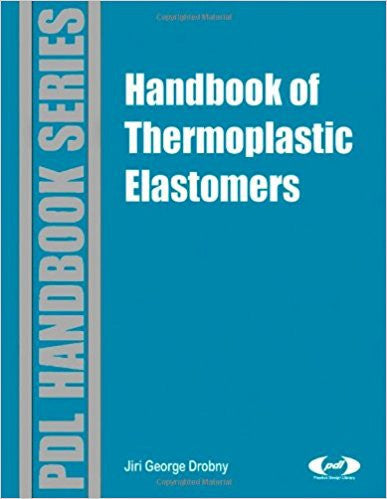
Handbook of Thermoplastic Elastomers
1 Introduction
1.1 Elasticity and Elastomers
1.2 Thermoplastic Elastomers
2 Brief History of Thermoplastic Elastomers
3 Additives
3.1 Antioxidants
3.2 Light Stabilizers
3.3 Nucleating Agents
3.4 Flame Retardants
3.5 Colorants
3.6 Antistatic Agents
3.7 Slip Agents
3.8 Antiblocking Agents
3.9 Processing Aids
3.10 Fillers and Reinforcements
3.11 Plasticizers
3.12 Other Additives
3.13 Selection of Additives
3.14 Health, Hygiene, and Safety
4 Processing Methods Applicable to Thermoplastic Elastomers
4.1 Introduction
4.2 Mixing and Blending
4.3 Extrusion
4.4 Injection Molding
4.5 Compression Molding
4.6 Transfer Molding
4.7 Blow Molding
4.8 Rotational Molding
4.9 Foaming of Thermoplastics
4.10 Thermoforming
4.11 Calendering
4.12 Secondary Manufacturing Processes
4.13 General Processing Technology of TPEs
4.14 Process Simulation
4.15 Product Development and Testing
5 Styrenic Block Copolymers
5.1 Introduction
5.2 Polystyrene– Polydiene Block Copolymers
5.3 SBCs Synthesized by Carbocationic Polymerization
6 Thermoplastic Elastomers Prepared by Dynamic Vulcanization
6.1 Introduction
6.2 The Dynamic Vulcanization Process
6.3 Properties of Blends Prepared by Dynamic Vulcanization
6.4 Processing and Fabrication of TPVs
7 Polyolefin-Based Thermoplastic Elastomers
7.1 Introduction
7.2 Thermoplastic Polyolefin Blends
7.3 Morphology
7.4 Properties of TPOs
7.5 Processing of TPOs
7.6 Painting of TPOs
8 Thermoplastic Elastomers Based on Halogen-Containing Polyolefins
8.1 Introduction
8.2 Blends of PVC with Nitrile Rubber (NBR)
8.3 Blends of PVC with Other Elastomers
8.4 Melt-Processable Rubber
8.5 Thermoplastic Fluorocarbon Elastomer
9 Thermoplastic Polyurethane Elastomers
9.1 Introduction
9.2 Synthesis of TPUs
9.3 Morphology
9.4 Thermal Transitions
9.5 Properties
9.6 Processing of TPUs
9.7 Blends of TPU with Other Polymers
9.8 Bonding and Welding
10 Thermoplastic Elastomers Based on Polyamides
10.1 Introduction
10.2 Synthesis
10.3 Morphology
10.4 Structure– Property Relationships
10.5 Physical and Mechanical Properties
10.6 Chemical and Solvent Resistance
10.7 Electrical Properties
10.8 Other Properties
10.9 Compounding
10.10 Processing
10.11 Bonding and Welding
11 Thermoplastic Polyether Ester Elastomers
11.1 Introduction
11.2 Synthesis
11.3 Morphology
11.4 Properties of Commercial COPEs
11.5 COPE Blends
11.6 Processing
12 Ionomeric Thermoplastic Elastomers
12.1 Introduction
12.2 Synthesis
12.3 Morphology
12.4 Properties and Processing
13 Other Thermoplastic Elastomers
13.1 Elastomeric Star Block Copolymers
13.2 TPEs Based on Interpenetrating Networks
13.3 TPE Based on Polyacrylates
14 Thermoplastic Elastomers Based on Recycled Rubber and Plastics
14.1 Introduction
14.2 EPDM Scrap
14.3 Butadiene-acrylonitrile Rubber (NBR) Scrap
14.4 Recycled Rubber
14.5 Waste Latex
14.6 Waste Plastics
15 Applications of Thermoplastic Elastomers
15.1 Introduction
15.2 Applications for Styrenic TPEs
15.3 Applications of Thermoplastic Vulcanizates (TPVs) and ETPVs
15.4 Applications of Thermoplastic Polyolefin Elastomers (TPOs)
15.5 Applications of Melt-Processable Rubber (MPR)
15.6 Applications of PVC Blends
15.7 Application of TPUs
15.8 Application of Thermoplastic Polyether Ester Elastomers
15.9 Applications of Polyamide TPEs
15.10 Applications of Ionomeric TPEs
15.11 Applications of Other TPEs
16 Recycling of Thermoplastic Elastomers
16.1 Introduction
16.2 Recycling Methods for Thermoplastic Elastomers (TPEs)
17 Recent Developments and Trends
17.1 Current State
17.2 Drivers for the Growth of TPEs
17.3 Trends in Technical Development
17.4 Other New Developments
Appendix 1: Books, Conferences, Major Review Articles
Appendix 2: Major Suppliers of Thermoplastic Elastomers and Compounds
Appendix 3: ISO Nomenclature for Thermoplastic Elastomers
Appendix 4: Processing Data Sheets for Commercial Thermoplastic Elastomers and Compounds
Appendix 5: Technical Data Sheets for Commercial Thermoplastic Elastomers and Compounds
Appendix 6: Recent TPE Patents
Glossary
Index
Thermoplastic elastomers are one of the most in-demand groups of materials today. Their most attractive feature is that they can be processed like plastics, yet they exhibit properties that are close to vulcanized rubber. Consequently, they can be produced in a highly cost-effective way, using short production cycles, with a considerably reduced energy consumption, and minimum production scrap. Moreover, because they are thermoplastics, production scrap as well as post-consumer scrap can be easily recycled.
This unique practical reference work compiles in one place the current working knowledge of chemistry, processing, physical and mechanical properties, as well as applications of thermoplastic elastomers. Because of the great number of thermoplastic elastomers and the variety of chemistries involved, the work is divided into chapters describing individual commercial groups. A significant part of this book is dedicated to processing methods, applications, and material data sheets. Chapters on processing methods and applications are enhanced with ample illustrations. Each chapter includes a comprehensive list of references for a more in-depth study. Other features are a list of current suppliers, ISO nomenclature, an extensive bibliography, a list of recent patents and a glossary of terms. The work is concluded by a chapter on newest developments and trends.
1 Introduction
1.1 Elasticity and Elastomers
1.2 Thermoplastic Elastomers
2 Brief History of Thermoplastic Elastomers
3 Additives
3.1 Antioxidants
3.2 Light Stabilizers
3.3 Nucleating Agents
3.4 Flame Retardants
3.5 Colorants
3.6 Antistatic Agents
3.7 Slip Agents
3.8 Antiblocking Agents
3.9 Processing Aids
3.10 Fillers and Reinforcements
3.11 Plasticizers
3.12 Other Additives
3.13 Selection of Additives
3.14 Health, Hygiene, and Safety
4 Processing Methods Applicable to Thermoplastic Elastomers
4.1 Introduction
4.2 Mixing and Blending
4.3 Extrusion
4.4 Injection Molding
4.5 Compression Molding
4.6 Transfer Molding
4.7 Blow Molding
4.8 Rotational Molding
4.9 Foaming of Thermoplastics
4.10 Thermoforming
4.11 Calendering
4.12 Secondary Manufacturing Processes
4.13 General Processing Technology of TPEs
4.14 Process Simulation
4.15 Product Development and Testing
5 Styrenic Block Copolymers
5.1 Introduction
5.2 Polystyrene– Polydiene Block Copolymers
5.3 SBCs Synthesized by Carbocationic Polymerization
6 Thermoplastic Elastomers Prepared by Dynamic Vulcanization
6.1 Introduction
6.2 The Dynamic Vulcanization Process
6.3 Properties of Blends Prepared by Dynamic Vulcanization
6.4 Processing and Fabrication of TPVs
7 Polyolefin-Based Thermoplastic Elastomers
7.1 Introduction
7.2 Thermoplastic Polyolefin Blends
7.3 Morphology
7.4 Properties of TPOs
7.5 Processing of TPOs
7.6 Painting of TPOs
8 Thermoplastic Elastomers Based on Halogen-Containing Polyolefins
8.1 Introduction
8.2 Blends of PVC with Nitrile Rubber (NBR)
8.3 Blends of PVC with Other Elastomers
8.4 Melt-Processable Rubber
8.5 Thermoplastic Fluorocarbon Elastomer
9 Thermoplastic Polyurethane Elastomers
9.1 Introduction
9.2 Synthesis of TPUs
9.3 Morphology
9.4 Thermal Transitions
9.5 Properties
9.6 Processing of TPUs
9.7 Blends of TPU with Other Polymers
9.8 Bonding and Welding
10 Thermoplastic Elastomers Based on Polyamides
10.1 Introduction
10.2 Synthesis
10.3 Morphology
10.4 Structure– Property Relationships
10.5 Physical and Mechanical Properties
10.6 Chemical and Solvent Resistance
10.7 Electrical Properties
10.8 Other Properties
10.9 Compounding
10.10 Processing
10.11 Bonding and Welding
11 Thermoplastic Polyether Ester Elastomers
11.1 Introduction
11.2 Synthesis
11.3 Morphology
11.4 Properties of Commercial COPEs
11.5 COPE Blends
11.6 Processing
12 Ionomeric Thermoplastic Elastomers
12.1 Introduction
12.2 Synthesis
12.3 Morphology
12.4 Properties and Processing
13 Other Thermoplastic Elastomers
13.1 Elastomeric Star Block Copolymers
13.2 TPEs Based on Interpenetrating Networks
13.3 TPE Based on Polyacrylates
14 Thermoplastic Elastomers Based on Recycled Rubber and Plastics
14.1 Introduction
14.2 EPDM Scrap
14.3 Butadiene-acrylonitrile Rubber (NBR) Scrap
14.4 Recycled Rubber
14.5 Waste Latex
14.6 Waste Plastics
15 Applications of Thermoplastic Elastomers
15.1 Introduction
15.2 Applications for Styrenic TPEs
15.3 Applications of Thermoplastic Vulcanizates (TPVs) and ETPVs
15.4 Applications of Thermoplastic Polyolefin Elastomers (TPOs)
15.5 Applications of Melt-Processable Rubber (MPR)
15.6 Applications of PVC Blends
15.7 Application of TPUs
15.8 Application of Thermoplastic Polyether Ester Elastomers
15.9 Applications of Polyamide TPEs
15.10 Applications of Ionomeric TPEs
15.11 Applications of Other TPEs
16 Recycling of Thermoplastic Elastomers
16.1 Introduction
16.2 Recycling Methods for Thermoplastic Elastomers (TPEs)
17 Recent Developments and Trends
17.1 Current State
17.2 Drivers for the Growth of TPEs
17.3 Trends in Technical Development
17.4 Other New Developments
Appendix 1: Books, Conferences, Major Review Articles
Appendix 2: Major Suppliers of Thermoplastic Elastomers and Compounds
Appendix 3: ISO Nomenclature for Thermoplastic Elastomers
Appendix 4: Processing Data Sheets for Commercial Thermoplastic Elastomers and Compounds
Appendix 5: Technical Data Sheets for Commercial Thermoplastic Elastomers and Compounds
Appendix 6: Recent TPE Patents
Glossary
Index
Drobny Polymer Associates, Inc.
Jiri George Drobny is a world renowned authority in the field of thermoplastic elastomers. His career spans over 40 years in the rubber and plastic processing industries in worldwide. He has been sought after for his multifaceted contributions to the field as an educator, lecturer, prolific author, and esteemed consultant.
Related Products
Multi-Material Injecti...
$115.00
{"id":11242214852,"title":"Multi-Material Injection Moulding","handle":"978-1-85957-327-3","description":"\u003ch5\u003eDescription\u003c\/h5\u003e\nAuthor: V. Goodship and J.C. Love, The University of Warwick \u003cbr\u003eISBN 978-1-85957-327-3 \u003cbr\u003e\u003cbr\u003epages: 116, figures: 23, tables: 6\n\u003ch5\u003eSummary\u003c\/h5\u003e\nInjection moulding is the most important of all the commercial methods of plastics processing. Many variations have been developed and one of the rapidly expanding fields is multi-material injection moulding. This is particularly important where processors are looking to gain technological advantages over rivals by adding value to products. Whilst tooling costs can be very high, cost savings can be made by eliminating assembly steps. This review looks at the many techniques being used, from the terminology to case studies. \u003cbr\u003e\u003cbr\u003eThere are many issues involved in moulding different types of materials together. Advantages are gained in the product by combining different properties. Recyclate can be used as a core material with virgin resin skin. However, there are potential problems. Compatibility is important for interfacial adhesion. Different materials have varying rheological properties and optimal moulding conditions, which can limit material choice. This is a big area for research as there have been few studies on co-molding incompatible polymers. \u003cbr\u003e\u003cbr\u003eThe three primary types of multi-material injection moulding examined are multi-component, multi-shot and over-moulding. \u003cbr\u003e\u003cbr\u003eMulti-component moulding can be further subdivided. Co-injection moulding involves making sequential injections into the same mould with one material as the core and one as the skin. It is also known as sandwich moulding because the core is fully encapsulated. Bi-injection moulding is the simultaneous injection of different materials through different gates. Interval injection moulding, also known as marbling, is the simultaneous injection of different materials through different gates giving limited mixing. \u003cbr\u003e\u003cbr\u003eMulti-shot moulding describes any process where distinct material shots are applied to produce the final component. This includes transfer moulding, core back moulding and rotating tool moulding. \u003cbr\u003e\u003cbr\u003eOver-moulding includes both insert moulding and lost core moulding, the latter produces hollow parts. \u003cbr\u003e\u003cbr\u003eThis review describes the basic types of multi-material injection moulding, the issues surrounding combining different types of polymers and examples of practical uses of this technology. It is clearly written and difficult concepts are explained with illustrations. \u003cbr\u003e\u003cbr\u003eThe abstracts from the Polymer Library include many more examples of the use of this technology, giving names of companies and organisations involved in this field.\u003cbr\u003e\u003cbr\u003e\n\u003ch5\u003eTable of Contents\u003c\/h5\u003e\n1. Introduction \u003cbr\u003e1.1 Multi-Component Moulding \u003cbr\u003e1.1.1 Co-Injection Moulding \u003cbr\u003e1.1.2 Bi-Injection Moulding \u003cbr\u003e1.1.3 Interval Injection Moulding \u003cbr\u003e1.2 Multi-Shot Moulding \u003cbr\u003e1.2.1 Transfer \u003cbr\u003e1.2.2 Core Back \u003cbr\u003e1.2.3 Rotating Tool \u003cbr\u003e1.3 Over-Moulding \u003cbr\u003e1.4 Business Trends \u003cbr\u003e2. Injection Moulding Basics \u003cbr\u003e\u003cbr\u003e2.1 Stages of Injection Moulding \u003cbr\u003e2.1.1 Plastication \u003cbr\u003e2.1.2 Mould Filling \u003cbr\u003e2.1.3 Packing and Solidification \u003cbr\u003e2.2 Differential Shrinkage and Cooling Effects \u003cbr\u003e2.3 Microstructure of Injection Mouldings \u003cbr\u003e3. Material Selection \u003cbr\u003e\u003cbr\u003e3.1 Material Bonding Properties \u003cbr\u003e3.2 General Material Properties \u003cbr\u003e4. Multi-Component Injection Moulding \u003cbr\u003e\u003cbr\u003e4.1 Co-Injection Moulding \u003cbr\u003e4.1.1 Material Selection for Co-Injection Moulding \u003cbr\u003e4.1.2 Co-Injection Moulding: Different Techniques \u003cbr\u003e4.1.3 Sequential Injection: Single Channel Technique \u003cbr\u003e4.1.4 Sequential Injection: Mono-Sandwich Technique \u003cbr\u003e4.1.5 Simultaneous Injection: Two Channel Technique \u003cbr\u003e4.1.6 Simultaneous Injection: Three Channel Technique \u003cbr\u003e4.1.7 Part Design and Tooling Requirements for Co-Injection Moulding \u003cbr\u003e4.1.8 Rheology and Mould Filling: Why and How Co-Injection Moulding Works \u003cbr\u003e4.1.9 Immiscible Materials Research in Co-Injection Moulding \u003cbr\u003e4.1.10 Co-Injection Moulding Applications - Case Studies \u003cbr\u003e4.1.11 Recycling and Legislation \u003cbr\u003e4.1.12 Discussion and Conclusions \u003cbr\u003e4.2 Bi-Injection Moulding \u003cbr\u003e4.3 Interval Injection Moulding \u003cbr\u003e5. Multi-Shot Moulding \u003cbr\u003e\u003cbr\u003e5.1 Machine Technology \u003cbr\u003e5.1.1 Injection Unit Configurations \u003cbr\u003e5.1.2 Plastication Design \u003cbr\u003e5.1.3 Machine Type \u003cbr\u003e5.2 Core Back Moulding \u003cbr\u003e5.3 Rotating Tool Moulding \u003cbr\u003e5.4 Transfer Moulding \u003cbr\u003e5.5 Multi-Shot with a Single Injection Unit \u003cbr\u003e5.6 Material Selection for Multi-Shot \u003cbr\u003e5.6.1 Material Properties \u003cbr\u003e5.6.2 Material Process Order \u003cbr\u003e5.6.3 Using Thermoset Materials \u003cbr\u003e5.6.4 Liquid Silicone Rubber (LSR) \u003cbr\u003e5.6.5 Thermoplastic Elastomers (TPEs) \u003cbr\u003e5.7 Multi-Shot Moulding Applications - Case Studies \u003cbr\u003e5.7.1 Trio Knob \u003cbr\u003e5.7.2 Stanley Screwdriver \u003cbr\u003e5.8 Limitations to Multi-Shot Moulding \u003cbr\u003e6. Over-Moulding \u003cbr\u003e\u003cbr\u003e6.1 Insert Moulding \u003cbr\u003e6.2 Lost Core Moulding \u003cbr\u003e7. The Future? \u003cbr\u003e\u003cbr\u003eAdditional References \u003cbr\u003eAbbreviations and Acronyms \u003cbr\u003eAbstracts from the Polymer Library Database \u003cbr\u003eSubject Index\u003cbr\u003e\u003cbr\u003e\n\u003ch5\u003eAbout Author\u003c\/h5\u003e\nDr. Goodship is a Senior Research Fellow with 14 years experience in the industry, expertise in coinjection moulding technology and a particular interest in recycling. Jo Love is an experienced materials engineer currently working on in-mould decoration. The authors are based at the Warwick Manufacturing Group in the Advanced Technology Centre at the University of Warwick.","published_at":"2017-06-22T21:13:24-04:00","created_at":"2017-06-22T21:13:24-04:00","vendor":"Chemtec Publishing","type":"Book","tags":["2002","book","co-injection molding","injection moulding","insert molding","molding","mould shrinkage","multi-component moulding","multi-shot molding","multi-shot moulding","p-processing","polymer","recycling","rheology","rotating molding transfer molding","rotating moulding transfer moulding","rotational moulding"],"price":11500,"price_min":11500,"price_max":11500,"available":true,"price_varies":false,"compare_at_price":null,"compare_at_price_min":0,"compare_at_price_max":0,"compare_at_price_varies":false,"variants":[{"id":43378354180,"title":"Default Title","option1":"Default Title","option2":null,"option3":null,"sku":"","requires_shipping":true,"taxable":true,"featured_image":null,"available":true,"name":"Multi-Material Injection Moulding","public_title":null,"options":["Default Title"],"price":11500,"weight":1000,"compare_at_price":null,"inventory_quantity":-3,"inventory_management":null,"inventory_policy":"continue","barcode":"","requires_selling_plan":false,"selling_plan_allocations":[],"quantity_rule":{"min":1,"max":null,"increment":1}}],"images":["\/\/chemtec.org\/cdn\/shop\/products\/978-1-85957-327-3.jpg?v=1499716740"],"featured_image":"\/\/chemtec.org\/cdn\/shop\/products\/978-1-85957-327-3.jpg?v=1499716740","options":["Title"],"media":[{"alt":null,"id":358515671133,"position":1,"preview_image":{"aspect_ratio":0.767,"height":450,"width":345,"src":"\/\/chemtec.org\/cdn\/shop\/products\/978-1-85957-327-3.jpg?v=1499716740"},"aspect_ratio":0.767,"height":450,"media_type":"image","src":"\/\/chemtec.org\/cdn\/shop\/products\/978-1-85957-327-3.jpg?v=1499716740","width":345}],"requires_selling_plan":false,"selling_plan_groups":[],"content":"\u003ch5\u003eDescription\u003c\/h5\u003e\nAuthor: V. Goodship and J.C. Love, The University of Warwick \u003cbr\u003eISBN 978-1-85957-327-3 \u003cbr\u003e\u003cbr\u003epages: 116, figures: 23, tables: 6\n\u003ch5\u003eSummary\u003c\/h5\u003e\nInjection moulding is the most important of all the commercial methods of plastics processing. Many variations have been developed and one of the rapidly expanding fields is multi-material injection moulding. This is particularly important where processors are looking to gain technological advantages over rivals by adding value to products. Whilst tooling costs can be very high, cost savings can be made by eliminating assembly steps. This review looks at the many techniques being used, from the terminology to case studies. \u003cbr\u003e\u003cbr\u003eThere are many issues involved in moulding different types of materials together. Advantages are gained in the product by combining different properties. Recyclate can be used as a core material with virgin resin skin. However, there are potential problems. Compatibility is important for interfacial adhesion. Different materials have varying rheological properties and optimal moulding conditions, which can limit material choice. This is a big area for research as there have been few studies on co-molding incompatible polymers. \u003cbr\u003e\u003cbr\u003eThe three primary types of multi-material injection moulding examined are multi-component, multi-shot and over-moulding. \u003cbr\u003e\u003cbr\u003eMulti-component moulding can be further subdivided. Co-injection moulding involves making sequential injections into the same mould with one material as the core and one as the skin. It is also known as sandwich moulding because the core is fully encapsulated. Bi-injection moulding is the simultaneous injection of different materials through different gates. Interval injection moulding, also known as marbling, is the simultaneous injection of different materials through different gates giving limited mixing. \u003cbr\u003e\u003cbr\u003eMulti-shot moulding describes any process where distinct material shots are applied to produce the final component. This includes transfer moulding, core back moulding and rotating tool moulding. \u003cbr\u003e\u003cbr\u003eOver-moulding includes both insert moulding and lost core moulding, the latter produces hollow parts. \u003cbr\u003e\u003cbr\u003eThis review describes the basic types of multi-material injection moulding, the issues surrounding combining different types of polymers and examples of practical uses of this technology. It is clearly written and difficult concepts are explained with illustrations. \u003cbr\u003e\u003cbr\u003eThe abstracts from the Polymer Library include many more examples of the use of this technology, giving names of companies and organisations involved in this field.\u003cbr\u003e\u003cbr\u003e\n\u003ch5\u003eTable of Contents\u003c\/h5\u003e\n1. Introduction \u003cbr\u003e1.1 Multi-Component Moulding \u003cbr\u003e1.1.1 Co-Injection Moulding \u003cbr\u003e1.1.2 Bi-Injection Moulding \u003cbr\u003e1.1.3 Interval Injection Moulding \u003cbr\u003e1.2 Multi-Shot Moulding \u003cbr\u003e1.2.1 Transfer \u003cbr\u003e1.2.2 Core Back \u003cbr\u003e1.2.3 Rotating Tool \u003cbr\u003e1.3 Over-Moulding \u003cbr\u003e1.4 Business Trends \u003cbr\u003e2. Injection Moulding Basics \u003cbr\u003e\u003cbr\u003e2.1 Stages of Injection Moulding \u003cbr\u003e2.1.1 Plastication \u003cbr\u003e2.1.2 Mould Filling \u003cbr\u003e2.1.3 Packing and Solidification \u003cbr\u003e2.2 Differential Shrinkage and Cooling Effects \u003cbr\u003e2.3 Microstructure of Injection Mouldings \u003cbr\u003e3. Material Selection \u003cbr\u003e\u003cbr\u003e3.1 Material Bonding Properties \u003cbr\u003e3.2 General Material Properties \u003cbr\u003e4. Multi-Component Injection Moulding \u003cbr\u003e\u003cbr\u003e4.1 Co-Injection Moulding \u003cbr\u003e4.1.1 Material Selection for Co-Injection Moulding \u003cbr\u003e4.1.2 Co-Injection Moulding: Different Techniques \u003cbr\u003e4.1.3 Sequential Injection: Single Channel Technique \u003cbr\u003e4.1.4 Sequential Injection: Mono-Sandwich Technique \u003cbr\u003e4.1.5 Simultaneous Injection: Two Channel Technique \u003cbr\u003e4.1.6 Simultaneous Injection: Three Channel Technique \u003cbr\u003e4.1.7 Part Design and Tooling Requirements for Co-Injection Moulding \u003cbr\u003e4.1.8 Rheology and Mould Filling: Why and How Co-Injection Moulding Works \u003cbr\u003e4.1.9 Immiscible Materials Research in Co-Injection Moulding \u003cbr\u003e4.1.10 Co-Injection Moulding Applications - Case Studies \u003cbr\u003e4.1.11 Recycling and Legislation \u003cbr\u003e4.1.12 Discussion and Conclusions \u003cbr\u003e4.2 Bi-Injection Moulding \u003cbr\u003e4.3 Interval Injection Moulding \u003cbr\u003e5. Multi-Shot Moulding \u003cbr\u003e\u003cbr\u003e5.1 Machine Technology \u003cbr\u003e5.1.1 Injection Unit Configurations \u003cbr\u003e5.1.2 Plastication Design \u003cbr\u003e5.1.3 Machine Type \u003cbr\u003e5.2 Core Back Moulding \u003cbr\u003e5.3 Rotating Tool Moulding \u003cbr\u003e5.4 Transfer Moulding \u003cbr\u003e5.5 Multi-Shot with a Single Injection Unit \u003cbr\u003e5.6 Material Selection for Multi-Shot \u003cbr\u003e5.6.1 Material Properties \u003cbr\u003e5.6.2 Material Process Order \u003cbr\u003e5.6.3 Using Thermoset Materials \u003cbr\u003e5.6.4 Liquid Silicone Rubber (LSR) \u003cbr\u003e5.6.5 Thermoplastic Elastomers (TPEs) \u003cbr\u003e5.7 Multi-Shot Moulding Applications - Case Studies \u003cbr\u003e5.7.1 Trio Knob \u003cbr\u003e5.7.2 Stanley Screwdriver \u003cbr\u003e5.8 Limitations to Multi-Shot Moulding \u003cbr\u003e6. Over-Moulding \u003cbr\u003e\u003cbr\u003e6.1 Insert Moulding \u003cbr\u003e6.2 Lost Core Moulding \u003cbr\u003e7. The Future? \u003cbr\u003e\u003cbr\u003eAdditional References \u003cbr\u003eAbbreviations and Acronyms \u003cbr\u003eAbstracts from the Polymer Library Database \u003cbr\u003eSubject Index\u003cbr\u003e\u003cbr\u003e\n\u003ch5\u003eAbout Author\u003c\/h5\u003e\nDr. Goodship is a Senior Research Fellow with 14 years experience in the industry, expertise in coinjection moulding technology and a particular interest in recycling. Jo Love is an experienced materials engineer currently working on in-mould decoration. The authors are based at the Warwick Manufacturing Group in the Advanced Technology Centre at the University of Warwick."}
Handbook of Polymer Foams
$190.00
{"id":11242213380,"title":"Handbook of Polymer Foams","handle":"978-1-85957-388-4","description":"\u003ch5\u003eDescription\u003c\/h5\u003e\nAuthor: David Eaves \u003cbr\u003eISBN 978-1-85957-388-6 \u003cbr\u003e\u003cbr\u003epages 274\n\u003ch5\u003eSummary\u003c\/h5\u003e\nThe use of polymer foams is extremely widespread. Indeed, it is hard to think of any industries where polymer foams do not have a part to play. They can be found for example in sports and leisure products, in military applications, in vehicles, in aircraft, and in the home. Most people will encounter polymer foams every day in one form or another, whether it be in furniture, in packaging, in their car, in refrigerator insulation, or in some other common application. \u003cbr\u003e\u003cbr\u003eAlthough naturally occurring polymer foams have been known for a long time, (e.g., sponges, cork), synthetic polymer foams have only been introduced to the market over the last fifty years or so. The development of a new polymer has usually been quickly followed by its production in an expanded or foam form owing to the unique and useful properties, which can be realised in the expanded state. \u003cbr\u003e\u003cbr\u003eThis Handbook reviews the chemistry, manufacturing methods, properties and applications of the synthetic polymer foams used in most applications. In addition, a chapter is included on the fundamental principles, which apply to all polymer foams. There is also a chapter on the blowing agents used to expand polymers, blowing agents having undergone considerable change and development in recent years in order to meet the requirements of the Montreal Protocol in relation to the reduction and elimination of chloroflurocarbons (CFC) and other ozone depleting agents. A chapter is also included on microcellular foams - a relatively new development where applications are still being explored. Most chapters have references to facilitate further exploration of the topics. The chapters are all written by experts in the field. \u003cbr\u003e\u003cbr\u003eThis book will be of interest to those just embarking upon an exploration of the subject of foams, whether in industry or academia. But this will be equally useful to those already working in the field, who need to know about different types of foam.\u003cbr\u003e\u003cbr\u003e\n\u003ch5\u003eTable of Contents\u003c\/h5\u003e\nPreface \u003cbr\u003e1 Foam Fundamentals (David Eaves, Independent Consultant)\u003cbr\u003e1.1 Introduction\u003cbr\u003e1.2 Foam Structure\u003cbr\u003e1.3 Foam Properties\u003cbr\u003e1.3.1 Compression Properties\u003cbr\u003e1.3.2 Energy Absorption Properties\u003cbr\u003e1.3.3 Thermal Properties\u003cbr\u003eReferences \u003cbr\u003e\u003cbr\u003e2 Blowing Agents (Sachida Singh, Huntsman Polyurethanes)\u003cbr\u003e2.1 Introduction\u003cbr\u003e2.2 Physical Blowing Agents\u003cbr\u003e2.2.1 Selection Criteria for Physical Blowing Agents\u003cbr\u003e2.2.2 Halogenated Hydrocarbons\u003cbr\u003e2.2.3 Hydrocarbons (HC)\u003cbr\u003e2.2.4 Inert Gases\u003cbr\u003e2.2.5 Other Physical Blowing Agents\u003cbr\u003e2.2.6 Blends of Physical Blowing Agents\u003cbr\u003e2.2.7 Encapsulated Physical Blowing Agents\u003cbr\u003e2.2.8 Physical Blowing Agent by Foam Type and Application\u003cbr\u003e2.3 Chemical Blowing Agents\u003cbr\u003e2.3.1 Selection Criteria for Chemical Blowing Agent\u003cbr\u003e2.3.2 Exothermic CBA\u003cbr\u003e2.3.3 Endothermic CBA\u003cbr\u003e2.3.4 Endo\/Exo Blends\u003cbr\u003eReferences \u003cbr\u003e\u003cbr\u003e3 Expanded Polystyrene: Development, Processing, Applications and Key Issues (Andrew Barnetson, BPF)\u003cbr\u003e3.1 Introduction\u003cbr\u003e3.1.1 Development of Expanded Polystyrene (EPS)\u003cbr\u003e3.2 Manufacture of Expanded Polystyrene Mouldings\u003cbr\u003e3.3 Applications for Expanded Polystyrene Packaging\u003cbr\u003e3.3.1 Packaging\u003cbr\u003e3.3.2 Construction\u003cbr\u003e3.3.3 Other Applications\u003cbr\u003e3.3.4 Novel Applications\u003cbr\u003e3.4 Properties of EPS\u003cbr\u003e3.4.1 Mechanical Performance\u003cbr\u003e3.4.2 Thermal Insulation\u003cbr\u003e3.4.3 Chemical Properties\u003cbr\u003e3.4.4 Recent Research on Properties of EPS: Value for Fruit and Vegetables\u003cbr\u003e3.5 Global Structure of Markets and Companies\u003cbr\u003e3.5.1 Europe\u003cbr\u003e3.5.2 Asia\u003cbr\u003e3.5.3 USA\u003cbr\u003e3.6 Key Issues Facing the EPS Industry\u003cbr\u003e3.6.1 Fire\u003cbr\u003e3.6.2 Recycling\u003cbr\u003e3.6.2 Alternatives to Mechanical Recycling\u003cbr\u003eFurther Information \u003cbr\u003e\u003cbr\u003e4 Rigid Polyurethane Foams (David Eaves, Independent Consultant)\u003cbr\u003e4.1 Introduction\u003cbr\u003e4.2 Materials\u003cbr\u003e4.2.1 Polyols\u003cbr\u003e4.2.2 Isocyanates\u003cbr\u003e4.2.3 Blowing Agents\u003cbr\u003e4.2.4 Other Additives\u003cbr\u003e4.3 Manufacturing Processes for Rigid Polyurethane Foam\u003cbr\u003e4.4 Recycling Processes for Rigid Polyurethane Foam\u003cbr\u003e4.5 Properties of Rigid Polyurethane Foams\u003cbr\u003e4.6 Applications\u003cbr\u003e4.6.1 Applications in Construction\u003cbr\u003e4.6.2 Applications in the Appliance Industry\u003cbr\u003eReferences \u003cbr\u003e\u003cbr\u003e5 Flexible Polyurethane Foam (Tyler Housel, Inolex Chemical Company)\u003cbr\u003e5.1 Introduction\u003cbr\u003e5.2 Chemistry\u003cbr\u003e5.3 Starting Materials\u003cbr\u003e5.3.1 Isocyanate\u003cbr\u003e5.3.2 Polyol\u003cbr\u003e5.3.3 Water\u003cbr\u003e5.3.4 Surfactant\u003cbr\u003e5.3.5 Catalyst\u003cbr\u003e5.3.6 Colorants\u003cbr\u003e5.3.7 Antioxidants\u003cbr\u003e5.3.8 Light Stabilisers\u003cbr\u003e5.3.9 Flame Retardants\u003cbr\u003e5.3.10 Adhesion Promoters\u003cbr\u003e5.3.11 Other Additives\u003cbr\u003e5.4 The Foaming Process\u003cbr\u003e5.4.1 Raw Material Conditioning\u003cbr\u003e5.4.2 Mixing\u003cbr\u003e5.4.3 Growth\u003cbr\u003e5.4.4 Cell Opening\u003cbr\u003e5.4.5 Cure\u003cbr\u003e5.5 Manufacturing Equipment\u003cbr\u003e5.5.1 Storage and Delivery\u003cbr\u003e5.5.2 Mixing\u003cbr\u003e5.5.3 Foam Rise and Cure\u003cbr\u003e5.5.4 Innovations\u003cbr\u003e5.6 Foam Characterisation\u003cbr\u003e5.6.1 Density\u003cbr\u003e5.6.2 Hardness\u003cbr\u003e5.6.3 Resilience\u003cbr\u003e5.6.4 Porosity\u003cbr\u003e5.6.5 Strength Properties\u003cbr\u003e5.6.6 Cell Structure\u003cbr\u003e5.6.7 Environmental Stability\u003cbr\u003e5.6.8 Fatigue\u003cbr\u003e5.6.9 Compression Set\u003cbr\u003e5.6.10 Flammability\u003cbr\u003e5.7 FPF Markets\u003cbr\u003e5.7.1 Transportation\u003cbr\u003e5.7.2 Comfort\u003cbr\u003e5.7.3 Carpet Cushion\u003cbr\u003e5.7.4 Packaging\u003cbr\u003e5.7.5 Specialty Applications\u003cbr\u003e5.8 Environmental Issues\u003cbr\u003e5.9 Organisations\u003cbr\u003eReferences \u003cbr\u003e\u003cbr\u003e6 Rigid PVC Foam (Noreen Thomas, University of Loughborough)\u003cbr\u003e6.1 Introduction\u003cbr\u003e6.2 Foam Extrusion\u003cbr\u003e6.2.1 Basic Principles\u003cbr\u003e6.2.2 Extrusion Processes\u003cbr\u003e6.2.3 Effect of Processing Conditions\u003cbr\u003e6.3 Foam Formulation Technology\u003cbr\u003e6.3.1 Blowing Agents\u003cbr\u003e6.3.2 Processing Aids\u003cbr\u003e6.3.3 Type of PVC\u003cbr\u003e6.3.4 Stabilisers\u003cbr\u003e6.3.5 Lubricants\u003cbr\u003e6.3.6 Typical Formulations\u003cbr\u003e6.4 Properties\u003cbr\u003e6.5 Novel Processes and Applications\u003cbr\u003e6.5.1 Recycling\u003cbr\u003e6.5.2 Microcellular Foam\u003cbr\u003e6.5.3 Foamed Composites\u003cbr\u003e6.6 Summary\u003cbr\u003eReferences \u003cbr\u003e\u003cbr\u003e7 Flexible PVC Foams (Chris Howick, EVC)\u003cbr\u003e7.1 Introduction\u003cbr\u003e7.2 Flexible Foam Types and PVC Types\u003cbr\u003e7.2.1 Flexible Foams Based on Suspension PVC\u003cbr\u003e7.2.2 Flexible Foams Based on Dispersion or Paste Resins\u003cbr\u003e7.2.3 Chemically Blown Foams from PVC Plastisols: Fundamentals\u003cbr\u003e7.2.4 PVC Resins used in Plastisol Foam Formation\u003cbr\u003e7.2.5 Mineral Fillers\u003cbr\u003e7.2.6 Pigments\u003cbr\u003e7.2.7 Liquid Plasticiser\u003cbr\u003e7.2.8 Blowing Agent Type and Level\u003cbr\u003e7.3 Products Utilising Foamed Plastisols\u003cbr\u003e7.3.1 Floorings and Carpet Backings\u003cbr\u003e7.3.2 Wallcoverings\u003cbr\u003e7.3.3 Synthetic Leather\u003cbr\u003e7.3.4 General Foams\u003cbr\u003eReferences \u003cbr\u003e\u003cbr\u003e8 Polyolefin Foams (David Eaves, Independent Consultant)\u003cbr\u003e8.1 Introduction\u003cbr\u003e8.2 Manufacturing Processes and Materials\u003cbr\u003e8.2.1 Extruded Non-Crosslinked Foam\u003cbr\u003e8.2.2 Expanded (Non-Crosslinked) Polyolefin Beads\u003cbr\u003e8.2.3 Extruded Crosslinked Foam - Processes\u003cbr\u003e8.2.4 Press Moulded Crosslinked Foam Process\u003cbr\u003e8.2.5 Injection Moulded Foam Process\u003cbr\u003e8.2.6 The Nitrogen Autoclave Process\u003cbr\u003e8.2.7 Recycling Processes\u003cbr\u003e8.2.8 Post Manufacturing Operations\u003cbr\u003e8.3 Properties of Polyolefin Foams\u003cbr\u003e8.4 Applications\u003cbr\u003e8.5 Foam Specifications\u003cbr\u003e8.5.1 Packaging\u003cbr\u003e8.5.2 Automotive\u003cbr\u003e8.5.3 Furnishings\u003cbr\u003e8.5.4 Buoyancy\u003cbr\u003e8.5.5 Aerospace\u003cbr\u003e8.5.6 Construction\u003cbr\u003e8.5.7 Toys\u003cbr\u003e8.5.8 Food contact\u003cbr\u003e8.6 Markets\u003cbr\u003eReferences \u003cbr\u003e\u003cbr\u003e9 Latex Foam (Rani Joseph, Cochin University)\u003cbr\u003e9.1 Introduction\u003cbr\u003e9.2 Dunlop Process\u003cbr\u003e9.2.1 Batch Process\u003cbr\u003e9.2.2 Selecting a Formulation for Latex Compounds\u003cbr\u003e9.2.3 Selection of Other Compounding Ingredients\u003cbr\u003e9.2.4 Continuous Process for Latex Foam Production\u003cbr\u003e9.3 Talalay Process\u003cbr\u003e9.4 Trouble Shooting in Latex Foam Manufacture\u003cbr\u003e9.5 Testing\u003cbr\u003e9.5.1 Compression Set\u003cbr\u003e9.5.2 Indentation Hardness\u003cbr\u003e9.5.3 Flexing Resistance\u003cbr\u003e9.5.4 Density\u003cbr\u003e9.5.5 Metallic Impurities\u003cbr\u003e9.6 Important Uses of Latex Foam\u003cbr\u003e9.6.1 Transportation\u003cbr\u003e9.6.2 Furniture\u003cbr\u003e9.6.3 Special Uses\u003cbr\u003eReferences \u003cbr\u003e\u003cbr\u003e10 Microcellular Foams (Vipin Kumar, University of Washington \u0026amp; Krishna Nadella, University of Washington)\u003cbr\u003e10.1 Introduction\u003cbr\u003e10.2 Processing of Microcellular Foams\u003cbr\u003e10.2.1 The Solid-State Batch Process\u003cbr\u003e10.2.2 The Semi-Continuous Process\u003cbr\u003e10.2.3 Extrusion and other Processing Methods\u003cbr\u003e10.3 Properties of Microcellular Foams\u003cbr\u003e10.4 Current Research Directions\u003cbr\u003e10.4.1 Microcellular Materials for Construction\u003cbr\u003e11.4.2 Open-Cell (Porous) Microcellular Foams\u003cbr\u003e10.4.3 Sub-Micron Foams and Nanofoams\u003cbr\u003e10.5 Commercial Opportunities\u003cbr\u003eReferences\u003cbr\u003e\u003cbr\u003e\n\u003ch5\u003eAbout Author\u003c\/h5\u003e\nDavid Eaves studied polymer chemistry at the University in Birmingham and completed his doctorate in 1958. He then joined Dunlop in their Central Research and Development Laboratories in Birmingham, later going out to Ireland (Cork) and Japan (Kobe) to establish and manage overseas satellite research centres. In 1984 he left Dunlop and joined BP Chemicals' polyethylene foam operation in Croydon as Technical Manager. He was part of the management buy-out team in 1992 when the company was renamed 'Zotefoams', and retired in 1998 as Technical Director. He has published many papers on aspects of polymer and polymer foam technology and is the author of the Rapra report 'Polymer Foams: Trends in Use and Technology.","published_at":"2017-06-22T21:13:18-04:00","created_at":"2017-06-22T21:13:19-04:00","vendor":"Chemtec Publishing","type":"Book","tags":["2004","aerospace","automotive","blends","blowing agents","book","construction","fire","foams","food","furnishing","hydrocarbons","inert gases","insulation","molding","moulding","p-structural","packaging","polymer","polymers","polystyrene","properties","recycling","structure","toys"],"price":19000,"price_min":19000,"price_max":19000,"available":true,"price_varies":false,"compare_at_price":null,"compare_at_price_min":0,"compare_at_price_max":0,"compare_at_price_varies":false,"variants":[{"id":43378350212,"title":"Default Title","option1":"Default Title","option2":null,"option3":null,"sku":"","requires_shipping":true,"taxable":true,"featured_image":null,"available":true,"name":"Handbook of Polymer Foams","public_title":null,"options":["Default Title"],"price":19000,"weight":1000,"compare_at_price":null,"inventory_quantity":-1,"inventory_management":null,"inventory_policy":"continue","barcode":"978-1-85957-388-6","requires_selling_plan":false,"selling_plan_allocations":[],"quantity_rule":{"min":1,"max":null,"increment":1}}],"images":["\/\/chemtec.org\/cdn\/shop\/products\/978-1-85957-388-4.jpg?v=1499442663"],"featured_image":"\/\/chemtec.org\/cdn\/shop\/products\/978-1-85957-388-4.jpg?v=1499442663","options":["Title"],"media":[{"alt":null,"id":355732226141,"position":1,"preview_image":{"aspect_ratio":0.701,"height":499,"width":350,"src":"\/\/chemtec.org\/cdn\/shop\/products\/978-1-85957-388-4.jpg?v=1499442663"},"aspect_ratio":0.701,"height":499,"media_type":"image","src":"\/\/chemtec.org\/cdn\/shop\/products\/978-1-85957-388-4.jpg?v=1499442663","width":350}],"requires_selling_plan":false,"selling_plan_groups":[],"content":"\u003ch5\u003eDescription\u003c\/h5\u003e\nAuthor: David Eaves \u003cbr\u003eISBN 978-1-85957-388-6 \u003cbr\u003e\u003cbr\u003epages 274\n\u003ch5\u003eSummary\u003c\/h5\u003e\nThe use of polymer foams is extremely widespread. Indeed, it is hard to think of any industries where polymer foams do not have a part to play. They can be found for example in sports and leisure products, in military applications, in vehicles, in aircraft, and in the home. Most people will encounter polymer foams every day in one form or another, whether it be in furniture, in packaging, in their car, in refrigerator insulation, or in some other common application. \u003cbr\u003e\u003cbr\u003eAlthough naturally occurring polymer foams have been known for a long time, (e.g., sponges, cork), synthetic polymer foams have only been introduced to the market over the last fifty years or so. The development of a new polymer has usually been quickly followed by its production in an expanded or foam form owing to the unique and useful properties, which can be realised in the expanded state. \u003cbr\u003e\u003cbr\u003eThis Handbook reviews the chemistry, manufacturing methods, properties and applications of the synthetic polymer foams used in most applications. In addition, a chapter is included on the fundamental principles, which apply to all polymer foams. There is also a chapter on the blowing agents used to expand polymers, blowing agents having undergone considerable change and development in recent years in order to meet the requirements of the Montreal Protocol in relation to the reduction and elimination of chloroflurocarbons (CFC) and other ozone depleting agents. A chapter is also included on microcellular foams - a relatively new development where applications are still being explored. Most chapters have references to facilitate further exploration of the topics. The chapters are all written by experts in the field. \u003cbr\u003e\u003cbr\u003eThis book will be of interest to those just embarking upon an exploration of the subject of foams, whether in industry or academia. But this will be equally useful to those already working in the field, who need to know about different types of foam.\u003cbr\u003e\u003cbr\u003e\n\u003ch5\u003eTable of Contents\u003c\/h5\u003e\nPreface \u003cbr\u003e1 Foam Fundamentals (David Eaves, Independent Consultant)\u003cbr\u003e1.1 Introduction\u003cbr\u003e1.2 Foam Structure\u003cbr\u003e1.3 Foam Properties\u003cbr\u003e1.3.1 Compression Properties\u003cbr\u003e1.3.2 Energy Absorption Properties\u003cbr\u003e1.3.3 Thermal Properties\u003cbr\u003eReferences \u003cbr\u003e\u003cbr\u003e2 Blowing Agents (Sachida Singh, Huntsman Polyurethanes)\u003cbr\u003e2.1 Introduction\u003cbr\u003e2.2 Physical Blowing Agents\u003cbr\u003e2.2.1 Selection Criteria for Physical Blowing Agents\u003cbr\u003e2.2.2 Halogenated Hydrocarbons\u003cbr\u003e2.2.3 Hydrocarbons (HC)\u003cbr\u003e2.2.4 Inert Gases\u003cbr\u003e2.2.5 Other Physical Blowing Agents\u003cbr\u003e2.2.6 Blends of Physical Blowing Agents\u003cbr\u003e2.2.7 Encapsulated Physical Blowing Agents\u003cbr\u003e2.2.8 Physical Blowing Agent by Foam Type and Application\u003cbr\u003e2.3 Chemical Blowing Agents\u003cbr\u003e2.3.1 Selection Criteria for Chemical Blowing Agent\u003cbr\u003e2.3.2 Exothermic CBA\u003cbr\u003e2.3.3 Endothermic CBA\u003cbr\u003e2.3.4 Endo\/Exo Blends\u003cbr\u003eReferences \u003cbr\u003e\u003cbr\u003e3 Expanded Polystyrene: Development, Processing, Applications and Key Issues (Andrew Barnetson, BPF)\u003cbr\u003e3.1 Introduction\u003cbr\u003e3.1.1 Development of Expanded Polystyrene (EPS)\u003cbr\u003e3.2 Manufacture of Expanded Polystyrene Mouldings\u003cbr\u003e3.3 Applications for Expanded Polystyrene Packaging\u003cbr\u003e3.3.1 Packaging\u003cbr\u003e3.3.2 Construction\u003cbr\u003e3.3.3 Other Applications\u003cbr\u003e3.3.4 Novel Applications\u003cbr\u003e3.4 Properties of EPS\u003cbr\u003e3.4.1 Mechanical Performance\u003cbr\u003e3.4.2 Thermal Insulation\u003cbr\u003e3.4.3 Chemical Properties\u003cbr\u003e3.4.4 Recent Research on Properties of EPS: Value for Fruit and Vegetables\u003cbr\u003e3.5 Global Structure of Markets and Companies\u003cbr\u003e3.5.1 Europe\u003cbr\u003e3.5.2 Asia\u003cbr\u003e3.5.3 USA\u003cbr\u003e3.6 Key Issues Facing the EPS Industry\u003cbr\u003e3.6.1 Fire\u003cbr\u003e3.6.2 Recycling\u003cbr\u003e3.6.2 Alternatives to Mechanical Recycling\u003cbr\u003eFurther Information \u003cbr\u003e\u003cbr\u003e4 Rigid Polyurethane Foams (David Eaves, Independent Consultant)\u003cbr\u003e4.1 Introduction\u003cbr\u003e4.2 Materials\u003cbr\u003e4.2.1 Polyols\u003cbr\u003e4.2.2 Isocyanates\u003cbr\u003e4.2.3 Blowing Agents\u003cbr\u003e4.2.4 Other Additives\u003cbr\u003e4.3 Manufacturing Processes for Rigid Polyurethane Foam\u003cbr\u003e4.4 Recycling Processes for Rigid Polyurethane Foam\u003cbr\u003e4.5 Properties of Rigid Polyurethane Foams\u003cbr\u003e4.6 Applications\u003cbr\u003e4.6.1 Applications in Construction\u003cbr\u003e4.6.2 Applications in the Appliance Industry\u003cbr\u003eReferences \u003cbr\u003e\u003cbr\u003e5 Flexible Polyurethane Foam (Tyler Housel, Inolex Chemical Company)\u003cbr\u003e5.1 Introduction\u003cbr\u003e5.2 Chemistry\u003cbr\u003e5.3 Starting Materials\u003cbr\u003e5.3.1 Isocyanate\u003cbr\u003e5.3.2 Polyol\u003cbr\u003e5.3.3 Water\u003cbr\u003e5.3.4 Surfactant\u003cbr\u003e5.3.5 Catalyst\u003cbr\u003e5.3.6 Colorants\u003cbr\u003e5.3.7 Antioxidants\u003cbr\u003e5.3.8 Light Stabilisers\u003cbr\u003e5.3.9 Flame Retardants\u003cbr\u003e5.3.10 Adhesion Promoters\u003cbr\u003e5.3.11 Other Additives\u003cbr\u003e5.4 The Foaming Process\u003cbr\u003e5.4.1 Raw Material Conditioning\u003cbr\u003e5.4.2 Mixing\u003cbr\u003e5.4.3 Growth\u003cbr\u003e5.4.4 Cell Opening\u003cbr\u003e5.4.5 Cure\u003cbr\u003e5.5 Manufacturing Equipment\u003cbr\u003e5.5.1 Storage and Delivery\u003cbr\u003e5.5.2 Mixing\u003cbr\u003e5.5.3 Foam Rise and Cure\u003cbr\u003e5.5.4 Innovations\u003cbr\u003e5.6 Foam Characterisation\u003cbr\u003e5.6.1 Density\u003cbr\u003e5.6.2 Hardness\u003cbr\u003e5.6.3 Resilience\u003cbr\u003e5.6.4 Porosity\u003cbr\u003e5.6.5 Strength Properties\u003cbr\u003e5.6.6 Cell Structure\u003cbr\u003e5.6.7 Environmental Stability\u003cbr\u003e5.6.8 Fatigue\u003cbr\u003e5.6.9 Compression Set\u003cbr\u003e5.6.10 Flammability\u003cbr\u003e5.7 FPF Markets\u003cbr\u003e5.7.1 Transportation\u003cbr\u003e5.7.2 Comfort\u003cbr\u003e5.7.3 Carpet Cushion\u003cbr\u003e5.7.4 Packaging\u003cbr\u003e5.7.5 Specialty Applications\u003cbr\u003e5.8 Environmental Issues\u003cbr\u003e5.9 Organisations\u003cbr\u003eReferences \u003cbr\u003e\u003cbr\u003e6 Rigid PVC Foam (Noreen Thomas, University of Loughborough)\u003cbr\u003e6.1 Introduction\u003cbr\u003e6.2 Foam Extrusion\u003cbr\u003e6.2.1 Basic Principles\u003cbr\u003e6.2.2 Extrusion Processes\u003cbr\u003e6.2.3 Effect of Processing Conditions\u003cbr\u003e6.3 Foam Formulation Technology\u003cbr\u003e6.3.1 Blowing Agents\u003cbr\u003e6.3.2 Processing Aids\u003cbr\u003e6.3.3 Type of PVC\u003cbr\u003e6.3.4 Stabilisers\u003cbr\u003e6.3.5 Lubricants\u003cbr\u003e6.3.6 Typical Formulations\u003cbr\u003e6.4 Properties\u003cbr\u003e6.5 Novel Processes and Applications\u003cbr\u003e6.5.1 Recycling\u003cbr\u003e6.5.2 Microcellular Foam\u003cbr\u003e6.5.3 Foamed Composites\u003cbr\u003e6.6 Summary\u003cbr\u003eReferences \u003cbr\u003e\u003cbr\u003e7 Flexible PVC Foams (Chris Howick, EVC)\u003cbr\u003e7.1 Introduction\u003cbr\u003e7.2 Flexible Foam Types and PVC Types\u003cbr\u003e7.2.1 Flexible Foams Based on Suspension PVC\u003cbr\u003e7.2.2 Flexible Foams Based on Dispersion or Paste Resins\u003cbr\u003e7.2.3 Chemically Blown Foams from PVC Plastisols: Fundamentals\u003cbr\u003e7.2.4 PVC Resins used in Plastisol Foam Formation\u003cbr\u003e7.2.5 Mineral Fillers\u003cbr\u003e7.2.6 Pigments\u003cbr\u003e7.2.7 Liquid Plasticiser\u003cbr\u003e7.2.8 Blowing Agent Type and Level\u003cbr\u003e7.3 Products Utilising Foamed Plastisols\u003cbr\u003e7.3.1 Floorings and Carpet Backings\u003cbr\u003e7.3.2 Wallcoverings\u003cbr\u003e7.3.3 Synthetic Leather\u003cbr\u003e7.3.4 General Foams\u003cbr\u003eReferences \u003cbr\u003e\u003cbr\u003e8 Polyolefin Foams (David Eaves, Independent Consultant)\u003cbr\u003e8.1 Introduction\u003cbr\u003e8.2 Manufacturing Processes and Materials\u003cbr\u003e8.2.1 Extruded Non-Crosslinked Foam\u003cbr\u003e8.2.2 Expanded (Non-Crosslinked) Polyolefin Beads\u003cbr\u003e8.2.3 Extruded Crosslinked Foam - Processes\u003cbr\u003e8.2.4 Press Moulded Crosslinked Foam Process\u003cbr\u003e8.2.5 Injection Moulded Foam Process\u003cbr\u003e8.2.6 The Nitrogen Autoclave Process\u003cbr\u003e8.2.7 Recycling Processes\u003cbr\u003e8.2.8 Post Manufacturing Operations\u003cbr\u003e8.3 Properties of Polyolefin Foams\u003cbr\u003e8.4 Applications\u003cbr\u003e8.5 Foam Specifications\u003cbr\u003e8.5.1 Packaging\u003cbr\u003e8.5.2 Automotive\u003cbr\u003e8.5.3 Furnishings\u003cbr\u003e8.5.4 Buoyancy\u003cbr\u003e8.5.5 Aerospace\u003cbr\u003e8.5.6 Construction\u003cbr\u003e8.5.7 Toys\u003cbr\u003e8.5.8 Food contact\u003cbr\u003e8.6 Markets\u003cbr\u003eReferences \u003cbr\u003e\u003cbr\u003e9 Latex Foam (Rani Joseph, Cochin University)\u003cbr\u003e9.1 Introduction\u003cbr\u003e9.2 Dunlop Process\u003cbr\u003e9.2.1 Batch Process\u003cbr\u003e9.2.2 Selecting a Formulation for Latex Compounds\u003cbr\u003e9.2.3 Selection of Other Compounding Ingredients\u003cbr\u003e9.2.4 Continuous Process for Latex Foam Production\u003cbr\u003e9.3 Talalay Process\u003cbr\u003e9.4 Trouble Shooting in Latex Foam Manufacture\u003cbr\u003e9.5 Testing\u003cbr\u003e9.5.1 Compression Set\u003cbr\u003e9.5.2 Indentation Hardness\u003cbr\u003e9.5.3 Flexing Resistance\u003cbr\u003e9.5.4 Density\u003cbr\u003e9.5.5 Metallic Impurities\u003cbr\u003e9.6 Important Uses of Latex Foam\u003cbr\u003e9.6.1 Transportation\u003cbr\u003e9.6.2 Furniture\u003cbr\u003e9.6.3 Special Uses\u003cbr\u003eReferences \u003cbr\u003e\u003cbr\u003e10 Microcellular Foams (Vipin Kumar, University of Washington \u0026amp; Krishna Nadella, University of Washington)\u003cbr\u003e10.1 Introduction\u003cbr\u003e10.2 Processing of Microcellular Foams\u003cbr\u003e10.2.1 The Solid-State Batch Process\u003cbr\u003e10.2.2 The Semi-Continuous Process\u003cbr\u003e10.2.3 Extrusion and other Processing Methods\u003cbr\u003e10.3 Properties of Microcellular Foams\u003cbr\u003e10.4 Current Research Directions\u003cbr\u003e10.4.1 Microcellular Materials for Construction\u003cbr\u003e11.4.2 Open-Cell (Porous) Microcellular Foams\u003cbr\u003e10.4.3 Sub-Micron Foams and Nanofoams\u003cbr\u003e10.5 Commercial Opportunities\u003cbr\u003eReferences\u003cbr\u003e\u003cbr\u003e\n\u003ch5\u003eAbout Author\u003c\/h5\u003e\nDavid Eaves studied polymer chemistry at the University in Birmingham and completed his doctorate in 1958. He then joined Dunlop in their Central Research and Development Laboratories in Birmingham, later going out to Ireland (Cork) and Japan (Kobe) to establish and manage overseas satellite research centres. In 1984 he left Dunlop and joined BP Chemicals' polyethylene foam operation in Croydon as Technical Manager. He was part of the management buy-out team in 1992 when the company was renamed 'Zotefoams', and retired in 1998 as Technical Director. He has published many papers on aspects of polymer and polymer foam technology and is the author of the Rapra report 'Polymer Foams: Trends in Use and Technology."}
Functional Fillers. Ch...
$350.00
{"id":8814739128477,"title":"Functional Fillers. Chemical composition, morphology, performance, applications, 2nd Ed","handle":"functional-fillers-chemical-composition-morphology-performance-applications-2nd-ed","description":"\u003ch5\u003eDescription\u003c\/h5\u003e\n\u003cp\u003eAuthor: George Wypych\u003cbr\u003eISBN 978-1- 77467-016-3 \u003cbr\u003e\u003cbr\u003e\u003cmeta charset=\"utf-8\"\u003e\u003c\/p\u003e\n\u003cp\u003eEdition: 2nd \u003cbr\u003ePages 326 + iv\u003cbr\u003eFigures 135\u003cbr\u003eTables 34\u003cbr\u003ePublished Jan. 2023\u003c\/p\u003e\n\u003ch5\u003eSummary\u003c\/h5\u003e\n\u003cp class=\"p1\"\u003eFunctional fillers are an important part of today's composite processing technologies. They improve the properties of composites through the creation of a larger interfacial area between the matrix and ffibers and they also provide thermal stability to polymeric matrices. Functional fillers are used extensively in industries such as aerospace, transportation, agriculture, construction, power generation, etc.\u003c\/p\u003e\n\u003cp class=\"p1\"\u003eThe book has two sections: analysis of the chemical composition and morphology of classical fillers (some of over 100 fillers listed in \u003cb\u003eHandbook of Fillers\u003c\/b\u003e, 5\u003csup\u003eth\u003c\/sup\u003e Edition), which contributed to the exceptional enhancements in their properties and applications.\u003c\/p\u003e\n\u003cp class=\"p1\"\u003ePresentation of new generations of fillers which provide designers with special properties not available so far from the classical fillers used by industry. Special groups of fillers discussed in this part of the book include, as follows\u003c\/p\u003e\n\u003cul class=\"ul1\"\u003e\n\u003cli class=\"li1\"\u003eStructure\u003c\/li\u003e\n\u003cul class=\"ul1\"\u003e\n\u003cli class=\"li1\"\u003eMolecular (e.g., silsesquioxanes)\u003c\/li\u003e\n\u003cli class=\"li1\"\u003eCarbon dots\u003c\/li\u003e\n\u003cli class=\"li1\"\u003eNano\u003c\/li\u003e\n\u003cli class=\"li1\"\u003eNanowires\u003c\/li\u003e\n\u003cli class=\"li1\"\u003eNanorods\u003c\/li\u003e\n\u003cli class=\"li1\"\u003eNanosheets\u003c\/li\u003e\n\u003cli class=\"li1\"\u003eNanodiamonds\u003c\/li\u003e\n\u003cli class=\"li1\"\u003eHigh aspect ratio\u003c\/li\u003e\n\u003cli class=\"li1\"\u003eLayered double hydroxides\u003c\/li\u003e\n\u003cli class=\"li1\"\u003eFunctionalized\u003c\/li\u003e\n\u003cli class=\"li1\"\u003eEncapsulated\u003c\/li\u003e\n\u003cli class=\"li1\"\u003eHybrid\u003c\/li\u003e\n\u003cli class=\"li1\"\u003ePorous\u003c\/li\u003e\n\u003c\/ul\u003e\n\u003cli class=\"li1\"\u003ePhysical properties\u003c\/li\u003e\n\u003cul class=\"ul1\"\u003e\n\u003cli class=\"li1\"\u003eSuperlight\u003c\/li\u003e\n\u003cli class=\"li1\"\u003eHigh density\u003c\/li\u003e\n\u003cli class=\"li1\"\u003eThermally insulating and conductive\u003c\/li\u003e\n\u003cli class=\"li1\"\u003eThermal energy storage\u003c\/li\u003e\n\u003c\/ul\u003e\n\u003cli class=\"li1\"\u003eElectrical and magnetic properties\u003c\/li\u003e\n\u003cul class=\"ul1\"\u003e\n\u003cli class=\"li1\"\u003eConductive\u003c\/li\u003e\n\u003cli class=\"li1\"\u003eInsulating\u003c\/li\u003e\n\u003cli class=\"li1\"\u003eInsulating\/conductive mixtures\u003c\/li\u003e\n\u003cli class=\"li1\"\u003eDielectric\u003c\/li\u003e\n\u003cli class=\"li1\"\u003eMagnetic\u003c\/li\u003e\n\u003cli class=\"li1\"\u003eMagnetodielectric\u003c\/li\u003e\n\u003cli class=\"li1\"\u003eEMI shielding\u003c\/li\u003e\n\u003cli class=\"li1\"\u003eMicrowave absorption\u003c\/li\u003e\n\u003cli class=\"li1\"\u003ePiezoresistive\u003c\/li\u003e\n\u003cli class=\"li1\"\u003eElectrostatic discharge prevention\u003c\/li\u003e\n\u003c\/ul\u003e\n\u003cli class=\"li1\"\u003eApplications\u003c\/li\u003e\n\u003cul class=\"ul1\"\u003e\n\u003cli class=\"li1\"\u003eLubricant\u003c\/li\u003e\n\u003cli class=\"li1\"\u003eAnti-corrosion\u003c\/li\u003e\n\u003cli class=\"li1\"\u003eMembrane\u003c\/li\u003e\n\u003cli class=\"li1\"\u003eOsteoconductive and other bone tissue engineering fillers\u003c\/li\u003e\n\u003cli class=\"li1\"\u003eTissue fillers\u003c\/li\u003e\n\u003cli class=\"li1\"\u003eAntimicrobial\u003c\/li\u003e\n\u003c\/ul\u003e\n\u003cli class=\"li1\"\u003eRenewable and recycling\u003c\/li\u003e\n\u003cul class=\"ul1\"\u003e\n\u003cli class=\"li1\"\u003eBiofillers\u003c\/li\u003e\n\u003cli class=\"li1\"\u003eBiosorbents\u003c\/li\u003e\n\u003cli class=\"li1\"\u003eGeopolymers\u003c\/li\u003e\n\u003cli class=\"li1\"\u003eRecycled materials\u003c\/li\u003e\n\u003c\/ul\u003e\n\u003c\/ul\u003e\n\u003cp class=\"p1\"\u003eFrom the above list, it is pertinent that chemical modifications, structural features, enhanced physical properties, mixtures of fillers, electrical and magnetic properties, special applications corrosion resistance, medicine, dentistry, and antimicrobial, and fillers from renewable resources are the main topics of the book.\u003c\/p\u003e\n\u003cp class=\"p1\"\u003eBlends of nanoscale fillers and nano-enhanced polymers have been developed for various end uses. This review describes the various types of nanofillers, their chemical compositions and properties, synthesis methods, and morphology. The functionalities of these functional fillers are revealed through their performance in polymer matrices and by integration with nanoparticles. Finally, some applications of functional fillers are highlighted along with a description of some future trends.\u003c\/p\u003e\n\u003cp class=\"p1\"\u003eThe expected audience, as in the case of \u003cb\u003eHandbook of Fillers\u003c\/b\u003e, includes most branches of the chemical industry (and some other such as pharmaceutical, medicinal, electronics, etc.), considering that these products are common throughout the industry.\u003c\/p\u003e\n\u003ch5\u003eAbout Author\u003c\/h5\u003e\n\u003cp\u003eGeorge Wypych has a Ph. D. in chemical engineering. His professional expertise includes both university teaching (full professor) and research \u0026amp; development. He has published 56 books: PVC Plastisols, (University Press); Polyvinylchloride Degradation, (Elsevier); Polyvinylchloride Stabilization, (Elsevier); Polymer Modified Textile Materials, (Wiley \u0026amp; Sons); Handbook of Material Weathering, 1st, 2nd, 3rd, and 4th Editions, (ChemTec Publishing); Handbook of Fillers, 1st, 2nd and 3rd Editions, (ChemTec Publishing); Recycling of PVC, (ChemTec Publishing); Weathering of Plastics. Testing to Mirror Real Life Performance, (Plastics Design Library), Handbook of Solvents, Handbook of Plasticizers, Handbook of Antistatics, Handbook of Antiblocking, Release, and Slip Additives (1st and 2nd Editions), PVC Degradation \u0026amp; Stabilization, PVC Formulary, Handbook of UV Degradation and Stabilization, Handbook of Biodeterioration, Biodegradation and Biostabilization, and Handbook of Polymers (all by ChemTec Publishing), 47 scientific papers, and he has obtained 16 patents. He specializes in polymer additives, polymer processing and formulation, material durability, and the development of sealants and coatings. He is included in the Dictionary of International Biography, Who's Who in Plastics and Polymers, Who's Who in Engineering, and was selected International Man of the Year 1996-1997 in recognition for his services to education.\u003c\/p\u003e","published_at":"2026-01-08T16:05:37-05:00","created_at":"2026-01-08T15:24:19-05:00","vendor":"Chemtec Publishing","type":"Book","tags":["2023","additive","additives","applications","book","filler","fillers","mechanical and thermal properties","polymer","polymers","properties","recycling","structure"],"price":35000,"price_min":35000,"price_max":35000,"available":true,"price_varies":false,"compare_at_price":null,"compare_at_price_min":0,"compare_at_price_max":0,"compare_at_price_varies":false,"variants":[{"id":47538039324829,"title":"Default Title","option1":"Default Title","option2":null,"option3":null,"sku":null,"requires_shipping":true,"taxable":false,"featured_image":null,"available":true,"name":"Functional Fillers. Chemical composition, morphology, performance, applications, 2nd Ed","public_title":null,"options":["Default Title"],"price":35000,"weight":1000,"compare_at_price":null,"inventory_quantity":0,"inventory_management":null,"inventory_policy":"continue","barcode":"978-1- 77467-016-3","requires_selling_plan":false,"selling_plan_allocations":[],"quantity_rule":{"min":1,"max":null,"increment":1}}],"images":["\/\/chemtec.org\/cdn\/shop\/files\/9781774670163.png?v=1767906331"],"featured_image":"\/\/chemtec.org\/cdn\/shop\/files\/9781774670163.png?v=1767906331","options":["Title"],"media":[{"alt":null,"id":32606587617437,"position":1,"preview_image":{"aspect_ratio":0.722,"height":450,"width":325,"src":"\/\/chemtec.org\/cdn\/shop\/files\/9781774670163.png?v=1767906331"},"aspect_ratio":0.722,"height":450,"media_type":"image","src":"\/\/chemtec.org\/cdn\/shop\/files\/9781774670163.png?v=1767906331","width":325}],"requires_selling_plan":false,"selling_plan_groups":[],"content":"\u003ch5\u003eDescription\u003c\/h5\u003e\n\u003cp\u003eAuthor: George Wypych\u003cbr\u003eISBN 978-1- 77467-016-3 \u003cbr\u003e\u003cbr\u003e\u003cmeta charset=\"utf-8\"\u003e\u003c\/p\u003e\n\u003cp\u003eEdition: 2nd \u003cbr\u003ePages 326 + iv\u003cbr\u003eFigures 135\u003cbr\u003eTables 34\u003cbr\u003ePublished Jan. 2023\u003c\/p\u003e\n\u003ch5\u003eSummary\u003c\/h5\u003e\n\u003cp class=\"p1\"\u003eFunctional fillers are an important part of today's composite processing technologies. They improve the properties of composites through the creation of a larger interfacial area between the matrix and ffibers and they also provide thermal stability to polymeric matrices. Functional fillers are used extensively in industries such as aerospace, transportation, agriculture, construction, power generation, etc.\u003c\/p\u003e\n\u003cp class=\"p1\"\u003eThe book has two sections: analysis of the chemical composition and morphology of classical fillers (some of over 100 fillers listed in \u003cb\u003eHandbook of Fillers\u003c\/b\u003e, 5\u003csup\u003eth\u003c\/sup\u003e Edition), which contributed to the exceptional enhancements in their properties and applications.\u003c\/p\u003e\n\u003cp class=\"p1\"\u003ePresentation of new generations of fillers which provide designers with special properties not available so far from the classical fillers used by industry. Special groups of fillers discussed in this part of the book include, as follows\u003c\/p\u003e\n\u003cul class=\"ul1\"\u003e\n\u003cli class=\"li1\"\u003eStructure\u003c\/li\u003e\n\u003cul class=\"ul1\"\u003e\n\u003cli class=\"li1\"\u003eMolecular (e.g., silsesquioxanes)\u003c\/li\u003e\n\u003cli class=\"li1\"\u003eCarbon dots\u003c\/li\u003e\n\u003cli class=\"li1\"\u003eNano\u003c\/li\u003e\n\u003cli class=\"li1\"\u003eNanowires\u003c\/li\u003e\n\u003cli class=\"li1\"\u003eNanorods\u003c\/li\u003e\n\u003cli class=\"li1\"\u003eNanosheets\u003c\/li\u003e\n\u003cli class=\"li1\"\u003eNanodiamonds\u003c\/li\u003e\n\u003cli class=\"li1\"\u003eHigh aspect ratio\u003c\/li\u003e\n\u003cli class=\"li1\"\u003eLayered double hydroxides\u003c\/li\u003e\n\u003cli class=\"li1\"\u003eFunctionalized\u003c\/li\u003e\n\u003cli class=\"li1\"\u003eEncapsulated\u003c\/li\u003e\n\u003cli class=\"li1\"\u003eHybrid\u003c\/li\u003e\n\u003cli class=\"li1\"\u003ePorous\u003c\/li\u003e\n\u003c\/ul\u003e\n\u003cli class=\"li1\"\u003ePhysical properties\u003c\/li\u003e\n\u003cul class=\"ul1\"\u003e\n\u003cli class=\"li1\"\u003eSuperlight\u003c\/li\u003e\n\u003cli class=\"li1\"\u003eHigh density\u003c\/li\u003e\n\u003cli class=\"li1\"\u003eThermally insulating and conductive\u003c\/li\u003e\n\u003cli class=\"li1\"\u003eThermal energy storage\u003c\/li\u003e\n\u003c\/ul\u003e\n\u003cli class=\"li1\"\u003eElectrical and magnetic properties\u003c\/li\u003e\n\u003cul class=\"ul1\"\u003e\n\u003cli class=\"li1\"\u003eConductive\u003c\/li\u003e\n\u003cli class=\"li1\"\u003eInsulating\u003c\/li\u003e\n\u003cli class=\"li1\"\u003eInsulating\/conductive mixtures\u003c\/li\u003e\n\u003cli class=\"li1\"\u003eDielectric\u003c\/li\u003e\n\u003cli class=\"li1\"\u003eMagnetic\u003c\/li\u003e\n\u003cli class=\"li1\"\u003eMagnetodielectric\u003c\/li\u003e\n\u003cli class=\"li1\"\u003eEMI shielding\u003c\/li\u003e\n\u003cli class=\"li1\"\u003eMicrowave absorption\u003c\/li\u003e\n\u003cli class=\"li1\"\u003ePiezoresistive\u003c\/li\u003e\n\u003cli class=\"li1\"\u003eElectrostatic discharge prevention\u003c\/li\u003e\n\u003c\/ul\u003e\n\u003cli class=\"li1\"\u003eApplications\u003c\/li\u003e\n\u003cul class=\"ul1\"\u003e\n\u003cli class=\"li1\"\u003eLubricant\u003c\/li\u003e\n\u003cli class=\"li1\"\u003eAnti-corrosion\u003c\/li\u003e\n\u003cli class=\"li1\"\u003eMembrane\u003c\/li\u003e\n\u003cli class=\"li1\"\u003eOsteoconductive and other bone tissue engineering fillers\u003c\/li\u003e\n\u003cli class=\"li1\"\u003eTissue fillers\u003c\/li\u003e\n\u003cli class=\"li1\"\u003eAntimicrobial\u003c\/li\u003e\n\u003c\/ul\u003e\n\u003cli class=\"li1\"\u003eRenewable and recycling\u003c\/li\u003e\n\u003cul class=\"ul1\"\u003e\n\u003cli class=\"li1\"\u003eBiofillers\u003c\/li\u003e\n\u003cli class=\"li1\"\u003eBiosorbents\u003c\/li\u003e\n\u003cli class=\"li1\"\u003eGeopolymers\u003c\/li\u003e\n\u003cli class=\"li1\"\u003eRecycled materials\u003c\/li\u003e\n\u003c\/ul\u003e\n\u003c\/ul\u003e\n\u003cp class=\"p1\"\u003eFrom the above list, it is pertinent that chemical modifications, structural features, enhanced physical properties, mixtures of fillers, electrical and magnetic properties, special applications corrosion resistance, medicine, dentistry, and antimicrobial, and fillers from renewable resources are the main topics of the book.\u003c\/p\u003e\n\u003cp class=\"p1\"\u003eBlends of nanoscale fillers and nano-enhanced polymers have been developed for various end uses. This review describes the various types of nanofillers, their chemical compositions and properties, synthesis methods, and morphology. The functionalities of these functional fillers are revealed through their performance in polymer matrices and by integration with nanoparticles. Finally, some applications of functional fillers are highlighted along with a description of some future trends.\u003c\/p\u003e\n\u003cp class=\"p1\"\u003eThe expected audience, as in the case of \u003cb\u003eHandbook of Fillers\u003c\/b\u003e, includes most branches of the chemical industry (and some other such as pharmaceutical, medicinal, electronics, etc.), considering that these products are common throughout the industry.\u003c\/p\u003e\n\u003ch5\u003eAbout Author\u003c\/h5\u003e\n\u003cp\u003eGeorge Wypych has a Ph. D. in chemical engineering. His professional expertise includes both university teaching (full professor) and research \u0026amp; development. He has published 56 books: PVC Plastisols, (University Press); Polyvinylchloride Degradation, (Elsevier); Polyvinylchloride Stabilization, (Elsevier); Polymer Modified Textile Materials, (Wiley \u0026amp; Sons); Handbook of Material Weathering, 1st, 2nd, 3rd, and 4th Editions, (ChemTec Publishing); Handbook of Fillers, 1st, 2nd and 3rd Editions, (ChemTec Publishing); Recycling of PVC, (ChemTec Publishing); Weathering of Plastics. Testing to Mirror Real Life Performance, (Plastics Design Library), Handbook of Solvents, Handbook of Plasticizers, Handbook of Antistatics, Handbook of Antiblocking, Release, and Slip Additives (1st and 2nd Editions), PVC Degradation \u0026amp; Stabilization, PVC Formulary, Handbook of UV Degradation and Stabilization, Handbook of Biodeterioration, Biodegradation and Biostabilization, and Handbook of Polymers (all by ChemTec Publishing), 47 scientific papers, and he has obtained 16 patents. He specializes in polymer additives, polymer processing and formulation, material durability, and the development of sealants and coatings. He is included in the Dictionary of International Biography, Who's Who in Plastics and Polymers, Who's Who in Engineering, and was selected International Man of the Year 1996-1997 in recognition for his services to education.\u003c\/p\u003e"}