

Chemtec Publishing offers a large collection of books on polymers, plastics, and rubber.
- Grid List
Filter

Polymers in Agricultur...
$122.00
{"id":11242227460,"title":"Polymers in Agriculture and Horticulture.","handle":"978-1-85957-460-7","description":"\u003ch5\u003eDescription\u003c\/h5\u003e\nAuthor: Roger P Brown \u003cbr\u003eISBN 978-1-85957-460-7 \u003cbr\u003e\u003cbr\u003e\u003cmeta charset=\"utf-8\"\u003e\u003cspan\u003ePublished: 2004\u003cbr\u003e\u003c\/span\u003e94 pages\n\u003ch5\u003eSummary\u003c\/h5\u003e\nPolymers have been used in agriculture and horticulture since the middle\u003cbr\u003eof the last century. There is a tremendous potential for using polymers\u003cbr\u003ein agriculture and our fields and garden would look very different if we\u003cbr\u003edid not use polymers in them.\u003cbr\u003e\u003cbr\u003eThis review traces the history of polymer use, discusses the markets for\u003cbr\u003epolymers in these applications, and describes in detail the different\u003cbr\u003etypes of polymers that can be used and their specific applications.\u003cbr\u003e\u003cbr\u003e\n\u003ch5\u003eTable of Contents\u003c\/h5\u003e\n1. Introduction \u003cbr\u003e2. The Market\u003cbr\u003e3. Materials\u003cbr\u003e4. Crop Protection \u003cbr\u003e4.1 Greenhouses\/Large Tunnel \u003cbr\u003e4.2 Low Tunnels \u003cbr\u003e4.3 Direct Covers \u003cbr\u003e4.4 Windbreaks \u003cbr\u003e4.5 Shading \u003cbr\u003e4.6 Protection Against Pests\u003cbr\u003e5. Soil Conditioning \u003cbr\u003e5.1 Mulching \u003cbr\u003e5.2 Soil Improvement\u003cbr\u003e6. Water Management \u003cbr\u003e6.1 Collection, Storage, and Transport of Water \u003cbr\u003e6.2 Irrigation \u003cbr\u003e6.3 Water Holding \u003cbr\u003e6.4 Drainage\u003cbr\u003e7. Harvesting and Crop Storage\u003cbr\u003e8. Buildings\u003cbr\u003e9. Machinery and Equipment\u003cbr\u003e10. Containers and Packaging\u003cbr\u003e11. Miscellaneous Applications \u003cbr\u003e11.1 Identification Tags \u003cbr\u003e11.2 Clothing and Footwear \u003cbr\u003e11.3 Controlled Release of Fertilizers, etc \u003cbr\u003e11.4 Garden Ponds \u003cbr\u003e11.5 Greenhouse Sundries \u003cbr\u003e11.6 Labels \u003cbr\u003e11.7 Seed Coatings \u003cbr\u003e11.8 Soil Less Cultivation \u003cbr\u003e11.9 Ties and Grafting Bands \u003cbr\u003e11.10 Twine \u003cbr\u003e11.11 Others\u003cbr\u003e12. Standards and Testing\u003cbr\u003e13. Disposal and Recycling\u003cbr\u003eAdditional References\u003cbr\u003e\u003cbr\u003e\n\u003ch5\u003eAbout Author\u003c\/h5\u003e\nRoger Brown is an internationally acknowledged expert on physical testing and quality assurance of polymers. He has published more than 70 technical papers and three standard textbooks on testing. In addition, he is editor of the journal Polymer Testing and co-editor of the newsletter The Test Report. He has over 25 years experience of running the testing laboratories and services at Rapra. Roger is active on many Standards committees.","published_at":"2017-06-22T21:14:05-04:00","created_at":"2017-06-22T21:14:05-04:00","vendor":"Chemtec Publishing","type":"Book","tags":["2004","agriculture","book","building","horticulture","p-applications","poly","polymers","polymers in acgriculture","recycling","water management"],"price":12200,"price_min":12200,"price_max":12200,"available":true,"price_varies":false,"compare_at_price":null,"compare_at_price_min":0,"compare_at_price_max":0,"compare_at_price_varies":false,"variants":[{"id":43378394884,"title":"Default Title","option1":"Default Title","option2":null,"option3":null,"sku":"","requires_shipping":true,"taxable":true,"featured_image":null,"available":true,"name":"Polymers in Agriculture and Horticulture.","public_title":null,"options":["Default Title"],"price":12200,"weight":1000,"compare_at_price":null,"inventory_quantity":1,"inventory_management":null,"inventory_policy":"continue","barcode":"978-1-85957-460-7","requires_selling_plan":false,"selling_plan_allocations":[],"quantity_rule":{"min":1,"max":null,"increment":1}}],"images":["\/\/chemtec.org\/cdn\/shop\/products\/978-1-85957-460-7.jpg?v=1499953251"],"featured_image":"\/\/chemtec.org\/cdn\/shop\/products\/978-1-85957-460-7.jpg?v=1499953251","options":["Title"],"media":[{"alt":null,"id":358701465693,"position":1,"preview_image":{"aspect_ratio":0.767,"height":450,"width":345,"src":"\/\/chemtec.org\/cdn\/shop\/products\/978-1-85957-460-7.jpg?v=1499953251"},"aspect_ratio":0.767,"height":450,"media_type":"image","src":"\/\/chemtec.org\/cdn\/shop\/products\/978-1-85957-460-7.jpg?v=1499953251","width":345}],"requires_selling_plan":false,"selling_plan_groups":[],"content":"\u003ch5\u003eDescription\u003c\/h5\u003e\nAuthor: Roger P Brown \u003cbr\u003eISBN 978-1-85957-460-7 \u003cbr\u003e\u003cbr\u003e\u003cmeta charset=\"utf-8\"\u003e\u003cspan\u003ePublished: 2004\u003cbr\u003e\u003c\/span\u003e94 pages\n\u003ch5\u003eSummary\u003c\/h5\u003e\nPolymers have been used in agriculture and horticulture since the middle\u003cbr\u003eof the last century. There is a tremendous potential for using polymers\u003cbr\u003ein agriculture and our fields and garden would look very different if we\u003cbr\u003edid not use polymers in them.\u003cbr\u003e\u003cbr\u003eThis review traces the history of polymer use, discusses the markets for\u003cbr\u003epolymers in these applications, and describes in detail the different\u003cbr\u003etypes of polymers that can be used and their specific applications.\u003cbr\u003e\u003cbr\u003e\n\u003ch5\u003eTable of Contents\u003c\/h5\u003e\n1. Introduction \u003cbr\u003e2. The Market\u003cbr\u003e3. Materials\u003cbr\u003e4. Crop Protection \u003cbr\u003e4.1 Greenhouses\/Large Tunnel \u003cbr\u003e4.2 Low Tunnels \u003cbr\u003e4.3 Direct Covers \u003cbr\u003e4.4 Windbreaks \u003cbr\u003e4.5 Shading \u003cbr\u003e4.6 Protection Against Pests\u003cbr\u003e5. Soil Conditioning \u003cbr\u003e5.1 Mulching \u003cbr\u003e5.2 Soil Improvement\u003cbr\u003e6. Water Management \u003cbr\u003e6.1 Collection, Storage, and Transport of Water \u003cbr\u003e6.2 Irrigation \u003cbr\u003e6.3 Water Holding \u003cbr\u003e6.4 Drainage\u003cbr\u003e7. Harvesting and Crop Storage\u003cbr\u003e8. Buildings\u003cbr\u003e9. Machinery and Equipment\u003cbr\u003e10. Containers and Packaging\u003cbr\u003e11. Miscellaneous Applications \u003cbr\u003e11.1 Identification Tags \u003cbr\u003e11.2 Clothing and Footwear \u003cbr\u003e11.3 Controlled Release of Fertilizers, etc \u003cbr\u003e11.4 Garden Ponds \u003cbr\u003e11.5 Greenhouse Sundries \u003cbr\u003e11.6 Labels \u003cbr\u003e11.7 Seed Coatings \u003cbr\u003e11.8 Soil Less Cultivation \u003cbr\u003e11.9 Ties and Grafting Bands \u003cbr\u003e11.10 Twine \u003cbr\u003e11.11 Others\u003cbr\u003e12. Standards and Testing\u003cbr\u003e13. Disposal and Recycling\u003cbr\u003eAdditional References\u003cbr\u003e\u003cbr\u003e\n\u003ch5\u003eAbout Author\u003c\/h5\u003e\nRoger Brown is an internationally acknowledged expert on physical testing and quality assurance of polymers. He has published more than 70 technical papers and three standard textbooks on testing. In addition, he is editor of the journal Polymer Testing and co-editor of the newsletter The Test Report. He has over 25 years experience of running the testing laboratories and services at Rapra. Roger is active on many Standards committees."}

Rubber Basics
$144.00
{"id":11242227076,"title":"Rubber Basics","handle":"978-1-85957-307-5","description":"\u003ch5\u003eDescription\u003c\/h5\u003e\nAuthor: R.B. Simpson \u003cbr\u003eISBN 978-1-85957-307-5 \u003cbr\u003e\u003cbr\u003e\u003cmeta charset=\"utf-8\"\u003e\u003cspan\u003ePublished: 2002 \u003cbr\u003e\u003c\/span\u003epages: 150,tables: 59, figures: 26\n\u003ch5\u003eSummary\u003c\/h5\u003e\nThe Rubber Basics book comprises a glossary of terms used in the rubber industry, a detailed description of the common rubber materials, a section on rubber additives, and an outline of the equipment types used in rubber processing. \u003cbr\u003e\u003cbr\u003eThe book aims to be a useful desktop reference book for anyone in the rubber industry. It provides a quick means of obtaining information about key subjects. It is simple enough to be understood by someone with a basic knowledge of the industry, but comprehensive enough to provide additional information for experienced workers moving into new areas. \u003cbr\u003e\u003cbr\u003eMany abbreviations are found in the industry and the glossary contains a good number of entries defining these. Terms relating to many aspects of the industry are included in materials, additives, physical test methods and machinery types to analytical test equipment. Examples include Adiabatic, Conductive Rubber, Dolly, Mooney Scorch Test, Rubbone, and Whiting. \u003cbr\u003e\u003cbr\u003eA useful short section lists the specific gravities of common rubbers and compounding ingredients, an important factor in material selection. \u003cbr\u003e\u003cbr\u003eThe section on rubbers is derived from the Rapra material selection programme known as Rubacams. It includes basic chemical structures for each rubber type together with information about material properties and uses. The material types covered range from natural rubber through polysulphide rubbers to thermoplastic elastomers. \u003cbr\u003e\u003cbr\u003eRubber compounding ingredients are listed and discussed from accelerators to waxes. The role of each ingredient in rubber compounding is described, together with general comments on usefulness and some of the issues involved. For example, titanium dioxide is generally used as a whitening agent but is also a useful reinforcing agent, the limiting factor being cost. \u003cbr\u003e\u003cbr\u003eRubber processing involves a wide variety of equipment from bale heaters to tyre retreading and testing machinery. This section describes each type in turn and its uses. Thus moulding, extrusion, hose braiding and dipping are all covered in this section.\u003cbr\u003e\u003cbr\u003e\n\u003ch5\u003eTable of Contents\u003c\/h5\u003e\nSection 1: Glossary of Rubber Terms \u003cbr\u003eSection 2: Specific Gravities of Some Rubbers and Compounding Ingredients \u003cbr\u003e\u003cbr\u003eSection 3: Rubbers including: \u003cbr\u003eNatural Rubber, Nitrile Rubbers, Polyisoprene, Polybutadiene, Epichlorohydrin Polymers, Polychloroprene, Polynorbornene Butyl Rubbers, Styrene-Butadiene Rubber, Ethylene-Propylene Rubber, Chlorosulphonated Polyethylene, Ethylene-Vinyl Acetate Copolymer, Ethylene-Acrylic Rubber, Polyacrylate Rubbers, Silicone Rubbers, Ebonite, Polysulphide Rubber, Propylene Oxide-Allyl Glycidyl Ether Copolymer, Polyurethane Elastomers, Fluorocarbon Rubber and Thermoplastic Elastomers. \u003cbr\u003e\u003cbr\u003eSection 4: Rubber Compounding Ingredients including: \u003cbr\u003eAccelerators, Antidegradants, Blowing Agents, Dusting and Anti-Tack Agents, Factice, Fillers, Fire Retardants, Peroxides, Petroleum Oils, Pigments, Prevulcanisation Inhibitors, Release Agents, Vulcanising Agents, and Waxes \u003cbr\u003e\u003cbr\u003eSection 5: Rubber Processing Equipment including \u003cbr\u003eAutoclaves, Cable Manufacturing, Calenders, Compression Moulding Presses, Conveyors, Cutting Equipment, Deflashing, Dipping, Dusting Devices, Extruders, Granulators, Shredders, Grinders, Hose Machinery, Injection Moulding Machines, Internal Mixers, Marking Devices, Metal Preparation for Bonding, Mills, Mixers for Rubber Dough, Moulds, Ovens, Preheaters, Presses, Spreading Machines, Transfer Moulding and Tyre Building Equipment\u003cbr\u003e\u003cbr\u003e\n\u003ch5\u003eAbout Author\u003c\/h5\u003e\nRichard Simpson is an expert in rubber processing and testing, having worked at Rapra in a senior capacity for many years.","published_at":"2017-06-22T21:14:04-04:00","created_at":"2017-06-22T21:14:04-04:00","vendor":"Chemtec Publishing","type":"Book","tags":["2002","additives","book","cable","calenders","chlorosulphonated Polyethylene","compounding","conveyors","copolymer","curing","ebonite","elastomers","epichlorohydrin","ethylene-acrylic","ethylene-propylene","Ethylene-Vinyl Acetate","extruders","fillers","fluorocarbon","granulators","grinders","ingredients","injection","moulding","natural rubber","Nitrile","polyacrylate","polybutadiene","polychloroprene","polyisoprene","polynorbornene butyl","polysulphide","polyurethane","processing","Propylene Oxide-Allyl Glycidyl Ether","r-properties","rubber","rubber formulary","shredders","silicone","styrene-butadiene","thermoplastic","tyre"],"price":14400,"price_min":14400,"price_max":14400,"available":true,"price_varies":false,"compare_at_price":null,"compare_at_price_min":0,"compare_at_price_max":0,"compare_at_price_varies":false,"variants":[{"id":43378394244,"title":"Default Title","option1":"Default Title","option2":null,"option3":null,"sku":"","requires_shipping":true,"taxable":true,"featured_image":null,"available":true,"name":"Rubber Basics","public_title":null,"options":["Default Title"],"price":14400,"weight":1000,"compare_at_price":null,"inventory_quantity":1,"inventory_management":null,"inventory_policy":"continue","barcode":"978-1-85957-307-5","requires_selling_plan":false,"selling_plan_allocations":[],"quantity_rule":{"min":1,"max":null,"increment":1}}],"images":["\/\/chemtec.org\/cdn\/shop\/products\/978-1-85957-307-5.jpg?v=1499954968"],"featured_image":"\/\/chemtec.org\/cdn\/shop\/products\/978-1-85957-307-5.jpg?v=1499954968","options":["Title"],"media":[{"alt":null,"id":358740263005,"position":1,"preview_image":{"aspect_ratio":0.767,"height":450,"width":345,"src":"\/\/chemtec.org\/cdn\/shop\/products\/978-1-85957-307-5.jpg?v=1499954968"},"aspect_ratio":0.767,"height":450,"media_type":"image","src":"\/\/chemtec.org\/cdn\/shop\/products\/978-1-85957-307-5.jpg?v=1499954968","width":345}],"requires_selling_plan":false,"selling_plan_groups":[],"content":"\u003ch5\u003eDescription\u003c\/h5\u003e\nAuthor: R.B. Simpson \u003cbr\u003eISBN 978-1-85957-307-5 \u003cbr\u003e\u003cbr\u003e\u003cmeta charset=\"utf-8\"\u003e\u003cspan\u003ePublished: 2002 \u003cbr\u003e\u003c\/span\u003epages: 150,tables: 59, figures: 26\n\u003ch5\u003eSummary\u003c\/h5\u003e\nThe Rubber Basics book comprises a glossary of terms used in the rubber industry, a detailed description of the common rubber materials, a section on rubber additives, and an outline of the equipment types used in rubber processing. \u003cbr\u003e\u003cbr\u003eThe book aims to be a useful desktop reference book for anyone in the rubber industry. It provides a quick means of obtaining information about key subjects. It is simple enough to be understood by someone with a basic knowledge of the industry, but comprehensive enough to provide additional information for experienced workers moving into new areas. \u003cbr\u003e\u003cbr\u003eMany abbreviations are found in the industry and the glossary contains a good number of entries defining these. Terms relating to many aspects of the industry are included in materials, additives, physical test methods and machinery types to analytical test equipment. Examples include Adiabatic, Conductive Rubber, Dolly, Mooney Scorch Test, Rubbone, and Whiting. \u003cbr\u003e\u003cbr\u003eA useful short section lists the specific gravities of common rubbers and compounding ingredients, an important factor in material selection. \u003cbr\u003e\u003cbr\u003eThe section on rubbers is derived from the Rapra material selection programme known as Rubacams. It includes basic chemical structures for each rubber type together with information about material properties and uses. The material types covered range from natural rubber through polysulphide rubbers to thermoplastic elastomers. \u003cbr\u003e\u003cbr\u003eRubber compounding ingredients are listed and discussed from accelerators to waxes. The role of each ingredient in rubber compounding is described, together with general comments on usefulness and some of the issues involved. For example, titanium dioxide is generally used as a whitening agent but is also a useful reinforcing agent, the limiting factor being cost. \u003cbr\u003e\u003cbr\u003eRubber processing involves a wide variety of equipment from bale heaters to tyre retreading and testing machinery. This section describes each type in turn and its uses. Thus moulding, extrusion, hose braiding and dipping are all covered in this section.\u003cbr\u003e\u003cbr\u003e\n\u003ch5\u003eTable of Contents\u003c\/h5\u003e\nSection 1: Glossary of Rubber Terms \u003cbr\u003eSection 2: Specific Gravities of Some Rubbers and Compounding Ingredients \u003cbr\u003e\u003cbr\u003eSection 3: Rubbers including: \u003cbr\u003eNatural Rubber, Nitrile Rubbers, Polyisoprene, Polybutadiene, Epichlorohydrin Polymers, Polychloroprene, Polynorbornene Butyl Rubbers, Styrene-Butadiene Rubber, Ethylene-Propylene Rubber, Chlorosulphonated Polyethylene, Ethylene-Vinyl Acetate Copolymer, Ethylene-Acrylic Rubber, Polyacrylate Rubbers, Silicone Rubbers, Ebonite, Polysulphide Rubber, Propylene Oxide-Allyl Glycidyl Ether Copolymer, Polyurethane Elastomers, Fluorocarbon Rubber and Thermoplastic Elastomers. \u003cbr\u003e\u003cbr\u003eSection 4: Rubber Compounding Ingredients including: \u003cbr\u003eAccelerators, Antidegradants, Blowing Agents, Dusting and Anti-Tack Agents, Factice, Fillers, Fire Retardants, Peroxides, Petroleum Oils, Pigments, Prevulcanisation Inhibitors, Release Agents, Vulcanising Agents, and Waxes \u003cbr\u003e\u003cbr\u003eSection 5: Rubber Processing Equipment including \u003cbr\u003eAutoclaves, Cable Manufacturing, Calenders, Compression Moulding Presses, Conveyors, Cutting Equipment, Deflashing, Dipping, Dusting Devices, Extruders, Granulators, Shredders, Grinders, Hose Machinery, Injection Moulding Machines, Internal Mixers, Marking Devices, Metal Preparation for Bonding, Mills, Mixers for Rubber Dough, Moulds, Ovens, Preheaters, Presses, Spreading Machines, Transfer Moulding and Tyre Building Equipment\u003cbr\u003e\u003cbr\u003e\n\u003ch5\u003eAbout Author\u003c\/h5\u003e\nRichard Simpson is an expert in rubber processing and testing, having worked at Rapra in a senior capacity for many years."}
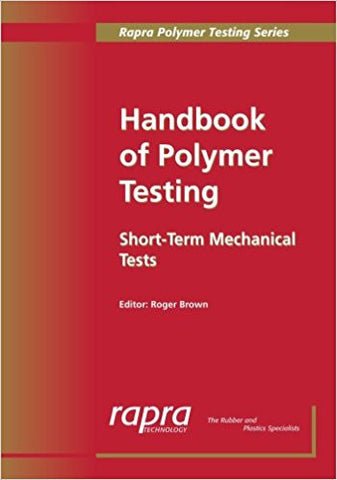
Handbook of Polymer Te...
$144.00
{"id":11242227204,"title":"Handbook of Polymer Testing - Short-Term Mechanical Tests","handle":"978-1-85957-324-2","description":"\u003ch5\u003eDescription\u003c\/h5\u003e\nAuthor: R. Brown \u003cbr\u003eISBN 978-1-85957-324-2 \u003cbr\u003e\u003cbr\u003epages 208\n\u003ch5\u003eSummary\u003c\/h5\u003e\nKnowledge of the properties of plastics is essential for designing products, specifying the material to be used, carrying out quality control on finished products, failure analysis and for understanding the structure and behaviour of new materials. \u003cbr\u003e\u003cbr\u003eEach class of materials has its own specific test procedures, which have developed as the material has evolved. This book concentrates on one area of testing – short-term mechanical tests. These are defined as tests of mechanical properties where the effects of long periods of time and cycling are ignored. This group of tests includes hardness, tensile, compression, shear, flexing, impact, and tear and in this book, it is also taken to include density and dimensional measurement together with test piece preparation and conditioning.\u003cbr\u003e\u003cbr\u003e\u003cstrong\u003eThe topics covered in this book, include:\u003c\/strong\u003e \u003cbr\u003e1. Introduction\u003cbr\u003eReasons for Testing, Source, and Condition of Test Pieces, Test Conditions, Limitations of Results, Sampling, Standards, Quality Control of Testing, Test Equipment, Product Testing, and Modes of Stressing. \u003cbr\u003e2. Test Piece Preparation\u003cbr\u003eMixing, Moulding, Stamping from Sheet or Film, and Machining. \u003cbr\u003e3. Conditioning\u003cbr\u003eStorage, Conditioning, Heat Treatment, Mechanical Conditioning, Test Conditions, and Apparatus for Conditioning. \u003cbr\u003e4. Mass, Density, and Dimensions\u003cbr\u003eMeasurement of Mass, of Density, and of Dimensions. \u003cbr\u003e5. Hardness\u003cbr\u003eRelationships, Standard Methods, and Other Methods. \u003cbr\u003e6. Tensile Stress-Strain\u003cbr\u003eGeneral, and Test Methods. \u003cbr\u003e7. Compression Stress-Strain\u003cbr\u003eTest Apparatus, Standard, and Other Tests. \u003cbr\u003e8. Shear Properties\u003cbr\u003eStandard, and Other Tests. \u003cbr\u003e9. Flexural Stress-Strain\u003cbr\u003eGeneral, and Test Methods. \u003cbr\u003e10. Impact Strength\u003cbr\u003eGeneral, and Specific Tests. \u003cbr\u003e11. Tear Properties\u003cbr\u003eTest Piece Geometry, Standard, and Other Tests \u003cbr\u003e12. Fracture Toughness\u003cbr\u003eStandard, and Other Methods. \u003cbr\u003eThis book will be useful to all those who are already involved in the testing of polymers and it is an ideal guide to those just starting out in the field, whether in academia or industry.\u003cbr\u003e\u003cbr\u003e\u003cbr\u003e\n\u003ch5\u003eTable of Contents\u003c\/h5\u003e\n\u003cp\u003e\u003cspan face=\"verdana,geneva\" size=\"1\" style=\"font-family: verdana, geneva; font-size: xx-small;\"\u003e1 Introduction \u003cbr\u003e1.1 Scope \u003cbr\u003e1.2 Reasons for Testing \u003cbr\u003e1.3 Source and Condition of Test Pieces \u003cbr\u003e1.3 Test Conditions \u003cbr\u003e1.4 Limitations of Results \u003cbr\u003e1.6 Sampling \u003cbr\u003e1.7 Standards \u003cbr\u003e1.8 Quality Control of Testing 1.9 Test Equipment \u003cbr\u003e1.10 Product Testing \u003cbr\u003e1.11 Modes of Stressing References \u003cbr\u003e\u003cbr\u003e2 Test Piece Preparation \u003cbr\u003e2.1 Introduction \u003cbr\u003e2.2 Mixing \u003cbr\u003e2.3 Moulding \u003cbr\u003e2.4 Stamping from Sheet or Film \u003cbr\u003e2.5 Machining References \u003cbr\u003e\u003cbr\u003e3 Conditioning \u003cbr\u003e3.1 Introduction \u003cbr\u003e3.2 Storage \u003cbr\u003e3.3 Conditioning \u003cbr\u003e3.4 Heat Treatment 3.5 Mechanical Conditioning \u003cbr\u003e3.5.1 Test Conditions \u003cbr\u003e3.6 Apparatus for Conditioning \u003cbr\u003e3.6.1 Air-Conditioned Rooms \u003cbr\u003e3.6.2 Enclosures\u003c\/span\u003e\u003c\/p\u003e\n\u003cp\u003e\u003cspan face=\"verdana,geneva\" size=\"1\" style=\"font-family: verdana, geneva; font-size: xx-small;\"\u003e3.6.3 Hygrometers \u003cbr\u003e3.6.4 Thermometers \u003cbr\u003e3.6.5 Apparatus for Elevated and Sub-Ambient Temperature References Appendix A – Tables of Thermal Equilibrium Times \u003cbr\u003e\u003cbr\u003e4 Mass, Density, and Dimensions \u003cbr\u003e4.1 Introduction \u003cbr\u003e4.2 Measurement of Mass \u003cbr\u003e4.3 Measurement of Density \u003cbr\u003e4.4 Measurement of Dimensions \u003cbr\u003e4.4.1 General \u003cbr\u003e4.4.2 ‘Standard’ Laboratory Procedures \u003cbr\u003e4.4.3 Other Procedures \u003cbr\u003e4.4.4 Surface Roughness \u003cbr\u003e4.4.5 Extensometry \u003cbr\u003e4.4.6 Dimensional Stability \u003cbr\u003e4.4.7 Dispersion References \u003cbr\u003e\u003cbr\u003e5 Hardness \u003cbr\u003e5.1 Introduction \u003cbr\u003e5.2 Relationships \u003cbr\u003e5.3 Standard Methods \u003cbr\u003e5.3.1 Shore Durometer \u003cbr\u003e5.3.2 Ball Indentation \u003cbr\u003e5.3.3 Rockwell \u003cbr\u003e5.3.4 Softness 5.3.5 Barcol Hardness \u003cbr\u003e5.4 Other Methods References \u003cbr\u003e\u003cbr\u003e6 Tensile Stress-Strain \u003cbr\u003e6.1 General Considerations \u003cbr\u003e6.1.1 Tough Materials with a Yield Stress Greater than the Failure Stress \u003cbr\u003e6.1.2 Tough Materials with a Yield Stress Lower than the Failure Stress \u003cbr\u003e6.1.3 Tough Materials with the same Yield and Failure Stress\u003cbr\u003e6.1.4 Brittle Materials \u003cbr\u003e6.2 Test Methods \u003cbr\u003e6.2.1 Standard Methods \u003cbr\u003e6.2.2 Test Apparatus \u003cbr\u003e6.2.3 Test Pieces \u003cbr\u003e6.2.4 Procedure References \u003cbr\u003e\u003cbr\u003e7 Compression Stress-Strain \u003cbr\u003e7.1 Introduction \u003cbr\u003e7.2 Test Apparatus \u003cbr\u003e7.3 Standard Tests \u003cbr\u003e7.3 Other Tests References \u003cbr\u003e\u003cbr\u003e8 Shear Properties \u003cbr\u003e8.1 Introduction \u003cbr\u003e8.2 Standard Tests \u003cbr\u003e8.3 Other Tests References \u003cbr\u003e\u003cbr\u003e9 Flexural Stress-Strain \u003cbr\u003e9.1 General Considerations \u003cbr\u003e9.2 Test Methods \u003cbr\u003e9.2.1 Standard Methods \u003cbr\u003e9.2.2 Test Apparatus \u003cbr\u003e9.2.3 Test Pieces \u003cbr\u003e9.2.4 Procedure References \u003cbr\u003e\u003cbr\u003e10 Impact Strength \u003cbr\u003e10.1 General Considerations \u003cbr\u003e10.1.1 Introduction \u003cbr\u003e10.1.2 Modes of Failure\u003cbr\u003e10.1.3 Factors Affecting the Impact Strength \u003cbr\u003e10.2 Specific Tests \u003cbr\u003e10.2.1 Pendulum Methods \u003cbr\u003e10.2.2 Drop Methods References \u003cbr\u003e\u003cbr\u003e11 Tear Properties \u003cbr\u003e11.1 Introduction \u003cbr\u003e11.2 Test Piece Geometry \u003cbr\u003e11.3 Standard Tests \u003cbr\u003e11.4 Other Tests References \u003cbr\u003e\u003cbr\u003e12 Fracture Toughness \u003cbr\u003e12.1 Introduction \u003cbr\u003e12.2 Standard Methods \u003cbr\u003e12.3 Other Methods References\u003cbr\u003e\u003cbr\u003e\u003c\/span\u003e\u003c\/p\u003e\n\u003ch5\u003eAbout Author\u003c\/h5\u003e\nRoger Brown is an internationally acknowledged expert on physical testing and quality assurance of polymers. He has published more than 70 technical papers and three standard textbooks on testing. In addition, he is editor of the journal Polymer Testing and co-editor of the newsletter The Test Report. He has over 25 years experience of running the testing laboratories and services at Rapra. Roger is active on many Standards committees.","published_at":"2017-06-22T21:14:04-04:00","created_at":"2017-06-22T21:14:04-04:00","vendor":"Chemtec Publishing","type":"Book","tags":["2002","book","compression","density","flexing","hardness","impact","mass","mixing","molding","moulding","p-testing","plastics","poly","properties","quality control","shear","stamping","stress-strain","tear","tensile","testing"],"price":14400,"price_min":14400,"price_max":14400,"available":true,"price_varies":false,"compare_at_price":null,"compare_at_price_min":0,"compare_at_price_max":0,"compare_at_price_varies":false,"variants":[{"id":43378394372,"title":"Default Title","option1":"Default Title","option2":null,"option3":null,"sku":"","requires_shipping":true,"taxable":true,"featured_image":null,"available":true,"name":"Handbook of Polymer Testing - Short-Term Mechanical Tests","public_title":null,"options":["Default Title"],"price":14400,"weight":1000,"compare_at_price":null,"inventory_quantity":1,"inventory_management":null,"inventory_policy":"continue","barcode":"978-1-85957-324-2","requires_selling_plan":false,"selling_plan_allocations":[],"quantity_rule":{"min":1,"max":null,"increment":1}}],"images":["\/\/chemtec.org\/cdn\/shop\/products\/978-1-85957-324-2.jpg?v=1499471522"],"featured_image":"\/\/chemtec.org\/cdn\/shop\/products\/978-1-85957-324-2.jpg?v=1499471522","options":["Title"],"media":[{"alt":null,"id":356335976541,"position":1,"preview_image":{"aspect_ratio":0.701,"height":499,"width":350,"src":"\/\/chemtec.org\/cdn\/shop\/products\/978-1-85957-324-2.jpg?v=1499471522"},"aspect_ratio":0.701,"height":499,"media_type":"image","src":"\/\/chemtec.org\/cdn\/shop\/products\/978-1-85957-324-2.jpg?v=1499471522","width":350}],"requires_selling_plan":false,"selling_plan_groups":[],"content":"\u003ch5\u003eDescription\u003c\/h5\u003e\nAuthor: R. Brown \u003cbr\u003eISBN 978-1-85957-324-2 \u003cbr\u003e\u003cbr\u003epages 208\n\u003ch5\u003eSummary\u003c\/h5\u003e\nKnowledge of the properties of plastics is essential for designing products, specifying the material to be used, carrying out quality control on finished products, failure analysis and for understanding the structure and behaviour of new materials. \u003cbr\u003e\u003cbr\u003eEach class of materials has its own specific test procedures, which have developed as the material has evolved. This book concentrates on one area of testing – short-term mechanical tests. These are defined as tests of mechanical properties where the effects of long periods of time and cycling are ignored. This group of tests includes hardness, tensile, compression, shear, flexing, impact, and tear and in this book, it is also taken to include density and dimensional measurement together with test piece preparation and conditioning.\u003cbr\u003e\u003cbr\u003e\u003cstrong\u003eThe topics covered in this book, include:\u003c\/strong\u003e \u003cbr\u003e1. Introduction\u003cbr\u003eReasons for Testing, Source, and Condition of Test Pieces, Test Conditions, Limitations of Results, Sampling, Standards, Quality Control of Testing, Test Equipment, Product Testing, and Modes of Stressing. \u003cbr\u003e2. Test Piece Preparation\u003cbr\u003eMixing, Moulding, Stamping from Sheet or Film, and Machining. \u003cbr\u003e3. Conditioning\u003cbr\u003eStorage, Conditioning, Heat Treatment, Mechanical Conditioning, Test Conditions, and Apparatus for Conditioning. \u003cbr\u003e4. Mass, Density, and Dimensions\u003cbr\u003eMeasurement of Mass, of Density, and of Dimensions. \u003cbr\u003e5. Hardness\u003cbr\u003eRelationships, Standard Methods, and Other Methods. \u003cbr\u003e6. Tensile Stress-Strain\u003cbr\u003eGeneral, and Test Methods. \u003cbr\u003e7. Compression Stress-Strain\u003cbr\u003eTest Apparatus, Standard, and Other Tests. \u003cbr\u003e8. Shear Properties\u003cbr\u003eStandard, and Other Tests. \u003cbr\u003e9. Flexural Stress-Strain\u003cbr\u003eGeneral, and Test Methods. \u003cbr\u003e10. Impact Strength\u003cbr\u003eGeneral, and Specific Tests. \u003cbr\u003e11. Tear Properties\u003cbr\u003eTest Piece Geometry, Standard, and Other Tests \u003cbr\u003e12. Fracture Toughness\u003cbr\u003eStandard, and Other Methods. \u003cbr\u003eThis book will be useful to all those who are already involved in the testing of polymers and it is an ideal guide to those just starting out in the field, whether in academia or industry.\u003cbr\u003e\u003cbr\u003e\u003cbr\u003e\n\u003ch5\u003eTable of Contents\u003c\/h5\u003e\n\u003cp\u003e\u003cspan face=\"verdana,geneva\" size=\"1\" style=\"font-family: verdana, geneva; font-size: xx-small;\"\u003e1 Introduction \u003cbr\u003e1.1 Scope \u003cbr\u003e1.2 Reasons for Testing \u003cbr\u003e1.3 Source and Condition of Test Pieces \u003cbr\u003e1.3 Test Conditions \u003cbr\u003e1.4 Limitations of Results \u003cbr\u003e1.6 Sampling \u003cbr\u003e1.7 Standards \u003cbr\u003e1.8 Quality Control of Testing 1.9 Test Equipment \u003cbr\u003e1.10 Product Testing \u003cbr\u003e1.11 Modes of Stressing References \u003cbr\u003e\u003cbr\u003e2 Test Piece Preparation \u003cbr\u003e2.1 Introduction \u003cbr\u003e2.2 Mixing \u003cbr\u003e2.3 Moulding \u003cbr\u003e2.4 Stamping from Sheet or Film \u003cbr\u003e2.5 Machining References \u003cbr\u003e\u003cbr\u003e3 Conditioning \u003cbr\u003e3.1 Introduction \u003cbr\u003e3.2 Storage \u003cbr\u003e3.3 Conditioning \u003cbr\u003e3.4 Heat Treatment 3.5 Mechanical Conditioning \u003cbr\u003e3.5.1 Test Conditions \u003cbr\u003e3.6 Apparatus for Conditioning \u003cbr\u003e3.6.1 Air-Conditioned Rooms \u003cbr\u003e3.6.2 Enclosures\u003c\/span\u003e\u003c\/p\u003e\n\u003cp\u003e\u003cspan face=\"verdana,geneva\" size=\"1\" style=\"font-family: verdana, geneva; font-size: xx-small;\"\u003e3.6.3 Hygrometers \u003cbr\u003e3.6.4 Thermometers \u003cbr\u003e3.6.5 Apparatus for Elevated and Sub-Ambient Temperature References Appendix A – Tables of Thermal Equilibrium Times \u003cbr\u003e\u003cbr\u003e4 Mass, Density, and Dimensions \u003cbr\u003e4.1 Introduction \u003cbr\u003e4.2 Measurement of Mass \u003cbr\u003e4.3 Measurement of Density \u003cbr\u003e4.4 Measurement of Dimensions \u003cbr\u003e4.4.1 General \u003cbr\u003e4.4.2 ‘Standard’ Laboratory Procedures \u003cbr\u003e4.4.3 Other Procedures \u003cbr\u003e4.4.4 Surface Roughness \u003cbr\u003e4.4.5 Extensometry \u003cbr\u003e4.4.6 Dimensional Stability \u003cbr\u003e4.4.7 Dispersion References \u003cbr\u003e\u003cbr\u003e5 Hardness \u003cbr\u003e5.1 Introduction \u003cbr\u003e5.2 Relationships \u003cbr\u003e5.3 Standard Methods \u003cbr\u003e5.3.1 Shore Durometer \u003cbr\u003e5.3.2 Ball Indentation \u003cbr\u003e5.3.3 Rockwell \u003cbr\u003e5.3.4 Softness 5.3.5 Barcol Hardness \u003cbr\u003e5.4 Other Methods References \u003cbr\u003e\u003cbr\u003e6 Tensile Stress-Strain \u003cbr\u003e6.1 General Considerations \u003cbr\u003e6.1.1 Tough Materials with a Yield Stress Greater than the Failure Stress \u003cbr\u003e6.1.2 Tough Materials with a Yield Stress Lower than the Failure Stress \u003cbr\u003e6.1.3 Tough Materials with the same Yield and Failure Stress\u003cbr\u003e6.1.4 Brittle Materials \u003cbr\u003e6.2 Test Methods \u003cbr\u003e6.2.1 Standard Methods \u003cbr\u003e6.2.2 Test Apparatus \u003cbr\u003e6.2.3 Test Pieces \u003cbr\u003e6.2.4 Procedure References \u003cbr\u003e\u003cbr\u003e7 Compression Stress-Strain \u003cbr\u003e7.1 Introduction \u003cbr\u003e7.2 Test Apparatus \u003cbr\u003e7.3 Standard Tests \u003cbr\u003e7.3 Other Tests References \u003cbr\u003e\u003cbr\u003e8 Shear Properties \u003cbr\u003e8.1 Introduction \u003cbr\u003e8.2 Standard Tests \u003cbr\u003e8.3 Other Tests References \u003cbr\u003e\u003cbr\u003e9 Flexural Stress-Strain \u003cbr\u003e9.1 General Considerations \u003cbr\u003e9.2 Test Methods \u003cbr\u003e9.2.1 Standard Methods \u003cbr\u003e9.2.2 Test Apparatus \u003cbr\u003e9.2.3 Test Pieces \u003cbr\u003e9.2.4 Procedure References \u003cbr\u003e\u003cbr\u003e10 Impact Strength \u003cbr\u003e10.1 General Considerations \u003cbr\u003e10.1.1 Introduction \u003cbr\u003e10.1.2 Modes of Failure\u003cbr\u003e10.1.3 Factors Affecting the Impact Strength \u003cbr\u003e10.2 Specific Tests \u003cbr\u003e10.2.1 Pendulum Methods \u003cbr\u003e10.2.2 Drop Methods References \u003cbr\u003e\u003cbr\u003e11 Tear Properties \u003cbr\u003e11.1 Introduction \u003cbr\u003e11.2 Test Piece Geometry \u003cbr\u003e11.3 Standard Tests \u003cbr\u003e11.4 Other Tests References \u003cbr\u003e\u003cbr\u003e12 Fracture Toughness \u003cbr\u003e12.1 Introduction \u003cbr\u003e12.2 Standard Methods \u003cbr\u003e12.3 Other Methods References\u003cbr\u003e\u003cbr\u003e\u003c\/span\u003e\u003c\/p\u003e\n\u003ch5\u003eAbout Author\u003c\/h5\u003e\nRoger Brown is an internationally acknowledged expert on physical testing and quality assurance of polymers. He has published more than 70 technical papers and three standard textbooks on testing. In addition, he is editor of the journal Polymer Testing and co-editor of the newsletter The Test Report. He has over 25 years experience of running the testing laboratories and services at Rapra. Roger is active on many Standards committees."}
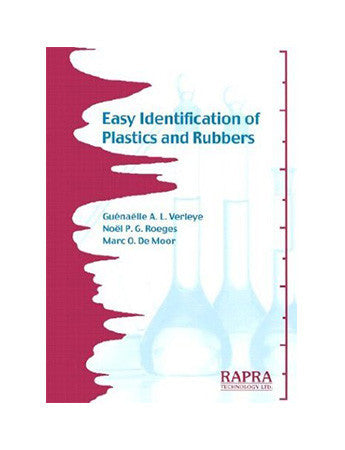
Easy Identification of...
$125.00
{"id":11242227332,"title":"Easy Identification of Plastics and Rubbers","handle":"978-1-85957-268-9","description":"\u003ch5\u003eDescription\u003c\/h5\u003e\nAuthor: G.A.L. Verleye, N.P.G. Roeges and M.O. De Moor \u003cbr\u003eISBN 978-1-85957-268-9 \u003cbr\u003e\u003cbr\u003epages 174\n\u003ch5\u003eSummary\u003c\/h5\u003e\nPolymers are found in every aspect of our daily lives. Materials must be carefully selected to ensure that properties match performance requirements. \u003cbr\u003e\u003cbr\u003eIt is often necessary to understand the chemical nature of a material to determine whether it is suitable for a particular application. This book gives guidance on the simple identification of different polymeric materials. Flow charts describe a step-by-step approach to determining the chemical nature of an unknown specimen, starting with simple studies of behaviour on heating and ranging to preparing samples for infrared spectroscopy. The infrared spectra of standard polymers are included for reference. \u003cbr\u003e\u003cbr\u003eThe book contains sections on: \u003cbr\u003e-Test methods \u003cbr\u003e-Interpreting infrared spectra \u003cbr\u003e-Flow charts for the identification of unknown samples \u003cbr\u003e-Thermoplastics \u003cbr\u003e-Thermosets \u003cbr\u003e-Elastomers \u003cbr\u003eCharacteristics of individual polymeric materials are described, including chemical structures, behaviour in tests, common applications and trade names. The infrared spectrum for each polymer is included together with an interpretation of the peaks seen. \u003cbr\u003e\u003cbr\u003eThe authors of this book are experts in the field of polymer identification. Professor De Moor has been working in industrial organic chemistry since 1979. Noel Roeges has published a renowned book on the interpretation of infrared spectra of organic structures. Verleye Guenaelle is a chemical engineer working in the polymer industry. \u003cbr\u003e\u003cbr\u003ePolymer technologists, researchers, scientists, technicians, and students of polymer science will all find this a useful text. It is written in a very practical, easy to follow style. Undergraduate students tested the methodology, bringing samples from waste to identify in the laboratories.\u003cbr\u003e\u003cbr\u003e\n\u003ch5\u003eTable of Contents\u003c\/h5\u003e\n1. Introduction \u003cbr\u003e\u003cbr\u003e2. Tests for the Identification of Plastics and Rubbers\u003cbr\u003e2.1 Simple tests\u003cbr\u003e2.2 Recording an IR spectrum\u003cbr\u003e2.3 The identification flow charts \u003cbr\u003e\u003cbr\u003e3. Thermoplastics\u003cbr\u003e3.1 What is a thermoplastic?\u003cbr\u003e3.2 Thermoplastic homopolymers\u003cbr\u003e3.3 Thermoplastic copolymers\u003cbr\u003e3.4 Characteristics of individual thermoplastic materials \u003cbr\u003e\u003cbr\u003e4. Cellulose and Starch\u003cbr\u003e4.1 Introduction to biopolymers\u003cbr\u003e4.2 Characteristics of individual biopolymers \u003cbr\u003e5. Thermosets\u003cbr\u003e5.1 What is a thermoset?\u003cbr\u003e5.2 Sample preparation for recording an IR-spectrum\u003cbr\u003e5.3 Thermoset materials\u003cbr\u003e5.4 Characteristics of individual thermoset materials \u003cbr\u003e\u003cbr\u003e6. Elastomers\u003cbr\u003e6.1 What is an elastomer?\u003cbr\u003e6.2 Recording an IR-spectrum\u003cbr\u003e6.3 The Burchfield colour reaction\u003cbr\u003e6.4 The Liebermann-Storch-Morawski reaction\u003cbr\u003e6.5 Elastomeric materials\u003cbr\u003e6.6 Characteristics of individual elastomers\u003cbr\u003e\u003cbr\u003e7. Chemical Products Required \u003cbr\u003e7.1 Introduction\u003cbr\u003e7.2 Organic solvents and reagents\u003cbr\u003e7.3 Inorganic products, acids and bases\u003cbr\u003e\u003cbr\u003e\n\u003ch5\u003eAbout Author\u003c\/h5\u003e\nRoger Brown is an internationally acknowledged expert on physical testing and quality assurance of polymers. He has published more than 70 technical papers and three standard textbooks on testing. In addition, he is editor of the journal Polymer Testing and co-editor of the newsletter The Test Report. He has over 25 years experience of running the testing laboratories and services at Rapra. Roger is active on many Standards committees.","published_at":"2017-06-22T21:14:04-04:00","created_at":"2017-06-22T21:14:04-04:00","vendor":"Chemtec Publishing","type":"Book","tags":["2001","acids","bases","biopolymers","book","cellulose","elastomers","flow charts","health","IR spectrum","p-testing","plastics","polymer","rubber","safety","solvents","starch","thermoplastic","toxicity"],"price":12500,"price_min":12500,"price_max":12500,"available":true,"price_varies":false,"compare_at_price":null,"compare_at_price_min":0,"compare_at_price_max":0,"compare_at_price_varies":false,"variants":[{"id":43378394820,"title":"Default Title","option1":"Default Title","option2":null,"option3":null,"sku":"","requires_shipping":true,"taxable":true,"featured_image":null,"available":true,"name":"Easy Identification of Plastics and Rubbers","public_title":null,"options":["Default Title"],"price":12500,"weight":1000,"compare_at_price":null,"inventory_quantity":1,"inventory_management":null,"inventory_policy":"continue","barcode":"978-1-85957-268-9","requires_selling_plan":false,"selling_plan_allocations":[],"quantity_rule":{"min":1,"max":null,"increment":1}}],"images":["\/\/chemtec.org\/cdn\/shop\/products\/978-1-85957-268-9.jpg?v=1499281031"],"featured_image":"\/\/chemtec.org\/cdn\/shop\/products\/978-1-85957-268-9.jpg?v=1499281031","options":["Title"],"media":[{"alt":null,"id":354453684317,"position":1,"preview_image":{"aspect_ratio":0.767,"height":450,"width":345,"src":"\/\/chemtec.org\/cdn\/shop\/products\/978-1-85957-268-9.jpg?v=1499281031"},"aspect_ratio":0.767,"height":450,"media_type":"image","src":"\/\/chemtec.org\/cdn\/shop\/products\/978-1-85957-268-9.jpg?v=1499281031","width":345}],"requires_selling_plan":false,"selling_plan_groups":[],"content":"\u003ch5\u003eDescription\u003c\/h5\u003e\nAuthor: G.A.L. Verleye, N.P.G. Roeges and M.O. De Moor \u003cbr\u003eISBN 978-1-85957-268-9 \u003cbr\u003e\u003cbr\u003epages 174\n\u003ch5\u003eSummary\u003c\/h5\u003e\nPolymers are found in every aspect of our daily lives. Materials must be carefully selected to ensure that properties match performance requirements. \u003cbr\u003e\u003cbr\u003eIt is often necessary to understand the chemical nature of a material to determine whether it is suitable for a particular application. This book gives guidance on the simple identification of different polymeric materials. Flow charts describe a step-by-step approach to determining the chemical nature of an unknown specimen, starting with simple studies of behaviour on heating and ranging to preparing samples for infrared spectroscopy. The infrared spectra of standard polymers are included for reference. \u003cbr\u003e\u003cbr\u003eThe book contains sections on: \u003cbr\u003e-Test methods \u003cbr\u003e-Interpreting infrared spectra \u003cbr\u003e-Flow charts for the identification of unknown samples \u003cbr\u003e-Thermoplastics \u003cbr\u003e-Thermosets \u003cbr\u003e-Elastomers \u003cbr\u003eCharacteristics of individual polymeric materials are described, including chemical structures, behaviour in tests, common applications and trade names. The infrared spectrum for each polymer is included together with an interpretation of the peaks seen. \u003cbr\u003e\u003cbr\u003eThe authors of this book are experts in the field of polymer identification. Professor De Moor has been working in industrial organic chemistry since 1979. Noel Roeges has published a renowned book on the interpretation of infrared spectra of organic structures. Verleye Guenaelle is a chemical engineer working in the polymer industry. \u003cbr\u003e\u003cbr\u003ePolymer technologists, researchers, scientists, technicians, and students of polymer science will all find this a useful text. It is written in a very practical, easy to follow style. Undergraduate students tested the methodology, bringing samples from waste to identify in the laboratories.\u003cbr\u003e\u003cbr\u003e\n\u003ch5\u003eTable of Contents\u003c\/h5\u003e\n1. Introduction \u003cbr\u003e\u003cbr\u003e2. Tests for the Identification of Plastics and Rubbers\u003cbr\u003e2.1 Simple tests\u003cbr\u003e2.2 Recording an IR spectrum\u003cbr\u003e2.3 The identification flow charts \u003cbr\u003e\u003cbr\u003e3. Thermoplastics\u003cbr\u003e3.1 What is a thermoplastic?\u003cbr\u003e3.2 Thermoplastic homopolymers\u003cbr\u003e3.3 Thermoplastic copolymers\u003cbr\u003e3.4 Characteristics of individual thermoplastic materials \u003cbr\u003e\u003cbr\u003e4. Cellulose and Starch\u003cbr\u003e4.1 Introduction to biopolymers\u003cbr\u003e4.2 Characteristics of individual biopolymers \u003cbr\u003e5. Thermosets\u003cbr\u003e5.1 What is a thermoset?\u003cbr\u003e5.2 Sample preparation for recording an IR-spectrum\u003cbr\u003e5.3 Thermoset materials\u003cbr\u003e5.4 Characteristics of individual thermoset materials \u003cbr\u003e\u003cbr\u003e6. Elastomers\u003cbr\u003e6.1 What is an elastomer?\u003cbr\u003e6.2 Recording an IR-spectrum\u003cbr\u003e6.3 The Burchfield colour reaction\u003cbr\u003e6.4 The Liebermann-Storch-Morawski reaction\u003cbr\u003e6.5 Elastomeric materials\u003cbr\u003e6.6 Characteristics of individual elastomers\u003cbr\u003e\u003cbr\u003e7. Chemical Products Required \u003cbr\u003e7.1 Introduction\u003cbr\u003e7.2 Organic solvents and reagents\u003cbr\u003e7.3 Inorganic products, acids and bases\u003cbr\u003e\u003cbr\u003e\n\u003ch5\u003eAbout Author\u003c\/h5\u003e\nRoger Brown is an internationally acknowledged expert on physical testing and quality assurance of polymers. He has published more than 70 technical papers and three standard textbooks on testing. In addition, he is editor of the journal Polymer Testing and co-editor of the newsletter The Test Report. He has over 25 years experience of running the testing laboratories and services at Rapra. Roger is active on many Standards committees."}

Sittig's Handbook of T...
$655.00
{"id":11242226948,"title":"Sittig's Handbook of Toxic and Hazardous Chemicals and Carcinogens","handle":"978-0-8155-1553-1","description":"\u003ch5\u003eDescription\u003c\/h5\u003e\nAuthor: Richard P. Pohanish \u003cbr\u003eISBN 978-0-8155-1553-1 \u003cbr\u003e\u003cbr\u003e\u003cmeta charset=\"utf-8\"\u003e\u003cspan\u003ePublished: 2008 \u003cbr\u003e\u003c\/span\u003e5th Edition, 3,000 pages\n\u003ch5\u003eSummary\u003c\/h5\u003e\nFor more than a quarter-century, \u003cstrong\u003eSittig’s Handbook of Toxic and Hazardous Chemicals and Carcinogens\u003c\/strong\u003e has continued to gather an ever-widening audience of users because it has proven to be among the most reliable, easy-to-use and essential reference works on hazardous materials. \u003cstrong\u003eSittig’s 5th Edition\u003c\/strong\u003e remains the lone comprehensive work providing a vast array of critical information on the 2,100 most heavily used, transported, and regulated chemical substances of both occupational and environmental concern.\n\u003cp class=\"style5\"\u003eEach year in the United States alone, over 350 billion pounds of toxic chemicals are manufactured and more than 8 billion pounds of these hazardous materials are transported through populated areas. It is not surprising that commercial chemical incidents occur tens of thousands of times each year, often with devastating and exorbitantly expensive consequences.\u003c\/p\u003e\n\u003cp\u003eGiven the reality of problems related to chemical hazards, including accidents and spills, the advent of new threats to our way of life, and the challenges of communicating complex data; \u003cstrong\u003eSittig’s Handbook of Toxic and Hazardous Chemicals and Carcinogens, 5th Edition\u003c\/strong\u003e provides data so that responsible decisions can be made by all who may have contact with the chemicals covered in this reference work.\u003c\/p\u003e\n\u003cp\u003eInformation is the most vital resource anyone can have when dealing with potential hazardous substance accidents or acts of terror. \u003cstrong\u003eSittig’s \u003c\/strong\u003eprovides extensive data for each of the 2,100 chemicals in a uniform format, enabling fast and accurate decisions in any situation. The chemicals are presented alphabetically and classified as a carcinogen, hazardous substance, hazardous waste, or toxic pollutant. This new edition contains extensively expanded information in all 28 fields for each chemical \u003cem\u003e(see the table of contents)\u003c\/em\u003e and has been updated to keep pace with world events. Chemicals classified as WMD have been included in the new edition as has more information frequently queried by first responders and frontline industrial safety personnel.\u003c\/p\u003e\n\u003cp\u003eToxic and hazardous chemicals are manufactured in nearly every country in the world. They are a critical part of the global economy and also one of the greatest threats to our safety and security. \u003cstrong\u003eSittig’s Handbook\u003c\/strong\u003e has proven itself, year after year, to be one of the most important major references anyone dealing with these substances can have at their disposal. This \u003cstrong\u003e5th Edition\u003c\/strong\u003e will prove that it is, once again, the lone comprehensive work available.\u003c\/p\u003e\n\u003cbr\u003e\n\u003ch5\u003eTable of Contents\u003c\/h5\u003e\n\u003cul type=\"disc\"\u003e\n\u003cli\u003eMolecular Formula\u003c\/li\u003e\n\u003cli\u003eCommon Formula\u003c\/li\u003e\n\u003cli\u003eSynonyms\u003c\/li\u003e\n\u003cli\u003eCAS Registry Number\n\u003cul type=\"circle\"\u003e\n\u003cli\u003eWhen alternate numbers exist, these have been added to the 5th Edition and will also appear in the CAS Index.\u003c\/li\u003e\n\u003c\/ul\u003e\n\u003c\/li\u003e\n\u003cli\u003eDOT ID\n\u003cul type=\"circle\"\u003e\n\u003cli\u003eDOT information has been updated to comply with the 2004 US Department of Transportation (DOT) \u003cem\u003eEmergency Response Guide\u003c\/em\u003e and classifications.\u003c\/li\u003e\n\u003c\/ul\u003e\n\u003c\/li\u003e\n\u003cli\u003eEEC Number\u003c\/li\u003e\n\u003cli\u003eRegulatory Authority\n\u003cul type=\"circle\"\u003e\n\u003cli\u003e\n\u003cp\u003eThe \u003cem\u003eCarcinogenicity\u003c\/em\u003e subsection has been simplified to contain the latest information from the National Cancer Institute (NCI), the National Toxicology Program (NCP), and the International Agency for Research on Cancer (IARC) with assessments and Cancer Groups 1 – 4. This is fortified with additional information on cancer in the Permissible Exposure in Air section (see below) as OSHA, NIOSH, ACGIH (American Conference of Governmental Hygienists) and the German Research Society (Deutsche Forchungsgemeinshaft) list their assessments.\u003c\/p\u003e\n\u003cul type=\"square\"\u003e\n\u003cli\u003eTesting information from the EPA follows carcinogen information.\u003c\/li\u003e\n\u003cli\u003eIf the chemical is used as a pesticide, the EPA status is listed as supported, canceled, etc.\u003c\/li\u003e\n\u003cli\u003eCanada’s Workplace Hazardous Material Information System (WHMIS) values have been added.\u003c\/li\u003e\n\u003c\/ul\u003e\n\u003c\/li\u003e\n\u003c\/ul\u003e\n\u003c\/li\u003e\n\u003cli\u003eCited in U.S. State Regulations\u003c\/li\u003e\n\u003cli\u003eDescription\n\u003cul type=\"circle\"\u003e\n\u003cli\u003eAdditional Physical Properties information has been added. Molecular weights are now present, as is vapor pressure, specific gravity, vapor density, and more.\u003c\/li\u003e\n\u003c\/ul\u003e\n\u003c\/li\u003e\n\u003cli\u003ePotential Exposure\n\u003cul type=\"circle\"\u003e\n\u003cli\u003eNow Contains the RTECS Compound Description, and more precise usage information has been added to most entries. Also in this section, the top 50 chemicals and some production figures have been added. For example, Phenol is shown as “Top 50 chemical production; 3.71 billion pounds in 1992, 3.60 billion pounds in 1991.”\u003c\/li\u003e\n\u003c\/ul\u003e\n\u003c\/li\u003e\n\u003cli\u003eIncompatibilities\u003c\/li\u003e\n\u003cli\u003ePermissible Exposure Limits in Air\n\u003cul type=\"circle\"\u003e\n\u003cli\u003eThis section has been completely reorganized and rewritten to harmonize with the various agencies and advisory providers. It is much more readable than the 4th Edition and now shows OSHA PELs, NIOSH RELs, ACGIH TLVs and Germany’s MAKs and BATs, and NIOSH IDLHs (levels at which chemicals are immediately dangerous to life and health). This section also contains updated permissible exposure limits for countries around the world.\u003c\/li\u003e\n\u003c\/ul\u003e\n\u003c\/li\u003e\n\u003cli\u003eDetermination in Air\n\u003cul type=\"circle\"\u003e\n\u003cli\u003eThis has been updated with more OSHA and NIOSH testing information.\u003c\/li\u003e\n\u003c\/ul\u003e\n\u003c\/li\u003e\n\u003cli\u003ePermissible Concentration in Water\u003c\/li\u003e\n\u003cli\u003eDetermination in Water\n\u003cul type=\"circle\"\u003e\n\u003cli\u003eThe Log Kow (Octanol\/water partition coefficient) has been added to this section. This is a simple, easily understood number and an indicator of potential pollution. Also, where there is information on Fish Toxicity numerical levels and ratings (LOW, INTERMEDIATE, HIGH, EXTRA HIGH) from the \u003cem\u003eNational Agricultural Risk Analysis Database\u003c\/em\u003e, it is included here.\u003c\/li\u003e\n\u003c\/ul\u003e\n\u003c\/li\u003e\n\u003cli\u003eRoutes of Entry\u003c\/li\u003e\n\u003cli\u003eHarmful Effects and Symptoms\n\u003cul type=\"circle\"\u003e\n\u003cli\u003eShort Term Exposure\u003c\/li\u003e\n\u003cli\u003eLong Term Exposure\n\u003cul type=\"square\"\u003e\n\u003cli\u003eNow contains Human Toxicity numerical levels and ratings (LOW, INTERMEDIATE, HIGH, EXTRA HIGH) from the \u003cem\u003eNational Agricultural Risk Analysis Database.\u003c\/em\u003e\n\u003c\/li\u003e\n\u003c\/ul\u003e\n\u003c\/li\u003e\n\u003cli\u003ePoints of Attack\u003c\/li\u003e\n\u003cli\u003eMedical Surveillance\n\u003cul type=\"square\"\u003e\n\u003cli\u003eNow contains recommended testing from NIOSH and \u003cu\u003erequired\u003c\/u\u003e testing mandated by OSHA.\u003c\/li\u003e\n\u003c\/ul\u003e\n\u003c\/li\u003e\n\u003cli\u003ePersonal Protective Methods\n\u003cul type=\"square\"\u003e\n\u003cli\u003eNow contains more specific information on protective materials for suits and gloves.\u003c\/li\u003e\n\u003c\/ul\u003e\n\u003c\/li\u003e\n\u003cli\u003eRespirator Selection\n\u003cul type=\"square\"\u003e\n\u003cli\u003eThis section has been brought up-to-date extensively with information from the NIOSH Pocket Guide (2006 edition).\u003c\/li\u003e\n\u003c\/ul\u003e\n\u003c\/li\u003e\n\u003c\/ul\u003e\n\u003c\/li\u003e\n\u003cli\u003eStorage\u003c\/li\u003e\n\u003cli\u003eShipping\n\u003cul type=\"circle\"\u003e\n\u003cli\u003eDOT information has been updated to comply with the 2004 US Department of Transportation (DOT) \u003cem\u003eEmergency Response Guide\u003c\/em\u003e and classifications.\u003c\/li\u003e\n\u003c\/ul\u003e\n\u003c\/li\u003e\n\u003cli\u003eSpill Handling\n\u003cul type=\"circle\"\u003e\n\u003cli\u003eNow contains the Soil Absorption Index from the \u003cem\u003eEPA National Agricultural Risk Analysis Database\u003c\/em\u003e.\u003c\/li\u003e\n\u003c\/ul\u003e\n\u003c\/li\u003e\n\u003cli\u003eFire Extinguishing\n\u003cul type=\"circle\"\u003e\n\u003cli\u003eNow contains information on specific products of combustion. For example, many otherwise mildly hazardous chemicals can emit highly toxic fumes and gasses in the heat of fire such as sulfur oxides, nitrogen oxides, arsenic, mercury, nickel, etc.\u003c\/li\u003e\n\u003c\/ul\u003e\n\u003c\/li\u003e\n\u003cli\u003eDisposal Method Suggested\u003c\/li\u003e\n\u003cli\u003eReferences\u003c\/li\u003e\n\u003c\/ul\u003e\n\u003ch5\u003eAbout Author\u003c\/h5\u003e\nRichard P. Pohanish is the author of numerous articles and professional reference works including (with Stanley Greene) four books and two CD-ROMs for the environmental, health and safety field. Mr. Pohanish has been active in the environmental field since 1980, is the President and Publisher of Chem-Data Systems, cofounder of Chemtox, Inc., and co-author of Sittig’s Pesticides and Agricultural Chemicals (2005).","published_at":"2017-06-22T21:14:03-04:00","created_at":"2017-06-22T21:14:03-04:00","vendor":"Chemtec Publishing","type":"Book","tags":["2008","ACGIH","arsenic","book","cancer","carcinogens","CAS","chemicals","disposal","DOT","EEC","effects","EINECS","environment","environmental","EPA","equipment manufacturers","exposure limits","firefighters","first aid","gasses","Germany’s MAKs and BATs","gloves","harmful","harmful effects","hazardous","hazardous waste","health","hygienists","long exposure","mercury","nickel","NIOSH","nitrogen oxides","OSHA","paramedics","police","polymer","protective materials","respiratory","routes of entry","RTECS Number","s hipping","safety","short exposure","storage","suits","sulfur oxides","symptoms","toxic","toxic fumes","toxic pollutant","toxicologists","waste disposal","WHMIS"],"price":65500,"price_min":65500,"price_max":65500,"available":true,"price_varies":false,"compare_at_price":null,"compare_at_price_min":0,"compare_at_price_max":0,"compare_at_price_varies":false,"variants":[{"id":43378394116,"title":"Default Title","option1":"Default Title","option2":null,"option3":null,"sku":"","requires_shipping":true,"taxable":true,"featured_image":null,"available":true,"name":"Sittig's Handbook of Toxic and Hazardous Chemicals and Carcinogens","public_title":null,"options":["Default Title"],"price":65500,"weight":1000,"compare_at_price":null,"inventory_quantity":1,"inventory_management":null,"inventory_policy":"continue","barcode":"978-0-8155-1553-1","requires_selling_plan":false,"selling_plan_allocations":[],"quantity_rule":{"min":1,"max":null,"increment":1}}],"images":["\/\/chemtec.org\/cdn\/shop\/products\/978-0-8155-1553-1.jpg?v=1499955671"],"featured_image":"\/\/chemtec.org\/cdn\/shop\/products\/978-0-8155-1553-1.jpg?v=1499955671","options":["Title"],"media":[{"alt":null,"id":358754156637,"position":1,"preview_image":{"aspect_ratio":0.767,"height":450,"width":345,"src":"\/\/chemtec.org\/cdn\/shop\/products\/978-0-8155-1553-1.jpg?v=1499955671"},"aspect_ratio":0.767,"height":450,"media_type":"image","src":"\/\/chemtec.org\/cdn\/shop\/products\/978-0-8155-1553-1.jpg?v=1499955671","width":345}],"requires_selling_plan":false,"selling_plan_groups":[],"content":"\u003ch5\u003eDescription\u003c\/h5\u003e\nAuthor: Richard P. Pohanish \u003cbr\u003eISBN 978-0-8155-1553-1 \u003cbr\u003e\u003cbr\u003e\u003cmeta charset=\"utf-8\"\u003e\u003cspan\u003ePublished: 2008 \u003cbr\u003e\u003c\/span\u003e5th Edition, 3,000 pages\n\u003ch5\u003eSummary\u003c\/h5\u003e\nFor more than a quarter-century, \u003cstrong\u003eSittig’s Handbook of Toxic and Hazardous Chemicals and Carcinogens\u003c\/strong\u003e has continued to gather an ever-widening audience of users because it has proven to be among the most reliable, easy-to-use and essential reference works on hazardous materials. \u003cstrong\u003eSittig’s 5th Edition\u003c\/strong\u003e remains the lone comprehensive work providing a vast array of critical information on the 2,100 most heavily used, transported, and regulated chemical substances of both occupational and environmental concern.\n\u003cp class=\"style5\"\u003eEach year in the United States alone, over 350 billion pounds of toxic chemicals are manufactured and more than 8 billion pounds of these hazardous materials are transported through populated areas. It is not surprising that commercial chemical incidents occur tens of thousands of times each year, often with devastating and exorbitantly expensive consequences.\u003c\/p\u003e\n\u003cp\u003eGiven the reality of problems related to chemical hazards, including accidents and spills, the advent of new threats to our way of life, and the challenges of communicating complex data; \u003cstrong\u003eSittig’s Handbook of Toxic and Hazardous Chemicals and Carcinogens, 5th Edition\u003c\/strong\u003e provides data so that responsible decisions can be made by all who may have contact with the chemicals covered in this reference work.\u003c\/p\u003e\n\u003cp\u003eInformation is the most vital resource anyone can have when dealing with potential hazardous substance accidents or acts of terror. \u003cstrong\u003eSittig’s \u003c\/strong\u003eprovides extensive data for each of the 2,100 chemicals in a uniform format, enabling fast and accurate decisions in any situation. The chemicals are presented alphabetically and classified as a carcinogen, hazardous substance, hazardous waste, or toxic pollutant. This new edition contains extensively expanded information in all 28 fields for each chemical \u003cem\u003e(see the table of contents)\u003c\/em\u003e and has been updated to keep pace with world events. Chemicals classified as WMD have been included in the new edition as has more information frequently queried by first responders and frontline industrial safety personnel.\u003c\/p\u003e\n\u003cp\u003eToxic and hazardous chemicals are manufactured in nearly every country in the world. They are a critical part of the global economy and also one of the greatest threats to our safety and security. \u003cstrong\u003eSittig’s Handbook\u003c\/strong\u003e has proven itself, year after year, to be one of the most important major references anyone dealing with these substances can have at their disposal. This \u003cstrong\u003e5th Edition\u003c\/strong\u003e will prove that it is, once again, the lone comprehensive work available.\u003c\/p\u003e\n\u003cbr\u003e\n\u003ch5\u003eTable of Contents\u003c\/h5\u003e\n\u003cul type=\"disc\"\u003e\n\u003cli\u003eMolecular Formula\u003c\/li\u003e\n\u003cli\u003eCommon Formula\u003c\/li\u003e\n\u003cli\u003eSynonyms\u003c\/li\u003e\n\u003cli\u003eCAS Registry Number\n\u003cul type=\"circle\"\u003e\n\u003cli\u003eWhen alternate numbers exist, these have been added to the 5th Edition and will also appear in the CAS Index.\u003c\/li\u003e\n\u003c\/ul\u003e\n\u003c\/li\u003e\n\u003cli\u003eDOT ID\n\u003cul type=\"circle\"\u003e\n\u003cli\u003eDOT information has been updated to comply with the 2004 US Department of Transportation (DOT) \u003cem\u003eEmergency Response Guide\u003c\/em\u003e and classifications.\u003c\/li\u003e\n\u003c\/ul\u003e\n\u003c\/li\u003e\n\u003cli\u003eEEC Number\u003c\/li\u003e\n\u003cli\u003eRegulatory Authority\n\u003cul type=\"circle\"\u003e\n\u003cli\u003e\n\u003cp\u003eThe \u003cem\u003eCarcinogenicity\u003c\/em\u003e subsection has been simplified to contain the latest information from the National Cancer Institute (NCI), the National Toxicology Program (NCP), and the International Agency for Research on Cancer (IARC) with assessments and Cancer Groups 1 – 4. This is fortified with additional information on cancer in the Permissible Exposure in Air section (see below) as OSHA, NIOSH, ACGIH (American Conference of Governmental Hygienists) and the German Research Society (Deutsche Forchungsgemeinshaft) list their assessments.\u003c\/p\u003e\n\u003cul type=\"square\"\u003e\n\u003cli\u003eTesting information from the EPA follows carcinogen information.\u003c\/li\u003e\n\u003cli\u003eIf the chemical is used as a pesticide, the EPA status is listed as supported, canceled, etc.\u003c\/li\u003e\n\u003cli\u003eCanada’s Workplace Hazardous Material Information System (WHMIS) values have been added.\u003c\/li\u003e\n\u003c\/ul\u003e\n\u003c\/li\u003e\n\u003c\/ul\u003e\n\u003c\/li\u003e\n\u003cli\u003eCited in U.S. State Regulations\u003c\/li\u003e\n\u003cli\u003eDescription\n\u003cul type=\"circle\"\u003e\n\u003cli\u003eAdditional Physical Properties information has been added. Molecular weights are now present, as is vapor pressure, specific gravity, vapor density, and more.\u003c\/li\u003e\n\u003c\/ul\u003e\n\u003c\/li\u003e\n\u003cli\u003ePotential Exposure\n\u003cul type=\"circle\"\u003e\n\u003cli\u003eNow Contains the RTECS Compound Description, and more precise usage information has been added to most entries. Also in this section, the top 50 chemicals and some production figures have been added. For example, Phenol is shown as “Top 50 chemical production; 3.71 billion pounds in 1992, 3.60 billion pounds in 1991.”\u003c\/li\u003e\n\u003c\/ul\u003e\n\u003c\/li\u003e\n\u003cli\u003eIncompatibilities\u003c\/li\u003e\n\u003cli\u003ePermissible Exposure Limits in Air\n\u003cul type=\"circle\"\u003e\n\u003cli\u003eThis section has been completely reorganized and rewritten to harmonize with the various agencies and advisory providers. It is much more readable than the 4th Edition and now shows OSHA PELs, NIOSH RELs, ACGIH TLVs and Germany’s MAKs and BATs, and NIOSH IDLHs (levels at which chemicals are immediately dangerous to life and health). This section also contains updated permissible exposure limits for countries around the world.\u003c\/li\u003e\n\u003c\/ul\u003e\n\u003c\/li\u003e\n\u003cli\u003eDetermination in Air\n\u003cul type=\"circle\"\u003e\n\u003cli\u003eThis has been updated with more OSHA and NIOSH testing information.\u003c\/li\u003e\n\u003c\/ul\u003e\n\u003c\/li\u003e\n\u003cli\u003ePermissible Concentration in Water\u003c\/li\u003e\n\u003cli\u003eDetermination in Water\n\u003cul type=\"circle\"\u003e\n\u003cli\u003eThe Log Kow (Octanol\/water partition coefficient) has been added to this section. This is a simple, easily understood number and an indicator of potential pollution. Also, where there is information on Fish Toxicity numerical levels and ratings (LOW, INTERMEDIATE, HIGH, EXTRA HIGH) from the \u003cem\u003eNational Agricultural Risk Analysis Database\u003c\/em\u003e, it is included here.\u003c\/li\u003e\n\u003c\/ul\u003e\n\u003c\/li\u003e\n\u003cli\u003eRoutes of Entry\u003c\/li\u003e\n\u003cli\u003eHarmful Effects and Symptoms\n\u003cul type=\"circle\"\u003e\n\u003cli\u003eShort Term Exposure\u003c\/li\u003e\n\u003cli\u003eLong Term Exposure\n\u003cul type=\"square\"\u003e\n\u003cli\u003eNow contains Human Toxicity numerical levels and ratings (LOW, INTERMEDIATE, HIGH, EXTRA HIGH) from the \u003cem\u003eNational Agricultural Risk Analysis Database.\u003c\/em\u003e\n\u003c\/li\u003e\n\u003c\/ul\u003e\n\u003c\/li\u003e\n\u003cli\u003ePoints of Attack\u003c\/li\u003e\n\u003cli\u003eMedical Surveillance\n\u003cul type=\"square\"\u003e\n\u003cli\u003eNow contains recommended testing from NIOSH and \u003cu\u003erequired\u003c\/u\u003e testing mandated by OSHA.\u003c\/li\u003e\n\u003c\/ul\u003e\n\u003c\/li\u003e\n\u003cli\u003ePersonal Protective Methods\n\u003cul type=\"square\"\u003e\n\u003cli\u003eNow contains more specific information on protective materials for suits and gloves.\u003c\/li\u003e\n\u003c\/ul\u003e\n\u003c\/li\u003e\n\u003cli\u003eRespirator Selection\n\u003cul type=\"square\"\u003e\n\u003cli\u003eThis section has been brought up-to-date extensively with information from the NIOSH Pocket Guide (2006 edition).\u003c\/li\u003e\n\u003c\/ul\u003e\n\u003c\/li\u003e\n\u003c\/ul\u003e\n\u003c\/li\u003e\n\u003cli\u003eStorage\u003c\/li\u003e\n\u003cli\u003eShipping\n\u003cul type=\"circle\"\u003e\n\u003cli\u003eDOT information has been updated to comply with the 2004 US Department of Transportation (DOT) \u003cem\u003eEmergency Response Guide\u003c\/em\u003e and classifications.\u003c\/li\u003e\n\u003c\/ul\u003e\n\u003c\/li\u003e\n\u003cli\u003eSpill Handling\n\u003cul type=\"circle\"\u003e\n\u003cli\u003eNow contains the Soil Absorption Index from the \u003cem\u003eEPA National Agricultural Risk Analysis Database\u003c\/em\u003e.\u003c\/li\u003e\n\u003c\/ul\u003e\n\u003c\/li\u003e\n\u003cli\u003eFire Extinguishing\n\u003cul type=\"circle\"\u003e\n\u003cli\u003eNow contains information on specific products of combustion. For example, many otherwise mildly hazardous chemicals can emit highly toxic fumes and gasses in the heat of fire such as sulfur oxides, nitrogen oxides, arsenic, mercury, nickel, etc.\u003c\/li\u003e\n\u003c\/ul\u003e\n\u003c\/li\u003e\n\u003cli\u003eDisposal Method Suggested\u003c\/li\u003e\n\u003cli\u003eReferences\u003c\/li\u003e\n\u003c\/ul\u003e\n\u003ch5\u003eAbout Author\u003c\/h5\u003e\nRichard P. Pohanish is the author of numerous articles and professional reference works including (with Stanley Greene) four books and two CD-ROMs for the environmental, health and safety field. Mr. Pohanish has been active in the environmental field since 1980, is the President and Publisher of Chem-Data Systems, cofounder of Chemtox, Inc., and co-author of Sittig’s Pesticides and Agricultural Chemicals (2005)."}
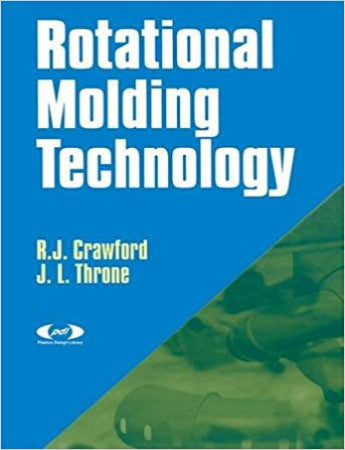
Rotational Molding Tec...
$225.00
{"id":11242226564,"title":"Rotational Molding Technology","handle":"1-884207-85-5","description":"\u003ch5\u003eDescription\u003c\/h5\u003e\nAuthor: James L. Throne and R.J. Crawford \u003cbr\u003eISBN 1-884207-85-5 \u003cbr\u003e\u003cbr\u003ePages: 450\n\u003ch5\u003eSummary\u003c\/h5\u003e\nThis book clarifies and quantifies many of the technical interactions in the process. It distinguishes itself from other books on the subject by being a seamless story of the advanced aspects of the rotational molding process. There are seven chapters within the book.\u003cbr\u003eThe U.S. market for rotational molding products was one billion pounds in the year 2000. The growth of the rotational molding industry has grown at 10 to 15% per year. With this growth has come an increasing need for details on the complex, technical aspects of the process.\u003cbr\u003e\u003cbr\u003e\n\u003ch5\u003eTable of Contents\u003c\/h5\u003e\n\u003cul\u003e\n\u003cli\u003eIntroduction to Rotational Molding\u003c\/li\u003e\n\u003cli\u003eA brief overview of the process and a comparison of rotational molding versus blow molding and twin-sheet thermoforming.\u003c\/li\u003e\n\u003cli\u003eRotational Molding Polymers\u003c\/li\u003e\n\u003cli\u003eDescribes the characteristics of polyolefins, which are the major class of polymers used in the process. It includes descriptions of vinyls, nylons, PVC plastisols, silicones, and thermosetting polymers.\u003c\/li\u003e\n\u003cli\u003ePulverizing, Grinding and Attrition\u003c\/li\u003e\n\u003cli\u003eFocuses on the particle size of solid polymer powders, particle size distribution, particle analysis techniques, and optimum particle shape. It also details pigments and property enhancers.\u003c\/li\u003e\n\u003cli\u003eRotational Molding Machines\u003c\/li\u003e\n\u003cli\u003eAn overview of the myriad types of commercial rotational molding machines.\u003c\/li\u003e\n\u003cli\u003eMolds\u003c\/li\u003e\n\u003cli\u003eCompares materials such as steel, aluminum, and electroformed nickel in terms of their characteristic strength and thermal efficiencies. It also discusses mold design aspects and various mold releases.\u003c\/li\u003e\n\u003cli\u003eProcessing\u003c\/li\u003e\n\u003cli\u003eCovers powder flow behavior, particle-to-particle adhesion, and densification as well as bubble removal, oven cycle time, and other mechanisms.\u003c\/li\u003e\n\u003cli\u003ePart Design\u003c\/li\u003e\n\u003cli\u003eProvides an overview of the technical aspects that influence the part design, including powder flow into and out of acute angles, and the effect of processing on properties and polymer characteristics.\u003c\/li\u003e\n\u003c\/ul\u003e\n\u003cbr\u003e\n\u003ch5\u003eAbout Author\u003c\/h5\u003e\nR.J. Crawford is a Professor of Mechanical Engineering at the University of Auckland, New Zealand. He has published over 200 papers and is the author of five textbooks on plastics and engineering materials. He has been awarded numerous prizes for his research including the Netlon Medal from the Institute of Materials. James L. Throne is President of Sherwood Technologies, Inc., a polymer processing consulting firm he started in 1985. He has more than 20 years industrial experience, and taught for 10 years in universities. He has published nearly 200 technical papers, has nine patents, and has written eight books on polymer processing.","published_at":"2017-06-22T21:14:02-04:00","created_at":"2017-06-22T21:14:02-04:00","vendor":"Chemtec Publishing","type":"Book","tags":["2001","adhesion","attrition","book","bubbles","grinding","mold design","molds","nylons","p-processing","polymer","polyolefins","process","pulverizing","PVC plastisols","silicones","thermosetting polymers","vinyls"],"price":22500,"price_min":22500,"price_max":22500,"available":true,"price_varies":false,"compare_at_price":null,"compare_at_price_min":0,"compare_at_price_max":0,"compare_at_price_varies":false,"variants":[{"id":43378393732,"title":"Default Title","option1":"Default Title","option2":null,"option3":null,"sku":"","requires_shipping":true,"taxable":true,"featured_image":null,"available":true,"name":"Rotational Molding Technology","public_title":null,"options":["Default Title"],"price":22500,"weight":1000,"compare_at_price":null,"inventory_quantity":0,"inventory_management":null,"inventory_policy":"continue","barcode":"1-884207-85-5","requires_selling_plan":false,"selling_plan_allocations":[],"quantity_rule":{"min":1,"max":null,"increment":1}}],"images":["\/\/chemtec.org\/cdn\/shop\/products\/1-884207-85-5.jpg?v=1499954920"],"featured_image":"\/\/chemtec.org\/cdn\/shop\/products\/1-884207-85-5.jpg?v=1499954920","options":["Title"],"media":[{"alt":null,"id":358739673181,"position":1,"preview_image":{"aspect_ratio":0.767,"height":450,"width":345,"src":"\/\/chemtec.org\/cdn\/shop\/products\/1-884207-85-5.jpg?v=1499954920"},"aspect_ratio":0.767,"height":450,"media_type":"image","src":"\/\/chemtec.org\/cdn\/shop\/products\/1-884207-85-5.jpg?v=1499954920","width":345}],"requires_selling_plan":false,"selling_plan_groups":[],"content":"\u003ch5\u003eDescription\u003c\/h5\u003e\nAuthor: James L. Throne and R.J. Crawford \u003cbr\u003eISBN 1-884207-85-5 \u003cbr\u003e\u003cbr\u003ePages: 450\n\u003ch5\u003eSummary\u003c\/h5\u003e\nThis book clarifies and quantifies many of the technical interactions in the process. It distinguishes itself from other books on the subject by being a seamless story of the advanced aspects of the rotational molding process. There are seven chapters within the book.\u003cbr\u003eThe U.S. market for rotational molding products was one billion pounds in the year 2000. The growth of the rotational molding industry has grown at 10 to 15% per year. With this growth has come an increasing need for details on the complex, technical aspects of the process.\u003cbr\u003e\u003cbr\u003e\n\u003ch5\u003eTable of Contents\u003c\/h5\u003e\n\u003cul\u003e\n\u003cli\u003eIntroduction to Rotational Molding\u003c\/li\u003e\n\u003cli\u003eA brief overview of the process and a comparison of rotational molding versus blow molding and twin-sheet thermoforming.\u003c\/li\u003e\n\u003cli\u003eRotational Molding Polymers\u003c\/li\u003e\n\u003cli\u003eDescribes the characteristics of polyolefins, which are the major class of polymers used in the process. It includes descriptions of vinyls, nylons, PVC plastisols, silicones, and thermosetting polymers.\u003c\/li\u003e\n\u003cli\u003ePulverizing, Grinding and Attrition\u003c\/li\u003e\n\u003cli\u003eFocuses on the particle size of solid polymer powders, particle size distribution, particle analysis techniques, and optimum particle shape. It also details pigments and property enhancers.\u003c\/li\u003e\n\u003cli\u003eRotational Molding Machines\u003c\/li\u003e\n\u003cli\u003eAn overview of the myriad types of commercial rotational molding machines.\u003c\/li\u003e\n\u003cli\u003eMolds\u003c\/li\u003e\n\u003cli\u003eCompares materials such as steel, aluminum, and electroformed nickel in terms of their characteristic strength and thermal efficiencies. It also discusses mold design aspects and various mold releases.\u003c\/li\u003e\n\u003cli\u003eProcessing\u003c\/li\u003e\n\u003cli\u003eCovers powder flow behavior, particle-to-particle adhesion, and densification as well as bubble removal, oven cycle time, and other mechanisms.\u003c\/li\u003e\n\u003cli\u003ePart Design\u003c\/li\u003e\n\u003cli\u003eProvides an overview of the technical aspects that influence the part design, including powder flow into and out of acute angles, and the effect of processing on properties and polymer characteristics.\u003c\/li\u003e\n\u003c\/ul\u003e\n\u003cbr\u003e\n\u003ch5\u003eAbout Author\u003c\/h5\u003e\nR.J. Crawford is a Professor of Mechanical Engineering at the University of Auckland, New Zealand. He has published over 200 papers and is the author of five textbooks on plastics and engineering materials. He has been awarded numerous prizes for his research including the Netlon Medal from the Institute of Materials. James L. Throne is President of Sherwood Technologies, Inc., a polymer processing consulting firm he started in 1985. He has more than 20 years industrial experience, and taught for 10 years in universities. He has published nearly 200 technical papers, has nine patents, and has written eight books on polymer processing."}
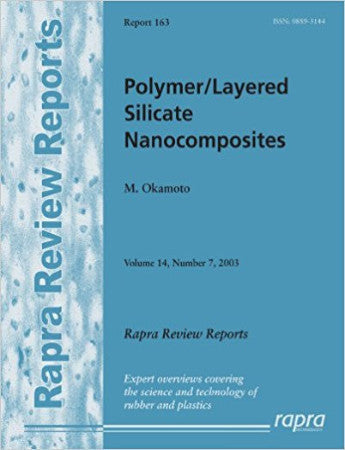
Polymer/Layered Silica...
$130.00
{"id":11242226436,"title":"Polymer\/Layered Silicate Nanocomposites","handle":"978-1-85957-391-4","description":"\u003ch5\u003eDescription\u003c\/h5\u003e\nAuthor: Masami Okamoto, Toyota Technological Institute \u003cbr\u003eISBN 978-1-85957-391-4 \u003cbr\u003e\u003cbr\u003e166 pages, Soft-backed\u003cbr\u003eVol. 14, no. 7, report 163, 2003\u003cbr\u003e\u003cbr\u003e\n\u003ch5\u003eSummary\u003c\/h5\u003e\nPolymer\/clay nanocomposites have received a lot of attention over the last decade. Companies such as Nanocor and Honeywell are already commercially exploiting nanocomposite materials. A small amount of nanodispersed filler leads to an improvement in material properties, such as modulus, strength, heat resistance, flame retardancy, and lowered gas permeability. Adding clay nanofillers to biodegradable polymers has also been shown to enhance compostability.\u003cbr\u003e\u003cbr\u003eThe enhancement of material properties has been linked to the interfacial interaction between the polymer matrix and the organically modified layered silicate filler structure. The filler particles provide a very high surface area.\u003cbr\u003e\u003cbr\u003eMontmorillonite, hectorite, and saponite are the most commonly used layered silicates. For a nanocomposite to be formed successfully, the mineral must disperse into separate layers. The surface chemistry is also important - ion exchange reactions with cations (commonly alkyl ammonium or alkyl phosphonium cations) allow the silicate to be compatibilised with the polymer matrix. The strong interactions between the two materials lead to dispersion at the nanometre level.\u003cbr\u003e\u003cbr\u003ePolymer\/layered silicate nanocomposites are prepared by a variety of routes. One of the first materials, a Nylon 6 nanocomposite, was prepared by in situ polymerisation of -caprolactam in a dispersion of montmorillonite. The silicate can be dispersed in a liquid monomer or a solution of monomer. It has also been possible to melt-mix polymers with layered silicates, avoiding the use of organic solvents. The latter method permits the use of conventional processing techniques such as injection moulding and extrusion.\u003cbr\u003e\u003cbr\u003eNanocomposites have been formed with a wide variety of polymers including: epoxy, polyurethane, polyetherimide, poybenzoxazine, polypropylene, polystyrene, polymethyl methacrylate, polycaprolactone, polyacrylonitrile, polyvinyl pyrrolidone, polyethylene glycol, polyvinylidene fluoride, polybutadiene, copolymers and liquid crystalline polymers. Summaries of the work carried out on these different materials and references to these studies are included in this Rapra Review Report.\u003cbr\u003e\u003cbr\u003eMany studies have been carried out to characterise different nanocomposites. Techniques in use include wide-angle X-ray diffraction and transmission electron microscopy.\u003cbr\u003e\u003cbr\u003eProcessing techniques are critical in polymer manufacturing and this holds true for nanocomposites. Several processing methods and innovative techniques are discussed. For example, Nylon 6 clay nanocomposites have been electrospun from solution, which resulted in highly aligned clay particles.\u003cbr\u003e\u003cbr\u003eTwo other types of nanofiller are briefly described here. Polyhedral oligomeric silsesquioxane (POSS) nanoparticles combine organic and inorganic segments with nanosized cage structures. Carbon nanotubes have also been examined as they offer unique mechanical and electrical properties.\u003cbr\u003e\u003cbr\u003eThis review is accompanied by around 400 abstracts compiled from the Polymer Library, to facilitate further reading on this subject. A subject index and a company index are included. The majority of these references are cited in the review, which is exceptionally well referenced.\u003cbr\u003e\u003cbr\u003e\u003cstrong\u003eKey features\u003c\/strong\u003e\u003cbr\u003eNanocomposite structure \u003cbr\u003eNanocomposite properties \u003cbr\u003eNanocomposite preparation \u003cbr\u003eDifferent polymer nanocomposites \u003cbr\u003eProcessing nanocomposites \u003cbr\u003eWell referenced\u003cbr\u003e\u003cbr\u003e\n\u003ch5\u003eTable of Contents\u003c\/h5\u003e\n\u003cstrong\u003e1.Introduction\u003cbr\u003e2. Layered Silicates \u003c\/strong\u003e\u003cbr\u003e2.1 Structure and Properties\u003cbr\u003e2.2 Organophilic Modification\u003cbr\u003e\u003cbr\u003e\u003cstrong\u003e3. Preparative Methods for PLS Nanocomposites\u003c\/strong\u003e \u003cbr\u003e3.1 Intercalation of Polymer or Pre-Polymer from Solution\u003cbr\u003e3.2 In Situ Intercalative Polymerisation Method\u003cbr\u003e3.3 Melt Intercalation Method\u0026lt;\u003cbr\u003e\u003cbr\u003e\u003cstrong\u003e4. Structure and Characterisation of PLS Nanocomposites \u003c\/strong\u003e\u003cbr\u003e4.1 Structure of PLS Nanocomposites\u003cbr\u003e4.2 Characterisation of PLS Nanocomposites\u003cbr\u003e\u003cbr\u003e\u003cstrong\u003e5. Types of Polymers for the Preparation of Nanocomposites \u003c\/strong\u003e\u003cbr\u003e5.1 Vinyl Polymer Systems\u003cbr\u003e5.1.1 PS\/LS Nanocomposites\u003cbr\u003e5.1.2 PMMA\/LS Nanocomposites\u003cbr\u003e5.1.3 PVA\/LS Nanocomposites\u003cbr\u003e5.1.4 Block Copolymer\/LS Nanocomposites\u003cbr\u003e5.2 Condensation Polymers and Rubbers\u003cbr\u003e5.2.1 Nylon\/LS Nanocomposites\u003cbr\u003e5.2.2 PCL\/LS Nanocomposites\u003cbr\u003e5.2.3 PET\/LS Nanocomposites\u003cbr\u003e5.2.4 PBT\/LS Nanocomposites\u003cbr\u003e5.2.5 PC\/LS Nanocomposites\u003cbr\u003e5.2.6 PEO\/LS Nanocomposites\u003cbr\u003e5.2.7 LCP\/LS Nanocomposites\u003cbr\u003e5.2.8 PBO\/LS Nanocomposites\u003cbr\u003e5.2.9 EPR\/LS Nanocomposites\u003cbr\u003e5.2.10 PU\/LS Nanocomposites\u003cbr\u003e5.2.11 Polyimide\/LS Nanocomposites\u003cbr\u003e5.3 Polyolefins\u003cbr\u003e5.3.1 PP\/LS Nanocomposites\u003cbr\u003e5.3.2 PE\/LS Nanocomposites\u003cbr\u003e5.4 Speciality Polymers\u003cbr\u003e5.4.1 PANI\/LS Nanocomposites\u003cbr\u003e5.4.2 PNVC\/LS Nanocomposites\u003cbr\u003e5.5 Biodegradable Polymers\u003cbr\u003e5.5.1 PLA\/LS Nanocomposites\u003cbr\u003e5.5.2 PBS\/Clay Nanocomposites\u003cbr\u003e\u003cbr\u003e\u003cstrong\u003e6. Properties of PLS Nanocomposite Materials \u003c\/strong\u003e\u003cbr\u003e6.1 Dynamic Mechanical Analysis (DMA)\u003cbr\u003e6.2 Tensile Properties\u003cbr\u003e6.3 Flexural Properties and Heat Distortion Temperature\u003cbr\u003e6.4 Thermal Stability\u003cbr\u003e6.5 Fire Retardant Properties\u003cbr\u003e6.6 Gas Barrier Properties\u003cbr\u003e6.7 Ionic Conductivity\u003cbr\u003e6.8 Optical Transparency\u003cbr\u003e6.9 Biodegradability\u003cbr\u003e6.10 Crystallisation\u003cbr\u003e6.10.1 Spherulite Growth\u003cbr\u003e6.10.2 Effect of Intercalation on Enhancement of Dynamic Modulus\u003cbr\u003e6.10.3 Crystallisation Controlled by Silicate Surfaces\u003cbr\u003e\u003cbr\u003e\u003cstrong\u003e7. Melt Rheology \u003c\/strong\u003e\u003cbr\u003e7.1 Linear Viscoelastic Properties\u003cbr\u003e7.2 Elongational Flow and Strain-Induced Hardening\u003cbr\u003e\u003cbr\u003e\u003cstrong\u003e8. Processing Operations \u003c\/strong\u003e\u003cbr\u003e8.1 Foam Processing Using Supercritical CO2\u003cbr\u003e8.2 Shear Flow Processing\u003cbr\u003e8.3 Electrospinning\u003cbr\u003e8.4 Porous Ceramic Materials\u003cbr\u003e\u003cbr\u003e\u003cstrong\u003e9. Multifunctional Polyhedral Oligomeric Silsesquioxane Nanocomposites \u003c\/strong\u003e\u003cbr\u003e\u003cbr\u003e\u003cstrong\u003e10. Carbon Nanotube Polymer Composites\u003cbr\u003e\u003cbr\u003e11. Outlook\u003cbr\u003e\u003cbr\u003eAdditional References\u003c\/strong\u003e\u003cbr\u003e\u003cbr\u003e\n\u003ch5\u003eAbout Author\u003c\/h5\u003e\nProfessor Musami Okamoto is a world-renowned expert in the field of polymer\/clay nanocomposites. He is currently a Professor at the Graduate School of Engineering, in the Toyota Technological Institute. He received a Ph.D. in 1994 from the Tokyo Institute of Technology on Structure Development during Melt Processing and Mechanical Properties in Polymer Blends. He has worked at Toyobo Co., where his research programme focused on polymer blends and alloys. He held a postdoctoral post at the National Institute of Advanced Industrial Science \u0026amp; Technology, Kyushu, prior to joining the faculty at Toyota","published_at":"2017-06-22T21:14:02-04:00","created_at":"2017-06-22T21:14:02-04:00","vendor":"Chemtec Publishing","type":"Book","tags":["2003","book","copolymers","epoxy","liquid crystalline polymers","nano","nanocomposites","p-applications","polyacrylontrile","polybutadiene","polycaprolactone","polyetherimide","polyethylene glycol","polymer","polymers","polymethyl methacrylate","polypropylene","polystyrene","polyurethane","polyvinyl pyrrolidone","polyvinylidene fluoride","poybenzoxazine","silicates"],"price":13000,"price_min":13000,"price_max":13000,"available":true,"price_varies":false,"compare_at_price":null,"compare_at_price_min":0,"compare_at_price_max":0,"compare_at_price_varies":false,"variants":[{"id":43378392708,"title":"Default Title","option1":"Default Title","option2":null,"option3":null,"sku":"","requires_shipping":true,"taxable":true,"featured_image":null,"available":true,"name":"Polymer\/Layered Silicate Nanocomposites","public_title":null,"options":["Default Title"],"price":13000,"weight":1000,"compare_at_price":null,"inventory_quantity":1,"inventory_management":null,"inventory_policy":"continue","barcode":"978-1-85957-391-4","requires_selling_plan":false,"selling_plan_allocations":[],"quantity_rule":{"min":1,"max":null,"increment":1}}],"images":["\/\/chemtec.org\/cdn\/shop\/products\/978-1-85957-391-4.jpg?v=1499953064"],"featured_image":"\/\/chemtec.org\/cdn\/shop\/products\/978-1-85957-391-4.jpg?v=1499953064","options":["Title"],"media":[{"alt":null,"id":358552731741,"position":1,"preview_image":{"aspect_ratio":0.767,"height":450,"width":345,"src":"\/\/chemtec.org\/cdn\/shop\/products\/978-1-85957-391-4.jpg?v=1499953064"},"aspect_ratio":0.767,"height":450,"media_type":"image","src":"\/\/chemtec.org\/cdn\/shop\/products\/978-1-85957-391-4.jpg?v=1499953064","width":345}],"requires_selling_plan":false,"selling_plan_groups":[],"content":"\u003ch5\u003eDescription\u003c\/h5\u003e\nAuthor: Masami Okamoto, Toyota Technological Institute \u003cbr\u003eISBN 978-1-85957-391-4 \u003cbr\u003e\u003cbr\u003e166 pages, Soft-backed\u003cbr\u003eVol. 14, no. 7, report 163, 2003\u003cbr\u003e\u003cbr\u003e\n\u003ch5\u003eSummary\u003c\/h5\u003e\nPolymer\/clay nanocomposites have received a lot of attention over the last decade. Companies such as Nanocor and Honeywell are already commercially exploiting nanocomposite materials. A small amount of nanodispersed filler leads to an improvement in material properties, such as modulus, strength, heat resistance, flame retardancy, and lowered gas permeability. Adding clay nanofillers to biodegradable polymers has also been shown to enhance compostability.\u003cbr\u003e\u003cbr\u003eThe enhancement of material properties has been linked to the interfacial interaction between the polymer matrix and the organically modified layered silicate filler structure. The filler particles provide a very high surface area.\u003cbr\u003e\u003cbr\u003eMontmorillonite, hectorite, and saponite are the most commonly used layered silicates. For a nanocomposite to be formed successfully, the mineral must disperse into separate layers. The surface chemistry is also important - ion exchange reactions with cations (commonly alkyl ammonium or alkyl phosphonium cations) allow the silicate to be compatibilised with the polymer matrix. The strong interactions between the two materials lead to dispersion at the nanometre level.\u003cbr\u003e\u003cbr\u003ePolymer\/layered silicate nanocomposites are prepared by a variety of routes. One of the first materials, a Nylon 6 nanocomposite, was prepared by in situ polymerisation of -caprolactam in a dispersion of montmorillonite. The silicate can be dispersed in a liquid monomer or a solution of monomer. It has also been possible to melt-mix polymers with layered silicates, avoiding the use of organic solvents. The latter method permits the use of conventional processing techniques such as injection moulding and extrusion.\u003cbr\u003e\u003cbr\u003eNanocomposites have been formed with a wide variety of polymers including: epoxy, polyurethane, polyetherimide, poybenzoxazine, polypropylene, polystyrene, polymethyl methacrylate, polycaprolactone, polyacrylonitrile, polyvinyl pyrrolidone, polyethylene glycol, polyvinylidene fluoride, polybutadiene, copolymers and liquid crystalline polymers. Summaries of the work carried out on these different materials and references to these studies are included in this Rapra Review Report.\u003cbr\u003e\u003cbr\u003eMany studies have been carried out to characterise different nanocomposites. Techniques in use include wide-angle X-ray diffraction and transmission electron microscopy.\u003cbr\u003e\u003cbr\u003eProcessing techniques are critical in polymer manufacturing and this holds true for nanocomposites. Several processing methods and innovative techniques are discussed. For example, Nylon 6 clay nanocomposites have been electrospun from solution, which resulted in highly aligned clay particles.\u003cbr\u003e\u003cbr\u003eTwo other types of nanofiller are briefly described here. Polyhedral oligomeric silsesquioxane (POSS) nanoparticles combine organic and inorganic segments with nanosized cage structures. Carbon nanotubes have also been examined as they offer unique mechanical and electrical properties.\u003cbr\u003e\u003cbr\u003eThis review is accompanied by around 400 abstracts compiled from the Polymer Library, to facilitate further reading on this subject. A subject index and a company index are included. The majority of these references are cited in the review, which is exceptionally well referenced.\u003cbr\u003e\u003cbr\u003e\u003cstrong\u003eKey features\u003c\/strong\u003e\u003cbr\u003eNanocomposite structure \u003cbr\u003eNanocomposite properties \u003cbr\u003eNanocomposite preparation \u003cbr\u003eDifferent polymer nanocomposites \u003cbr\u003eProcessing nanocomposites \u003cbr\u003eWell referenced\u003cbr\u003e\u003cbr\u003e\n\u003ch5\u003eTable of Contents\u003c\/h5\u003e\n\u003cstrong\u003e1.Introduction\u003cbr\u003e2. Layered Silicates \u003c\/strong\u003e\u003cbr\u003e2.1 Structure and Properties\u003cbr\u003e2.2 Organophilic Modification\u003cbr\u003e\u003cbr\u003e\u003cstrong\u003e3. Preparative Methods for PLS Nanocomposites\u003c\/strong\u003e \u003cbr\u003e3.1 Intercalation of Polymer or Pre-Polymer from Solution\u003cbr\u003e3.2 In Situ Intercalative Polymerisation Method\u003cbr\u003e3.3 Melt Intercalation Method\u0026lt;\u003cbr\u003e\u003cbr\u003e\u003cstrong\u003e4. Structure and Characterisation of PLS Nanocomposites \u003c\/strong\u003e\u003cbr\u003e4.1 Structure of PLS Nanocomposites\u003cbr\u003e4.2 Characterisation of PLS Nanocomposites\u003cbr\u003e\u003cbr\u003e\u003cstrong\u003e5. Types of Polymers for the Preparation of Nanocomposites \u003c\/strong\u003e\u003cbr\u003e5.1 Vinyl Polymer Systems\u003cbr\u003e5.1.1 PS\/LS Nanocomposites\u003cbr\u003e5.1.2 PMMA\/LS Nanocomposites\u003cbr\u003e5.1.3 PVA\/LS Nanocomposites\u003cbr\u003e5.1.4 Block Copolymer\/LS Nanocomposites\u003cbr\u003e5.2 Condensation Polymers and Rubbers\u003cbr\u003e5.2.1 Nylon\/LS Nanocomposites\u003cbr\u003e5.2.2 PCL\/LS Nanocomposites\u003cbr\u003e5.2.3 PET\/LS Nanocomposites\u003cbr\u003e5.2.4 PBT\/LS Nanocomposites\u003cbr\u003e5.2.5 PC\/LS Nanocomposites\u003cbr\u003e5.2.6 PEO\/LS Nanocomposites\u003cbr\u003e5.2.7 LCP\/LS Nanocomposites\u003cbr\u003e5.2.8 PBO\/LS Nanocomposites\u003cbr\u003e5.2.9 EPR\/LS Nanocomposites\u003cbr\u003e5.2.10 PU\/LS Nanocomposites\u003cbr\u003e5.2.11 Polyimide\/LS Nanocomposites\u003cbr\u003e5.3 Polyolefins\u003cbr\u003e5.3.1 PP\/LS Nanocomposites\u003cbr\u003e5.3.2 PE\/LS Nanocomposites\u003cbr\u003e5.4 Speciality Polymers\u003cbr\u003e5.4.1 PANI\/LS Nanocomposites\u003cbr\u003e5.4.2 PNVC\/LS Nanocomposites\u003cbr\u003e5.5 Biodegradable Polymers\u003cbr\u003e5.5.1 PLA\/LS Nanocomposites\u003cbr\u003e5.5.2 PBS\/Clay Nanocomposites\u003cbr\u003e\u003cbr\u003e\u003cstrong\u003e6. Properties of PLS Nanocomposite Materials \u003c\/strong\u003e\u003cbr\u003e6.1 Dynamic Mechanical Analysis (DMA)\u003cbr\u003e6.2 Tensile Properties\u003cbr\u003e6.3 Flexural Properties and Heat Distortion Temperature\u003cbr\u003e6.4 Thermal Stability\u003cbr\u003e6.5 Fire Retardant Properties\u003cbr\u003e6.6 Gas Barrier Properties\u003cbr\u003e6.7 Ionic Conductivity\u003cbr\u003e6.8 Optical Transparency\u003cbr\u003e6.9 Biodegradability\u003cbr\u003e6.10 Crystallisation\u003cbr\u003e6.10.1 Spherulite Growth\u003cbr\u003e6.10.2 Effect of Intercalation on Enhancement of Dynamic Modulus\u003cbr\u003e6.10.3 Crystallisation Controlled by Silicate Surfaces\u003cbr\u003e\u003cbr\u003e\u003cstrong\u003e7. Melt Rheology \u003c\/strong\u003e\u003cbr\u003e7.1 Linear Viscoelastic Properties\u003cbr\u003e7.2 Elongational Flow and Strain-Induced Hardening\u003cbr\u003e\u003cbr\u003e\u003cstrong\u003e8. Processing Operations \u003c\/strong\u003e\u003cbr\u003e8.1 Foam Processing Using Supercritical CO2\u003cbr\u003e8.2 Shear Flow Processing\u003cbr\u003e8.3 Electrospinning\u003cbr\u003e8.4 Porous Ceramic Materials\u003cbr\u003e\u003cbr\u003e\u003cstrong\u003e9. Multifunctional Polyhedral Oligomeric Silsesquioxane Nanocomposites \u003c\/strong\u003e\u003cbr\u003e\u003cbr\u003e\u003cstrong\u003e10. Carbon Nanotube Polymer Composites\u003cbr\u003e\u003cbr\u003e11. Outlook\u003cbr\u003e\u003cbr\u003eAdditional References\u003c\/strong\u003e\u003cbr\u003e\u003cbr\u003e\n\u003ch5\u003eAbout Author\u003c\/h5\u003e\nProfessor Musami Okamoto is a world-renowned expert in the field of polymer\/clay nanocomposites. He is currently a Professor at the Graduate School of Engineering, in the Toyota Technological Institute. He received a Ph.D. in 1994 from the Tokyo Institute of Technology on Structure Development during Melt Processing and Mechanical Properties in Polymer Blends. He has worked at Toyobo Co., where his research programme focused on polymer blends and alloys. He held a postdoctoral post at the National Institute of Advanced Industrial Science \u0026amp; Technology, Kyushu, prior to joining the faculty at Toyota"}
Developments in the Th...
$260.00
{"id":11242226500,"title":"Developments in the Theory of Cationoid Polymerisations","handle":"978-1-85957-270-2","description":"\u003ch5\u003eDescription\u003c\/h5\u003e\nAuthor: Professor P.H. Plesch \u003cbr\u003eISBN 978-1-85957-270-2 \u003cbr\u003e\u003cbr\u003epages: 772\n\u003ch5\u003eSummary\u003c\/h5\u003e\nThe interest in what were known at first as Friedel-Crafts polymerisations started in the 1930s and grew rapidly from the 1940s under the influence of the US Synthetic Rubber Programme and from the 1950s as a result of the Ziegler-Natta and related polymer developments. From 1944 Professor Plesch has spent most of his academic life, studying the nature of what were later called cationic and, more recently still, cationoid polymerisations. The change of generic title reflects the growing insight into these reactions, much of which is due to Professor Plesch and his research group. \u003cbr\u003e\u003cbr\u003eBecause of his interest in the fundamentals of the reactions, these researches spawned the new areas of Binary Ionogenic Equilibria and the Polarography of carbenium and oxonium ions in his laboratory. \u003cbr\u003e\u003cbr\u003eHowever it is only the publications on the mechanisms of the cationoid polymerisations that are collected together in this present volume. Each paper or group of papers is preceded by an introductory prologue in which the authors assesses the current relevance of his work and indicates why even the oldest findings are still worth keeping in mind when facing new work. \u003cbr\u003e\u003cbr\u003eProfessor Plesch directs the ruthless critical scrutiny, for which he became well-known, to his own work, pointing out errors revealed by hindsight. \u003cbr\u003e\u003cbr\u003eThe eight Sections, each consisting of several thematically related papers, are followed by a complete list of Professor Plesch's chemical publications. \u003cbr\u003e\u003cbr\u003eThis book is an appropriate sequel to the two books on Cationic Polymerisations edited by Professor Plesch in 1953 and 1963. Like its predecessors, this book will be indispensable to anyone who intends to study the subject and also to those who use the reactions concerned to make rubbers and resins in a chemical plant. Because of the Author's acute sense of continuity and his awareness of 'prior art', these papers will be a useful resource for historians of chemical ideas.\u003cbr\u003e\u003cbr\u003e\u003cbr\u003e\n\u003ch5\u003eTable of Contents\u003c\/h5\u003e\n1. General Introduction \u003cbr\u003e2. Developments in the Cationic Polymerisation of Alkenes - A Personal View \u003cbr\u003e3. Reviews \u003cbr\u003e4. Theorising About Reaction Mechanisms \u003cbr\u003e5. About Propagating Species and Propagation Rate Constants in Cationic Polymerisations \u003cbr\u003e6. Pseudocationic Polymerisation (?-cat), renamed circa 1998 'Cationoid Insertion Polymerisation (CIP)' \u003cbr\u003e7. The Polymerisation of 1,3-Dioxacycloalkanes \u003cbr\u003e8. The Chemical Publications of P.H. Plesch in Chronological Order, 1946-2001\u003cbr\u003e\u003cbr\u003e\n\u003ch5\u003eAbout Author\u003c\/h5\u003e\nProfessor Plesch was born in 1918, educated at the College Française in Berlin and Harrow School, Middlesex. He graduated from the University of Cambridge (MA) and the University of Manchester (PhD) and was awarded the DSc by the University of Cambridge in 1978. From 1940 he was the colloid chemist at the British Pottery Research Association; he then worked in the alginate industry, and his last War-related assignment was as a Research Assistant at Manchester University. After four years there as Assistant Lecturer he became a founder-member of the University College of North Staffordshire (later Keele University) in 1951There he stayed, retiring in 1985 from the Chair of Physical Chemistry; as Professor Emeritus he still enjoys the hospitality of his old Department. \u003cbr\u003e\u003cbr\u003eProfessor Plesch has published three books and over 150 chemical papers, the latest appearing in February 2001.\u003cbr\u003e\u003cbr\u003e","published_at":"2017-06-22T21:14:02-04:00","created_at":"2017-06-22T21:14:02-04:00","vendor":"Chemtec Publishing","type":"Book","tags":["1","2002","3-Dioxacycloalkanes","book","cationic polymerisations","cationoid","Cationoid Insertion","CIP","p-chemistry","polymer","polymer synthesis","polymerisation","polymerization","pseudocationic polymerisation","reaction mechanisms"],"price":26000,"price_min":26000,"price_max":26000,"available":true,"price_varies":false,"compare_at_price":null,"compare_at_price_min":0,"compare_at_price_max":0,"compare_at_price_varies":false,"variants":[{"id":43378393668,"title":"Default Title","option1":"Default Title","option2":null,"option3":null,"sku":"","requires_shipping":true,"taxable":true,"featured_image":null,"available":true,"name":"Developments in the Theory of Cationoid Polymerisations","public_title":null,"options":["Default Title"],"price":26000,"weight":1000,"compare_at_price":null,"inventory_quantity":1,"inventory_management":null,"inventory_policy":"continue","barcode":"978-1-85957-270-2","requires_selling_plan":false,"selling_plan_allocations":[],"quantity_rule":{"min":1,"max":null,"increment":1}}],"images":["\/\/chemtec.org\/cdn\/shop\/products\/978-1-85957-270-2.jpg?v=1499213613"],"featured_image":"\/\/chemtec.org\/cdn\/shop\/products\/978-1-85957-270-2.jpg?v=1499213613","options":["Title"],"media":[{"alt":null,"id":353974157405,"position":1,"preview_image":{"aspect_ratio":0.767,"height":450,"width":345,"src":"\/\/chemtec.org\/cdn\/shop\/products\/978-1-85957-270-2.jpg?v=1499213613"},"aspect_ratio":0.767,"height":450,"media_type":"image","src":"\/\/chemtec.org\/cdn\/shop\/products\/978-1-85957-270-2.jpg?v=1499213613","width":345}],"requires_selling_plan":false,"selling_plan_groups":[],"content":"\u003ch5\u003eDescription\u003c\/h5\u003e\nAuthor: Professor P.H. Plesch \u003cbr\u003eISBN 978-1-85957-270-2 \u003cbr\u003e\u003cbr\u003epages: 772\n\u003ch5\u003eSummary\u003c\/h5\u003e\nThe interest in what were known at first as Friedel-Crafts polymerisations started in the 1930s and grew rapidly from the 1940s under the influence of the US Synthetic Rubber Programme and from the 1950s as a result of the Ziegler-Natta and related polymer developments. From 1944 Professor Plesch has spent most of his academic life, studying the nature of what were later called cationic and, more recently still, cationoid polymerisations. The change of generic title reflects the growing insight into these reactions, much of which is due to Professor Plesch and his research group. \u003cbr\u003e\u003cbr\u003eBecause of his interest in the fundamentals of the reactions, these researches spawned the new areas of Binary Ionogenic Equilibria and the Polarography of carbenium and oxonium ions in his laboratory. \u003cbr\u003e\u003cbr\u003eHowever it is only the publications on the mechanisms of the cationoid polymerisations that are collected together in this present volume. Each paper or group of papers is preceded by an introductory prologue in which the authors assesses the current relevance of his work and indicates why even the oldest findings are still worth keeping in mind when facing new work. \u003cbr\u003e\u003cbr\u003eProfessor Plesch directs the ruthless critical scrutiny, for which he became well-known, to his own work, pointing out errors revealed by hindsight. \u003cbr\u003e\u003cbr\u003eThe eight Sections, each consisting of several thematically related papers, are followed by a complete list of Professor Plesch's chemical publications. \u003cbr\u003e\u003cbr\u003eThis book is an appropriate sequel to the two books on Cationic Polymerisations edited by Professor Plesch in 1953 and 1963. Like its predecessors, this book will be indispensable to anyone who intends to study the subject and also to those who use the reactions concerned to make rubbers and resins in a chemical plant. Because of the Author's acute sense of continuity and his awareness of 'prior art', these papers will be a useful resource for historians of chemical ideas.\u003cbr\u003e\u003cbr\u003e\u003cbr\u003e\n\u003ch5\u003eTable of Contents\u003c\/h5\u003e\n1. General Introduction \u003cbr\u003e2. Developments in the Cationic Polymerisation of Alkenes - A Personal View \u003cbr\u003e3. Reviews \u003cbr\u003e4. Theorising About Reaction Mechanisms \u003cbr\u003e5. About Propagating Species and Propagation Rate Constants in Cationic Polymerisations \u003cbr\u003e6. Pseudocationic Polymerisation (?-cat), renamed circa 1998 'Cationoid Insertion Polymerisation (CIP)' \u003cbr\u003e7. The Polymerisation of 1,3-Dioxacycloalkanes \u003cbr\u003e8. The Chemical Publications of P.H. Plesch in Chronological Order, 1946-2001\u003cbr\u003e\u003cbr\u003e\n\u003ch5\u003eAbout Author\u003c\/h5\u003e\nProfessor Plesch was born in 1918, educated at the College Française in Berlin and Harrow School, Middlesex. He graduated from the University of Cambridge (MA) and the University of Manchester (PhD) and was awarded the DSc by the University of Cambridge in 1978. From 1940 he was the colloid chemist at the British Pottery Research Association; he then worked in the alginate industry, and his last War-related assignment was as a Research Assistant at Manchester University. After four years there as Assistant Lecturer he became a founder-member of the University College of North Staffordshire (later Keele University) in 1951There he stayed, retiring in 1985 from the Chair of Physical Chemistry; as Professor Emeritus he still enjoys the hospitality of his old Department. \u003cbr\u003e\u003cbr\u003eProfessor Plesch has published three books and over 150 chemical papers, the latest appearing in February 2001.\u003cbr\u003e\u003cbr\u003e"}

Rubber Technologist's...
$180.00
{"id":11242226372,"title":"Rubber Technologist's Handbook, Volume 1","handle":"978-1-85957-262-7","description":"\u003ch5\u003eDescription\u003c\/h5\u003e\nAuthor: S.K. De and J.R. White \u003cbr\u003eISBN 978-1-85957-262-7 \u003cbr\u003e\u003cbr\u003e\u003cmeta charset=\"utf-8\"\u003e\u003cspan\u003ePublished: 2001\u003cbr\u003e\u003c\/span\u003ePages: 576\n\u003ch5\u003eSummary\u003c\/h5\u003e\nRubber components are found in almost every area of modern life. Rubber is used in cars, in shoes, in construction and is used in many other applications. \u003cbr\u003eThis book provides a foundation in rubber technology and discusses the most recent developments in the subject. The book is written by experts in their respective fields. \u003cbr\u003e\u003cbr\u003eThe fourteen chapters cover natural rubber, synthetic rubber, thermoplastic elastomers, fillers, compounding additives, mixing, engineering design, testing, tyre technology, automotive applications, footwear, rubbers in construction, the durability of rubber products and rubber recycling. \u003cbr\u003e\u003cbr\u003eThe book will serve the needs of those who are already in the rubber industry and new entrants to the field who aspire to build a career in rubber and allied areas. Materials Science students and researchers, designers and engineers should all find this handbook helpful.\u003cbr\u003e\u003cbr\u003e\n\u003ch5\u003eTable of Contents\u003c\/h5\u003e\n1. Introduction, S.K. De, and J.R. White\u003cbr\u003e2. Natural Rubber, N.M. Mathew\u003cbr\u003e3. Synthetic Elastomers, S. Datta\u003cbr\u003e4. Thermoplastic Elastomers, P. Antony and S.K. De\u003cbr\u003e5. Fillers, H. Mouri\u003cbr\u003e6. Rubber Additives - Compounding Ingredients, R.N. Datta and F.A.A. Ingham \u003cbr\u003e7. Rubber Mixing, P. Freakley \u003cbr\u003e8. Engineering with Elastomers, A. Stevenson \u003cbr\u003e9. Testing, R. Brown \u003cbr\u003e10. Trends in Tyre Technology, D.M. Dryden, J.R. Luchini and G.B. Ouyang \u003cbr\u003e11. Automotive Rubbers, J-M. Jaillet \u003cbr\u003e12. Rubber Compounding in Footwear, K. Ames \u003cbr\u003e13. Rubber in Construction, A.H. Delgado, and R.M. Paroli \u003cbr\u003e14. Durability of Engineering Rubber Products, R.P. Campion \u003cbr\u003e15. Rubber Recycling, A.I. Isayev\u003cbr\u003e\u003cbr\u003e\n\u003ch5\u003eAbout Author\u003c\/h5\u003e\nProfessor Jim White graduated from Imperial College, London with a degree in Physics in 1964 and completed a Ph.D. in Chemical Physics in the Department of Chemical Engineering at Imperial College in 1968. After one year as a Research Officer at Morganite Carbon Company and two years as a Postdoc in the Biophysics Department at Johns Hopkins University, Baltimore he moved to Queen Mary College, London as a Senior Research Assistant. He has been at the University of Newcastle upon Tyne since 1975. He was awarded the degree of DSc (Eng) by the University of London in 1994. He is Associate Editor of the Journal of Materials Science. \u003cbr\u003e\u003cbr\u003eProfessor Sadhan K De has been a Professor at the Rubber Technology Center at the Indian Institute of Technology, Kharagpur, since 1982. He was the Founding Head of the Rubber Technology Center at Indian Institute of Technology, from 1982 to 1987, and then again headed the Center from 1995-1999. Professor De was the Dean of Postgraduate studies of this Institute (IIT, Kharagpur) from 1987 to 1990. He has organised three international Rubber Conferences (1980, 1986, 1997) in India, has had over 260 research publications in International Journals and co-authored three previous books, authored several review papers and chapters in books.\u003cbr\u003e\u003cbr\u003e","published_at":"2017-06-22T21:14:01-04:00","created_at":"2017-06-22T21:14:01-04:00","vendor":"Chemtec Publishing","type":"Book","tags":["2001","additives","book","compounding","construction","durability","elastomers","fillers","footwear","mixing","natural rubber","r-compounding","rubber","rubber formulary","synthetic","testing","thermoplastic elastomers","tyre. automotive"],"price":18000,"price_min":18000,"price_max":28000,"available":true,"price_varies":true,"compare_at_price":null,"compare_at_price_min":0,"compare_at_price_max":0,"compare_at_price_varies":false,"variants":[{"id":43378392068,"title":"Soft cover","option1":"Soft cover","option2":null,"option3":null,"sku":"978-1-85957-440-9","requires_shipping":true,"taxable":true,"featured_image":null,"available":true,"name":"Rubber Technologist's Handbook, Volume 1 - Soft cover","public_title":"Soft cover","options":["Soft cover"],"price":18000,"weight":0,"compare_at_price":null,"inventory_quantity":1,"inventory_management":null,"inventory_policy":"continue","barcode":"978-1-85957-440-9","requires_selling_plan":false,"selling_plan_allocations":[],"quantity_rule":{"min":1,"max":null,"increment":1}},{"id":50445119364,"title":"Hard cover","option1":"Hard cover","option2":null,"option3":null,"sku":"978-1-84735-100-5","requires_shipping":true,"taxable":true,"featured_image":null,"available":true,"name":"Rubber Technologist's Handbook, Volume 1 - Hard cover","public_title":"Hard cover","options":["Hard cover"],"price":28000,"weight":0,"compare_at_price":null,"inventory_quantity":1,"inventory_management":null,"inventory_policy":"continue","barcode":"978-1-84735-100-5","requires_selling_plan":false,"selling_plan_allocations":[],"quantity_rule":{"min":1,"max":null,"increment":1}}],"images":["\/\/chemtec.org\/cdn\/shop\/products\/978-1-85957-262-7.jpg?v=1499955346"],"featured_image":"\/\/chemtec.org\/cdn\/shop\/products\/978-1-85957-262-7.jpg?v=1499955346","options":["Cover"],"media":[{"alt":null,"id":358742392925,"position":1,"preview_image":{"aspect_ratio":0.767,"height":450,"width":345,"src":"\/\/chemtec.org\/cdn\/shop\/products\/978-1-85957-262-7.jpg?v=1499955346"},"aspect_ratio":0.767,"height":450,"media_type":"image","src":"\/\/chemtec.org\/cdn\/shop\/products\/978-1-85957-262-7.jpg?v=1499955346","width":345}],"requires_selling_plan":false,"selling_plan_groups":[],"content":"\u003ch5\u003eDescription\u003c\/h5\u003e\nAuthor: S.K. De and J.R. White \u003cbr\u003eISBN 978-1-85957-262-7 \u003cbr\u003e\u003cbr\u003e\u003cmeta charset=\"utf-8\"\u003e\u003cspan\u003ePublished: 2001\u003cbr\u003e\u003c\/span\u003ePages: 576\n\u003ch5\u003eSummary\u003c\/h5\u003e\nRubber components are found in almost every area of modern life. Rubber is used in cars, in shoes, in construction and is used in many other applications. \u003cbr\u003eThis book provides a foundation in rubber technology and discusses the most recent developments in the subject. The book is written by experts in their respective fields. \u003cbr\u003e\u003cbr\u003eThe fourteen chapters cover natural rubber, synthetic rubber, thermoplastic elastomers, fillers, compounding additives, mixing, engineering design, testing, tyre technology, automotive applications, footwear, rubbers in construction, the durability of rubber products and rubber recycling. \u003cbr\u003e\u003cbr\u003eThe book will serve the needs of those who are already in the rubber industry and new entrants to the field who aspire to build a career in rubber and allied areas. Materials Science students and researchers, designers and engineers should all find this handbook helpful.\u003cbr\u003e\u003cbr\u003e\n\u003ch5\u003eTable of Contents\u003c\/h5\u003e\n1. Introduction, S.K. De, and J.R. White\u003cbr\u003e2. Natural Rubber, N.M. Mathew\u003cbr\u003e3. Synthetic Elastomers, S. Datta\u003cbr\u003e4. Thermoplastic Elastomers, P. Antony and S.K. De\u003cbr\u003e5. Fillers, H. Mouri\u003cbr\u003e6. Rubber Additives - Compounding Ingredients, R.N. Datta and F.A.A. Ingham \u003cbr\u003e7. Rubber Mixing, P. Freakley \u003cbr\u003e8. Engineering with Elastomers, A. Stevenson \u003cbr\u003e9. Testing, R. Brown \u003cbr\u003e10. Trends in Tyre Technology, D.M. Dryden, J.R. Luchini and G.B. Ouyang \u003cbr\u003e11. Automotive Rubbers, J-M. Jaillet \u003cbr\u003e12. Rubber Compounding in Footwear, K. Ames \u003cbr\u003e13. Rubber in Construction, A.H. Delgado, and R.M. Paroli \u003cbr\u003e14. Durability of Engineering Rubber Products, R.P. Campion \u003cbr\u003e15. Rubber Recycling, A.I. Isayev\u003cbr\u003e\u003cbr\u003e\n\u003ch5\u003eAbout Author\u003c\/h5\u003e\nProfessor Jim White graduated from Imperial College, London with a degree in Physics in 1964 and completed a Ph.D. in Chemical Physics in the Department of Chemical Engineering at Imperial College in 1968. After one year as a Research Officer at Morganite Carbon Company and two years as a Postdoc in the Biophysics Department at Johns Hopkins University, Baltimore he moved to Queen Mary College, London as a Senior Research Assistant. He has been at the University of Newcastle upon Tyne since 1975. He was awarded the degree of DSc (Eng) by the University of London in 1994. He is Associate Editor of the Journal of Materials Science. \u003cbr\u003e\u003cbr\u003eProfessor Sadhan K De has been a Professor at the Rubber Technology Center at the Indian Institute of Technology, Kharagpur, since 1982. He was the Founding Head of the Rubber Technology Center at Indian Institute of Technology, from 1982 to 1987, and then again headed the Center from 1995-1999. Professor De was the Dean of Postgraduate studies of this Institute (IIT, Kharagpur) from 1987 to 1990. He has organised three international Rubber Conferences (1980, 1986, 1997) in India, has had over 260 research publications in International Journals and co-authored three previous books, authored several review papers and chapters in books.\u003cbr\u003e\u003cbr\u003e"}
PVC - World Markets an...
$430.00
{"id":11242226052,"title":"PVC - World Markets and Prospects","handle":"978-1-85957-311-2","description":"\u003ch5\u003eDescription\u003c\/h5\u003e\nAuthor: Market Report, 2002, G. Pritchard, Emeritus Professor of Kingston University, Surrey, UK \u003cbr\u003eISBN 978-1-85957-311-2 \u003cbr\u003e\u003cbr\u003eKingston University, Surrey, UK\u003cbr\u003e\u003cbr\u003e\u003cmeta charset=\"utf-8\"\u003e\u003cspan\u003ePublished: 2002\u003cbr\u003e\u003c\/span\u003epages: 200\u003cbr\u003e\n\u003ch5\u003eSummary\u003c\/h5\u003e\n20% of all the resin sold in the world today, 26 million tonnes, consists of PVC. It is the second most used plastics material in the world. \u003cbr\u003e\u003cbr\u003eThis report discusses PVC from a business perspective, looking at its supply and demand, price, markets and applications, environmental issues and the future prospects of the industry. \u003cbr\u003e\u003cbr\u003eProfessor Pritchard is an exceptional author. He has successfully covered the broad sweep of the PVC industry, describing raw materials and synthesis, additives and compounding, and processing. Current issues have been highlighted including new technology and market forces. \u003cbr\u003e\u003cbr\u003eApplications are dealt with by sector with emphasis on the building and construction industry, the predominant user of PVC in applications such as window profiles. Other key application areas include medical, wire and cable and packaging. The trends in different global regions are addressed to indicate where markets are mature and where they are likely to expand. \u003cbr\u003e\u003cbr\u003eThere is also an extensive section describing individual global regions, including North America, Europe and China, and indicating areas of over-capacity and of growth. Population size, local legislation, free trade areas and degree of industrialization are all relevant factors here. \u003cbr\u003e\u003cbr\u003eThe individual companies in the PVC industry are diverse in their range of activities. Besides listings in appropriate sections of the book, there is a chapter giving individual company descriptions, citing useful information such as capacity and prospects. \u003cbr\u003e\u003cbr\u003eThere have been campaigns by environmentalists against the use of PVC. There are also concerns about the safety of some of the additives, which have been used in plastics to date, primarily heavy metal stabilisers and phthalate plasticisers. This report outlines these concerns, the effects on the industry and the efforts of PVC manufacturers to address these issues. \u003cbr\u003e\u003cbr\u003eRecycling of plastics is a major issue for all resins, particularly those used in packaging and vehicles, which are increasingly being targeted by legislation. End-of-life PVC is discussed here. \u003cbr\u003e\u003cbr\u003eThis report is accessible to both technical and non-technical personnel with an interest in the PVC industry. It will provide an excellent overview for market researchers, and analysts, whilst providing key information on the marketplace and prospects to those in the industry.\u003cbr\u003e\u003cbr\u003e\n\u003ch5\u003eTable of Contents\u003c\/h5\u003e\n1. About this Report \u003cbr\u003e2. Executive Summary \u003cbr\u003e3. Brief History of the PVC Industry \u003cbr\u003e4. Advantages and Disadvantages of PVC \u003cbr\u003e5. World Consumption of PVC \u003cbr\u003e6. The Price of PVC \u003cbr\u003e7. How PVC is Made \u003cbr\u003e8. Additives for PVC formulations \u003cbr\u003e9. Compounding and Shaping \u003cbr\u003e10. Environmental Issues \u003cbr\u003e11. End-of-Life Disposal of PVC Products \u003cbr\u003e12. PVC in Building and Construction \u003cbr\u003e13. Floorcoverings \u003cbr\u003e14. Packaging \u003cbr\u003e15. Wire and Cable \u003cbr\u003e16. Medical Products \u003cbr\u003e17. Toys and Other Children's Products \u003cbr\u003e18. Gloves \u003cbr\u003e19. Footwear \u003cbr\u003e20. Automotive Applications of PVC \u003cbr\u003e21. Coatings, Paints and Coated Substrates \u003cbr\u003e22. Other Applications of PVC \u003cbr\u003e23. The PVC Industry in Key Global Regions \u003cbr\u003e24. Some Representative Companies in the PVC Industry \u003cbr\u003e25. Prospects for PVC - A Brief Summary \u003cbr\u003eAbbreviations and Acronyms \u003cbr\u003eReferences \u003cbr\u003eAppendix: Additional Sources of Information\u003cbr\u003e\u003cbr\u003e\n\u003ch5\u003eAbout Author\u003c\/h5\u003e\nProfessor Geoff Pritchard is Emeritus Professor of Kingston University in Surrey, UK. He has extensive knowledge of the PVC industry. He is the editor of several books on plastics and is also the editor of the monthly newsletter Focus on Polyvinyl Chloride, which provides regular updates of events in the PVC industry worldwide, as well as of Rapra's Focus on Plastics Additives, much of which relates to PVC.","published_at":"2017-06-22T21:14:01-04:00","created_at":"2017-06-22T21:14:01-04:00","vendor":"Chemtec Publishing","type":"Book","tags":["2002","additives","automotive","book","building","cable","coatings","compounding","construction","copolymers","disposal","emulsion","environment","floorcoverings","footwear","global production","gloves","market","marketing","medical","packaging","paints","price","PVC","report","shaping","solution","suspension","toys","wire"],"price":43000,"price_min":43000,"price_max":43000,"available":true,"price_varies":false,"compare_at_price":null,"compare_at_price_min":0,"compare_at_price_max":0,"compare_at_price_varies":false,"variants":[{"id":43378391684,"title":"Default Title","option1":"Default Title","option2":null,"option3":null,"sku":"","requires_shipping":true,"taxable":true,"featured_image":null,"available":true,"name":"PVC - World Markets and Prospects","public_title":null,"options":["Default Title"],"price":43000,"weight":1000,"compare_at_price":null,"inventory_quantity":1,"inventory_management":null,"inventory_policy":"continue","barcode":"978-1-85957-311-2","requires_selling_plan":false,"selling_plan_allocations":[],"quantity_rule":{"min":1,"max":null,"increment":1}}],"images":["\/\/chemtec.org\/cdn\/shop\/products\/978-1-85957-311-2.jpg?v=1499726197"],"featured_image":"\/\/chemtec.org\/cdn\/shop\/products\/978-1-85957-311-2.jpg?v=1499726197","options":["Title"],"media":[{"alt":null,"id":358725943389,"position":1,"preview_image":{"aspect_ratio":0.767,"height":450,"width":345,"src":"\/\/chemtec.org\/cdn\/shop\/products\/978-1-85957-311-2.jpg?v=1499726197"},"aspect_ratio":0.767,"height":450,"media_type":"image","src":"\/\/chemtec.org\/cdn\/shop\/products\/978-1-85957-311-2.jpg?v=1499726197","width":345}],"requires_selling_plan":false,"selling_plan_groups":[],"content":"\u003ch5\u003eDescription\u003c\/h5\u003e\nAuthor: Market Report, 2002, G. Pritchard, Emeritus Professor of Kingston University, Surrey, UK \u003cbr\u003eISBN 978-1-85957-311-2 \u003cbr\u003e\u003cbr\u003eKingston University, Surrey, UK\u003cbr\u003e\u003cbr\u003e\u003cmeta charset=\"utf-8\"\u003e\u003cspan\u003ePublished: 2002\u003cbr\u003e\u003c\/span\u003epages: 200\u003cbr\u003e\n\u003ch5\u003eSummary\u003c\/h5\u003e\n20% of all the resin sold in the world today, 26 million tonnes, consists of PVC. It is the second most used plastics material in the world. \u003cbr\u003e\u003cbr\u003eThis report discusses PVC from a business perspective, looking at its supply and demand, price, markets and applications, environmental issues and the future prospects of the industry. \u003cbr\u003e\u003cbr\u003eProfessor Pritchard is an exceptional author. He has successfully covered the broad sweep of the PVC industry, describing raw materials and synthesis, additives and compounding, and processing. Current issues have been highlighted including new technology and market forces. \u003cbr\u003e\u003cbr\u003eApplications are dealt with by sector with emphasis on the building and construction industry, the predominant user of PVC in applications such as window profiles. Other key application areas include medical, wire and cable and packaging. The trends in different global regions are addressed to indicate where markets are mature and where they are likely to expand. \u003cbr\u003e\u003cbr\u003eThere is also an extensive section describing individual global regions, including North America, Europe and China, and indicating areas of over-capacity and of growth. Population size, local legislation, free trade areas and degree of industrialization are all relevant factors here. \u003cbr\u003e\u003cbr\u003eThe individual companies in the PVC industry are diverse in their range of activities. Besides listings in appropriate sections of the book, there is a chapter giving individual company descriptions, citing useful information such as capacity and prospects. \u003cbr\u003e\u003cbr\u003eThere have been campaigns by environmentalists against the use of PVC. There are also concerns about the safety of some of the additives, which have been used in plastics to date, primarily heavy metal stabilisers and phthalate plasticisers. This report outlines these concerns, the effects on the industry and the efforts of PVC manufacturers to address these issues. \u003cbr\u003e\u003cbr\u003eRecycling of plastics is a major issue for all resins, particularly those used in packaging and vehicles, which are increasingly being targeted by legislation. End-of-life PVC is discussed here. \u003cbr\u003e\u003cbr\u003eThis report is accessible to both technical and non-technical personnel with an interest in the PVC industry. It will provide an excellent overview for market researchers, and analysts, whilst providing key information on the marketplace and prospects to those in the industry.\u003cbr\u003e\u003cbr\u003e\n\u003ch5\u003eTable of Contents\u003c\/h5\u003e\n1. About this Report \u003cbr\u003e2. Executive Summary \u003cbr\u003e3. Brief History of the PVC Industry \u003cbr\u003e4. Advantages and Disadvantages of PVC \u003cbr\u003e5. World Consumption of PVC \u003cbr\u003e6. The Price of PVC \u003cbr\u003e7. How PVC is Made \u003cbr\u003e8. Additives for PVC formulations \u003cbr\u003e9. Compounding and Shaping \u003cbr\u003e10. Environmental Issues \u003cbr\u003e11. End-of-Life Disposal of PVC Products \u003cbr\u003e12. PVC in Building and Construction \u003cbr\u003e13. Floorcoverings \u003cbr\u003e14. Packaging \u003cbr\u003e15. Wire and Cable \u003cbr\u003e16. Medical Products \u003cbr\u003e17. Toys and Other Children's Products \u003cbr\u003e18. Gloves \u003cbr\u003e19. Footwear \u003cbr\u003e20. Automotive Applications of PVC \u003cbr\u003e21. Coatings, Paints and Coated Substrates \u003cbr\u003e22. Other Applications of PVC \u003cbr\u003e23. The PVC Industry in Key Global Regions \u003cbr\u003e24. Some Representative Companies in the PVC Industry \u003cbr\u003e25. Prospects for PVC - A Brief Summary \u003cbr\u003eAbbreviations and Acronyms \u003cbr\u003eReferences \u003cbr\u003eAppendix: Additional Sources of Information\u003cbr\u003e\u003cbr\u003e\n\u003ch5\u003eAbout Author\u003c\/h5\u003e\nProfessor Geoff Pritchard is Emeritus Professor of Kingston University in Surrey, UK. He has extensive knowledge of the PVC industry. He is the editor of several books on plastics and is also the editor of the monthly newsletter Focus on Polyvinyl Chloride, which provides regular updates of events in the PVC industry worldwide, as well as of Rapra's Focus on Plastics Additives, much of which relates to PVC."}

Applied Nanotechnology...
$155.00
{"id":11242226308,"title":"Applied Nanotechnology 2nd Ed","handle":"978-1455731893","description":"\u003ch5\u003eDescription\u003c\/h5\u003e\nAuthor: Jeremy Ramsden \u003cbr\u003eISBN 978-1455731893 \u003cbr\u003e\u003cbr\u003eHardbound, 240 Pages\n\u003ch5\u003eSummary\u003c\/h5\u003e\nAn overview of nanotechnology that encompasses scientific, technological, economic and social issues – investigating the potential of nanotechnology to transform whole sectors of industry from healthcare to energy. Jeremy Ramsden provides a blueprint for those involved in the commercialization of nanotechnology. \u003cbr\u003e\u003cbr\u003eIn \u003cb\u003eApplied Nanotechnology\u003c\/b\u003e Professor Ramsden takes an integrated approach to the scientific, commercial and social aspects of nanotechnology, exploring:\u003cbr\u003e\u003cbr\u003e\n\u003cul\u003e\n\u003cli\u003eThe relationship between nanotechnology and innovation\u003c\/li\u003e\n\u003cli\u003eThe changing economics and business models required to commercialize innovations in nanotechnology\u003c\/li\u003e\n\u003cli\u003eProduct design challenges - investigated through case studies\u003c\/li\u003e\n\u003cli\u003eApplications in various sectors, including composite materials, energy, and agriculture\u003c\/li\u003e\n\u003cli\u003eThe role of government in promoting nanotechnology\u003c\/li\u003e\n\u003cli\u003eThe potential future of molecular self-assembly in industrial production\u003c\/li\u003e\n\u003cli\u003eThe ethics and social implications of nanotechnology\u003cbr\u003e\u003cbr\u003e\u003cbr\u003eAs well as providing business models and practical examples of the innovation process, this book offers a vision of the role of nanotechnology in confronting the challenges facing humanity, from healthcare to climate change.\u003cbr\u003e\u003cbr\u003e\n\u003c\/li\u003e\n\u003c\/ul\u003e\n\u003ch5\u003eTable of Contents\u003c\/h5\u003e\nPart I Technology Basics\u003cbr\u003e\u003cbr\u003e1. What is nanotechnology?\u003cbr\u003e\u003cbr\u003e2. Science, technology, and wealth\u003cbr\u003e\u003cbr\u003e3. Innovation\u003cbr\u003e\u003cbr\u003e4. Why nanotechnology?\u003cbr\u003e\u003cbr\u003ePart II Nanotechnology Products\u003cbr\u003e\u003cbr\u003e5. The nanotechnology business\u003cbr\u003e\u003cbr\u003e6. Miscellaneous applications\u003cbr\u003e\u003cbr\u003e7. Information technologies\u003cbr\u003e\u003cbr\u003e8. Applications to health\u003cbr\u003e\u003cbr\u003ePart III Organizing Nanotechnology Business\u003cbr\u003e\u003cbr\u003e9. The business environment\u003cbr\u003e\u003cbr\u003e10. Assessing demand for nanotechnology\u003cbr\u003e\u003cbr\u003e11. Design of nanotechnology products\u003cbr\u003e\u003cbr\u003ePart IV Wide and Long-Term Issues\u003cbr\u003e\u003cbr\u003e12. The future of nanotechnology\u003cbr\u003e\u003cbr\u003e13. Grand challenges\u003cbr\u003e\u003cbr\u003e14. Ethics and nanotechnology\u003cbr\u003e\u003cbr\u003e\n\u003ch5\u003eAbout Author\u003c\/h5\u003e\nProfessor Jeremy Ramsden graduated (Natural Sciences) from Cambridge University and obtained his doctorate from the Ecole Polytechnique Federale in Lausanne. He was appointed as Professor of Nanotechnology at Cranfield University in 2002, becoming additionally Director of Research for Bionanotechnology at Cranfield University?s Kitakyushu campus in 2003.","published_at":"2017-06-22T21:14:01-04:00","created_at":"2017-06-22T21:14:01-04:00","vendor":"Chemtec Publishing","type":"Book","tags":["2013","appilcation","biotechnology","book","MEMS","micro- and nanotechnology","nano"],"price":15500,"price_min":15500,"price_max":15500,"available":true,"price_varies":false,"compare_at_price":null,"compare_at_price_min":0,"compare_at_price_max":0,"compare_at_price_varies":false,"variants":[{"id":43378391940,"title":"Default Title","option1":"Default Title","option2":null,"option3":null,"sku":"","requires_shipping":true,"taxable":true,"featured_image":null,"available":true,"name":"Applied Nanotechnology 2nd Ed","public_title":null,"options":["Default Title"],"price":15500,"weight":1000,"compare_at_price":null,"inventory_quantity":1,"inventory_management":null,"inventory_policy":"continue","barcode":"978-1455731893","requires_selling_plan":false,"selling_plan_allocations":[],"quantity_rule":{"min":1,"max":null,"increment":1}}],"images":["\/\/chemtec.org\/cdn\/shop\/products\/978-1455731893.jpg?v=1498190869"],"featured_image":"\/\/chemtec.org\/cdn\/shop\/products\/978-1455731893.jpg?v=1498190869","options":["Title"],"media":[{"alt":null,"id":350156292189,"position":1,"preview_image":{"aspect_ratio":0.767,"height":450,"width":345,"src":"\/\/chemtec.org\/cdn\/shop\/products\/978-1455731893.jpg?v=1498190869"},"aspect_ratio":0.767,"height":450,"media_type":"image","src":"\/\/chemtec.org\/cdn\/shop\/products\/978-1455731893.jpg?v=1498190869","width":345}],"requires_selling_plan":false,"selling_plan_groups":[],"content":"\u003ch5\u003eDescription\u003c\/h5\u003e\nAuthor: Jeremy Ramsden \u003cbr\u003eISBN 978-1455731893 \u003cbr\u003e\u003cbr\u003eHardbound, 240 Pages\n\u003ch5\u003eSummary\u003c\/h5\u003e\nAn overview of nanotechnology that encompasses scientific, technological, economic and social issues – investigating the potential of nanotechnology to transform whole sectors of industry from healthcare to energy. Jeremy Ramsden provides a blueprint for those involved in the commercialization of nanotechnology. \u003cbr\u003e\u003cbr\u003eIn \u003cb\u003eApplied Nanotechnology\u003c\/b\u003e Professor Ramsden takes an integrated approach to the scientific, commercial and social aspects of nanotechnology, exploring:\u003cbr\u003e\u003cbr\u003e\n\u003cul\u003e\n\u003cli\u003eThe relationship between nanotechnology and innovation\u003c\/li\u003e\n\u003cli\u003eThe changing economics and business models required to commercialize innovations in nanotechnology\u003c\/li\u003e\n\u003cli\u003eProduct design challenges - investigated through case studies\u003c\/li\u003e\n\u003cli\u003eApplications in various sectors, including composite materials, energy, and agriculture\u003c\/li\u003e\n\u003cli\u003eThe role of government in promoting nanotechnology\u003c\/li\u003e\n\u003cli\u003eThe potential future of molecular self-assembly in industrial production\u003c\/li\u003e\n\u003cli\u003eThe ethics and social implications of nanotechnology\u003cbr\u003e\u003cbr\u003e\u003cbr\u003eAs well as providing business models and practical examples of the innovation process, this book offers a vision of the role of nanotechnology in confronting the challenges facing humanity, from healthcare to climate change.\u003cbr\u003e\u003cbr\u003e\n\u003c\/li\u003e\n\u003c\/ul\u003e\n\u003ch5\u003eTable of Contents\u003c\/h5\u003e\nPart I Technology Basics\u003cbr\u003e\u003cbr\u003e1. What is nanotechnology?\u003cbr\u003e\u003cbr\u003e2. Science, technology, and wealth\u003cbr\u003e\u003cbr\u003e3. Innovation\u003cbr\u003e\u003cbr\u003e4. Why nanotechnology?\u003cbr\u003e\u003cbr\u003ePart II Nanotechnology Products\u003cbr\u003e\u003cbr\u003e5. The nanotechnology business\u003cbr\u003e\u003cbr\u003e6. Miscellaneous applications\u003cbr\u003e\u003cbr\u003e7. Information technologies\u003cbr\u003e\u003cbr\u003e8. Applications to health\u003cbr\u003e\u003cbr\u003ePart III Organizing Nanotechnology Business\u003cbr\u003e\u003cbr\u003e9. The business environment\u003cbr\u003e\u003cbr\u003e10. Assessing demand for nanotechnology\u003cbr\u003e\u003cbr\u003e11. Design of nanotechnology products\u003cbr\u003e\u003cbr\u003ePart IV Wide and Long-Term Issues\u003cbr\u003e\u003cbr\u003e12. The future of nanotechnology\u003cbr\u003e\u003cbr\u003e13. Grand challenges\u003cbr\u003e\u003cbr\u003e14. Ethics and nanotechnology\u003cbr\u003e\u003cbr\u003e\n\u003ch5\u003eAbout Author\u003c\/h5\u003e\nProfessor Jeremy Ramsden graduated (Natural Sciences) from Cambridge University and obtained his doctorate from the Ecole Polytechnique Federale in Lausanne. He was appointed as Professor of Nanotechnology at Cranfield University in 2002, becoming additionally Director of Research for Bionanotechnology at Cranfield University?s Kitakyushu campus in 2003."}
Physicochemical Behavi...
$209.00
{"id":11242225924,"title":"Physicochemical Behavior and Supramolecular Organization of Polymers","handle":"978-1-4020-9371-5","description":"\u003ch5\u003eDescription\u003c\/h5\u003e\nAuthor: Gargallo, Ligia, Radic, Deodato \u003cbr\u003eISBN 978-1-4020-9371-5 \u003cbr\u003e\u003cbr\u003e242 p., Hardcover\n\u003ch5\u003eSummary\u003c\/h5\u003e\nAs the title suggests, this monograph features the physicochemical behavior and supramolecular organization of polymers. The book consists of four chapters dealing with solution properties, viscoelastic behavior, physicochemical aspects at interfaces and supramolecular structures of polymeric systems. The classical treatment of the physicochemical behavior of polymers is presented in such a way that the book will meet the requirements of a beginner in the study of polymeric systems in solution and in some aspects of the solid state, as well as those of the experienced researcher in other types of materials. Physicochemical behavior and Supramolecular Organization of Polymers is ultimately, a contribution to the chemistry of materials; it is a powerful reference tool for students and scientists working both in polymer chemistry, polymer physics and materials science.\n\u003ch5\u003eTable of Contents\u003c\/h5\u003e\nI. Polymer Solution Behavior. The polymer in Pure Solvent and in Mixed Solvent.\u003cbr\u003e\u003cbr\u003e1.1 Introduction. Solution Properties.\u003cbr\u003e1.2 Polymer Solutions in Good Solvents. Excluded-Volume effects.\u003cbr\u003e1.3 Theta Condition.\u003cbr\u003e1.4 Concentration Regimes.\u003cbr\u003e1.5 Critical Phenomena in Polymer Solutions.\u003cbr\u003e1.6 Polymers in Binary solvents. Cosolvency Effects. Preferential Adsorption phenomena.\u003cbr\u003e1.7 Thermodynamical Description. Association Equilibria Theory.\u003cbr\u003e\u003cbr\u003eII. Viscoelastic Behavior of Polymers.\u003cbr\u003e\u003cbr\u003e2.1 Introduction.\u003cbr\u003e2.2 The Nature of Viscoelasticity.\u003cbr\u003e2.3 Mechanical Dynamical and Dielectric Relaxations.\u003cbr\u003e2.4 Molecular Theories.\u003cbr\u003e2.5 Viscoelastic Properties of Poly (methacrylates), Poly (itaconates) and Poly (carbonates).\u003cbr\u003e\u003cbr\u003e\u003cbr\u003eIII. Physicochemical Aspects of Polymer at Interfaces.\u003cbr\u003e\u003cbr\u003e3.1 Introduction.\u003cbr\u003e3.2 Langmuir monolayers and Langmuir-Blodgett Films.\u003cbr\u003e3.3 Amphiphilic block Copolymer Behavior.\u003cbr\u003e3.4 Polymer Adsorption from solution.\u003cbr\u003e3.5 Wettability and Contact Angles.\u003cbr\u003e\u003cbr\u003e\u003cbr\u003eIV. Complex Polymeric Systems. Macromolecular Structures Organization. Design and Formation using Interfaces and Cyclic Molecules.\u003cbr\u003e\u003cbr\u003e4.1 Introduction\u003cbr\u003e4.2 Inclusion Complexes between Polymers and Cyclic molecules. Surface Activity.\u003cbr\u003e4.3 Block Copolymers and dendronized Polymers at the Interfaces. Self–Assembles Effect of Molecular Architectures.\u003cbr\u003e\u003cbr\u003e\n\u003ch5\u003eAbout Author\u003c\/h5\u003e\nProf. Dr. Ligia Gargallo, BSc., Ph.D., (full professor) is the 2007 L'Oreal UNESCO Laureate. She was born in 1934 and studied Pharmaceutical Chemistry. Prof. Gargallo obtained her Ph.D. in Physical Chemistry in 1971 and is a Full Professor at the Pontificia Universidad Catolica de Chile which she joined in 1976. Expertise includes university teaching and research in Physical Chemistry and Polymer Science.\u003cbr\u003e\u003cbr\u003eHer co-author Prof. Dr. Deodato Radic is also professor at Pontificia Universidad Catolica de Chile.\u003cbr\u003e\u003cbr\u003e","published_at":"2017-06-22T21:14:00-04:00","created_at":"2017-06-22T21:14:00-04:00","vendor":"Chemtec Publishing","type":"Book","tags":["2009","book","Complex Polymeric Systems","p-chemical","Physicochemical Behavior","polymer","Polymers","Supramolecular Organization","Viscoelastic Behavior"],"price":20900,"price_min":20900,"price_max":20900,"available":true,"price_varies":false,"compare_at_price":null,"compare_at_price_min":0,"compare_at_price_max":0,"compare_at_price_varies":false,"variants":[{"id":43378391492,"title":"Default Title","option1":"Default Title","option2":null,"option3":null,"sku":"","requires_shipping":true,"taxable":true,"featured_image":null,"available":true,"name":"Physicochemical Behavior and Supramolecular Organization of Polymers","public_title":null,"options":["Default Title"],"price":20900,"weight":1000,"compare_at_price":null,"inventory_quantity":1,"inventory_management":null,"inventory_policy":"continue","barcode":"978-1-4020-9371-5","requires_selling_plan":false,"selling_plan_allocations":[],"quantity_rule":{"min":1,"max":null,"increment":1}}],"images":["\/\/chemtec.org\/cdn\/shop\/products\/978-1-4020-9371-5.jpg?v=1499952196"],"featured_image":"\/\/chemtec.org\/cdn\/shop\/products\/978-1-4020-9371-5.jpg?v=1499952196","options":["Title"],"media":[{"alt":null,"id":358531956829,"position":1,"preview_image":{"aspect_ratio":0.767,"height":450,"width":345,"src":"\/\/chemtec.org\/cdn\/shop\/products\/978-1-4020-9371-5.jpg?v=1499952196"},"aspect_ratio":0.767,"height":450,"media_type":"image","src":"\/\/chemtec.org\/cdn\/shop\/products\/978-1-4020-9371-5.jpg?v=1499952196","width":345}],"requires_selling_plan":false,"selling_plan_groups":[],"content":"\u003ch5\u003eDescription\u003c\/h5\u003e\nAuthor: Gargallo, Ligia, Radic, Deodato \u003cbr\u003eISBN 978-1-4020-9371-5 \u003cbr\u003e\u003cbr\u003e242 p., Hardcover\n\u003ch5\u003eSummary\u003c\/h5\u003e\nAs the title suggests, this monograph features the physicochemical behavior and supramolecular organization of polymers. The book consists of four chapters dealing with solution properties, viscoelastic behavior, physicochemical aspects at interfaces and supramolecular structures of polymeric systems. The classical treatment of the physicochemical behavior of polymers is presented in such a way that the book will meet the requirements of a beginner in the study of polymeric systems in solution and in some aspects of the solid state, as well as those of the experienced researcher in other types of materials. Physicochemical behavior and Supramolecular Organization of Polymers is ultimately, a contribution to the chemistry of materials; it is a powerful reference tool for students and scientists working both in polymer chemistry, polymer physics and materials science.\n\u003ch5\u003eTable of Contents\u003c\/h5\u003e\nI. Polymer Solution Behavior. The polymer in Pure Solvent and in Mixed Solvent.\u003cbr\u003e\u003cbr\u003e1.1 Introduction. Solution Properties.\u003cbr\u003e1.2 Polymer Solutions in Good Solvents. Excluded-Volume effects.\u003cbr\u003e1.3 Theta Condition.\u003cbr\u003e1.4 Concentration Regimes.\u003cbr\u003e1.5 Critical Phenomena in Polymer Solutions.\u003cbr\u003e1.6 Polymers in Binary solvents. Cosolvency Effects. Preferential Adsorption phenomena.\u003cbr\u003e1.7 Thermodynamical Description. Association Equilibria Theory.\u003cbr\u003e\u003cbr\u003eII. Viscoelastic Behavior of Polymers.\u003cbr\u003e\u003cbr\u003e2.1 Introduction.\u003cbr\u003e2.2 The Nature of Viscoelasticity.\u003cbr\u003e2.3 Mechanical Dynamical and Dielectric Relaxations.\u003cbr\u003e2.4 Molecular Theories.\u003cbr\u003e2.5 Viscoelastic Properties of Poly (methacrylates), Poly (itaconates) and Poly (carbonates).\u003cbr\u003e\u003cbr\u003e\u003cbr\u003eIII. Physicochemical Aspects of Polymer at Interfaces.\u003cbr\u003e\u003cbr\u003e3.1 Introduction.\u003cbr\u003e3.2 Langmuir monolayers and Langmuir-Blodgett Films.\u003cbr\u003e3.3 Amphiphilic block Copolymer Behavior.\u003cbr\u003e3.4 Polymer Adsorption from solution.\u003cbr\u003e3.5 Wettability and Contact Angles.\u003cbr\u003e\u003cbr\u003e\u003cbr\u003eIV. Complex Polymeric Systems. Macromolecular Structures Organization. Design and Formation using Interfaces and Cyclic Molecules.\u003cbr\u003e\u003cbr\u003e4.1 Introduction\u003cbr\u003e4.2 Inclusion Complexes between Polymers and Cyclic molecules. Surface Activity.\u003cbr\u003e4.3 Block Copolymers and dendronized Polymers at the Interfaces. Self–Assembles Effect of Molecular Architectures.\u003cbr\u003e\u003cbr\u003e\n\u003ch5\u003eAbout Author\u003c\/h5\u003e\nProf. Dr. Ligia Gargallo, BSc., Ph.D., (full professor) is the 2007 L'Oreal UNESCO Laureate. She was born in 1934 and studied Pharmaceutical Chemistry. Prof. Gargallo obtained her Ph.D. in Physical Chemistry in 1971 and is a Full Professor at the Pontificia Universidad Catolica de Chile which she joined in 1976. Expertise includes university teaching and research in Physical Chemistry and Polymer Science.\u003cbr\u003e\u003cbr\u003eHer co-author Prof. Dr. Deodato Radic is also professor at Pontificia Universidad Catolica de Chile.\u003cbr\u003e\u003cbr\u003e"}
Pharmaceutical Applica...
$150.00
{"id":11242225988,"title":"Pharmaceutical Applications of Polymers for Drug Delivery","handle":"978-1-85957-479-9","description":"\u003ch5\u003eDescription\u003c\/h5\u003e\nAuthor: Professor David Jones \u003cbr\u003eISBN 978-1-85957-479-9 \u003cbr\u003e\u003cbr\u003epages 124\n\u003ch5\u003eSummary\u003c\/h5\u003e\nPolymers are becoming increasingly important in the field of drug delivery. The pharmaceutical applications of polymers range from their use as binders in tablets to viscosity and flow controlling agents in liquids, suspensions and emulsions. Polymers can be used as film coatings to disguise the unpleasant taste of a drug, to enhance drug stability and to modify drug release characteristics. \u003cbr\u003e\u003cbr\u003eThe review focuses on the use of pharmaceutical polymer for controlled drug delivery applications. Examples of pharmaceutical polymers and the principles of controlled drug delivery are outlined and applications of polymers for controlled drug delivery are described. \u003cbr\u003e\u003cbr\u003eThe field of controlled drug delivery is vast therefore this review aims to provide an overview of the applications of pharmaceutical polymers. The reader will be directed where necessary to appropriate textbooks and specialised reviews. Although polymers are used extensively as pharmaceutical packaging, this review is concerned with the use of polymers in the formulation of dosage forms. \u003cbr\u003e\u003cbr\u003eThis review will be of interest to anyone who has an interest in the pharmaceutical use of polymers, whether as a researcher or as a manufacturer of medical devices. \u003cbr\u003e\u003cbr\u003eThe review is accompanied by approximately 250 abstracts taken from papers and books in the Rapra Polymer Library database, to facilitate further reading on this subject. A subject and a company index are also included.\u003cbr\u003e\u003cbr\u003e\n\u003ch5\u003eTable of Contents\u003c\/h5\u003e\n1. PHYSICOCHEMICAL PROPERTIES OF PHARMACEUTICAL POLYMERS\u003cbr\u003e1.1 Introduction\u003cbr\u003e1.2 Examples of Pharmaceutical Polymers\u003cbr\u003e1.2.1 Vinyl Polymers\u003cbr\u003e1.2.2 Cellulose Ethers\u003cbr\u003e1.2.3 Polyesters\u003cbr\u003e1.2.4 Silicones\u003cbr\u003e1.2.5 Polysaccharides and Related Polymers\u003cbr\u003e1.2.6 Miscellaneous Polymers \u003cbr\u003e\u003cbr\u003e2. APPLICATIONS OF POLYMERS FOR THE FORMULATION OF CONVENTIONAL DOSAGE FORMS\u003cbr\u003e2.1 Solid Dosage Forms\u003cbr\u003e2.1.1 Tablets\u003cbr\u003e2.1.2 Capsules\u003cbr\u003e2.1.3 Film Coatings of Solid Dosage Forms\u003cbr\u003e2.2 Disperse Systems\u003cbr\u003e2.3 Gels\u003cbr\u003e2.4 Transdermal Drug Delivery Systems (Patches) \u003cbr\u003e\u003cbr\u003e3. APPLICATIONS OF POLYMERS FOR CONTROLLED DRUG DELIVERY\u003cbr\u003e3.1 Introduction: Principles of Controlled Drug Delivery\u003cbr\u003e3.2 Reservoir Systems\u003cbr\u003e3.2.1 The Ocusert System\u003cbr\u003e3.2.2 The Progestasert System\u003cbr\u003e3.2.3 Reservoir Designed Transdermal Patches\u003cbr\u003e3.3 Matrix Systems\u003cbr\u003e3.4 Swelling Controlled Release Systems\u003cbr\u003e3.5 Biodegradable Systems\u003cbr\u003e3.6 Osmotically Controlled Drug Delivery Systems\u003cbr\u003e3.7 Stimulus Responsive Drug Release\u003cbr\u003e3.7.1 Ultrasound Responsive Drug Release\u003cbr\u003e3.7.2 Temperature Responsive Drug Release\u003cbr\u003e3.7.3 pH Responsive Drug Release\u003cbr\u003e3.7.4 Electric Current Responsive Drug Release\u003cbr\u003e3.8 Polymer-Drug Conjugates \u003cbr\u003e\u003cbr\u003e4. GENERAL CONCLUSIONS\u003cbr\u003eAdditional References\u003cbr\u003eAbbreviations and Acronyms\u003cbr\u003eAbstracts from the Polymer Library Database\u003cbr\u003eSubject Index\u003cbr\u003e\u003cbr\u003e\n\u003ch5\u003eAbout Author\u003c\/h5\u003e\nProfessor David Jones Jones was appointed to the Chair in Biomaterial Science at Queen’s University in Belfast in 1999. His research interests are centred on the design, synthesis, formulation and characterisation of advanced medical devices and implantable\/topical drug delivery systems. His work involves close liaison with the pharmaceutical and medical device industries and clinicians. More recently, his research has concerned novel silicones for medical device and drug delivery applications and additionally, research concerning medical device applications of novel biodegradable polymers from shell waste.","published_at":"2017-06-22T21:14:00-04:00","created_at":"2017-06-22T21:14:00-04:00","vendor":"Chemtec Publishing","type":"Book","tags":["2004","air monitoring","applications","biodegradable systems","book","capsules","cellulose ethers","disperse systems","drug release","environment","film coatings","gels","health","osmotically controlled systems","p-applications","patches","pH","plastics","polyesters","polymer","polysaccharides","rubber","safety","silicones","solid dosage forms","tablets","vinyl polymers"],"price":15000,"price_min":15000,"price_max":15000,"available":true,"price_varies":false,"compare_at_price":null,"compare_at_price_min":0,"compare_at_price_max":0,"compare_at_price_varies":false,"variants":[{"id":43378391620,"title":"Default Title","option1":"Default Title","option2":null,"option3":null,"sku":"","requires_shipping":true,"taxable":true,"featured_image":null,"available":true,"name":"Pharmaceutical Applications of Polymers for Drug Delivery","public_title":null,"options":["Default Title"],"price":15000,"weight":1000,"compare_at_price":null,"inventory_quantity":1,"inventory_management":null,"inventory_policy":"continue","barcode":"978-1-85957-479-9","requires_selling_plan":false,"selling_plan_allocations":[],"quantity_rule":{"min":1,"max":null,"increment":1}}],"images":["\/\/chemtec.org\/cdn\/shop\/products\/978-1-85957-479-9.jpg?v=1499725908"],"featured_image":"\/\/chemtec.org\/cdn\/shop\/products\/978-1-85957-479-9.jpg?v=1499725908","options":["Title"],"media":[{"alt":null,"id":358530580573,"position":1,"preview_image":{"aspect_ratio":0.767,"height":450,"width":345,"src":"\/\/chemtec.org\/cdn\/shop\/products\/978-1-85957-479-9.jpg?v=1499725908"},"aspect_ratio":0.767,"height":450,"media_type":"image","src":"\/\/chemtec.org\/cdn\/shop\/products\/978-1-85957-479-9.jpg?v=1499725908","width":345}],"requires_selling_plan":false,"selling_plan_groups":[],"content":"\u003ch5\u003eDescription\u003c\/h5\u003e\nAuthor: Professor David Jones \u003cbr\u003eISBN 978-1-85957-479-9 \u003cbr\u003e\u003cbr\u003epages 124\n\u003ch5\u003eSummary\u003c\/h5\u003e\nPolymers are becoming increasingly important in the field of drug delivery. The pharmaceutical applications of polymers range from their use as binders in tablets to viscosity and flow controlling agents in liquids, suspensions and emulsions. Polymers can be used as film coatings to disguise the unpleasant taste of a drug, to enhance drug stability and to modify drug release characteristics. \u003cbr\u003e\u003cbr\u003eThe review focuses on the use of pharmaceutical polymer for controlled drug delivery applications. Examples of pharmaceutical polymers and the principles of controlled drug delivery are outlined and applications of polymers for controlled drug delivery are described. \u003cbr\u003e\u003cbr\u003eThe field of controlled drug delivery is vast therefore this review aims to provide an overview of the applications of pharmaceutical polymers. The reader will be directed where necessary to appropriate textbooks and specialised reviews. Although polymers are used extensively as pharmaceutical packaging, this review is concerned with the use of polymers in the formulation of dosage forms. \u003cbr\u003e\u003cbr\u003eThis review will be of interest to anyone who has an interest in the pharmaceutical use of polymers, whether as a researcher or as a manufacturer of medical devices. \u003cbr\u003e\u003cbr\u003eThe review is accompanied by approximately 250 abstracts taken from papers and books in the Rapra Polymer Library database, to facilitate further reading on this subject. A subject and a company index are also included.\u003cbr\u003e\u003cbr\u003e\n\u003ch5\u003eTable of Contents\u003c\/h5\u003e\n1. PHYSICOCHEMICAL PROPERTIES OF PHARMACEUTICAL POLYMERS\u003cbr\u003e1.1 Introduction\u003cbr\u003e1.2 Examples of Pharmaceutical Polymers\u003cbr\u003e1.2.1 Vinyl Polymers\u003cbr\u003e1.2.2 Cellulose Ethers\u003cbr\u003e1.2.3 Polyesters\u003cbr\u003e1.2.4 Silicones\u003cbr\u003e1.2.5 Polysaccharides and Related Polymers\u003cbr\u003e1.2.6 Miscellaneous Polymers \u003cbr\u003e\u003cbr\u003e2. APPLICATIONS OF POLYMERS FOR THE FORMULATION OF CONVENTIONAL DOSAGE FORMS\u003cbr\u003e2.1 Solid Dosage Forms\u003cbr\u003e2.1.1 Tablets\u003cbr\u003e2.1.2 Capsules\u003cbr\u003e2.1.3 Film Coatings of Solid Dosage Forms\u003cbr\u003e2.2 Disperse Systems\u003cbr\u003e2.3 Gels\u003cbr\u003e2.4 Transdermal Drug Delivery Systems (Patches) \u003cbr\u003e\u003cbr\u003e3. APPLICATIONS OF POLYMERS FOR CONTROLLED DRUG DELIVERY\u003cbr\u003e3.1 Introduction: Principles of Controlled Drug Delivery\u003cbr\u003e3.2 Reservoir Systems\u003cbr\u003e3.2.1 The Ocusert System\u003cbr\u003e3.2.2 The Progestasert System\u003cbr\u003e3.2.3 Reservoir Designed Transdermal Patches\u003cbr\u003e3.3 Matrix Systems\u003cbr\u003e3.4 Swelling Controlled Release Systems\u003cbr\u003e3.5 Biodegradable Systems\u003cbr\u003e3.6 Osmotically Controlled Drug Delivery Systems\u003cbr\u003e3.7 Stimulus Responsive Drug Release\u003cbr\u003e3.7.1 Ultrasound Responsive Drug Release\u003cbr\u003e3.7.2 Temperature Responsive Drug Release\u003cbr\u003e3.7.3 pH Responsive Drug Release\u003cbr\u003e3.7.4 Electric Current Responsive Drug Release\u003cbr\u003e3.8 Polymer-Drug Conjugates \u003cbr\u003e\u003cbr\u003e4. GENERAL CONCLUSIONS\u003cbr\u003eAdditional References\u003cbr\u003eAbbreviations and Acronyms\u003cbr\u003eAbstracts from the Polymer Library Database\u003cbr\u003eSubject Index\u003cbr\u003e\u003cbr\u003e\n\u003ch5\u003eAbout Author\u003c\/h5\u003e\nProfessor David Jones Jones was appointed to the Chair in Biomaterial Science at Queen’s University in Belfast in 1999. His research interests are centred on the design, synthesis, formulation and characterisation of advanced medical devices and implantable\/topical drug delivery systems. His work involves close liaison with the pharmaceutical and medical device industries and clinicians. More recently, his research has concerned novel silicones for medical device and drug delivery applications and additionally, research concerning medical device applications of novel biodegradable polymers from shell waste."}

Rheology. Fundamentals
$150.00
{"id":11242225604,"title":"Rheology. Fundamentals","handle":"1-895198-09-7","description":"\u003ch5\u003eDescription\u003c\/h5\u003e\nAuthor: Prof. Alexander Ya. Malkin \u003cbr\u003e10-ISBN 1-895198-09-7 \u003cbr\u003e\u003cspan\u003e13-ISBN 978-1-895198-09-6 \u003c\/span\u003e\u003cbr\u003e\u003cmeta charset=\"utf-8\"\u003e\u003cspan\u003ePublished: 1994\u003cbr\u003e\u003c\/span\u003e315 pages, 101 figures\n\u003ch5\u003eSummary\u003c\/h5\u003e\nMost technological improvements are realized through application of rheology used to modify properties of materials. At the same time, rheology is a complex discipline not fully understood by most researchers and engineers. It is not because rheology is too difficult to understand but mostly because the discipline uses its own language full of terms and models, understood by rheologists but not commonly used by others. ChemTec Publishing introduces a new series entitled Fundamental Topics in Rheology, designed to facilitate the conversion of rheology from a field familiar to a narrow group of specialists to a popularly applied science. The first book in the series was written by Prof. Malkin who is an accomplished researcher in the field. Prof. Malkin wrote one of the first books on polymer rheology together with his mentor and well-known Russian scientist Prof. Vinogradov. This book is still in a popular use in every major library. The present, difficult task to write on fundamental principles of rheology in an easy to understand way without losing its scientific content, Prof. Malkin fulfilled with accomplishment. It is only possible to write this book according to the previously defined prescription, if author can see nature as a complex but homogeneous entirety, divided to disciplines for the clarity of thought or simply to concentrate on one angle of observation at the time but with proper balance always maintained, and this was precisely achieved by the author.\n\u003ch5\u003eTable of Contents\u003c\/h5\u003e\n\u003cul\u003e\n\u003cli\u003e\u003cspan size=\"1\" color=\"#000031\" face=\"verdana,geneva\" style=\"color: #000031; font-family: verdana, geneva; font-size: xx-small;\"\u003eIntroduction \u003c\/span\u003e\u003c\/li\u003e\n\u003cli\u003e\u003cspan size=\"1\" color=\"#000031\" face=\"verdana,geneva\" style=\"color: #000031; font-family: verdana, geneva; font-size: xx-small;\"\u003eSubject and language of rheology \u003c\/span\u003e\u003c\/li\u003e\n\u003cli\u003e\u003cspan size=\"1\" color=\"#000031\" face=\"verdana,geneva\" style=\"color: #000031; font-family: verdana, geneva; font-size: xx-small;\"\u003eStress \u003c\/span\u003e\u003c\/li\u003e\n\u003cli\u003e\u003cspan size=\"1\" color=\"#000031\" face=\"verdana,geneva\" style=\"color: #000031; font-family: verdana, geneva; font-size: xx-small;\"\u003eDeformation and rate of deformation \u003c\/span\u003e\u003c\/li\u003e\n\u003cli\u003e\u003cspan size=\"1\" color=\"#000031\" face=\"verdana,geneva\" style=\"color: #000031; font-family: verdana, geneva; font-size: xx-small;\"\u003eRheological equations of state \u003c\/span\u003e\u003c\/li\u003e\n\u003cli\u003e\u003cspan size=\"1\" color=\"#000031\" face=\"verdana,geneva\" style=\"color: #000031; font-family: verdana, geneva; font-size: xx-small;\"\u003eRheological viscous fluids \u003c\/span\u003e\u003c\/li\u003e\n\u003cli\u003e\u003cspan size=\"1\" color=\"#000031\" face=\"verdana,geneva\" style=\"color: #000031; font-family: verdana, geneva; font-size: xx-small;\"\u003eElastic solids \u003c\/span\u003e\u003c\/li\u003e\n\u003cli\u003e\u003cspan size=\"1\" color=\"#000031\" face=\"verdana,geneva\" style=\"color: #000031; font-family: verdana, geneva; font-size: xx-small;\"\u003eViscoelasticity. \u003c\/span\u003e\u003c\/li\u003e\n\u003c\/ul\u003e\n\u003cp\u003e\u003cspan size=\"1\" face=\"verdana,geneva\" style=\"font-family: verdana, geneva; font-size: xx-small;\"\u003eEach chapter is completed by two sections: examples of practical application of theory and a review of the most important concepts introduced. Both sections of each chapter were designed to assure that the most important goal is achieved -- that the knowledge is absorbed by the reader rather than leaving the image of complexity and impenetrability of the topic. It is no exaggeration to say that this book should be available for anyone who wants to work with materials in any capacity would it be in research or production in any area of science or industry. This book is an invaluable source for students but is also to be found on the desk of rheologists. \u003cbr\u003e\u003c\/span\u003e\u003c\/p\u003e\n\u003ch5\u003eAbout Author\u003c\/h5\u003e\nProf. Dr. Alexander Ya. Malkin, Principal Research Fellow, Institute of Petrochemical Synthesis, Russian Academy of Sciences, Moscow, Russia","published_at":"2017-06-22T21:13:59-04:00","created_at":"2017-06-22T21:13:59-04:00","vendor":"Chemtec Publishing","type":"Book","tags":["1994","book","deformation","elastic solids","p-properties","polymer","rheological equations","rheology","stress","viscoelasticity","viscous fluids"],"price":15000,"price_min":15000,"price_max":15000,"available":true,"price_varies":false,"compare_at_price":null,"compare_at_price_min":0,"compare_at_price_max":0,"compare_at_price_varies":false,"variants":[{"id":43378391172,"title":"Default Title","option1":"Default Title","option2":null,"option3":null,"sku":"","requires_shipping":true,"taxable":true,"featured_image":null,"available":true,"name":"Rheology. Fundamentals","public_title":null,"options":["Default Title"],"price":15000,"weight":1000,"compare_at_price":null,"inventory_quantity":1,"inventory_management":null,"inventory_policy":"continue","barcode":"1-895198-09-7","requires_selling_plan":false,"selling_plan_allocations":[],"quantity_rule":{"min":1,"max":null,"increment":1}}],"images":["\/\/chemtec.org\/cdn\/shop\/products\/1-895198-09-7.jpg?v=1504029577"],"featured_image":"\/\/chemtec.org\/cdn\/shop\/products\/1-895198-09-7.jpg?v=1504029577","options":["Title"],"media":[{"alt":null,"id":412847112285,"position":1,"preview_image":{"aspect_ratio":0.767,"height":450,"width":345,"src":"\/\/chemtec.org\/cdn\/shop\/products\/1-895198-09-7.jpg?v=1504029577"},"aspect_ratio":0.767,"height":450,"media_type":"image","src":"\/\/chemtec.org\/cdn\/shop\/products\/1-895198-09-7.jpg?v=1504029577","width":345}],"requires_selling_plan":false,"selling_plan_groups":[],"content":"\u003ch5\u003eDescription\u003c\/h5\u003e\nAuthor: Prof. Alexander Ya. Malkin \u003cbr\u003e10-ISBN 1-895198-09-7 \u003cbr\u003e\u003cspan\u003e13-ISBN 978-1-895198-09-6 \u003c\/span\u003e\u003cbr\u003e\u003cmeta charset=\"utf-8\"\u003e\u003cspan\u003ePublished: 1994\u003cbr\u003e\u003c\/span\u003e315 pages, 101 figures\n\u003ch5\u003eSummary\u003c\/h5\u003e\nMost technological improvements are realized through application of rheology used to modify properties of materials. At the same time, rheology is a complex discipline not fully understood by most researchers and engineers. It is not because rheology is too difficult to understand but mostly because the discipline uses its own language full of terms and models, understood by rheologists but not commonly used by others. ChemTec Publishing introduces a new series entitled Fundamental Topics in Rheology, designed to facilitate the conversion of rheology from a field familiar to a narrow group of specialists to a popularly applied science. The first book in the series was written by Prof. Malkin who is an accomplished researcher in the field. Prof. Malkin wrote one of the first books on polymer rheology together with his mentor and well-known Russian scientist Prof. Vinogradov. This book is still in a popular use in every major library. The present, difficult task to write on fundamental principles of rheology in an easy to understand way without losing its scientific content, Prof. Malkin fulfilled with accomplishment. It is only possible to write this book according to the previously defined prescription, if author can see nature as a complex but homogeneous entirety, divided to disciplines for the clarity of thought or simply to concentrate on one angle of observation at the time but with proper balance always maintained, and this was precisely achieved by the author.\n\u003ch5\u003eTable of Contents\u003c\/h5\u003e\n\u003cul\u003e\n\u003cli\u003e\u003cspan size=\"1\" color=\"#000031\" face=\"verdana,geneva\" style=\"color: #000031; font-family: verdana, geneva; font-size: xx-small;\"\u003eIntroduction \u003c\/span\u003e\u003c\/li\u003e\n\u003cli\u003e\u003cspan size=\"1\" color=\"#000031\" face=\"verdana,geneva\" style=\"color: #000031; font-family: verdana, geneva; font-size: xx-small;\"\u003eSubject and language of rheology \u003c\/span\u003e\u003c\/li\u003e\n\u003cli\u003e\u003cspan size=\"1\" color=\"#000031\" face=\"verdana,geneva\" style=\"color: #000031; font-family: verdana, geneva; font-size: xx-small;\"\u003eStress \u003c\/span\u003e\u003c\/li\u003e\n\u003cli\u003e\u003cspan size=\"1\" color=\"#000031\" face=\"verdana,geneva\" style=\"color: #000031; font-family: verdana, geneva; font-size: xx-small;\"\u003eDeformation and rate of deformation \u003c\/span\u003e\u003c\/li\u003e\n\u003cli\u003e\u003cspan size=\"1\" color=\"#000031\" face=\"verdana,geneva\" style=\"color: #000031; font-family: verdana, geneva; font-size: xx-small;\"\u003eRheological equations of state \u003c\/span\u003e\u003c\/li\u003e\n\u003cli\u003e\u003cspan size=\"1\" color=\"#000031\" face=\"verdana,geneva\" style=\"color: #000031; font-family: verdana, geneva; font-size: xx-small;\"\u003eRheological viscous fluids \u003c\/span\u003e\u003c\/li\u003e\n\u003cli\u003e\u003cspan size=\"1\" color=\"#000031\" face=\"verdana,geneva\" style=\"color: #000031; font-family: verdana, geneva; font-size: xx-small;\"\u003eElastic solids \u003c\/span\u003e\u003c\/li\u003e\n\u003cli\u003e\u003cspan size=\"1\" color=\"#000031\" face=\"verdana,geneva\" style=\"color: #000031; font-family: verdana, geneva; font-size: xx-small;\"\u003eViscoelasticity. \u003c\/span\u003e\u003c\/li\u003e\n\u003c\/ul\u003e\n\u003cp\u003e\u003cspan size=\"1\" face=\"verdana,geneva\" style=\"font-family: verdana, geneva; font-size: xx-small;\"\u003eEach chapter is completed by two sections: examples of practical application of theory and a review of the most important concepts introduced. Both sections of each chapter were designed to assure that the most important goal is achieved -- that the knowledge is absorbed by the reader rather than leaving the image of complexity and impenetrability of the topic. It is no exaggeration to say that this book should be available for anyone who wants to work with materials in any capacity would it be in research or production in any area of science or industry. This book is an invaluable source for students but is also to be found on the desk of rheologists. \u003cbr\u003e\u003c\/span\u003e\u003c\/p\u003e\n\u003ch5\u003eAbout Author\u003c\/h5\u003e\nProf. Dr. Alexander Ya. Malkin, Principal Research Fellow, Institute of Petrochemical Synthesis, Russian Academy of Sciences, Moscow, Russia"}
Thermoplastic Elastomers
$250.00
{"id":11242225156,"title":"Thermoplastic Elastomers","handle":"978-1-85957-302-0","description":"\u003ch5\u003eDescription\u003c\/h5\u003e\nAuthor: P.W. Dufton \u003cbr\u003eISBN 978-1-85957-302-0 \u003cbr\u003e\u003cbr\u003e\u003cmeta charset=\"utf-8\"\u003e\u003cspan\u003ePublished: 2001\u003cbr\u003e\u003c\/span\u003ePages: 166\n\u003ch5\u003eSummary\u003c\/h5\u003e\nMaterials that combine elastomeric properties with many of the attributes of thermoplastics have been available to industry for over twenty years. A wide acceptance of these materials has taken place due to a growing catalogue of experience backed by convincing case studies in many sectors of industrial activity; new-generation materials have been developed to meet the demands of ever more discriminating customers. \u003cbr\u003e\u003cbr\u003eThis report contains discussion of the different families of thermoplastic elastomer (TPE) materials, and of the trends in material developments. The key end-use sectors are analysed in terms of material usage and future trends. Each sector is examined in some detail starting with reference to activity in Western Europe, the involvement of polymers within the sector, and how important a share of that involvement is held by TPEs. The issues which affect the choice of different materials and how these are likely to impinge on the use of TPEs in future are discussed. \u003cbr\u003e\u003cbr\u003eData on TPE supply and consumption by material family and trends for future consumption are given. Growth in TPE usage is due to three main factors: replacement for other materials, new processing technologies and new applications and markets. TPEs have proven themselves in meeting a wide range of demanding engineering requirements and automotive applications. These applications will continue to grow because of the cost savings provided and the performance delivered.\u003cbr\u003e\u003cbr\u003e\n\u003ch5\u003eTable of Contents\u003c\/h5\u003e\n1 Introduction\u003cbr\u003e1.1 Background\u003cbr\u003e1.2 The Report\u003cbr\u003e1.3 Methodology\u003cbr\u003e2 Executive Summary\u003cbr\u003e2.1 Overall\u003cbr\u003e2.2 Materials\u003cbr\u003e2.3 General\u003cbr\u003e3 TPE Technologies\u003cbr\u003e3.1 Introduction\u003cbr\u003e3.2 Styrenic Block Copolymers (SBCs)\u003cbr\u003e3.3 Thermoplastic Olefins (TPOs)\u003cbr\u003e3.4 Thermoplastic Vulcanisates (TPVs)\u003cbr\u003e3.5 Thermoplastic Polyurethane Elastomers (TPUs)\u003cbr\u003e3.6 Copolyesters (COPEs)\u003cbr\u003e3.7 Copolyamides (COPAs)\u003cbr\u003e4 Material Developments, Products and Trends\u003cbr\u003e4.1 Styrenic Block Copolymers (SBCs)\u003cbr\u003e4.2 Thermoplastic Olefins (TPOs)\u003cbr\u003e4.3 Thermoplastic Vulcanisates (TPVs)\u003cbr\u003e4.4 Thermoplastic Polyurethane Elastomers (TPUs)\u003cbr\u003e4.5 Copolyesters (COPEs)\u003cbr\u003e4.6 Copolyamides (COPAs)\u003cbr\u003e4.7 Other TPE Materials\u003cbr\u003e5 End-User Markets for Thermoplastic Elastomers\u003cbr\u003e5.1 Automotive\u003cbr\u003e5.2 General Mechanical and Industrial Rubber Products\u003cbr\u003e5.3 Footwear\u003cbr\u003e5.4 Medical and Healthcare Markets\u003cbr\u003e5.5 Other Market Sectors\u003cbr\u003e6 The Supply and Demand for Thermoplastic Elastomers\u003cbr\u003e6.1 Summary\u003cbr\u003e6.2 Current Supply and Demand by Material\u003cbr\u003e6.3 Notes on Suppliers and Compounders\u003cbr\u003e6.4 Estimated Future Demand for TPEs\u003cbr\u003e7 Processing, Machinery and Other Factors\u003cbr\u003e7.1 Extrusion\u003cbr\u003e7.2 Injection Moulding\u003cbr\u003e7.3 Finishing and Assembly\u003cbr\u003e7.4 Machinery\u003cbr\u003e7.5 Testing Procedures\u003cbr\u003e7.6 Recycling\u003cbr\u003e\u003cbr\u003e\n\u003ch5\u003eAbout Author\u003c\/h5\u003e\nPeter W. Dufton graduated from Cambridge University in Materials Science before taking a research degree for work on mechanical properties of high strength aircraft materials. He joined Dunlop in 1970 to work on tyre reinforcement materials before moving within the company to technical support and product development in the Overseas Division. This was followed by a period as Overseas Business Development Manager in Dunlop Adhesives. \u003cbr\u003e\u003cbr\u003eFrom 1987-2000 he worked for Rapra as a consultant in the business analysis and publishing areas, undertaking multi-client work in the field of market research on a range of topics. These include tyres, fire-related matters, wire and cable and various other end-use sectors for the polymers, individual polymer materials development and compounding additives. He is also the author of several reports in the Rapra Industry Analysis Series.\u003cbr\u003e\u003cbr\u003e","published_at":"2017-06-22T21:13:58-04:00","created_at":"2017-06-22T21:13:58-04:00","vendor":"Chemtec Publishing","type":"Book","tags":["2001","automotive","blends","book","compounders","copolyamides","copolyesters","copolymers","demand","elastomers","extrusion","footwear","healthcare markets","injection moulding","machinery","materials","medical","olefins","plastics","polyurethane","report","styrenic block","suppliers","testing","thermoplastics","trends","vulcanisates","weathering"],"price":25000,"price_min":25000,"price_max":25000,"available":true,"price_varies":false,"compare_at_price":null,"compare_at_price_min":0,"compare_at_price_max":0,"compare_at_price_varies":false,"variants":[{"id":43378390660,"title":"Default Title","option1":"Default Title","option2":null,"option3":null,"sku":"","requires_shipping":true,"taxable":true,"featured_image":null,"available":true,"name":"Thermoplastic Elastomers","public_title":null,"options":["Default Title"],"price":25000,"weight":1000,"compare_at_price":null,"inventory_quantity":1,"inventory_management":null,"inventory_policy":"continue","barcode":"978-1-85957-302-0","requires_selling_plan":false,"selling_plan_allocations":[],"quantity_rule":{"min":1,"max":null,"increment":1}}],"images":["\/\/chemtec.org\/cdn\/shop\/products\/978-1-85957-302-0_4cfec737-5ebd-41ec-ab0c-6ffe43a87438.jpg?v=1499956757"],"featured_image":"\/\/chemtec.org\/cdn\/shop\/products\/978-1-85957-302-0_4cfec737-5ebd-41ec-ab0c-6ffe43a87438.jpg?v=1499956757","options":["Title"],"media":[{"alt":null,"id":358821396573,"position":1,"preview_image":{"aspect_ratio":0.767,"height":450,"width":345,"src":"\/\/chemtec.org\/cdn\/shop\/products\/978-1-85957-302-0_4cfec737-5ebd-41ec-ab0c-6ffe43a87438.jpg?v=1499956757"},"aspect_ratio":0.767,"height":450,"media_type":"image","src":"\/\/chemtec.org\/cdn\/shop\/products\/978-1-85957-302-0_4cfec737-5ebd-41ec-ab0c-6ffe43a87438.jpg?v=1499956757","width":345}],"requires_selling_plan":false,"selling_plan_groups":[],"content":"\u003ch5\u003eDescription\u003c\/h5\u003e\nAuthor: P.W. Dufton \u003cbr\u003eISBN 978-1-85957-302-0 \u003cbr\u003e\u003cbr\u003e\u003cmeta charset=\"utf-8\"\u003e\u003cspan\u003ePublished: 2001\u003cbr\u003e\u003c\/span\u003ePages: 166\n\u003ch5\u003eSummary\u003c\/h5\u003e\nMaterials that combine elastomeric properties with many of the attributes of thermoplastics have been available to industry for over twenty years. A wide acceptance of these materials has taken place due to a growing catalogue of experience backed by convincing case studies in many sectors of industrial activity; new-generation materials have been developed to meet the demands of ever more discriminating customers. \u003cbr\u003e\u003cbr\u003eThis report contains discussion of the different families of thermoplastic elastomer (TPE) materials, and of the trends in material developments. The key end-use sectors are analysed in terms of material usage and future trends. Each sector is examined in some detail starting with reference to activity in Western Europe, the involvement of polymers within the sector, and how important a share of that involvement is held by TPEs. The issues which affect the choice of different materials and how these are likely to impinge on the use of TPEs in future are discussed. \u003cbr\u003e\u003cbr\u003eData on TPE supply and consumption by material family and trends for future consumption are given. Growth in TPE usage is due to three main factors: replacement for other materials, new processing technologies and new applications and markets. TPEs have proven themselves in meeting a wide range of demanding engineering requirements and automotive applications. These applications will continue to grow because of the cost savings provided and the performance delivered.\u003cbr\u003e\u003cbr\u003e\n\u003ch5\u003eTable of Contents\u003c\/h5\u003e\n1 Introduction\u003cbr\u003e1.1 Background\u003cbr\u003e1.2 The Report\u003cbr\u003e1.3 Methodology\u003cbr\u003e2 Executive Summary\u003cbr\u003e2.1 Overall\u003cbr\u003e2.2 Materials\u003cbr\u003e2.3 General\u003cbr\u003e3 TPE Technologies\u003cbr\u003e3.1 Introduction\u003cbr\u003e3.2 Styrenic Block Copolymers (SBCs)\u003cbr\u003e3.3 Thermoplastic Olefins (TPOs)\u003cbr\u003e3.4 Thermoplastic Vulcanisates (TPVs)\u003cbr\u003e3.5 Thermoplastic Polyurethane Elastomers (TPUs)\u003cbr\u003e3.6 Copolyesters (COPEs)\u003cbr\u003e3.7 Copolyamides (COPAs)\u003cbr\u003e4 Material Developments, Products and Trends\u003cbr\u003e4.1 Styrenic Block Copolymers (SBCs)\u003cbr\u003e4.2 Thermoplastic Olefins (TPOs)\u003cbr\u003e4.3 Thermoplastic Vulcanisates (TPVs)\u003cbr\u003e4.4 Thermoplastic Polyurethane Elastomers (TPUs)\u003cbr\u003e4.5 Copolyesters (COPEs)\u003cbr\u003e4.6 Copolyamides (COPAs)\u003cbr\u003e4.7 Other TPE Materials\u003cbr\u003e5 End-User Markets for Thermoplastic Elastomers\u003cbr\u003e5.1 Automotive\u003cbr\u003e5.2 General Mechanical and Industrial Rubber Products\u003cbr\u003e5.3 Footwear\u003cbr\u003e5.4 Medical and Healthcare Markets\u003cbr\u003e5.5 Other Market Sectors\u003cbr\u003e6 The Supply and Demand for Thermoplastic Elastomers\u003cbr\u003e6.1 Summary\u003cbr\u003e6.2 Current Supply and Demand by Material\u003cbr\u003e6.3 Notes on Suppliers and Compounders\u003cbr\u003e6.4 Estimated Future Demand for TPEs\u003cbr\u003e7 Processing, Machinery and Other Factors\u003cbr\u003e7.1 Extrusion\u003cbr\u003e7.2 Injection Moulding\u003cbr\u003e7.3 Finishing and Assembly\u003cbr\u003e7.4 Machinery\u003cbr\u003e7.5 Testing Procedures\u003cbr\u003e7.6 Recycling\u003cbr\u003e\u003cbr\u003e\n\u003ch5\u003eAbout Author\u003c\/h5\u003e\nPeter W. Dufton graduated from Cambridge University in Materials Science before taking a research degree for work on mechanical properties of high strength aircraft materials. He joined Dunlop in 1970 to work on tyre reinforcement materials before moving within the company to technical support and product development in the Overseas Division. This was followed by a period as Overseas Business Development Manager in Dunlop Adhesives. \u003cbr\u003e\u003cbr\u003eFrom 1987-2000 he worked for Rapra as a consultant in the business analysis and publishing areas, undertaking multi-client work in the field of market research on a range of topics. These include tyres, fire-related matters, wire and cable and various other end-use sectors for the polymers, individual polymer materials development and compounding additives. He is also the author of several reports in the Rapra Industry Analysis Series.\u003cbr\u003e\u003cbr\u003e"}
Mould Design Guide (The)
$220.00
{"id":11242225028,"title":"Mould Design Guide (The)","handle":"978-1-84735-088-6","description":"\u003ch5\u003eDescription\u003c\/h5\u003e\nAuthor: Smithers Rapra By Peter Jones \u003cbr\u003eISBN 978-1-84735-088-6 \u003cbr\u003e\u003cbr\u003eSoft-backed, 255 x 190 mm, 556 pages.\n\u003ch5\u003eSummary\u003c\/h5\u003e\nThis book provides design engineers, toolmakers, moulding technicians and production engineers with an in depth guide to the design and manufacture of mould tools that work successfully in production. It highlights the necessity to design a mould tool that allows overall production to make an acceptable profit, and whilst it is recognised that not all design engineers will be able to influence the profitability factor it is an important aspect to consider. \u003cbr\u003e\u003cbr\u003eThe guide focuses on designs that will produce the required production rate and quality of mouldings in a consistent and reliable fashion; the key components of a successful mould tool. The introductory chapters outline the injection moulding process, basic moulding parameters, and overall machine construction. Dedicated chapters give a full account of all the variables that should be taken into account. \u003cbr\u003e\u003cbr\u003eAll the major types of mould tools are covered in the text including two plates, three plates, split, side core, stack and hot runner. Also, some less frequently used designs are discussed including multi plate and rotary side core moulds. Additionally, there are chapters devoted to stress analysis and fatigue. \u003cbr\u003e\u003cbr\u003eThe theme through the book is based on design simplicity. The simpler the design of the mould is, the more likely it is to provide trouble-free mouldings. The information contained in this book is based on over thirty five years experience in the injection moulding industry and on over 3,000 successful mould designs. It contains many tips, wrinkles, and tweaks discovered over this period to equip the reader with information that will contribute significantly to successful mold tool designs and avoid common pitfalls. \u003cbr\u003e\u003cbr\u003eThere are many data tables, design examples and a gallery of full mould designs included so that useful information may be referenced quickly. A glossary of injection moulding terms gives a full explanation of the required terminology.\u003cbr\u003e\u003cbr\u003e\u003cstrong\u003eReviewed.\u003c\/strong\u003e\u003cbr\u003e\u003cbr\u003e\"An excellent treatise of reference for mould designers, tooling engineers, production engineers and others associated directly or indirectly with injection mould tooling.\" \u003cbr\u003eMr Rangarajan, Popular Plastics and Packaging Vol.LIII - No. 4 April 2008\u003cbr\u003e\u003cbr\u003e\n\u003ch5\u003eTable of Contents\u003c\/h5\u003e\n1 Introduction \u003cbr\u003e2 The Injection Moulding Process \u003cbr\u003e3 Plastics Materials \u003cbr\u003e4 Good Design Practice \u003cbr\u003e5 Design Checklist \u003cbr\u003e6 Determining the Right Number of Impressions \u003cbr\u003e7 Step-by-Step Design \u003cbr\u003e8 Mouldmaking \u003cbr\u003e9 Two-Plate Mould Tools \u003cbr\u003e10 Ejection Systems \u003cbr\u003e11 Mould Temperature Control \u003cbr\u003e12 Undercut Injection Mould Tools \u003cbr\u003e13 Automatic Unscrewing Mould Tool Design \u003cbr\u003e14 Multiplate Tool Systems \u003cbr\u003e15 Runnerless Moulding \u003cbr\u003e16 Mould Materials \u003cbr\u003e17 Runner and Gate Design \u003cbr\u003e18 Standard Mould Parts \u003cbr\u003e19 Deflection and Stress in Mould Components \u003cbr\u003e20 Fatigue \u003cbr\u003e21 Limits and Fits \u003cbr\u003e22 Impression Blanking \u003cbr\u003e23 Summary of Mould Calculations \u003cbr\u003e24 Integrated Design Examples \u003cbr\u003e25 Mathematical and Reference Tables \u003cbr\u003e26 Glossary of Moulding Terminology\u003cbr\u003e\u003cbr\u003e\n\u003ch5\u003eAbout Author\u003c\/h5\u003e\nPeter Jones is a practising Consulting Engineer with over thirty five years experience in the plastics industry. He has wide experience in mould tool design, toolmaking, and production management, and he has worked for a number of well-known companies including ICI, United Gas Industries, and Smiths. \u003cbr\u003e\u003cbr\u003eDuring his time as an employee he held positions of Chief Mould Designer, Technical Manager, Production Director and Managing Director – all within the injection moulding industry. In his capacity as a consulting engineer, he has advised several well known national and international companies in the engineering, medical, pharmaceutical, electronic, consumer industries and oil industry on mould design and construction, processing, production, and management. In project management roles he has been responsible for setting up complete injection moulding plants for both internal uses and as stand-alone units.\u003cbr\u003e\u003cbr\u003e","published_at":"2017-06-22T21:13:57-04:00","created_at":"2017-06-22T21:13:58-04:00","vendor":"Chemtec Publishing","type":"Book","tags":["2008","book","design","injection moulding","molding","moulding","p-processing","parameters","polymer","temperature"],"price":22000,"price_min":22000,"price_max":22000,"available":true,"price_varies":false,"compare_at_price":null,"compare_at_price_min":0,"compare_at_price_max":0,"compare_at_price_varies":false,"variants":[{"id":43378390340,"title":"Default Title","option1":"Default Title","option2":null,"option3":null,"sku":"","requires_shipping":true,"taxable":true,"featured_image":null,"available":true,"name":"Mould Design Guide (The)","public_title":null,"options":["Default Title"],"price":22000,"weight":1000,"compare_at_price":null,"inventory_quantity":1,"inventory_management":null,"inventory_policy":"continue","barcode":"978-1-84735-088-6","requires_selling_plan":false,"selling_plan_allocations":[],"quantity_rule":{"min":1,"max":null,"increment":1}}],"images":["\/\/chemtec.org\/cdn\/shop\/products\/978-1-84735-088-6.jpg?v=1499951468"],"featured_image":"\/\/chemtec.org\/cdn\/shop\/products\/978-1-84735-088-6.jpg?v=1499951468","options":["Title"],"media":[{"alt":null,"id":358514753629,"position":1,"preview_image":{"aspect_ratio":0.767,"height":450,"width":345,"src":"\/\/chemtec.org\/cdn\/shop\/products\/978-1-84735-088-6.jpg?v=1499951468"},"aspect_ratio":0.767,"height":450,"media_type":"image","src":"\/\/chemtec.org\/cdn\/shop\/products\/978-1-84735-088-6.jpg?v=1499951468","width":345}],"requires_selling_plan":false,"selling_plan_groups":[],"content":"\u003ch5\u003eDescription\u003c\/h5\u003e\nAuthor: Smithers Rapra By Peter Jones \u003cbr\u003eISBN 978-1-84735-088-6 \u003cbr\u003e\u003cbr\u003eSoft-backed, 255 x 190 mm, 556 pages.\n\u003ch5\u003eSummary\u003c\/h5\u003e\nThis book provides design engineers, toolmakers, moulding technicians and production engineers with an in depth guide to the design and manufacture of mould tools that work successfully in production. It highlights the necessity to design a mould tool that allows overall production to make an acceptable profit, and whilst it is recognised that not all design engineers will be able to influence the profitability factor it is an important aspect to consider. \u003cbr\u003e\u003cbr\u003eThe guide focuses on designs that will produce the required production rate and quality of mouldings in a consistent and reliable fashion; the key components of a successful mould tool. The introductory chapters outline the injection moulding process, basic moulding parameters, and overall machine construction. Dedicated chapters give a full account of all the variables that should be taken into account. \u003cbr\u003e\u003cbr\u003eAll the major types of mould tools are covered in the text including two plates, three plates, split, side core, stack and hot runner. Also, some less frequently used designs are discussed including multi plate and rotary side core moulds. Additionally, there are chapters devoted to stress analysis and fatigue. \u003cbr\u003e\u003cbr\u003eThe theme through the book is based on design simplicity. The simpler the design of the mould is, the more likely it is to provide trouble-free mouldings. The information contained in this book is based on over thirty five years experience in the injection moulding industry and on over 3,000 successful mould designs. It contains many tips, wrinkles, and tweaks discovered over this period to equip the reader with information that will contribute significantly to successful mold tool designs and avoid common pitfalls. \u003cbr\u003e\u003cbr\u003eThere are many data tables, design examples and a gallery of full mould designs included so that useful information may be referenced quickly. A glossary of injection moulding terms gives a full explanation of the required terminology.\u003cbr\u003e\u003cbr\u003e\u003cstrong\u003eReviewed.\u003c\/strong\u003e\u003cbr\u003e\u003cbr\u003e\"An excellent treatise of reference for mould designers, tooling engineers, production engineers and others associated directly or indirectly with injection mould tooling.\" \u003cbr\u003eMr Rangarajan, Popular Plastics and Packaging Vol.LIII - No. 4 April 2008\u003cbr\u003e\u003cbr\u003e\n\u003ch5\u003eTable of Contents\u003c\/h5\u003e\n1 Introduction \u003cbr\u003e2 The Injection Moulding Process \u003cbr\u003e3 Plastics Materials \u003cbr\u003e4 Good Design Practice \u003cbr\u003e5 Design Checklist \u003cbr\u003e6 Determining the Right Number of Impressions \u003cbr\u003e7 Step-by-Step Design \u003cbr\u003e8 Mouldmaking \u003cbr\u003e9 Two-Plate Mould Tools \u003cbr\u003e10 Ejection Systems \u003cbr\u003e11 Mould Temperature Control \u003cbr\u003e12 Undercut Injection Mould Tools \u003cbr\u003e13 Automatic Unscrewing Mould Tool Design \u003cbr\u003e14 Multiplate Tool Systems \u003cbr\u003e15 Runnerless Moulding \u003cbr\u003e16 Mould Materials \u003cbr\u003e17 Runner and Gate Design \u003cbr\u003e18 Standard Mould Parts \u003cbr\u003e19 Deflection and Stress in Mould Components \u003cbr\u003e20 Fatigue \u003cbr\u003e21 Limits and Fits \u003cbr\u003e22 Impression Blanking \u003cbr\u003e23 Summary of Mould Calculations \u003cbr\u003e24 Integrated Design Examples \u003cbr\u003e25 Mathematical and Reference Tables \u003cbr\u003e26 Glossary of Moulding Terminology\u003cbr\u003e\u003cbr\u003e\n\u003ch5\u003eAbout Author\u003c\/h5\u003e\nPeter Jones is a practising Consulting Engineer with over thirty five years experience in the plastics industry. He has wide experience in mould tool design, toolmaking, and production management, and he has worked for a number of well-known companies including ICI, United Gas Industries, and Smiths. \u003cbr\u003e\u003cbr\u003eDuring his time as an employee he held positions of Chief Mould Designer, Technical Manager, Production Director and Managing Director – all within the injection moulding industry. In his capacity as a consulting engineer, he has advised several well known national and international companies in the engineering, medical, pharmaceutical, electronic, consumer industries and oil industry on mould design and construction, processing, production, and management. In project management roles he has been responsible for setting up complete injection moulding plants for both internal uses and as stand-alone units.\u003cbr\u003e\u003cbr\u003e"}
End-of-Life Tyres-Expl...
$450.00
{"id":11242225092,"title":"End-of-Life Tyres-Exploiting their Value","handle":"978-1-85957-241-2","description":"\u003ch5\u003eDescription\u003c\/h5\u003e\nAuthor: P.W. Dufton \u003cbr\u003eISBN 978-1-85957-241-2 \u003cbr\u003e\u003cbr\u003ePages: 210, Figures: 7, Tables: 50\u003cbr\u003e\u003cbr\u003e\n\u003ch5\u003eSummary\u003c\/h5\u003e\nMuch has happened recently in the field of waste management and this has had a strong impact on the handling of used tires. This Rapra Industry Analysis Report provides up-to-date data and comment about the progress in the UK, Europe and North America in the handling of the problem of used tires once removed from vehicles. Legislation in Europe is concentrating the minds of authorities and operators alike, to provide sustainable solutions to the recovery and recycling of these tires and to maximize the benefit from such activity. \u003cbr\u003eThe report considers the various options for the recovery and recycling of used tires. A brief description of tire construction and design is accompanied by a discussion of trends in tire manufacturing and how these may affect subsequent recycling. After an analysis of the retread industry and its relevance to the recycling issues, the different routes that a non-retreadable tire may take are examined: rubber crumb production, pyrolysis, reclaim rubber and other chemical or thermal processes that yield a selection of end products. The processes involved and the applications of the resulting materials are discussed. Recovery of energy from used Tires by incineration and the techniques involved is also reviewed. \u003cbr\u003eThe regulatory initiatives and legislative pressures likely to affect the management of end-of-life tires are considered with discussion of the situation in Europe, North America and Japan. Estimates are provided\u003cbr\u003efor the quantities of tires involved. Analysis of these figures allows comparison between the various recycling activities and the emerging trends are discussed. \u003cbr\u003eThe report is of interest to a range of different sectors from those responsible for waste management, regulatory bodies and local authorities through retreaders and recyclers to those who make rubber-containing products or who plan to enhance value from the materials contained in end-of-life tires.\u003cbr\u003e\u003cbr\u003e\n\u003ch5\u003eAbout Author\u003c\/h5\u003e\nPeter W. Dufton graduated from Cambridge University in materials Science before taking a research degree for work on mechanical properties of high strength aircraft materials. He joined Dunlop in 1970 to work on tire reinforcement materials before moving within the company to technical support and product development in the Overseas Division. This was followed by a period as Overseas Business Development Manager in Dunlop Adhesives. Since joining Rapra in 1987, as a consultant in the business analysis and publishing areas, he has undertaken multi-client work in the field of market research on a range of topics. These include tires, fire-related matters, wire and cable and various other end-use sectors for the polymers, individual polymer materials development and compounding additives. He is also the author of several reports in the Rapra Industry Analysis Series.","published_at":"2017-06-22T21:13:58-04:00","created_at":"2017-06-22T21:13:58-04:00","vendor":"Chemtec Publishing","type":"Book","tags":["2001","acrylate rubber","book","crumb","incineration","plastics","pyrolysis","r-properties","recovery","recycling","rubber","tires","waste"],"price":45000,"price_min":45000,"price_max":45000,"available":true,"price_varies":false,"compare_at_price":null,"compare_at_price_min":0,"compare_at_price_max":0,"compare_at_price_varies":false,"variants":[{"id":43378390404,"title":"Default Title","option1":"Default Title","option2":null,"option3":null,"sku":"","requires_shipping":true,"taxable":true,"featured_image":null,"available":true,"name":"End-of-Life Tyres-Exploiting their Value","public_title":null,"options":["Default Title"],"price":45000,"weight":1000,"compare_at_price":null,"inventory_quantity":1,"inventory_management":null,"inventory_policy":"continue","barcode":"978-1-85957-241-2","requires_selling_plan":false,"selling_plan_allocations":[],"quantity_rule":{"min":1,"max":null,"increment":1}}],"images":["\/\/chemtec.org\/cdn\/shop\/products\/978-1-85957-241-2.jpg?v=1499727385"],"featured_image":"\/\/chemtec.org\/cdn\/shop\/products\/978-1-85957-241-2.jpg?v=1499727385","options":["Title"],"media":[{"alt":null,"id":354794504285,"position":1,"preview_image":{"aspect_ratio":0.767,"height":450,"width":345,"src":"\/\/chemtec.org\/cdn\/shop\/products\/978-1-85957-241-2.jpg?v=1499727385"},"aspect_ratio":0.767,"height":450,"media_type":"image","src":"\/\/chemtec.org\/cdn\/shop\/products\/978-1-85957-241-2.jpg?v=1499727385","width":345}],"requires_selling_plan":false,"selling_plan_groups":[],"content":"\u003ch5\u003eDescription\u003c\/h5\u003e\nAuthor: P.W. Dufton \u003cbr\u003eISBN 978-1-85957-241-2 \u003cbr\u003e\u003cbr\u003ePages: 210, Figures: 7, Tables: 50\u003cbr\u003e\u003cbr\u003e\n\u003ch5\u003eSummary\u003c\/h5\u003e\nMuch has happened recently in the field of waste management and this has had a strong impact on the handling of used tires. This Rapra Industry Analysis Report provides up-to-date data and comment about the progress in the UK, Europe and North America in the handling of the problem of used tires once removed from vehicles. Legislation in Europe is concentrating the minds of authorities and operators alike, to provide sustainable solutions to the recovery and recycling of these tires and to maximize the benefit from such activity. \u003cbr\u003eThe report considers the various options for the recovery and recycling of used tires. A brief description of tire construction and design is accompanied by a discussion of trends in tire manufacturing and how these may affect subsequent recycling. After an analysis of the retread industry and its relevance to the recycling issues, the different routes that a non-retreadable tire may take are examined: rubber crumb production, pyrolysis, reclaim rubber and other chemical or thermal processes that yield a selection of end products. The processes involved and the applications of the resulting materials are discussed. Recovery of energy from used Tires by incineration and the techniques involved is also reviewed. \u003cbr\u003eThe regulatory initiatives and legislative pressures likely to affect the management of end-of-life tires are considered with discussion of the situation in Europe, North America and Japan. Estimates are provided\u003cbr\u003efor the quantities of tires involved. Analysis of these figures allows comparison between the various recycling activities and the emerging trends are discussed. \u003cbr\u003eThe report is of interest to a range of different sectors from those responsible for waste management, regulatory bodies and local authorities through retreaders and recyclers to those who make rubber-containing products or who plan to enhance value from the materials contained in end-of-life tires.\u003cbr\u003e\u003cbr\u003e\n\u003ch5\u003eAbout Author\u003c\/h5\u003e\nPeter W. Dufton graduated from Cambridge University in materials Science before taking a research degree for work on mechanical properties of high strength aircraft materials. He joined Dunlop in 1970 to work on tire reinforcement materials before moving within the company to technical support and product development in the Overseas Division. This was followed by a period as Overseas Business Development Manager in Dunlop Adhesives. Since joining Rapra in 1987, as a consultant in the business analysis and publishing areas, he has undertaken multi-client work in the field of market research on a range of topics. These include tires, fire-related matters, wire and cable and various other end-use sectors for the polymers, individual polymer materials development and compounding additives. He is also the author of several reports in the Rapra Industry Analysis Series."}
Compounding Precipitat...
$330.00
{"id":11242225476,"title":"Compounding Precipitated Silica in Elastomers, Theory and Practice","handle":"978-0-8155-1528-9","description":"\u003ch5\u003eDescription\u003c\/h5\u003e\nAuthor: Norman Hewitt \u003cbr\u003eISBN 978-0-8155-1528-9 \u003cbr\u003e\u003cbr\u003ePages: 578 pp, Hardback\n\u003ch5\u003eSummary\u003c\/h5\u003e\nThis valuable guide to compounding elastomers with precipitated silica covers principles, properties, mixing, testing and formulations from a practical perspective. This handbook and reference manual will serve those who work on part design, elastomer formulation, manufacturing and applications of elastomers. Ample discussion of compound specifications adds to the usefulness of this book to practitioners. Comparisons of carbon black and silica compounds throughout the book allow readers to select the most suitable formulation for applications ranging from tires to electrical insulation to shoe soles. \u003cbr\u003e\u003cbr\u003eThe author has over forty years of experience in the rubber industry highlighted by his 39 years at the PPG Rubber Research laboratories. A highlight of the book is the inclusion of studies conducted by the author which greatly adds to the richness of the contents.\u003cbr\u003e\u003cbr\u003e\n\u003ch5\u003eTable of Contents\u003c\/h5\u003e\n\u003cb\u003e\u003cbr\u003eChapter 1: SILICA AS A REINFORCING FILLER\u003c\/b\u003e\u003cbr\u003e1.1 Introduction \u003cbr\u003e1.2 Manufacture of Precipitated Silica \u003cbr\u003e1.3 Silica and Carbon black \u003cbr\u003e1.4 Silica Surface Area \u003cbr\u003e1.5 Silica Free Water \u003cbr\u003e1.6 Silica Free Water, Affect on Visible Dispersion \u003cbr\u003e1.7 Silica Surface Silanol groups \u003cbr\u003e1.8 Silica pH \u003cbr\u003e1.9 Soluble Salts in Silica \u003cbr\u003e1.10 Physical Form and Sensity of Silica \u003cbr\u003e1.11 Other Silica Properties \u003cbr\u003e1.12 Silane Treated Silicas \u003cbr\u003e\u003cb\u003eChapter 2: COMPOUNDING PRECIPITATED SILICA IN NATURAL RUBBER\u003c\/b\u003e\u003cbr\u003e2.1 Introduction \u003cbr\u003e2.2 Silica and Carbon Black \u003cbr\u003e2.3 Activation: Zinc Oxide \u003cbr\u003e2.4 Cure Activation: Glycols \u003cbr\u003e2.5 Acceleration with Secondary Accelerators in Normal Sulfur Systems \u003cbr\u003e2.6 Acceleration: Single Accelerators in Normal Sulfur Systems \u003cbr\u003e2.7 Acceleration: Single Accelerators; Vulcanizate Properties \u003cbr\u003e2.8 Acceleration: Low Sulfur\/Sulfur Donor Systems \u003cbr\u003e2.9 Reversion \u003cbr\u003e2.10 Antioxidant Systems: Non-staining \u003cbr\u003e2.11 Plasticization \u003cbr\u003e2.12 Tear Resistance \u003cbr\u003e2.13 Tear Resistance: Contour Curve Studies of Silica Content Effects \u003cbr\u003e2.14 Tear Resistance: Silica Primary Particle Size \u003cbr\u003e2.15 Tear Resistance; Non-Marking Solid tires \u003cbr\u003e2.16 Shelf Aged Stiffness and Green Strength \u003cbr\u003e2.17 Peroxide Cure \u003cbr\u003e2.18 Peroxide Curing: Silica Reinforcement and Structure \u003cbr\u003e2.19 Peroxide Curing: Silica Surface Area \u003cbr\u003e2.20 Peroxide Cure: Silane Coupling \u003cbr\u003e2.21 Silane Coupling: Sulfur Cure Systems \u003cbr\u003e2.22 Zinc-Free Cure Systems \u003cbr\u003e2.23 Zinc-Free Cure Systems: Polyisoprene (IR) \u003cbr\u003e2.24 Brass Adhesion \u003cbr\u003e2.25 Brass Adhesion Mechanism \u003cbr\u003e2.26 Adhesion to Textile Fabrics; the HRH system \u003cbr\u003e2.27 Fabric Adhesion: Dynamic testing \u003cbr\u003e2.28 Heat Resistance \u003cbr\u003eNatural Rubber Formulary \u003cbr\u003e\u003cb\u003eChapter 3: COMPOUNDING PRECIPITATED SILICA IN EMULSION SBR\u003c\/b\u003e\u003cbr\u003e3.1 Introduction \u003cbr\u003e3.2 Silica and Carbon Black \u003cbr\u003e3.3 Cure Systems: Activation with Glycols \u003cbr\u003e3.4 Cure System: Zinc Oxide Activation \u003cbr\u003e3.5 Cure System: Magnesium Oxide Activation \u003cbr\u003e3.6 Cure system: Lead oxide (Litharge) Activation \u003cbr\u003e3.7 Cure System: Stearic acid \u003cbr\u003e3.8 Cure Systems: Primary, Secondary Accelerators \u003cbr\u003e3.9 Cure Systems: Single Accelerators \u003cbr\u003e3.10 Cure Systems: Sulfur Concentration \u003cbr\u003e3.11 Plasticization \u003cbr\u003e3.12 Antioxidants \u003cbr\u003e3.13 Tear Resistance: Silica Primary Particle Size \u003cbr\u003e3.14 Tear Resistance: Silica Content \u003cbr\u003e3.15 Fabric Adhesion \u003cbr\u003e3.16 Heat Resistance \u003cbr\u003e3.17 Silane coupling \u003cbr\u003e3.18 Silane Coupling: Competition \u003cbr\u003eEmulsion SBR Formulary \u003cbr\u003e\u003cb\u003eChapter 4: COMPOUNDING SILICA IN ELASTOMERS SOLUTION SBR AND BR\u003c\/b\u003e\u003cbr\u003e4.1 Introduction \u003cbr\u003e4.2 Silica and Carbon Black \u003cbr\u003e4.3 Zinc-Free Cure Systems \u003cbr\u003e4.4 Zinc-Free Cure Systems: Accelerators \u0026amp; Sulfur \u003cbr\u003e4.5 Zinc-Free Cure Systems: Polymer Effects \u003cbr\u003e4.6 Zinc-Free Cure Systems: Zinc oxide and HMT \u003cbr\u003e4.7 Zinc-Free Cure Systems: Effects of Additives \u003cbr\u003e4.8 Zinc-Free Cure systems: Sulfur content \u003cbr\u003e4.9 Zinc-Free Cure System: Antioxidants \u003cbr\u003e4.10 Zinc-Free Cure Systems: Processing \u003cbr\u003e4.11 Zinc-Free Systems: Plasticizers \u003cbr\u003e4.12 Zinc-Free Systems: Additive plasticizers \u003cbr\u003e4.13 Silane Coupling: Pretreated Silica \u003cbr\u003e4.14 Silane Coupling \u003cbr\u003e4.15 Zinc-Free Cure Systems: Surface Area Effects \u003cbr\u003e4.16 Zinc-Free Cure Systems: Trouser Tear Strength \u003cbr\u003e4.17 Zinc-Free Cure Systems ; Silica Content \u003cbr\u003e4.18 Zinc-Free Cure Systems: Durometer Equivalents \u003cbr\u003eSolution SBR and BR Formulary \u003cbr\u003e\u003cb\u003eChapter 5: COMPOUNDING SILICA IN ELASTOMERS EPDM\u003c\/b\u003e\u003cbr\u003e5.1 Introduction \u003cbr\u003e5.2 Silica and Carbon Black \u003cbr\u003e5.3 Acceleration Systems \u003cbr\u003e5.4 Low Sulfur Systems with Donors \u003cbr\u003e5.5 Activation: Oxides and Glycols \u003cbr\u003e5.6 Antioxidants: Heat Resistance \u003cbr\u003e5.7 Zinc-Free Cure Systems \u003cbr\u003e5.8 Silane Coupling \u003cbr\u003e5.9 Silica Surface Area \u003cbr\u003e5.10 Peroxide Cure Systems \u003cbr\u003e5.11 Processing \u003cbr\u003e5.12 Adhesion to Brass \u003cbr\u003e5.13 Fabric Adhesion \u003cbr\u003e5.14 Adhesion to Zinc (Galvanized) Coatings \u003cbr\u003e5.15 Compression Fatigue Life \u003cbr\u003eEPDM Formulary \u003cbr\u003e\u003cb\u003eChapter 6: COMPOUNDING PRECIPITATED SILICA IN NEOPRENE\u003c\/b\u003e\u003cbr\u003e6.1 Introduction \u003cbr\u003e6.2 NSM (Type W) Neoprene: Oxide Crosslinking \u003cbr\u003e6.3 NSM Neoprene (W): Organic Acceleration \u003cbr\u003e6.4 NSM Neoprene: Glycol Activation \u003cbr\u003e6.5 NSM Neoprene: Plasticization \u003cbr\u003e6.6 NSM Neoprene: Silica and Black \u003cbr\u003e6.7 Silica Surface Area \u003cbr\u003e6.8 NSM Neoprene: Silane Coupling \u003cbr\u003e6.9 NSM Neoprene: Fabric Adhesion \u003cbr\u003e6.10 NSM Neoprene: Brass Adhesion \u003cbr\u003e6.11 NSM Neoprene: Water Absorption \u003cbr\u003e6.12 Sulfur Modified (SM) Neoprene: Cure Systems \u003cbr\u003e6.13 SM Neoprene: Glycol Activation \u003cbr\u003e6.14 SM Neoprene: Retarding Scorch \u003cbr\u003e6.15 SM Neoprene: Silane Coupling \u003cbr\u003e6.16 SM Neoprene: Processing \u003cbr\u003e6.17 SM Neoprene: Silica Surface Area effects \u003cbr\u003e6.18 SM Neoprene: Silica Free Water Content \u003cbr\u003e6.19 SM Neoprene: Cord and Fabric Adhesion \u003cbr\u003e6.20 SM Neoprene: Brass Adhesion \u003cbr\u003e\u003cb\u003eChapter 7: COMPOUNDING PRECIPITATED SILICA IN NITRILE\u003c\/b\u003e\u003cbr\u003e7.1 Introduction \u003cbr\u003e7.2 Silica and Carbon Black \u003cbr\u003e7.3 Silica Surface Area \u003cbr\u003e7.4 NBR\/PVC Blends \u003cbr\u003e7.5 Acceleration: Sulfur Content \u003cbr\u003e7.6 Accelerators \u003cbr\u003e7.7 Activators \u003cbr\u003e7.8 Silane Coupling \u003cbr\u003e7.9 Peroxide Curing \u003cbr\u003e7.10 Processing \u003cbr\u003e7.11 Zinc-Free Cure Systems \u003cbr\u003e7.12 Phenolic Resins \u003cbr\u003e7.13 NBR Adhesion to Brass \u003cbr\u003e7.14 NBR Adhesion to Fabric \u003cbr\u003eNitrile Formulary \u003cbr\u003eAppendix A: COMPOUNDING BASICS \u003cbr\u003eAppendix B: COMPOUNDING MATERIALS \u003cbr\u003eAppendix C: RUBBER PROCESSING \u003cbr\u003eAppendix D: PHYSICAL TESTING OF RUBBERAppendix E: COMMON COMPOUNDING ABBREVIATIONS \u003cbr\u003eINDEX\u003cbr\u003e\n\u003ch5\u003eAbout Author\u003c\/h5\u003e\nPPG (former).\u003cbr\u003eNorman Hewitt worked for 39 years with PPG and his work with precipitated silica is world renowned. His technical service activity with PPG included research and development projects on the mechanism and application of reinforcing silica in the rubber industry. This book is the culmination of his more than four decades of experience in the rubber industry.\u003cbr\u003e\u003cbr\u003e","published_at":"2017-06-22T21:13:58-04:00","created_at":"2017-06-22T21:13:58-04:00","vendor":"Chemtec Publishing","type":"Book","tags":["2007","adhesion","antioxidant","book","brass","carbon black","coating","compounding","curing","Lead Oxide","Magnesium Oxide","natural rubber","NBR\/PVC","Neoprene","pH","plastisization","r-compounding","reinforcement","rubber","silica","Sulfur","surface","Zinc Oxide","Zinc-free"],"price":33000,"price_min":33000,"price_max":33000,"available":true,"price_varies":false,"compare_at_price":null,"compare_at_price_min":0,"compare_at_price_max":0,"compare_at_price_varies":false,"variants":[{"id":43378391108,"title":"Default Title","option1":"Default Title","option2":null,"option3":null,"sku":"","requires_shipping":true,"taxable":true,"featured_image":null,"available":true,"name":"Compounding Precipitated Silica in Elastomers, Theory and Practice","public_title":null,"options":["Default Title"],"price":33000,"weight":1000,"compare_at_price":null,"inventory_quantity":1,"inventory_management":null,"inventory_policy":"continue","barcode":"978-0-8155-1528-9","requires_selling_plan":false,"selling_plan_allocations":[],"quantity_rule":{"min":1,"max":null,"increment":1}}],"images":["\/\/chemtec.org\/cdn\/shop\/products\/978-0-8155-1528-9.jpg?v=1499211446"],"featured_image":"\/\/chemtec.org\/cdn\/shop\/products\/978-0-8155-1528-9.jpg?v=1499211446","options":["Title"],"media":[{"alt":null,"id":353964392541,"position":1,"preview_image":{"aspect_ratio":0.767,"height":450,"width":345,"src":"\/\/chemtec.org\/cdn\/shop\/products\/978-0-8155-1528-9.jpg?v=1499211446"},"aspect_ratio":0.767,"height":450,"media_type":"image","src":"\/\/chemtec.org\/cdn\/shop\/products\/978-0-8155-1528-9.jpg?v=1499211446","width":345}],"requires_selling_plan":false,"selling_plan_groups":[],"content":"\u003ch5\u003eDescription\u003c\/h5\u003e\nAuthor: Norman Hewitt \u003cbr\u003eISBN 978-0-8155-1528-9 \u003cbr\u003e\u003cbr\u003ePages: 578 pp, Hardback\n\u003ch5\u003eSummary\u003c\/h5\u003e\nThis valuable guide to compounding elastomers with precipitated silica covers principles, properties, mixing, testing and formulations from a practical perspective. This handbook and reference manual will serve those who work on part design, elastomer formulation, manufacturing and applications of elastomers. Ample discussion of compound specifications adds to the usefulness of this book to practitioners. Comparisons of carbon black and silica compounds throughout the book allow readers to select the most suitable formulation for applications ranging from tires to electrical insulation to shoe soles. \u003cbr\u003e\u003cbr\u003eThe author has over forty years of experience in the rubber industry highlighted by his 39 years at the PPG Rubber Research laboratories. A highlight of the book is the inclusion of studies conducted by the author which greatly adds to the richness of the contents.\u003cbr\u003e\u003cbr\u003e\n\u003ch5\u003eTable of Contents\u003c\/h5\u003e\n\u003cb\u003e\u003cbr\u003eChapter 1: SILICA AS A REINFORCING FILLER\u003c\/b\u003e\u003cbr\u003e1.1 Introduction \u003cbr\u003e1.2 Manufacture of Precipitated Silica \u003cbr\u003e1.3 Silica and Carbon black \u003cbr\u003e1.4 Silica Surface Area \u003cbr\u003e1.5 Silica Free Water \u003cbr\u003e1.6 Silica Free Water, Affect on Visible Dispersion \u003cbr\u003e1.7 Silica Surface Silanol groups \u003cbr\u003e1.8 Silica pH \u003cbr\u003e1.9 Soluble Salts in Silica \u003cbr\u003e1.10 Physical Form and Sensity of Silica \u003cbr\u003e1.11 Other Silica Properties \u003cbr\u003e1.12 Silane Treated Silicas \u003cbr\u003e\u003cb\u003eChapter 2: COMPOUNDING PRECIPITATED SILICA IN NATURAL RUBBER\u003c\/b\u003e\u003cbr\u003e2.1 Introduction \u003cbr\u003e2.2 Silica and Carbon Black \u003cbr\u003e2.3 Activation: Zinc Oxide \u003cbr\u003e2.4 Cure Activation: Glycols \u003cbr\u003e2.5 Acceleration with Secondary Accelerators in Normal Sulfur Systems \u003cbr\u003e2.6 Acceleration: Single Accelerators in Normal Sulfur Systems \u003cbr\u003e2.7 Acceleration: Single Accelerators; Vulcanizate Properties \u003cbr\u003e2.8 Acceleration: Low Sulfur\/Sulfur Donor Systems \u003cbr\u003e2.9 Reversion \u003cbr\u003e2.10 Antioxidant Systems: Non-staining \u003cbr\u003e2.11 Plasticization \u003cbr\u003e2.12 Tear Resistance \u003cbr\u003e2.13 Tear Resistance: Contour Curve Studies of Silica Content Effects \u003cbr\u003e2.14 Tear Resistance: Silica Primary Particle Size \u003cbr\u003e2.15 Tear Resistance; Non-Marking Solid tires \u003cbr\u003e2.16 Shelf Aged Stiffness and Green Strength \u003cbr\u003e2.17 Peroxide Cure \u003cbr\u003e2.18 Peroxide Curing: Silica Reinforcement and Structure \u003cbr\u003e2.19 Peroxide Curing: Silica Surface Area \u003cbr\u003e2.20 Peroxide Cure: Silane Coupling \u003cbr\u003e2.21 Silane Coupling: Sulfur Cure Systems \u003cbr\u003e2.22 Zinc-Free Cure Systems \u003cbr\u003e2.23 Zinc-Free Cure Systems: Polyisoprene (IR) \u003cbr\u003e2.24 Brass Adhesion \u003cbr\u003e2.25 Brass Adhesion Mechanism \u003cbr\u003e2.26 Adhesion to Textile Fabrics; the HRH system \u003cbr\u003e2.27 Fabric Adhesion: Dynamic testing \u003cbr\u003e2.28 Heat Resistance \u003cbr\u003eNatural Rubber Formulary \u003cbr\u003e\u003cb\u003eChapter 3: COMPOUNDING PRECIPITATED SILICA IN EMULSION SBR\u003c\/b\u003e\u003cbr\u003e3.1 Introduction \u003cbr\u003e3.2 Silica and Carbon Black \u003cbr\u003e3.3 Cure Systems: Activation with Glycols \u003cbr\u003e3.4 Cure System: Zinc Oxide Activation \u003cbr\u003e3.5 Cure System: Magnesium Oxide Activation \u003cbr\u003e3.6 Cure system: Lead oxide (Litharge) Activation \u003cbr\u003e3.7 Cure System: Stearic acid \u003cbr\u003e3.8 Cure Systems: Primary, Secondary Accelerators \u003cbr\u003e3.9 Cure Systems: Single Accelerators \u003cbr\u003e3.10 Cure Systems: Sulfur Concentration \u003cbr\u003e3.11 Plasticization \u003cbr\u003e3.12 Antioxidants \u003cbr\u003e3.13 Tear Resistance: Silica Primary Particle Size \u003cbr\u003e3.14 Tear Resistance: Silica Content \u003cbr\u003e3.15 Fabric Adhesion \u003cbr\u003e3.16 Heat Resistance \u003cbr\u003e3.17 Silane coupling \u003cbr\u003e3.18 Silane Coupling: Competition \u003cbr\u003eEmulsion SBR Formulary \u003cbr\u003e\u003cb\u003eChapter 4: COMPOUNDING SILICA IN ELASTOMERS SOLUTION SBR AND BR\u003c\/b\u003e\u003cbr\u003e4.1 Introduction \u003cbr\u003e4.2 Silica and Carbon Black \u003cbr\u003e4.3 Zinc-Free Cure Systems \u003cbr\u003e4.4 Zinc-Free Cure Systems: Accelerators \u0026amp; Sulfur \u003cbr\u003e4.5 Zinc-Free Cure Systems: Polymer Effects \u003cbr\u003e4.6 Zinc-Free Cure Systems: Zinc oxide and HMT \u003cbr\u003e4.7 Zinc-Free Cure Systems: Effects of Additives \u003cbr\u003e4.8 Zinc-Free Cure systems: Sulfur content \u003cbr\u003e4.9 Zinc-Free Cure System: Antioxidants \u003cbr\u003e4.10 Zinc-Free Cure Systems: Processing \u003cbr\u003e4.11 Zinc-Free Systems: Plasticizers \u003cbr\u003e4.12 Zinc-Free Systems: Additive plasticizers \u003cbr\u003e4.13 Silane Coupling: Pretreated Silica \u003cbr\u003e4.14 Silane Coupling \u003cbr\u003e4.15 Zinc-Free Cure Systems: Surface Area Effects \u003cbr\u003e4.16 Zinc-Free Cure Systems: Trouser Tear Strength \u003cbr\u003e4.17 Zinc-Free Cure Systems ; Silica Content \u003cbr\u003e4.18 Zinc-Free Cure Systems: Durometer Equivalents \u003cbr\u003eSolution SBR and BR Formulary \u003cbr\u003e\u003cb\u003eChapter 5: COMPOUNDING SILICA IN ELASTOMERS EPDM\u003c\/b\u003e\u003cbr\u003e5.1 Introduction \u003cbr\u003e5.2 Silica and Carbon Black \u003cbr\u003e5.3 Acceleration Systems \u003cbr\u003e5.4 Low Sulfur Systems with Donors \u003cbr\u003e5.5 Activation: Oxides and Glycols \u003cbr\u003e5.6 Antioxidants: Heat Resistance \u003cbr\u003e5.7 Zinc-Free Cure Systems \u003cbr\u003e5.8 Silane Coupling \u003cbr\u003e5.9 Silica Surface Area \u003cbr\u003e5.10 Peroxide Cure Systems \u003cbr\u003e5.11 Processing \u003cbr\u003e5.12 Adhesion to Brass \u003cbr\u003e5.13 Fabric Adhesion \u003cbr\u003e5.14 Adhesion to Zinc (Galvanized) Coatings \u003cbr\u003e5.15 Compression Fatigue Life \u003cbr\u003eEPDM Formulary \u003cbr\u003e\u003cb\u003eChapter 6: COMPOUNDING PRECIPITATED SILICA IN NEOPRENE\u003c\/b\u003e\u003cbr\u003e6.1 Introduction \u003cbr\u003e6.2 NSM (Type W) Neoprene: Oxide Crosslinking \u003cbr\u003e6.3 NSM Neoprene (W): Organic Acceleration \u003cbr\u003e6.4 NSM Neoprene: Glycol Activation \u003cbr\u003e6.5 NSM Neoprene: Plasticization \u003cbr\u003e6.6 NSM Neoprene: Silica and Black \u003cbr\u003e6.7 Silica Surface Area \u003cbr\u003e6.8 NSM Neoprene: Silane Coupling \u003cbr\u003e6.9 NSM Neoprene: Fabric Adhesion \u003cbr\u003e6.10 NSM Neoprene: Brass Adhesion \u003cbr\u003e6.11 NSM Neoprene: Water Absorption \u003cbr\u003e6.12 Sulfur Modified (SM) Neoprene: Cure Systems \u003cbr\u003e6.13 SM Neoprene: Glycol Activation \u003cbr\u003e6.14 SM Neoprene: Retarding Scorch \u003cbr\u003e6.15 SM Neoprene: Silane Coupling \u003cbr\u003e6.16 SM Neoprene: Processing \u003cbr\u003e6.17 SM Neoprene: Silica Surface Area effects \u003cbr\u003e6.18 SM Neoprene: Silica Free Water Content \u003cbr\u003e6.19 SM Neoprene: Cord and Fabric Adhesion \u003cbr\u003e6.20 SM Neoprene: Brass Adhesion \u003cbr\u003e\u003cb\u003eChapter 7: COMPOUNDING PRECIPITATED SILICA IN NITRILE\u003c\/b\u003e\u003cbr\u003e7.1 Introduction \u003cbr\u003e7.2 Silica and Carbon Black \u003cbr\u003e7.3 Silica Surface Area \u003cbr\u003e7.4 NBR\/PVC Blends \u003cbr\u003e7.5 Acceleration: Sulfur Content \u003cbr\u003e7.6 Accelerators \u003cbr\u003e7.7 Activators \u003cbr\u003e7.8 Silane Coupling \u003cbr\u003e7.9 Peroxide Curing \u003cbr\u003e7.10 Processing \u003cbr\u003e7.11 Zinc-Free Cure Systems \u003cbr\u003e7.12 Phenolic Resins \u003cbr\u003e7.13 NBR Adhesion to Brass \u003cbr\u003e7.14 NBR Adhesion to Fabric \u003cbr\u003eNitrile Formulary \u003cbr\u003eAppendix A: COMPOUNDING BASICS \u003cbr\u003eAppendix B: COMPOUNDING MATERIALS \u003cbr\u003eAppendix C: RUBBER PROCESSING \u003cbr\u003eAppendix D: PHYSICAL TESTING OF RUBBERAppendix E: COMMON COMPOUNDING ABBREVIATIONS \u003cbr\u003eINDEX\u003cbr\u003e\n\u003ch5\u003eAbout Author\u003c\/h5\u003e\nPPG (former).\u003cbr\u003eNorman Hewitt worked for 39 years with PPG and his work with precipitated silica is world renowned. His technical service activity with PPG included research and development projects on the mechanism and application of reinforcing silica in the rubber industry. This book is the culmination of his more than four decades of experience in the rubber industry.\u003cbr\u003e\u003cbr\u003e"}
Practical Guide to Blo...
$90.00
{"id":11242224772,"title":"Practical Guide to Blow Moulding","handle":"978-1-85957-513-0","description":"\u003ch5\u003eDescription\u003c\/h5\u003e\nAuthor: N. C. Lee \u003cbr\u003eISBN 978-1-85957-513-0 \u003cbr\u003e\u003cbr\u003ePublished: 2006\u003cbr\u003ePages: 204\n\u003ch5\u003eSummary\u003c\/h5\u003e\nBlow moulding is a manufacturing process used to form hollow plastic parts. It evolved from the ancient art of glass blowing and it is used to particular advantage with plastic materials. Celluloid was used first to blow mould baby rattles and novelties in the 1930s, linear low-density polyethylene was used in the 1940s for high production bottles and these days polyethylene terephthalate is used to make anything from soda bottles to highly sophisticated multilayered containers and automotive fuel tanks in the last decade. \u003cbr\u003e\u003cbr\u003eWhen designing a product it is important to consider aspects such as a material's characteristics, the processing methods available, the assembly and finishing procedures, and the life cycle and expected performance of the product. This book presents the basics of blow moulding as well as the latest state-of-the-art and science of the industry. A key feature is the approach of discussing the ‘basics’ and then taking the reader through the entire process from design development through to final production. \u003cbr\u003e\u003cbr\u003eIt is very important for those involved in the manufacturing operation to keep abreast of the advances that are being made. This book will be of interest to those already using the blow moulding process and those who are interested in the potential offered by this versatile technology.\u003cbr\u003e\u003cbr\u003e\n\u003ch5\u003eTable of Contents\u003c\/h5\u003e\n1 What is Blow Moulding?\u003cbr\u003e1.1 Introduction\u003cbr\u003e1.1.1 Definition\u003cbr\u003e1.1.2 Basic Process\u003cbr\u003e1.1.3 History and Development\u003cbr\u003e1.2 Types of Blow Moulding\u003cbr\u003e1.2.1 Introduction\u003cbr\u003e1.2.2 Stretch Blow Moulding\u003cbr\u003e1.2.3 Extrusion Blow Moulding\u003cbr\u003e1.3 Material Considerations\u003cbr\u003e1.3.1 Materials Selection\u003cbr\u003e1.3.2 Product Properties and Market Usage\u003cbr\u003eReferences \u003cbr\u003e2 Design and Engineering\u003cbr\u003e2.1 Design\u003cbr\u003e2.1.1 Product Design and Development System\u003cbr\u003e2.1.2 Process Management Tracking Systems\u003cbr\u003e2.2 Basic Design\u003cbr\u003e2.2.1 Basic Design Considerations\u003cbr\u003e2.2.2 Bottle and Container Design\u003cbr\u003e2.2.3 Structural Design\u003cbr\u003e2.2.4 Design Details\u003cbr\u003e2.3 Selection of Materials\u003cbr\u003e2.3.1 Polymer Principles\u003cbr\u003e2.3.2 Types of Polymers\u003cbr\u003e2.3.3 Amorphous and Crystalline\u003cbr\u003e2.3.4 Fundamental Properties\u003cbr\u003e2.4 Characteristics For Blow Moulding\u003cbr\u003e2.4.1 HDPE\u003cbr\u003e2.4.2 Acrylonitrile Butadiene Styrene (ABS)\u003cbr\u003e2.4.3 Polycarbonate (PC)\u003cbr\u003e2.4.4 Polypropylene\u003cbr\u003e2.4.5 Polyphenylene Oxide\u003cbr\u003e2.5 Colouring Plastic Materials\u003cbr\u003e2.6 Regrind\u003cbr\u003e2.6.1 Re-grind Specifications\u003cbr\u003e2.6.2 Process Performance\u003cbr\u003e2.6.3 Physical Properties\u003cbr\u003e2.7 Post Consumer and Industrial Recycled Materials\u003cbr\u003eReferences\u003cbr\u003eGeneral Reading \u003cbr\u003e3 Mould Design and Engineering\u003cbr\u003e3.1 Main Characteristics of the Mould\u003cbr\u003e3.2 Basic Design and Construction Considerations\u003cbr\u003e3.2.1 Mould Materials\u003cbr\u003e3.2.2 Selection of Materials\u003cbr\u003e3.2.3 Characteristics of Mould Materials\u003cbr\u003e3.3 Cut Mould versus Cast Moulds\u003cbr\u003e3.3.1 Cast Aluminium Moulds\u003cbr\u003e3.3.2 Cut Moulds\u003cbr\u003e3.3.3 Cast and Cut Moulds\u003cbr\u003e3.4 Importance of Fast Mould Cooling\u003cbr\u003e3.4.1 Fast Heat Transfer Material Considerations\u003cbr\u003e3.4.2 Manifolds\u003cbr\u003e3.4.3 Control of Flash\u003cbr\u003e3.4.4 Rate of Cooling\u003cbr\u003e3.4.5 Remedies for Flash\u003cbr\u003e3.5 The Pinch Off\u003cbr\u003e3.5.1 Importance\u003cbr\u003e3.6 High Quality, Undamaged Mould Cavity Finish\u003cbr\u003e3.6.1 Mould Cavity Finish\u003cbr\u003e3.7 Effects of Air and Moisture Trapped in the Mould\u003cbr\u003e3.7.1 Polished Moulds\u003cbr\u003e3.7.2 Moisture\u003cbr\u003e3.8 Injection of the Blowing Air\u003cbr\u003e3.8.1 Injection Blowing Air\u003cbr\u003e3.8.2 Blowing Devices\u003cbr\u003e3.9 Ejection of the Piece from the Mould\u003cbr\u003e3.9.1 Ejection Methods\u003cbr\u003e3.9.2 Manual Ejection\u003cbr\u003e3.9.3 Automatic Ejection\u003cbr\u003e3.9.4 Hydraulic Systems\u003cbr\u003e3.10 Pre-Pinch Bars\u003cbr\u003e3.10.1 Top Pinch\u003cbr\u003e3.10.2 Bottom Pinch\u003cbr\u003e3.11 Bottle Moulds\u003cbr\u003e3.11.1 Neck Ring and Blow Pin Design\u003cbr\u003e3.12 Dome Systems\u003cbr\u003e3.12.1 Dome Blow Pin\u003cbr\u003e3.12.2 Trimming Types\u003cbr\u003e3.13 Pre-Finished System\u003cbr\u003e3.13.1 Pre-Finished Neck Rings\u003cbr\u003e3.14 Unusual Problems\u003cbr\u003e3.14.1 Special Features\u003cbr\u003e3.14.2 Irregular Shaped Parts\u003cbr\u003e3.15 Computer Aided Design and Engineering for Mould Making\u003cbr\u003e3.15.1 Application in Mould Making\u003cbr\u003e3.15.2 Systems and Methods\u003cbr\u003e3.16 General Mould Buying Practices\u003cbr\u003e3.16.1 Mould Procurement\u003cbr\u003e3.16.2 Request for Quotation\u003cbr\u003e3.17 Mould Maintenance Program\u003cbr\u003e3.17.1 The Moulds Used to Produce Polyvinyl Chloride (PVC) and Polyethylene Terephthalate\u003cbr\u003e3.17.2 Moulds for PE\u003cbr\u003e3.17.3 Mould Cooling Lines\u003cbr\u003e3.17.4 Guide Pins and Bushings\u003cbr\u003e3.17.5 Striker Plates and Blow Pin Plates\u003cbr\u003e3.17.6 Pinch off\u003cbr\u003e3.17.7 Shut Down\u003cbr\u003eAcknowledgements\u003cbr\u003eReferences\u003cbr\u003eFurther Reading \u003cbr\u003e4 The Extrusion Blow Moulding System\u003cbr\u003e4.1 Extruder\u003cbr\u003e4.2 Drive\u003cbr\u003e4.2.1 Motors\u003cbr\u003e4.3 Gear Box\u003cbr\u003e4.4 Screw Support Bearings\u003cbr\u003e4.4.1 Life of Thrust Bearings\u003cbr\u003e4.5 Extruder Feed\u003cbr\u003e4.5.1 Feed\u003cbr\u003e4.6 Hopper\u003cbr\u003e4.6.2 Feed Throat\u003cbr\u003e4.7 Single-Screw Extruder\u003cbr\u003e4.7.1 Barrel Construction\u003cbr\u003e4.7.2 Zone Heating\u003cbr\u003e4.7.3 Venting\u003cbr\u003e4.7.4 Wear Resistant Barrels\u003cbr\u003e4.7.5 Grooved Barrels\u003cbr\u003e4.7.6 Pressure Generation\u003cbr\u003e4.8 Melt Filtration\u003cbr\u003e4.9 The Screw\u003cbr\u003e4.9.1 General-Purpose Screw\u003cbr\u003e4.9.2 Screw Zones\u003cbr\u003e4.9.3 Dedicated Screws\u003cbr\u003e4.9.4 Barrier Screws\u003cbr\u003e4.9.5 Wear-Resistant Screws\u003cbr\u003e4.9.6 Mixing Pins and Sections\u003cbr\u003e4.9.7 Distributive and Dispersive Mixing\u003cbr\u003e4.10 The Extrusion Blow Moulding Head and Die Unit\u003cbr\u003e4.10.1 Centre-Feed Die\u003cbr\u003e4.10.2 Side-Feed Dies\u003cbr\u003e4.10.3 Wall Thickness\u003cbr\u003e4.10.4 Accumulator Head\u003cbr\u003e4.10.5 Die and Mandrel\u003cbr\u003e4.10.6 Die Swell\u003cbr\u003e4.10.7 Parison Adjustment\u003cbr\u003e4.10.8 Die Shaping\u003cbr\u003e4.10.9 Parison Programming\u003cbr\u003e4.10.10 Blow-up Ratio\u003cbr\u003e4.11 Mould Clamping Systems\u003cbr\u003e4.11.2 Clamping System Requirements\u003cbr\u003e4.11.3 Clamp Operation\u003cbr\u003e4.11.4 Press Types \u003cbr\u003e5 Extrusion Blow Moulding Advanced Systems\u003cbr\u003e5.1 Co-Extrusion Blow Moulding\u003cbr\u003e5.1.1 Arrangement of Extruders for Co-Extrusion\u003cbr\u003e5.1.2 Multi-Layered Structures\u003cbr\u003e5.1.3 Co-Extrusion Systems\u003cbr\u003e5.2 Three-Dimensional Blow Moulding\u003cbr\u003e5.2.1 Introduction to 3-D\u003cbr\u003e5.2.2 3-D Extrusion Processes\u003cbr\u003e5.2.3 Suction Blow Moulding\u003cbr\u003e5.2.4 Parison Manipulation\u003cbr\u003e5.2.5 3-D Extrusion Systems\u003cbr\u003e5.2.6 Head Adapter Radial Wall System\u003cbr\u003e5.3 Double Walled Parts and Containers \u003cbr\u003e6 Injection and Stretch Blow Moulding Machines\u003cbr\u003e6.1 Introduction\u003cbr\u003e6.1.1 Injection Moulding Process\u003cbr\u003e6.2 Process Characteristics\u003cbr\u003e6.2.1 One step Machine\u003cbr\u003e6.2.2 Two Step Process\u003cbr\u003e6.2.3 Moulding Process\u003cbr\u003e6.3 Tooling\u003cbr\u003e6.3.1 Introduction\u003cbr\u003e6.4 Stretch Blow Moulding\u003cbr\u003e6.4.1 Introduction\u003cbr\u003eReferences \u003cbr\u003e7 Safe and Efficient Set-up, Start-up, Operation, Shutdown Procedures and Safety\u003cbr\u003e7.1 Start-up\u003cbr\u003e7.1.1 Start-Up Preparations\u003cbr\u003e7.1.2 Melt Temperature\u003cbr\u003e7.1.3 Warming up an Empty Machine\u003cbr\u003e7.1.4 Warming up a Full Machine\u003cbr\u003e7.1.5 Initial Operation and Purging\u003cbr\u003e7.1.6 Commencing Moulding – Manual Operation\u003cbr\u003e7.1.7 Commencing Moulding – Automatic Operation\u003cbr\u003e7.1.8 Changing Conditions and Dimension Verification\u003cbr\u003e7.1.9 Recording Production Conditions\u003cbr\u003e7.2 Safety in Normal Machine Operation\u003cbr\u003e7.2.1 Operation\u003cbr\u003e7.2.2 Safety Considerations\u003cbr\u003e7.3 Shutting Down\u003cbr\u003e7.3.1 Temporary Stops\u003cbr\u003e7.3.2 Overnight Stops\u003cbr\u003e7.3.3 High Temperature Work\u003cbr\u003e7.3.4 Heat-Sensitive Materials\u003cbr\u003e7.3.5 Purge Materials\u003cbr\u003e7.3.6 Shutting Down an Injection Blow Moulding Machine\u003cbr\u003e7.3.7 Check Recommendations\u003cbr\u003eReferences \u003cbr\u003e8 Fault Finding – Causes and Effects\u003cbr\u003e8.1 Introduction\u003cbr\u003e8.2 Troubleshooting\u003cbr\u003e8.3 Brainstorming\u003cbr\u003e8.4 Problems and Causes\u003cbr\u003e8.4.1 Background Sounds of the Plant\u003cbr\u003e8.4.2 Quality Problems\u003cbr\u003e8.4.3 Machine and Equipment Problems\u003cbr\u003e8.4.4 Importance of Consistent Material\u003cbr\u003e8.4.5 Process Settings\u003cbr\u003e8.4.6 Ambient Conditions\u003cbr\u003e8.5 Preventive and Corrective Actions\u003cbr\u003e8.5.1 Corrective Actions\u003cbr\u003e8.5.2 Corrective-Action Team\u003cbr\u003e8.5.3 Root Cause\u003cbr\u003e8.6 Packaging\u003cbr\u003e8.7 Scrap\u003cbr\u003e8.7.1 Contaminated Material\u003cbr\u003e8.7.2 Reworked Parts \u003cbr\u003e9 Auxiliary Equipment: Design, Function, Operation, and Safety\u003cbr\u003e9.1 Bulk Material Handling Systems\u003cbr\u003e9.2 Dryer\u003cbr\u003e9.2.1 Hot Air Dryers\u003cbr\u003e9.2.2 Dryer Operation\u003cbr\u003e9.2.3 Dryer Safety\u003cbr\u003e9.3 Blenders and Metering Equipment (Feeders)\u003cbr\u003e9.3.1 A Volumetric Blender\u003cbr\u003e9.3.2 Gravimetric Systems\u003cbr\u003e9.3.3 Metering and Blending Equipment\u003cbr\u003e9.3.4 Machine Operation\u003cbr\u003e9.4 Machine Safety\u003cbr\u003e9.5 Hopper Loader\u003cbr\u003e9.5.1 Loader Operation\u003cbr\u003e9.6 Water Temperature Controllers\u003cbr\u003e9.6.1 Operation\u003cbr\u003e9.7 In-line Inspection and Testing Equipment\u003cbr\u003e9.7.1 Laser Measurement\u003cbr\u003e9.7.2 Ultrasonic Testing\u003cbr\u003e9.7.3 Vision Systems\u003cbr\u003e9.7.4 Mechanical\u003cbr\u003e9.8 Conveyors\u003cbr\u003e9.9 Granulators\u003cbr\u003e9.10 Safety \u003cbr\u003e10 Finishing\u003cbr\u003e10.1 Planning for the Finishing of a Blow Moulded Part\u003cbr\u003e10.1.1 Product Design\u003cbr\u003e10.1.2 Mould Engineering\u003cbr\u003e10.1.3 Process Planning\u003cbr\u003e10.2 Removing Domes and Other Sections\u003cbr\u003e10.3 Flash Removal\u003cbr\u003e10.3.1 The Cutting Machine – Round Parts versus Parts with Corners \u003cbr\u003e11 Decoration of Blow Moulded Products\u003cbr\u003e11.1 Testing Surface Treated Parts\u003cbr\u003e11.2 Spray Painting\u003cbr\u003e11.3 Screen Printing\u003cbr\u003e11.4 Hot Stamping\u003cbr\u003e11.5 Pad Printing\u003cbr\u003e11.6 Labels and Decals \u003cbr\u003e12 Glossary\u003cbr\u003e\u003cbr\u003e\n\u003ch5\u003eAbout Author\u003c\/h5\u003e\nNorman Lee has held various positions in the plastics industry in product and process design and development, in a career of over forty years culminating as Vice President of Research and Development with Zarn, Inc., USA. He has been active in the SPE in the Plastic Environmental (Recycling), Blow Molding and Product Development Divisions. He has written several technical reference books and been granted 20 patents in the field of blow moulding. Mr. Lee is now directing his own consulting services, offering seminars and in-plant training programs for the blow moulding industry and conducting expert witness work.","published_at":"2017-06-22T21:13:56-04:00","created_at":"2017-06-22T21:13:57-04:00","vendor":"Chemtec Publishing","type":"Book","tags":["2006","barrel","blow moulding","book","co-extrusion","die","drive","extruder","feed","gear box","hopper","mandrel","materials","motors","moulding","p-processing","PE","plastics","polyethylene","polymer","polyvinyl chloride","PVC","screw","terephthalate","wear"],"price":9000,"price_min":9000,"price_max":9000,"available":true,"price_varies":false,"compare_at_price":null,"compare_at_price_min":0,"compare_at_price_max":0,"compare_at_price_varies":false,"variants":[{"id":43378389892,"title":"Default Title","option1":"Default Title","option2":null,"option3":null,"sku":"","requires_shipping":true,"taxable":true,"featured_image":null,"available":true,"name":"Practical Guide to Blow Moulding","public_title":null,"options":["Default Title"],"price":9000,"weight":1000,"compare_at_price":null,"inventory_quantity":1,"inventory_management":null,"inventory_policy":"continue","barcode":"978-1-85957-513-0","requires_selling_plan":false,"selling_plan_allocations":[],"quantity_rule":{"min":1,"max":null,"increment":1}}],"images":["\/\/chemtec.org\/cdn\/shop\/products\/978-1-85957-513-0.jpg?v=1499953510"],"featured_image":"\/\/chemtec.org\/cdn\/shop\/products\/978-1-85957-513-0.jpg?v=1499953510","options":["Title"],"media":[{"alt":null,"id":358716244061,"position":1,"preview_image":{"aspect_ratio":0.767,"height":450,"width":345,"src":"\/\/chemtec.org\/cdn\/shop\/products\/978-1-85957-513-0.jpg?v=1499953510"},"aspect_ratio":0.767,"height":450,"media_type":"image","src":"\/\/chemtec.org\/cdn\/shop\/products\/978-1-85957-513-0.jpg?v=1499953510","width":345}],"requires_selling_plan":false,"selling_plan_groups":[],"content":"\u003ch5\u003eDescription\u003c\/h5\u003e\nAuthor: N. C. Lee \u003cbr\u003eISBN 978-1-85957-513-0 \u003cbr\u003e\u003cbr\u003ePublished: 2006\u003cbr\u003ePages: 204\n\u003ch5\u003eSummary\u003c\/h5\u003e\nBlow moulding is a manufacturing process used to form hollow plastic parts. It evolved from the ancient art of glass blowing and it is used to particular advantage with plastic materials. Celluloid was used first to blow mould baby rattles and novelties in the 1930s, linear low-density polyethylene was used in the 1940s for high production bottles and these days polyethylene terephthalate is used to make anything from soda bottles to highly sophisticated multilayered containers and automotive fuel tanks in the last decade. \u003cbr\u003e\u003cbr\u003eWhen designing a product it is important to consider aspects such as a material's characteristics, the processing methods available, the assembly and finishing procedures, and the life cycle and expected performance of the product. This book presents the basics of blow moulding as well as the latest state-of-the-art and science of the industry. A key feature is the approach of discussing the ‘basics’ and then taking the reader through the entire process from design development through to final production. \u003cbr\u003e\u003cbr\u003eIt is very important for those involved in the manufacturing operation to keep abreast of the advances that are being made. This book will be of interest to those already using the blow moulding process and those who are interested in the potential offered by this versatile technology.\u003cbr\u003e\u003cbr\u003e\n\u003ch5\u003eTable of Contents\u003c\/h5\u003e\n1 What is Blow Moulding?\u003cbr\u003e1.1 Introduction\u003cbr\u003e1.1.1 Definition\u003cbr\u003e1.1.2 Basic Process\u003cbr\u003e1.1.3 History and Development\u003cbr\u003e1.2 Types of Blow Moulding\u003cbr\u003e1.2.1 Introduction\u003cbr\u003e1.2.2 Stretch Blow Moulding\u003cbr\u003e1.2.3 Extrusion Blow Moulding\u003cbr\u003e1.3 Material Considerations\u003cbr\u003e1.3.1 Materials Selection\u003cbr\u003e1.3.2 Product Properties and Market Usage\u003cbr\u003eReferences \u003cbr\u003e2 Design and Engineering\u003cbr\u003e2.1 Design\u003cbr\u003e2.1.1 Product Design and Development System\u003cbr\u003e2.1.2 Process Management Tracking Systems\u003cbr\u003e2.2 Basic Design\u003cbr\u003e2.2.1 Basic Design Considerations\u003cbr\u003e2.2.2 Bottle and Container Design\u003cbr\u003e2.2.3 Structural Design\u003cbr\u003e2.2.4 Design Details\u003cbr\u003e2.3 Selection of Materials\u003cbr\u003e2.3.1 Polymer Principles\u003cbr\u003e2.3.2 Types of Polymers\u003cbr\u003e2.3.3 Amorphous and Crystalline\u003cbr\u003e2.3.4 Fundamental Properties\u003cbr\u003e2.4 Characteristics For Blow Moulding\u003cbr\u003e2.4.1 HDPE\u003cbr\u003e2.4.2 Acrylonitrile Butadiene Styrene (ABS)\u003cbr\u003e2.4.3 Polycarbonate (PC)\u003cbr\u003e2.4.4 Polypropylene\u003cbr\u003e2.4.5 Polyphenylene Oxide\u003cbr\u003e2.5 Colouring Plastic Materials\u003cbr\u003e2.6 Regrind\u003cbr\u003e2.6.1 Re-grind Specifications\u003cbr\u003e2.6.2 Process Performance\u003cbr\u003e2.6.3 Physical Properties\u003cbr\u003e2.7 Post Consumer and Industrial Recycled Materials\u003cbr\u003eReferences\u003cbr\u003eGeneral Reading \u003cbr\u003e3 Mould Design and Engineering\u003cbr\u003e3.1 Main Characteristics of the Mould\u003cbr\u003e3.2 Basic Design and Construction Considerations\u003cbr\u003e3.2.1 Mould Materials\u003cbr\u003e3.2.2 Selection of Materials\u003cbr\u003e3.2.3 Characteristics of Mould Materials\u003cbr\u003e3.3 Cut Mould versus Cast Moulds\u003cbr\u003e3.3.1 Cast Aluminium Moulds\u003cbr\u003e3.3.2 Cut Moulds\u003cbr\u003e3.3.3 Cast and Cut Moulds\u003cbr\u003e3.4 Importance of Fast Mould Cooling\u003cbr\u003e3.4.1 Fast Heat Transfer Material Considerations\u003cbr\u003e3.4.2 Manifolds\u003cbr\u003e3.4.3 Control of Flash\u003cbr\u003e3.4.4 Rate of Cooling\u003cbr\u003e3.4.5 Remedies for Flash\u003cbr\u003e3.5 The Pinch Off\u003cbr\u003e3.5.1 Importance\u003cbr\u003e3.6 High Quality, Undamaged Mould Cavity Finish\u003cbr\u003e3.6.1 Mould Cavity Finish\u003cbr\u003e3.7 Effects of Air and Moisture Trapped in the Mould\u003cbr\u003e3.7.1 Polished Moulds\u003cbr\u003e3.7.2 Moisture\u003cbr\u003e3.8 Injection of the Blowing Air\u003cbr\u003e3.8.1 Injection Blowing Air\u003cbr\u003e3.8.2 Blowing Devices\u003cbr\u003e3.9 Ejection of the Piece from the Mould\u003cbr\u003e3.9.1 Ejection Methods\u003cbr\u003e3.9.2 Manual Ejection\u003cbr\u003e3.9.3 Automatic Ejection\u003cbr\u003e3.9.4 Hydraulic Systems\u003cbr\u003e3.10 Pre-Pinch Bars\u003cbr\u003e3.10.1 Top Pinch\u003cbr\u003e3.10.2 Bottom Pinch\u003cbr\u003e3.11 Bottle Moulds\u003cbr\u003e3.11.1 Neck Ring and Blow Pin Design\u003cbr\u003e3.12 Dome Systems\u003cbr\u003e3.12.1 Dome Blow Pin\u003cbr\u003e3.12.2 Trimming Types\u003cbr\u003e3.13 Pre-Finished System\u003cbr\u003e3.13.1 Pre-Finished Neck Rings\u003cbr\u003e3.14 Unusual Problems\u003cbr\u003e3.14.1 Special Features\u003cbr\u003e3.14.2 Irregular Shaped Parts\u003cbr\u003e3.15 Computer Aided Design and Engineering for Mould Making\u003cbr\u003e3.15.1 Application in Mould Making\u003cbr\u003e3.15.2 Systems and Methods\u003cbr\u003e3.16 General Mould Buying Practices\u003cbr\u003e3.16.1 Mould Procurement\u003cbr\u003e3.16.2 Request for Quotation\u003cbr\u003e3.17 Mould Maintenance Program\u003cbr\u003e3.17.1 The Moulds Used to Produce Polyvinyl Chloride (PVC) and Polyethylene Terephthalate\u003cbr\u003e3.17.2 Moulds for PE\u003cbr\u003e3.17.3 Mould Cooling Lines\u003cbr\u003e3.17.4 Guide Pins and Bushings\u003cbr\u003e3.17.5 Striker Plates and Blow Pin Plates\u003cbr\u003e3.17.6 Pinch off\u003cbr\u003e3.17.7 Shut Down\u003cbr\u003eAcknowledgements\u003cbr\u003eReferences\u003cbr\u003eFurther Reading \u003cbr\u003e4 The Extrusion Blow Moulding System\u003cbr\u003e4.1 Extruder\u003cbr\u003e4.2 Drive\u003cbr\u003e4.2.1 Motors\u003cbr\u003e4.3 Gear Box\u003cbr\u003e4.4 Screw Support Bearings\u003cbr\u003e4.4.1 Life of Thrust Bearings\u003cbr\u003e4.5 Extruder Feed\u003cbr\u003e4.5.1 Feed\u003cbr\u003e4.6 Hopper\u003cbr\u003e4.6.2 Feed Throat\u003cbr\u003e4.7 Single-Screw Extruder\u003cbr\u003e4.7.1 Barrel Construction\u003cbr\u003e4.7.2 Zone Heating\u003cbr\u003e4.7.3 Venting\u003cbr\u003e4.7.4 Wear Resistant Barrels\u003cbr\u003e4.7.5 Grooved Barrels\u003cbr\u003e4.7.6 Pressure Generation\u003cbr\u003e4.8 Melt Filtration\u003cbr\u003e4.9 The Screw\u003cbr\u003e4.9.1 General-Purpose Screw\u003cbr\u003e4.9.2 Screw Zones\u003cbr\u003e4.9.3 Dedicated Screws\u003cbr\u003e4.9.4 Barrier Screws\u003cbr\u003e4.9.5 Wear-Resistant Screws\u003cbr\u003e4.9.6 Mixing Pins and Sections\u003cbr\u003e4.9.7 Distributive and Dispersive Mixing\u003cbr\u003e4.10 The Extrusion Blow Moulding Head and Die Unit\u003cbr\u003e4.10.1 Centre-Feed Die\u003cbr\u003e4.10.2 Side-Feed Dies\u003cbr\u003e4.10.3 Wall Thickness\u003cbr\u003e4.10.4 Accumulator Head\u003cbr\u003e4.10.5 Die and Mandrel\u003cbr\u003e4.10.6 Die Swell\u003cbr\u003e4.10.7 Parison Adjustment\u003cbr\u003e4.10.8 Die Shaping\u003cbr\u003e4.10.9 Parison Programming\u003cbr\u003e4.10.10 Blow-up Ratio\u003cbr\u003e4.11 Mould Clamping Systems\u003cbr\u003e4.11.2 Clamping System Requirements\u003cbr\u003e4.11.3 Clamp Operation\u003cbr\u003e4.11.4 Press Types \u003cbr\u003e5 Extrusion Blow Moulding Advanced Systems\u003cbr\u003e5.1 Co-Extrusion Blow Moulding\u003cbr\u003e5.1.1 Arrangement of Extruders for Co-Extrusion\u003cbr\u003e5.1.2 Multi-Layered Structures\u003cbr\u003e5.1.3 Co-Extrusion Systems\u003cbr\u003e5.2 Three-Dimensional Blow Moulding\u003cbr\u003e5.2.1 Introduction to 3-D\u003cbr\u003e5.2.2 3-D Extrusion Processes\u003cbr\u003e5.2.3 Suction Blow Moulding\u003cbr\u003e5.2.4 Parison Manipulation\u003cbr\u003e5.2.5 3-D Extrusion Systems\u003cbr\u003e5.2.6 Head Adapter Radial Wall System\u003cbr\u003e5.3 Double Walled Parts and Containers \u003cbr\u003e6 Injection and Stretch Blow Moulding Machines\u003cbr\u003e6.1 Introduction\u003cbr\u003e6.1.1 Injection Moulding Process\u003cbr\u003e6.2 Process Characteristics\u003cbr\u003e6.2.1 One step Machine\u003cbr\u003e6.2.2 Two Step Process\u003cbr\u003e6.2.3 Moulding Process\u003cbr\u003e6.3 Tooling\u003cbr\u003e6.3.1 Introduction\u003cbr\u003e6.4 Stretch Blow Moulding\u003cbr\u003e6.4.1 Introduction\u003cbr\u003eReferences \u003cbr\u003e7 Safe and Efficient Set-up, Start-up, Operation, Shutdown Procedures and Safety\u003cbr\u003e7.1 Start-up\u003cbr\u003e7.1.1 Start-Up Preparations\u003cbr\u003e7.1.2 Melt Temperature\u003cbr\u003e7.1.3 Warming up an Empty Machine\u003cbr\u003e7.1.4 Warming up a Full Machine\u003cbr\u003e7.1.5 Initial Operation and Purging\u003cbr\u003e7.1.6 Commencing Moulding – Manual Operation\u003cbr\u003e7.1.7 Commencing Moulding – Automatic Operation\u003cbr\u003e7.1.8 Changing Conditions and Dimension Verification\u003cbr\u003e7.1.9 Recording Production Conditions\u003cbr\u003e7.2 Safety in Normal Machine Operation\u003cbr\u003e7.2.1 Operation\u003cbr\u003e7.2.2 Safety Considerations\u003cbr\u003e7.3 Shutting Down\u003cbr\u003e7.3.1 Temporary Stops\u003cbr\u003e7.3.2 Overnight Stops\u003cbr\u003e7.3.3 High Temperature Work\u003cbr\u003e7.3.4 Heat-Sensitive Materials\u003cbr\u003e7.3.5 Purge Materials\u003cbr\u003e7.3.6 Shutting Down an Injection Blow Moulding Machine\u003cbr\u003e7.3.7 Check Recommendations\u003cbr\u003eReferences \u003cbr\u003e8 Fault Finding – Causes and Effects\u003cbr\u003e8.1 Introduction\u003cbr\u003e8.2 Troubleshooting\u003cbr\u003e8.3 Brainstorming\u003cbr\u003e8.4 Problems and Causes\u003cbr\u003e8.4.1 Background Sounds of the Plant\u003cbr\u003e8.4.2 Quality Problems\u003cbr\u003e8.4.3 Machine and Equipment Problems\u003cbr\u003e8.4.4 Importance of Consistent Material\u003cbr\u003e8.4.5 Process Settings\u003cbr\u003e8.4.6 Ambient Conditions\u003cbr\u003e8.5 Preventive and Corrective Actions\u003cbr\u003e8.5.1 Corrective Actions\u003cbr\u003e8.5.2 Corrective-Action Team\u003cbr\u003e8.5.3 Root Cause\u003cbr\u003e8.6 Packaging\u003cbr\u003e8.7 Scrap\u003cbr\u003e8.7.1 Contaminated Material\u003cbr\u003e8.7.2 Reworked Parts \u003cbr\u003e9 Auxiliary Equipment: Design, Function, Operation, and Safety\u003cbr\u003e9.1 Bulk Material Handling Systems\u003cbr\u003e9.2 Dryer\u003cbr\u003e9.2.1 Hot Air Dryers\u003cbr\u003e9.2.2 Dryer Operation\u003cbr\u003e9.2.3 Dryer Safety\u003cbr\u003e9.3 Blenders and Metering Equipment (Feeders)\u003cbr\u003e9.3.1 A Volumetric Blender\u003cbr\u003e9.3.2 Gravimetric Systems\u003cbr\u003e9.3.3 Metering and Blending Equipment\u003cbr\u003e9.3.4 Machine Operation\u003cbr\u003e9.4 Machine Safety\u003cbr\u003e9.5 Hopper Loader\u003cbr\u003e9.5.1 Loader Operation\u003cbr\u003e9.6 Water Temperature Controllers\u003cbr\u003e9.6.1 Operation\u003cbr\u003e9.7 In-line Inspection and Testing Equipment\u003cbr\u003e9.7.1 Laser Measurement\u003cbr\u003e9.7.2 Ultrasonic Testing\u003cbr\u003e9.7.3 Vision Systems\u003cbr\u003e9.7.4 Mechanical\u003cbr\u003e9.8 Conveyors\u003cbr\u003e9.9 Granulators\u003cbr\u003e9.10 Safety \u003cbr\u003e10 Finishing\u003cbr\u003e10.1 Planning for the Finishing of a Blow Moulded Part\u003cbr\u003e10.1.1 Product Design\u003cbr\u003e10.1.2 Mould Engineering\u003cbr\u003e10.1.3 Process Planning\u003cbr\u003e10.2 Removing Domes and Other Sections\u003cbr\u003e10.3 Flash Removal\u003cbr\u003e10.3.1 The Cutting Machine – Round Parts versus Parts with Corners \u003cbr\u003e11 Decoration of Blow Moulded Products\u003cbr\u003e11.1 Testing Surface Treated Parts\u003cbr\u003e11.2 Spray Painting\u003cbr\u003e11.3 Screen Printing\u003cbr\u003e11.4 Hot Stamping\u003cbr\u003e11.5 Pad Printing\u003cbr\u003e11.6 Labels and Decals \u003cbr\u003e12 Glossary\u003cbr\u003e\u003cbr\u003e\n\u003ch5\u003eAbout Author\u003c\/h5\u003e\nNorman Lee has held various positions in the plastics industry in product and process design and development, in a career of over forty years culminating as Vice President of Research and Development with Zarn, Inc., USA. He has been active in the SPE in the Plastic Environmental (Recycling), Blow Molding and Product Development Divisions. He has written several technical reference books and been granted 20 patents in the field of blow moulding. Mr. Lee is now directing his own consulting services, offering seminars and in-plant training programs for the blow moulding industry and conducting expert witness work."}
Handbook of Photochemi...
$150.00
{"id":11242224836,"title":"Handbook of Photochemistry and Photophysics of Polymeric Materials","handle":"978-0-470-13796-3","description":"\u003ch5\u003eDescription\u003c\/h5\u003e\nAuthor: N. S. Allen \u003cbr\u003eISBN 978-0-470-13796-3 \u003cbr\u003e\u003cbr\u003eHardcover\u003cbr\u003e689 pages\u003cbr\u003e\u003cbr\u003e\n\u003ch5\u003eSummary\u003c\/h5\u003e\nCovering materials, mechanisms, processes, properties, developments, and applications of photochemistry and photophysics in polymers, Handbook of Photochemistry and Photophysics of Polymeric Materials provides the fundamentals and applications of polymer photochemistry and photophysics in one accessible source. For each category, the fundamentals of the materials are presented alongside important developments and particular applications in the field. This book is a useful and practical resource for all researchers and graduate students working on polymeric materials either prepared by or involved in photochemistry and photophysics.\n\u003ch5\u003eAbout Author\u003c\/h5\u003e\nNorman S. Allen, PhD, DSc, is Professor and Chair of Applied Chemistry at Manchester Metropolitan University. Professor Allen has published some 600 papers, articles, books, and book chapters. He is the founder and a member of the editorial board of the journal Dyes and Pigments. He is also founder of the journal Polymer Photochemistry and is on the editorial board of Journal of Vinyl and Additive Technology and Polymer Degradation and Stability. Professor Allen is also Editor in Chief of the Open Materials Science Journal. From 1978–2007 he was the specialist reporter for the section on \"Polymer Photochemistry\" in the Royal Society of Chemistry's Photochemistry series.","published_at":"2017-06-22T21:13:57-04:00","created_at":"2017-06-22T21:13:57-04:00","vendor":"Chemtec Publishing","type":"Book","tags":["2010","book","degradation","material","Photochemistry","polymeric materials","polymers","stabilization"],"price":15000,"price_min":15000,"price_max":15000,"available":true,"price_varies":false,"compare_at_price":null,"compare_at_price_min":0,"compare_at_price_max":0,"compare_at_price_varies":false,"variants":[{"id":43378390148,"title":"Default Title","option1":"Default Title","option2":null,"option3":null,"sku":"","requires_shipping":true,"taxable":true,"featured_image":null,"available":true,"name":"Handbook of Photochemistry and Photophysics of Polymeric Materials","public_title":null,"options":["Default Title"],"price":15000,"weight":1000,"compare_at_price":null,"inventory_quantity":1,"inventory_management":null,"inventory_policy":"continue","barcode":"978-0-470-13796-3","requires_selling_plan":false,"selling_plan_allocations":[],"quantity_rule":{"min":1,"max":null,"increment":1}}],"images":["\/\/chemtec.org\/cdn\/shop\/products\/978-0-470-13796-3.jpg?v=1499442520"],"featured_image":"\/\/chemtec.org\/cdn\/shop\/products\/978-0-470-13796-3.jpg?v=1499442520","options":["Title"],"media":[{"alt":null,"id":355731669085,"position":1,"preview_image":{"aspect_ratio":0.665,"height":499,"width":332,"src":"\/\/chemtec.org\/cdn\/shop\/products\/978-0-470-13796-3.jpg?v=1499442520"},"aspect_ratio":0.665,"height":499,"media_type":"image","src":"\/\/chemtec.org\/cdn\/shop\/products\/978-0-470-13796-3.jpg?v=1499442520","width":332}],"requires_selling_plan":false,"selling_plan_groups":[],"content":"\u003ch5\u003eDescription\u003c\/h5\u003e\nAuthor: N. S. Allen \u003cbr\u003eISBN 978-0-470-13796-3 \u003cbr\u003e\u003cbr\u003eHardcover\u003cbr\u003e689 pages\u003cbr\u003e\u003cbr\u003e\n\u003ch5\u003eSummary\u003c\/h5\u003e\nCovering materials, mechanisms, processes, properties, developments, and applications of photochemistry and photophysics in polymers, Handbook of Photochemistry and Photophysics of Polymeric Materials provides the fundamentals and applications of polymer photochemistry and photophysics in one accessible source. For each category, the fundamentals of the materials are presented alongside important developments and particular applications in the field. This book is a useful and practical resource for all researchers and graduate students working on polymeric materials either prepared by or involved in photochemistry and photophysics.\n\u003ch5\u003eAbout Author\u003c\/h5\u003e\nNorman S. Allen, PhD, DSc, is Professor and Chair of Applied Chemistry at Manchester Metropolitan University. Professor Allen has published some 600 papers, articles, books, and book chapters. He is the founder and a member of the editorial board of the journal Dyes and Pigments. He is also founder of the journal Polymer Photochemistry and is on the editorial board of Journal of Vinyl and Additive Technology and Polymer Degradation and Stability. Professor Allen is also Editor in Chief of the Open Materials Science Journal. From 1978–2007 he was the specialist reporter for the section on \"Polymer Photochemistry\" in the Royal Society of Chemistry's Photochemistry series."}