

- Grid List
Filter
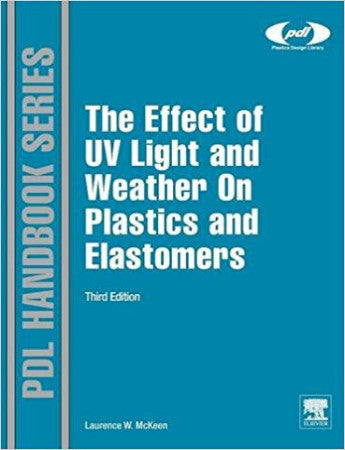
The Effect of UV Light...
$300.00
{"id":11242223556,"title":"The Effect of UV Light and Weather on Plastics and Elastomers, 3 Ed","handle":"978-1-4557-2851-0","description":"\u003ch5\u003eDescription\u003c\/h5\u003e\nAuthor: Laurence McKeen \u003cbr\u003eISBN 978-1-4557-2851-0\u003cbr\u003e\u003cmeta charset=\"utf-8\"\u003e\u003cspan\u003ePublished: 2013 \u003c\/span\u003e \u003cbr\u003e\u003cbr\u003eHardbound, 512 Pages\n\u003ch5\u003eSummary\u003c\/h5\u003e\nThis reference guide brings together a wide range of essential data on the effect of weather and UV light exposure on plastics and elastomers, enabling engineers to make optimal material choices and design decisions. The data is supported by explanations of how to make use of the data in real-world engineering contexts.\u003cbr\u003e\u003cbr\u003eOutdoor usage, in both normal and extreme environments, has a variety of effects on the different plastics and elastomers suitable for outdoor applications - such as discoloring and brittleness. The data tables in this book enable engineers and scientists to select the right materials for a given product or application, across a wide range of sectors including construction, packaging, signage, consumer (e.g. toys, outdoor furniture), automotive \u0026amp; aerospace, defense, etc.\u003cbr\u003e\u003cbr\u003eThe third edition includes new text chapters that provide the underpinning knowledge required to make the best use of the data.\u003cbr\u003e\u003cbr\u003eLarry McKeen has also added detailed descriptions of the effect of weathering on the most common polymer classes such as polyolefins, polyamides, polyesters, elastomers, fluoropolymers, biodegradable plastics, etc. - and explanations of the effect of weather on the polymers being treated - making this book an invaluable design guide as well as an industry standard data source. Data has been updated throughout, with 25% new data. The resulting Handbook is an essential reference for Plastics Engineers, Materials Scientists, and Chemists working in contexts where outdoor use is envisaged.\n\u003ch5\u003eTable of Contents\u003c\/h5\u003e\nIntroduction to Plastics and\u003cbr\u003e\u003cbr\u003ePolymers\u003cbr\u003e\u003cbr\u003e2. Introduction to Environmental testing\u003cbr\u003e\u003cbr\u003e3. Production of plastic films and articles\u003cbr\u003e\u003cbr\u003e4. Principles of photochemistry\u003cbr\u003e\u003cbr\u003e5. Markets and Applications for Plastics requiring UV and weathering performance\u003cbr\u003e\u003cbr\u003e6. Styrene-based Plastics\u003cbr\u003e\u003cbr\u003e7. Polyesters\u003cbr\u003e\u003cbr\u003e8. Polyimides\u003cbr\u003e\u003cbr\u003e9. Polyamides (Nylons)\u003cbr\u003e\u003cbr\u003e10. Polyolefins, Polyvinyls \u0026amp; Acrylics\u003cbr\u003e\u003cbr\u003e11. Fluoropolymers\u003cbr\u003e\u003cbr\u003e12. High Temperature\/ High-Performance Polymers\u003cbr\u003e\u003cbr\u003e13. Elastomers and rubbers\u003cbr\u003e\u003cbr\u003e14. Environmentally friendly polymers (biosource and biodegradable)\u003cbr\u003e\u003cbr\u003eAppendices\n\u003ch5\u003eAbout Author\u003c\/h5\u003e\nLaurence McKeen, Senior Research Associate, DuPont, Wilmington, DE, USA","published_at":"2017-06-22T21:13:53-04:00","created_at":"2017-06-22T21:13:53-04:00","vendor":"Chemtec Publishing","type":"Book","tags":["2013","book","elastomers","environmentally friendly polymers","material","p-properties","Photochemistry","plastics","polymers","rubbers","UV exposure","weathering"],"price":30000,"price_min":30000,"price_max":30000,"available":true,"price_varies":false,"compare_at_price":null,"compare_at_price_min":0,"compare_at_price_max":0,"compare_at_price_varies":false,"variants":[{"id":43378379780,"title":"Default Title","option1":"Default Title","option2":null,"option3":null,"sku":"","requires_shipping":true,"taxable":true,"featured_image":null,"available":true,"name":"The Effect of UV Light and Weather on Plastics and Elastomers, 3 Ed","public_title":null,"options":["Default Title"],"price":30000,"weight":1000,"compare_at_price":null,"inventory_quantity":1,"inventory_management":null,"inventory_policy":"continue","barcode":"978-1-4557-2851-0","requires_selling_plan":false,"selling_plan_allocations":[],"quantity_rule":{"min":1,"max":null,"increment":1}}],"images":["\/\/chemtec.org\/cdn\/shop\/products\/978-1-4557-2851-0_a03875be-66e8-43d3-a394-f7ed21fdf79a.jpg?v=1499956459"],"featured_image":"\/\/chemtec.org\/cdn\/shop\/products\/978-1-4557-2851-0_a03875be-66e8-43d3-a394-f7ed21fdf79a.jpg?v=1499956459","options":["Title"],"media":[{"alt":null,"id":358793740381,"position":1,"preview_image":{"aspect_ratio":0.767,"height":450,"width":345,"src":"\/\/chemtec.org\/cdn\/shop\/products\/978-1-4557-2851-0_a03875be-66e8-43d3-a394-f7ed21fdf79a.jpg?v=1499956459"},"aspect_ratio":0.767,"height":450,"media_type":"image","src":"\/\/chemtec.org\/cdn\/shop\/products\/978-1-4557-2851-0_a03875be-66e8-43d3-a394-f7ed21fdf79a.jpg?v=1499956459","width":345}],"requires_selling_plan":false,"selling_plan_groups":[],"content":"\u003ch5\u003eDescription\u003c\/h5\u003e\nAuthor: Laurence McKeen \u003cbr\u003eISBN 978-1-4557-2851-0\u003cbr\u003e\u003cmeta charset=\"utf-8\"\u003e\u003cspan\u003ePublished: 2013 \u003c\/span\u003e \u003cbr\u003e\u003cbr\u003eHardbound, 512 Pages\n\u003ch5\u003eSummary\u003c\/h5\u003e\nThis reference guide brings together a wide range of essential data on the effect of weather and UV light exposure on plastics and elastomers, enabling engineers to make optimal material choices and design decisions. The data is supported by explanations of how to make use of the data in real-world engineering contexts.\u003cbr\u003e\u003cbr\u003eOutdoor usage, in both normal and extreme environments, has a variety of effects on the different plastics and elastomers suitable for outdoor applications - such as discoloring and brittleness. The data tables in this book enable engineers and scientists to select the right materials for a given product or application, across a wide range of sectors including construction, packaging, signage, consumer (e.g. toys, outdoor furniture), automotive \u0026amp; aerospace, defense, etc.\u003cbr\u003e\u003cbr\u003eThe third edition includes new text chapters that provide the underpinning knowledge required to make the best use of the data.\u003cbr\u003e\u003cbr\u003eLarry McKeen has also added detailed descriptions of the effect of weathering on the most common polymer classes such as polyolefins, polyamides, polyesters, elastomers, fluoropolymers, biodegradable plastics, etc. - and explanations of the effect of weather on the polymers being treated - making this book an invaluable design guide as well as an industry standard data source. Data has been updated throughout, with 25% new data. The resulting Handbook is an essential reference for Plastics Engineers, Materials Scientists, and Chemists working in contexts where outdoor use is envisaged.\n\u003ch5\u003eTable of Contents\u003c\/h5\u003e\nIntroduction to Plastics and\u003cbr\u003e\u003cbr\u003ePolymers\u003cbr\u003e\u003cbr\u003e2. Introduction to Environmental testing\u003cbr\u003e\u003cbr\u003e3. Production of plastic films and articles\u003cbr\u003e\u003cbr\u003e4. Principles of photochemistry\u003cbr\u003e\u003cbr\u003e5. Markets and Applications for Plastics requiring UV and weathering performance\u003cbr\u003e\u003cbr\u003e6. Styrene-based Plastics\u003cbr\u003e\u003cbr\u003e7. Polyesters\u003cbr\u003e\u003cbr\u003e8. Polyimides\u003cbr\u003e\u003cbr\u003e9. Polyamides (Nylons)\u003cbr\u003e\u003cbr\u003e10. Polyolefins, Polyvinyls \u0026amp; Acrylics\u003cbr\u003e\u003cbr\u003e11. Fluoropolymers\u003cbr\u003e\u003cbr\u003e12. High Temperature\/ High-Performance Polymers\u003cbr\u003e\u003cbr\u003e13. Elastomers and rubbers\u003cbr\u003e\u003cbr\u003e14. Environmentally friendly polymers (biosource and biodegradable)\u003cbr\u003e\u003cbr\u003eAppendices\n\u003ch5\u003eAbout Author\u003c\/h5\u003e\nLaurence McKeen, Senior Research Associate, DuPont, Wilmington, DE, USA"}
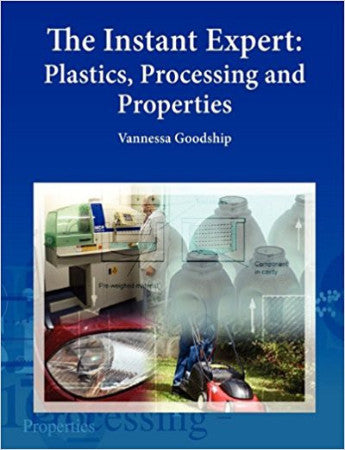
The Instant Expert: Pl...
$125.00
{"id":11242236228,"title":"The Instant Expert: Plastics, Processing and Properties","handle":"978-1-906479-05-3","description":"\u003ch5\u003eDescription\u003c\/h5\u003e\nAuthor: Dr. Vannessa Goodship \u003cbr\u003eISBN 978-1-906479-05-3 \u003cbr\u003e\u003cbr\u003e\u003cmeta charset=\"utf-8\"\u003e\u003cspan\u003ePublished: 2010 \u003cbr\u003e\u003c\/span\u003ePages 190 softcover\n\u003ch5\u003eSummary\u003c\/h5\u003e\nThe Instant Expert: Plastics, Processing, and Properties provides clear\u003cbr\u003edescriptions of the wide range of plastic materials, and explanations of the\u003cbr\u003ebasic shaping and finishing processes. The author also talks about materials\u003cbr\u003eproperties and testing, and provides some simple examples of why particular\u003cbr\u003eplastics are used in common or more challenging applications. Common\u003cbr\u003eabbreviations are explained.\u003cbr\u003eReadable from cover-to-cover, or easily referred to when questions arise,\u003cbr\u003ethis book will be indispensable. \u003cbr\u003e\u003cbr\u003ePlastics - they are everywhere.\" The first sentence of this book hints at\u003cbr\u003ethe problem it seeks to address. The shear diversity of plastics materials\u003cbr\u003ehas led to their use in products as varied as disposable packaging,\u003cbr\u003elife-saving medical devices, giant wind-turbine blades and tiny electronic\u003cbr\u003ecomponents. Their prices and properties vary as widely, and they can be\u003cbr\u003emoulded, extruded, blown, formed, and shaped in many other ways.\u003cbr\u003eTraditionally made from petrochemicals, designers can now also choose from a\u003cbr\u003erange of natural materials. The performance will depend on chemical\u003cbr\u003econstitution, but also on the selection of processing aids and property\u003cbr\u003emodifiers which can be added to the basic material.\u003cbr\u003e\u003cbr\u003e\n\u003ch5\u003eTable of Contents\u003c\/h5\u003e\n\u003cstrong\u003ePart 1: Polymers and plastics \u003c\/strong\u003e\u003cbr\u003eIntroduction \u003cbr\u003eMaterials \u003cbr\u003ePolymers \u003cbr\u003ePlastics \u003cbr\u003eAdditives - from polymers to plastics \u003cbr\u003eBlends \u003cbr\u003eComposites and laminates \u003cbr\u003eThermoplastic fibres \u003cbr\u003eBiopolymers \u003cbr\u003eScope of plastic materials \u003cbr\u003e\u003cstrong\u003ePart 2: Processing \u003c\/strong\u003e \u003cbr\u003eThe principles of plastics processing \u003cbr\u003eExtrusion \u003cbr\u003eTwin-screw machines \u003cbr\u003eProcessing beyond the screw \u003cbr\u003eCompounding \u003cbr\u003eCoextrusion \u003cbr\u003eInjection Moulding \u003cbr\u003eBlow Moulding \u003cbr\u003eFilm Blowing \u003cbr\u003eThermoforming \u003cbr\u003eCompression Moulding \u003cbr\u003eInjection compression moulding \u003cbr\u003eRotational moulding \u003cbr\u003eCalendering \u003cbr\u003eIntrusion moulding \u003cbr\u003eTransfer moulding \u003cbr\u003eReaction Injection Moulding \u003cbr\u003eMaking fibre reinforced structural components \u003cbr\u003eMelt spinning \u003cbr\u003eElectrospinning \u003cbr\u003eProducing Plastic Foams \u003cbr\u003eFinishing Operations \u003cbr\u003eDecoration: Painting, Plating, and Printing \u003cbr\u003e\u003cstrong\u003ePart 3: Properties \u003c\/strong\u003e\u003cbr\u003eQuality and Testing \u003cbr\u003eIntroduction to Common Methods \u003cbr\u003ePhysical Properties \u003cbr\u003eMechanical Properties of Plastics and their effect on performance \u003cbr\u003eThermal Properties \u003cbr\u003eElectrical Properties \u003cbr\u003eOther Properties \u003cbr\u003eSafety Factors - a cautionary comment \u003cbr\u003e\u003cstrong\u003e4. The Scope and Application of plastic materials \u003c\/strong\u003e\u003cbr\u003eTypical Applications of common plastics \u003cbr\u003e-Packaging Materials \u003cbr\u003e-Medical Products and Devices \u003cbr\u003e-Automotive Applications \u003cbr\u003e-Electrical and Electronic goods \u003cbr\u003e-Construction and structural engineering \u003cbr\u003eGreen Issues: reuse and disposal of plastics \u003cbr\u003eNature's polymer processing\u003cbr\u003e\u003cbr\u003e","published_at":"2017-06-22T21:14:31-04:00","created_at":"2017-06-22T21:14:31-04:00","vendor":"Chemtec Publishing","type":"Book","tags":["2010","application","book","material","plastics","processing"],"price":12500,"price_min":12500,"price_max":12500,"available":true,"price_varies":false,"compare_at_price":null,"compare_at_price_min":0,"compare_at_price_max":0,"compare_at_price_varies":false,"variants":[{"id":43378423108,"title":"Default Title","option1":"Default Title","option2":null,"option3":null,"sku":"","requires_shipping":true,"taxable":true,"featured_image":null,"available":true,"name":"The Instant Expert: Plastics, Processing and Properties","public_title":null,"options":["Default Title"],"price":12500,"weight":1000,"compare_at_price":null,"inventory_quantity":1,"inventory_management":null,"inventory_policy":"continue","barcode":"978-1-906479-05-3","requires_selling_plan":false,"selling_plan_allocations":[],"quantity_rule":{"min":1,"max":null,"increment":1}}],"images":["\/\/chemtec.org\/cdn\/shop\/products\/978-1-906479-05-3_ec614b02-9966-4bf9-94ae-596b1431a17f.jpg?v=1499956482"],"featured_image":"\/\/chemtec.org\/cdn\/shop\/products\/978-1-906479-05-3_ec614b02-9966-4bf9-94ae-596b1431a17f.jpg?v=1499956482","options":["Title"],"media":[{"alt":null,"id":358795509853,"position":1,"preview_image":{"aspect_ratio":0.767,"height":450,"width":345,"src":"\/\/chemtec.org\/cdn\/shop\/products\/978-1-906479-05-3_ec614b02-9966-4bf9-94ae-596b1431a17f.jpg?v=1499956482"},"aspect_ratio":0.767,"height":450,"media_type":"image","src":"\/\/chemtec.org\/cdn\/shop\/products\/978-1-906479-05-3_ec614b02-9966-4bf9-94ae-596b1431a17f.jpg?v=1499956482","width":345}],"requires_selling_plan":false,"selling_plan_groups":[],"content":"\u003ch5\u003eDescription\u003c\/h5\u003e\nAuthor: Dr. Vannessa Goodship \u003cbr\u003eISBN 978-1-906479-05-3 \u003cbr\u003e\u003cbr\u003e\u003cmeta charset=\"utf-8\"\u003e\u003cspan\u003ePublished: 2010 \u003cbr\u003e\u003c\/span\u003ePages 190 softcover\n\u003ch5\u003eSummary\u003c\/h5\u003e\nThe Instant Expert: Plastics, Processing, and Properties provides clear\u003cbr\u003edescriptions of the wide range of plastic materials, and explanations of the\u003cbr\u003ebasic shaping and finishing processes. The author also talks about materials\u003cbr\u003eproperties and testing, and provides some simple examples of why particular\u003cbr\u003eplastics are used in common or more challenging applications. Common\u003cbr\u003eabbreviations are explained.\u003cbr\u003eReadable from cover-to-cover, or easily referred to when questions arise,\u003cbr\u003ethis book will be indispensable. \u003cbr\u003e\u003cbr\u003ePlastics - they are everywhere.\" The first sentence of this book hints at\u003cbr\u003ethe problem it seeks to address. The shear diversity of plastics materials\u003cbr\u003ehas led to their use in products as varied as disposable packaging,\u003cbr\u003elife-saving medical devices, giant wind-turbine blades and tiny electronic\u003cbr\u003ecomponents. Their prices and properties vary as widely, and they can be\u003cbr\u003emoulded, extruded, blown, formed, and shaped in many other ways.\u003cbr\u003eTraditionally made from petrochemicals, designers can now also choose from a\u003cbr\u003erange of natural materials. The performance will depend on chemical\u003cbr\u003econstitution, but also on the selection of processing aids and property\u003cbr\u003emodifiers which can be added to the basic material.\u003cbr\u003e\u003cbr\u003e\n\u003ch5\u003eTable of Contents\u003c\/h5\u003e\n\u003cstrong\u003ePart 1: Polymers and plastics \u003c\/strong\u003e\u003cbr\u003eIntroduction \u003cbr\u003eMaterials \u003cbr\u003ePolymers \u003cbr\u003ePlastics \u003cbr\u003eAdditives - from polymers to plastics \u003cbr\u003eBlends \u003cbr\u003eComposites and laminates \u003cbr\u003eThermoplastic fibres \u003cbr\u003eBiopolymers \u003cbr\u003eScope of plastic materials \u003cbr\u003e\u003cstrong\u003ePart 2: Processing \u003c\/strong\u003e \u003cbr\u003eThe principles of plastics processing \u003cbr\u003eExtrusion \u003cbr\u003eTwin-screw machines \u003cbr\u003eProcessing beyond the screw \u003cbr\u003eCompounding \u003cbr\u003eCoextrusion \u003cbr\u003eInjection Moulding \u003cbr\u003eBlow Moulding \u003cbr\u003eFilm Blowing \u003cbr\u003eThermoforming \u003cbr\u003eCompression Moulding \u003cbr\u003eInjection compression moulding \u003cbr\u003eRotational moulding \u003cbr\u003eCalendering \u003cbr\u003eIntrusion moulding \u003cbr\u003eTransfer moulding \u003cbr\u003eReaction Injection Moulding \u003cbr\u003eMaking fibre reinforced structural components \u003cbr\u003eMelt spinning \u003cbr\u003eElectrospinning \u003cbr\u003eProducing Plastic Foams \u003cbr\u003eFinishing Operations \u003cbr\u003eDecoration: Painting, Plating, and Printing \u003cbr\u003e\u003cstrong\u003ePart 3: Properties \u003c\/strong\u003e\u003cbr\u003eQuality and Testing \u003cbr\u003eIntroduction to Common Methods \u003cbr\u003ePhysical Properties \u003cbr\u003eMechanical Properties of Plastics and their effect on performance \u003cbr\u003eThermal Properties \u003cbr\u003eElectrical Properties \u003cbr\u003eOther Properties \u003cbr\u003eSafety Factors - a cautionary comment \u003cbr\u003e\u003cstrong\u003e4. The Scope and Application of plastic materials \u003c\/strong\u003e\u003cbr\u003eTypical Applications of common plastics \u003cbr\u003e-Packaging Materials \u003cbr\u003e-Medical Products and Devices \u003cbr\u003e-Automotive Applications \u003cbr\u003e-Electrical and Electronic goods \u003cbr\u003e-Construction and structural engineering \u003cbr\u003eGreen Issues: reuse and disposal of plastics \u003cbr\u003eNature's polymer processing\u003cbr\u003e\u003cbr\u003e"}
Thermal Stability of P...
$205.00
{"id":11242241412,"title":"Thermal Stability of Polymers","handle":"9781847355133","description":"\u003ch5\u003eDescription\u003c\/h5\u003e\nAuthor: T. R. Crompton \u003cbr\u003eISBN 9781847355133 \u003cbr\u003e\u003cbr\u003e\u003cmeta charset=\"utf-8\"\u003e\u003cspan\u003ePublished: 2012\u003cbr\u003e\u003c\/span\u003eNumber of pages 216, Hardcover\n\u003ch5\u003eSummary\u003c\/h5\u003e\nIn recent years numerous research papers have been published on the changes in chemical structure and in physical properties of polymers when they are exposed to heat over a range of temperatures. For example, these changes can occur at any time during the injection moulding of the plastic, in the subsequent processing and in its end-use application when exposed to elevated temperatures.\u003cbr\u003e\u003cbr\u003eThermal stability is a very important parameter which must be taken into account when selecting polymers whether for their use as constructional or engineering applications or in the packaging of food at high temperatures.\u003cbr\u003e\u003cbr\u003eThe mechanisms by which such changes occur are many and it is important to know what these are and to be able to measure the rate of change of polymer structure and its dependence on temperature and time. Development of an understanding of the mechanisms of thermal degradation will help the chemist to develop materials with better thermal stability. This is particularly important in newer developments in engineering and aerospace.\u003cbr\u003e\u003cbr\u003eThis book reviews in nine chapters the measurement of these properties in the main types of polymers in use today. Numerous techniques are discussed ranging from thermogravimetric analysis, differential scanning calorimetry, infrared and nuclear magnetic resonance-based methods to pyrolytic techniques such as those based on pyrolysis, gas chromatography, and mass spectrometry.\u003cbr\u003e\u003cbr\u003eThe book is aimed at those engaged in the manufacture of polymers and the development of end-user applications. It is essential that students of polymer science should have a thorough understanding of polymer stability and an additional aim of the book is to help in the development of such an interest.\n\u003ch5\u003eTable of Contents\u003c\/h5\u003e\n1. Carbon Hydrogen Polymers \u003cbr\u003e1.1 Polyethylene\u003cbr\u003e1.1.1 Random Scission \u003cbr\u003e1.1.2 Depolymerisation \u003cbr\u003e1.1.3 Side Group Elimination \u003cbr\u003e1.1.3.1 Differential Thermal Analysis \u003cbr\u003e1.1.3.2 Differential Scanning Calorimetry \u003cbr\u003e1.1.3.3 Other Techniques \u003cbr\u003e1.2 Polypropylene and Polyisobutylene\u003cbr\u003e1.3 Polystyrene and Copolymers\u003cbr\u003e1.3.1 Polystyrenes \u003cbr\u003e1.3.2 Polystyrene Copolymers \u003cbr\u003e1.3.2.1 Styrene Acrylonitrile \u003cbr\u003e1.3.2.2 Styrene-divinylbenzene \u003cbr\u003e1.3.2.3 Styrene-Isoprene (Kraton 1107)\u003cbr\u003e1.3.2.4 Miscellaneous Copolymers\u003cbr\u003e1.4 Carbocyclic Polymers \u003cbr\u003eRubbers\u003cbr\u003e2.1 Polyisoprene \u003cbr\u003e2.2 Styrene-Butadiene \u003cbr\u003e2.3 Polyisobutylene \u003cbr\u003e2.Thermal Stability of Polymers\u003cbr\u003e2.4 Polybutadiene \u003cbr\u003e2.5 Ethylene–propylene–diene rubbers\u003cbr\u003e2.6 Chlorinated Rubber \u003cbr\u003e2.7 Miscellaneous Rubbers \u003cbr\u003e3. Oxygen-Containing Polymers \u003cbr\u003e3.1 Phenol-Formaldehyde Resins \u003cbr\u003e3.2 Polyethers \u003cbr\u003e3.3 Epoxy Resins \u003cbr\u003e3.4 Polymethyl Methacrylates \u003cbr\u003e3.4.1 Homopolymers\u003cbr\u003e3.4.2 Copolymers \u003cbr\u003e3.5 Polyacrylates.\u003cbr\u003e3.6 Polyarylates \u003cbr\u003e3.7 Polyalkylene Oxides \u003cbr\u003e3.8 Polycarbonates \u003cbr\u003e3.9 Polyvinyl Alcohol and Polyvinyl Acetate\u003cbr\u003e3.10 Polyethylene Terephthalate\u003cbr\u003e3.11 Polyethylene Oxalate \u003cbr\u003e3.12 Polyoxymethylene \u003cbr\u003e3.13 Other Oxygen Containing Polymers \u003cbr\u003e4. Halogen-Containing Polymers \u003cbr\u003e4.1 Chloro Polymers \u003cbr\u003e4.1.1 Polyvinyl Chloride and Polyvinylidene Chloride \u003cbr\u003e4.1.1.1 Negative ions \u003cbr\u003e4.1.1.2 Positive ions\u003cbr\u003e4.1.2 Chloromethyl Substituted Polystyrene \u003cbr\u003e4.1.3 Chlorinated Polyethylene \u003cbr\u003e4.2 Fluorine-Containing Polymers \u003cbr\u003e4.2.1 Polytetrafluoroethylene\u003cbr\u003e4.2.2 Polychlorotrifluoroethylene \u003cbr\u003e4.2.3 Polyvinylidene Fluoride \u003cbr\u003e4.2.4 Fluorinated Polyimides \u003cbr\u003e4.2.5 Other Fluoropolymers \u003cbr\u003e5. Nitrogen-Containing Polymers \u003cbr\u003e5.1 Polyamides\u003cbr\u003e5.2 Polyimides \u003cbr\u003e5.3 Polyacrylamides \u003cbr\u003e5.4 Polyacrylonitrile \u003cbr\u003e5.5 Polyureas\u003cbr\u003e5.6 Polyurethanes \u003cbr\u003e5.7 Polyazides \u003cbr\u003e5.8 Polybutyl Cyanoacrylate \u003cbr\u003e5.9 Polyhydrazides \u003cbr\u003e5.10 Miscellaneous Polymers \u003cbr\u003e6. Sulfur-Containing Polymers \u003cbr\u003e6.1 Polyolefin Sulfides \u003cbr\u003e6.2 Polystyrene Sulfide – Polyethylene Sulfide Copolymers \u003cbr\u003e6.3 Polyphenylene Sulfides \u003cbr\u003e6.4 Polyxylylene Sulfide \u003cbr\u003e6.5 Polydisulfides \u003cbr\u003e6.6 Polysulfones. \u003cbr\u003e6.7 Miscellaneous Sulfur Compounds \u003cbr\u003e7. Silicon-Containing Polymers\u003cbr\u003e7.1 Silsesquioxanes \u003cbr\u003e7.2 Polyborosilazanes\u003cbr\u003e7.3 Polyoxadisilacyclopentene \u003cbr\u003e7.4 Miscellaneous Silicon Polymers\u003cbr\u003e8. Phosphorus-Containing Polymers \u003cbr\u003e8.1 Triacryloyloxyethyl Phosphate and Diacryloyl Oxyethyl Ethyl Phosphate \u003cbr\u003e8.2 Other phosphorus-containing compounds \u003cbr\u003e9. Effect of Metal Contamination on the Heat Stability of Polymers.","published_at":"2017-06-22T21:14:48-04:00","created_at":"2017-06-22T21:14:48-04:00","vendor":"Chemtec Publishing","type":"Book","tags":["2012","analysis","book","degradation","depolymerisation","material","mechanism of degradation","p-properties","poly","polymers","resins","rubbers","stabilty","thermal analysis","weathering"],"price":20500,"price_min":20500,"price_max":20500,"available":true,"price_varies":false,"compare_at_price":null,"compare_at_price_min":0,"compare_at_price_max":0,"compare_at_price_varies":false,"variants":[{"id":43378439108,"title":"Default Title","option1":"Default Title","option2":null,"option3":null,"sku":"","requires_shipping":true,"taxable":true,"featured_image":null,"available":true,"name":"Thermal Stability of Polymers","public_title":null,"options":["Default Title"],"price":20500,"weight":1000,"compare_at_price":null,"inventory_quantity":1,"inventory_management":null,"inventory_policy":"continue","barcode":"9781847355133","requires_selling_plan":false,"selling_plan_allocations":[],"quantity_rule":{"min":1,"max":null,"increment":1}}],"images":["\/\/chemtec.org\/cdn\/shop\/products\/9781847355133_aedc2f5d-25e3-4838-849e-b713e11a84ee.jpg?v=1499956664"],"featured_image":"\/\/chemtec.org\/cdn\/shop\/products\/9781847355133_aedc2f5d-25e3-4838-849e-b713e11a84ee.jpg?v=1499956664","options":["Title"],"media":[{"alt":null,"id":358807371869,"position":1,"preview_image":{"aspect_ratio":0.767,"height":450,"width":345,"src":"\/\/chemtec.org\/cdn\/shop\/products\/9781847355133_aedc2f5d-25e3-4838-849e-b713e11a84ee.jpg?v=1499956664"},"aspect_ratio":0.767,"height":450,"media_type":"image","src":"\/\/chemtec.org\/cdn\/shop\/products\/9781847355133_aedc2f5d-25e3-4838-849e-b713e11a84ee.jpg?v=1499956664","width":345}],"requires_selling_plan":false,"selling_plan_groups":[],"content":"\u003ch5\u003eDescription\u003c\/h5\u003e\nAuthor: T. R. Crompton \u003cbr\u003eISBN 9781847355133 \u003cbr\u003e\u003cbr\u003e\u003cmeta charset=\"utf-8\"\u003e\u003cspan\u003ePublished: 2012\u003cbr\u003e\u003c\/span\u003eNumber of pages 216, Hardcover\n\u003ch5\u003eSummary\u003c\/h5\u003e\nIn recent years numerous research papers have been published on the changes in chemical structure and in physical properties of polymers when they are exposed to heat over a range of temperatures. For example, these changes can occur at any time during the injection moulding of the plastic, in the subsequent processing and in its end-use application when exposed to elevated temperatures.\u003cbr\u003e\u003cbr\u003eThermal stability is a very important parameter which must be taken into account when selecting polymers whether for their use as constructional or engineering applications or in the packaging of food at high temperatures.\u003cbr\u003e\u003cbr\u003eThe mechanisms by which such changes occur are many and it is important to know what these are and to be able to measure the rate of change of polymer structure and its dependence on temperature and time. Development of an understanding of the mechanisms of thermal degradation will help the chemist to develop materials with better thermal stability. This is particularly important in newer developments in engineering and aerospace.\u003cbr\u003e\u003cbr\u003eThis book reviews in nine chapters the measurement of these properties in the main types of polymers in use today. Numerous techniques are discussed ranging from thermogravimetric analysis, differential scanning calorimetry, infrared and nuclear magnetic resonance-based methods to pyrolytic techniques such as those based on pyrolysis, gas chromatography, and mass spectrometry.\u003cbr\u003e\u003cbr\u003eThe book is aimed at those engaged in the manufacture of polymers and the development of end-user applications. It is essential that students of polymer science should have a thorough understanding of polymer stability and an additional aim of the book is to help in the development of such an interest.\n\u003ch5\u003eTable of Contents\u003c\/h5\u003e\n1. Carbon Hydrogen Polymers \u003cbr\u003e1.1 Polyethylene\u003cbr\u003e1.1.1 Random Scission \u003cbr\u003e1.1.2 Depolymerisation \u003cbr\u003e1.1.3 Side Group Elimination \u003cbr\u003e1.1.3.1 Differential Thermal Analysis \u003cbr\u003e1.1.3.2 Differential Scanning Calorimetry \u003cbr\u003e1.1.3.3 Other Techniques \u003cbr\u003e1.2 Polypropylene and Polyisobutylene\u003cbr\u003e1.3 Polystyrene and Copolymers\u003cbr\u003e1.3.1 Polystyrenes \u003cbr\u003e1.3.2 Polystyrene Copolymers \u003cbr\u003e1.3.2.1 Styrene Acrylonitrile \u003cbr\u003e1.3.2.2 Styrene-divinylbenzene \u003cbr\u003e1.3.2.3 Styrene-Isoprene (Kraton 1107)\u003cbr\u003e1.3.2.4 Miscellaneous Copolymers\u003cbr\u003e1.4 Carbocyclic Polymers \u003cbr\u003eRubbers\u003cbr\u003e2.1 Polyisoprene \u003cbr\u003e2.2 Styrene-Butadiene \u003cbr\u003e2.3 Polyisobutylene \u003cbr\u003e2.Thermal Stability of Polymers\u003cbr\u003e2.4 Polybutadiene \u003cbr\u003e2.5 Ethylene–propylene–diene rubbers\u003cbr\u003e2.6 Chlorinated Rubber \u003cbr\u003e2.7 Miscellaneous Rubbers \u003cbr\u003e3. Oxygen-Containing Polymers \u003cbr\u003e3.1 Phenol-Formaldehyde Resins \u003cbr\u003e3.2 Polyethers \u003cbr\u003e3.3 Epoxy Resins \u003cbr\u003e3.4 Polymethyl Methacrylates \u003cbr\u003e3.4.1 Homopolymers\u003cbr\u003e3.4.2 Copolymers \u003cbr\u003e3.5 Polyacrylates.\u003cbr\u003e3.6 Polyarylates \u003cbr\u003e3.7 Polyalkylene Oxides \u003cbr\u003e3.8 Polycarbonates \u003cbr\u003e3.9 Polyvinyl Alcohol and Polyvinyl Acetate\u003cbr\u003e3.10 Polyethylene Terephthalate\u003cbr\u003e3.11 Polyethylene Oxalate \u003cbr\u003e3.12 Polyoxymethylene \u003cbr\u003e3.13 Other Oxygen Containing Polymers \u003cbr\u003e4. Halogen-Containing Polymers \u003cbr\u003e4.1 Chloro Polymers \u003cbr\u003e4.1.1 Polyvinyl Chloride and Polyvinylidene Chloride \u003cbr\u003e4.1.1.1 Negative ions \u003cbr\u003e4.1.1.2 Positive ions\u003cbr\u003e4.1.2 Chloromethyl Substituted Polystyrene \u003cbr\u003e4.1.3 Chlorinated Polyethylene \u003cbr\u003e4.2 Fluorine-Containing Polymers \u003cbr\u003e4.2.1 Polytetrafluoroethylene\u003cbr\u003e4.2.2 Polychlorotrifluoroethylene \u003cbr\u003e4.2.3 Polyvinylidene Fluoride \u003cbr\u003e4.2.4 Fluorinated Polyimides \u003cbr\u003e4.2.5 Other Fluoropolymers \u003cbr\u003e5. Nitrogen-Containing Polymers \u003cbr\u003e5.1 Polyamides\u003cbr\u003e5.2 Polyimides \u003cbr\u003e5.3 Polyacrylamides \u003cbr\u003e5.4 Polyacrylonitrile \u003cbr\u003e5.5 Polyureas\u003cbr\u003e5.6 Polyurethanes \u003cbr\u003e5.7 Polyazides \u003cbr\u003e5.8 Polybutyl Cyanoacrylate \u003cbr\u003e5.9 Polyhydrazides \u003cbr\u003e5.10 Miscellaneous Polymers \u003cbr\u003e6. Sulfur-Containing Polymers \u003cbr\u003e6.1 Polyolefin Sulfides \u003cbr\u003e6.2 Polystyrene Sulfide – Polyethylene Sulfide Copolymers \u003cbr\u003e6.3 Polyphenylene Sulfides \u003cbr\u003e6.4 Polyxylylene Sulfide \u003cbr\u003e6.5 Polydisulfides \u003cbr\u003e6.6 Polysulfones. \u003cbr\u003e6.7 Miscellaneous Sulfur Compounds \u003cbr\u003e7. Silicon-Containing Polymers\u003cbr\u003e7.1 Silsesquioxanes \u003cbr\u003e7.2 Polyborosilazanes\u003cbr\u003e7.3 Polyoxadisilacyclopentene \u003cbr\u003e7.4 Miscellaneous Silicon Polymers\u003cbr\u003e8. Phosphorus-Containing Polymers \u003cbr\u003e8.1 Triacryloyloxyethyl Phosphate and Diacryloyl Oxyethyl Ethyl Phosphate \u003cbr\u003e8.2 Other phosphorus-containing compounds \u003cbr\u003e9. Effect of Metal Contamination on the Heat Stability of Polymers."}
Update on Polymers for...
$99.00
{"id":11242239748,"title":"Update on Polymers for Oral Drug Delivery","handle":"9781847355379","description":"\u003ch5\u003eDescription\u003c\/h5\u003e\nAuthor: Fang Liu \u003cbr\u003eISBN 9781847355379\u003cbr\u003e\u003cbr\u003ePublish: 2011 \u003cbr\u003e\u003cbr\u003e\n\u003ch5\u003eSummary\u003c\/h5\u003e\n\u003cdiv\u003eThe preferred route for drug delivery remains the oral route, but oral drug delivery has now developed beyond traditional dosage forms such as tablets and capsules. Nowadays it is possible to use polymers to allow drugs to be targeted to specific sites in the gastrointestinal tract, and to extend the drug release profile. In addition, polymers can be engineered to allow oral delivery of such complex molecules as proteins, peptides, and even genes.\u003c\/div\u003e\n\u003cdiv\u003e\u003c\/div\u003e\n\u003cdiv\u003eThis book gives a comprehensive summary of oral drug delivery systems, both conventional and novel, and the ways in which polymers have been adapted for these systems. Particular attention is devoted to gastrointestinal physiology and the physio-chemical properties of polymers in order to understand the factors affecting their performance in practice.\u003c\/div\u003e\n\u003cdiv\u003e\u003c\/div\u003e\n\u003cdiv\u003eThis update will interest everyone involved in the pharmaceutical world, whether in academia or in industry. It will be of particular value to those responsible for designing new oral drug delivery systems involving polymers. It will provide a useful reference text both for researchers and manufacturers, and will also be a helpful introduction for students of all levels to the application of polymers in pharmacy.\u003c\/div\u003e\n\u003ch5\u003eTable of Contents\u003c\/h5\u003e\n1 Gastrointestinal Physiology and its Influence on Oral Drug Delivery Systems\u003cbr\u003e1.1 Introduction\u003cbr\u003e1.2 How the Stomach can Affect Various Polymer Dosage Forms\u003cbr\u003e1.2.1 Motility and Transit of Polymer Dosage Forms in the Stomach \u003cbr\u003e1.2.2 Fluid and Secretions in the Stomach\u003cbr\u003e1.3 How the Small Intestine can affect Polymeric Dosage Forms \u003cbr\u003e1.3.1 Fluid and Secretions in the Small Intestine \u003cbr\u003e1.3.2 Transit in the Small Intestine\u003cbr\u003e1.4 How the Colon can affect Polymeric Dosage Forms\u003cbr\u003e1.4.1 Fluid in the Colon \u003cbr\u003e1.4.2 Transit through the Colon\u003cbr\u003e1.4.3 Bacteria in the Colon \u003cbr\u003e1.5 The Effect of Polymers on the Gastrointestinal Tract\u003cbr\u003e1.6 The Fate of Polymers in the Gut \u003cbr\u003e1.7 Conclusions \u003cbr\u003eReferences \u003cbr\u003e\u003cbr\u003e\u003cbr\u003e2 Polymers for Conventional Oral Dosage Forms\u003cbr\u003e2.1 Polymers for Immediate Release Granules and Tablets\u003cbr\u003e2.2 Polymers for Pellet Cores\u003cbr\u003e2.3 Polymers for Capsule Shells \u003cbr\u003e2.4 Polymers for Immediate-release Film Coatings\u003cbr\u003e2.4.1 Taste Masking\u003cbr\u003e2.4.2 Moisture Barrier Coatings\u003cbr\u003e2.4.3 Oxygen Barrier Coatings\u003cbr\u003e2.5 Conclusions \u003cbr\u003e\u003cbr\u003e\u003cbr\u003e3 Polymers for Extended or Sustained Drug Delivery\u003cbr\u003e3.1 Introduction\u003cbr\u003e3.2 Key Concepts in Controlled Drug Delivery\u003cbr\u003e3.3 Diffusion-controlled Drug Delivery Systems\u003cbr\u003e3.3.1 Reservoir Drug Delivery Systems\u003cbr\u003e3.3.2 Inert Matrix Systems for Controlled Drug Release\u003cbr\u003e3.4 Swelling-controlled Release Systems \u003cbr\u003e3.4.1 Overview \u003cbr\u003e3.4.2 Drug Release from Swelling Systems \u003cbr\u003e3.4.3 Case I Diffusion\u003cbr\u003e3.4.4 Case II Diffusion \u003cbr\u003e3.5 Osmotic Pump Systems\u003cbr\u003e3.5.1 Drug Solubility\u003cbr\u003e3.5.2 Osmotic Pressure\u003cbr\u003e3.5.3 Orifice Size\u003cbr\u003e3.5.4 The Semi-permeable Membrane\u003cbr\u003e3.6 Polysaccharides in Oral Drug Delivery\u003cbr\u003e3.6.1 Starch\u003cbr\u003e3.6.2 Cellulose\u003cbr\u003e3.6.3 Chitosan \u003cbr\u003e3.6.4 Alginates \u003cbr\u003e3.6.5 Xanthan Gum \u003cbr\u003e3.6.6 Guar Gum and Locust Bean Gum \u003cbr\u003e3.7 Hydrogels for Drug Delivery\u003cbr\u003e3.7.1 Stimulus-sensitive Hydrogels\u003cbr\u003e3.7.2 pH- and Temperature-triggered Drug Delivery\u003cbr\u003e3.7.3 Future Directions in Hydrogel Development \u003cbr\u003e3.8 Molecular Recognition as a Concept for Oral Drug Delivery\u003cbr\u003e3.9 Conclusions\u003cbr\u003eReferences\u003cbr\u003e\u003cbr\u003e\u003cbr\u003e\u003cbr\u003e4 Site-specific Drug Delivery: Polymers for Gastroretention\u003cbr\u003e4.1 Gastroretention: The Challenges and Benefits \u003cbr\u003e4.2 How can Gastroretention be Achieved? \u003cbr\u003e4.2.1 Size-increasing Systems \u003cbr\u003e4.2.2 Floating Systems \u003cbr\u003e4.2.3 Mucoadhesive Systems\u003cbr\u003e4.3 Conclusions\u003cbr\u003eReferences\u003cbr\u003e\u003cbr\u003e\u003cbr\u003e5 Enteric Polymers for Small Intestinal Drug Delivery \u003cbr\u003e 5.1 Polymers for Enteric Coatings\u003cbr\u003e5.1.1 Cellulose-based Enteric Polymers\u003cbr\u003e5.1.2 Polyvinyl Derivatives\u003cbr\u003e5.1.3 Polymethacrylates\u003cbr\u003e5.1.4 Aqueous Enteric Coatings \u003cbr\u003e5.2 Factors Influencing Enteric Polymer Dissolution \u003cbr\u003e5.2.1 Polymer Structure \u003cbr\u003e5.2.2 Dissolution Media\u003cbr\u003e5.3 In vivo Performance of Enteric Coatings\u003cbr\u003e5.4 Conclusions \u003cbr\u003eReferences \u003cbr\u003e\u003cbr\u003e\u003cbr\u003e6 Polymers for Modified-release Site-specific Drug Delivery to the Colon\u003cbr\u003e6.1 Introduction\u003cbr\u003e6.2 pH-triggered Enteric Drug Delivery to the Colon\u003cbr\u003e6.3 Microbially-triggered Colonic Delivery\u003cbr\u003e6.4 Time-dependent Colonic Delivery\u003cbr\u003e6.4.1 Pressure-controlled Colonic Delivery \u003cbr\u003e6.5 Combination Approaches to Colonic Delivery\u003cbr\u003e6.6 Conclusions \u003cbr\u003eReferences\u003cbr\u003e\u003cbr\u003e\u003cbr\u003e7 Polymers for Site-specific Drug Delivery: Mucoadhesion\u003cbr\u003e7.1 Mucoadhesion as a Drug Delivery Concept\u003cbr\u003e7.2 The Mucus Layer\u003cbr\u003e7.3 Mucoadhesion \u003cbr\u003e7.4 Polymers Providing Mucoadhesion \u003cbr\u003e7.4.1 Natural Polymers \u003cbr\u003e 7.4.2 Semi-synthetic Polymers\u003cbr\u003e7.4.3 Acrylic Acid Derivatives\u003cbr\u003e7.4.4 Thiolated Polymers or Thiomers\u003cbr\u003e7.4.5 PEGylated polymers\u003cbr\u003e7.4.6 N-(2-Hydroxypropyl) Methacrylamide Copolymers \u003cbr\u003e7.5 Polymer Factors Influencing Mucoadhesive Potential\u003cbr\u003e7.5.1 Molecular Weight\u003cbr\u003e 7.5.2 Polymer Flexibility and Conformation\u003cbr\u003e7.5.3 Polymer Cohesiveness \u003cbr\u003e7.5.4 Polymer Concentration\u003cbr\u003e7.5.5 Chemical Structure of the Polymer\u003cbr\u003e7.5.6 Hydrophilicity of a Polymer\u003cbr\u003e7.6 In Vivo Examples of Mucoadhesion \u003cbr\u003e7.6.1 The Stomach \u003cbr\u003e7.6.2 The Small Intestine\u003cbr\u003e7.6.3 The Colon\u003cbr\u003e7.7 Conclusions \u003cbr\u003eReferences \u003cbr\u003e\u003cbr\u003e\u003cbr\u003e8 Micro- and Nanoparticles for Oral Protein and Gene Delivery\u003cbr\u003e8.1 Protein and Gene Therapeutics \u003cbr\u003e8.2 Physiological Barriers in Oral Protein and Gene Delivery \u003cbr\u003e8.2.1 Degradation in the Gastrointestinal Environment \u003cbr\u003e 8.2.2 Permeability Barriers\u003cbr\u003e8.3 Polymers used in Microparticles and Nanoparticles\u003cbr\u003e8.4 Preparation Methods \u003cbr\u003e8.4.1 Emulsion Solvent Evaporation\u003cbr\u003e8.4.2 Emulsion Solvent Diffusion or Displacement \u003cbr\u003e8.4.3 Salting Out\u003cbr\u003e8.4.4 Ionic Gelation \u003cbr\u003e8.4.5 Complex Coacervation\u003cbr\u003e8.5 Factors Affecting the Mucosal Uptake of Particles \u003cbr\u003e8.5.1 Transport of Particles across Intestinal Mucosa\u003cbr\u003e8.5.2 Particle Size\u003cbr\u003e8.5.3 Surface Properties \u003cbr\u003e8.5.4 In Vivo Results\u003cbr\u003e8.6 Conclusions \u003cbr\u003eReferences\u003cbr\u003eAppendix\u003cbr\u003eAbbreviations\u003cbr\u003eIndex","published_at":"2017-06-22T21:14:42-04:00","created_at":"2017-06-22T21:14:42-04:00","vendor":"Chemtec Publishing","type":"Book","tags":["2011","book","drug delivery","material","polymer"],"price":9900,"price_min":9900,"price_max":9900,"available":true,"price_varies":false,"compare_at_price":null,"compare_at_price_min":0,"compare_at_price_max":0,"compare_at_price_varies":false,"variants":[{"id":43378433092,"title":"Default Title","option1":"Default Title","option2":null,"option3":null,"sku":"","requires_shipping":true,"taxable":true,"featured_image":null,"available":true,"name":"Update on Polymers for Oral Drug Delivery","public_title":null,"options":["Default Title"],"price":9900,"weight":1000,"compare_at_price":null,"inventory_quantity":1,"inventory_management":null,"inventory_policy":"continue","barcode":"9781847355379","requires_selling_plan":false,"selling_plan_allocations":[],"quantity_rule":{"min":1,"max":null,"increment":1}}],"images":["\/\/chemtec.org\/cdn\/shop\/products\/9781847355379_2b41a7b8-79ee-4a83-bfc9-42591339d7ed.jpg?v=1499957068"],"featured_image":"\/\/chemtec.org\/cdn\/shop\/products\/9781847355379_2b41a7b8-79ee-4a83-bfc9-42591339d7ed.jpg?v=1499957068","options":["Title"],"media":[{"alt":null,"id":358841221213,"position":1,"preview_image":{"aspect_ratio":0.767,"height":450,"width":345,"src":"\/\/chemtec.org\/cdn\/shop\/products\/9781847355379_2b41a7b8-79ee-4a83-bfc9-42591339d7ed.jpg?v=1499957068"},"aspect_ratio":0.767,"height":450,"media_type":"image","src":"\/\/chemtec.org\/cdn\/shop\/products\/9781847355379_2b41a7b8-79ee-4a83-bfc9-42591339d7ed.jpg?v=1499957068","width":345}],"requires_selling_plan":false,"selling_plan_groups":[],"content":"\u003ch5\u003eDescription\u003c\/h5\u003e\nAuthor: Fang Liu \u003cbr\u003eISBN 9781847355379\u003cbr\u003e\u003cbr\u003ePublish: 2011 \u003cbr\u003e\u003cbr\u003e\n\u003ch5\u003eSummary\u003c\/h5\u003e\n\u003cdiv\u003eThe preferred route for drug delivery remains the oral route, but oral drug delivery has now developed beyond traditional dosage forms such as tablets and capsules. Nowadays it is possible to use polymers to allow drugs to be targeted to specific sites in the gastrointestinal tract, and to extend the drug release profile. In addition, polymers can be engineered to allow oral delivery of such complex molecules as proteins, peptides, and even genes.\u003c\/div\u003e\n\u003cdiv\u003e\u003c\/div\u003e\n\u003cdiv\u003eThis book gives a comprehensive summary of oral drug delivery systems, both conventional and novel, and the ways in which polymers have been adapted for these systems. Particular attention is devoted to gastrointestinal physiology and the physio-chemical properties of polymers in order to understand the factors affecting their performance in practice.\u003c\/div\u003e\n\u003cdiv\u003e\u003c\/div\u003e\n\u003cdiv\u003eThis update will interest everyone involved in the pharmaceutical world, whether in academia or in industry. It will be of particular value to those responsible for designing new oral drug delivery systems involving polymers. It will provide a useful reference text both for researchers and manufacturers, and will also be a helpful introduction for students of all levels to the application of polymers in pharmacy.\u003c\/div\u003e\n\u003ch5\u003eTable of Contents\u003c\/h5\u003e\n1 Gastrointestinal Physiology and its Influence on Oral Drug Delivery Systems\u003cbr\u003e1.1 Introduction\u003cbr\u003e1.2 How the Stomach can Affect Various Polymer Dosage Forms\u003cbr\u003e1.2.1 Motility and Transit of Polymer Dosage Forms in the Stomach \u003cbr\u003e1.2.2 Fluid and Secretions in the Stomach\u003cbr\u003e1.3 How the Small Intestine can affect Polymeric Dosage Forms \u003cbr\u003e1.3.1 Fluid and Secretions in the Small Intestine \u003cbr\u003e1.3.2 Transit in the Small Intestine\u003cbr\u003e1.4 How the Colon can affect Polymeric Dosage Forms\u003cbr\u003e1.4.1 Fluid in the Colon \u003cbr\u003e1.4.2 Transit through the Colon\u003cbr\u003e1.4.3 Bacteria in the Colon \u003cbr\u003e1.5 The Effect of Polymers on the Gastrointestinal Tract\u003cbr\u003e1.6 The Fate of Polymers in the Gut \u003cbr\u003e1.7 Conclusions \u003cbr\u003eReferences \u003cbr\u003e\u003cbr\u003e\u003cbr\u003e2 Polymers for Conventional Oral Dosage Forms\u003cbr\u003e2.1 Polymers for Immediate Release Granules and Tablets\u003cbr\u003e2.2 Polymers for Pellet Cores\u003cbr\u003e2.3 Polymers for Capsule Shells \u003cbr\u003e2.4 Polymers for Immediate-release Film Coatings\u003cbr\u003e2.4.1 Taste Masking\u003cbr\u003e2.4.2 Moisture Barrier Coatings\u003cbr\u003e2.4.3 Oxygen Barrier Coatings\u003cbr\u003e2.5 Conclusions \u003cbr\u003e\u003cbr\u003e\u003cbr\u003e3 Polymers for Extended or Sustained Drug Delivery\u003cbr\u003e3.1 Introduction\u003cbr\u003e3.2 Key Concepts in Controlled Drug Delivery\u003cbr\u003e3.3 Diffusion-controlled Drug Delivery Systems\u003cbr\u003e3.3.1 Reservoir Drug Delivery Systems\u003cbr\u003e3.3.2 Inert Matrix Systems for Controlled Drug Release\u003cbr\u003e3.4 Swelling-controlled Release Systems \u003cbr\u003e3.4.1 Overview \u003cbr\u003e3.4.2 Drug Release from Swelling Systems \u003cbr\u003e3.4.3 Case I Diffusion\u003cbr\u003e3.4.4 Case II Diffusion \u003cbr\u003e3.5 Osmotic Pump Systems\u003cbr\u003e3.5.1 Drug Solubility\u003cbr\u003e3.5.2 Osmotic Pressure\u003cbr\u003e3.5.3 Orifice Size\u003cbr\u003e3.5.4 The Semi-permeable Membrane\u003cbr\u003e3.6 Polysaccharides in Oral Drug Delivery\u003cbr\u003e3.6.1 Starch\u003cbr\u003e3.6.2 Cellulose\u003cbr\u003e3.6.3 Chitosan \u003cbr\u003e3.6.4 Alginates \u003cbr\u003e3.6.5 Xanthan Gum \u003cbr\u003e3.6.6 Guar Gum and Locust Bean Gum \u003cbr\u003e3.7 Hydrogels for Drug Delivery\u003cbr\u003e3.7.1 Stimulus-sensitive Hydrogels\u003cbr\u003e3.7.2 pH- and Temperature-triggered Drug Delivery\u003cbr\u003e3.7.3 Future Directions in Hydrogel Development \u003cbr\u003e3.8 Molecular Recognition as a Concept for Oral Drug Delivery\u003cbr\u003e3.9 Conclusions\u003cbr\u003eReferences\u003cbr\u003e\u003cbr\u003e\u003cbr\u003e\u003cbr\u003e4 Site-specific Drug Delivery: Polymers for Gastroretention\u003cbr\u003e4.1 Gastroretention: The Challenges and Benefits \u003cbr\u003e4.2 How can Gastroretention be Achieved? \u003cbr\u003e4.2.1 Size-increasing Systems \u003cbr\u003e4.2.2 Floating Systems \u003cbr\u003e4.2.3 Mucoadhesive Systems\u003cbr\u003e4.3 Conclusions\u003cbr\u003eReferences\u003cbr\u003e\u003cbr\u003e\u003cbr\u003e5 Enteric Polymers for Small Intestinal Drug Delivery \u003cbr\u003e 5.1 Polymers for Enteric Coatings\u003cbr\u003e5.1.1 Cellulose-based Enteric Polymers\u003cbr\u003e5.1.2 Polyvinyl Derivatives\u003cbr\u003e5.1.3 Polymethacrylates\u003cbr\u003e5.1.4 Aqueous Enteric Coatings \u003cbr\u003e5.2 Factors Influencing Enteric Polymer Dissolution \u003cbr\u003e5.2.1 Polymer Structure \u003cbr\u003e5.2.2 Dissolution Media\u003cbr\u003e5.3 In vivo Performance of Enteric Coatings\u003cbr\u003e5.4 Conclusions \u003cbr\u003eReferences \u003cbr\u003e\u003cbr\u003e\u003cbr\u003e6 Polymers for Modified-release Site-specific Drug Delivery to the Colon\u003cbr\u003e6.1 Introduction\u003cbr\u003e6.2 pH-triggered Enteric Drug Delivery to the Colon\u003cbr\u003e6.3 Microbially-triggered Colonic Delivery\u003cbr\u003e6.4 Time-dependent Colonic Delivery\u003cbr\u003e6.4.1 Pressure-controlled Colonic Delivery \u003cbr\u003e6.5 Combination Approaches to Colonic Delivery\u003cbr\u003e6.6 Conclusions \u003cbr\u003eReferences\u003cbr\u003e\u003cbr\u003e\u003cbr\u003e7 Polymers for Site-specific Drug Delivery: Mucoadhesion\u003cbr\u003e7.1 Mucoadhesion as a Drug Delivery Concept\u003cbr\u003e7.2 The Mucus Layer\u003cbr\u003e7.3 Mucoadhesion \u003cbr\u003e7.4 Polymers Providing Mucoadhesion \u003cbr\u003e7.4.1 Natural Polymers \u003cbr\u003e 7.4.2 Semi-synthetic Polymers\u003cbr\u003e7.4.3 Acrylic Acid Derivatives\u003cbr\u003e7.4.4 Thiolated Polymers or Thiomers\u003cbr\u003e7.4.5 PEGylated polymers\u003cbr\u003e7.4.6 N-(2-Hydroxypropyl) Methacrylamide Copolymers \u003cbr\u003e7.5 Polymer Factors Influencing Mucoadhesive Potential\u003cbr\u003e7.5.1 Molecular Weight\u003cbr\u003e 7.5.2 Polymer Flexibility and Conformation\u003cbr\u003e7.5.3 Polymer Cohesiveness \u003cbr\u003e7.5.4 Polymer Concentration\u003cbr\u003e7.5.5 Chemical Structure of the Polymer\u003cbr\u003e7.5.6 Hydrophilicity of a Polymer\u003cbr\u003e7.6 In Vivo Examples of Mucoadhesion \u003cbr\u003e7.6.1 The Stomach \u003cbr\u003e7.6.2 The Small Intestine\u003cbr\u003e7.6.3 The Colon\u003cbr\u003e7.7 Conclusions \u003cbr\u003eReferences \u003cbr\u003e\u003cbr\u003e\u003cbr\u003e8 Micro- and Nanoparticles for Oral Protein and Gene Delivery\u003cbr\u003e8.1 Protein and Gene Therapeutics \u003cbr\u003e8.2 Physiological Barriers in Oral Protein and Gene Delivery \u003cbr\u003e8.2.1 Degradation in the Gastrointestinal Environment \u003cbr\u003e 8.2.2 Permeability Barriers\u003cbr\u003e8.3 Polymers used in Microparticles and Nanoparticles\u003cbr\u003e8.4 Preparation Methods \u003cbr\u003e8.4.1 Emulsion Solvent Evaporation\u003cbr\u003e8.4.2 Emulsion Solvent Diffusion or Displacement \u003cbr\u003e8.4.3 Salting Out\u003cbr\u003e8.4.4 Ionic Gelation \u003cbr\u003e8.4.5 Complex Coacervation\u003cbr\u003e8.5 Factors Affecting the Mucosal Uptake of Particles \u003cbr\u003e8.5.1 Transport of Particles across Intestinal Mucosa\u003cbr\u003e8.5.2 Particle Size\u003cbr\u003e8.5.3 Surface Properties \u003cbr\u003e8.5.4 In Vivo Results\u003cbr\u003e8.6 Conclusions \u003cbr\u003eReferences\u003cbr\u003eAppendix\u003cbr\u003eAbbreviations\u003cbr\u003eIndex"}