

Chemtec Publishing offers a large collection of books on polymers, plastics, and rubber.
- Grid List
Filter
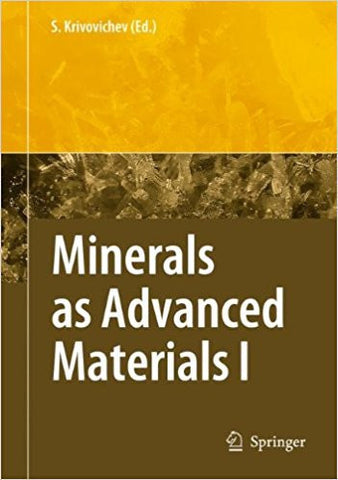
Minerals as Advanced M...
$219.00
{"id":11242209476,"title":"Minerals as Advanced Materials I","handle":"978-3-540-77122-7","description":"\u003ch5\u003eDescription\u003c\/h5\u003e\nAuthor: Krivovichev, Sergey V. (Ed.) \u003cbr\u003eISBN 978-3-540-77122-7 \u003cbr\u003e\u003cbr\u003e256 p. 90 illus., Hardcover\n\u003ch5\u003eSummary\u003c\/h5\u003e\nThis book represents a collection of papers presented at the 1st International workshop ‘Minerals as Advanced Materials I’ planned as an exchange of ideas between mineralogists and material scientists. The basic idea of the workshop was to identify minerals and mineral objects that have or potentially have unique physical, chemical and structural properties that are of interest from the viewpoint of applied mineralogy and material science. The topics covered include: zeolites, their natural occurrence, properties and applications; microporous and mesoporous mineral phases; layered mineral structures and composites; natural nanostructures (nanotubes, nanoclusters, nanocomposites, photonic crystals); biological minerals and biocompatible materials; minerals as actinide host matrices and other aspects of interactions between mineralogy and material sciences.\n\u003ch5\u003eAbout Author\u003c\/h5\u003e\n\u003cstrong\u003eSergey V. Krivovichev\u003c\/strong\u003e is Professor and Chairman of the Department of Crystallography, Faculty of Geology, St.Petersburg State University. He has co-authored two books and more than 200 scientific papers in the fields of mineralogy, crystallography, and structural chemistry. He has been awarded the Medal for Scientific Excellence by the European Mineralogical Union (2002), Alexander von Humboldt and Lise Meitner Research fellowships, and a number of Russian national distinctions. His activities include services as Associate Editor for leading mineralogical journals such as Canadian Mineralogist, American Mineralogist and Russian Mineralogist (Zapiski RMO).","published_at":"2017-06-22T21:13:06-04:00","created_at":"2017-06-22T21:13:06-04:00","vendor":"Chemtec Publishing","type":"Book","tags":["2008","biological minerlas","Biominerals","book","Materials","Mineralogy","nano","Nanostructures","Radioactive management","zeolites"],"price":21900,"price_min":21900,"price_max":21900,"available":true,"price_varies":false,"compare_at_price":null,"compare_at_price_min":0,"compare_at_price_max":0,"compare_at_price_varies":false,"variants":[{"id":43378330436,"title":"Default Title","option1":"Default Title","option2":null,"option3":null,"sku":"","requires_shipping":true,"taxable":true,"featured_image":null,"available":true,"name":"Minerals as Advanced Materials I","public_title":null,"options":["Default Title"],"price":21900,"weight":1000,"compare_at_price":null,"inventory_quantity":1,"inventory_management":null,"inventory_policy":"continue","barcode":"978-3-540-77122-7","requires_selling_plan":false,"selling_plan_allocations":[],"quantity_rule":{"min":1,"max":null,"increment":1}}],"images":["\/\/chemtec.org\/cdn\/shop\/products\/978-3-540-77122-7.jpg?v=1499716431"],"featured_image":"\/\/chemtec.org\/cdn\/shop\/products\/978-3-540-77122-7.jpg?v=1499716431","options":["Title"],"media":[{"alt":null,"id":358512853085,"position":1,"preview_image":{"aspect_ratio":0.703,"height":499,"width":351,"src":"\/\/chemtec.org\/cdn\/shop\/products\/978-3-540-77122-7.jpg?v=1499716431"},"aspect_ratio":0.703,"height":499,"media_type":"image","src":"\/\/chemtec.org\/cdn\/shop\/products\/978-3-540-77122-7.jpg?v=1499716431","width":351}],"requires_selling_plan":false,"selling_plan_groups":[],"content":"\u003ch5\u003eDescription\u003c\/h5\u003e\nAuthor: Krivovichev, Sergey V. (Ed.) \u003cbr\u003eISBN 978-3-540-77122-7 \u003cbr\u003e\u003cbr\u003e256 p. 90 illus., Hardcover\n\u003ch5\u003eSummary\u003c\/h5\u003e\nThis book represents a collection of papers presented at the 1st International workshop ‘Minerals as Advanced Materials I’ planned as an exchange of ideas between mineralogists and material scientists. The basic idea of the workshop was to identify minerals and mineral objects that have or potentially have unique physical, chemical and structural properties that are of interest from the viewpoint of applied mineralogy and material science. The topics covered include: zeolites, their natural occurrence, properties and applications; microporous and mesoporous mineral phases; layered mineral structures and composites; natural nanostructures (nanotubes, nanoclusters, nanocomposites, photonic crystals); biological minerals and biocompatible materials; minerals as actinide host matrices and other aspects of interactions between mineralogy and material sciences.\n\u003ch5\u003eAbout Author\u003c\/h5\u003e\n\u003cstrong\u003eSergey V. Krivovichev\u003c\/strong\u003e is Professor and Chairman of the Department of Crystallography, Faculty of Geology, St.Petersburg State University. He has co-authored two books and more than 200 scientific papers in the fields of mineralogy, crystallography, and structural chemistry. He has been awarded the Medal for Scientific Excellence by the European Mineralogical Union (2002), Alexander von Humboldt and Lise Meitner Research fellowships, and a number of Russian national distinctions. His activities include services as Associate Editor for leading mineralogical journals such as Canadian Mineralogist, American Mineralogist and Russian Mineralogist (Zapiski RMO)."}

Ichi, ni, san. Adventu...
$35.00
{"id":11242209348,"title":"Ichi, ni, san. Adventures with Japanese numbers","handle":"978-1-895198-42-3","description":"\u003ch5\u003eDescription\u003c\/h5\u003e\nAuthor: Prof. R. Byron Bird and Dr. Reiji Mezaki \u003cbr\u003eISBN 978-1-895198-42-3 \u003cbr\u003e\u003cbr\u003eNumber of pages: 192\n\u003ch5\u003eSummary\u003c\/h5\u003e\n\u003cbr\u003eThis book is about numbers and their use in the enumeration, counting, and calculation in Japanese, in everyday life, in sciences, and in geography. It also provides a gateway to the understanding of the Japanese language, culture, and organization. In addition, the book gives an introduction to Japanese grammar, place names, proverbs, idioms, sayings, and poetry.\u003cbr\u003e\u003cbr\u003eThe authors of the book are Dr. Bird, a professor of chemical engineering from the U.S.A., and a former student from his department, Dr. Mezaki. They have interacted for decades after first meeting in the 1950s. Dr. Mezaki has worked in several areas of applied chemistry and chemical engineering, and Dr. Bird has had the study of technical Japanese as a hobby since 1960.\u003cbr\u003e\u003cbr\u003eThis book is an excellent example of international cooperation that not only brings people together, but inspires them to produce for us this marvelous book, which is a guide for both technical and nontechnical people to learn about the subject of ways of human perceptions that differ from place to place but serve similar needs.\u003cbr\u003e\u003cbr\u003eThe book may be useful for collateral reading in courses in first- and second-year Japanese. Considering the type, composition, and contents of the book, it is difficult to say who does not need it.\u003cbr\u003e\u003cbr\u003eMore information about the book can be found in the \u003ca href=\"http:\/\/chemtec.org\/prodimages\/Ichi-ni-san-Preface.pdf\" target=\"_blank\" rel=\"noopener noreferrer\"\u003ePreface (pdf)\u003c\/a\u003e\u003cbr\u003e\u003cbr\u003e\n\u003ch5\u003eTable of Contents\u003c\/h5\u003e\n\u003cstrong\u003e1. The Japanese Writing System\u003c\/strong\u003e\u003cbr\u003e1.1 Pronunciation of Japanese; Romanization\u003cbr\u003e1.2 Hiragana\u003cbr\u003e1.3 Katakana\u003cbr\u003e1.4 Kanji\u003cbr\u003e\u003cstrong\u003e2. The Numbers and Counting\u003c\/strong\u003e\u003cbr\u003e2.1 Counting from 1 to 10\u003cbr\u003e2.2 Counting from 11 to 100\u003cbr\u003e2.3 Counting from 101 to 1,000\u003cbr\u003e2.4 Counting from 1,001 to 10,000\u003cbr\u003e2.5 Even larger numbers\u003cbr\u003e2.6 Lucky and unlucky numbers\u003cbr\u003e2.7 Numbers in legal documents\u003cbr\u003e2.8 Still other symbols\u003cbr\u003e2.9 Counting on the fingers\u003cbr\u003e2.10 Tallying cups of coffee or soft drinks\u003cbr\u003e2.11 The soroban\u003cbr\u003e\u003cstrong\u003e3. Zero, Fractions, Decimals, etc.\u003c\/strong\u003e\u003cbr\u003e3.1 Decimals and percentages\u003cbr\u003e3.2 Fractions\u003cbr\u003e3.3 Powers, roots, and factorials\u003cbr\u003e3.4 Regular polygons and polyhedrons\u003cbr\u003e\u003cstrong\u003e4. Months, Days, and Hours\u003c\/strong\u003e\u003cbr\u003e4.1 Names of the months\u003cbr\u003e4.2 Days of the month\u003cbr\u003e4.3 Time of day\u003cbr\u003e4.4 Birthdays\u003cbr\u003e\u003cstrong\u003e5. Counters\u003c\/strong\u003e\u003cbr\u003e5.1 “Chinese numbers”\u003cbr\u003e5.2 “Japanese numbers”\u003cbr\u003e\u003cstrong\u003e6. Use of Numbers with Prefixes and Suffixes\u003c\/strong\u003e\u003cbr\u003e6.1 Ordinal numbers\u003cbr\u003e6.2 “Times”\u003cbr\u003e6.3 Equal distribution\u003cbr\u003e6.4 Indefinite numbers\u003cbr\u003e\u003cstrong\u003e7. Words Containing Numbers\u003c\/strong\u003e\u003cbr\u003e7.1 One\u003cbr\u003e7.2 Two\u003cbr\u003e7.3 Three\u003cbr\u003e7.4 Four\u003cbr\u003e7.5 Five\u003cbr\u003e7.6 Six\u003cbr\u003e7.7 Seven\u003cbr\u003e7.8 Eight\u003cbr\u003e7.9 Nine\u003cbr\u003e7.10 Ten\u003cbr\u003e7.11 One hundred\u003cbr\u003e7.12 One thousand\u003cbr\u003e7.13 Ten thousand\u003cbr\u003e7.14 One hundred thousand\u003cbr\u003e7.15 Zero\u003cbr\u003e7.16 One-half \u003cbr\u003e7.17 Miscellaneous\u003cbr\u003e\u003cstrong\u003e8. Numbers in Geography\u003c\/strong\u003e\u003cbr\u003e8.1 Main islands\u003cbr\u003e8.2 Lesser islands\u003cbr\u003e8.3 Prefectures\u003cbr\u003e8.4 Cities\u003cbr\u003e8.5 Towns\u003cbr\u003e8.6 Villages\u003cbr\u003e8.7 Mountains\u003cbr\u003e8.8 Lakes\u003cbr\u003e8.9 Rivers\u003cbr\u003e8.10 Peninsulas\u003cbr\u003e8.11 Stations\u003cbr\u003e\u003cstrong\u003e9. Numbers in Personal Names\u003c\/strong\u003e\u003cbr\u003e9.1 Family names\u003cbr\u003e9.2 Given names (male)\u003cbr\u003e9.3 Given names (female)\u003cbr\u003e\u003cstrong\u003e10. Some Grammatical Points\u003c\/strong\u003e\u003cbr\u003e10.1 Particles\u003cbr\u003e10.2 Verb forms\u003cbr\u003e10.3 Adjective forms\u003cbr\u003e10.4 Ellipses\u003cbr\u003e\u003cstrong\u003e11. Numbers in Proverbs, Idioms, and Sayings: Kotowaza #1 to #68\u003cbr\u003e12. Numbers in Haiku: Haiku #1 to #49\u003cbr\u003e13. Numbers in Tanka: Tanka #1 to # 32\u003cbr\u003e14. Fooling around with Numbers\u003c\/strong\u003e\u003cbr\u003e14.1 Sayings with four characters\u003cbr\u003e14.2 Sayings with N and N\u003cbr\u003e14.3 Sayings with N and (N+1)\u003cbr\u003e14.4 Numbers appearing inside other characters\u003cbr\u003e14.5 Mnemonics for remembering numbers\u003cbr\u003e14.6 Numerical categories \u003cbr\u003e14.7 Comical expressions involving numbers \u003cbr\u003e14.8 Names for vegetables and other edibles\u003cbr\u003e\u003cstrong\u003e15. Writing Kanji\u003c\/strong\u003e \u003cbr\u003eReferences \u003cbr\u003eAppendix: Characters given by their total stroke count\u003cbr\u003e\u003cbr\u003e\u003cbr\u003e\n\u003ch5\u003eAbout Author\u003c\/h5\u003e\n\u003cstrong\u003eR. BYRON BIRD\u003c\/strong\u003e has been a Professor of Chemical Engineering at the University of Wisconsin-Madison since 1953. He is well known as the senior author of Transport Phenomena, a standard chemical engineering textbook, and the monograph Dynamics of Polymeric Liquids. He has taught twice at the Technical University in Delft in Holland, and has coauthored two Dutch literary readers. In Japan, he has taught at Kyoto and Nagoya Universities, and has coauthored three books on technical Japanese translation. He is a member of the National Academy of Sciences and the National Academy of Engineering, as well as a recipient of the National Medal of Science.\u003cbr\u003e\u003cbr\u003e\u003cstrong\u003eREIJI MEZAKI\u003c\/strong\u003e received his B.S. in Industrial Chemistry from Kyoto University and his Ph. D. in Chemical Engineering from the University of Wisconsin. After several years of teaching service at Yale University and New York University, he worked for Mitsubishi Chemical Corporation, Mitsubishi Research Institute, and the University of Tokyo as a research staff member in frontier and essential areas of applied chemistry and chemical engineering. They include computer-assisted optimization of chemical processes and database construction of polymers and nanocomposites. Presently he is a visiting researcher at the National Institute of Advanced Industrial Science and Technology.\u003cbr\u003e\u003cbr\u003e\u003cbr\u003e","published_at":"2017-06-22T21:13:06-04:00","created_at":"2017-06-22T21:13:06-04:00","vendor":"Chemtec Publishing","type":"Book","tags":["2009","book","general","Japan","Japanese","language","numbers"],"price":3500,"price_min":3500,"price_max":5500,"available":true,"price_varies":true,"compare_at_price":null,"compare_at_price_min":0,"compare_at_price_max":0,"compare_at_price_varies":false,"variants":[{"id":43378329796,"title":"Hardcover","option1":"Hardcover","option2":null,"option3":null,"sku":"","requires_shipping":true,"taxable":true,"featured_image":null,"available":true,"name":"Ichi, ni, san. Adventures with Japanese numbers - Hardcover","public_title":"Hardcover","options":["Hardcover"],"price":5500,"weight":1000,"compare_at_price":null,"inventory_quantity":1,"inventory_management":null,"inventory_policy":"continue","barcode":"978-1-895198-42-3","requires_selling_plan":false,"selling_plan_allocations":[],"quantity_rule":{"min":1,"max":null,"increment":1}},{"id":49414383748,"title":"Softcover","option1":"Softcover","option2":null,"option3":null,"sku":"","requires_shipping":true,"taxable":true,"featured_image":null,"available":true,"name":"Ichi, ni, san. Adventures with Japanese numbers - Softcover","public_title":"Softcover","options":["Softcover"],"price":3500,"weight":1000,"compare_at_price":null,"inventory_quantity":1,"inventory_management":null,"inventory_policy":"continue","barcode":"978-1-895198-43-0","requires_selling_plan":false,"selling_plan_allocations":[],"quantity_rule":{"min":1,"max":null,"increment":1}}],"images":["\/\/chemtec.org\/cdn\/shop\/products\/978-1-895198-42-3.jpg?v=1499478359"],"featured_image":"\/\/chemtec.org\/cdn\/shop\/products\/978-1-895198-42-3.jpg?v=1499478359","options":["Cover"],"media":[{"alt":null,"id":356437590109,"position":1,"preview_image":{"aspect_ratio":0.614,"height":189,"width":116,"src":"\/\/chemtec.org\/cdn\/shop\/products\/978-1-895198-42-3.jpg?v=1499478359"},"aspect_ratio":0.614,"height":189,"media_type":"image","src":"\/\/chemtec.org\/cdn\/shop\/products\/978-1-895198-42-3.jpg?v=1499478359","width":116}],"requires_selling_plan":false,"selling_plan_groups":[],"content":"\u003ch5\u003eDescription\u003c\/h5\u003e\nAuthor: Prof. R. Byron Bird and Dr. Reiji Mezaki \u003cbr\u003eISBN 978-1-895198-42-3 \u003cbr\u003e\u003cbr\u003eNumber of pages: 192\n\u003ch5\u003eSummary\u003c\/h5\u003e\n\u003cbr\u003eThis book is about numbers and their use in the enumeration, counting, and calculation in Japanese, in everyday life, in sciences, and in geography. It also provides a gateway to the understanding of the Japanese language, culture, and organization. In addition, the book gives an introduction to Japanese grammar, place names, proverbs, idioms, sayings, and poetry.\u003cbr\u003e\u003cbr\u003eThe authors of the book are Dr. Bird, a professor of chemical engineering from the U.S.A., and a former student from his department, Dr. Mezaki. They have interacted for decades after first meeting in the 1950s. Dr. Mezaki has worked in several areas of applied chemistry and chemical engineering, and Dr. Bird has had the study of technical Japanese as a hobby since 1960.\u003cbr\u003e\u003cbr\u003eThis book is an excellent example of international cooperation that not only brings people together, but inspires them to produce for us this marvelous book, which is a guide for both technical and nontechnical people to learn about the subject of ways of human perceptions that differ from place to place but serve similar needs.\u003cbr\u003e\u003cbr\u003eThe book may be useful for collateral reading in courses in first- and second-year Japanese. Considering the type, composition, and contents of the book, it is difficult to say who does not need it.\u003cbr\u003e\u003cbr\u003eMore information about the book can be found in the \u003ca href=\"http:\/\/chemtec.org\/prodimages\/Ichi-ni-san-Preface.pdf\" target=\"_blank\" rel=\"noopener noreferrer\"\u003ePreface (pdf)\u003c\/a\u003e\u003cbr\u003e\u003cbr\u003e\n\u003ch5\u003eTable of Contents\u003c\/h5\u003e\n\u003cstrong\u003e1. The Japanese Writing System\u003c\/strong\u003e\u003cbr\u003e1.1 Pronunciation of Japanese; Romanization\u003cbr\u003e1.2 Hiragana\u003cbr\u003e1.3 Katakana\u003cbr\u003e1.4 Kanji\u003cbr\u003e\u003cstrong\u003e2. The Numbers and Counting\u003c\/strong\u003e\u003cbr\u003e2.1 Counting from 1 to 10\u003cbr\u003e2.2 Counting from 11 to 100\u003cbr\u003e2.3 Counting from 101 to 1,000\u003cbr\u003e2.4 Counting from 1,001 to 10,000\u003cbr\u003e2.5 Even larger numbers\u003cbr\u003e2.6 Lucky and unlucky numbers\u003cbr\u003e2.7 Numbers in legal documents\u003cbr\u003e2.8 Still other symbols\u003cbr\u003e2.9 Counting on the fingers\u003cbr\u003e2.10 Tallying cups of coffee or soft drinks\u003cbr\u003e2.11 The soroban\u003cbr\u003e\u003cstrong\u003e3. Zero, Fractions, Decimals, etc.\u003c\/strong\u003e\u003cbr\u003e3.1 Decimals and percentages\u003cbr\u003e3.2 Fractions\u003cbr\u003e3.3 Powers, roots, and factorials\u003cbr\u003e3.4 Regular polygons and polyhedrons\u003cbr\u003e\u003cstrong\u003e4. Months, Days, and Hours\u003c\/strong\u003e\u003cbr\u003e4.1 Names of the months\u003cbr\u003e4.2 Days of the month\u003cbr\u003e4.3 Time of day\u003cbr\u003e4.4 Birthdays\u003cbr\u003e\u003cstrong\u003e5. Counters\u003c\/strong\u003e\u003cbr\u003e5.1 “Chinese numbers”\u003cbr\u003e5.2 “Japanese numbers”\u003cbr\u003e\u003cstrong\u003e6. Use of Numbers with Prefixes and Suffixes\u003c\/strong\u003e\u003cbr\u003e6.1 Ordinal numbers\u003cbr\u003e6.2 “Times”\u003cbr\u003e6.3 Equal distribution\u003cbr\u003e6.4 Indefinite numbers\u003cbr\u003e\u003cstrong\u003e7. Words Containing Numbers\u003c\/strong\u003e\u003cbr\u003e7.1 One\u003cbr\u003e7.2 Two\u003cbr\u003e7.3 Three\u003cbr\u003e7.4 Four\u003cbr\u003e7.5 Five\u003cbr\u003e7.6 Six\u003cbr\u003e7.7 Seven\u003cbr\u003e7.8 Eight\u003cbr\u003e7.9 Nine\u003cbr\u003e7.10 Ten\u003cbr\u003e7.11 One hundred\u003cbr\u003e7.12 One thousand\u003cbr\u003e7.13 Ten thousand\u003cbr\u003e7.14 One hundred thousand\u003cbr\u003e7.15 Zero\u003cbr\u003e7.16 One-half \u003cbr\u003e7.17 Miscellaneous\u003cbr\u003e\u003cstrong\u003e8. Numbers in Geography\u003c\/strong\u003e\u003cbr\u003e8.1 Main islands\u003cbr\u003e8.2 Lesser islands\u003cbr\u003e8.3 Prefectures\u003cbr\u003e8.4 Cities\u003cbr\u003e8.5 Towns\u003cbr\u003e8.6 Villages\u003cbr\u003e8.7 Mountains\u003cbr\u003e8.8 Lakes\u003cbr\u003e8.9 Rivers\u003cbr\u003e8.10 Peninsulas\u003cbr\u003e8.11 Stations\u003cbr\u003e\u003cstrong\u003e9. Numbers in Personal Names\u003c\/strong\u003e\u003cbr\u003e9.1 Family names\u003cbr\u003e9.2 Given names (male)\u003cbr\u003e9.3 Given names (female)\u003cbr\u003e\u003cstrong\u003e10. Some Grammatical Points\u003c\/strong\u003e\u003cbr\u003e10.1 Particles\u003cbr\u003e10.2 Verb forms\u003cbr\u003e10.3 Adjective forms\u003cbr\u003e10.4 Ellipses\u003cbr\u003e\u003cstrong\u003e11. Numbers in Proverbs, Idioms, and Sayings: Kotowaza #1 to #68\u003cbr\u003e12. Numbers in Haiku: Haiku #1 to #49\u003cbr\u003e13. Numbers in Tanka: Tanka #1 to # 32\u003cbr\u003e14. Fooling around with Numbers\u003c\/strong\u003e\u003cbr\u003e14.1 Sayings with four characters\u003cbr\u003e14.2 Sayings with N and N\u003cbr\u003e14.3 Sayings with N and (N+1)\u003cbr\u003e14.4 Numbers appearing inside other characters\u003cbr\u003e14.5 Mnemonics for remembering numbers\u003cbr\u003e14.6 Numerical categories \u003cbr\u003e14.7 Comical expressions involving numbers \u003cbr\u003e14.8 Names for vegetables and other edibles\u003cbr\u003e\u003cstrong\u003e15. Writing Kanji\u003c\/strong\u003e \u003cbr\u003eReferences \u003cbr\u003eAppendix: Characters given by their total stroke count\u003cbr\u003e\u003cbr\u003e\u003cbr\u003e\n\u003ch5\u003eAbout Author\u003c\/h5\u003e\n\u003cstrong\u003eR. BYRON BIRD\u003c\/strong\u003e has been a Professor of Chemical Engineering at the University of Wisconsin-Madison since 1953. He is well known as the senior author of Transport Phenomena, a standard chemical engineering textbook, and the monograph Dynamics of Polymeric Liquids. He has taught twice at the Technical University in Delft in Holland, and has coauthored two Dutch literary readers. In Japan, he has taught at Kyoto and Nagoya Universities, and has coauthored three books on technical Japanese translation. He is a member of the National Academy of Sciences and the National Academy of Engineering, as well as a recipient of the National Medal of Science.\u003cbr\u003e\u003cbr\u003e\u003cstrong\u003eREIJI MEZAKI\u003c\/strong\u003e received his B.S. in Industrial Chemistry from Kyoto University and his Ph. D. in Chemical Engineering from the University of Wisconsin. After several years of teaching service at Yale University and New York University, he worked for Mitsubishi Chemical Corporation, Mitsubishi Research Institute, and the University of Tokyo as a research staff member in frontier and essential areas of applied chemistry and chemical engineering. They include computer-assisted optimization of chemical processes and database construction of polymers and nanocomposites. Presently he is a visiting researcher at the National Institute of Advanced Industrial Science and Technology.\u003cbr\u003e\u003cbr\u003e\u003cbr\u003e"}
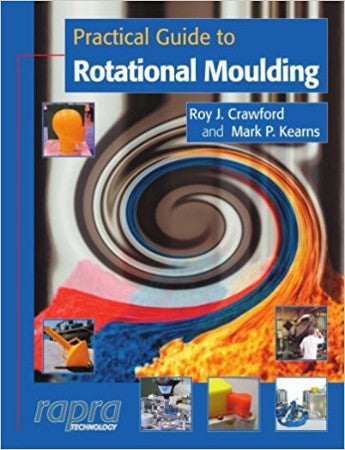
Practical Guide to Rot...
$90.00
{"id":11242209156,"title":"Practical Guide to Rotational Molding","handle":"978-1-85957-387-7","description":"\u003ch5\u003eDescription\u003c\/h5\u003e\nAuthor: R.J. Crawford and M.P. Kearns \u003cbr\u003eISBN 978-1-85957-387-7 \u003cbr\u003e\u003cbr\u003e\u003cmeta charset=\"utf-8\"\u003e\u003cspan\u003ePublished: 2003\u003cbr\u003e\u003c\/span\u003epages 184\n\u003ch5\u003eSummary\u003c\/h5\u003e\nRotational molding is a low pressure, a high temperature manufacturing method for producing hollow one-piece plastic parts. The molding process dates back hundreds of years to the Swiss use of the method to make hollow chocolate eggs. The technology involves aspects ranging from mould design to mould heating and cooling, and remolding methods. Not all materials are suitable for the process - resin and additive selection are critical. \u003cbr\u003e\u003cbr\u003eRotational moulding is a very competitive alternative to blow molding, thermoforming and injection molding for the manufacture of hollow plastic parts. It offers designers the chance to produce stress-free articles, with uniform wall thickness and complex shapes. Typical molded parts include bulk containers, tanks, canoes, toys, medical equipment, automotive parts, and ducts. \u003cbr\u003e\u003cbr\u003eThere are many advantages associated with rotational molding. Firstly, the moulds are relatively simple and cheap, because the process is low pressure, unlike injection molding. The wall thickness of parts is more uniform and it is possible to alter the wall thickness without changing the mould. Complex parts with undercuts ad intricate contours can be manufactured relatively easily. There is also very little waste as the required weight of plastic to produce the part is placed inside the mould. \u003cbr\u003e\u003cbr\u003eThis book – A Practical Guide to Rotational Molding – describes the basic aspects of rotational molding and includes information on the latest state of the art developments in the industry. A key feature of the approach is to use photographs wherever possible to illustrate the points that are being made. This book will be useful to those new to the industry, as well as those who are experienced in some aspects of the process. \u003cbr\u003e\u003cbr\u003eThe ever-changing nature of this industry means that it is very important for those involved in the manufacturing operation to keep abreast of the advances that are being made. The industry is becoming more competitive and customers are making increasing demands in terms of part quality and performance. \u003cbr\u003e\u003cbr\u003eRotational molding is becoming a highly sophisticated manufacturing method for plastic parts. New mould and machine features, and advanced process control technologies, are being developed. This gives designers, and end users, access to new opportunities to create novel and innovative plastic moldings. New technologies such as mould internal air temperature measurement, mould pressurization, and one shot foaming are now available.\u003cbr\u003e\u003cbr\u003e\n\u003ch5\u003eTable of Contents\u003c\/h5\u003e\nPreface \u003cbr\u003eChapter 1 – Introduction to the Rotational Molding Process\u003cbr\u003e1.1 Introduction\u003cbr\u003e1.2 The Rotational Molding Process\u003cbr\u003e1.3 Overview of Rotational Molding\u003cbr\u003e1.4 Special Nature of Rotational Molding\u003cbr\u003e1.5 Advantages of Rotational Molding\u003cbr\u003e1.6 Disadvantages of Rotational Molding\u003cbr\u003e1.7 Common Applications for Rotomoulded Products\u003cbr\u003e1.7.1 Material Handling Products\u003cbr\u003e1.7.2 Industrial Products\u003cbr\u003e1.7.3 Environmental Products\u003cbr\u003e1.7.4 Leisure Products\u003cbr\u003e1.7.5 Marine Products\u003cbr\u003e1.7.6 Road Signage\u003cbr\u003eBibliography \u003cbr\u003eChapter 2 – Moulds\u003cbr\u003e2.1 Introduction\u003cbr\u003e2.2 Mould Materials\u003cbr\u003e2.3 Sheet Steel\u003cbr\u003e2.4 Aluminium\u003cbr\u003e2.5 Electroformed Nickel\u003cbr\u003e2.6 Comparison Between Mould Materials\u003cbr\u003e2.7 Mould Design\u003cbr\u003e2.7.1 Mould Frame\u003cbr\u003e2.7.2 Molded-in Inserts\u003cbr\u003e2.7.3 Molded-in Handles\u003cbr\u003e2.7.4 Temporary Inserts\u003cbr\u003e2.7.5 Movable Cores\u003cbr\u003e2.7.6 Threads\u003cbr\u003e2.7.7 Mould Venting\u003cbr\u003e2.7.8 Mould Surface Finish\u003cbr\u003e2.8 Mould Release\u003cbr\u003e2.8.1 Mould Preparation for Release Agent\u003cbr\u003e2.8.2 Reactive Systems\u003cbr\u003e2.8.2.1 Spray-on Zinc Stearates\u003cbr\u003e2.8.2.2 Silicones\u003cbr\u003e2.8.2.3 Disiloxanes\u003cbr\u003e2.8.3 Conventional Systems\u003cbr\u003e2.8.4 Permanent Systems\u003cbr\u003e2.8.5 Hybrid Systems\u003cbr\u003e2.9 Mould Cooling\u003cbr\u003e2.10 Mould Ancillaries\u003cbr\u003e2.11 Molding Aids\u003cbr\u003e2.12 Kiss-Offs\u003cbr\u003e2.13 Calculation of Charge Weight \u003cbr\u003eChapter 3 - Rotational Molding Machinery\u003cbr\u003e3.1 Introduction\u003cbr\u003e3.2 Types of Rotational Molding Machines\u003cbr\u003e3.2.1 Carousel Machines\u003cbr\u003e3.2.2 Shuttle Machines\u003cbr\u003e3.2.3 Clamshell Machines\u003cbr\u003e3.2.4 Rock and Roll Machines\u003cbr\u003e3.2.5 Other Types of Machines\u003cbr\u003e3.3 Mould Swing\u003cbr\u003e3.4 Mould Speed\u003cbr\u003e3.5 Speed Ratio\u003cbr\u003e3.6 Oven Air Flow Amplification\u003cbr\u003e3.7 Cooling\u003cbr\u003e3.8 Developments in Machine Control\u003cbr\u003e3.9 Internal Air Temperature Measurement in Rotational Molding\u003cbr\u003e3.10 Preparation of Rotolog for Molding Trials\u003cbr\u003e3.11 Monitoring Pressure Inside a Mould\u003cbr\u003eBibliography \u003cbr\u003eChapter 4 – Materials for Rotational Molding\u003cbr\u003e4.1 Introduction\u003cbr\u003e4.2 Typical Characteristics of Rotationally Molded Plastics\u003cbr\u003e4.3 Materials Used in Rotational Molding\u003cbr\u003e4.4 Polyethylene\u003cbr\u003e4.4.1 Low Density Polyethylene (LDPE)\u003cbr\u003e4.4.2 High Density Polyethylene (HDPE)\u003cbr\u003e4.4.3 Medium Density Polyethylene (MDPE)\u003cbr\u003e4.4.4 Linear Low Density Polyethylene (LLDPE)\u003cbr\u003e4.4.5 Metallocene Polyethylene\u003cbr\u003e4.4.6 Ethylene-Vinyl Acetate (EVA)\u003cbr\u003e4.4.7 Ethylene-Butyl Acrylate (EBA)\u003cbr\u003e4.5 Polypropylene (PP)\u003cbr\u003e4.6 Polyamides (Nylons)\u003cbr\u003e4.6.1 Nylon 6\u003cbr\u003e4.6.2 Nylon 11 and Nylon 12\u003cbr\u003e4.6.3 Reaction Injection Molding (RIM) Nylon\u003cbr\u003e4.7 Amorphous Materials\u003cbr\u003e4.7.1 Polyvinyl Chloride (PVC)\u003cbr\u003e4.7.2 Fluoropolymers\u003cbr\u003e4.8 Other Plastics\u003cbr\u003e4.9 Additives Used in Rotational Molding Materials\u003cbr\u003e4.9.1 Fillers\u003cbr\u003e4.9.2 Plasticizers\u003cbr\u003e4.9.3 Lubricants\u003cbr\u003e4.9.4 Stabilizers\u003cbr\u003e4.9.5 Anti-Oxidants\u003cbr\u003e4.9.6 Ultraviolet Stabilizers\u003cbr\u003e4.9.7 Flame Retardants\u003cbr\u003e4.9.8 Crosslinking Agents\u003cbr\u003e4.9.9 Foaming Agents\u003cbr\u003e4.9.10 Pigments\u003cbr\u003e4.10 Powders for Rotational Molding - Grinding or Pulverizing\u003cbr\u003e4.10.1 Introduction\u003cbr\u003e4.11 Particle Size Distribution\u003cbr\u003e4.12 Dry Flow\u003cbr\u003e4.13 Bulk Density\u003cbr\u003e4.14 Factors Affecting Powder Quality\u003cbr\u003e4.14.1 Gap Size\u003cbr\u003e4.14.2 Number of Mill Teeth\u003cbr\u003e4.14.3 Grinding Temperature\u003cbr\u003e4.15 Micropelletising\u003cbr\u003e4.16 Coloring of Plastics for Rotational Molding\u003cbr\u003e4.17 Types of Pigments\u003cbr\u003eBibliography \u003cbr\u003eChapter 5 – Quality Control in Rotational Molding\u003cbr\u003e5.1 Introduction\u003cbr\u003e5.2 Wall Thickness Distribution\u003cbr\u003e5.3 Shrinkage\u003cbr\u003e5.3.1 Shrinkage Guidelines\u003cbr\u003e5.3.2 Control of Shrinkage\u003cbr\u003e5.3.2.1 Effect of Release Point on Shrinkage\u003cbr\u003e5.3.2.2 Other Factors Affecting Shrinkage\u003cbr\u003e5.4 Warpage\u003cbr\u003e5.4.1 Control of Warpage\u003cbr\u003e5.5 Residual Stress\u003cbr\u003e5.5.1 Short-Term Effects of Residual Stresses\u003cbr\u003e5.5.2 Long-Term Effects of Residual Stresses\u003cbr\u003e5.5.3 Cures for Residual Stress Problems\u003cbr\u003e5.6 Surface Decoration\u003cbr\u003e5.6.1 Painting\u003cbr\u003e5.6.2 Hot Stamping\u003cbr\u003e5.6.3 Adhesives\u003cbr\u003e5.6.4 In-Mould Decoration\u003cbr\u003e5.6.5 Post Molding Decoration\u003cbr\u003e5.7 Foaming in Rotational Molding\u003cbr\u003e5.7.1 Chemical Blowing Agent Technology\u003cbr\u003e5.7.2 Design of Foamed Sections\u003cbr\u003e5.7.3 Solid\/Foam Cross-Sections\u003cbr\u003e5.7.4 Solid\/Foam\/Solid Cross-Sections\u003cbr\u003eBibliography \u003cbr\u003eChapter 6 – The Future for Rotational Molding\u003cbr\u003e6.1 Materials\u003cbr\u003e6.2 Moulds\u003cbr\u003e6.3 Molding Equipment\u003cbr\u003e6.4 The Challenges\u003cbr\u003e6.5 The Role that the Molder Must Play\u003cbr\u003e6.6 The Role that the Suppliers Must Play\u003cbr\u003eAbbreviations and Acronyms\u003cbr\u003eIndex\u003cbr\u003e\u003cbr\u003e\n\u003ch5\u003eAbout Author\u003c\/h5\u003e\n\u003cstrong\u003eProfessor Roy J.CRAWFORD\u003c\/strong\u003e FREng B.Sc., Ph.D., D.Sc., FIMechE., FIM\u003cbr\u003eQueen's University, Belfast \u003cbr\u003eProfessor Roy Crawford obtained a first-class honors degree in Mechanical Engineering from the Queen's University of Belfast in 1970. He went on to obtain a Ph.D. degree relating to the processing and properties of plastics in 1973. He obtained a DSc degree for research work on plastics in 1987. Over the past 30 years, he has concentrated on studying the processing behavior of plastics. He has published over 250 papers in learned journals and conferences during this time. He is the author of 7 textbooks on plastics and engineering materials. \u003cbr\u003e\u003cbr\u003eRoy Crawford is currently Pro Vice-Chancellor for Research and Development and Professor of Engineering Materials at Queen's University Belfast. From 1997 to 1999 he was Director of the Polymer Processing Research Centre at Queen's University. This Centre was established on the basis of the international reputation of the Rotational Molding Research Centre that he initiated at the University. \u003cbr\u003e\u003cbr\u003eHe has been awarded a number of prizes for the high quality of his research work. In 1996 he received the prestigious Netlon Medal from the Institute of Materials for innovative contributions to the molding of plastics. He is Technical Director for the Association of Rotational Molders in Chicago, USA and Technical Editor for the Rotation Magazine, published in the USA. \u003cbr\u003e\u003cbr\u003e\u003cstrong\u003eM. P. KEARNS\u003c\/strong\u003e B.Eng., M.Phil., C.Eng., MIChemE\u003cbr\u003eQueen's University, Belfast \u003cbr\u003eMark Kearns is the Rotational Molding Research Manager of the Polymer Processing Research Centre at Queen’s University, Belfast. He is a Chartered Chemical Engineer with an M.Phil Degree in Rotational Molding. He manages rotational molding research and development projects for companies and institutions across Europe, Australasia, and North America, and organizes the Association of Rotational Molders - sponsored, ‘Advanced Rotational Molding Training Seminars’ both in Belfast and North America. Mark has spent over ten years in rotational molding research, initially in Industry as a Development Engineer and Deputy Production Manager. He has published over 50 papers and conference proceedings on rotational molding and has delivered lectures on rotational molding in North America, Asia, Africa and Europe.\u003cbr\u003e\u003cbr\u003e","published_at":"2017-06-22T21:13:05-04:00","created_at":"2017-06-22T21:13:05-04:00","vendor":"Chemtec Publishing","type":"Book","tags":["2003","additives","agent","ancillaries","automotive","book","canoes","containers","cooling","cores","disiloxanes","ducts","frame","heating","inserts","low pressure molding","machinery","manufacturing","medical equipment","moulding","p-processing","parts","polyethylene","polymer","release","rotational","rotational molding","silicones","speed","tanks","technology","toys","venting","Zinc Stearates"],"price":9000,"price_min":9000,"price_max":9000,"available":true,"price_varies":false,"compare_at_price":null,"compare_at_price_min":0,"compare_at_price_max":0,"compare_at_price_varies":false,"variants":[{"id":43378329732,"title":"Default Title","option1":"Default Title","option2":null,"option3":null,"sku":"","requires_shipping":true,"taxable":true,"featured_image":null,"available":true,"name":"Practical Guide to Rotational Molding","public_title":null,"options":["Default Title"],"price":9000,"weight":1000,"compare_at_price":null,"inventory_quantity":0,"inventory_management":null,"inventory_policy":"continue","barcode":"978-1-85957-387-7","requires_selling_plan":false,"selling_plan_allocations":[],"quantity_rule":{"min":1,"max":null,"increment":1}}],"images":["\/\/chemtec.org\/cdn\/shop\/products\/51jQip1cC5L._SX400_BO1_204_203_200.jpg?v=1499953613"],"featured_image":"\/\/chemtec.org\/cdn\/shop\/products\/51jQip1cC5L._SX400_BO1_204_203_200.jpg?v=1499953613","options":["Title"],"media":[{"alt":null,"id":358721978461,"position":1,"preview_image":{"aspect_ratio":0.767,"height":450,"width":345,"src":"\/\/chemtec.org\/cdn\/shop\/products\/51jQip1cC5L._SX400_BO1_204_203_200.jpg?v=1499953613"},"aspect_ratio":0.767,"height":450,"media_type":"image","src":"\/\/chemtec.org\/cdn\/shop\/products\/51jQip1cC5L._SX400_BO1_204_203_200.jpg?v=1499953613","width":345}],"requires_selling_plan":false,"selling_plan_groups":[],"content":"\u003ch5\u003eDescription\u003c\/h5\u003e\nAuthor: R.J. Crawford and M.P. Kearns \u003cbr\u003eISBN 978-1-85957-387-7 \u003cbr\u003e\u003cbr\u003e\u003cmeta charset=\"utf-8\"\u003e\u003cspan\u003ePublished: 2003\u003cbr\u003e\u003c\/span\u003epages 184\n\u003ch5\u003eSummary\u003c\/h5\u003e\nRotational molding is a low pressure, a high temperature manufacturing method for producing hollow one-piece plastic parts. The molding process dates back hundreds of years to the Swiss use of the method to make hollow chocolate eggs. The technology involves aspects ranging from mould design to mould heating and cooling, and remolding methods. Not all materials are suitable for the process - resin and additive selection are critical. \u003cbr\u003e\u003cbr\u003eRotational moulding is a very competitive alternative to blow molding, thermoforming and injection molding for the manufacture of hollow plastic parts. It offers designers the chance to produce stress-free articles, with uniform wall thickness and complex shapes. Typical molded parts include bulk containers, tanks, canoes, toys, medical equipment, automotive parts, and ducts. \u003cbr\u003e\u003cbr\u003eThere are many advantages associated with rotational molding. Firstly, the moulds are relatively simple and cheap, because the process is low pressure, unlike injection molding. The wall thickness of parts is more uniform and it is possible to alter the wall thickness without changing the mould. Complex parts with undercuts ad intricate contours can be manufactured relatively easily. There is also very little waste as the required weight of plastic to produce the part is placed inside the mould. \u003cbr\u003e\u003cbr\u003eThis book – A Practical Guide to Rotational Molding – describes the basic aspects of rotational molding and includes information on the latest state of the art developments in the industry. A key feature of the approach is to use photographs wherever possible to illustrate the points that are being made. This book will be useful to those new to the industry, as well as those who are experienced in some aspects of the process. \u003cbr\u003e\u003cbr\u003eThe ever-changing nature of this industry means that it is very important for those involved in the manufacturing operation to keep abreast of the advances that are being made. The industry is becoming more competitive and customers are making increasing demands in terms of part quality and performance. \u003cbr\u003e\u003cbr\u003eRotational molding is becoming a highly sophisticated manufacturing method for plastic parts. New mould and machine features, and advanced process control technologies, are being developed. This gives designers, and end users, access to new opportunities to create novel and innovative plastic moldings. New technologies such as mould internal air temperature measurement, mould pressurization, and one shot foaming are now available.\u003cbr\u003e\u003cbr\u003e\n\u003ch5\u003eTable of Contents\u003c\/h5\u003e\nPreface \u003cbr\u003eChapter 1 – Introduction to the Rotational Molding Process\u003cbr\u003e1.1 Introduction\u003cbr\u003e1.2 The Rotational Molding Process\u003cbr\u003e1.3 Overview of Rotational Molding\u003cbr\u003e1.4 Special Nature of Rotational Molding\u003cbr\u003e1.5 Advantages of Rotational Molding\u003cbr\u003e1.6 Disadvantages of Rotational Molding\u003cbr\u003e1.7 Common Applications for Rotomoulded Products\u003cbr\u003e1.7.1 Material Handling Products\u003cbr\u003e1.7.2 Industrial Products\u003cbr\u003e1.7.3 Environmental Products\u003cbr\u003e1.7.4 Leisure Products\u003cbr\u003e1.7.5 Marine Products\u003cbr\u003e1.7.6 Road Signage\u003cbr\u003eBibliography \u003cbr\u003eChapter 2 – Moulds\u003cbr\u003e2.1 Introduction\u003cbr\u003e2.2 Mould Materials\u003cbr\u003e2.3 Sheet Steel\u003cbr\u003e2.4 Aluminium\u003cbr\u003e2.5 Electroformed Nickel\u003cbr\u003e2.6 Comparison Between Mould Materials\u003cbr\u003e2.7 Mould Design\u003cbr\u003e2.7.1 Mould Frame\u003cbr\u003e2.7.2 Molded-in Inserts\u003cbr\u003e2.7.3 Molded-in Handles\u003cbr\u003e2.7.4 Temporary Inserts\u003cbr\u003e2.7.5 Movable Cores\u003cbr\u003e2.7.6 Threads\u003cbr\u003e2.7.7 Mould Venting\u003cbr\u003e2.7.8 Mould Surface Finish\u003cbr\u003e2.8 Mould Release\u003cbr\u003e2.8.1 Mould Preparation for Release Agent\u003cbr\u003e2.8.2 Reactive Systems\u003cbr\u003e2.8.2.1 Spray-on Zinc Stearates\u003cbr\u003e2.8.2.2 Silicones\u003cbr\u003e2.8.2.3 Disiloxanes\u003cbr\u003e2.8.3 Conventional Systems\u003cbr\u003e2.8.4 Permanent Systems\u003cbr\u003e2.8.5 Hybrid Systems\u003cbr\u003e2.9 Mould Cooling\u003cbr\u003e2.10 Mould Ancillaries\u003cbr\u003e2.11 Molding Aids\u003cbr\u003e2.12 Kiss-Offs\u003cbr\u003e2.13 Calculation of Charge Weight \u003cbr\u003eChapter 3 - Rotational Molding Machinery\u003cbr\u003e3.1 Introduction\u003cbr\u003e3.2 Types of Rotational Molding Machines\u003cbr\u003e3.2.1 Carousel Machines\u003cbr\u003e3.2.2 Shuttle Machines\u003cbr\u003e3.2.3 Clamshell Machines\u003cbr\u003e3.2.4 Rock and Roll Machines\u003cbr\u003e3.2.5 Other Types of Machines\u003cbr\u003e3.3 Mould Swing\u003cbr\u003e3.4 Mould Speed\u003cbr\u003e3.5 Speed Ratio\u003cbr\u003e3.6 Oven Air Flow Amplification\u003cbr\u003e3.7 Cooling\u003cbr\u003e3.8 Developments in Machine Control\u003cbr\u003e3.9 Internal Air Temperature Measurement in Rotational Molding\u003cbr\u003e3.10 Preparation of Rotolog for Molding Trials\u003cbr\u003e3.11 Monitoring Pressure Inside a Mould\u003cbr\u003eBibliography \u003cbr\u003eChapter 4 – Materials for Rotational Molding\u003cbr\u003e4.1 Introduction\u003cbr\u003e4.2 Typical Characteristics of Rotationally Molded Plastics\u003cbr\u003e4.3 Materials Used in Rotational Molding\u003cbr\u003e4.4 Polyethylene\u003cbr\u003e4.4.1 Low Density Polyethylene (LDPE)\u003cbr\u003e4.4.2 High Density Polyethylene (HDPE)\u003cbr\u003e4.4.3 Medium Density Polyethylene (MDPE)\u003cbr\u003e4.4.4 Linear Low Density Polyethylene (LLDPE)\u003cbr\u003e4.4.5 Metallocene Polyethylene\u003cbr\u003e4.4.6 Ethylene-Vinyl Acetate (EVA)\u003cbr\u003e4.4.7 Ethylene-Butyl Acrylate (EBA)\u003cbr\u003e4.5 Polypropylene (PP)\u003cbr\u003e4.6 Polyamides (Nylons)\u003cbr\u003e4.6.1 Nylon 6\u003cbr\u003e4.6.2 Nylon 11 and Nylon 12\u003cbr\u003e4.6.3 Reaction Injection Molding (RIM) Nylon\u003cbr\u003e4.7 Amorphous Materials\u003cbr\u003e4.7.1 Polyvinyl Chloride (PVC)\u003cbr\u003e4.7.2 Fluoropolymers\u003cbr\u003e4.8 Other Plastics\u003cbr\u003e4.9 Additives Used in Rotational Molding Materials\u003cbr\u003e4.9.1 Fillers\u003cbr\u003e4.9.2 Plasticizers\u003cbr\u003e4.9.3 Lubricants\u003cbr\u003e4.9.4 Stabilizers\u003cbr\u003e4.9.5 Anti-Oxidants\u003cbr\u003e4.9.6 Ultraviolet Stabilizers\u003cbr\u003e4.9.7 Flame Retardants\u003cbr\u003e4.9.8 Crosslinking Agents\u003cbr\u003e4.9.9 Foaming Agents\u003cbr\u003e4.9.10 Pigments\u003cbr\u003e4.10 Powders for Rotational Molding - Grinding or Pulverizing\u003cbr\u003e4.10.1 Introduction\u003cbr\u003e4.11 Particle Size Distribution\u003cbr\u003e4.12 Dry Flow\u003cbr\u003e4.13 Bulk Density\u003cbr\u003e4.14 Factors Affecting Powder Quality\u003cbr\u003e4.14.1 Gap Size\u003cbr\u003e4.14.2 Number of Mill Teeth\u003cbr\u003e4.14.3 Grinding Temperature\u003cbr\u003e4.15 Micropelletising\u003cbr\u003e4.16 Coloring of Plastics for Rotational Molding\u003cbr\u003e4.17 Types of Pigments\u003cbr\u003eBibliography \u003cbr\u003eChapter 5 – Quality Control in Rotational Molding\u003cbr\u003e5.1 Introduction\u003cbr\u003e5.2 Wall Thickness Distribution\u003cbr\u003e5.3 Shrinkage\u003cbr\u003e5.3.1 Shrinkage Guidelines\u003cbr\u003e5.3.2 Control of Shrinkage\u003cbr\u003e5.3.2.1 Effect of Release Point on Shrinkage\u003cbr\u003e5.3.2.2 Other Factors Affecting Shrinkage\u003cbr\u003e5.4 Warpage\u003cbr\u003e5.4.1 Control of Warpage\u003cbr\u003e5.5 Residual Stress\u003cbr\u003e5.5.1 Short-Term Effects of Residual Stresses\u003cbr\u003e5.5.2 Long-Term Effects of Residual Stresses\u003cbr\u003e5.5.3 Cures for Residual Stress Problems\u003cbr\u003e5.6 Surface Decoration\u003cbr\u003e5.6.1 Painting\u003cbr\u003e5.6.2 Hot Stamping\u003cbr\u003e5.6.3 Adhesives\u003cbr\u003e5.6.4 In-Mould Decoration\u003cbr\u003e5.6.5 Post Molding Decoration\u003cbr\u003e5.7 Foaming in Rotational Molding\u003cbr\u003e5.7.1 Chemical Blowing Agent Technology\u003cbr\u003e5.7.2 Design of Foamed Sections\u003cbr\u003e5.7.3 Solid\/Foam Cross-Sections\u003cbr\u003e5.7.4 Solid\/Foam\/Solid Cross-Sections\u003cbr\u003eBibliography \u003cbr\u003eChapter 6 – The Future for Rotational Molding\u003cbr\u003e6.1 Materials\u003cbr\u003e6.2 Moulds\u003cbr\u003e6.3 Molding Equipment\u003cbr\u003e6.4 The Challenges\u003cbr\u003e6.5 The Role that the Molder Must Play\u003cbr\u003e6.6 The Role that the Suppliers Must Play\u003cbr\u003eAbbreviations and Acronyms\u003cbr\u003eIndex\u003cbr\u003e\u003cbr\u003e\n\u003ch5\u003eAbout Author\u003c\/h5\u003e\n\u003cstrong\u003eProfessor Roy J.CRAWFORD\u003c\/strong\u003e FREng B.Sc., Ph.D., D.Sc., FIMechE., FIM\u003cbr\u003eQueen's University, Belfast \u003cbr\u003eProfessor Roy Crawford obtained a first-class honors degree in Mechanical Engineering from the Queen's University of Belfast in 1970. He went on to obtain a Ph.D. degree relating to the processing and properties of plastics in 1973. He obtained a DSc degree for research work on plastics in 1987. Over the past 30 years, he has concentrated on studying the processing behavior of plastics. He has published over 250 papers in learned journals and conferences during this time. He is the author of 7 textbooks on plastics and engineering materials. \u003cbr\u003e\u003cbr\u003eRoy Crawford is currently Pro Vice-Chancellor for Research and Development and Professor of Engineering Materials at Queen's University Belfast. From 1997 to 1999 he was Director of the Polymer Processing Research Centre at Queen's University. This Centre was established on the basis of the international reputation of the Rotational Molding Research Centre that he initiated at the University. \u003cbr\u003e\u003cbr\u003eHe has been awarded a number of prizes for the high quality of his research work. In 1996 he received the prestigious Netlon Medal from the Institute of Materials for innovative contributions to the molding of plastics. He is Technical Director for the Association of Rotational Molders in Chicago, USA and Technical Editor for the Rotation Magazine, published in the USA. \u003cbr\u003e\u003cbr\u003e\u003cstrong\u003eM. P. KEARNS\u003c\/strong\u003e B.Eng., M.Phil., C.Eng., MIChemE\u003cbr\u003eQueen's University, Belfast \u003cbr\u003eMark Kearns is the Rotational Molding Research Manager of the Polymer Processing Research Centre at Queen’s University, Belfast. He is a Chartered Chemical Engineer with an M.Phil Degree in Rotational Molding. He manages rotational molding research and development projects for companies and institutions across Europe, Australasia, and North America, and organizes the Association of Rotational Molders - sponsored, ‘Advanced Rotational Molding Training Seminars’ both in Belfast and North America. Mark has spent over ten years in rotational molding research, initially in Industry as a Development Engineer and Deputy Production Manager. He has published over 50 papers and conference proceedings on rotational molding and has delivered lectures on rotational molding in North America, Asia, Africa and Europe.\u003cbr\u003e\u003cbr\u003e"}
Industrial Control Tec...
$297.00
{"id":11242208900,"title":"Industrial Control Technology. A Handbook for Engineers and Researchers","handle":"9780815515715","description":"\u003ch5\u003eDescription\u003c\/h5\u003e\nAuthor: Peng Zhang \u003cbr\u003eISBN 9780815515715 \u003cbr\u003e\u003cbr\u003e900 pages · 6\" x 9\" Hardback\n\u003ch5\u003eSummary\u003c\/h5\u003e\nThis handbook gives comprehensive coverage of all kinds of industrial control systems to help engineers and researchers correctly and efficiently implement their projects.\u003cbr\u003e\u003cstrong\u003eAUDIENCE\u003c\/strong\u003e\u003cbr\u003eManufacturing sector including automobiles, aircraft, ships, satellites, robots and intelligent controllers such as copiers and printers. Large scale infrastructure systems such as state-wide power grids, traffic control networks, water supply systems and environmental monitoring systems. Processing factories and plants that implement chemical processing, petroleum processing, wastewater and materials processing. Production sectors such as coal wells, iron, and steel foundries; crude oil and natural gas fields. Researchers and postgraduates in academia working in automation, robotics, controllers, computer control, industrial process control, real-time control, distributed control, and embedded control.\u003cbr\u003e\u003cstrong\u003eDESCRIPTION\u003c\/strong\u003e\u003cbr\u003eThis handbook gives comprehensive coverage of all kinds of industrial control systems to help engineers and researchers correctly and efficiently implement their projects. It is an indispensable guide and references for anyone involved in control, automation, computer networks and robotics in industry and academia alike. \u003cbr\u003e\u003cbr\u003eWhether you are part of the manufacturing sector, large-scale infrastructure systems, or processing technologies, this book is the key to learning and implementing real time and distributed control applications. It covers working at the device and machine level as well as the wider environments of plant and enterprise. It includes information on sensors and actuators; computer hardware; system interfaces; digital controllers that perform programs and protocols; the embedded applications software; data communications in distributed control systems; and the system routines that make control systems more user-friendly and safe to operate. This handbook is a single source reference in an industry with highly disparate information from myriad sources.\u003cbr\u003e\u003cstrong\u003eBISAC SUBJECT HEADINGS\u003c\/strong\u003e\u003cbr\u003eTEC005050: TECHNOLOGY \/ Construction \/ Heating, Ventilation \u0026amp; Air Conditioning\u003cbr\u003eTEC008030: TECHNOLOGY \/ Electronics \/ Circuits \/ Logic\u003cbr\u003eTEC009060: TECHNOLOGY \/ Engineering \/ Industrial\u003cbr\u003e\u003cbr\u003e\u003cbr\u003e\u003cbr\u003e\n\u003ch5\u003eTable of Contents\u003c\/h5\u003e\nPreface\u003cbr\u003e\u003cbr\u003eAcknowledgements \u003cbr\u003e1: Sensors and Actuators for Industrial Control\u003cbr\u003e\u003cbr\u003e1.1 Sensors\u003cbr\u003e\u003cbr\u003e1.2 Actuators\u003cbr\u003e\u003cbr\u003e1.3 Valves\u003cbr\u003e\u003cbr\u003e1.4 References\u003cbr\u003e\u003cbr\u003e2: Computer Hardware for Industrial Control \u003cbr\u003e\u003cbr\u003e2.1 Microprocessor Unit Chipset\u003cbr\u003e\u003cbr\u003e2.2 Programmable Peripheral Devices\u003cbr\u003e\u003cbr\u003e2.3 Application Specific Integrated Circuit (ASIC)\u003cbr\u003e\u003cbr\u003e2.4 References\u003cbr\u003e\u003cbr\u003e3: System Interfaces for Industrial Control\u003cbr\u003e\u003cbr\u003e3.1 Actuator-Sensor Interface\u003cbr\u003e\u003cbr\u003e3.2 Industrial Control System Interface Devices\u003cbr\u003e\u003cbr\u003e3.3 Human-Machine Interface in Industrial Control\u003cbr\u003e\u003cbr\u003e3.4 Highway Addressable Remote Transducer (HART) Field Communications\u003cbr\u003e\u003cbr\u003e3.5 References\u003cbr\u003e\u003cbr\u003e4: Digital Controllers for Industrial Control\u003cbr\u003e\u003cbr\u003e4.1 Industrial Intelligent Controllers\u003cbr\u003e\u003cbr\u003e4.2 Industrial Process Controllers\u003cbr\u003e\u003cbr\u003e4.3 References\u003cbr\u003e\u003cbr\u003e5: Application Software for Industrial Control\u003cbr\u003e\u003cbr\u003e5.1 Boot Code for Microprocessor Unit Chipset\u003cbr\u003e\u003cbr\u003e5.2 Real-Time Operating System \u003cbr\u003e\u003cbr\u003e5.3 Real-Time Application System\u003cbr\u003e\u003cbr\u003e5.4 References\u003cbr\u003e\u003cbr\u003e6: Data Communications in Distributed Control System\u003cbr\u003e\u003cbr\u003e6.1 Distributed Industrial Control System\u003cbr\u003e\u003cbr\u003e6.2 Data Communication Basics\u003cbr\u003e\u003cbr\u003e6.3 Data Transmission Control Circuits and Devices\u003cbr\u003e\u003cbr\u003e6.4 Data Transmission Protocols \u003cbr\u003e\u003cbr\u003e6.5 Data Link Protocols\u003cbr\u003e\u003cbr\u003e6.6 Data Communication Protocols \u003cbr\u003e6.7 References\u003cbr\u003e\u003cbr\u003e7: System Routines in Industrial Control\u003cbr\u003e\u003cbr\u003e7.1 Overviews\u003cbr\u003e\u003cbr\u003e7.2 Power-on and Power-down Routines\u003cbr\u003e\u003cbr\u003e7.3 Install and Configure Routines\u003cbr\u003e\u003cbr\u003e7.4 Diagnostic Routines\u003cbr\u003e\u003cbr\u003e7.5 Simulation Routines\u003cbr\u003e\u003cbr\u003e7.6 References\u003cbr\u003e\u003cbr\u003e\u003cbr\u003e\u003cbr\u003e\n\u003ch5\u003eAbout Author\u003c\/h5\u003e\n\u003cstrong\u003ePeng Zhang\u003c\/strong\u003e\u003cbr\u003e\u003ci\u003eBeijing Normal University, PR of China\u003c\/i\u003e\u003cbr\u003ePeng Zhang is a Professor of Technical Physics at Beijing Normal University, Peoples Republic of China. After receiving his Ph.D. from the Chinese Academy of Sciences in 1988, Dr. Zhang has worked for almost 20 years in the United States, United Kingdom, and China with several industrial corporations and research institutions on industrial control technology and engineering numerical computations. He is currently working on the research and development of real-time embedded and concurrently distributed control and monitoring in varying applications including traffic signal control, remote-sensing control, power plant processes, geophysical prospecting, and parallel computing.\u003cbr\u003e \u003cbr\u003e\u003cbr\u003e","published_at":"2017-06-22T21:13:04-04:00","created_at":"2017-06-22T21:13:05-04:00","vendor":"Chemtec Publishing","type":"Book","tags":["2008","actuators","automation","book","computer networks","control","control systems","digital controllers","environment","general","Interface Devices","robotics","sensors","software for industrial control","valves"],"price":29700,"price_min":29700,"price_max":29700,"available":true,"price_varies":false,"compare_at_price":null,"compare_at_price_min":0,"compare_at_price_max":0,"compare_at_price_varies":false,"variants":[{"id":43378329156,"title":"Default Title","option1":"Default Title","option2":null,"option3":null,"sku":"","requires_shipping":true,"taxable":true,"featured_image":null,"available":true,"name":"Industrial Control Technology. A Handbook for Engineers and Researchers","public_title":null,"options":["Default Title"],"price":29700,"weight":1000,"compare_at_price":null,"inventory_quantity":1,"inventory_management":null,"inventory_policy":"continue","barcode":"9780815515715","requires_selling_plan":false,"selling_plan_allocations":[],"quantity_rule":{"min":1,"max":null,"increment":1}}],"images":["\/\/chemtec.org\/cdn\/shop\/products\/9780815515715.jpg?v=1499478743"],"featured_image":"\/\/chemtec.org\/cdn\/shop\/products\/9780815515715.jpg?v=1499478743","options":["Title"],"media":[{"alt":null,"id":356455317597,"position":1,"preview_image":{"aspect_ratio":0.733,"height":499,"width":366,"src":"\/\/chemtec.org\/cdn\/shop\/products\/9780815515715.jpg?v=1499478743"},"aspect_ratio":0.733,"height":499,"media_type":"image","src":"\/\/chemtec.org\/cdn\/shop\/products\/9780815515715.jpg?v=1499478743","width":366}],"requires_selling_plan":false,"selling_plan_groups":[],"content":"\u003ch5\u003eDescription\u003c\/h5\u003e\nAuthor: Peng Zhang \u003cbr\u003eISBN 9780815515715 \u003cbr\u003e\u003cbr\u003e900 pages · 6\" x 9\" Hardback\n\u003ch5\u003eSummary\u003c\/h5\u003e\nThis handbook gives comprehensive coverage of all kinds of industrial control systems to help engineers and researchers correctly and efficiently implement their projects.\u003cbr\u003e\u003cstrong\u003eAUDIENCE\u003c\/strong\u003e\u003cbr\u003eManufacturing sector including automobiles, aircraft, ships, satellites, robots and intelligent controllers such as copiers and printers. Large scale infrastructure systems such as state-wide power grids, traffic control networks, water supply systems and environmental monitoring systems. Processing factories and plants that implement chemical processing, petroleum processing, wastewater and materials processing. Production sectors such as coal wells, iron, and steel foundries; crude oil and natural gas fields. Researchers and postgraduates in academia working in automation, robotics, controllers, computer control, industrial process control, real-time control, distributed control, and embedded control.\u003cbr\u003e\u003cstrong\u003eDESCRIPTION\u003c\/strong\u003e\u003cbr\u003eThis handbook gives comprehensive coverage of all kinds of industrial control systems to help engineers and researchers correctly and efficiently implement their projects. It is an indispensable guide and references for anyone involved in control, automation, computer networks and robotics in industry and academia alike. \u003cbr\u003e\u003cbr\u003eWhether you are part of the manufacturing sector, large-scale infrastructure systems, or processing technologies, this book is the key to learning and implementing real time and distributed control applications. It covers working at the device and machine level as well as the wider environments of plant and enterprise. It includes information on sensors and actuators; computer hardware; system interfaces; digital controllers that perform programs and protocols; the embedded applications software; data communications in distributed control systems; and the system routines that make control systems more user-friendly and safe to operate. This handbook is a single source reference in an industry with highly disparate information from myriad sources.\u003cbr\u003e\u003cstrong\u003eBISAC SUBJECT HEADINGS\u003c\/strong\u003e\u003cbr\u003eTEC005050: TECHNOLOGY \/ Construction \/ Heating, Ventilation \u0026amp; Air Conditioning\u003cbr\u003eTEC008030: TECHNOLOGY \/ Electronics \/ Circuits \/ Logic\u003cbr\u003eTEC009060: TECHNOLOGY \/ Engineering \/ Industrial\u003cbr\u003e\u003cbr\u003e\u003cbr\u003e\u003cbr\u003e\n\u003ch5\u003eTable of Contents\u003c\/h5\u003e\nPreface\u003cbr\u003e\u003cbr\u003eAcknowledgements \u003cbr\u003e1: Sensors and Actuators for Industrial Control\u003cbr\u003e\u003cbr\u003e1.1 Sensors\u003cbr\u003e\u003cbr\u003e1.2 Actuators\u003cbr\u003e\u003cbr\u003e1.3 Valves\u003cbr\u003e\u003cbr\u003e1.4 References\u003cbr\u003e\u003cbr\u003e2: Computer Hardware for Industrial Control \u003cbr\u003e\u003cbr\u003e2.1 Microprocessor Unit Chipset\u003cbr\u003e\u003cbr\u003e2.2 Programmable Peripheral Devices\u003cbr\u003e\u003cbr\u003e2.3 Application Specific Integrated Circuit (ASIC)\u003cbr\u003e\u003cbr\u003e2.4 References\u003cbr\u003e\u003cbr\u003e3: System Interfaces for Industrial Control\u003cbr\u003e\u003cbr\u003e3.1 Actuator-Sensor Interface\u003cbr\u003e\u003cbr\u003e3.2 Industrial Control System Interface Devices\u003cbr\u003e\u003cbr\u003e3.3 Human-Machine Interface in Industrial Control\u003cbr\u003e\u003cbr\u003e3.4 Highway Addressable Remote Transducer (HART) Field Communications\u003cbr\u003e\u003cbr\u003e3.5 References\u003cbr\u003e\u003cbr\u003e4: Digital Controllers for Industrial Control\u003cbr\u003e\u003cbr\u003e4.1 Industrial Intelligent Controllers\u003cbr\u003e\u003cbr\u003e4.2 Industrial Process Controllers\u003cbr\u003e\u003cbr\u003e4.3 References\u003cbr\u003e\u003cbr\u003e5: Application Software for Industrial Control\u003cbr\u003e\u003cbr\u003e5.1 Boot Code for Microprocessor Unit Chipset\u003cbr\u003e\u003cbr\u003e5.2 Real-Time Operating System \u003cbr\u003e\u003cbr\u003e5.3 Real-Time Application System\u003cbr\u003e\u003cbr\u003e5.4 References\u003cbr\u003e\u003cbr\u003e6: Data Communications in Distributed Control System\u003cbr\u003e\u003cbr\u003e6.1 Distributed Industrial Control System\u003cbr\u003e\u003cbr\u003e6.2 Data Communication Basics\u003cbr\u003e\u003cbr\u003e6.3 Data Transmission Control Circuits and Devices\u003cbr\u003e\u003cbr\u003e6.4 Data Transmission Protocols \u003cbr\u003e\u003cbr\u003e6.5 Data Link Protocols\u003cbr\u003e\u003cbr\u003e6.6 Data Communication Protocols \u003cbr\u003e6.7 References\u003cbr\u003e\u003cbr\u003e7: System Routines in Industrial Control\u003cbr\u003e\u003cbr\u003e7.1 Overviews\u003cbr\u003e\u003cbr\u003e7.2 Power-on and Power-down Routines\u003cbr\u003e\u003cbr\u003e7.3 Install and Configure Routines\u003cbr\u003e\u003cbr\u003e7.4 Diagnostic Routines\u003cbr\u003e\u003cbr\u003e7.5 Simulation Routines\u003cbr\u003e\u003cbr\u003e7.6 References\u003cbr\u003e\u003cbr\u003e\u003cbr\u003e\u003cbr\u003e\n\u003ch5\u003eAbout Author\u003c\/h5\u003e\n\u003cstrong\u003ePeng Zhang\u003c\/strong\u003e\u003cbr\u003e\u003ci\u003eBeijing Normal University, PR of China\u003c\/i\u003e\u003cbr\u003ePeng Zhang is a Professor of Technical Physics at Beijing Normal University, Peoples Republic of China. After receiving his Ph.D. from the Chinese Academy of Sciences in 1988, Dr. Zhang has worked for almost 20 years in the United States, United Kingdom, and China with several industrial corporations and research institutions on industrial control technology and engineering numerical computations. He is currently working on the research and development of real-time embedded and concurrently distributed control and monitoring in varying applications including traffic signal control, remote-sensing control, power plant processes, geophysical prospecting, and parallel computing.\u003cbr\u003e \u003cbr\u003e\u003cbr\u003e"}
Handbook of Deposition...
$250.00
{"id":11242209092,"title":"Handbook of Deposition Technologies for Films and Coatings","handle":"978-0-8155-2031-3","description":"\u003ch5\u003eDescription\u003c\/h5\u003e\nAuthor: Peter M. Martin \u003cbr\u003eISBN 978-0-8155-2031-3 \u003cbr\u003e\u003cbr\u003e\n\u003cp\u003e936 pages\u003c\/p\u003e\n\u003cp\u003e3rd Edition\u003c\/p\u003e\n\u003ch5\u003eSummary\u003c\/h5\u003e\nRecent years have seen a rapid expansion in the applications of advanced thin film coatings in areas including photovoltaics, energy conversion, energy efficiency, biomedical engineering, telecommunications, pharmaceuticals and flat panel displays. In a tough economic climate, surface engineering remains a growth industry, because surface engineered products improve performance, increase energy efficiency, add functionality and reduce costs.\u003cbr\u003e\u003cbr\u003eThis fully updated edition of Handbook of Deposition Technologies for Films and Coatings explores these new applications, and the major advances in deposition processes and technologies that have made them possible.\u003cbr\u003e\u003cbr\u003eThe aim of this handbook is to provide scientists and engineers with detailed and practical information on:\u003cbr\u003e\n\u003cul\u003e\n\u003cli\u003eDeposition processes for thin film coatings\u003c\/li\u003e\n\u003cli\u003eSurface engineering\u003c\/li\u003e\n\u003cli\u003eAdvanced thin film applications and structures\u003c\/li\u003e\n\u003cli\u003eRelationships between deposition process parameters and thin film microstructure\u003c\/li\u003e\n\u003cli\u003eNucleation and thin film growth processes\u003c\/li\u003e\n\u003cli\u003eSculpted thin films\u003c\/li\u003e\n\u003cli\u003eCharacterization of composition, bonding, and microstructure\u003c\/li\u003e\n\u003cli\u003eThe role of plasmas in thin film growth\u003c\/li\u003e\n\u003c\/ul\u003e\n\u003cbr\u003e\n\u003cp\u003eIn this third edition, extensive new material has been added throughout the book, especially in the areas concerned with plasma assisted vapor deposition processes and metallurgical coating applications.\u003c\/p\u003e\n\u003cp\u003e\u003cstrong\u003eKey Features\u003c\/strong\u003e\u003cbr\u003e\u003cbr\u003e\u003c\/p\u003e\n\u003cul\u003e\n\u003cli\u003eExplains in depth the many recent improvements in deposition technologies and applications\u003c\/li\u003e\n\u003cli\u003eThoroughly explains deposition technologies and their current applications\u003c\/li\u003e\n\u003cli\u003eDiscusses the numerous 'frontier areas' for the applications of the products of deposition technology\u003cbr\u003e\u003cbr\u003e\n\u003c\/li\u003e\n\u003c\/ul\u003e\n\u003cbr\u003e\n\u003ch5\u003eTable of Contents\u003c\/h5\u003e\nDeposition Technologies: An Overview (Peter M. Martin) \u003cbr\u003ePlasmas in Deposition Processes (Scott G. Walton and J.E. Greene) \u003cbr\u003eSurface Preparation for Film and Coating Deposition Processes (Donald M. Mattox) \u003cbr\u003eEvaporation: Processes, Bulk Microstructures and Mechanical Properties (S. Ismat Shah, G. Hassnain Jaffari, Emre Yassitepe and Bakhtyar Ali) \u003cbr\u003eSputter Deposition Processes (D. Depla, S. Mahieu and J.E. Greene) \u003cbr\u003eIon Plating (Donald M. Mattox) \u003cbr\u003eChemical Vapor Deposition (Jan-Otto Carlsson and Peter M. Martin)\u003cbr\u003eAtomic Layer Deposition (Arto Pakalla and Matti Putkonen) \u003cbr\u003ePlasma-Enhanced Chemical Vapor Deposition of Functional Coatings (L. Martinu, O. Zabeida and J.E. Klemberg-Sapieha) \u003cbr\u003eUnfiltered and Filtered Cathodic Arc Processes (Andre Anders) \u003cbr\u003eVacuum Polymer Deposition (Mark E. Gross and Peter M. Martin) \u003cbr\u003eThin Film Nucleation, Growth, and Microstructural Evolution: An Atomic Scale View (J.E. Greene) \u003cbr\u003eGlancing Angle Deposition (Michael T. Taschuk, Matthew M. Hawkeye and Michael J. Brett)\u003cbr\u003eNanocomposite Coatings for Severe Applications (Ali Erdemir and Andrey A. Voevodin)\u003cbr\u003eNon-Elemental Characterization of Films and Coatings (Donald M. Mattox) \u003cbr\u003eCharacterization of Films and Coatings (D.R. Baer and S. Thevuthasan)\u003cbr\u003eAtmospheric Pressure Plasma Sources and Processing (Hana Barankova and Ladislav Bardos)\u003cbr\u003eJet Vapor Deposition (Paul Komarenko, Michael Drago, Michael Gorski, Takashi Tamagawa and Bret Halpern)\u003cbr\u003e\u003cbr\u003e\n\u003ch5\u003eAbout Author\u003c\/h5\u003e\n\u003cstrong\u003ePeter M. Martin\u003c\/strong\u003e gained his PhD in Solid State Physics from Ohio State University and was a Post Doctoral Fellow at Carnegie-Mellon University. Dr Martin has been instrumental in developing patterned optical coatings for optical filtering, microwave shielding, and non-linear optical applications.","published_at":"2017-06-22T21:13:05-04:00","created_at":"2017-06-22T21:13:05-04:00","vendor":"Chemtec Publishing","type":"Book","tags":["2010","applications","book","coatings","microstructure","p-applications","poly","science","structures","technology","thin films"],"price":25000,"price_min":25000,"price_max":25000,"available":true,"price_varies":false,"compare_at_price":null,"compare_at_price_min":0,"compare_at_price_max":0,"compare_at_price_varies":false,"variants":[{"id":43378329348,"title":"Default Title","option1":"Default Title","option2":null,"option3":null,"sku":"","requires_shipping":true,"taxable":true,"featured_image":null,"available":true,"name":"Handbook of Deposition Technologies for Films and Coatings","public_title":null,"options":["Default Title"],"price":25000,"weight":1000,"compare_at_price":null,"inventory_quantity":1,"inventory_management":null,"inventory_policy":"continue","barcode":"978-0-8155-2031-3","requires_selling_plan":false,"selling_plan_allocations":[],"quantity_rule":{"min":1,"max":null,"increment":1}}],"images":["\/\/chemtec.org\/cdn\/shop\/products\/978-0-8155-2031-3.jpg?v=1499387962"],"featured_image":"\/\/chemtec.org\/cdn\/shop\/products\/978-0-8155-2031-3.jpg?v=1499387962","options":["Title"],"media":[{"alt":null,"id":354810331229,"position":1,"preview_image":{"aspect_ratio":0.814,"height":500,"width":407,"src":"\/\/chemtec.org\/cdn\/shop\/products\/978-0-8155-2031-3.jpg?v=1499387962"},"aspect_ratio":0.814,"height":500,"media_type":"image","src":"\/\/chemtec.org\/cdn\/shop\/products\/978-0-8155-2031-3.jpg?v=1499387962","width":407}],"requires_selling_plan":false,"selling_plan_groups":[],"content":"\u003ch5\u003eDescription\u003c\/h5\u003e\nAuthor: Peter M. Martin \u003cbr\u003eISBN 978-0-8155-2031-3 \u003cbr\u003e\u003cbr\u003e\n\u003cp\u003e936 pages\u003c\/p\u003e\n\u003cp\u003e3rd Edition\u003c\/p\u003e\n\u003ch5\u003eSummary\u003c\/h5\u003e\nRecent years have seen a rapid expansion in the applications of advanced thin film coatings in areas including photovoltaics, energy conversion, energy efficiency, biomedical engineering, telecommunications, pharmaceuticals and flat panel displays. In a tough economic climate, surface engineering remains a growth industry, because surface engineered products improve performance, increase energy efficiency, add functionality and reduce costs.\u003cbr\u003e\u003cbr\u003eThis fully updated edition of Handbook of Deposition Technologies for Films and Coatings explores these new applications, and the major advances in deposition processes and technologies that have made them possible.\u003cbr\u003e\u003cbr\u003eThe aim of this handbook is to provide scientists and engineers with detailed and practical information on:\u003cbr\u003e\n\u003cul\u003e\n\u003cli\u003eDeposition processes for thin film coatings\u003c\/li\u003e\n\u003cli\u003eSurface engineering\u003c\/li\u003e\n\u003cli\u003eAdvanced thin film applications and structures\u003c\/li\u003e\n\u003cli\u003eRelationships between deposition process parameters and thin film microstructure\u003c\/li\u003e\n\u003cli\u003eNucleation and thin film growth processes\u003c\/li\u003e\n\u003cli\u003eSculpted thin films\u003c\/li\u003e\n\u003cli\u003eCharacterization of composition, bonding, and microstructure\u003c\/li\u003e\n\u003cli\u003eThe role of plasmas in thin film growth\u003c\/li\u003e\n\u003c\/ul\u003e\n\u003cbr\u003e\n\u003cp\u003eIn this third edition, extensive new material has been added throughout the book, especially in the areas concerned with plasma assisted vapor deposition processes and metallurgical coating applications.\u003c\/p\u003e\n\u003cp\u003e\u003cstrong\u003eKey Features\u003c\/strong\u003e\u003cbr\u003e\u003cbr\u003e\u003c\/p\u003e\n\u003cul\u003e\n\u003cli\u003eExplains in depth the many recent improvements in deposition technologies and applications\u003c\/li\u003e\n\u003cli\u003eThoroughly explains deposition technologies and their current applications\u003c\/li\u003e\n\u003cli\u003eDiscusses the numerous 'frontier areas' for the applications of the products of deposition technology\u003cbr\u003e\u003cbr\u003e\n\u003c\/li\u003e\n\u003c\/ul\u003e\n\u003cbr\u003e\n\u003ch5\u003eTable of Contents\u003c\/h5\u003e\nDeposition Technologies: An Overview (Peter M. Martin) \u003cbr\u003ePlasmas in Deposition Processes (Scott G. Walton and J.E. Greene) \u003cbr\u003eSurface Preparation for Film and Coating Deposition Processes (Donald M. Mattox) \u003cbr\u003eEvaporation: Processes, Bulk Microstructures and Mechanical Properties (S. Ismat Shah, G. Hassnain Jaffari, Emre Yassitepe and Bakhtyar Ali) \u003cbr\u003eSputter Deposition Processes (D. Depla, S. Mahieu and J.E. Greene) \u003cbr\u003eIon Plating (Donald M. Mattox) \u003cbr\u003eChemical Vapor Deposition (Jan-Otto Carlsson and Peter M. Martin)\u003cbr\u003eAtomic Layer Deposition (Arto Pakalla and Matti Putkonen) \u003cbr\u003ePlasma-Enhanced Chemical Vapor Deposition of Functional Coatings (L. Martinu, O. Zabeida and J.E. Klemberg-Sapieha) \u003cbr\u003eUnfiltered and Filtered Cathodic Arc Processes (Andre Anders) \u003cbr\u003eVacuum Polymer Deposition (Mark E. Gross and Peter M. Martin) \u003cbr\u003eThin Film Nucleation, Growth, and Microstructural Evolution: An Atomic Scale View (J.E. Greene) \u003cbr\u003eGlancing Angle Deposition (Michael T. Taschuk, Matthew M. Hawkeye and Michael J. Brett)\u003cbr\u003eNanocomposite Coatings for Severe Applications (Ali Erdemir and Andrey A. Voevodin)\u003cbr\u003eNon-Elemental Characterization of Films and Coatings (Donald M. Mattox) \u003cbr\u003eCharacterization of Films and Coatings (D.R. Baer and S. Thevuthasan)\u003cbr\u003eAtmospheric Pressure Plasma Sources and Processing (Hana Barankova and Ladislav Bardos)\u003cbr\u003eJet Vapor Deposition (Paul Komarenko, Michael Drago, Michael Gorski, Takashi Tamagawa and Bret Halpern)\u003cbr\u003e\u003cbr\u003e\n\u003ch5\u003eAbout Author\u003c\/h5\u003e\n\u003cstrong\u003ePeter M. Martin\u003c\/strong\u003e gained his PhD in Solid State Physics from Ohio State University and was a Post Doctoral Fellow at Carnegie-Mellon University. Dr Martin has been instrumental in developing patterned optical coatings for optical filtering, microwave shielding, and non-linear optical applications."}
Handbook of Material B...
$265.00
{"id":11242208644,"title":"Handbook of Material Biodegradation, Biodeterioration, and Biostabilization","handle":"978-1-895198-44-7","description":"\u003ch5\u003eDescription\u003c\/h5\u003e\nAuthor: Falkiewicz-Dulik, M; Janda, K; Wypych, G \u003cbr\u003eISBN 978-1-895198-44-7 \u003cbr\u003e\u003cbr\u003eFirst Edition\u003cbr\u003ePages: 368\u003cbr\u003eFigures: 63\u003cbr\u003eTables: 188\u003cbr\u003e\u003cbr\u003e\u003cbr\u003e\n\u003ch5\u003eSummary\u003c\/h5\u003e\nThis book is about protection of materials and products against colonization and subsequent degradation of their properties. The book contains 9 chapters each devoted to essential aspects related to biodegradation and biostabilization.\u003cbr\u003eThe introductory chapter gives historical note on chronological developments in the field, presents classification of biocidal products, and defines essential terms which are frequently used in the subject of the book.\u003cbr\u003e\u003cbr\u003eMicroorganisms involved in biodegradation and biodeterioration of materials are presented within the framework of their classification, based on the most recent developments and agreements. Information on 13 groups of bacteria 7 groups of fungi, and 4 groups of protozoa are discussed in Chapter 2, which also contains discussion of major mechanisms of biodegradation and biodeterioration, including biofilm formation and its effects on biostabilization of materials.\u003cbr\u003e\u003cbr\u003eChapter 3 is devoted to industrial biocides. It begins with discussion of mechanisms of biostabilization followed by discussion of types of biostabilizers. In this discussion, biocides are divided into 19 groups and properties of stabilizers for each group are given in the tabular form. Only stabilizers permitted for use in European Union and the USA are included in the discussion. The selection is based on the current in 2010 lists of approved substances.\u003cbr\u003e\u003cbr\u003eChapter 4 contains information on biodegradation, biodeterioration and biostabilization of industrial products. For each group of products, relevant microorganisms, essential product components, mechanisms of biodegradation and biodeterioration, results of biodeterioration, biostabilization, and used formulations are given. Twenty two groups of industrial products are included in evaluation. Also, 24 groups of polymers are discussed here in separate sections.\u003cbr\u003e\u003cbr\u003eChapter 5 contains information on standard and other frequently used analytical methods in the field of the book. Chapter 6 contains evaluation of health and safety aspects of biocide application. Chapter 7 contains the most current information on environmental fate of biostabilizers, including their concentrations, toxicity, and the rates of decay. Discussion is based on the most current data (current decade) to give real picture of current situation.\u003cbr\u003e\u003cbr\u003eChapter 8 contains information on regulations developed in European Union, by world organizations, and in the USA to give a comprehensive background of legislative measures. The last chapter is on protection of workers who use biocides in their work.\u003cbr\u003eThis comprehensive source of fundamental information and data is based on thousands of papers, patents, and information from biocide manufacturers. The above contents and the most-up-to-date information make this book essential for almost all the fields of applied chemistry.\u003cbr\u003e\u003cbr\u003eVery drastic changes in biocides which can be used according to regulations make most of the very informative books published in past misleading because regulations eliminated many products, which they discuss. This book only looks to future applications, giving ideas on how to protect materials in today’s environment.\u003cbr\u003e\u003cbr\u003e\u003cbr\u003e\n\u003ch5\u003eTable of Contents\u003c\/h5\u003e\n\u003cstrong\u003e1 Introduction \u003c\/strong\u003e\u003cbr\u003e1.1 Short historical note\u003cbr\u003e1.2 Classification\u003cbr\u003e1.3 Definitions\u003cbr\u003e\n\u003cp\u003e\u003cstrong\u003e2 Microorganism involved in biodegradation of materials \u003c\/strong\u003e\u003c\/p\u003e\n2.1 General classifications of living things\u003cbr\u003e2.2 Bacteria\u003cbr\u003e2.2.1 Actinobacteria\u003cbr\u003e2.2.2 Bacteroidetes\/Chlorobi\u003cbr\u003e2.2.3 Chlamydiae\/Verrucomicrobiae\u003cbr\u003e2.2.4 Chloroflexi\u003cbr\u003e2.2.5 Cyanobacteria\u003cbr\u003e2.2.6 Fibrobacteres\/Acidobacteria\u003cbr\u003e2.2.7 Firmicutes\u003cbr\u003e2.2.8 Fusobacteria\u003cbr\u003e2.2.9 Nitrospirae\u003cbr\u003e2.2.10 Planctomycetes\u003cbr\u003e2.2.11 Proteobacteria\u003cbr\u003e2.2.12 Thermodesulfobacteria\u003cbr\u003e2.2.13 Thermotogae\u003cbr\u003e2.3 Fungi\u003cbr\u003e2.3.1 Ascomycota\u003cbr\u003e2.3.2 Basidiomycota\u003cbr\u003e2.3.3 Blastocladiomycota\u003cbr\u003e2.3.4 Chytridiomycota\u003cbr\u003e2.3.5 Glomeromycota\u003cbr\u003e2.3.6 Microsporidia\u003cbr\u003e2.3.7 Neocallimastigomycota\u003cbr\u003e2.4 Protozoa\u003cbr\u003e2.5 Biodegradation \u0026amp; biodeterioration mechanisms\u003cbr\u003e\n\u003cp\u003e\u003cstrong\u003e3 Industrial biocides\u003c\/strong\u003e\u003c\/p\u003e\n3.1 General mechanisms of biostabilization\u003cbr\u003e3.2 Chemical types of biostabilizers\u003cbr\u003e3.2.1 Acetal aldehyde-releasing compounds\u003cbr\u003e3.2.2 Acid esters\u003cbr\u003e3.2.3 Acids\u003cbr\u003e3.2.4 Active halogen products\u003cbr\u003e3.2.5 Alcohols\u003cbr\u003e3.2.6 Aldehydes\u003cbr\u003e3.2.7 Amides\u003cbr\u003e3.2.8 Azoles\u003cbr\u003e3.2.9 Carbamates\u003cbr\u003e3.2.10 Formaldehyde-releasing compounds\u003cbr\u003e3.2.11 Haloalkylthio compounds\u003cbr\u003e3.2.12 Heterocyclic N,S-compounds\u003cbr\u003e3.2.13 Metal-containing products\u003cbr\u003e3.2.14 Oxidizing agents\u003cbr\u003e3.2.15 Phenolics\u003cbr\u003e3.2.16 Polymeric materials\u003cbr\u003e3.2.17 Pyridine derivatives\u003cbr\u003e3.2.18 Quaternary ammonium compounds and other surface active agents\u003cbr\u003e3.2.19 Other (not included) products\u003cbr\u003e3.3 Principles of selection of biostabilizers\u003cbr\u003e3.4 Longevity of biostabilized materials\u003cbr\u003e\n\u003cp\u003e\u003cstrong\u003e4 Biodegradation, biodeterioration, and biostabilization of industrial products\u003c\/strong\u003e\u003c\/p\u003e\n4.1 Building products \u003cbr\u003e4.2 Coatings and paints \u003cbr\u003e4.3 Cultural heritage excluding stone building and monuments\u003cbr\u003e4.4 Dental materials\u003cbr\u003e4.5 Electrical and electronic products \u003cbr\u003e4.6 Fibers and textiles \u003cbr\u003e4.7 Leather and leather products \u003cbr\u003e4.8 Marine transport\u003cbr\u003e4.9 Medical applications\u003cbr\u003e4.10 Metals\u003cbr\u003e4.11 Mineral dispersions\u003cbr\u003e4.12 Petroleum products (fuels and lubricants)\u003cbr\u003e4.13 Pharmaceuticals, cosmetics, and toiletries \u003cbr\u003e4.14 Polymers\u003cbr\u003e4.15 Pulp and paper \u003cbr\u003e4.16 Roofing materials\u003cbr\u003e4.17 Rubber\u003cbr\u003e4.18 Sealants and adhesives\u003cbr\u003e4.19 Stones and other building materials\u003cbr\u003e4.21 Swimming pools\u003cbr\u003e4.22 Water\u003cbr\u003e4.23 Wood\u003cbr\u003e\u003cbr\u003e\u003cstrong\u003e5 Analytical methods in biodegradation, biodeterioration, and biostabilization \u003c\/strong\u003e\u003cbr\u003e5.1 Standards\u003cbr\u003e5.1.1 Adhesives and sealants\u003cbr\u003e5.1.2 Antifouling coatings\u003cbr\u003e5.1.3 Antiseptic drugs and handwash\u003cbr\u003e5.1.4 Chemical materials in general\u003cbr\u003e5.1.5 Coatings and paints\u003cbr\u003e5.1.6 Cooling water systems\u003cbr\u003e5.1.7 Detergents\u003cbr\u003e5.1.8 Fuels and fuels systems\u003cbr\u003e5.1.9 Geomembranes and geotextiles\u003cbr\u003e5.1.10 Hydraulic fluids\u003cbr\u003e5.1.11 Lubricants\u003cbr\u003e5.1.12 Lumber, pallets, and wood boxes\u003cbr\u003e5.1.13 Metalworking fluids\u003cbr\u003e5.1.14 Oilfield and refinery\u003cbr\u003e5.1.15 Oil spill response\u003cbr\u003e5.1.16 Packaging\u003cbr\u003e5.1.17 Paper\u003cbr\u003e5.1.18 Plastics and polymers\u003cbr\u003e5.1.19 Stone consolidants\u003cbr\u003e5.1.20 Surgical implants and medical devices\u003cbr\u003e5.1.21 Water systems\u003cbr\u003e5.2 Non-conventional analysis\u003cbr\u003e \u003cbr\u003e\u003cstrong\u003e6 Biostabilizers - health \u0026amp; safety \u003c\/strong\u003e\u003cbr\u003e6.1 Toxic substance control\u003cbr\u003e6.2 Carcinogenic effects\u003cbr\u003e6.3 Workplace exposure limits\u003cbr\u003e6.4 Food regulatory acts\u003cbr\u003e\n\u003cp\u003e\u003cstrong\u003e7 Environmental fates of biostabilizers \u003c\/strong\u003e\u003c\/p\u003e\n7.1 Concentration\u003cbr\u003e7.2 Toxicity\u003cbr\u003e7.3 Decay\u003cbr\u003e\n\u003cp\u003e\u003cstrong\u003e8 Legislation \u003c\/strong\u003e\u003c\/p\u003e\n8.1 European Union\u003cbr\u003e8.2 International\u003cbr\u003e8.3 USA\u003cbr\u003e\n\u003cp\u003e\u003cstrong\u003e9 Personal protection \u003c\/strong\u003e\u003c\/p\u003e\n9.1 Clothing\u003cbr\u003e9.2 Gloves\u003cbr\u003e9.3 Eye protection\u003cbr\u003e9.4 Respiratory protection\u003cbr\u003e\u003cbr\u003e\u003cbr\u003e\u003cbr\u003e\n\u003ch5\u003eAbout Author\u003c\/h5\u003e\n\u003cstrong\u003eMichalina Falkiewicz-Dulik\u003c\/strong\u003e has a M.Sc. degree in experimental physics and thirty years of experience in leather products manufacture with special reference to research, development, and technology implementation on industrial scale. She coauthored 2 books: Microbiology of materials (Technical University of Łódź Press) and Light industry - management and organization of production, materials science, technology and design, (Kazimierz Pułaski Technical University of Radom Press). She has published 24 scientific papers, 3 know-how manuals, 87 articles and reports in: Medical Mycology, Advances in Dermatology and Allergology, Przegląd Skórzany, Przegląd Włókienniczy WOS, Ochrona Przed Korozją. She has been awarded four prizes by Polish Federation of Engineering Associations NOT for technologies of manufacturing synthetic materials and one prize by National Fund for Environmental Protection and Water Management for the project “Recycling Technology – Technology Recycling”. She is also forensic expert in the area of leather and leather goods, raw materials, plastic and rubber, and leather processing and footwear as well as an auditor of Quality Management System according to ISO 9001.\u003cbr\u003e\u003cbr\u003e\u003cbr\u003e\n\u003cp\u003e\u003cstrong\u003eDr. Eng. Katarzyna Janda\u003c\/strong\u003e is an associate professor at the Faculty of Environmental Management and Agriculture in West Pomeranian University of Technology in Szczecin. She has been teaching in the area of preservation, storage, processing, and evaluation of commodity plant materials. Dr. Janda conducts research on enzymatic activity and effects of fungi, especially those colonizing plant materials, on storage stability of various materials. She has published 47 research papers and coauthored a book entitled Microbiology of Materials published by the Technical University of Lodz Press, with contribution on biodeterioration of petroleum products.\u003c\/p\u003e\n\u003cp\u003e \u003c\/p\u003e\n\u003cstrong\u003eGeorge Wypych\u003c\/strong\u003ehas a Ph. D. in chemical engineering. His professional expertise includes both university teaching (full professor) and research \u0026amp; development. He has published 15 books: PVC Plastisols, (University Press); Polyvinylchloride Degradation, (Elsevier); Polyvinylchloride Stabilization, (Elsevier); Polymer Modified Textile Materials, (Wiley \u0026amp; Sons); Handbook of Material Weathering, 1st, 2nd, 3rd, and 4th Editions, (ChemTec Publishing); Handbook of Fillers, 1st and 2nd Editions, (ChemTec Publishing); Recycling of PVC, (ChemTec Publishing); Weathering of Plastics. Testing to Mirror Real Life Performance, (Plastics Design Library), Handbook of Solvents, Handbook of Plasticizers, Handbook of Antistatics, Handbook of Antiblocking, Release, and Slip Additives, PVC Degradation \u0026amp; Stabilization, The PVC Formulary, Handbook of Biodegradation, Biodeterioration , and Biostabilization (all by ChemTec Publishing), 47 scientific papers, and he has obtained 16 patents. He specializes in polymer additives, polymer processing and formulation, material durability and the development of sealants and coatings. He is included in the Dictionary of International Biography, Who's Who in Plastics and Polymers, Who's Who in Engineering, and was selected International Man of the Year 1996-1997 in recognition for his services to education.\u003cbr\u003e\u003cbr\u003e","published_at":"2017-06-22T21:13:04-04:00","created_at":"2017-06-22T21:13:04-04:00","vendor":"Chemtec Publishing","type":"Book","tags":["2010","biodegradable plastics","Biodegradation","Biodeterioration","biopolymers","Biostabilization","biostabilizers","book","industrial biocides","mechanism of biodegradation"],"price":26500,"price_min":26500,"price_max":26500,"available":true,"price_varies":false,"compare_at_price":null,"compare_at_price_min":0,"compare_at_price_max":0,"compare_at_price_varies":false,"variants":[{"id":43378328580,"title":"Default Title","option1":"Default Title","option2":null,"option3":null,"sku":"","requires_shipping":true,"taxable":true,"featured_image":null,"available":true,"name":"Handbook of Material Biodegradation, Biodeterioration, and Biostabilization","public_title":null,"options":["Default Title"],"price":26500,"weight":1000,"compare_at_price":null,"inventory_quantity":0,"inventory_management":null,"inventory_policy":"continue","barcode":"978-1-895198-44-7","requires_selling_plan":false,"selling_plan_allocations":[],"quantity_rule":{"min":1,"max":null,"increment":1}}],"images":["\/\/chemtec.org\/cdn\/shop\/products\/978-1-895198-44-7.jpg?v=1499887695"],"featured_image":"\/\/chemtec.org\/cdn\/shop\/products\/978-1-895198-44-7.jpg?v=1499887695","options":["Title"],"media":[{"alt":null,"id":355726131293,"position":1,"preview_image":{"aspect_ratio":0.767,"height":450,"width":345,"src":"\/\/chemtec.org\/cdn\/shop\/products\/978-1-895198-44-7.jpg?v=1499887695"},"aspect_ratio":0.767,"height":450,"media_type":"image","src":"\/\/chemtec.org\/cdn\/shop\/products\/978-1-895198-44-7.jpg?v=1499887695","width":345}],"requires_selling_plan":false,"selling_plan_groups":[],"content":"\u003ch5\u003eDescription\u003c\/h5\u003e\nAuthor: Falkiewicz-Dulik, M; Janda, K; Wypych, G \u003cbr\u003eISBN 978-1-895198-44-7 \u003cbr\u003e\u003cbr\u003eFirst Edition\u003cbr\u003ePages: 368\u003cbr\u003eFigures: 63\u003cbr\u003eTables: 188\u003cbr\u003e\u003cbr\u003e\u003cbr\u003e\n\u003ch5\u003eSummary\u003c\/h5\u003e\nThis book is about protection of materials and products against colonization and subsequent degradation of their properties. The book contains 9 chapters each devoted to essential aspects related to biodegradation and biostabilization.\u003cbr\u003eThe introductory chapter gives historical note on chronological developments in the field, presents classification of biocidal products, and defines essential terms which are frequently used in the subject of the book.\u003cbr\u003e\u003cbr\u003eMicroorganisms involved in biodegradation and biodeterioration of materials are presented within the framework of their classification, based on the most recent developments and agreements. Information on 13 groups of bacteria 7 groups of fungi, and 4 groups of protozoa are discussed in Chapter 2, which also contains discussion of major mechanisms of biodegradation and biodeterioration, including biofilm formation and its effects on biostabilization of materials.\u003cbr\u003e\u003cbr\u003eChapter 3 is devoted to industrial biocides. It begins with discussion of mechanisms of biostabilization followed by discussion of types of biostabilizers. In this discussion, biocides are divided into 19 groups and properties of stabilizers for each group are given in the tabular form. Only stabilizers permitted for use in European Union and the USA are included in the discussion. The selection is based on the current in 2010 lists of approved substances.\u003cbr\u003e\u003cbr\u003eChapter 4 contains information on biodegradation, biodeterioration and biostabilization of industrial products. For each group of products, relevant microorganisms, essential product components, mechanisms of biodegradation and biodeterioration, results of biodeterioration, biostabilization, and used formulations are given. Twenty two groups of industrial products are included in evaluation. Also, 24 groups of polymers are discussed here in separate sections.\u003cbr\u003e\u003cbr\u003eChapter 5 contains information on standard and other frequently used analytical methods in the field of the book. Chapter 6 contains evaluation of health and safety aspects of biocide application. Chapter 7 contains the most current information on environmental fate of biostabilizers, including their concentrations, toxicity, and the rates of decay. Discussion is based on the most current data (current decade) to give real picture of current situation.\u003cbr\u003e\u003cbr\u003eChapter 8 contains information on regulations developed in European Union, by world organizations, and in the USA to give a comprehensive background of legislative measures. The last chapter is on protection of workers who use biocides in their work.\u003cbr\u003eThis comprehensive source of fundamental information and data is based on thousands of papers, patents, and information from biocide manufacturers. The above contents and the most-up-to-date information make this book essential for almost all the fields of applied chemistry.\u003cbr\u003e\u003cbr\u003eVery drastic changes in biocides which can be used according to regulations make most of the very informative books published in past misleading because regulations eliminated many products, which they discuss. This book only looks to future applications, giving ideas on how to protect materials in today’s environment.\u003cbr\u003e\u003cbr\u003e\u003cbr\u003e\n\u003ch5\u003eTable of Contents\u003c\/h5\u003e\n\u003cstrong\u003e1 Introduction \u003c\/strong\u003e\u003cbr\u003e1.1 Short historical note\u003cbr\u003e1.2 Classification\u003cbr\u003e1.3 Definitions\u003cbr\u003e\n\u003cp\u003e\u003cstrong\u003e2 Microorganism involved in biodegradation of materials \u003c\/strong\u003e\u003c\/p\u003e\n2.1 General classifications of living things\u003cbr\u003e2.2 Bacteria\u003cbr\u003e2.2.1 Actinobacteria\u003cbr\u003e2.2.2 Bacteroidetes\/Chlorobi\u003cbr\u003e2.2.3 Chlamydiae\/Verrucomicrobiae\u003cbr\u003e2.2.4 Chloroflexi\u003cbr\u003e2.2.5 Cyanobacteria\u003cbr\u003e2.2.6 Fibrobacteres\/Acidobacteria\u003cbr\u003e2.2.7 Firmicutes\u003cbr\u003e2.2.8 Fusobacteria\u003cbr\u003e2.2.9 Nitrospirae\u003cbr\u003e2.2.10 Planctomycetes\u003cbr\u003e2.2.11 Proteobacteria\u003cbr\u003e2.2.12 Thermodesulfobacteria\u003cbr\u003e2.2.13 Thermotogae\u003cbr\u003e2.3 Fungi\u003cbr\u003e2.3.1 Ascomycota\u003cbr\u003e2.3.2 Basidiomycota\u003cbr\u003e2.3.3 Blastocladiomycota\u003cbr\u003e2.3.4 Chytridiomycota\u003cbr\u003e2.3.5 Glomeromycota\u003cbr\u003e2.3.6 Microsporidia\u003cbr\u003e2.3.7 Neocallimastigomycota\u003cbr\u003e2.4 Protozoa\u003cbr\u003e2.5 Biodegradation \u0026amp; biodeterioration mechanisms\u003cbr\u003e\n\u003cp\u003e\u003cstrong\u003e3 Industrial biocides\u003c\/strong\u003e\u003c\/p\u003e\n3.1 General mechanisms of biostabilization\u003cbr\u003e3.2 Chemical types of biostabilizers\u003cbr\u003e3.2.1 Acetal aldehyde-releasing compounds\u003cbr\u003e3.2.2 Acid esters\u003cbr\u003e3.2.3 Acids\u003cbr\u003e3.2.4 Active halogen products\u003cbr\u003e3.2.5 Alcohols\u003cbr\u003e3.2.6 Aldehydes\u003cbr\u003e3.2.7 Amides\u003cbr\u003e3.2.8 Azoles\u003cbr\u003e3.2.9 Carbamates\u003cbr\u003e3.2.10 Formaldehyde-releasing compounds\u003cbr\u003e3.2.11 Haloalkylthio compounds\u003cbr\u003e3.2.12 Heterocyclic N,S-compounds\u003cbr\u003e3.2.13 Metal-containing products\u003cbr\u003e3.2.14 Oxidizing agents\u003cbr\u003e3.2.15 Phenolics\u003cbr\u003e3.2.16 Polymeric materials\u003cbr\u003e3.2.17 Pyridine derivatives\u003cbr\u003e3.2.18 Quaternary ammonium compounds and other surface active agents\u003cbr\u003e3.2.19 Other (not included) products\u003cbr\u003e3.3 Principles of selection of biostabilizers\u003cbr\u003e3.4 Longevity of biostabilized materials\u003cbr\u003e\n\u003cp\u003e\u003cstrong\u003e4 Biodegradation, biodeterioration, and biostabilization of industrial products\u003c\/strong\u003e\u003c\/p\u003e\n4.1 Building products \u003cbr\u003e4.2 Coatings and paints \u003cbr\u003e4.3 Cultural heritage excluding stone building and monuments\u003cbr\u003e4.4 Dental materials\u003cbr\u003e4.5 Electrical and electronic products \u003cbr\u003e4.6 Fibers and textiles \u003cbr\u003e4.7 Leather and leather products \u003cbr\u003e4.8 Marine transport\u003cbr\u003e4.9 Medical applications\u003cbr\u003e4.10 Metals\u003cbr\u003e4.11 Mineral dispersions\u003cbr\u003e4.12 Petroleum products (fuels and lubricants)\u003cbr\u003e4.13 Pharmaceuticals, cosmetics, and toiletries \u003cbr\u003e4.14 Polymers\u003cbr\u003e4.15 Pulp and paper \u003cbr\u003e4.16 Roofing materials\u003cbr\u003e4.17 Rubber\u003cbr\u003e4.18 Sealants and adhesives\u003cbr\u003e4.19 Stones and other building materials\u003cbr\u003e4.21 Swimming pools\u003cbr\u003e4.22 Water\u003cbr\u003e4.23 Wood\u003cbr\u003e\u003cbr\u003e\u003cstrong\u003e5 Analytical methods in biodegradation, biodeterioration, and biostabilization \u003c\/strong\u003e\u003cbr\u003e5.1 Standards\u003cbr\u003e5.1.1 Adhesives and sealants\u003cbr\u003e5.1.2 Antifouling coatings\u003cbr\u003e5.1.3 Antiseptic drugs and handwash\u003cbr\u003e5.1.4 Chemical materials in general\u003cbr\u003e5.1.5 Coatings and paints\u003cbr\u003e5.1.6 Cooling water systems\u003cbr\u003e5.1.7 Detergents\u003cbr\u003e5.1.8 Fuels and fuels systems\u003cbr\u003e5.1.9 Geomembranes and geotextiles\u003cbr\u003e5.1.10 Hydraulic fluids\u003cbr\u003e5.1.11 Lubricants\u003cbr\u003e5.1.12 Lumber, pallets, and wood boxes\u003cbr\u003e5.1.13 Metalworking fluids\u003cbr\u003e5.1.14 Oilfield and refinery\u003cbr\u003e5.1.15 Oil spill response\u003cbr\u003e5.1.16 Packaging\u003cbr\u003e5.1.17 Paper\u003cbr\u003e5.1.18 Plastics and polymers\u003cbr\u003e5.1.19 Stone consolidants\u003cbr\u003e5.1.20 Surgical implants and medical devices\u003cbr\u003e5.1.21 Water systems\u003cbr\u003e5.2 Non-conventional analysis\u003cbr\u003e \u003cbr\u003e\u003cstrong\u003e6 Biostabilizers - health \u0026amp; safety \u003c\/strong\u003e\u003cbr\u003e6.1 Toxic substance control\u003cbr\u003e6.2 Carcinogenic effects\u003cbr\u003e6.3 Workplace exposure limits\u003cbr\u003e6.4 Food regulatory acts\u003cbr\u003e\n\u003cp\u003e\u003cstrong\u003e7 Environmental fates of biostabilizers \u003c\/strong\u003e\u003c\/p\u003e\n7.1 Concentration\u003cbr\u003e7.2 Toxicity\u003cbr\u003e7.3 Decay\u003cbr\u003e\n\u003cp\u003e\u003cstrong\u003e8 Legislation \u003c\/strong\u003e\u003c\/p\u003e\n8.1 European Union\u003cbr\u003e8.2 International\u003cbr\u003e8.3 USA\u003cbr\u003e\n\u003cp\u003e\u003cstrong\u003e9 Personal protection \u003c\/strong\u003e\u003c\/p\u003e\n9.1 Clothing\u003cbr\u003e9.2 Gloves\u003cbr\u003e9.3 Eye protection\u003cbr\u003e9.4 Respiratory protection\u003cbr\u003e\u003cbr\u003e\u003cbr\u003e\u003cbr\u003e\n\u003ch5\u003eAbout Author\u003c\/h5\u003e\n\u003cstrong\u003eMichalina Falkiewicz-Dulik\u003c\/strong\u003e has a M.Sc. degree in experimental physics and thirty years of experience in leather products manufacture with special reference to research, development, and technology implementation on industrial scale. She coauthored 2 books: Microbiology of materials (Technical University of Łódź Press) and Light industry - management and organization of production, materials science, technology and design, (Kazimierz Pułaski Technical University of Radom Press). She has published 24 scientific papers, 3 know-how manuals, 87 articles and reports in: Medical Mycology, Advances in Dermatology and Allergology, Przegląd Skórzany, Przegląd Włókienniczy WOS, Ochrona Przed Korozją. She has been awarded four prizes by Polish Federation of Engineering Associations NOT for technologies of manufacturing synthetic materials and one prize by National Fund for Environmental Protection and Water Management for the project “Recycling Technology – Technology Recycling”. She is also forensic expert in the area of leather and leather goods, raw materials, plastic and rubber, and leather processing and footwear as well as an auditor of Quality Management System according to ISO 9001.\u003cbr\u003e\u003cbr\u003e\u003cbr\u003e\n\u003cp\u003e\u003cstrong\u003eDr. Eng. Katarzyna Janda\u003c\/strong\u003e is an associate professor at the Faculty of Environmental Management and Agriculture in West Pomeranian University of Technology in Szczecin. She has been teaching in the area of preservation, storage, processing, and evaluation of commodity plant materials. Dr. Janda conducts research on enzymatic activity and effects of fungi, especially those colonizing plant materials, on storage stability of various materials. She has published 47 research papers and coauthored a book entitled Microbiology of Materials published by the Technical University of Lodz Press, with contribution on biodeterioration of petroleum products.\u003c\/p\u003e\n\u003cp\u003e \u003c\/p\u003e\n\u003cstrong\u003eGeorge Wypych\u003c\/strong\u003ehas a Ph. D. in chemical engineering. His professional expertise includes both university teaching (full professor) and research \u0026amp; development. He has published 15 books: PVC Plastisols, (University Press); Polyvinylchloride Degradation, (Elsevier); Polyvinylchloride Stabilization, (Elsevier); Polymer Modified Textile Materials, (Wiley \u0026amp; Sons); Handbook of Material Weathering, 1st, 2nd, 3rd, and 4th Editions, (ChemTec Publishing); Handbook of Fillers, 1st and 2nd Editions, (ChemTec Publishing); Recycling of PVC, (ChemTec Publishing); Weathering of Plastics. Testing to Mirror Real Life Performance, (Plastics Design Library), Handbook of Solvents, Handbook of Plasticizers, Handbook of Antistatics, Handbook of Antiblocking, Release, and Slip Additives, PVC Degradation \u0026amp; Stabilization, The PVC Formulary, Handbook of Biodegradation, Biodeterioration , and Biostabilization (all by ChemTec Publishing), 47 scientific papers, and he has obtained 16 patents. He specializes in polymer additives, polymer processing and formulation, material durability and the development of sealants and coatings. He is included in the Dictionary of International Biography, Who's Who in Plastics and Polymers, Who's Who in Engineering, and was selected International Man of the Year 1996-1997 in recognition for his services to education.\u003cbr\u003e\u003cbr\u003e"}
Handbook of Biodegrada...
$285.00
{"id":11242208772,"title":"Handbook of Biodegradation, Biodeterioration, and Biostabilization, 2nd Edition","handle":"978-1-895198-87-4","description":"\u003ch5\u003eDescription\u003c\/h5\u003e\nAuthor: Falkiewicz-Dulik, M; Janda, K; Wypych, G \u003cbr\u003eISBN 978-1-895198-87-4 \u003cbr\u003e\u003cbr\u003e\n\u003cdiv\u003e\n\u003cmeta charset=\"utf-8\"\u003e\n\u003cspan\u003ePublished: 2015\u003c\/span\u003e\u003cbr\u003ePages 464\u003c\/div\u003e\n\u003cdiv\u003eTables 208\u003c\/div\u003e\n\u003cdiv\u003eFigures 85\u003c\/div\u003e\n\u003cdiv\u003e\u003c\/div\u003e\n\u003ch5\u003eSummary\u003c\/h5\u003e\nThis book is about protection of materials and products against colonization and subsequent degradation of their properties. The book contains 11 chapters each devoted to essential aspects related to biodegradation and biostabilization.\u003cbr\u003e\u003cbr\u003eThe introductory chapter gives the historical note on chronological developments in the field, presents the classification of biocidal products, and defines essential terms which are frequently used in the subject of the book.\u003cbr\u003e\u003cbr\u003eMicroorganisms involved in biodegradation and biodeterioration of materials are presented within the framework of their classification, based on the most recent findings and conclusions. Information on 13 groups of bacteria 7 groups of fungi and 4 groups of protozoa involved in biodegradative processes are discussed in Chapter 2. \u003cbr\u003e\u003cbr\u003eChapter 3 is devoted to industrial biocides. In this discussion, biocides are divided into 19 groups and properties of stabilizers for each group are given in the tabular form. Only stabilizers permitted for use in European Union and the USA are included in the discussion. The selection is based on the most current lists of approved substances. Information on different biocides is followed by sections discussing principles of selection of biostabilizers and methods of stabilizers delivery (bulk addition, nanoparticles, delayed delivery, surface coating, and reaction with functionalized polymer).\u003cbr\u003e\u003cbr\u003eChapter 4 contains discussion on the influence of material properties on biodeterioration. The following topics are discussed in this chapter: surface properties, crystalline structure, pH, the effect of oxidation prior to biodegradation, and effect of pigments.\u003cbr\u003e\u003cbr\u003eChapter 5 aims at the discussion of mechanism and kinetics of biostabilizers action. Among many other topics influence of biomass adhesion, resistance to the biocide, biocide leaching rate, and longevity of biostabilized materials are discussed.\u003cbr\u003e\u003cbr\u003eChapter 6 contains information on biodegradation, biodeterioration, and biostabilization of industrial products. For each group of products, relevant microorganisms, essential product components, mechanisms of biodegradation and biodeterioration, results of biodeterioration, biostabilization, and used formulations are given. 22 groups of industrial products are included in the evaluation. This, the most important chapter, discusses also, more than 28 groups of polymers in separate sections.\u003cbr\u003e\u003cbr\u003eChapter 7 contains information on standard and frequently used analytical methods in the field of the biodegradation, biodeterioration, and biostabilization of materials.\u003cbr\u003e\u003cbr\u003eChapter 8 contains the evaluation of health and safety aspects of biocide application, including topics, such as toxic substance control, carcinogenic effect, workplace exposure limits, and food regulatory acts.\u003cbr\u003e\u003cbr\u003eChapter 9 contains the most current information on the environmental fate of biostabilizers, including their concentrations, toxicity, and the rates of decay. The discussion is based on the data to give a real picture of the current situation.\u003cbr\u003e\u003cbr\u003eChapter 10 contains information on regulations developed in European Union, by world organizations, and in the USA to give a comprehensive background of legislative measures. The last chapter is on the protection of workers who use biocides in their work.\u003cbr\u003e\u003cbr\u003eThis comprehensive source of fundamental information and data is based on thousands of papers, patents, and information from biocide manufacturers. The above contents and the most-up-to-date information make this book essential for almost all the fields of applied chemistry.\u003cbr\u003e\u003cbr\u003eVery drastic changes in biocides which can be used according to regulations make most of the very informative books published in past misleading because regulations eliminated many products, which they discuss. This book only looks at future applications, giving ideas on how to protect materials in today’s environment.\n\u003ch5\u003eTable of Contents\u003c\/h5\u003e\n1 Introduction \u003cbr\u003e2 Microorganism involved in biodegradation of materials \u003cbr\u003e3 Industrial biocides\u003cbr\u003e4 Effect of material properties on biodeterioration\u003cbr\u003e5 Mechanisms and kinetics\u003cbr\u003e6 Biodegradation, biodeterioration, and biostabilization of industrial products\u003cbr\u003e7 Analytical methods in biodegradation, biodeterioration, and biostabilization \u003cbr\u003e8 Biostabilizers - health \u0026amp; safety \u003cbr\u003e9 Environmental fates of biostabilizers \u003cbr\u003e10 Legislation \u003cbr\u003e11 Personal protection\n\u003ch5\u003eAbout Author\u003c\/h5\u003e\n\u003cstrong\u003eMichalina Falkiewicz-Dulik\u003c\/strong\u003e has an M.Sc. degree in experimental physics and thirty years of experience in leather products manufacture with special reference to research, development, and technology implementation on an industrial scale. She coauthored 2 books: Microbiology of materials (Technical University of ?ód? Press) and Light industry - management and organization of production, materials science, technology, and design, (Kazimierz Pu?aski Technical University of Radom Press). She has published 24 scientific papers, 3 know-how manuals, 87 articles and reports in Medical Mycology, Advances in Dermatology and Allergology, Przegl?d Skórzany, Przegl?d W?ókienniczy WOS, Ochrona Przed Korozj?. She has been awarded four prizes by Polish Federation of Engineering Associations NOT for technologies of manufacturing synthetic materials and one prize by National Fund for Environmental Protection and Water Management for the project “Recycling Technology – Technology Recycling”. She is also a forensic expert in the area of leather and leather goods, raw materials, plastic and rubber, and leather processing and footwear as well as an auditor of Quality Management System according to ISO 9001.\u003cbr\u003e\u003cbr\u003e\u003cbr\u003e\u003cstrong\u003eDr. Eng. Katarzyna Janda\u003c\/strong\u003e is an associate professor at the Faculty of Environmental Management and Agriculture in the West Pomeranian University of Technology in Szczecin. She has been teaching in the area of preservation, storage, processing, and evaluation of commodity plant materials. Dr. Janda conducts research on enzymatic activity and effects of fungi, especially those colonizing plant materials, on storage stability of various materials. She has published 47 research papers and coauthored a book entitled Microbiology of Materials published by the Technical University of Lodz Press, with the contribution on biodeterioration of petroleum products.\u003cbr\u003e\u003cbr\u003e\u003cstrong\u003eGeorge Wypych has a Ph. D.\u003c\/strong\u003e in chemical engineering. His professional expertise includes both university teaching (full professor) and research \u0026amp; development. He has published 15 books: PVC Plastisols, (University Press); Polyvinylchloride Degradation, (Elsevier); Polyvinylchloride Stabilization, (Elsevier); Polymer Modified Textile Materials, (Wiley \u0026amp; Sons); Handbook of Material Weathering, 1st, 2nd, 3rd, and 4th Editions, (ChemTec Publishing); Handbook of Fillers, 1st and 2nd Editions, (ChemTec Publishing); Recycling of PVC, (ChemTec Publishing); Weathering of Plastics. Testing to Mirror Real Life Performance, (Plastics Design Library), Handbook of Solvents, Handbook of Plasticizers, Handbook of Antistatics, Handbook of Antiblocking, Release, and Slip Additives, PVC Degradation \u0026amp; Stabilization, The PVC Formulary, Handbook of Biodegradation, Biodeterioration , and Biostabilization (all by ChemTec Publishing), 47 scientific papers, and he has obtained 16 patents. He specializes in polymer additives, polymer processing and formulation, material durability and the development of sealants and coatings. He is included in the Dictionary of International Biography, Who's Who in Plastics and Polymers, Who's Who in Engineering, and was selected International Man of the Year 1996-1997 in recognition for his services to education.","published_at":"2017-06-22T21:13:04-04:00","created_at":"2017-06-22T21:13:04-04:00","vendor":"Chemtec Publishing","type":"Book","tags":["2015","biodegradable plastics","Biodegradation","Biodeterioration","biopolymers","Biostabilization","biostabilizers","book","environmental","industrial biocides","mechanism of biodegradation"],"price":28500,"price_min":28500,"price_max":28500,"available":true,"price_varies":false,"compare_at_price":null,"compare_at_price_min":0,"compare_at_price_max":0,"compare_at_price_varies":false,"variants":[{"id":43378329028,"title":"Default Title","option1":"Default Title","option2":null,"option3":null,"sku":"","requires_shipping":true,"taxable":true,"featured_image":null,"available":true,"name":"Handbook of Biodegradation, Biodeterioration, and Biostabilization, 2nd Edition","public_title":null,"options":["Default Title"],"price":28500,"weight":1000,"compare_at_price":null,"inventory_quantity":1,"inventory_management":null,"inventory_policy":"continue","barcode":"978-1-895198-87-4","requires_selling_plan":false,"selling_plan_allocations":[],"quantity_rule":{"min":1,"max":null,"increment":1}}],"images":["\/\/chemtec.org\/cdn\/shop\/products\/978-1-895198-87-4.jpg?v=1499387642"],"featured_image":"\/\/chemtec.org\/cdn\/shop\/products\/978-1-895198-87-4.jpg?v=1499387642","options":["Title"],"media":[{"alt":null,"id":354809806941,"position":1,"preview_image":{"aspect_ratio":0.704,"height":450,"width":317,"src":"\/\/chemtec.org\/cdn\/shop\/products\/978-1-895198-87-4.jpg?v=1499387642"},"aspect_ratio":0.704,"height":450,"media_type":"image","src":"\/\/chemtec.org\/cdn\/shop\/products\/978-1-895198-87-4.jpg?v=1499387642","width":317}],"requires_selling_plan":false,"selling_plan_groups":[],"content":"\u003ch5\u003eDescription\u003c\/h5\u003e\nAuthor: Falkiewicz-Dulik, M; Janda, K; Wypych, G \u003cbr\u003eISBN 978-1-895198-87-4 \u003cbr\u003e\u003cbr\u003e\n\u003cdiv\u003e\n\u003cmeta charset=\"utf-8\"\u003e\n\u003cspan\u003ePublished: 2015\u003c\/span\u003e\u003cbr\u003ePages 464\u003c\/div\u003e\n\u003cdiv\u003eTables 208\u003c\/div\u003e\n\u003cdiv\u003eFigures 85\u003c\/div\u003e\n\u003cdiv\u003e\u003c\/div\u003e\n\u003ch5\u003eSummary\u003c\/h5\u003e\nThis book is about protection of materials and products against colonization and subsequent degradation of their properties. The book contains 11 chapters each devoted to essential aspects related to biodegradation and biostabilization.\u003cbr\u003e\u003cbr\u003eThe introductory chapter gives the historical note on chronological developments in the field, presents the classification of biocidal products, and defines essential terms which are frequently used in the subject of the book.\u003cbr\u003e\u003cbr\u003eMicroorganisms involved in biodegradation and biodeterioration of materials are presented within the framework of their classification, based on the most recent findings and conclusions. Information on 13 groups of bacteria 7 groups of fungi and 4 groups of protozoa involved in biodegradative processes are discussed in Chapter 2. \u003cbr\u003e\u003cbr\u003eChapter 3 is devoted to industrial biocides. In this discussion, biocides are divided into 19 groups and properties of stabilizers for each group are given in the tabular form. Only stabilizers permitted for use in European Union and the USA are included in the discussion. The selection is based on the most current lists of approved substances. Information on different biocides is followed by sections discussing principles of selection of biostabilizers and methods of stabilizers delivery (bulk addition, nanoparticles, delayed delivery, surface coating, and reaction with functionalized polymer).\u003cbr\u003e\u003cbr\u003eChapter 4 contains discussion on the influence of material properties on biodeterioration. The following topics are discussed in this chapter: surface properties, crystalline structure, pH, the effect of oxidation prior to biodegradation, and effect of pigments.\u003cbr\u003e\u003cbr\u003eChapter 5 aims at the discussion of mechanism and kinetics of biostabilizers action. Among many other topics influence of biomass adhesion, resistance to the biocide, biocide leaching rate, and longevity of biostabilized materials are discussed.\u003cbr\u003e\u003cbr\u003eChapter 6 contains information on biodegradation, biodeterioration, and biostabilization of industrial products. For each group of products, relevant microorganisms, essential product components, mechanisms of biodegradation and biodeterioration, results of biodeterioration, biostabilization, and used formulations are given. 22 groups of industrial products are included in the evaluation. This, the most important chapter, discusses also, more than 28 groups of polymers in separate sections.\u003cbr\u003e\u003cbr\u003eChapter 7 contains information on standard and frequently used analytical methods in the field of the biodegradation, biodeterioration, and biostabilization of materials.\u003cbr\u003e\u003cbr\u003eChapter 8 contains the evaluation of health and safety aspects of biocide application, including topics, such as toxic substance control, carcinogenic effect, workplace exposure limits, and food regulatory acts.\u003cbr\u003e\u003cbr\u003eChapter 9 contains the most current information on the environmental fate of biostabilizers, including their concentrations, toxicity, and the rates of decay. The discussion is based on the data to give a real picture of the current situation.\u003cbr\u003e\u003cbr\u003eChapter 10 contains information on regulations developed in European Union, by world organizations, and in the USA to give a comprehensive background of legislative measures. The last chapter is on the protection of workers who use biocides in their work.\u003cbr\u003e\u003cbr\u003eThis comprehensive source of fundamental information and data is based on thousands of papers, patents, and information from biocide manufacturers. The above contents and the most-up-to-date information make this book essential for almost all the fields of applied chemistry.\u003cbr\u003e\u003cbr\u003eVery drastic changes in biocides which can be used according to regulations make most of the very informative books published in past misleading because regulations eliminated many products, which they discuss. This book only looks at future applications, giving ideas on how to protect materials in today’s environment.\n\u003ch5\u003eTable of Contents\u003c\/h5\u003e\n1 Introduction \u003cbr\u003e2 Microorganism involved in biodegradation of materials \u003cbr\u003e3 Industrial biocides\u003cbr\u003e4 Effect of material properties on biodeterioration\u003cbr\u003e5 Mechanisms and kinetics\u003cbr\u003e6 Biodegradation, biodeterioration, and biostabilization of industrial products\u003cbr\u003e7 Analytical methods in biodegradation, biodeterioration, and biostabilization \u003cbr\u003e8 Biostabilizers - health \u0026amp; safety \u003cbr\u003e9 Environmental fates of biostabilizers \u003cbr\u003e10 Legislation \u003cbr\u003e11 Personal protection\n\u003ch5\u003eAbout Author\u003c\/h5\u003e\n\u003cstrong\u003eMichalina Falkiewicz-Dulik\u003c\/strong\u003e has an M.Sc. degree in experimental physics and thirty years of experience in leather products manufacture with special reference to research, development, and technology implementation on an industrial scale. She coauthored 2 books: Microbiology of materials (Technical University of ?ód? Press) and Light industry - management and organization of production, materials science, technology, and design, (Kazimierz Pu?aski Technical University of Radom Press). She has published 24 scientific papers, 3 know-how manuals, 87 articles and reports in Medical Mycology, Advances in Dermatology and Allergology, Przegl?d Skórzany, Przegl?d W?ókienniczy WOS, Ochrona Przed Korozj?. She has been awarded four prizes by Polish Federation of Engineering Associations NOT for technologies of manufacturing synthetic materials and one prize by National Fund for Environmental Protection and Water Management for the project “Recycling Technology – Technology Recycling”. She is also a forensic expert in the area of leather and leather goods, raw materials, plastic and rubber, and leather processing and footwear as well as an auditor of Quality Management System according to ISO 9001.\u003cbr\u003e\u003cbr\u003e\u003cbr\u003e\u003cstrong\u003eDr. Eng. Katarzyna Janda\u003c\/strong\u003e is an associate professor at the Faculty of Environmental Management and Agriculture in the West Pomeranian University of Technology in Szczecin. She has been teaching in the area of preservation, storage, processing, and evaluation of commodity plant materials. Dr. Janda conducts research on enzymatic activity and effects of fungi, especially those colonizing plant materials, on storage stability of various materials. She has published 47 research papers and coauthored a book entitled Microbiology of Materials published by the Technical University of Lodz Press, with the contribution on biodeterioration of petroleum products.\u003cbr\u003e\u003cbr\u003e\u003cstrong\u003eGeorge Wypych has a Ph. D.\u003c\/strong\u003e in chemical engineering. His professional expertise includes both university teaching (full professor) and research \u0026amp; development. He has published 15 books: PVC Plastisols, (University Press); Polyvinylchloride Degradation, (Elsevier); Polyvinylchloride Stabilization, (Elsevier); Polymer Modified Textile Materials, (Wiley \u0026amp; Sons); Handbook of Material Weathering, 1st, 2nd, 3rd, and 4th Editions, (ChemTec Publishing); Handbook of Fillers, 1st and 2nd Editions, (ChemTec Publishing); Recycling of PVC, (ChemTec Publishing); Weathering of Plastics. Testing to Mirror Real Life Performance, (Plastics Design Library), Handbook of Solvents, Handbook of Plasticizers, Handbook of Antistatics, Handbook of Antiblocking, Release, and Slip Additives, PVC Degradation \u0026amp; Stabilization, The PVC Formulary, Handbook of Biodegradation, Biodeterioration , and Biostabilization (all by ChemTec Publishing), 47 scientific papers, and he has obtained 16 patents. He specializes in polymer additives, polymer processing and formulation, material durability and the development of sealants and coatings. He is included in the Dictionary of International Biography, Who's Who in Plastics and Polymers, Who's Who in Engineering, and was selected International Man of the Year 1996-1997 in recognition for his services to education."}
The Effect of Temperat...
$330.00
{"id":11242208260,"title":"The Effect of Temperature and Other Factors on Plastics","handle":"978-0-8155-1568-5","description":"\u003ch5\u003eDescription\u003c\/h5\u003e\nAuthor: Laurence W. McKeen, Editor \u003cbr\u003eISBN 978-0-8155-1568-5 \u003cbr\u003e\u003cbr\u003e\u003cmeta charset=\"utf-8\"\u003e\u003cspan\u003ePublished: 2007\u003cbr\u003e\u003c\/span\u003e2nd Edition, 824 pages, hardcover\n\u003ch5\u003eSummary\u003c\/h5\u003e\nThis book is an update to the first edition compiled and published in 1990 by William Woishnis. A lot has changed in the field since 1990 and a lot has not changed. There are new plastic materials. There has been a huge turnover in ownership of plastics producing companies. There has been a lot of consolidation, which of course means discontinued products. Thus, this update is much more extensive than the usual \"next edition.\"\u003cbr\u003e\u003cbr\u003eIt has been reorganized from a chemistry point of view. Plastics of similar polymer types are grouped into nine chapters. Each of these chapters includes an introduction with a brief explanation of the chemistry of the polymers used in the plastics.\u003cbr\u003e\u003cbr\u003eAn extensive first chapter has been added as an introduction that summarizes the chemistry of making polymers, the formulation of plastics, testing and test methods, and plastic selection.\u003cbr\u003e\u003cbr\u003eMost plastic products and parts are expected to be used in environments other than room temperature and standard humidity conditions. Chapters 2-10 are a databank that serves as an evaluation of plastics as they are exposed to varying operating conditions at different temperatures, humidity, and other factors. Over 900 graphs for more than 45 generic families of plastics are contained in these chapters. \u003cstrong\u003eThe following types of graphs may also be included:\u003c\/strong\u003e\u003cbr\u003e\u003cbr\u003eA. Properties as Functions of Temperature\u003cbr\u003e(1) Flexural modulus\/strength\u003cbr\u003e(2) Tensile modulus\/strength\u003cbr\u003e(3) Shear modulus\/strength\u003cbr\u003e(4) Impact strength\u003cbr\u003e(5) Hardness\u003cbr\u003e(6) Torsional modulus\u003cbr\u003e(7) Coefficient of thermal expansion\u003cbr\u003e(8) Dielectric constant\u003cbr\u003e(9) Dissipation factor\u003cbr\u003e(10) Water absorption\u003cbr\u003e(11) Specific volume\/heat\u003cbr\u003e(12) Pressure-volume-temperature plots\u003cbr\u003e\u003cbr\u003eB: Stress vs. Strain Curves at Various Temperatures\u003cbr\u003e(1) Strain rates\u003cbr\u003e(2) Humidity levels\u003cbr\u003e\u003cbr\u003eC: Mechanical Properties as a Function of...\u003cbr\u003e(1) Strain rate\u003cbr\u003e(2) Humidity level\u003cbr\u003e\u003cbr\u003eD: Electric Properties as a Function of...\u003cbr\u003e(1) Humidity level\u003cbr\u003e(2) Frequency\u003cbr\u003e\u003cbr\u003eE: Also Included\u003cbr\u003e(1) Properties vs. Thickness\u003cbr\u003e(2) Dimensions vs. Moisture\u003cbr\u003e(3) Properties vs. Glass Content and other Formulation Factors\u003cbr\u003e\u003cbr\u003eChapter 11 contains extensive mechanical and electrical data in tabular form. The tables contain data on several thousand plastics. Similarly, Chapter 12 contains thermal data on several thousand plastics. \u003cbr\u003eData from the first edition have only been removed if those products were discontinued, and many products were. Product names and manufacturers have been updated.\u003cbr\u003e\u003cbr\u003e• Detailed introductions of plastics properties, testing procedures, and principles of plastics design. \u003cbr\u003e• The only \"databook\" available on the effects of temperature and humidity conditions on plastics and elastomers. \u003cbr\u003e• More than 1,000 graphs and tables allow for easy comparison between products. \u003cbr\u003e• Covers more than 70 types of plastics, and summarizes the chemistry of each type.\u003cbr\u003e\u003cbr\u003e\u003cstrong\u003eBISAC SUBJECT HEADINGS\u003c\/strong\u003e\u003cbr\u003eTEC055000: TECHNOLOGY \/ Textiles \u0026amp; Polymers\u003cbr\u003eTEC021000: TECHNOLOGY \/ Material Science\u003cbr\u003eTEC016020: TECHNOLOGY \/ Industrial Design \/ Product \u003cbr\u003e\u003cbr\u003e \u003cbr\u003e\u003cbr\u003e\n\u003ch5\u003eTable of Contents\u003c\/h5\u003e\n\u003cstrong\u003e1. Introduction to Plastic Properties\u003c\/strong\u003e\u003cbr\u003e1.1. Plastics and Polymers \u003cbr\u003e1.1.1. Polymerization \u003cbr\u003e1.1.2. Copolymers \u003cbr\u003e1.1.3. Linear, Branched and Crosslinked Polymers \u003cbr\u003e1.1.4. Molecular Weight \u003cbr\u003e1.1.5. Thermosets vs. Thermoplastics \u003cbr\u003e1.1.6. Crystalline vs. Amorphous \u003cbr\u003e1.1.7. Blends \u003cbr\u003e1.1.8. Elastomers \u003cbr\u003e1.1.9. Additives \u003cbr\u003e1.2. Testing of Plastics \u003cbr\u003e1.2.1. Mechanical Property Testing of Plastics \u003cbr\u003e1.2.2. Impact Property Testing of Plastics \u003cbr\u003e1.2.3. Thermal Property Testing of Plastics \u003cbr\u003e1.3. Principles of Plastic Product Design \u003cbr\u003e1.3.1. Rigidity of Plastics Materials \u003cbr\u003e1.3.2. The Assessment of Maximum Service Temperature \u003cbr\u003e1.3.3. Toughness \u003cbr\u003e1.4. Summary \u003cbr\u003e\u003cstrong\u003e2. Styrenics\u003c\/strong\u003e\u003cbr\u003e2.1. Background \u003cbr\u003e2.2. Polystyrene (PS) \u003cbr\u003e2.3. Acrylonitrile Styrene Acrylate (ASA) \u003cbr\u003e2.4. Styrene Acrylonitrile (SAN) \u003cbr\u003e2.5. Acrylonitrile Butadiene Styrene (ABS) \u003cbr\u003e2.6. Styrene Maleic Anhydride (SMA) \u003cbr\u003e2.7. Styrenic Block Copolymers (SBC) \u003cbr\u003e2.8. Blends \u003cbr\u003e\u003cstrong\u003e3. Polyethers\u003c\/strong\u003e\u003cbr\u003e3.1. Background \u003cbr\u003e3.2. Acetals (POM) \u003cbr\u003e3.3. Acetal Copolymers (POM-Co) \u003cbr\u003e3.4. Modified Polyphenylene Ether\/Polyphenylene Oxides (PPE, PPO) \u003cbr\u003e\u003cstrong\u003e4. Polyesters\u003c\/strong\u003e\u003cbr\u003e4.1. Background \u003cbr\u003e4.2. Polycarbonate (PC) \u003cbr\u003e4.3. Polybutylene Terephthalate (PBT) \u003cbr\u003e4.4. Polyethylene Terephthalate (PET) \u003cbr\u003e4.5. Liquid Crystalline Polymers (LCP) \u003cbr\u003e4.6. Polycyclohexylene-dimethylene Terephthalate (PCT) \u003cbr\u003e4.7. Polyester Blends and Alloys \u003cbr\u003e\u003cstrong\u003e5. Polyimides\u003c\/strong\u003e\u003cbr\u003e5.1. Background \u003cbr\u003e5.2. Polyetherimide (PEI) \u003cbr\u003e5.3. Polyamide-imide (PAI) \u003cbr\u003e5.4. Polyimide (PI) \u003cbr\u003e6. Polyamides \u003cbr\u003e6.1. Background \u003cbr\u003e6.2. Nylon 6 \u003cbr\u003e6.3. Nylon 11 \u003cbr\u003e6.4. Nylon 12 \u003cbr\u003e6.5. Nylon 66 \u003cbr\u003e6.6. Nylon 610 \u003cbr\u003e6.7. Nylon 612 \u003cbr\u003e6.8. Nylon 666 \u003cbr\u003e6.9. Nylon Amorphous \u003cbr\u003e6.10. Nylon 46 \u003cbr\u003e6.11. PPA \u003cbr\u003e6.12. PAA \u003cbr\u003e6.13. PA Blends \u003cbr\u003e\u003cstrong\u003e7. Polyolefins and Acrylics\u003c\/strong\u003e\u003cbr\u003e7.1. Background \u003cbr\u003e7.2. Polyethylene (PE) \u003cbr\u003e7.3. Poly Propylene (PP) \u003cbr\u003e7.4. Polytrimethyl Pentene (PTP) \u003cbr\u003e7.5. Ultrahigh Molecular Weight Polyethylene (UHMWPE) \u003cbr\u003e7.6. Rigid Polyvinyl Chloride (PVC) \u003cbr\u003e7.7. Cyclic Olefin Copolymer (COC) \u003cbr\u003e7.8. Polymethyl Methacrylate (PMMA) \u003cbr\u003e\u003cstrong\u003e8. Thermoplastic Elastomers\u003c\/strong\u003e\u003cbr\u003e8.1. Background \u003cbr\u003e8.2. Thermoplastic Polyurethane Elastomers (TPU) \u003cbr\u003e8.3. Thermoplastic Copolyester Elastomers (TPE-E or COPE) \u003cbr\u003e8.4. Thermoplastic Polyether Block Amide Elastomers (PEBA) \u003cbr\u003e\u003cstrong\u003e9. Fluoropolymers\u003c\/strong\u003e\u003cbr\u003e9.1. Background \u003cbr\u003e9.2. Polytetrafluoroethylene (PTFE) \u003cbr\u003e9.3. Polyethylene Chlorotrifluoroethylene (ECTFE) \u003cbr\u003e9.4. Polyethylene Tetrafluoroethylene (ETFE) \u003cbr\u003e9.5. Fluorinated Ethylene Propylene (FEP) \u003cbr\u003e9.6. Perfluoro Alkoxy (PFA) \u003cbr\u003e9.7. Polychlorotrifluoroethylene (PCTFE) \u003cbr\u003e9.8. Polyvinylidene Fluoride (PVDF) \u003cbr\u003e\u003cstrong\u003e10. Miscellaneous High Temperature Plastics\u003c\/strong\u003e\u003cbr\u003e10.1. Background \u003cbr\u003e10.2. Polyetheretherketone (PEEK) \u003cbr\u003e10.3. Polyether Sulfone (PES) \u003cbr\u003e10.4. Polyphenylene Sulfide (PPS) \u003cbr\u003e10.5. Polysulfone (PSU) \u003cbr\u003e\u003cstrong\u003e11. Tables of Selected ISO 10350 Properties of Selected Plastics\u003c\/strong\u003e\u003cbr\u003e11.1. Styrenics \u003cbr\u003e11.2. Polyethers \u003cbr\u003e11.3. Polyesters \u003cbr\u003e11.4. Polyimides \u003cbr\u003e11.5. Polyamides \u003cbr\u003e11.6. Polyolefins and Acrylics \u003cbr\u003e11.7. Thermoplastic Elastomers \u003cbr\u003e11.8. Fluoropolymers \u003cbr\u003e11.9. Miscellaneous High Temperature Plastics \u003cbr\u003e\u003cstrong\u003e12. Tables of Selected Thermal Properties of Selected Plastics\u003c\/strong\u003e\u003cbr\u003e12.1. Styrenics \u003cbr\u003e12.2. Polyethers \u003cbr\u003e12.3. Polyesters \u003cbr\u003e12.4. Polyimides \u003cbr\u003e12.5. Polyamides \u003cbr\u003e12.6. Polyolefins and Acrylics \u003cbr\u003e12.7. Thermoplastic Elastomers \u003cbr\u003e12.8. Fluoropolymers \u003cbr\u003e12.9. Miscellaneous High Temperature Plastics \u003cbr\u003eAppendices: \u003cbr\u003eAbbreviations \u003cbr\u003eTradenames \u003cbr\u003eConversion Factors?\n\u003ch5\u003eAbout Author\u003c\/h5\u003e\n\u003cstrong\u003eLaurence W. McKeen\u003c\/strong\u003e\u003cbr\u003e\u003ci\u003eDuPont Teflon Finishes Group (former), Delaware, U.S.A.\u003c\/i\u003e\u003cbr\u003eDr. Laurence W. McKeen earned a B.S. in Chemistry from Rensselaer Polytechnic Institute in 1973 and a Ph.D. in 1978 from the University of Wisconsin. He began his career with DuPont in 1978 as a mass spectroscopist but moved into product development in the Teflon® Finishes group in 1980. He has accumulated over 28 years of experience in product development and application working with customers in a wide range of industries which has led to dozens of commercial products.\u003cbr\u003e\u003cbr\u003e","published_at":"2017-06-22T21:13:02-04:00","created_at":"2017-06-22T21:13:03-04:00","vendor":"Chemtec Publishing","type":"Book","tags":["2007","book","coefficient thermal expansion","dielectric constant","dissipation factor","flexural modulus\/strength","hardness","impact strength","nylon","p-properties","poly","polyamides","polyesters","polyethers","polyimides","polymer","properties","shear modulus\/strength","styrenics","tensile modulus\/strength","torsional modulus","water absorption"],"price":33000,"price_min":33000,"price_max":33000,"available":true,"price_varies":false,"compare_at_price":null,"compare_at_price_min":0,"compare_at_price_max":0,"compare_at_price_varies":false,"variants":[{"id":43378327876,"title":"Default Title","option1":"Default Title","option2":null,"option3":null,"sku":"","requires_shipping":true,"taxable":true,"featured_image":null,"available":true,"name":"The Effect of Temperature and Other Factors on Plastics","public_title":null,"options":["Default Title"],"price":33000,"weight":0,"compare_at_price":null,"inventory_quantity":1,"inventory_management":null,"inventory_policy":"continue","barcode":"978-0-8155-1568-5","requires_selling_plan":false,"selling_plan_allocations":[],"quantity_rule":{"min":1,"max":null,"increment":1}}],"images":["\/\/chemtec.org\/cdn\/shop\/products\/978-0-8155-1568-5_03bfaf61-3bf8-4e32-a93e-0728f95bfac1.jpg?v=1499956368"],"featured_image":"\/\/chemtec.org\/cdn\/shop\/products\/978-0-8155-1568-5_03bfaf61-3bf8-4e32-a93e-0728f95bfac1.jpg?v=1499956368","options":["Title"],"media":[{"alt":null,"id":358785286237,"position":1,"preview_image":{"aspect_ratio":0.767,"height":450,"width":345,"src":"\/\/chemtec.org\/cdn\/shop\/products\/978-0-8155-1568-5_03bfaf61-3bf8-4e32-a93e-0728f95bfac1.jpg?v=1499956368"},"aspect_ratio":0.767,"height":450,"media_type":"image","src":"\/\/chemtec.org\/cdn\/shop\/products\/978-0-8155-1568-5_03bfaf61-3bf8-4e32-a93e-0728f95bfac1.jpg?v=1499956368","width":345}],"requires_selling_plan":false,"selling_plan_groups":[],"content":"\u003ch5\u003eDescription\u003c\/h5\u003e\nAuthor: Laurence W. McKeen, Editor \u003cbr\u003eISBN 978-0-8155-1568-5 \u003cbr\u003e\u003cbr\u003e\u003cmeta charset=\"utf-8\"\u003e\u003cspan\u003ePublished: 2007\u003cbr\u003e\u003c\/span\u003e2nd Edition, 824 pages, hardcover\n\u003ch5\u003eSummary\u003c\/h5\u003e\nThis book is an update to the first edition compiled and published in 1990 by William Woishnis. A lot has changed in the field since 1990 and a lot has not changed. There are new plastic materials. There has been a huge turnover in ownership of plastics producing companies. There has been a lot of consolidation, which of course means discontinued products. Thus, this update is much more extensive than the usual \"next edition.\"\u003cbr\u003e\u003cbr\u003eIt has been reorganized from a chemistry point of view. Plastics of similar polymer types are grouped into nine chapters. Each of these chapters includes an introduction with a brief explanation of the chemistry of the polymers used in the plastics.\u003cbr\u003e\u003cbr\u003eAn extensive first chapter has been added as an introduction that summarizes the chemistry of making polymers, the formulation of plastics, testing and test methods, and plastic selection.\u003cbr\u003e\u003cbr\u003eMost plastic products and parts are expected to be used in environments other than room temperature and standard humidity conditions. Chapters 2-10 are a databank that serves as an evaluation of plastics as they are exposed to varying operating conditions at different temperatures, humidity, and other factors. Over 900 graphs for more than 45 generic families of plastics are contained in these chapters. \u003cstrong\u003eThe following types of graphs may also be included:\u003c\/strong\u003e\u003cbr\u003e\u003cbr\u003eA. Properties as Functions of Temperature\u003cbr\u003e(1) Flexural modulus\/strength\u003cbr\u003e(2) Tensile modulus\/strength\u003cbr\u003e(3) Shear modulus\/strength\u003cbr\u003e(4) Impact strength\u003cbr\u003e(5) Hardness\u003cbr\u003e(6) Torsional modulus\u003cbr\u003e(7) Coefficient of thermal expansion\u003cbr\u003e(8) Dielectric constant\u003cbr\u003e(9) Dissipation factor\u003cbr\u003e(10) Water absorption\u003cbr\u003e(11) Specific volume\/heat\u003cbr\u003e(12) Pressure-volume-temperature plots\u003cbr\u003e\u003cbr\u003eB: Stress vs. Strain Curves at Various Temperatures\u003cbr\u003e(1) Strain rates\u003cbr\u003e(2) Humidity levels\u003cbr\u003e\u003cbr\u003eC: Mechanical Properties as a Function of...\u003cbr\u003e(1) Strain rate\u003cbr\u003e(2) Humidity level\u003cbr\u003e\u003cbr\u003eD: Electric Properties as a Function of...\u003cbr\u003e(1) Humidity level\u003cbr\u003e(2) Frequency\u003cbr\u003e\u003cbr\u003eE: Also Included\u003cbr\u003e(1) Properties vs. Thickness\u003cbr\u003e(2) Dimensions vs. Moisture\u003cbr\u003e(3) Properties vs. Glass Content and other Formulation Factors\u003cbr\u003e\u003cbr\u003eChapter 11 contains extensive mechanical and electrical data in tabular form. The tables contain data on several thousand plastics. Similarly, Chapter 12 contains thermal data on several thousand plastics. \u003cbr\u003eData from the first edition have only been removed if those products were discontinued, and many products were. Product names and manufacturers have been updated.\u003cbr\u003e\u003cbr\u003e• Detailed introductions of plastics properties, testing procedures, and principles of plastics design. \u003cbr\u003e• The only \"databook\" available on the effects of temperature and humidity conditions on plastics and elastomers. \u003cbr\u003e• More than 1,000 graphs and tables allow for easy comparison between products. \u003cbr\u003e• Covers more than 70 types of plastics, and summarizes the chemistry of each type.\u003cbr\u003e\u003cbr\u003e\u003cstrong\u003eBISAC SUBJECT HEADINGS\u003c\/strong\u003e\u003cbr\u003eTEC055000: TECHNOLOGY \/ Textiles \u0026amp; Polymers\u003cbr\u003eTEC021000: TECHNOLOGY \/ Material Science\u003cbr\u003eTEC016020: TECHNOLOGY \/ Industrial Design \/ Product \u003cbr\u003e\u003cbr\u003e \u003cbr\u003e\u003cbr\u003e\n\u003ch5\u003eTable of Contents\u003c\/h5\u003e\n\u003cstrong\u003e1. Introduction to Plastic Properties\u003c\/strong\u003e\u003cbr\u003e1.1. Plastics and Polymers \u003cbr\u003e1.1.1. Polymerization \u003cbr\u003e1.1.2. Copolymers \u003cbr\u003e1.1.3. Linear, Branched and Crosslinked Polymers \u003cbr\u003e1.1.4. Molecular Weight \u003cbr\u003e1.1.5. Thermosets vs. Thermoplastics \u003cbr\u003e1.1.6. Crystalline vs. Amorphous \u003cbr\u003e1.1.7. Blends \u003cbr\u003e1.1.8. Elastomers \u003cbr\u003e1.1.9. Additives \u003cbr\u003e1.2. Testing of Plastics \u003cbr\u003e1.2.1. Mechanical Property Testing of Plastics \u003cbr\u003e1.2.2. Impact Property Testing of Plastics \u003cbr\u003e1.2.3. Thermal Property Testing of Plastics \u003cbr\u003e1.3. Principles of Plastic Product Design \u003cbr\u003e1.3.1. Rigidity of Plastics Materials \u003cbr\u003e1.3.2. The Assessment of Maximum Service Temperature \u003cbr\u003e1.3.3. Toughness \u003cbr\u003e1.4. Summary \u003cbr\u003e\u003cstrong\u003e2. Styrenics\u003c\/strong\u003e\u003cbr\u003e2.1. Background \u003cbr\u003e2.2. Polystyrene (PS) \u003cbr\u003e2.3. Acrylonitrile Styrene Acrylate (ASA) \u003cbr\u003e2.4. Styrene Acrylonitrile (SAN) \u003cbr\u003e2.5. Acrylonitrile Butadiene Styrene (ABS) \u003cbr\u003e2.6. Styrene Maleic Anhydride (SMA) \u003cbr\u003e2.7. Styrenic Block Copolymers (SBC) \u003cbr\u003e2.8. Blends \u003cbr\u003e\u003cstrong\u003e3. Polyethers\u003c\/strong\u003e\u003cbr\u003e3.1. Background \u003cbr\u003e3.2. Acetals (POM) \u003cbr\u003e3.3. Acetal Copolymers (POM-Co) \u003cbr\u003e3.4. Modified Polyphenylene Ether\/Polyphenylene Oxides (PPE, PPO) \u003cbr\u003e\u003cstrong\u003e4. Polyesters\u003c\/strong\u003e\u003cbr\u003e4.1. Background \u003cbr\u003e4.2. Polycarbonate (PC) \u003cbr\u003e4.3. Polybutylene Terephthalate (PBT) \u003cbr\u003e4.4. Polyethylene Terephthalate (PET) \u003cbr\u003e4.5. Liquid Crystalline Polymers (LCP) \u003cbr\u003e4.6. Polycyclohexylene-dimethylene Terephthalate (PCT) \u003cbr\u003e4.7. Polyester Blends and Alloys \u003cbr\u003e\u003cstrong\u003e5. Polyimides\u003c\/strong\u003e\u003cbr\u003e5.1. Background \u003cbr\u003e5.2. Polyetherimide (PEI) \u003cbr\u003e5.3. Polyamide-imide (PAI) \u003cbr\u003e5.4. Polyimide (PI) \u003cbr\u003e6. Polyamides \u003cbr\u003e6.1. Background \u003cbr\u003e6.2. Nylon 6 \u003cbr\u003e6.3. Nylon 11 \u003cbr\u003e6.4. Nylon 12 \u003cbr\u003e6.5. Nylon 66 \u003cbr\u003e6.6. Nylon 610 \u003cbr\u003e6.7. Nylon 612 \u003cbr\u003e6.8. Nylon 666 \u003cbr\u003e6.9. Nylon Amorphous \u003cbr\u003e6.10. Nylon 46 \u003cbr\u003e6.11. PPA \u003cbr\u003e6.12. PAA \u003cbr\u003e6.13. PA Blends \u003cbr\u003e\u003cstrong\u003e7. Polyolefins and Acrylics\u003c\/strong\u003e\u003cbr\u003e7.1. Background \u003cbr\u003e7.2. Polyethylene (PE) \u003cbr\u003e7.3. Poly Propylene (PP) \u003cbr\u003e7.4. Polytrimethyl Pentene (PTP) \u003cbr\u003e7.5. Ultrahigh Molecular Weight Polyethylene (UHMWPE) \u003cbr\u003e7.6. Rigid Polyvinyl Chloride (PVC) \u003cbr\u003e7.7. Cyclic Olefin Copolymer (COC) \u003cbr\u003e7.8. Polymethyl Methacrylate (PMMA) \u003cbr\u003e\u003cstrong\u003e8. Thermoplastic Elastomers\u003c\/strong\u003e\u003cbr\u003e8.1. Background \u003cbr\u003e8.2. Thermoplastic Polyurethane Elastomers (TPU) \u003cbr\u003e8.3. Thermoplastic Copolyester Elastomers (TPE-E or COPE) \u003cbr\u003e8.4. Thermoplastic Polyether Block Amide Elastomers (PEBA) \u003cbr\u003e\u003cstrong\u003e9. Fluoropolymers\u003c\/strong\u003e\u003cbr\u003e9.1. Background \u003cbr\u003e9.2. Polytetrafluoroethylene (PTFE) \u003cbr\u003e9.3. Polyethylene Chlorotrifluoroethylene (ECTFE) \u003cbr\u003e9.4. Polyethylene Tetrafluoroethylene (ETFE) \u003cbr\u003e9.5. Fluorinated Ethylene Propylene (FEP) \u003cbr\u003e9.6. Perfluoro Alkoxy (PFA) \u003cbr\u003e9.7. Polychlorotrifluoroethylene (PCTFE) \u003cbr\u003e9.8. Polyvinylidene Fluoride (PVDF) \u003cbr\u003e\u003cstrong\u003e10. Miscellaneous High Temperature Plastics\u003c\/strong\u003e\u003cbr\u003e10.1. Background \u003cbr\u003e10.2. Polyetheretherketone (PEEK) \u003cbr\u003e10.3. Polyether Sulfone (PES) \u003cbr\u003e10.4. Polyphenylene Sulfide (PPS) \u003cbr\u003e10.5. Polysulfone (PSU) \u003cbr\u003e\u003cstrong\u003e11. Tables of Selected ISO 10350 Properties of Selected Plastics\u003c\/strong\u003e\u003cbr\u003e11.1. Styrenics \u003cbr\u003e11.2. Polyethers \u003cbr\u003e11.3. Polyesters \u003cbr\u003e11.4. Polyimides \u003cbr\u003e11.5. Polyamides \u003cbr\u003e11.6. Polyolefins and Acrylics \u003cbr\u003e11.7. Thermoplastic Elastomers \u003cbr\u003e11.8. Fluoropolymers \u003cbr\u003e11.9. Miscellaneous High Temperature Plastics \u003cbr\u003e\u003cstrong\u003e12. Tables of Selected Thermal Properties of Selected Plastics\u003c\/strong\u003e\u003cbr\u003e12.1. Styrenics \u003cbr\u003e12.2. Polyethers \u003cbr\u003e12.3. Polyesters \u003cbr\u003e12.4. Polyimides \u003cbr\u003e12.5. Polyamides \u003cbr\u003e12.6. Polyolefins and Acrylics \u003cbr\u003e12.7. Thermoplastic Elastomers \u003cbr\u003e12.8. Fluoropolymers \u003cbr\u003e12.9. Miscellaneous High Temperature Plastics \u003cbr\u003eAppendices: \u003cbr\u003eAbbreviations \u003cbr\u003eTradenames \u003cbr\u003eConversion Factors?\n\u003ch5\u003eAbout Author\u003c\/h5\u003e\n\u003cstrong\u003eLaurence W. McKeen\u003c\/strong\u003e\u003cbr\u003e\u003ci\u003eDuPont Teflon Finishes Group (former), Delaware, U.S.A.\u003c\/i\u003e\u003cbr\u003eDr. Laurence W. McKeen earned a B.S. in Chemistry from Rensselaer Polytechnic Institute in 1973 and a Ph.D. in 1978 from the University of Wisconsin. He began his career with DuPont in 1978 as a mass spectroscopist but moved into product development in the Teflon® Finishes group in 1980. He has accumulated over 28 years of experience in product development and application working with customers in a wide range of industries which has led to dozens of commercial products.\u003cbr\u003e\u003cbr\u003e"}
The Effect of Steriliz...
$314.00
{"id":11242208388,"title":"The Effect of Sterilization Methods on Plastics and Elastomers, 2nd Edition","handle":"978-0-8155-1505-0","description":"\u003ch5\u003eDescription\u003c\/h5\u003e\nAuthor: Liesl K. Massey \u003cbr\u003eISBN 978-0-8155-1505-0 \u003cbr\u003e\u003cmeta charset=\"utf-8\"\u003e\u003cspan\u003ePublished: 2005 \u003c\/span\u003e\u003cbr\u003e\u003cbr\u003e412 pages · 8.5\" x 11\" Hardback\n\u003ch5\u003eSummary\u003c\/h5\u003e\nThis extensively updated second edition was created for medical device, medical packaging, and food packaging design engineers, material product technical support, and research\/development personnel. This comprehensive databook contains important characteristics and properties data on the effects of sterilization methods on plastics and elastomers. It provides a ready reference for comparing materials in the same family as well as materials in different families. \u003cbr\u003e\u003cbr\u003eData are presented on 43 major plastic and elastomer packaging materials, including biodegradable or organic polymers. New to this edition are resin chapters containing textual summary information including category; a general description; applications; resistances to particular sterilization methods; and regulatory status considerations for use in medical devices and medical\/food packaging. The resin chapter material supplier trade name product data is presented in a graphical and tabular format, with results normalized to SI units, retaining the familiar format of the best selling first edition and allowing easy comparison between materials and test conditions.\u003ca href=\"prodimages\/9780815515050.pdf\" target=\"_blank\" rel=\"noopener noreferrer\"\u003e\u003cbr\u003e\u003cbr\u003e\u003c\/a\u003e\u003cstrong\u003eBISAC SUBJECT HEADINGS\u003c\/strong\u003e\u003cbr\u003eTEC055000: TECHNOLOGY \/ Textiles \u0026amp; Polymers\u003cbr\u003eTEC021000: TECHNOLOGY \/ Material Science\u003cbr\u003eMED108000: MEDICAL \/ Instruments \u0026amp; Supplies\u003cbr\u003e\u003cbr\u003e\u003cstrong\u003eBIC CODES\u003c\/strong\u003e\u003cbr\u003eTDCP: Plastics \u0026amp; polymers technology\u003cbr\u003eTGM: Materials science\u003cbr\u003eMBG: Medical equipment and techniques\u003cbr\u003e\u003cbr\u003e\u003ca href=\"prodimages\/9780815515050.pdf\" target=\"_blank\" rel=\"noopener noreferrer\"\u003e\u003cbr\u003e\u003c\/a\u003e\u003cbr\u003e\n\u003ch5\u003eTable of Contents\u003c\/h5\u003e\nSterilization Methods\u003cbr\u003e\u003cbr\u003eSterilization Stability of Materials\u003cbr\u003e\u003cbr\u003eComparative Radiation Stability\u003cbr\u003e\u003cbr\u003eThe Effect of Ionizing Radiation on Polymers\u003cbr\u003e\u003cbr\u003eRadiation Stabilizers\u003cbr\u003e\u003cbr\u003eThe Effects of Gamma Sterilization on Color Change\u003cbr\u003e\u003cbr\u003eRegulatory Status\u003cbr\u003e\u003cbr\u003eResin Chapters\u003cbr\u003e\u003cbr\u003eAcetal\u003cbr\u003e\u003cbr\u003eABS\u003cbr\u003e\u003cbr\u003eFluoropolymers\u003cbr\u003e\u003cbr\u003eNylon\u003cbr\u003e\u003cbr\u003ePolycarbonate\u003cbr\u003e\u003cbr\u003ePolyester\u003cbr\u003e\u003cbr\u003eLiquid Crystal Polymer\u003cbr\u003e\u003cbr\u003ePolyimide\u003cbr\u003e\u003cbr\u003ePolyketone\u003cbr\u003e\u003cbr\u003ePolyolefin\u003cbr\u003e\u003cbr\u003ePolyphenylene Sulfide\u003cbr\u003e\u003cbr\u003ePolystyrene\u003cbr\u003e\u003cbr\u003ePolysulfone\u003cbr\u003e\u003cbr\u003ePolyurethane\u003cbr\u003e\u003cbr\u003eStyrene Acrylonitrile\u003cbr\u003e\u003cbr\u003eStyrene Butadiene Copolymers\u003cbr\u003e\u003cbr\u003ePolyvinyl Chloride\u003cbr\u003e\u003cbr\u003eThermoplastic Alloys\u003cbr\u003e\u003cbr\u003eThermoplastic Elastomers\u003cbr\u003e\u003cbr\u003eSilicone\u003cbr\u003e\u003cbr\u003eBiodegradable or Organic\u003cbr\u003e\u003cbr\u003eReferences\u003cbr\u003e\u003cbr\u003eGlossary\u003cbr\u003e\u003cbr\u003eIndices\u003cbr\u003e\u003cbr\u003eTable and Graph Index\u003cbr\u003e\u003cbr\u003eTrade Name Index\u003cbr\u003e\u003cbr\u003e\n\u003ch5\u003eAbout Author\u003c\/h5\u003e\n\u003cstrong\u003eLiesl K. Massey\u003c\/strong\u003e\u003cbr\u003eFina Oil and Chemical Company\u003cbr\u003eEducated as a mechanical engineer and MBS, Liesl K. Massey brings substantial and varied plastics industry experience from Fina Oil and Chemical Company and Ferro Corporation to her writing occupation. Past responsibilities include technical service support, new product introductions, account management, and customer service management of a wide range of resin and additive products. She is a past committee member of the annual SPE Polyolefins Conference and is currently consulting within the polymer and polymer additives market.\u003cbr\u003e\u003cbr\u003e","published_at":"2017-06-22T21:13:03-04:00","created_at":"2017-06-22T21:13:03-04:00","vendor":"Chemtec Publishing","type":"Book","tags":["2005","book","elastomers","Gamma Sterilization","general","medical","methods","p-applications","plastics","polymer","polymers","radiation","stability","sterlization"],"price":31400,"price_min":31400,"price_max":31400,"available":true,"price_varies":false,"compare_at_price":null,"compare_at_price_min":0,"compare_at_price_max":0,"compare_at_price_varies":false,"variants":[{"id":43378328004,"title":"Default Title","option1":"Default Title","option2":null,"option3":null,"sku":"","requires_shipping":true,"taxable":true,"featured_image":null,"available":true,"name":"The Effect of Sterilization Methods on Plastics and Elastomers, 2nd Edition","public_title":null,"options":["Default Title"],"price":31400,"weight":1000,"compare_at_price":null,"inventory_quantity":1,"inventory_management":null,"inventory_policy":"continue","barcode":"978-0-8155-1505-0","requires_selling_plan":false,"selling_plan_allocations":[],"quantity_rule":{"min":1,"max":null,"increment":1}}],"images":["\/\/chemtec.org\/cdn\/shop\/products\/978-0-8155-1505-0_296b5c8a-6cce-44b0-84dc-e77c6568fb61.jpg?v=1499956302"],"featured_image":"\/\/chemtec.org\/cdn\/shop\/products\/978-0-8155-1505-0_296b5c8a-6cce-44b0-84dc-e77c6568fb61.jpg?v=1499956302","options":["Title"],"media":[{"alt":null,"id":358783483997,"position":1,"preview_image":{"aspect_ratio":0.767,"height":450,"width":345,"src":"\/\/chemtec.org\/cdn\/shop\/products\/978-0-8155-1505-0_296b5c8a-6cce-44b0-84dc-e77c6568fb61.jpg?v=1499956302"},"aspect_ratio":0.767,"height":450,"media_type":"image","src":"\/\/chemtec.org\/cdn\/shop\/products\/978-0-8155-1505-0_296b5c8a-6cce-44b0-84dc-e77c6568fb61.jpg?v=1499956302","width":345}],"requires_selling_plan":false,"selling_plan_groups":[],"content":"\u003ch5\u003eDescription\u003c\/h5\u003e\nAuthor: Liesl K. Massey \u003cbr\u003eISBN 978-0-8155-1505-0 \u003cbr\u003e\u003cmeta charset=\"utf-8\"\u003e\u003cspan\u003ePublished: 2005 \u003c\/span\u003e\u003cbr\u003e\u003cbr\u003e412 pages · 8.5\" x 11\" Hardback\n\u003ch5\u003eSummary\u003c\/h5\u003e\nThis extensively updated second edition was created for medical device, medical packaging, and food packaging design engineers, material product technical support, and research\/development personnel. This comprehensive databook contains important characteristics and properties data on the effects of sterilization methods on plastics and elastomers. It provides a ready reference for comparing materials in the same family as well as materials in different families. \u003cbr\u003e\u003cbr\u003eData are presented on 43 major plastic and elastomer packaging materials, including biodegradable or organic polymers. New to this edition are resin chapters containing textual summary information including category; a general description; applications; resistances to particular sterilization methods; and regulatory status considerations for use in medical devices and medical\/food packaging. The resin chapter material supplier trade name product data is presented in a graphical and tabular format, with results normalized to SI units, retaining the familiar format of the best selling first edition and allowing easy comparison between materials and test conditions.\u003ca href=\"prodimages\/9780815515050.pdf\" target=\"_blank\" rel=\"noopener noreferrer\"\u003e\u003cbr\u003e\u003cbr\u003e\u003c\/a\u003e\u003cstrong\u003eBISAC SUBJECT HEADINGS\u003c\/strong\u003e\u003cbr\u003eTEC055000: TECHNOLOGY \/ Textiles \u0026amp; Polymers\u003cbr\u003eTEC021000: TECHNOLOGY \/ Material Science\u003cbr\u003eMED108000: MEDICAL \/ Instruments \u0026amp; Supplies\u003cbr\u003e\u003cbr\u003e\u003cstrong\u003eBIC CODES\u003c\/strong\u003e\u003cbr\u003eTDCP: Plastics \u0026amp; polymers technology\u003cbr\u003eTGM: Materials science\u003cbr\u003eMBG: Medical equipment and techniques\u003cbr\u003e\u003cbr\u003e\u003ca href=\"prodimages\/9780815515050.pdf\" target=\"_blank\" rel=\"noopener noreferrer\"\u003e\u003cbr\u003e\u003c\/a\u003e\u003cbr\u003e\n\u003ch5\u003eTable of Contents\u003c\/h5\u003e\nSterilization Methods\u003cbr\u003e\u003cbr\u003eSterilization Stability of Materials\u003cbr\u003e\u003cbr\u003eComparative Radiation Stability\u003cbr\u003e\u003cbr\u003eThe Effect of Ionizing Radiation on Polymers\u003cbr\u003e\u003cbr\u003eRadiation Stabilizers\u003cbr\u003e\u003cbr\u003eThe Effects of Gamma Sterilization on Color Change\u003cbr\u003e\u003cbr\u003eRegulatory Status\u003cbr\u003e\u003cbr\u003eResin Chapters\u003cbr\u003e\u003cbr\u003eAcetal\u003cbr\u003e\u003cbr\u003eABS\u003cbr\u003e\u003cbr\u003eFluoropolymers\u003cbr\u003e\u003cbr\u003eNylon\u003cbr\u003e\u003cbr\u003ePolycarbonate\u003cbr\u003e\u003cbr\u003ePolyester\u003cbr\u003e\u003cbr\u003eLiquid Crystal Polymer\u003cbr\u003e\u003cbr\u003ePolyimide\u003cbr\u003e\u003cbr\u003ePolyketone\u003cbr\u003e\u003cbr\u003ePolyolefin\u003cbr\u003e\u003cbr\u003ePolyphenylene Sulfide\u003cbr\u003e\u003cbr\u003ePolystyrene\u003cbr\u003e\u003cbr\u003ePolysulfone\u003cbr\u003e\u003cbr\u003ePolyurethane\u003cbr\u003e\u003cbr\u003eStyrene Acrylonitrile\u003cbr\u003e\u003cbr\u003eStyrene Butadiene Copolymers\u003cbr\u003e\u003cbr\u003ePolyvinyl Chloride\u003cbr\u003e\u003cbr\u003eThermoplastic Alloys\u003cbr\u003e\u003cbr\u003eThermoplastic Elastomers\u003cbr\u003e\u003cbr\u003eSilicone\u003cbr\u003e\u003cbr\u003eBiodegradable or Organic\u003cbr\u003e\u003cbr\u003eReferences\u003cbr\u003e\u003cbr\u003eGlossary\u003cbr\u003e\u003cbr\u003eIndices\u003cbr\u003e\u003cbr\u003eTable and Graph Index\u003cbr\u003e\u003cbr\u003eTrade Name Index\u003cbr\u003e\u003cbr\u003e\n\u003ch5\u003eAbout Author\u003c\/h5\u003e\n\u003cstrong\u003eLiesl K. Massey\u003c\/strong\u003e\u003cbr\u003eFina Oil and Chemical Company\u003cbr\u003eEducated as a mechanical engineer and MBS, Liesl K. Massey brings substantial and varied plastics industry experience from Fina Oil and Chemical Company and Ferro Corporation to her writing occupation. Past responsibilities include technical service support, new product introductions, account management, and customer service management of a wide range of resin and additive products. She is a past committee member of the annual SPE Polyolefins Conference and is currently consulting within the polymer and polymer additives market.\u003cbr\u003e\u003cbr\u003e"}
Nanotechnology: Enviro...
$173.00
{"id":11242208452,"title":"Nanotechnology: Environmental Implications and Solutions","handle":"978-0-471-69976-7","description":"\u003ch5\u003eDescription\u003c\/h5\u003e\nAuthor: Louis Theodore, Robert G. Kunz \u003cbr\u003eISBN 978-0-471-69976-7 \u003cbr\u003e\u003cbr\u003eHardcover\u003cbr\u003e448 pages\u003cbr\u003e\u003cbr\u003e\n\u003ch5\u003eSummary\u003c\/h5\u003e\nAn authoritative, in-depth exploration of the environmental consequences of nanotechnology\u003cbr\u003e\u003cbr\u003eNanotechnology is revolutionizing the chemical, telecom, biotech, pharmaceutical, healthcare, aerospace, and computer industries, among others, and many exciting new nanotech applications are envisioned for the near future. While the rapid pace of innovation has been truly inspiring, much remains to be learned about the potential environmental and health risks posed by this nascent technology and its byproducts. So important is this issue that the ultimate success or failure of nanotechnology may well depend on how effectively science and industry address these concerns in the years ahead.\u003cbr\u003e\u003cbr\u003eWritten by two highly accomplished environmental professionals, Nanotechnology: Environmental Implications and Solutions brings scientists, engineers, and policymakers up to speed on the current state of knowledge in this vitally important area. Professor Theodore and Dr. Kunz provide a concise review of nano-fundamentals and explore background issues surrounding nanotechnology and its environmental impact.\u003cbr\u003e\u003cbr\u003e\u003cstrong\u003eThey then follow up with in-depth discussions of:\u003c\/strong\u003e\u003cbr\u003e\n\u003cul\u003e\n\u003cli\u003eThe control, monitoring, and reduction of nanotech byproducts and their impact on the air, water, and land\u003c\/li\u003e\n\u003cli\u003eHealth risks associated with nanotechnology, and methods to assess and control them\u003c\/li\u003e\n\u003cli\u003e Nanotech hazard risk assessment-including emergency response planning and personnel training\u003c\/li\u003e\n\u003cli\u003eMultimedia approaches that are available for the analysis of the impact of nanotechnology in the chemical, manufacturing, and waste disposal industries\u003c\/li\u003e\n\u003cli\u003eThe future of nanotechnology and the \"Industrial Revolution II\"\u003c\/li\u003e\n\u003cli\u003eThe legal implications of nanotechnology\u003c\/li\u003e\n\u003cli\u003eSocietal and ethical implications of nanotechnology-based materials and processing method\u003c\/li\u003e\n\u003c\/ul\u003e\n\u003cbr\u003eAssuming only a basic knowledge of physics, chemistry, and mathematics on behalf of its readers, Nanotechnology: Environmental Implications and Solutions makes fascinating and useful reading for engineers, scientists, administrators, environmental regulatory officials, and public policymakers, as well as students in a range of science and engineering disciplines.\u003cbr\u003e\u003cbr\u003e\n\u003ch5\u003eTable of Contents\u003c\/h5\u003e\n\u003cbr\u003ePreface. \u003cbr\u003eForeword by Rita D’Aquino. \u003cbr\u003e\u003cstrong\u003e1 NANOTECHNOLOGY\/ENVIRONMENTAL OVERVIEW.\u003c\/strong\u003e\u003cbr\u003e1.1 Introduction. \u003cbr\u003e1.2 Survey of Nanotechnology Applications. \u003cbr\u003e1.3 Legal Considerations for Nanotechnology by A. Calderone. \u003cbr\u003e1.4 Recent Patent Activity. \u003cbr\u003e1.5 Environmental Implications. \u003cbr\u003e1.6 Current Environmental Regulations. \u003cbr\u003e1.7 Classification and Sources of Pollutants. \u003cbr\u003e1.8 Effects of Pollutants. \u003cbr\u003e1.9 Text Contents. \u003cbr\u003e1.10 Summary. \u003cbr\u003eReferences. \u003cbr\u003e\u003cstrong\u003e2 NANOTECHNOLOGY: TURNING BASIC SCIENCE INTO REALITY (Suzanne A. Shelley).\u003c\/strong\u003e\u003cbr\u003e2.1 Introduction. \u003cbr\u003e2.2 Basic Chemistry and Size-Related Properties. \u003cbr\u003e2.3 Nanotechnology: Prime Materials and Manufacturing Methods. \u003cbr\u003e2.4 Carbon Nanotubes and Buckyballs. \u003cbr\u003e2.5 Current and Future Market Applications. \u003cbr\u003e2.6 Analytical Methods. \u003cbr\u003e2.7 Health and Safety Issues: Ethical, Legal, and Societal Implications. \u003cbr\u003e2.8 Funding Future Developmental Efforts. \u003cbr\u003e2.9 Summary. \u003cbr\u003eReferences. \u003cbr\u003e\u003cstrong\u003e3 AIR ISSUES.\u003c\/strong\u003e\u003cbr\u003e3.1 Introduction. \u003cbr\u003e3.2 Air Pollution Control Equipment. \u003cbr\u003e3.3 Atmospheric Dispersion Modeling. \u003cbr\u003e3.4 Stack Design. \u003cbr\u003e3.5 Indoor Air Quality. \u003cbr\u003e3.6 Monitoring Methods. \u003cbr\u003e3.7 Summary. \u003cbr\u003eReferences. \u003cbr\u003e\u003cstrong\u003e4 WATER ISSUES.\u003c\/strong\u003e\u003cbr\u003e4.1 Introduction. \u003cbr\u003e4.2 Industrial Wastewater Management. \u003cbr\u003e4.3 Municipal Wastewater Treatment. \u003cbr\u003e4.4 Dispersion Modeling in Water Systems. \u003cbr\u003e4.5 Monitoring Methods. \u003cbr\u003e4.6 Summary. \u003cbr\u003eReferences. \u003cbr\u003e\u003cstrong\u003e5 SOLID WASTE ISSUES.\u003c\/strong\u003e\u003cbr\u003e5.1 Introduction. \u003cbr\u003e5.2 Industrial Waste Management. \u003cbr\u003e5.3 Municipal Solid Waste Management. \u003cbr\u003e5.4 Hospital Waste Management. \u003cbr\u003e5.5 Nuclear Waste Management. \u003cbr\u003e5.6 Metals. \u003cbr\u003e5.7 Superfund. \u003cbr\u003e5.8 Monitoring Methods. \u003cbr\u003e5.9 Summary. \u003cbr\u003eReferences. \u003cbr\u003e\u003cstrong\u003e6 MULTIMEDIA ANALYSIS.\u003c\/strong\u003e\u003cbr\u003e6.1 Introduction. \u003cbr\u003e6.2 Historical Perspective. \u003cbr\u003e6.3 Multimedia Application: A Chemical Plant. \u003cbr\u003e6.4 Multimedia Application: Products and Services. \u003cbr\u003e6.5 Multimedia Application: A Hazardous Waste Incineration Facility. \u003cbr\u003e6.6 Education and Training. \u003cbr\u003e6.7 Summary. \u003cbr\u003eReferences. \u003cbr\u003e\u003cstrong\u003e7 HEALTH RISK ASSESSMENT.\u003c\/strong\u003e\u003cbr\u003e7.1 Introduction. \u003cbr\u003e7.2 Health Risk Assessment Evaluation Process. \u003cbr\u003e7.3 Why Use Risk-Based Decision Making? \u003cbr\u003e7.4 Risk-Based Corrective Action Approach. \u003cbr\u003e7.5 Statutory Requirements Involving Environmental Communication. \u003cbr\u003e7.6 Public Perception of Risk. \u003cbr\u003e7.7 Risk Communication. \u003cbr\u003e7.8 Seven Cardinal Rules of Risk Communication. \u003cbr\u003e7.9 Summary. \u003cbr\u003eReferences. \u003cbr\u003e\u003cstrong\u003e8 HAZARD RISK ASSESSMENT.\u003c\/strong\u003e\u003cbr\u003e8.1 Introduction. \u003cbr\u003e8.2 Superfund Amendments and Reauthorization of Act of 1986. \u003cbr\u003e8.3 Need For Emergency Response Planning. \u003cbr\u003e8.4 Emergency Planning. \u003cbr\u003e8.5 Hazards Survey. \u003cbr\u003e8.6 Training of Personnel. \u003cbr\u003e8.7 Hazard Risk Assessment Evaluation Process. \u003cbr\u003e8.8 Summary. \u003cbr\u003eReferences. \u003cbr\u003e\u003cstrong\u003e9 ETHICAL CONSIDERATIONS.\u003c\/strong\u003e\u003cbr\u003e9.1 Introduction. \u003cbr\u003e9.2 Air Pollution. \u003cbr\u003e9.3 Water Pollution. \u003cbr\u003e9.4 Solid Waste Pollution. \u003cbr\u003e9.5 Health Concerns. \u003cbr\u003e9.6 Hazard Concerns. \u003cbr\u003e9.7 Summary. \u003cbr\u003eReferences. \u003cbr\u003e\u003cstrong\u003e10 FUTURE TRENDS.\u003c\/strong\u003e\u003cbr\u003e10.1 Introduction. \u003cbr\u003e10.2 Air Issues. \u003cbr\u003e10.3 Water Issues. \u003cbr\u003e10.4 Solid Waste Issues. \u003cbr\u003e10.5 Multimedia Concerns and Hazards. \u003cbr\u003e10.6 Health and Hazard Risk Assessment. \u003cbr\u003e10.7 Environmental Ethics. \u003cbr\u003e10.8 Environmental Audits. \u003cbr\u003e10.9 ISO 14000. \u003cbr\u003e10.10 Summary. \u003cbr\u003eReferences. \u003cbr\u003eNAME INDEX. \u003cbr\u003eSUBJECT INDEX.\n\u003ch5\u003eAbout Author\u003c\/h5\u003e\n\u003cstrong\u003eLOUIS THEODORE, Ph.D.\u003c\/strong\u003e, is Professor in the Chemical Engineering Department of Manhattan College, in New York City. He has received awards from the International Air and Waste Management Association and the American Society for Engineering Education. \u003cbr\u003e\u003cbr\u003e\u003cstrong\u003eROBERT G. KUNZ, Ph.D.\u003c\/strong\u003e, is an environmental consultant with three decades of experience in the petroleum and chemical industries. He is the recipient of the Water Pollution Control Federation's Harrison Prescott Eddy Medal.\u003cbr\u003e\u003cbr\u003e","published_at":"2017-06-22T21:13:03-04:00","created_at":"2017-06-22T21:13:03-04:00","vendor":"Chemtec Publishing","type":"Book","tags":["2005","application","book","environment","Environmental Implications","ethical consideration","health risks","legal considerations","multimedia analysis","nano","nanotech by products","nanotech hazard risk assessment","nanotechnology","regulations"],"price":17300,"price_min":17300,"price_max":17300,"available":true,"price_varies":false,"compare_at_price":null,"compare_at_price_min":0,"compare_at_price_max":0,"compare_at_price_varies":false,"variants":[{"id":43378328388,"title":"Default Title","option1":"Default Title","option2":null,"option3":null,"sku":"","requires_shipping":true,"taxable":true,"featured_image":null,"available":true,"name":"Nanotechnology: Environmental Implications and Solutions","public_title":null,"options":["Default Title"],"price":17300,"weight":1000,"compare_at_price":null,"inventory_quantity":1,"inventory_management":null,"inventory_policy":"continue","barcode":"978-0-471-69976-7","requires_selling_plan":false,"selling_plan_allocations":[],"quantity_rule":{"min":1,"max":null,"increment":1}}],"images":["\/\/chemtec.org\/cdn\/shop\/products\/978-0-471-69976-7.jpg?v=1499725714"],"featured_image":"\/\/chemtec.org\/cdn\/shop\/products\/978-0-471-69976-7.jpg?v=1499725714","options":["Title"],"media":[{"alt":null,"id":358524518493,"position":1,"preview_image":{"aspect_ratio":0.767,"height":450,"width":345,"src":"\/\/chemtec.org\/cdn\/shop\/products\/978-0-471-69976-7.jpg?v=1499725714"},"aspect_ratio":0.767,"height":450,"media_type":"image","src":"\/\/chemtec.org\/cdn\/shop\/products\/978-0-471-69976-7.jpg?v=1499725714","width":345}],"requires_selling_plan":false,"selling_plan_groups":[],"content":"\u003ch5\u003eDescription\u003c\/h5\u003e\nAuthor: Louis Theodore, Robert G. Kunz \u003cbr\u003eISBN 978-0-471-69976-7 \u003cbr\u003e\u003cbr\u003eHardcover\u003cbr\u003e448 pages\u003cbr\u003e\u003cbr\u003e\n\u003ch5\u003eSummary\u003c\/h5\u003e\nAn authoritative, in-depth exploration of the environmental consequences of nanotechnology\u003cbr\u003e\u003cbr\u003eNanotechnology is revolutionizing the chemical, telecom, biotech, pharmaceutical, healthcare, aerospace, and computer industries, among others, and many exciting new nanotech applications are envisioned for the near future. While the rapid pace of innovation has been truly inspiring, much remains to be learned about the potential environmental and health risks posed by this nascent technology and its byproducts. So important is this issue that the ultimate success or failure of nanotechnology may well depend on how effectively science and industry address these concerns in the years ahead.\u003cbr\u003e\u003cbr\u003eWritten by two highly accomplished environmental professionals, Nanotechnology: Environmental Implications and Solutions brings scientists, engineers, and policymakers up to speed on the current state of knowledge in this vitally important area. Professor Theodore and Dr. Kunz provide a concise review of nano-fundamentals and explore background issues surrounding nanotechnology and its environmental impact.\u003cbr\u003e\u003cbr\u003e\u003cstrong\u003eThey then follow up with in-depth discussions of:\u003c\/strong\u003e\u003cbr\u003e\n\u003cul\u003e\n\u003cli\u003eThe control, monitoring, and reduction of nanotech byproducts and their impact on the air, water, and land\u003c\/li\u003e\n\u003cli\u003eHealth risks associated with nanotechnology, and methods to assess and control them\u003c\/li\u003e\n\u003cli\u003e Nanotech hazard risk assessment-including emergency response planning and personnel training\u003c\/li\u003e\n\u003cli\u003eMultimedia approaches that are available for the analysis of the impact of nanotechnology in the chemical, manufacturing, and waste disposal industries\u003c\/li\u003e\n\u003cli\u003eThe future of nanotechnology and the \"Industrial Revolution II\"\u003c\/li\u003e\n\u003cli\u003eThe legal implications of nanotechnology\u003c\/li\u003e\n\u003cli\u003eSocietal and ethical implications of nanotechnology-based materials and processing method\u003c\/li\u003e\n\u003c\/ul\u003e\n\u003cbr\u003eAssuming only a basic knowledge of physics, chemistry, and mathematics on behalf of its readers, Nanotechnology: Environmental Implications and Solutions makes fascinating and useful reading for engineers, scientists, administrators, environmental regulatory officials, and public policymakers, as well as students in a range of science and engineering disciplines.\u003cbr\u003e\u003cbr\u003e\n\u003ch5\u003eTable of Contents\u003c\/h5\u003e\n\u003cbr\u003ePreface. \u003cbr\u003eForeword by Rita D’Aquino. \u003cbr\u003e\u003cstrong\u003e1 NANOTECHNOLOGY\/ENVIRONMENTAL OVERVIEW.\u003c\/strong\u003e\u003cbr\u003e1.1 Introduction. \u003cbr\u003e1.2 Survey of Nanotechnology Applications. \u003cbr\u003e1.3 Legal Considerations for Nanotechnology by A. Calderone. \u003cbr\u003e1.4 Recent Patent Activity. \u003cbr\u003e1.5 Environmental Implications. \u003cbr\u003e1.6 Current Environmental Regulations. \u003cbr\u003e1.7 Classification and Sources of Pollutants. \u003cbr\u003e1.8 Effects of Pollutants. \u003cbr\u003e1.9 Text Contents. \u003cbr\u003e1.10 Summary. \u003cbr\u003eReferences. \u003cbr\u003e\u003cstrong\u003e2 NANOTECHNOLOGY: TURNING BASIC SCIENCE INTO REALITY (Suzanne A. Shelley).\u003c\/strong\u003e\u003cbr\u003e2.1 Introduction. \u003cbr\u003e2.2 Basic Chemistry and Size-Related Properties. \u003cbr\u003e2.3 Nanotechnology: Prime Materials and Manufacturing Methods. \u003cbr\u003e2.4 Carbon Nanotubes and Buckyballs. \u003cbr\u003e2.5 Current and Future Market Applications. \u003cbr\u003e2.6 Analytical Methods. \u003cbr\u003e2.7 Health and Safety Issues: Ethical, Legal, and Societal Implications. \u003cbr\u003e2.8 Funding Future Developmental Efforts. \u003cbr\u003e2.9 Summary. \u003cbr\u003eReferences. \u003cbr\u003e\u003cstrong\u003e3 AIR ISSUES.\u003c\/strong\u003e\u003cbr\u003e3.1 Introduction. \u003cbr\u003e3.2 Air Pollution Control Equipment. \u003cbr\u003e3.3 Atmospheric Dispersion Modeling. \u003cbr\u003e3.4 Stack Design. \u003cbr\u003e3.5 Indoor Air Quality. \u003cbr\u003e3.6 Monitoring Methods. \u003cbr\u003e3.7 Summary. \u003cbr\u003eReferences. \u003cbr\u003e\u003cstrong\u003e4 WATER ISSUES.\u003c\/strong\u003e\u003cbr\u003e4.1 Introduction. \u003cbr\u003e4.2 Industrial Wastewater Management. \u003cbr\u003e4.3 Municipal Wastewater Treatment. \u003cbr\u003e4.4 Dispersion Modeling in Water Systems. \u003cbr\u003e4.5 Monitoring Methods. \u003cbr\u003e4.6 Summary. \u003cbr\u003eReferences. \u003cbr\u003e\u003cstrong\u003e5 SOLID WASTE ISSUES.\u003c\/strong\u003e\u003cbr\u003e5.1 Introduction. \u003cbr\u003e5.2 Industrial Waste Management. \u003cbr\u003e5.3 Municipal Solid Waste Management. \u003cbr\u003e5.4 Hospital Waste Management. \u003cbr\u003e5.5 Nuclear Waste Management. \u003cbr\u003e5.6 Metals. \u003cbr\u003e5.7 Superfund. \u003cbr\u003e5.8 Monitoring Methods. \u003cbr\u003e5.9 Summary. \u003cbr\u003eReferences. \u003cbr\u003e\u003cstrong\u003e6 MULTIMEDIA ANALYSIS.\u003c\/strong\u003e\u003cbr\u003e6.1 Introduction. \u003cbr\u003e6.2 Historical Perspective. \u003cbr\u003e6.3 Multimedia Application: A Chemical Plant. \u003cbr\u003e6.4 Multimedia Application: Products and Services. \u003cbr\u003e6.5 Multimedia Application: A Hazardous Waste Incineration Facility. \u003cbr\u003e6.6 Education and Training. \u003cbr\u003e6.7 Summary. \u003cbr\u003eReferences. \u003cbr\u003e\u003cstrong\u003e7 HEALTH RISK ASSESSMENT.\u003c\/strong\u003e\u003cbr\u003e7.1 Introduction. \u003cbr\u003e7.2 Health Risk Assessment Evaluation Process. \u003cbr\u003e7.3 Why Use Risk-Based Decision Making? \u003cbr\u003e7.4 Risk-Based Corrective Action Approach. \u003cbr\u003e7.5 Statutory Requirements Involving Environmental Communication. \u003cbr\u003e7.6 Public Perception of Risk. \u003cbr\u003e7.7 Risk Communication. \u003cbr\u003e7.8 Seven Cardinal Rules of Risk Communication. \u003cbr\u003e7.9 Summary. \u003cbr\u003eReferences. \u003cbr\u003e\u003cstrong\u003e8 HAZARD RISK ASSESSMENT.\u003c\/strong\u003e\u003cbr\u003e8.1 Introduction. \u003cbr\u003e8.2 Superfund Amendments and Reauthorization of Act of 1986. \u003cbr\u003e8.3 Need For Emergency Response Planning. \u003cbr\u003e8.4 Emergency Planning. \u003cbr\u003e8.5 Hazards Survey. \u003cbr\u003e8.6 Training of Personnel. \u003cbr\u003e8.7 Hazard Risk Assessment Evaluation Process. \u003cbr\u003e8.8 Summary. \u003cbr\u003eReferences. \u003cbr\u003e\u003cstrong\u003e9 ETHICAL CONSIDERATIONS.\u003c\/strong\u003e\u003cbr\u003e9.1 Introduction. \u003cbr\u003e9.2 Air Pollution. \u003cbr\u003e9.3 Water Pollution. \u003cbr\u003e9.4 Solid Waste Pollution. \u003cbr\u003e9.5 Health Concerns. \u003cbr\u003e9.6 Hazard Concerns. \u003cbr\u003e9.7 Summary. \u003cbr\u003eReferences. \u003cbr\u003e\u003cstrong\u003e10 FUTURE TRENDS.\u003c\/strong\u003e\u003cbr\u003e10.1 Introduction. \u003cbr\u003e10.2 Air Issues. \u003cbr\u003e10.3 Water Issues. \u003cbr\u003e10.4 Solid Waste Issues. \u003cbr\u003e10.5 Multimedia Concerns and Hazards. \u003cbr\u003e10.6 Health and Hazard Risk Assessment. \u003cbr\u003e10.7 Environmental Ethics. \u003cbr\u003e10.8 Environmental Audits. \u003cbr\u003e10.9 ISO 14000. \u003cbr\u003e10.10 Summary. \u003cbr\u003eReferences. \u003cbr\u003eNAME INDEX. \u003cbr\u003eSUBJECT INDEX.\n\u003ch5\u003eAbout Author\u003c\/h5\u003e\n\u003cstrong\u003eLOUIS THEODORE, Ph.D.\u003c\/strong\u003e, is Professor in the Chemical Engineering Department of Manhattan College, in New York City. He has received awards from the International Air and Waste Management Association and the American Society for Engineering Education. \u003cbr\u003e\u003cbr\u003e\u003cstrong\u003eROBERT G. KUNZ, Ph.D.\u003c\/strong\u003e, is an environmental consultant with three decades of experience in the petroleum and chemical industries. He is the recipient of the Water Pollution Control Federation's Harrison Prescott Eddy Medal.\u003cbr\u003e\u003cbr\u003e"}
Functional Fillers for...
$270.00
{"id":11242208516,"title":"Functional Fillers for Plastics","handle":"978-3-527-32361-6","description":"\u003ch5\u003eDescription\u003c\/h5\u003e\nAuthor: Ed. Marino Xanthos \u003cbr\u003eISBN 978-3-527-32361-6 \u003cbr\u003e\u003cbr\u003epages 531, Hardcover\n\u003ch5\u003eSummary\u003c\/h5\u003e\nEdited and co-authored by Professor Marino Xanthos with contributions by international experts from industry and academia, the book presents methods of mixing\/incorporation technologies, surface treatments and modifications for enhanced functionality, an analysis of parameters affecting filler performance and a presentation of current and emerging applications. Additionally, the novel classification according to modification of specific polymer properties rather than filler chemical composition will provide a better understanding of the relationships between processing, structure, and properties of products containing functional fillers and the identification of new markets and applications. \u003cbr\u003e\u003cbr\u003eFor engineers, scientists and technologists involved in the industrially important sector of polymer composites.\n\u003ch5\u003eTable of Contents\u003c\/h5\u003e\nPreface. \u003cbr\u003eList of Contributors. \u003cbr\u003e\u003cstrong\u003ePart I: Polymers and Fillers.\u003c\/strong\u003e \u003cbr\u003e1 Polymers and Polymer Composites. \u003cbr\u003e2 Modification of Polymer Mechanical and Rheological Properties\u003cbr\u003ewith Functional Fillers. \u003cbr\u003e3 Mixing of Fillers with Plastics. \u003cbr\u003e\u003cstrong\u003ePart II: Surface Modifiers and Coupling Agents.\u003c\/strong\u003e \u003cbr\u003e4 Silane Coupling Agents. \u003cbr\u003e5 Titanate Coupling Agents. \u003cbr\u003e6 Functional Polymers and Other Modifiers. \u003cbr\u003e\u003cstrong\u003ePart III: Fillers and their Functions.\u003c\/strong\u003e \u003cbr\u003e7 Glass Fibers. \u003cbr\u003e8 Mica Flakes. \u003cbr\u003e9 Nanoclays and Their Emerging Markets. \u003cbr\u003e10 Carbon Nanotubes\/Nanofibers and Carbon Fibers. \u003cbr\u003e11 Natural Fibers. \u003cbr\u003e12 Talc. \u003cbr\u003e13 Kaolin. \u003cbr\u003e14 Wollastonite. \u003cbr\u003e15 Wood Flour. \u003cbr\u003e16 Calcium Carbonate. \u003cbr\u003e17 Fire Retardants. \u003cbr\u003e18 Conductive and Magnetic Fillers.\u003cbr\u003e19 Surface Property Modifiers. \u003cbr\u003e20 Processing Aids. \u003cbr\u003e21 Glass and Ceramic Spheres. \u003cbr\u003e22 Bioactive Fillers. \u003cbr\u003e23 In Situ Generated Fillers: Organic–Inorganic Hybrids.\u003cbr\u003e \n\u003ch5\u003eAbout Author\u003c\/h5\u003e\n\u003cstrong\u003eMarino Xanthos\u003c\/strong\u003e is Professor of Chemical Engineering and Director of the Polymer Engineering Center of the New Jersey Institute of Technology since 1995. He studied chemical engineering at the University of Toronto, where he took his Ph.D. degree in 1974. He then became Manager of R \u0026amp; D and Technical Services at Marietta Resources International Ltd. in 1975 and taught at the Stevens Institute of Technology, Hoboken, from 1980 to 1995. Since 1988, he has also been Director of Research at the Polymer Processing Institute (PPI), Newark, NJ, an independent non-profit research organization located at NJIT. His interests focus on polymer blends, composites, and foams, polymer modification and reactive processing, plastics recycling and life-cycle assessment, structure-property relationships, environmental considerations in polymer processing.","published_at":"2017-06-22T21:13:03-04:00","created_at":"2017-06-22T21:13:03-04:00","vendor":"Chemtec Publishing","type":"Book","tags":["2010","applications","bioactive","book","calcium carbonate","ceramic","composite","conductive","fibers","fillers","fire retardant","functional","glass","magnetic","mica","mineral","p-additives","plastics","polymer","polymers","processing aids","rheology","silane","talc kaolin wollastonite","Wiley","wood"],"price":27000,"price_min":27000,"price_max":27000,"available":true,"price_varies":false,"compare_at_price":null,"compare_at_price_min":0,"compare_at_price_max":0,"compare_at_price_varies":false,"variants":[{"id":43378328452,"title":"Default Title","option1":"Default Title","option2":null,"option3":null,"sku":"","requires_shipping":true,"taxable":true,"featured_image":null,"available":true,"name":"Functional Fillers for Plastics","public_title":null,"options":["Default Title"],"price":27000,"weight":1000,"compare_at_price":null,"inventory_quantity":0,"inventory_management":null,"inventory_policy":"continue","barcode":"978-3-527-32361-6","requires_selling_plan":false,"selling_plan_allocations":[],"quantity_rule":{"min":1,"max":null,"increment":1}}],"images":["\/\/chemtec.org\/cdn\/shop\/products\/978-3-527-32361-6.jpg?v=1499386929"],"featured_image":"\/\/chemtec.org\/cdn\/shop\/products\/978-3-527-32361-6.jpg?v=1499386929","options":["Title"],"media":[{"alt":null,"id":354808856669,"position":1,"preview_image":{"aspect_ratio":0.736,"height":450,"width":331,"src":"\/\/chemtec.org\/cdn\/shop\/products\/978-3-527-32361-6.jpg?v=1499386929"},"aspect_ratio":0.736,"height":450,"media_type":"image","src":"\/\/chemtec.org\/cdn\/shop\/products\/978-3-527-32361-6.jpg?v=1499386929","width":331}],"requires_selling_plan":false,"selling_plan_groups":[],"content":"\u003ch5\u003eDescription\u003c\/h5\u003e\nAuthor: Ed. Marino Xanthos \u003cbr\u003eISBN 978-3-527-32361-6 \u003cbr\u003e\u003cbr\u003epages 531, Hardcover\n\u003ch5\u003eSummary\u003c\/h5\u003e\nEdited and co-authored by Professor Marino Xanthos with contributions by international experts from industry and academia, the book presents methods of mixing\/incorporation technologies, surface treatments and modifications for enhanced functionality, an analysis of parameters affecting filler performance and a presentation of current and emerging applications. Additionally, the novel classification according to modification of specific polymer properties rather than filler chemical composition will provide a better understanding of the relationships between processing, structure, and properties of products containing functional fillers and the identification of new markets and applications. \u003cbr\u003e\u003cbr\u003eFor engineers, scientists and technologists involved in the industrially important sector of polymer composites.\n\u003ch5\u003eTable of Contents\u003c\/h5\u003e\nPreface. \u003cbr\u003eList of Contributors. \u003cbr\u003e\u003cstrong\u003ePart I: Polymers and Fillers.\u003c\/strong\u003e \u003cbr\u003e1 Polymers and Polymer Composites. \u003cbr\u003e2 Modification of Polymer Mechanical and Rheological Properties\u003cbr\u003ewith Functional Fillers. \u003cbr\u003e3 Mixing of Fillers with Plastics. \u003cbr\u003e\u003cstrong\u003ePart II: Surface Modifiers and Coupling Agents.\u003c\/strong\u003e \u003cbr\u003e4 Silane Coupling Agents. \u003cbr\u003e5 Titanate Coupling Agents. \u003cbr\u003e6 Functional Polymers and Other Modifiers. \u003cbr\u003e\u003cstrong\u003ePart III: Fillers and their Functions.\u003c\/strong\u003e \u003cbr\u003e7 Glass Fibers. \u003cbr\u003e8 Mica Flakes. \u003cbr\u003e9 Nanoclays and Their Emerging Markets. \u003cbr\u003e10 Carbon Nanotubes\/Nanofibers and Carbon Fibers. \u003cbr\u003e11 Natural Fibers. \u003cbr\u003e12 Talc. \u003cbr\u003e13 Kaolin. \u003cbr\u003e14 Wollastonite. \u003cbr\u003e15 Wood Flour. \u003cbr\u003e16 Calcium Carbonate. \u003cbr\u003e17 Fire Retardants. \u003cbr\u003e18 Conductive and Magnetic Fillers.\u003cbr\u003e19 Surface Property Modifiers. \u003cbr\u003e20 Processing Aids. \u003cbr\u003e21 Glass and Ceramic Spheres. \u003cbr\u003e22 Bioactive Fillers. \u003cbr\u003e23 In Situ Generated Fillers: Organic–Inorganic Hybrids.\u003cbr\u003e \n\u003ch5\u003eAbout Author\u003c\/h5\u003e\n\u003cstrong\u003eMarino Xanthos\u003c\/strong\u003e is Professor of Chemical Engineering and Director of the Polymer Engineering Center of the New Jersey Institute of Technology since 1995. He studied chemical engineering at the University of Toronto, where he took his Ph.D. degree in 1974. He then became Manager of R \u0026amp; D and Technical Services at Marietta Resources International Ltd. in 1975 and taught at the Stevens Institute of Technology, Hoboken, from 1980 to 1995. Since 1988, he has also been Director of Research at the Polymer Processing Institute (PPI), Newark, NJ, an independent non-profit research organization located at NJIT. His interests focus on polymer blends, composites, and foams, polymer modification and reactive processing, plastics recycling and life-cycle assessment, structure-property relationships, environmental considerations in polymer processing."}
Thin Film Materials Te...
$140.00
{"id":11242208068,"title":"Thin Film Materials Technology: Sputtering of Compound Materials","handle":"0-8155-1483-2","description":"\u003ch5\u003eDescription\u003c\/h5\u003e\nAuthor: Kiyotaka Wasa et al \u003cbr\u003eISBN 0-8155-1483-2 \u003cbr\u003e\u003cbr\u003e\u003cmeta charset=\"utf-8\"\u003e\u003cspan\u003ePublished: 2004\u003cbr\u003e\u003c\/span\u003ePages 432\n\u003ch5\u003eSummary\u003c\/h5\u003e\nAn invaluable resource for industrial science and engineering newcomers to sputter deposition technology in thin film production applications, this book is rich in coverage of both historical developments and the newest experimental and technological information about ceramic thin films, a key technology for nano-materials in high-speed information applications and large-area functional coating such as automotive or decorative painting of plastic parts, among other topics.\u003cbr\u003eIn seven concise chapters, the book thoroughly reviews basic thin film technology and deposition processes, sputtering processes, structural control of compound thin films, and microfabrication by sputtering.\u003cbr\u003e\u003cbr\u003e\n\u003ch5\u003eTable of Contents\u003c\/h5\u003e\nThin Film Materials and Devices\u003cbr\u003eThin Film Process\u003cbr\u003eThin Film Growth Process\u003cbr\u003eThin Film Deposition Process\u003cbr\u003eCharacterization\u003cbr\u003eSputtering Phenomena\u003cbr\u003eSputtering Yield\u003cbr\u003eSputtering Atoms\u003cbr\u003eMechanisms of Sputtering\u003cbr\u003eSputtering Systems\u003cbr\u003eDischarge in a Gas\u003cbr\u003eSputtering System\u003cbr\u003ePractical Aspects of Sputtering System\u003cbr\u003eDeposition of Compound Thin Films\u003cbr\u003eOxides\u003cbr\u003eNitrides\u003cbr\u003eCarbides and Silicides\u003cbr\u003eDiamond\u003cbr\u003eSelenides\u003cbr\u003eAmorphous Thin Films\u003cbr\u003eSuper-Lattice Structures\u003cbr\u003eOrganic Thin Films\u003cbr\u003eMagnetron Sputtering Under a Strong Magentic Field\u003cbr\u003eStructural Control of Compound Thin Films\u003cbr\u003eFerroelectric Materials and Structures\u003cbr\u003eControl of Structure\u003cbr\u003eNanometer Structures\u003cbr\u003eInterfacial Control\u003cbr\u003eMicrofabrication by Sputtering\u003cbr\u003eClassification by Sputtering Etching\u003cbr\u003eIon Beam Sputter Etching\u003cbr\u003eDiode Sputter Etching\u003cbr\u003eDeposition into Deep Trench Structure\u003cbr\u003eAppendix\u003cbr\u003eElectric Units, Their Symbols and Conversion\u003cbr\u003eFactors\u003cbr\u003eFundamental Physical Constants\u003cbr\u003eIndex\u003cbr\u003e\u003cbr\u003e\n\u003ch5\u003eAbout Author\u003c\/h5\u003e\n\u003cstrong\u003eKiyotaka Wasa\u003c\/strong\u003e brings to this book over 40 years experience in the fields of radiation damage, gas discharge, plasma, cathodic sputtering and thin film technology with Matsushita Electric, Ltd. and Yokohama City University. A Ph.D. from Osaka University, his honors in surface science include awards from Japan and the United States. He has made seminal contributions to magnetron sputtering and developed numerous thin film materials and electronic devices including ZnO, diamond, and high-Tc superconducting thin films. Life Fellow of IEEE.\u003cbr\u003e\u003cbr\u003e\u003cstrong\u003eMakoto Kitabatake\u003c\/strong\u003e has studied a synthesis of novel materials by sputtering at Matsushita Electric, Ltd. and University of Illinois. He got Ph.D. from Tohoku University. He has seminal work in the low temperature growth of carbides and nitrides by ion beam sputtering. He has a seminal work on a growth of cubic diamond at room temperature and silicon carbide semiconducting devices.\u003cbr\u003e\u003cbr\u003e\u003cstrong\u003eHideaki Adachi\u003c\/strong\u003e has studied a growth process of oxide compound thin films at Matsushita Electric, Ltd. A Ph.D. from Tohoku University, his honors in thin film materials include awards from Japan. He has seminal contribution to a synthesis of single crystal perovskite thin films and man-made superlattice of perovskite by sputtering. He has given a pioneer work in PLZT electro-optic switches, man-made high-Tc superconductors, and magnetic oxide devices.\u003cbr\u003e\u003cbr\u003e","published_at":"2017-06-22T21:13:02-04:00","created_at":"2017-06-22T21:13:02-04:00","vendor":"Chemtec Publishing","type":"Book","tags":["2004","actuators","automotive parts","book","coatings","composite","compound films","film","flat display","flexible ferroelectric memory","micro-MEMS","micro-sensors","mobile compact","nanometer","non-peel plastics","p-applications","painting","plasma","PLD","poly","solar battery","superlattice","thin film"],"price":14000,"price_min":14000,"price_max":14000,"available":true,"price_varies":false,"compare_at_price":null,"compare_at_price_min":0,"compare_at_price_max":0,"compare_at_price_varies":false,"variants":[{"id":43378327620,"title":"Default Title","option1":"Default Title","option2":null,"option3":null,"sku":"","requires_shipping":true,"taxable":true,"featured_image":null,"available":true,"name":"Thin Film Materials Technology: Sputtering of Compound Materials","public_title":null,"options":["Default Title"],"price":14000,"weight":1000,"compare_at_price":null,"inventory_quantity":1,"inventory_management":null,"inventory_policy":"continue","barcode":"0-8155-1483-2","requires_selling_plan":false,"selling_plan_allocations":[],"quantity_rule":{"min":1,"max":null,"increment":1}}],"images":["\/\/chemtec.org\/cdn\/shop\/products\/0-8155-1483-2_7f078de6-e28f-47be-8c0f-51d9b75ca898.jpg?v=1499956812"],"featured_image":"\/\/chemtec.org\/cdn\/shop\/products\/0-8155-1483-2_7f078de6-e28f-47be-8c0f-51d9b75ca898.jpg?v=1499956812","options":["Title"],"media":[{"alt":null,"id":358826246237,"position":1,"preview_image":{"aspect_ratio":0.767,"height":450,"width":345,"src":"\/\/chemtec.org\/cdn\/shop\/products\/0-8155-1483-2_7f078de6-e28f-47be-8c0f-51d9b75ca898.jpg?v=1499956812"},"aspect_ratio":0.767,"height":450,"media_type":"image","src":"\/\/chemtec.org\/cdn\/shop\/products\/0-8155-1483-2_7f078de6-e28f-47be-8c0f-51d9b75ca898.jpg?v=1499956812","width":345}],"requires_selling_plan":false,"selling_plan_groups":[],"content":"\u003ch5\u003eDescription\u003c\/h5\u003e\nAuthor: Kiyotaka Wasa et al \u003cbr\u003eISBN 0-8155-1483-2 \u003cbr\u003e\u003cbr\u003e\u003cmeta charset=\"utf-8\"\u003e\u003cspan\u003ePublished: 2004\u003cbr\u003e\u003c\/span\u003ePages 432\n\u003ch5\u003eSummary\u003c\/h5\u003e\nAn invaluable resource for industrial science and engineering newcomers to sputter deposition technology in thin film production applications, this book is rich in coverage of both historical developments and the newest experimental and technological information about ceramic thin films, a key technology for nano-materials in high-speed information applications and large-area functional coating such as automotive or decorative painting of plastic parts, among other topics.\u003cbr\u003eIn seven concise chapters, the book thoroughly reviews basic thin film technology and deposition processes, sputtering processes, structural control of compound thin films, and microfabrication by sputtering.\u003cbr\u003e\u003cbr\u003e\n\u003ch5\u003eTable of Contents\u003c\/h5\u003e\nThin Film Materials and Devices\u003cbr\u003eThin Film Process\u003cbr\u003eThin Film Growth Process\u003cbr\u003eThin Film Deposition Process\u003cbr\u003eCharacterization\u003cbr\u003eSputtering Phenomena\u003cbr\u003eSputtering Yield\u003cbr\u003eSputtering Atoms\u003cbr\u003eMechanisms of Sputtering\u003cbr\u003eSputtering Systems\u003cbr\u003eDischarge in a Gas\u003cbr\u003eSputtering System\u003cbr\u003ePractical Aspects of Sputtering System\u003cbr\u003eDeposition of Compound Thin Films\u003cbr\u003eOxides\u003cbr\u003eNitrides\u003cbr\u003eCarbides and Silicides\u003cbr\u003eDiamond\u003cbr\u003eSelenides\u003cbr\u003eAmorphous Thin Films\u003cbr\u003eSuper-Lattice Structures\u003cbr\u003eOrganic Thin Films\u003cbr\u003eMagnetron Sputtering Under a Strong Magentic Field\u003cbr\u003eStructural Control of Compound Thin Films\u003cbr\u003eFerroelectric Materials and Structures\u003cbr\u003eControl of Structure\u003cbr\u003eNanometer Structures\u003cbr\u003eInterfacial Control\u003cbr\u003eMicrofabrication by Sputtering\u003cbr\u003eClassification by Sputtering Etching\u003cbr\u003eIon Beam Sputter Etching\u003cbr\u003eDiode Sputter Etching\u003cbr\u003eDeposition into Deep Trench Structure\u003cbr\u003eAppendix\u003cbr\u003eElectric Units, Their Symbols and Conversion\u003cbr\u003eFactors\u003cbr\u003eFundamental Physical Constants\u003cbr\u003eIndex\u003cbr\u003e\u003cbr\u003e\n\u003ch5\u003eAbout Author\u003c\/h5\u003e\n\u003cstrong\u003eKiyotaka Wasa\u003c\/strong\u003e brings to this book over 40 years experience in the fields of radiation damage, gas discharge, plasma, cathodic sputtering and thin film technology with Matsushita Electric, Ltd. and Yokohama City University. A Ph.D. from Osaka University, his honors in surface science include awards from Japan and the United States. He has made seminal contributions to magnetron sputtering and developed numerous thin film materials and electronic devices including ZnO, diamond, and high-Tc superconducting thin films. Life Fellow of IEEE.\u003cbr\u003e\u003cbr\u003e\u003cstrong\u003eMakoto Kitabatake\u003c\/strong\u003e has studied a synthesis of novel materials by sputtering at Matsushita Electric, Ltd. and University of Illinois. He got Ph.D. from Tohoku University. He has seminal work in the low temperature growth of carbides and nitrides by ion beam sputtering. He has a seminal work on a growth of cubic diamond at room temperature and silicon carbide semiconducting devices.\u003cbr\u003e\u003cbr\u003e\u003cstrong\u003eHideaki Adachi\u003c\/strong\u003e has studied a growth process of oxide compound thin films at Matsushita Electric, Ltd. A Ph.D. from Tohoku University, his honors in thin film materials include awards from Japan. He has seminal contribution to a synthesis of single crystal perovskite thin films and man-made superlattice of perovskite by sputtering. He has given a pioneer work in PLZT electro-optic switches, man-made high-Tc superconductors, and magnetic oxide devices.\u003cbr\u003e\u003cbr\u003e"}
Thermal Degradation of...
$145.00
{"id":11242208196,"title":"Thermal Degradation of Polymeric Materials","handle":"978-1-85957-498-0","description":"\u003ch5\u003eDescription\u003c\/h5\u003e\nAuthor: K. Pielichowski and J. Njuguna \u003cbr\u003eISBN 978-1-85957-498-0 \u003cbr\u003e\u003cbr\u003e\u003cmeta charset=\"utf-8\"\u003e\u003cspan\u003ePublished: 2005 \u003cbr\u003e\u003c\/span\u003e306 pages\n\u003ch5\u003eSummary\u003c\/h5\u003e\nThermal degradation of polymeric materials is an important issue from both the academic and the industrial viewpoints. Understanding the thermal degradation of polymers is of paramount importance for developing a rational technology of polymer processing and higher-temperature applications. Controlling degradation requires an understanding of many different phenomena, including chemical mechanisms, the influence of polymer morphology, the complexities of oxidation chemistry, and the effects of stabilisers, fillers and other additives. \u003cbr\u003e\u003cbr\u003eThis work summarises recent developments in the study of the thermal degradation of polymers. The authors present an overview of thermal degradation mechanisms and kinetics as well as describing the use of thermogravimetry and differential scanning calorimetry, in combination with mass spectroscopy and infrared spectrometry, to investigate thermal decomposition. These methods have proved useful for defining suitable processing conditions for polymers as well as useful service guidelines for their application. \u003cbr\u003e\u003cbr\u003eThe authors go on to discuss the thermal degradation of various polymers, copolymers, high-performance plastics, blends, and composites, including polyolefins, styrene polymers, polyvinyl chloride, polyamides, polyurethanes, polyesters, polyacrylates and others. \u003cbr\u003e\u003cbr\u003eThis book offers a wealth of information for polymer researchers and processors requiring an understanding of the implications of thermal degradation on material and product performance.\u003cbr\u003e\u003cbr\u003e\n\u003ch5\u003eTable of Contents\u003c\/h5\u003e\n1 Introduction\u003cbr\u003e1.1 Thermal Degradation Techniques\u003cbr\u003e1.1.1 Thermogravimetry (TG)\u003cbr\u003e1.1.2 Pyrolysis (Py)\u003cbr\u003e1.1.3 Thermal Volatilisation Analysis (TVA)\u003cbr\u003e1.1.4 Differential Scanning Calorimetry (DSC)\u003cbr\u003e1.1.5 Matrix-Assisted Laser Desorption\/Ionisation Mass Spectrometry (MALDI)\u003cbr\u003e1.1.6 Others\u003cbr\u003e1.2 Ageing and Lifetime Predictions\u003cbr\u003e1.3 Thermal Degradation Pathways \u003cbr\u003e2 Mechanisms of Thermal Degradation of Polymers\u003cbr\u003e2.1 Side-Group Elimination\u003cbr\u003e2.2 Random Scission\u003cbr\u003e2.3 Depolymerisation \u003cbr\u003e3 Thermooxidative Degradation \u003cbr\u003e4 Kinetics of Thermal Degradation\u003cbr\u003e4.1 Introduction\u003cbr\u003e4.2 Kinetic Analysis \u003cbr\u003e5 Polymers, Copolymers, and Blends\u003cbr\u003e5.1 Polyolefins\u003cbr\u003e5.1.1 Polyethylene (PE)\u003cbr\u003e5.1.2 Polypropylene (PP)\u003cbr\u003e5.1.3 Polyisobutylene (PIB)\u003cbr\u003e5.1.4 Cyclic Olefin Copolymers\u003cbr\u003e5.1.5 Diene Polymers\u003cbr\u003e5.2 Styrene Polymers\u003cbr\u003e5.2.1 Polystyrene (PS) and its Chemical Modifications\u003cbr\u003e5.2.2 Styrene Copolymers\u003cbr\u003e5.2.3 Acrylonitrile-Butadiene-Styrene Terpolymer (ABS)\u003cbr\u003e5.2.4 Polystyrene Blends\u003cbr\u003e5.3 Poly(Vinyl Chloride) (PVC)\u003cbr\u003e5.3.1 Poly(Vinyl Chloride) Homopolymer\u003cbr\u003e5.3.2 Poly(Vinyl Chloride) Blends\u003cbr\u003e5.4 Polyamides (PA)\u003cbr\u003e5.4.1 Poly(Ester Amide)s\u003cbr\u003e5.4.2 Liquid-Crystalline Polyamides\u003cbr\u003e5.4.3 Polyamide Blends\u003cbr\u003e5.5 Polyurethanes (PUs)\u003cbr\u003e5.5.1 Thermoplastic Polyurethanes\u003cbr\u003e5.5.2 Polyurethane Foams\u003cbr\u003e5.6 Polyesters\u003cbr\u003e5.6.1 Poly(Ethylene Terephthalate) (PET)\u003cbr\u003e5.6.2 Biodegradable Polyesters\u003cbr\u003e5.7 Acryl Polymers\u003cbr\u003e5.7.1 Poly(Methyl Methacrylate) (PMMA)\u003cbr\u003e5.7.2 Acryl (Co)Polymers\u003cbr\u003e5.7.3 Acrylonitrile-Containing (Co)Polymers\u003cbr\u003e5.8 Others\u003cbr\u003e5.8.1 Poly(Vinyl Acetate) (PVAc)\u003cbr\u003e5.8.2 Poly(Vinyl Alcohol) (PVOH)\u003cbr\u003e5.8.3 Vinylidene Chloride (VDC) Copolymers\u003cbr\u003e5.8.4 Sulfone-Containing Polymers\u003cbr\u003e5.8.5 Sulfide-Containing (Co)Polymers\u003cbr\u003e5.8.6 Poly(Bisphenol-A Carbonate) (PC)\u003cbr\u003e5.8.7 Poly(Butylene Terephthalate) (PBT)\u003cbr\u003e5.8.8 Poly(Ethylene Glycol Allenyl Methyl Ether) (PEGA)\u003cbr\u003e5.8.9 Poly(Ether Ketone)s (PEKs)\u003cbr\u003e5.8.10 Poly(Epichlorohydrin-co-Ethylene Oxide) \u003cbr\u003e6 Natural Polymers\u003cbr\u003e6.1 Starch\u003cbr\u003e6.2 Chitin and Chitosan\u003cbr\u003e6.3 Cellulose\u003cbr\u003e6.4 Lignins\u003cbr\u003e6.5 Poly(Hydroxyalkanoate)s (PHAs)\u003cbr\u003e6.6 Proteins\u003cbr\u003e6.7 Natural Rubber\u003cbr\u003e6.8 Poly(Hydroxy Acid)s\u003cbr\u003e6.8.1 Poly(L-Lactic Acid) (PLLA)\u003cbr\u003e6.8.2 Poly(L-Lactic Acid) Blends\u003cbr\u003e6.9 Poly(p-Dioxanone) (PPDO) \u003cbr\u003e7 Reinforced Polymer Nanocomposites\u003cbr\u003e7.1 Glass-Fibre-Reinforced Composites\u003cbr\u003e7.2 Carbon-Fibre-Reinforced Composites\u003cbr\u003e7.3 Unsaturated Polyester Resins Reinforced with Fibres\u003cbr\u003e7.4 Reinforced Polyurethane Composites\u003cbr\u003e7.5 Polyamides with Natural Fibres\u003cbr\u003e7.6 Other Composites \u003cbr\u003e8 Inorganic Polymers\u003cbr\u003e8.1 Polysiloxanes\u003cbr\u003e8.2 Polyphosphazenes\u003cbr\u003e8.3 Polysilazanes and Polysilanes\u003cbr\u003e8.4 Organic-Inorganic Hybrid Polymers \u003cbr\u003e9 High Temperature-Resistant Polymers\u003cbr\u003e9.1 Aromatic Polyamides\u003cbr\u003e9.2 Aromatic Polycarbonates\u003cbr\u003e9.3 Aromatic Polyethers\u003cbr\u003e9.4 Phenylene-Containing Polymers\u003cbr\u003e9.5 Poly(Ether Ether Ketone) (PEEK)\u003cbr\u003e9.6 Polybenzimidazoles (PBIs)\u003cbr\u003e9.7 Polybismaleimides (BMIs)\u003cbr\u003e9.8 Polybenzoxazines\u003cbr\u003e9.9 Other High-Temperature Polymers\u003cbr\u003e9.9.1 Phenolic Resins\u003cbr\u003e9.9.2 Epoxies\u003cbr\u003e9.9.3 Poly(Ether Imide) (PEI) \u003cbr\u003e10 Recycling of Polymers by Thermal Degradation\u003cbr\u003e10.1 Polyolefins\u003cbr\u003e10.2 Polystyrene\u003cbr\u003e10.2.1 Polystyrene in the Melt\u003cbr\u003e10.2.2 Polystyrene in Solution\u003cbr\u003e10.3 Poly(Vinyl Chloride)\u003cbr\u003e10.4 Polyamides\u003cbr\u003e10.5 Natural Polymers\u003cbr\u003e10.5.1 Poly(L-Lactic Acid)\u003cbr\u003e10.5.2 Lignocellulose\u003cbr\u003e10.6 Other Homopolymers\u003cbr\u003e10.7 Mixtures of Polymer Wastes\u003cbr\u003e10.8 Thermal Degradation of Polymeric Materials – Ecological Issues\u003cbr\u003e10.8.1 Disposal Options and Sources of Information\u003cbr\u003e10.8.2 Sustainable Development \u003cbr\u003e11 Thermal Degradation During Processing of Polymers\u003cbr\u003e11.1 Polyethylene\u003cbr\u003e11.2 Polypropylene and its Blends\u003cbr\u003e11.3 Poly(Vinyl Alcohol)\u003cbr\u003e11.4 Other Polymers \u003cbr\u003e12 Modelling of Thermal Degradation Processes \u003cbr\u003e13 Concluding Remarks \u003cbr\u003e14 References \u003cbr\u003e15 References Available from the Polymer Library\u003cbr\u003e\u003cbr\u003e\n\u003ch5\u003eAbout Author\u003c\/h5\u003e\n\u003cstrong\u003eKrzysztof Pielichowski\u003c\/strong\u003e is currently an associate professor of polymer science at the Cracow University of Technology. He has written over 80 articles and was awarded the Foundation for Polish Science fellowship in 1996 and the Fulbright fellowship in 2003. \u003cbr\u003e\u003cbr\u003e\u003cstrong\u003eJames Njuguna\u003c\/strong\u003e is a Ph.D. student at the City University of London. He was a Marie Curie Fellow at the Cracow University of Technology in 2003\/2004, performing research in the area of polymeric nanocomposites.\u003cbr\u003e\u003cbr\u003e","published_at":"2017-06-22T21:13:02-04:00","created_at":"2017-06-22T21:13:02-04:00","vendor":"Chemtec Publishing","type":"Book","tags":["2005","book","composites","Differential Scanning Calorimetry","fibres","high-performance plastics","mechanisms of degradation","methods of testing","nanocomposites","p-properties","polymer","PVC degradation","recycling","thermal degradation","thermal degradation of composites","thermal degradation of natural rubber","thermal degradation of polymers"],"price":14500,"price_min":14500,"price_max":14500,"available":true,"price_varies":false,"compare_at_price":null,"compare_at_price_min":0,"compare_at_price_max":0,"compare_at_price_varies":false,"variants":[{"id":43378327748,"title":"Default Title","option1":"Default Title","option2":null,"option3":null,"sku":"","requires_shipping":true,"taxable":true,"featured_image":null,"available":true,"name":"Thermal Degradation of Polymeric Materials","public_title":null,"options":["Default Title"],"price":14500,"weight":1000,"compare_at_price":null,"inventory_quantity":1,"inventory_management":null,"inventory_policy":"continue","barcode":"978-1-85957-498-0","requires_selling_plan":false,"selling_plan_allocations":[],"quantity_rule":{"min":1,"max":null,"increment":1}}],"images":["\/\/chemtec.org\/cdn\/shop\/products\/978-1-85957-498-0_9eaf5567-fe97-4693-824d-b7ab6ead2bf1.jpg?v=1499956622"],"featured_image":"\/\/chemtec.org\/cdn\/shop\/products\/978-1-85957-498-0_9eaf5567-fe97-4693-824d-b7ab6ead2bf1.jpg?v=1499956622","options":["Title"],"media":[{"alt":null,"id":358804947037,"position":1,"preview_image":{"aspect_ratio":0.767,"height":450,"width":345,"src":"\/\/chemtec.org\/cdn\/shop\/products\/978-1-85957-498-0_9eaf5567-fe97-4693-824d-b7ab6ead2bf1.jpg?v=1499956622"},"aspect_ratio":0.767,"height":450,"media_type":"image","src":"\/\/chemtec.org\/cdn\/shop\/products\/978-1-85957-498-0_9eaf5567-fe97-4693-824d-b7ab6ead2bf1.jpg?v=1499956622","width":345}],"requires_selling_plan":false,"selling_plan_groups":[],"content":"\u003ch5\u003eDescription\u003c\/h5\u003e\nAuthor: K. Pielichowski and J. Njuguna \u003cbr\u003eISBN 978-1-85957-498-0 \u003cbr\u003e\u003cbr\u003e\u003cmeta charset=\"utf-8\"\u003e\u003cspan\u003ePublished: 2005 \u003cbr\u003e\u003c\/span\u003e306 pages\n\u003ch5\u003eSummary\u003c\/h5\u003e\nThermal degradation of polymeric materials is an important issue from both the academic and the industrial viewpoints. Understanding the thermal degradation of polymers is of paramount importance for developing a rational technology of polymer processing and higher-temperature applications. Controlling degradation requires an understanding of many different phenomena, including chemical mechanisms, the influence of polymer morphology, the complexities of oxidation chemistry, and the effects of stabilisers, fillers and other additives. \u003cbr\u003e\u003cbr\u003eThis work summarises recent developments in the study of the thermal degradation of polymers. The authors present an overview of thermal degradation mechanisms and kinetics as well as describing the use of thermogravimetry and differential scanning calorimetry, in combination with mass spectroscopy and infrared spectrometry, to investigate thermal decomposition. These methods have proved useful for defining suitable processing conditions for polymers as well as useful service guidelines for their application. \u003cbr\u003e\u003cbr\u003eThe authors go on to discuss the thermal degradation of various polymers, copolymers, high-performance plastics, blends, and composites, including polyolefins, styrene polymers, polyvinyl chloride, polyamides, polyurethanes, polyesters, polyacrylates and others. \u003cbr\u003e\u003cbr\u003eThis book offers a wealth of information for polymer researchers and processors requiring an understanding of the implications of thermal degradation on material and product performance.\u003cbr\u003e\u003cbr\u003e\n\u003ch5\u003eTable of Contents\u003c\/h5\u003e\n1 Introduction\u003cbr\u003e1.1 Thermal Degradation Techniques\u003cbr\u003e1.1.1 Thermogravimetry (TG)\u003cbr\u003e1.1.2 Pyrolysis (Py)\u003cbr\u003e1.1.3 Thermal Volatilisation Analysis (TVA)\u003cbr\u003e1.1.4 Differential Scanning Calorimetry (DSC)\u003cbr\u003e1.1.5 Matrix-Assisted Laser Desorption\/Ionisation Mass Spectrometry (MALDI)\u003cbr\u003e1.1.6 Others\u003cbr\u003e1.2 Ageing and Lifetime Predictions\u003cbr\u003e1.3 Thermal Degradation Pathways \u003cbr\u003e2 Mechanisms of Thermal Degradation of Polymers\u003cbr\u003e2.1 Side-Group Elimination\u003cbr\u003e2.2 Random Scission\u003cbr\u003e2.3 Depolymerisation \u003cbr\u003e3 Thermooxidative Degradation \u003cbr\u003e4 Kinetics of Thermal Degradation\u003cbr\u003e4.1 Introduction\u003cbr\u003e4.2 Kinetic Analysis \u003cbr\u003e5 Polymers, Copolymers, and Blends\u003cbr\u003e5.1 Polyolefins\u003cbr\u003e5.1.1 Polyethylene (PE)\u003cbr\u003e5.1.2 Polypropylene (PP)\u003cbr\u003e5.1.3 Polyisobutylene (PIB)\u003cbr\u003e5.1.4 Cyclic Olefin Copolymers\u003cbr\u003e5.1.5 Diene Polymers\u003cbr\u003e5.2 Styrene Polymers\u003cbr\u003e5.2.1 Polystyrene (PS) and its Chemical Modifications\u003cbr\u003e5.2.2 Styrene Copolymers\u003cbr\u003e5.2.3 Acrylonitrile-Butadiene-Styrene Terpolymer (ABS)\u003cbr\u003e5.2.4 Polystyrene Blends\u003cbr\u003e5.3 Poly(Vinyl Chloride) (PVC)\u003cbr\u003e5.3.1 Poly(Vinyl Chloride) Homopolymer\u003cbr\u003e5.3.2 Poly(Vinyl Chloride) Blends\u003cbr\u003e5.4 Polyamides (PA)\u003cbr\u003e5.4.1 Poly(Ester Amide)s\u003cbr\u003e5.4.2 Liquid-Crystalline Polyamides\u003cbr\u003e5.4.3 Polyamide Blends\u003cbr\u003e5.5 Polyurethanes (PUs)\u003cbr\u003e5.5.1 Thermoplastic Polyurethanes\u003cbr\u003e5.5.2 Polyurethane Foams\u003cbr\u003e5.6 Polyesters\u003cbr\u003e5.6.1 Poly(Ethylene Terephthalate) (PET)\u003cbr\u003e5.6.2 Biodegradable Polyesters\u003cbr\u003e5.7 Acryl Polymers\u003cbr\u003e5.7.1 Poly(Methyl Methacrylate) (PMMA)\u003cbr\u003e5.7.2 Acryl (Co)Polymers\u003cbr\u003e5.7.3 Acrylonitrile-Containing (Co)Polymers\u003cbr\u003e5.8 Others\u003cbr\u003e5.8.1 Poly(Vinyl Acetate) (PVAc)\u003cbr\u003e5.8.2 Poly(Vinyl Alcohol) (PVOH)\u003cbr\u003e5.8.3 Vinylidene Chloride (VDC) Copolymers\u003cbr\u003e5.8.4 Sulfone-Containing Polymers\u003cbr\u003e5.8.5 Sulfide-Containing (Co)Polymers\u003cbr\u003e5.8.6 Poly(Bisphenol-A Carbonate) (PC)\u003cbr\u003e5.8.7 Poly(Butylene Terephthalate) (PBT)\u003cbr\u003e5.8.8 Poly(Ethylene Glycol Allenyl Methyl Ether) (PEGA)\u003cbr\u003e5.8.9 Poly(Ether Ketone)s (PEKs)\u003cbr\u003e5.8.10 Poly(Epichlorohydrin-co-Ethylene Oxide) \u003cbr\u003e6 Natural Polymers\u003cbr\u003e6.1 Starch\u003cbr\u003e6.2 Chitin and Chitosan\u003cbr\u003e6.3 Cellulose\u003cbr\u003e6.4 Lignins\u003cbr\u003e6.5 Poly(Hydroxyalkanoate)s (PHAs)\u003cbr\u003e6.6 Proteins\u003cbr\u003e6.7 Natural Rubber\u003cbr\u003e6.8 Poly(Hydroxy Acid)s\u003cbr\u003e6.8.1 Poly(L-Lactic Acid) (PLLA)\u003cbr\u003e6.8.2 Poly(L-Lactic Acid) Blends\u003cbr\u003e6.9 Poly(p-Dioxanone) (PPDO) \u003cbr\u003e7 Reinforced Polymer Nanocomposites\u003cbr\u003e7.1 Glass-Fibre-Reinforced Composites\u003cbr\u003e7.2 Carbon-Fibre-Reinforced Composites\u003cbr\u003e7.3 Unsaturated Polyester Resins Reinforced with Fibres\u003cbr\u003e7.4 Reinforced Polyurethane Composites\u003cbr\u003e7.5 Polyamides with Natural Fibres\u003cbr\u003e7.6 Other Composites \u003cbr\u003e8 Inorganic Polymers\u003cbr\u003e8.1 Polysiloxanes\u003cbr\u003e8.2 Polyphosphazenes\u003cbr\u003e8.3 Polysilazanes and Polysilanes\u003cbr\u003e8.4 Organic-Inorganic Hybrid Polymers \u003cbr\u003e9 High Temperature-Resistant Polymers\u003cbr\u003e9.1 Aromatic Polyamides\u003cbr\u003e9.2 Aromatic Polycarbonates\u003cbr\u003e9.3 Aromatic Polyethers\u003cbr\u003e9.4 Phenylene-Containing Polymers\u003cbr\u003e9.5 Poly(Ether Ether Ketone) (PEEK)\u003cbr\u003e9.6 Polybenzimidazoles (PBIs)\u003cbr\u003e9.7 Polybismaleimides (BMIs)\u003cbr\u003e9.8 Polybenzoxazines\u003cbr\u003e9.9 Other High-Temperature Polymers\u003cbr\u003e9.9.1 Phenolic Resins\u003cbr\u003e9.9.2 Epoxies\u003cbr\u003e9.9.3 Poly(Ether Imide) (PEI) \u003cbr\u003e10 Recycling of Polymers by Thermal Degradation\u003cbr\u003e10.1 Polyolefins\u003cbr\u003e10.2 Polystyrene\u003cbr\u003e10.2.1 Polystyrene in the Melt\u003cbr\u003e10.2.2 Polystyrene in Solution\u003cbr\u003e10.3 Poly(Vinyl Chloride)\u003cbr\u003e10.4 Polyamides\u003cbr\u003e10.5 Natural Polymers\u003cbr\u003e10.5.1 Poly(L-Lactic Acid)\u003cbr\u003e10.5.2 Lignocellulose\u003cbr\u003e10.6 Other Homopolymers\u003cbr\u003e10.7 Mixtures of Polymer Wastes\u003cbr\u003e10.8 Thermal Degradation of Polymeric Materials – Ecological Issues\u003cbr\u003e10.8.1 Disposal Options and Sources of Information\u003cbr\u003e10.8.2 Sustainable Development \u003cbr\u003e11 Thermal Degradation During Processing of Polymers\u003cbr\u003e11.1 Polyethylene\u003cbr\u003e11.2 Polypropylene and its Blends\u003cbr\u003e11.3 Poly(Vinyl Alcohol)\u003cbr\u003e11.4 Other Polymers \u003cbr\u003e12 Modelling of Thermal Degradation Processes \u003cbr\u003e13 Concluding Remarks \u003cbr\u003e14 References \u003cbr\u003e15 References Available from the Polymer Library\u003cbr\u003e\u003cbr\u003e\n\u003ch5\u003eAbout Author\u003c\/h5\u003e\n\u003cstrong\u003eKrzysztof Pielichowski\u003c\/strong\u003e is currently an associate professor of polymer science at the Cracow University of Technology. He has written over 80 articles and was awarded the Foundation for Polish Science fellowship in 1996 and the Fulbright fellowship in 2003. \u003cbr\u003e\u003cbr\u003e\u003cstrong\u003eJames Njuguna\u003c\/strong\u003e is a Ph.D. student at the City University of London. He was a Marie Curie Fellow at the Cracow University of Technology in 2003\/2004, performing research in the area of polymeric nanocomposites.\u003cbr\u003e\u003cbr\u003e"}
Supercritical Fluid Cl...
$231.00
{"id":11242207812,"title":"Supercritical Fluid Cleaning","handle":"0-8155-1416-6","description":"\u003ch5\u003eDescription\u003c\/h5\u003e\nAuthor: John McHardy, Samuel P. Sawan \u003cbr\u003e10-ISBN 0-8155-1416-6 \u003cbr\u003e\u003cspan\u003e13-ISBN 978-0-8155-1416-9 \u003c\/span\u003e\u003cbr\u003e\u003cmeta charset=\"utf-8\"\u003e\u003cspan\u003ePublished: 1998\u003cbr\u003e\u003c\/span\u003ePages: 290, Figures: 51, Tables: 42\u003cbr\u003e\u003cbr\u003e\n\u003ch5\u003eSummary\u003c\/h5\u003e\nAlthough supercritical fluid (SCF) technology is now widely used in extraction and purification processes (in the petrochemical, food and pharmaceuticals industries), this book is the first to address the new application of cleaning. The objective is to provide a roadmap for readers who want to know whether SCF technology can meet their own processing and cleaning needs. It is particularly helpful to those striving to balance the requirements for a clean product and a clean environment. The interdisciplinary subject matter will appeal to scientists and engineers in all specialties ranging from materials and polymer sciences to chemistry and physics. It is also useful to those developing new processes for other applications, and references given at the end of each chapter provide links to the wider body of SCF literature.\u003cbr\u003eThe book is organized with topics progressing from the fundamental nature of the supercritical state, through process conditions and materials interactions, to economic considerations. Practical examples are included to show how the technology has been successfully applied. The first four chapters consider principles governing SCF processing, detailing issues such as solubility, design for cleanability, and the dynamics of particle removal. The next three chapters discuss surfactants and microemulsions, SCF interaction with polymers, and the use of supercritical carbon dioxide as a cleaning solvent. The closing chapters focus on more practical considerations such as scale-up, equipment costs, and financial analysis.\u003cbr\u003eMany contributors to this book belong to the \"Joint Association for the Advancement of SCF Technology: (JAAST). A primary motivation for the formation of JAAST was the growing worldwide need to replace ozone-depleting compounds (ODCs) and smog-forming volatile organic compounds (VOCs) in manufacturing processes. Although aqueous cleaning has been adopted successfully for many applications, water is not a panacea and SCF technology has emerged as a leading alternative.\u003cbr\u003e\u003cbr\u003e\n\u003ch5\u003eTable of Contents\u003c\/h5\u003e\nThe Supercritical State\u003cbr\u003eSolubility in Supercritical Fluid Cleaning\u003cbr\u003eDesign for Cleanability\u003cbr\u003eDynamics of Particle Removal by Supercritical Carbon Dioxide\u003cbr\u003eSurfactants and Microemulsions in Supercritical Fluids\u003cbr\u003eEvaluation of Supercritical Fluid Interactions with Polymeric Materials\u003cbr\u003eA Survey on the Use of Supercritical Carbon Dioxide as a Cleaning Solvent\u003cbr\u003ePrecision Cleaning with Supercritical Fluid: A Case Study\u003cbr\u003eScaleup Considerations\u003cbr\u003eEquipment Cost Considerations and Financial Analysis of Supercritical Fluid Processing\u003cbr\u003eA Practical Guide to Supercritical Fluid Cleaning\n\u003ch5\u003eAbout Author\u003c\/h5\u003e\n\u003cstrong\u003eJohn McHardy\u003c\/strong\u003e is presently scientist Component and Materials Laboratory Hughes Aircraft Company, where he has played a major role in the technical and commercial development of supercritical fluid cleaning. He has made many contributions to environmental and electrochemical technology and has acted as an internal consultant in the area: such as corrosion, metal migration batteries, heterogeneous catalysis and solid state materials. Dr. McHardy has to his credit over twenty-five research publications, one book, and seven patents.\u003cbr\u003e\u003cbr\u003e\u003cstrong\u003eSamuel P. Sawan\u003c\/strong\u003e is professor, Department of Chemistry, University of Massachusetts Lowell, Lowell, Massachusetts. He is a member of the American Chemical Society, the Society of Plastic Engineers, Sigma Xi and SPIE.\u003cbr\u003e\u003cbr\u003e","published_at":"2017-06-22T21:13:01-04:00","created_at":"2017-06-22T21:13:01-04:00","vendor":"Chemtec Publishing","type":"Book","tags":["1998","book","cleanability","environment","extraction","particle removal","poly","purification","solubility","supercritical fluid"],"price":23100,"price_min":23100,"price_max":23100,"available":true,"price_varies":false,"compare_at_price":null,"compare_at_price_min":0,"compare_at_price_max":0,"compare_at_price_varies":false,"variants":[{"id":43378327108,"title":"Default Title","option1":"Default Title","option2":null,"option3":null,"sku":"","requires_shipping":true,"taxable":true,"featured_image":null,"available":true,"name":"Supercritical Fluid Cleaning","public_title":null,"options":["Default Title"],"price":23100,"weight":1000,"compare_at_price":null,"inventory_quantity":1,"inventory_management":null,"inventory_policy":"continue","barcode":"978-0-8155-1416-9","requires_selling_plan":false,"selling_plan_allocations":[],"quantity_rule":{"min":1,"max":null,"increment":1}}],"images":["\/\/chemtec.org\/cdn\/shop\/products\/0-8155-1416-6_be3faffa-f496-438c-bb3a-467f9ae9b513.jpg?v=1499956058"],"featured_image":"\/\/chemtec.org\/cdn\/shop\/products\/0-8155-1416-6_be3faffa-f496-438c-bb3a-467f9ae9b513.jpg?v=1499956058","options":["Title"],"media":[{"alt":null,"id":358772408413,"position":1,"preview_image":{"aspect_ratio":0.767,"height":450,"width":345,"src":"\/\/chemtec.org\/cdn\/shop\/products\/0-8155-1416-6_be3faffa-f496-438c-bb3a-467f9ae9b513.jpg?v=1499956058"},"aspect_ratio":0.767,"height":450,"media_type":"image","src":"\/\/chemtec.org\/cdn\/shop\/products\/0-8155-1416-6_be3faffa-f496-438c-bb3a-467f9ae9b513.jpg?v=1499956058","width":345}],"requires_selling_plan":false,"selling_plan_groups":[],"content":"\u003ch5\u003eDescription\u003c\/h5\u003e\nAuthor: John McHardy, Samuel P. Sawan \u003cbr\u003e10-ISBN 0-8155-1416-6 \u003cbr\u003e\u003cspan\u003e13-ISBN 978-0-8155-1416-9 \u003c\/span\u003e\u003cbr\u003e\u003cmeta charset=\"utf-8\"\u003e\u003cspan\u003ePublished: 1998\u003cbr\u003e\u003c\/span\u003ePages: 290, Figures: 51, Tables: 42\u003cbr\u003e\u003cbr\u003e\n\u003ch5\u003eSummary\u003c\/h5\u003e\nAlthough supercritical fluid (SCF) technology is now widely used in extraction and purification processes (in the petrochemical, food and pharmaceuticals industries), this book is the first to address the new application of cleaning. The objective is to provide a roadmap for readers who want to know whether SCF technology can meet their own processing and cleaning needs. It is particularly helpful to those striving to balance the requirements for a clean product and a clean environment. The interdisciplinary subject matter will appeal to scientists and engineers in all specialties ranging from materials and polymer sciences to chemistry and physics. It is also useful to those developing new processes for other applications, and references given at the end of each chapter provide links to the wider body of SCF literature.\u003cbr\u003eThe book is organized with topics progressing from the fundamental nature of the supercritical state, through process conditions and materials interactions, to economic considerations. Practical examples are included to show how the technology has been successfully applied. The first four chapters consider principles governing SCF processing, detailing issues such as solubility, design for cleanability, and the dynamics of particle removal. The next three chapters discuss surfactants and microemulsions, SCF interaction with polymers, and the use of supercritical carbon dioxide as a cleaning solvent. The closing chapters focus on more practical considerations such as scale-up, equipment costs, and financial analysis.\u003cbr\u003eMany contributors to this book belong to the \"Joint Association for the Advancement of SCF Technology: (JAAST). A primary motivation for the formation of JAAST was the growing worldwide need to replace ozone-depleting compounds (ODCs) and smog-forming volatile organic compounds (VOCs) in manufacturing processes. Although aqueous cleaning has been adopted successfully for many applications, water is not a panacea and SCF technology has emerged as a leading alternative.\u003cbr\u003e\u003cbr\u003e\n\u003ch5\u003eTable of Contents\u003c\/h5\u003e\nThe Supercritical State\u003cbr\u003eSolubility in Supercritical Fluid Cleaning\u003cbr\u003eDesign for Cleanability\u003cbr\u003eDynamics of Particle Removal by Supercritical Carbon Dioxide\u003cbr\u003eSurfactants and Microemulsions in Supercritical Fluids\u003cbr\u003eEvaluation of Supercritical Fluid Interactions with Polymeric Materials\u003cbr\u003eA Survey on the Use of Supercritical Carbon Dioxide as a Cleaning Solvent\u003cbr\u003ePrecision Cleaning with Supercritical Fluid: A Case Study\u003cbr\u003eScaleup Considerations\u003cbr\u003eEquipment Cost Considerations and Financial Analysis of Supercritical Fluid Processing\u003cbr\u003eA Practical Guide to Supercritical Fluid Cleaning\n\u003ch5\u003eAbout Author\u003c\/h5\u003e\n\u003cstrong\u003eJohn McHardy\u003c\/strong\u003e is presently scientist Component and Materials Laboratory Hughes Aircraft Company, where he has played a major role in the technical and commercial development of supercritical fluid cleaning. He has made many contributions to environmental and electrochemical technology and has acted as an internal consultant in the area: such as corrosion, metal migration batteries, heterogeneous catalysis and solid state materials. Dr. McHardy has to his credit over twenty-five research publications, one book, and seven patents.\u003cbr\u003e\u003cbr\u003e\u003cstrong\u003eSamuel P. Sawan\u003c\/strong\u003e is professor, Department of Chemistry, University of Massachusetts Lowell, Lowell, Massachusetts. He is a member of the American Chemical Society, the Society of Plastic Engineers, Sigma Xi and SPIE.\u003cbr\u003e\u003cbr\u003e"}
Nanotechnology: Volume...
$256.00
{"id":11242207748,"title":"Nanotechnology: Volume 2: Environmental Aspects","handle":"978-3-527-31735-6","description":"\u003ch5\u003eDescription\u003c\/h5\u003e\nAuthor: Harald Krug \u003cbr\u003eISBN 978-3-527-31735-6 \u003cbr\u003e\u003cbr\u003eHardcover\u003cbr\u003e317 pages\u003cbr\u003e\u003cbr\u003e\n\u003ch5\u003eSummary\u003c\/h5\u003e\nThis cutting-edge reference addresses the impact nanotechnology has on the environment. From risks to benefits covered by leading professionals in the field and aimed at a multitude of skill levels and disciplines. \u003cbr\u003e\u003cbr\u003e\n\u003ch5\u003eTable of Contents\u003c\/h5\u003e\nPreface. \u003cbr\u003e\u003cbr\u003eList of Contributors. \u003cbr\u003e\u003cbr\u003e1. Pollution Prevention and treatment Using Nanotechnology (Bernd Nowack). \u003cbr\u003e\u003cbr\u003e2. Photocatalytic Surfaces: Antipollution and Antimicrobial Effects (Norman S. Allen, Michele Edge, Joanne Verran, John Stratton, Julie Maltby, and Claire Bygott). \u003cbr\u003e\u003cbr\u003e3. Nanosized Photocatalysts in Environmental Remediation (Jess P. Wilcoxon and Billie L. Abrams). \u003cbr\u003e\u003cbr\u003e4. Pollution Treatment, Remediation, and Sensing (Abhilash Sugunan and Joydeep Dutta). \u003cbr\u003e\u003cbr\u003e5. Benefits in Energy Budget (Ian Ivar Suni). \u003cbr\u003e\u003cbr\u003e6. An Industrial Ecology Perspective (Shannon M. Lloyd, Deanna N. Lekas, and Ketra A. Schmitt). \u003cbr\u003e\u003cbr\u003e7. Composition, Transformation and Effects of Nanoparticles in the Atmosphere (Ulrich Pöschl). \u003cbr\u003e\u003cbr\u003e8. Measurement and Detection of Nanoparticles Within the Environment (Thomas A.J. Kuhlbusch, Heinz Fissan, and Christof Asbach). \u003cbr\u003e\u003cbr\u003e9. Epidemiological Studies on Particulate Air Pollution (Irene Brüske-Hohlfeld and Annette Peters). \u003cbr\u003e\u003cbr\u003e10. Impact of Nanotechnological Developments on the Environment (Harald F. Krug and Petra Klug). \u003cbr\u003e\u003cbr\u003eIndex.\u003cbr\u003e\u003cbr\u003e\n\u003ch5\u003eAbout Author\u003c\/h5\u003e\n\u003cstrong\u003eHarald Krug\u003c\/strong\u003e is Head of the Department for Materials Biology interactions of the Empa, St. Gallen. \u003cbr\u003e\u003cbr\u003eHe previously was a Professor at the Institute of Toxicology and Genetics at the research centre Karlsruhe. In his research he investigates the health and genetics at the Research Centre Karlsruhe. in his research he investigates the health and environmental risks of nanotechnology.\u003cbr\u003e\u003cbr\u003e","published_at":"2017-06-22T21:13:01-04:00","created_at":"2017-06-22T21:13:01-04:00","vendor":"Chemtec Publishing","type":"Book","tags":["2008","air pollution","book","environmental aspects","epidemiological studies","industrial ecology","nano","nanotechnology","pollution prevention","pollution treatment"],"price":25600,"price_min":25600,"price_max":25600,"available":true,"price_varies":false,"compare_at_price":null,"compare_at_price_min":0,"compare_at_price_max":0,"compare_at_price_varies":false,"variants":[{"id":43378327044,"title":"Default Title","option1":"Default Title","option2":null,"option3":null,"sku":"","requires_shipping":true,"taxable":true,"featured_image":null,"available":true,"name":"Nanotechnology: Volume 2: Environmental Aspects","public_title":null,"options":["Default Title"],"price":25600,"weight":1000,"compare_at_price":null,"inventory_quantity":1,"inventory_management":null,"inventory_policy":"continue","barcode":"978-3-527-31735-6","requires_selling_plan":false,"selling_plan_allocations":[],"quantity_rule":{"min":1,"max":null,"increment":1}}],"images":["\/\/chemtec.org\/cdn\/shop\/products\/978-3-527-31735-6.jpg?v=1499951807"],"featured_image":"\/\/chemtec.org\/cdn\/shop\/products\/978-3-527-31735-6.jpg?v=1499951807","options":["Title"],"media":[{"alt":null,"id":358525272157,"position":1,"preview_image":{"aspect_ratio":0.767,"height":450,"width":345,"src":"\/\/chemtec.org\/cdn\/shop\/products\/978-3-527-31735-6.jpg?v=1499951807"},"aspect_ratio":0.767,"height":450,"media_type":"image","src":"\/\/chemtec.org\/cdn\/shop\/products\/978-3-527-31735-6.jpg?v=1499951807","width":345}],"requires_selling_plan":false,"selling_plan_groups":[],"content":"\u003ch5\u003eDescription\u003c\/h5\u003e\nAuthor: Harald Krug \u003cbr\u003eISBN 978-3-527-31735-6 \u003cbr\u003e\u003cbr\u003eHardcover\u003cbr\u003e317 pages\u003cbr\u003e\u003cbr\u003e\n\u003ch5\u003eSummary\u003c\/h5\u003e\nThis cutting-edge reference addresses the impact nanotechnology has on the environment. From risks to benefits covered by leading professionals in the field and aimed at a multitude of skill levels and disciplines. \u003cbr\u003e\u003cbr\u003e\n\u003ch5\u003eTable of Contents\u003c\/h5\u003e\nPreface. \u003cbr\u003e\u003cbr\u003eList of Contributors. \u003cbr\u003e\u003cbr\u003e1. Pollution Prevention and treatment Using Nanotechnology (Bernd Nowack). \u003cbr\u003e\u003cbr\u003e2. Photocatalytic Surfaces: Antipollution and Antimicrobial Effects (Norman S. Allen, Michele Edge, Joanne Verran, John Stratton, Julie Maltby, and Claire Bygott). \u003cbr\u003e\u003cbr\u003e3. Nanosized Photocatalysts in Environmental Remediation (Jess P. Wilcoxon and Billie L. Abrams). \u003cbr\u003e\u003cbr\u003e4. Pollution Treatment, Remediation, and Sensing (Abhilash Sugunan and Joydeep Dutta). \u003cbr\u003e\u003cbr\u003e5. Benefits in Energy Budget (Ian Ivar Suni). \u003cbr\u003e\u003cbr\u003e6. An Industrial Ecology Perspective (Shannon M. Lloyd, Deanna N. Lekas, and Ketra A. Schmitt). \u003cbr\u003e\u003cbr\u003e7. Composition, Transformation and Effects of Nanoparticles in the Atmosphere (Ulrich Pöschl). \u003cbr\u003e\u003cbr\u003e8. Measurement and Detection of Nanoparticles Within the Environment (Thomas A.J. Kuhlbusch, Heinz Fissan, and Christof Asbach). \u003cbr\u003e\u003cbr\u003e9. Epidemiological Studies on Particulate Air Pollution (Irene Brüske-Hohlfeld and Annette Peters). \u003cbr\u003e\u003cbr\u003e10. Impact of Nanotechnological Developments on the Environment (Harald F. Krug and Petra Klug). \u003cbr\u003e\u003cbr\u003eIndex.\u003cbr\u003e\u003cbr\u003e\n\u003ch5\u003eAbout Author\u003c\/h5\u003e\n\u003cstrong\u003eHarald Krug\u003c\/strong\u003e is Head of the Department for Materials Biology interactions of the Empa, St. Gallen. \u003cbr\u003e\u003cbr\u003eHe previously was a Professor at the Institute of Toxicology and Genetics at the research centre Karlsruhe. In his research he investigates the health and genetics at the Research Centre Karlsruhe. in his research he investigates the health and environmental risks of nanotechnology.\u003cbr\u003e\u003cbr\u003e"}
Feedstock Recycling an...
$480.00
{"id":11242207940,"title":"Feedstock Recycling and Pyrolysis of Waste Plastics: Converting Waste Plastics into Diesel and Other Fuels","handle":"978-0-470-02152-1","description":"\u003ch5\u003eDescription\u003c\/h5\u003e\nAuthor: Eds. Scheirs, Walter Kaminsky \u003cbr\u003eISBN 978-0-470-02152-1 \u003cbr\u003e\u003cbr\u003epages 816, Hardcover\n\u003ch5\u003eSummary\u003c\/h5\u003e\nPyrolysis is a recycling technique converting plastic waste into fuels, monomers, or other valuable materials by thermal and catalytic cracking processes. It allows the treatment of mixed, unwashed plastic wastes. For many years research has been carried out on thermally converting waste plastics into useful hydrocarbons liquids such as crude oil and diesel fuel. Recently the technology has matured to the point where commercial plants are now available. Pyrolysis recycling of mixed waste plastics into generator and transportation fuels is seen as the answer for recovering value from unwashed, mixed plastics and achieving their desired diversion from landfill. \u003cbr\u003e\u003cbr\u003eThis book provides an overview of the science and technology of pyrolysis of waste plastics. It describes the types of plastics that are suitable for pyrolysis recycling, the mechanism of pyrolytic degradation of various plastics, characterization of the pyrolysis products and details of commercially mature pyrolysis technologies. This book also covers co-pyrolysis technology, including: waste plastic\/waste oil, waste plastics\/coal, and waste plastics\/rubber.\u003cbr\u003e\u003cbr\u003e \n\u003ch5\u003eTable of Contents\u003c\/h5\u003e\n\u003cbr\u003e\u003cbr\u003e\u003cbr\u003eContributors. \u003cbr\u003eSeries Preface. \u003cbr\u003ePreface. \u003cbr\u003eAbout the Editors. \u003cbr\u003e\u003cstrong\u003eI INTRODUCTION.\u003c\/strong\u003e \u003cbr\u003e1 Introduction to Feedstock Recycling of Plastics (A. Buekens). \u003cbr\u003e\u003cstrong\u003eII CATALYTIC CRACKING.\u003c\/strong\u003e \u003cbr\u003e2 Acid-Catalyzed Cracking of Polyolefins: Primary Reaction Mechanisms (Robert L. White). \u003cbr\u003e3 Catalytic Upgrading of Plastic Wastes (J. Aguado, D. P. Serrano, and J. M. Escola). \u003cbr\u003e4 Thermal and Catalytic Conversion of Polyolefins (Jerzy Walendziewski). \u003cbr\u003e5 Thermal and Catalytic Degradation of Waste HDPE (Kyong-Hwan Lee). \u003cbr\u003e6 Development of a Process for the Continuous Conversion of Waste Plastics Mixtures to Fuel (Takao Masuda and Teruoki Tago). \u003cbr\u003e7 Catalytic Degradation of Plastic Waste to Fuel over Microporous Materials (George Manos). \u003cbr\u003e8 Liquefaction of Municipal Waste Plastics over Acidic and Nonacidic Catalysts (Jale Yanik and Tamer Karayildirim). \u003cbr\u003e9 Kinetic Model of the Chemical and Catalytic Recycling of Waste Polyethylene into Fuels (Norbert Miskolczi). \u003cbr\u003e\u003cstrong\u003eIII QUALITY OF FUELS.\u003c\/strong\u003e \u003cbr\u003e10 Production of Gaseous and Liquid Fuels by Pyrolysis and Gasification of Plastics: Technological Approach (C. Gisèle Jung and André Fontana). \u003cbr\u003e11 Yield and Composition of Gases and Oils\/Waxes from the Feedstock Recycling of Waste Plastic (Paul T. Williams). \u003cbr\u003e12 Composition of Liquid Fuels Derived from the Pyrolysis of Plastics (Marianne Blazsó). \u003cbr\u003e13 Production of Premium Oil Products from Waste Plastic by Pyrolysis and Hydroprocessing (S.J. Miller, N. Shah and G.P. Huffman). \u003cbr\u003e14 The Conversion of Waste Plastics\/Petroleum Residue Mixtures to Transportation Fuels (Mohammad Farhat Ali and Mohammad Nahid Siddiqui). \u003cbr\u003e\u003cstrong\u003eIV REACTOR TYPES.\u003c\/strong\u003e \u003cbr\u003e15 Overview of Commercial Pyrolysis Processes for Waste Plastics (John Scheirs). \u003cbr\u003e16 Fluidized Bed Pyrolysis of Plastic Wastes (Umberto Arena and Maria Laura Mastellone). \u003cbr\u003e17 The Hamburg Fluidized-bed Pyrolysis Process to Recycle Polymer Wastes and Tires (Walter Kaminsky). \u003cbr\u003e18 Liquefaction of PVC Mixed Plastics (Thallada Bhaskar and Yusaku Sakata). \u003cbr\u003e19 Liquid Fuel from Plastic Wastes Using Extrusion–Rotary Kiln Reactors (Sam Behzadi and Mohammed Farid). \u003cbr\u003e20 Rotary Kiln Pyrolysis of Polymers Containing Heteroatoms (Andreas Hornung and Helmut Seifert). \u003cbr\u003e21 Microwave Pyrolysis of Plastic Wastes (C. Ludlow-Palafox and H.A. Chase). \u003cbr\u003e22 Continuous Thermal Process for Cracking Polyolefin Wastes to Produce Hydrocarbons (Jean Dispons). \u003cbr\u003e23 Waste Plastic Pyrolysis in Free-Fall Reactors (Ali Y. Bilgesü, M. Çetin Koçak, and Ali Karaduman). \u003cbr\u003e\u003cstrong\u003eV MONOMER RECOVERY.\u003c\/strong\u003e \u003cbr\u003e24 Monomer Recovery of Plastic Waste in a Fluidized Bed Process (Walter Kaminsky). \u003cbr\u003e25 Feedstock Recycling of PET (Toshiaki Yoshioka and Guido Grause). \u003cbr\u003e\u003cstrong\u003eVI ASIAN DEVELOPMENTS.\u003c\/strong\u003e \u003cbr\u003e26 The Liquefaction of Plastic Containers and Packaging in Japan (A. Okuwaki, T. Yoshioka, M. Asai, H. Tachibana, K. Wakai, K. Tada). \u003cbr\u003e27 Process and Equipment for Conversions of Waste Plastics into Fuels (Alka Zadgaonkar). \u003cbr\u003e28 Converting Waste Plastics into Liquid Fuel by Pyrolysis: Developments in China (Yuan Xingzhong). \u003cbr\u003eIndex. \u003cbr\u003e\u003cbr\u003e\n\u003ch5\u003eAbout Author\u003c\/h5\u003e\n\u003cstrong\u003eJohn Scheirs\u003c\/strong\u003e is a polymer research specialist with broad interests in polystyrenes and styrenic copolymers. He is the principal consultant with ExcelPlas, a polymer consulting company. John was born in 1965 in Melbourne and studies applied chemistry at the University of Melbourne. He has worked on projects concerning the fracture, stress cracking, processing, characterization and recycling of styrenic polymers. John has authored over 50 scientific papers, including 8 encyclopedia chapters, and a number of books on polymer analysis and polymer recycling. \u003cbr\u003e\u003cbr\u003e\u003cstrong\u003eProfessor Walter Kaminsky\u003c\/strong\u003e studied chemistry at the University of Hamburg. Since 1979 he has been a full professor of technical and macromolecular chemistry at the University of Hamburg. He supervises a group of 20 students and scientists in the field of metallocene\/MAO catalysis and a group in the field of recycling of plastics and scrap tires by pyrolysis. He was President of the Gesellschaft Deutscher Chemiker (GDCh), Hamburg section, Dean of the faculty of chemistry at the University of Hamburg, Director of the Institute for Technical and Macromolecular Chemistry, and is a member of the GDCh, DECHEMA, Naturforscher und Ärzte, Verein Deutscher Ingenieure, and American Chemical Society. He has published more than 200 papers\/books and holds 20 patents. He has organized several international symposia in the field of olefin polymerization and pyrolysis of polymer wastes. He is the advisor for authorities and companies in the fields of metallocene catalysts, polymerization of olefins, and recycling of plastics and environmental protection.\u003cbr\u003e\u003cbr\u003e","published_at":"2017-06-22T21:13:01-04:00","created_at":"2017-06-22T21:13:01-04:00","vendor":"Chemtec Publishing","type":"Book","tags":["2006","book","catalytic cracking","degradation","feedstock recycling","fluidized","gases","plastics","polyolefin","pyrolysis","racking","reactor types","recycling","waste"],"price":48000,"price_min":48000,"price_max":48000,"available":true,"price_varies":false,"compare_at_price":null,"compare_at_price_min":0,"compare_at_price_max":0,"compare_at_price_varies":false,"variants":[{"id":43378327428,"title":"Default Title","option1":"Default Title","option2":null,"option3":null,"sku":"","requires_shipping":true,"taxable":true,"featured_image":null,"available":true,"name":"Feedstock Recycling and Pyrolysis of Waste Plastics: Converting Waste Plastics into Diesel and Other Fuels","public_title":null,"options":["Default Title"],"price":48000,"weight":1000,"compare_at_price":null,"inventory_quantity":1,"inventory_management":null,"inventory_policy":"continue","barcode":"978-0-470-02152-1","requires_selling_plan":false,"selling_plan_allocations":[],"quantity_rule":{"min":1,"max":null,"increment":1}}],"images":["\/\/chemtec.org\/cdn\/shop\/products\/978-0-470-02152-1.jpg?v=1499385819"],"featured_image":"\/\/chemtec.org\/cdn\/shop\/products\/978-0-470-02152-1.jpg?v=1499385819","options":["Title"],"media":[{"alt":null,"id":354805710941,"position":1,"preview_image":{"aspect_ratio":0.764,"height":450,"width":344,"src":"\/\/chemtec.org\/cdn\/shop\/products\/978-0-470-02152-1.jpg?v=1499385819"},"aspect_ratio":0.764,"height":450,"media_type":"image","src":"\/\/chemtec.org\/cdn\/shop\/products\/978-0-470-02152-1.jpg?v=1499385819","width":344}],"requires_selling_plan":false,"selling_plan_groups":[],"content":"\u003ch5\u003eDescription\u003c\/h5\u003e\nAuthor: Eds. Scheirs, Walter Kaminsky \u003cbr\u003eISBN 978-0-470-02152-1 \u003cbr\u003e\u003cbr\u003epages 816, Hardcover\n\u003ch5\u003eSummary\u003c\/h5\u003e\nPyrolysis is a recycling technique converting plastic waste into fuels, monomers, or other valuable materials by thermal and catalytic cracking processes. It allows the treatment of mixed, unwashed plastic wastes. For many years research has been carried out on thermally converting waste plastics into useful hydrocarbons liquids such as crude oil and diesel fuel. Recently the technology has matured to the point where commercial plants are now available. Pyrolysis recycling of mixed waste plastics into generator and transportation fuels is seen as the answer for recovering value from unwashed, mixed plastics and achieving their desired diversion from landfill. \u003cbr\u003e\u003cbr\u003eThis book provides an overview of the science and technology of pyrolysis of waste plastics. It describes the types of plastics that are suitable for pyrolysis recycling, the mechanism of pyrolytic degradation of various plastics, characterization of the pyrolysis products and details of commercially mature pyrolysis technologies. This book also covers co-pyrolysis technology, including: waste plastic\/waste oil, waste plastics\/coal, and waste plastics\/rubber.\u003cbr\u003e\u003cbr\u003e \n\u003ch5\u003eTable of Contents\u003c\/h5\u003e\n\u003cbr\u003e\u003cbr\u003e\u003cbr\u003eContributors. \u003cbr\u003eSeries Preface. \u003cbr\u003ePreface. \u003cbr\u003eAbout the Editors. \u003cbr\u003e\u003cstrong\u003eI INTRODUCTION.\u003c\/strong\u003e \u003cbr\u003e1 Introduction to Feedstock Recycling of Plastics (A. Buekens). \u003cbr\u003e\u003cstrong\u003eII CATALYTIC CRACKING.\u003c\/strong\u003e \u003cbr\u003e2 Acid-Catalyzed Cracking of Polyolefins: Primary Reaction Mechanisms (Robert L. White). \u003cbr\u003e3 Catalytic Upgrading of Plastic Wastes (J. Aguado, D. P. Serrano, and J. M. Escola). \u003cbr\u003e4 Thermal and Catalytic Conversion of Polyolefins (Jerzy Walendziewski). \u003cbr\u003e5 Thermal and Catalytic Degradation of Waste HDPE (Kyong-Hwan Lee). \u003cbr\u003e6 Development of a Process for the Continuous Conversion of Waste Plastics Mixtures to Fuel (Takao Masuda and Teruoki Tago). \u003cbr\u003e7 Catalytic Degradation of Plastic Waste to Fuel over Microporous Materials (George Manos). \u003cbr\u003e8 Liquefaction of Municipal Waste Plastics over Acidic and Nonacidic Catalysts (Jale Yanik and Tamer Karayildirim). \u003cbr\u003e9 Kinetic Model of the Chemical and Catalytic Recycling of Waste Polyethylene into Fuels (Norbert Miskolczi). \u003cbr\u003e\u003cstrong\u003eIII QUALITY OF FUELS.\u003c\/strong\u003e \u003cbr\u003e10 Production of Gaseous and Liquid Fuels by Pyrolysis and Gasification of Plastics: Technological Approach (C. Gisèle Jung and André Fontana). \u003cbr\u003e11 Yield and Composition of Gases and Oils\/Waxes from the Feedstock Recycling of Waste Plastic (Paul T. Williams). \u003cbr\u003e12 Composition of Liquid Fuels Derived from the Pyrolysis of Plastics (Marianne Blazsó). \u003cbr\u003e13 Production of Premium Oil Products from Waste Plastic by Pyrolysis and Hydroprocessing (S.J. Miller, N. Shah and G.P. Huffman). \u003cbr\u003e14 The Conversion of Waste Plastics\/Petroleum Residue Mixtures to Transportation Fuels (Mohammad Farhat Ali and Mohammad Nahid Siddiqui). \u003cbr\u003e\u003cstrong\u003eIV REACTOR TYPES.\u003c\/strong\u003e \u003cbr\u003e15 Overview of Commercial Pyrolysis Processes for Waste Plastics (John Scheirs). \u003cbr\u003e16 Fluidized Bed Pyrolysis of Plastic Wastes (Umberto Arena and Maria Laura Mastellone). \u003cbr\u003e17 The Hamburg Fluidized-bed Pyrolysis Process to Recycle Polymer Wastes and Tires (Walter Kaminsky). \u003cbr\u003e18 Liquefaction of PVC Mixed Plastics (Thallada Bhaskar and Yusaku Sakata). \u003cbr\u003e19 Liquid Fuel from Plastic Wastes Using Extrusion–Rotary Kiln Reactors (Sam Behzadi and Mohammed Farid). \u003cbr\u003e20 Rotary Kiln Pyrolysis of Polymers Containing Heteroatoms (Andreas Hornung and Helmut Seifert). \u003cbr\u003e21 Microwave Pyrolysis of Plastic Wastes (C. Ludlow-Palafox and H.A. Chase). \u003cbr\u003e22 Continuous Thermal Process for Cracking Polyolefin Wastes to Produce Hydrocarbons (Jean Dispons). \u003cbr\u003e23 Waste Plastic Pyrolysis in Free-Fall Reactors (Ali Y. Bilgesü, M. Çetin Koçak, and Ali Karaduman). \u003cbr\u003e\u003cstrong\u003eV MONOMER RECOVERY.\u003c\/strong\u003e \u003cbr\u003e24 Monomer Recovery of Plastic Waste in a Fluidized Bed Process (Walter Kaminsky). \u003cbr\u003e25 Feedstock Recycling of PET (Toshiaki Yoshioka and Guido Grause). \u003cbr\u003e\u003cstrong\u003eVI ASIAN DEVELOPMENTS.\u003c\/strong\u003e \u003cbr\u003e26 The Liquefaction of Plastic Containers and Packaging in Japan (A. Okuwaki, T. Yoshioka, M. Asai, H. Tachibana, K. Wakai, K. Tada). \u003cbr\u003e27 Process and Equipment for Conversions of Waste Plastics into Fuels (Alka Zadgaonkar). \u003cbr\u003e28 Converting Waste Plastics into Liquid Fuel by Pyrolysis: Developments in China (Yuan Xingzhong). \u003cbr\u003eIndex. \u003cbr\u003e\u003cbr\u003e\n\u003ch5\u003eAbout Author\u003c\/h5\u003e\n\u003cstrong\u003eJohn Scheirs\u003c\/strong\u003e is a polymer research specialist with broad interests in polystyrenes and styrenic copolymers. He is the principal consultant with ExcelPlas, a polymer consulting company. John was born in 1965 in Melbourne and studies applied chemistry at the University of Melbourne. He has worked on projects concerning the fracture, stress cracking, processing, characterization and recycling of styrenic polymers. John has authored over 50 scientific papers, including 8 encyclopedia chapters, and a number of books on polymer analysis and polymer recycling. \u003cbr\u003e\u003cbr\u003e\u003cstrong\u003eProfessor Walter Kaminsky\u003c\/strong\u003e studied chemistry at the University of Hamburg. Since 1979 he has been a full professor of technical and macromolecular chemistry at the University of Hamburg. He supervises a group of 20 students and scientists in the field of metallocene\/MAO catalysis and a group in the field of recycling of plastics and scrap tires by pyrolysis. He was President of the Gesellschaft Deutscher Chemiker (GDCh), Hamburg section, Dean of the faculty of chemistry at the University of Hamburg, Director of the Institute for Technical and Macromolecular Chemistry, and is a member of the GDCh, DECHEMA, Naturforscher und Ärzte, Verein Deutscher Ingenieure, and American Chemical Society. He has published more than 200 papers\/books and holds 20 patents. He has organized several international symposia in the field of olefin polymerization and pyrolysis of polymer wastes. He is the advisor for authorities and companies in the fields of metallocene catalysts, polymerization of olefins, and recycling of plastics and environmental protection.\u003cbr\u003e\u003cbr\u003e"}
Specialized Molding Te...
$216.00
{"id":11242207684,"title":"Specialized Molding Techniques - Application, Design, Materials and Processing","handle":"1-884207-91-x","description":"\u003ch5\u003eDescription\u003c\/h5\u003e\nAuthor: Hans-Peter Heim and Helmut Potente \u003cbr\u003e10-ISBN 1-884207-91-X \u003cbr\u003e\u003cspan\u003e13-ISBN 978-1-884207-91-4 \u003c\/span\u003e\u003cbr\u003eUniversity of Paderborn, Germany\u003cbr\u003e\u003cbr\u003ePages: 317, Figures: 207, Tables: 45\u003cbr\u003e\u003cbr\u003e\n\u003ch5\u003eSummary\u003c\/h5\u003e\nA surge of new molding technologies is transforming plastics processing and material forms to the highly efficient, integrated manufacturing that will set industry standards in the early years of this century. Many of these emerging material-process technologies discussed in this book include: gas-assisted injection molding, fusible core injection molding, low pressure injection molding (including laminate molding and liquid-gas assist molding), advanced blow molding, thermoplastic sheet composite processing, reactive liquid composite molding, microcellular plastics, lamellar injection molding, and multi-material, multiprocess technology, coinjection, in-mold decoration, encapsulation, stack molding, micro-injection molding, fusible core, vibration-assisted, injection molding extrusion, surface replication and direct compounding. The main emphasis is given to thin-wall molding, gas-assist molding, and vacuum assisted resin transfer molding. To put these new technologies in a context and to accentuate opportunities, the relations among these technologies are analyzed in terms of \u003cbr\u003e\u003cbr\u003e\u003cstrong\u003eProducts:\u003c\/strong\u003e auto parts (e.g. bumpers, trim, keyless entry module, blower switch housing), business machines chassis, pallets, furniture, handles, television housings, covers, golf club shafts, connectors, notebook casing, switches, sensors, antennas, sockets, lighting, cellular phone housing, submicron parts, and medical devices.\u003cbr\u003e\u003cstrong\u003eMaterials:\u003c\/strong\u003e composition, resin consideration, blends, structure (skin\/core), shrinkage, viscosity, weld line strength, structural properties, morphology, reinforcement, surface roughness \u003cbr\u003e\u003cstrong\u003eProcessing:\u003c\/strong\u003e macroscopic structure, size and shape, typical problems and their solutions, flow length, injection pressure prediction, process simulation, processing parameters, tooling issues, rheology, rheokinetics, flow equations, flow simulation, no-slip boundary conditions, pressure loss, surface appearance, manufacturing cost, leakage modelling, set-up criteria, optimization of molding parameters non-return valve applications.\u003cbr\u003e\u003cstrong\u003eGeometry:\u003c\/strong\u003e function (enclosure\/support) and complexity (symmetric\/three-dimensional), molding window, filling of a complex part, design optimization, x-ray tomography, image reconstruction, acoustic imaging, warpage calculation, simulation and calculation, flow channels, and tight tolerance. \u003cbr\u003eReview of manufacturers, licenses, required investment in equipment, and cost benefits expected in return.\u003cbr\u003eThis is in addition to evaluation of hardware, processing parameters, problems, and results of the application of these processes. The examples of some other processes involved include: photoimaging, in-mold circuit definition, two-shot, one-shot, two-cavity shuttle design, valve gate technology, low-pressure injection molding, in-mold decoration, plating, in-mold assembly, sandwich molding, and large part molding.\u003cbr\u003e\u003cbr\u003e\n\u003ch5\u003eTable of Contents\u003c\/h5\u003e\n\u003cp\u003eGas-Assisted Injection Molding\u003cbr\u003eFusible Core Injection Molding\u003cbr\u003eLow-Pressure Injection Molding (including laminate molding and liquid-gas assist molding)\u003cbr\u003eAdvanced Blow Molding\u003cbr\u003eThermoplastic Sheet Composite Processing\u003cbr\u003eReactive Liquid Composite Molding\u003cbr\u003eMicrocellular Plastics\u003cbr\u003eLamellar Injection Molding\u003cbr\u003eMultimaterial\/Multiprocess Technology\u003cbr\u003eCoinjection\u003cbr\u003eIn-Mold Decoration\u003cbr\u003eEncapsulation\u003cbr\u003eStack Molding\u003cbr\u003eMicroinjection Molding\u003cbr\u003eFusible Core\u003cbr\u003eVibration-Assisted\u003cbr\u003eInjection Molding Extrusion\u003cbr\u003eSurface Replication\u003cbr\u003eDirect Compounding\u003c\/p\u003e\n\u003ch5\u003eAbout Author\u003c\/h5\u003e\n\u003cstrong\u003eHans-Peter Heim\u003c\/strong\u003e studied engineering and business administration at the University of Paderborn in Germany. He completed his diploma thesis in 1996 at an automotive supplier company in Italy. Following this, he carried out different projects on quality assurance and quality improvement in plastics processing at this same company. Since 1997 he has worked in the field of gas-assisted injection molding, quality improvement and quality assurance in Prof. Dr.-Ing. H. Potente's group at the KTP Institute of Plastics Engineering in Paderborn. He has been chief engineer at the KTP since 1999. He completed his Ph.D. thesis on gas-assisted injection molding in March 2001. \u003cbr\u003e\u003cbr\u003e\u003cstrong\u003eProfessor Dr.-Ing. Helmut Potente\u003c\/strong\u003e gained his doctorate at the IKV Institute of Plastics Processing at Aachen University of Technology. From 1971 to 1974 he was head of the Plastics Process Engineering Laboratory at Westfälische Metallindustrie KG Hueck \u0026amp; Co. in Lippstadt\/Germany. In 1974 he was appointed an academic officer and Professor of Joining, Forming and Refining Technology for Plastics at Aachen University of Technology. Since 1980 he has held the Chair of Plastics Engineering at the University of Paderborn and been Head of the Institute of Plastics Processing.\u003cbr\u003e\u003cbr\u003e","published_at":"2017-06-22T21:13:00-04:00","created_at":"2017-06-22T21:13:00-04:00","vendor":"Chemtec Publishing","type":"Book","tags":["2001","blow molding","book","coinjection","in-mold decoration","injection","lamellar","liquid composites","material","microcellular","molding","moulding","multimaterial","multiprocess","p-processing","plastics","polymer","processing","sheet composite","thermoplastic"],"price":21600,"price_min":21600,"price_max":21600,"available":true,"price_varies":false,"compare_at_price":null,"compare_at_price_min":0,"compare_at_price_max":0,"compare_at_price_varies":false,"variants":[{"id":43378326980,"title":"Default Title","option1":"Default Title","option2":null,"option3":null,"sku":"","requires_shipping":true,"taxable":true,"featured_image":null,"available":true,"name":"Specialized Molding Techniques - Application, Design, Materials and Processing","public_title":null,"options":["Default Title"],"price":21600,"weight":1000,"compare_at_price":null,"inventory_quantity":1,"inventory_management":null,"inventory_policy":"continue","barcode":"978-1-884207-91-4","requires_selling_plan":false,"selling_plan_allocations":[],"quantity_rule":{"min":1,"max":null,"increment":1}}],"images":["\/\/chemtec.org\/cdn\/shop\/products\/1-884207-91-X.jpg?v=1499913869"],"featured_image":"\/\/chemtec.org\/cdn\/shop\/products\/1-884207-91-X.jpg?v=1499913869","options":["Title"],"media":[{"alt":null,"id":358759268445,"position":1,"preview_image":{"aspect_ratio":0.767,"height":450,"width":345,"src":"\/\/chemtec.org\/cdn\/shop\/products\/1-884207-91-X.jpg?v=1499913869"},"aspect_ratio":0.767,"height":450,"media_type":"image","src":"\/\/chemtec.org\/cdn\/shop\/products\/1-884207-91-X.jpg?v=1499913869","width":345}],"requires_selling_plan":false,"selling_plan_groups":[],"content":"\u003ch5\u003eDescription\u003c\/h5\u003e\nAuthor: Hans-Peter Heim and Helmut Potente \u003cbr\u003e10-ISBN 1-884207-91-X \u003cbr\u003e\u003cspan\u003e13-ISBN 978-1-884207-91-4 \u003c\/span\u003e\u003cbr\u003eUniversity of Paderborn, Germany\u003cbr\u003e\u003cbr\u003ePages: 317, Figures: 207, Tables: 45\u003cbr\u003e\u003cbr\u003e\n\u003ch5\u003eSummary\u003c\/h5\u003e\nA surge of new molding technologies is transforming plastics processing and material forms to the highly efficient, integrated manufacturing that will set industry standards in the early years of this century. Many of these emerging material-process technologies discussed in this book include: gas-assisted injection molding, fusible core injection molding, low pressure injection molding (including laminate molding and liquid-gas assist molding), advanced blow molding, thermoplastic sheet composite processing, reactive liquid composite molding, microcellular plastics, lamellar injection molding, and multi-material, multiprocess technology, coinjection, in-mold decoration, encapsulation, stack molding, micro-injection molding, fusible core, vibration-assisted, injection molding extrusion, surface replication and direct compounding. The main emphasis is given to thin-wall molding, gas-assist molding, and vacuum assisted resin transfer molding. To put these new technologies in a context and to accentuate opportunities, the relations among these technologies are analyzed in terms of \u003cbr\u003e\u003cbr\u003e\u003cstrong\u003eProducts:\u003c\/strong\u003e auto parts (e.g. bumpers, trim, keyless entry module, blower switch housing), business machines chassis, pallets, furniture, handles, television housings, covers, golf club shafts, connectors, notebook casing, switches, sensors, antennas, sockets, lighting, cellular phone housing, submicron parts, and medical devices.\u003cbr\u003e\u003cstrong\u003eMaterials:\u003c\/strong\u003e composition, resin consideration, blends, structure (skin\/core), shrinkage, viscosity, weld line strength, structural properties, morphology, reinforcement, surface roughness \u003cbr\u003e\u003cstrong\u003eProcessing:\u003c\/strong\u003e macroscopic structure, size and shape, typical problems and their solutions, flow length, injection pressure prediction, process simulation, processing parameters, tooling issues, rheology, rheokinetics, flow equations, flow simulation, no-slip boundary conditions, pressure loss, surface appearance, manufacturing cost, leakage modelling, set-up criteria, optimization of molding parameters non-return valve applications.\u003cbr\u003e\u003cstrong\u003eGeometry:\u003c\/strong\u003e function (enclosure\/support) and complexity (symmetric\/three-dimensional), molding window, filling of a complex part, design optimization, x-ray tomography, image reconstruction, acoustic imaging, warpage calculation, simulation and calculation, flow channels, and tight tolerance. \u003cbr\u003eReview of manufacturers, licenses, required investment in equipment, and cost benefits expected in return.\u003cbr\u003eThis is in addition to evaluation of hardware, processing parameters, problems, and results of the application of these processes. The examples of some other processes involved include: photoimaging, in-mold circuit definition, two-shot, one-shot, two-cavity shuttle design, valve gate technology, low-pressure injection molding, in-mold decoration, plating, in-mold assembly, sandwich molding, and large part molding.\u003cbr\u003e\u003cbr\u003e\n\u003ch5\u003eTable of Contents\u003c\/h5\u003e\n\u003cp\u003eGas-Assisted Injection Molding\u003cbr\u003eFusible Core Injection Molding\u003cbr\u003eLow-Pressure Injection Molding (including laminate molding and liquid-gas assist molding)\u003cbr\u003eAdvanced Blow Molding\u003cbr\u003eThermoplastic Sheet Composite Processing\u003cbr\u003eReactive Liquid Composite Molding\u003cbr\u003eMicrocellular Plastics\u003cbr\u003eLamellar Injection Molding\u003cbr\u003eMultimaterial\/Multiprocess Technology\u003cbr\u003eCoinjection\u003cbr\u003eIn-Mold Decoration\u003cbr\u003eEncapsulation\u003cbr\u003eStack Molding\u003cbr\u003eMicroinjection Molding\u003cbr\u003eFusible Core\u003cbr\u003eVibration-Assisted\u003cbr\u003eInjection Molding Extrusion\u003cbr\u003eSurface Replication\u003cbr\u003eDirect Compounding\u003c\/p\u003e\n\u003ch5\u003eAbout Author\u003c\/h5\u003e\n\u003cstrong\u003eHans-Peter Heim\u003c\/strong\u003e studied engineering and business administration at the University of Paderborn in Germany. He completed his diploma thesis in 1996 at an automotive supplier company in Italy. Following this, he carried out different projects on quality assurance and quality improvement in plastics processing at this same company. Since 1997 he has worked in the field of gas-assisted injection molding, quality improvement and quality assurance in Prof. Dr.-Ing. H. Potente's group at the KTP Institute of Plastics Engineering in Paderborn. He has been chief engineer at the KTP since 1999. He completed his Ph.D. thesis on gas-assisted injection molding in March 2001. \u003cbr\u003e\u003cbr\u003e\u003cstrong\u003eProfessor Dr.-Ing. Helmut Potente\u003c\/strong\u003e gained his doctorate at the IKV Institute of Plastics Processing at Aachen University of Technology. From 1971 to 1974 he was head of the Plastics Process Engineering Laboratory at Westfälische Metallindustrie KG Hueck \u0026amp; Co. in Lippstadt\/Germany. In 1974 he was appointed an academic officer and Professor of Joining, Forming and Refining Technology for Plastics at Aachen University of Technology. Since 1980 he has held the Chair of Plastics Engineering at the University of Paderborn and been Head of the Institute of Plastics Processing.\u003cbr\u003e\u003cbr\u003e"}
Nanotechnology: Volume...
$245.00
{"id":11242207620,"title":"Nanotechnology: Volume 1: Principles and Fundamentals","handle":"978-3-527-31732-5","description":"\u003ch5\u003eDescription\u003c\/h5\u003e\nAuthor: Günter Schmid \u003cbr\u003eISBN 978-3-527-31732-5 \u003cbr\u003e\u003cbr\u003eHardcover\u003cbr\u003e310 pages\u003cbr\u003e\u003cbr\u003e\n\u003ch5\u003eSummary\u003c\/h5\u003e\nThe ultimate reference book, providing an in-depth introduction to nanotechnology, discussing topics from ethics and philosophy to challenges faced by this up-and-coming industry, all in one comprehensive volume. The topic could not be hotter, Nanotechnology is the new technology drive of the 21st century paired with existing, multibillion dollar markets and fundings. \u003cbr\u003e\u003cbr\u003eThe 2 volumes set gives an excellent, in-depth overview of everything you need to know about nanotechnology and nanoscience with each volume dedicated to a specific topic which is covered in detail by experts from that particular field.\u003cbr\u003e\u003cbr\u003e\n\u003ch5\u003eTable of Contents\u003c\/h5\u003e\nList of Contributors. \u003cbr\u003e\u003cbr\u003e1. Introduction (Günter Schmid). \u003cbr\u003e\u003cbr\u003e2. The Nature of Nanotechnology (Günter Schmid). \u003cbr\u003e\u003cbr\u003e3. Top-Down Versus Bottom-Up (Wolfgang J. Parak, Friedrich C. Simmel, and Alexander W. Holleitner). \u003cbr\u003e\u003cbr\u003e4. Fundamental Principles of Quantum Dots (Wolfgang J. Parak, Liberato manna, and Thomas Nann). \u003cbr\u003e\u003cbr\u003e5. Fundamentals and Functionality of Inorganic Wires, Rods, and Tubes (Jörg J. Schneider, Alexander Popp, and Jörg Engstler). \u003cbr\u003e\u003cbr\u003e6. Biomolecule-Nanoparticle Hybrid Systems (Maya Zayats and Itamar Willner). \u003cbr\u003e\u003cbr\u003e7. Philosophy of Nanotechnoscience (Alfred Nordmann). \u003cbr\u003e\u003cbr\u003e8. Ethics of Nanotechnology. State of the Art and Challenges Ahead (Armin Grunwald). \u003cbr\u003e\u003cbr\u003e9. Outlook and Consequences (Günter Schmid). \u003cbr\u003e\u003cbr\u003eReferences. \u003cbr\u003e\u003cbr\u003eIndex.\u003cbr\u003e\u003cbr\u003e\n\u003ch5\u003eAbout Author\u003c\/h5\u003e\n\u003cstrong\u003eGunter Schmid\u003c\/strong\u003e, Professor em. at the University of Duisburg-Essen. His research is focused on the interface between chemistry an physics, covering clusters, nanoparticles, and nanosciences. He published about 350 papers and edited several books on nanomaterials and nanotechnology. He acts as a member of several editorial boards, e.g. for Small and Advanced Functional Materials. In 2003 he received the prestigious Wilhelm-Klemm award of the German Chemical Society","published_at":"2017-06-22T21:13:00-04:00","created_at":"2017-06-22T21:13:00-04:00","vendor":"Chemtec Publishing","type":"Book","tags":["2008","biomolecule-nanoparticle","book","ethics","nano","nanotechnology","nanotechnoscience","nature of nanotechnology","philosophy","quantum dots"],"price":24500,"price_min":24500,"price_max":24500,"available":true,"price_varies":false,"compare_at_price":null,"compare_at_price_min":0,"compare_at_price_max":0,"compare_at_price_varies":false,"variants":[{"id":43378326916,"title":"Default Title","option1":"Default Title","option2":null,"option3":null,"sku":"","requires_shipping":true,"taxable":true,"featured_image":null,"available":true,"name":"Nanotechnology: Volume 1: Principles and Fundamentals","public_title":null,"options":["Default Title"],"price":24500,"weight":1000,"compare_at_price":null,"inventory_quantity":1,"inventory_management":null,"inventory_policy":"continue","barcode":"978-3-527-31732-5","requires_selling_plan":false,"selling_plan_allocations":[],"quantity_rule":{"min":1,"max":null,"increment":1}}],"images":["\/\/chemtec.org\/cdn\/shop\/products\/978-3-527-31732-5.jpg?v=1499951786"],"featured_image":"\/\/chemtec.org\/cdn\/shop\/products\/978-3-527-31732-5.jpg?v=1499951786","options":["Title"],"media":[{"alt":null,"id":358525239389,"position":1,"preview_image":{"aspect_ratio":0.767,"height":450,"width":345,"src":"\/\/chemtec.org\/cdn\/shop\/products\/978-3-527-31732-5.jpg?v=1499951786"},"aspect_ratio":0.767,"height":450,"media_type":"image","src":"\/\/chemtec.org\/cdn\/shop\/products\/978-3-527-31732-5.jpg?v=1499951786","width":345}],"requires_selling_plan":false,"selling_plan_groups":[],"content":"\u003ch5\u003eDescription\u003c\/h5\u003e\nAuthor: Günter Schmid \u003cbr\u003eISBN 978-3-527-31732-5 \u003cbr\u003e\u003cbr\u003eHardcover\u003cbr\u003e310 pages\u003cbr\u003e\u003cbr\u003e\n\u003ch5\u003eSummary\u003c\/h5\u003e\nThe ultimate reference book, providing an in-depth introduction to nanotechnology, discussing topics from ethics and philosophy to challenges faced by this up-and-coming industry, all in one comprehensive volume. The topic could not be hotter, Nanotechnology is the new technology drive of the 21st century paired with existing, multibillion dollar markets and fundings. \u003cbr\u003e\u003cbr\u003eThe 2 volumes set gives an excellent, in-depth overview of everything you need to know about nanotechnology and nanoscience with each volume dedicated to a specific topic which is covered in detail by experts from that particular field.\u003cbr\u003e\u003cbr\u003e\n\u003ch5\u003eTable of Contents\u003c\/h5\u003e\nList of Contributors. \u003cbr\u003e\u003cbr\u003e1. Introduction (Günter Schmid). \u003cbr\u003e\u003cbr\u003e2. The Nature of Nanotechnology (Günter Schmid). \u003cbr\u003e\u003cbr\u003e3. Top-Down Versus Bottom-Up (Wolfgang J. Parak, Friedrich C. Simmel, and Alexander W. Holleitner). \u003cbr\u003e\u003cbr\u003e4. Fundamental Principles of Quantum Dots (Wolfgang J. Parak, Liberato manna, and Thomas Nann). \u003cbr\u003e\u003cbr\u003e5. Fundamentals and Functionality of Inorganic Wires, Rods, and Tubes (Jörg J. Schneider, Alexander Popp, and Jörg Engstler). \u003cbr\u003e\u003cbr\u003e6. Biomolecule-Nanoparticle Hybrid Systems (Maya Zayats and Itamar Willner). \u003cbr\u003e\u003cbr\u003e7. Philosophy of Nanotechnoscience (Alfred Nordmann). \u003cbr\u003e\u003cbr\u003e8. Ethics of Nanotechnology. State of the Art and Challenges Ahead (Armin Grunwald). \u003cbr\u003e\u003cbr\u003e9. Outlook and Consequences (Günter Schmid). \u003cbr\u003e\u003cbr\u003eReferences. \u003cbr\u003e\u003cbr\u003eIndex.\u003cbr\u003e\u003cbr\u003e\n\u003ch5\u003eAbout Author\u003c\/h5\u003e\n\u003cstrong\u003eGunter Schmid\u003c\/strong\u003e, Professor em. at the University of Duisburg-Essen. His research is focused on the interface between chemistry an physics, covering clusters, nanoparticles, and nanosciences. He published about 350 papers and edited several books on nanomaterials and nanotechnology. He acts as a member of several editorial boards, e.g. for Small and Advanced Functional Materials. In 2003 he received the prestigious Wilhelm-Klemm award of the German Chemical Society"}

Nanotechnology & Society
$189.00
{"id":11242207556,"title":"Nanotechnology \u0026 Society","handle":"978-1-4020-6208-7","description":"\u003ch5\u003eDescription\u003c\/h5\u003e\nAuthor: Allhoff, Fritz; Lin, Patrick (Eds.) \u003cbr\u003eISBN 978-1-4020-6208-7 \u003cbr\u003e\u003cbr\u003eCurrent and Emerging Ethical Issues\u003cbr\u003e300 p., Hardcover\u003cbr\u003e\u003cbr\u003e\n\u003ch5\u003eSummary\u003c\/h5\u003e\nNanotechnology \u0026amp; Society is a collection of sixteen papers focused on the most urgent issues arising from nanotechnology today and in the near future. Written by leading researchers, policy experts, and nanoethics scholars worldwide, the book is divided into five units: foundational issues; risk and regulation; industry and policy; the human condition; and selected global issues. The essays tackle such contentious issues as environmental impact, health dangers, medical benefits, intellectual property, professional code of ethics, privacy, international governance, and more.\n\u003ch5\u003eTable of Contents\u003c\/h5\u003e\nForeword\u003cbr\u003eBiosketches \u003cbr\u003eIntroduction \u003cbr\u003e\u003cstrong\u003ePart I Foundational Issues\u003c\/strong\u003e\u003cbr\u003e\u003cstrong\u003e1 On the Autonomy and Justification of Nanoethics \u003c\/strong\u003e\u003cbr\u003eFritz Allhoff\u003cbr\u003e\u003cstrong\u003e2 The Presumptive Case for Nanotechnology\u003c\/strong\u003e\u003cbr\u003ePaul B. Thompson\u003cbr\u003e\u003cstrong\u003e3 The Bearable Newness of Nanoscience, or: How Not to Get\u003c\/strong\u003e Regulated Out of Business \u003cbr\u003eArthur Zucker\u003cbr\u003e\u003cbr\u003e\u003cstrong\u003ePart II Risk and Regulation\u003c\/strong\u003e\u003cbr\u003e\u003cstrong\u003e4 Ethics, Risk, and Nanotechnology: Responsible Approaches to Dealing with Risk\u003c\/strong\u003e\u003cbr\u003eCommission de l’Éthique de la Science et de la Technologie\u003cbr\u003e\u003cstrong\u003e5 Intuitive Toxicology: The Public Perception of Nanoscience \u003c\/strong\u003e\u003cbr\u003eDavid M. Berube\u003cbr\u003e\u003cstrong\u003e6 Environmental Holism and Nanotechnology\u003c\/strong\u003e\u003cbr\u003eThomas M. Powers\u003cbr\u003e\u003cbr\u003e\u003cstrong\u003ePart III Industry and Policy\u003c\/strong\u003e\u003cbr\u003e\u003cstrong\u003e7 Nanotechnology’s Future: Considerations for the Professional\u003c\/strong\u003e\u003cbr\u003eAshley Shew\u003cbr\u003e\u003cstrong\u003e8 The Tangled Web of Tiny Things: Privacy Implications of Nano-electronics\u003c\/strong\u003e\u003cbr\u003eJeroen van den Hoven\u003cbr\u003e\u003cstrong\u003e9 Carbon Nanotube Patent Thickets\u003c\/strong\u003e\u003cbr\u003eDrew L. Harris\u003cbr\u003e\u003cbr\u003e\u003cstrong\u003ePart IV The Human Condition\u003c\/strong\u003e\u003cbr\u003e\u003cstrong\u003e10 Ethical Aspects of Nanomedicine: A Condensed Version of the EGE Opinion 21\u003c\/strong\u003e\u003cbr\u003eEuropean Group on Ethics\u003cbr\u003e\u003cstrong\u003e11 Emerging Issues in Nanomedicine and Ethics\u003c\/strong\u003e\u003cbr\u003eRaj Bawa and Summer Johnson\u003cbr\u003e\u003cstrong\u003e12 Nanoscience, Nanoscientists, and Controversy\u003c\/strong\u003e\u003cbr\u003eJason Scott Robert\u003cbr\u003e\u003cbr\u003e\u003cstrong\u003ePart V Global Issues\u003c\/strong\u003e\u003cbr\u003e\u003cstrong\u003e13 Nanotechnology and the Poor: Opportunities and Risks\u003c\/strong\u003e\u003cbr\u003efor Developing Countries\u003cbr\u003eTodd F. Barker, Leili Fatehi, Michael T. Lesnick, Timothy J. Mealey, and Rex R. Raimond\u003cbr\u003e\u003cstrong\u003e14 Cultural Diversity in Nanotechnology Ethics\u003c\/strong\u003e\u003cbr\u003eJoachim Schummer\u003cbr\u003e\u003cstrong\u003e15 Transnational Nanotechnology Governance:\u003c\/strong\u003e \u003cstrong\u003eA Comparison of the US and China \u003c\/strong\u003e\u003cbr\u003eEvan S. Michelson and David Rejeski\n\u003ch5\u003eAbout Author\u003c\/h5\u003e\n\u003cstrong\u003eFRITZ ALLHOFF, Ph.D.\u003c\/strong\u003e, is an Assistant Professor of Philosophy at Western Michigan University and Research Associate in the Centre for Applied Philosophy and Public Ethics at The Australian National University. \u003cbr\u003e\u003cbr\u003e\u003cstrong\u003ePATRICK LIN, Ph.D.\u003c\/strong\u003e, is a Visiting Assistant Professor of Philosophy at California State Polytechnic University, San Luis Obispo, and has academic appointments at Dartmouth College and Western Michigan University. Both editors are also co-founders of The Nanoethics Group.\u003cbr\u003e\u003cbr\u003e","published_at":"2017-06-22T21:13:00-04:00","created_at":"2017-06-22T21:13:00-04:00","vendor":"Chemtec Publishing","type":"Book","tags":["2008","book","environment","envisioning the future","human enhancement","medical benefits","nano","nanoethics","nanomedicine","privacy","risk and regulation"],"price":18900,"price_min":18900,"price_max":18900,"available":true,"price_varies":false,"compare_at_price":null,"compare_at_price_min":0,"compare_at_price_max":0,"compare_at_price_varies":false,"variants":[{"id":43378326852,"title":"Default Title","option1":"Default Title","option2":null,"option3":null,"sku":"","requires_shipping":true,"taxable":true,"featured_image":null,"available":true,"name":"Nanotechnology \u0026 Society","public_title":null,"options":["Default Title"],"price":18900,"weight":1000,"compare_at_price":null,"inventory_quantity":1,"inventory_management":null,"inventory_policy":"continue","barcode":"978-1-4020-6208-7","requires_selling_plan":false,"selling_plan_allocations":[],"quantity_rule":{"min":1,"max":null,"increment":1}}],"images":["\/\/chemtec.org\/cdn\/shop\/products\/978-1-4020-6208-7.jpg?v=1499951662"],"featured_image":"\/\/chemtec.org\/cdn\/shop\/products\/978-1-4020-6208-7.jpg?v=1499951662","options":["Title"],"media":[{"alt":null,"id":358523306077,"position":1,"preview_image":{"aspect_ratio":0.767,"height":450,"width":345,"src":"\/\/chemtec.org\/cdn\/shop\/products\/978-1-4020-6208-7.jpg?v=1499951662"},"aspect_ratio":0.767,"height":450,"media_type":"image","src":"\/\/chemtec.org\/cdn\/shop\/products\/978-1-4020-6208-7.jpg?v=1499951662","width":345}],"requires_selling_plan":false,"selling_plan_groups":[],"content":"\u003ch5\u003eDescription\u003c\/h5\u003e\nAuthor: Allhoff, Fritz; Lin, Patrick (Eds.) \u003cbr\u003eISBN 978-1-4020-6208-7 \u003cbr\u003e\u003cbr\u003eCurrent and Emerging Ethical Issues\u003cbr\u003e300 p., Hardcover\u003cbr\u003e\u003cbr\u003e\n\u003ch5\u003eSummary\u003c\/h5\u003e\nNanotechnology \u0026amp; Society is a collection of sixteen papers focused on the most urgent issues arising from nanotechnology today and in the near future. Written by leading researchers, policy experts, and nanoethics scholars worldwide, the book is divided into five units: foundational issues; risk and regulation; industry and policy; the human condition; and selected global issues. The essays tackle such contentious issues as environmental impact, health dangers, medical benefits, intellectual property, professional code of ethics, privacy, international governance, and more.\n\u003ch5\u003eTable of Contents\u003c\/h5\u003e\nForeword\u003cbr\u003eBiosketches \u003cbr\u003eIntroduction \u003cbr\u003e\u003cstrong\u003ePart I Foundational Issues\u003c\/strong\u003e\u003cbr\u003e\u003cstrong\u003e1 On the Autonomy and Justification of Nanoethics \u003c\/strong\u003e\u003cbr\u003eFritz Allhoff\u003cbr\u003e\u003cstrong\u003e2 The Presumptive Case for Nanotechnology\u003c\/strong\u003e\u003cbr\u003ePaul B. Thompson\u003cbr\u003e\u003cstrong\u003e3 The Bearable Newness of Nanoscience, or: How Not to Get\u003c\/strong\u003e Regulated Out of Business \u003cbr\u003eArthur Zucker\u003cbr\u003e\u003cbr\u003e\u003cstrong\u003ePart II Risk and Regulation\u003c\/strong\u003e\u003cbr\u003e\u003cstrong\u003e4 Ethics, Risk, and Nanotechnology: Responsible Approaches to Dealing with Risk\u003c\/strong\u003e\u003cbr\u003eCommission de l’Éthique de la Science et de la Technologie\u003cbr\u003e\u003cstrong\u003e5 Intuitive Toxicology: The Public Perception of Nanoscience \u003c\/strong\u003e\u003cbr\u003eDavid M. Berube\u003cbr\u003e\u003cstrong\u003e6 Environmental Holism and Nanotechnology\u003c\/strong\u003e\u003cbr\u003eThomas M. Powers\u003cbr\u003e\u003cbr\u003e\u003cstrong\u003ePart III Industry and Policy\u003c\/strong\u003e\u003cbr\u003e\u003cstrong\u003e7 Nanotechnology’s Future: Considerations for the Professional\u003c\/strong\u003e\u003cbr\u003eAshley Shew\u003cbr\u003e\u003cstrong\u003e8 The Tangled Web of Tiny Things: Privacy Implications of Nano-electronics\u003c\/strong\u003e\u003cbr\u003eJeroen van den Hoven\u003cbr\u003e\u003cstrong\u003e9 Carbon Nanotube Patent Thickets\u003c\/strong\u003e\u003cbr\u003eDrew L. Harris\u003cbr\u003e\u003cbr\u003e\u003cstrong\u003ePart IV The Human Condition\u003c\/strong\u003e\u003cbr\u003e\u003cstrong\u003e10 Ethical Aspects of Nanomedicine: A Condensed Version of the EGE Opinion 21\u003c\/strong\u003e\u003cbr\u003eEuropean Group on Ethics\u003cbr\u003e\u003cstrong\u003e11 Emerging Issues in Nanomedicine and Ethics\u003c\/strong\u003e\u003cbr\u003eRaj Bawa and Summer Johnson\u003cbr\u003e\u003cstrong\u003e12 Nanoscience, Nanoscientists, and Controversy\u003c\/strong\u003e\u003cbr\u003eJason Scott Robert\u003cbr\u003e\u003cbr\u003e\u003cstrong\u003ePart V Global Issues\u003c\/strong\u003e\u003cbr\u003e\u003cstrong\u003e13 Nanotechnology and the Poor: Opportunities and Risks\u003c\/strong\u003e\u003cbr\u003efor Developing Countries\u003cbr\u003eTodd F. Barker, Leili Fatehi, Michael T. Lesnick, Timothy J. Mealey, and Rex R. Raimond\u003cbr\u003e\u003cstrong\u003e14 Cultural Diversity in Nanotechnology Ethics\u003c\/strong\u003e\u003cbr\u003eJoachim Schummer\u003cbr\u003e\u003cstrong\u003e15 Transnational Nanotechnology Governance:\u003c\/strong\u003e \u003cstrong\u003eA Comparison of the US and China \u003c\/strong\u003e\u003cbr\u003eEvan S. Michelson and David Rejeski\n\u003ch5\u003eAbout Author\u003c\/h5\u003e\n\u003cstrong\u003eFRITZ ALLHOFF, Ph.D.\u003c\/strong\u003e, is an Assistant Professor of Philosophy at Western Michigan University and Research Associate in the Centre for Applied Philosophy and Public Ethics at The Australian National University. \u003cbr\u003e\u003cbr\u003e\u003cstrong\u003ePATRICK LIN, Ph.D.\u003c\/strong\u003e, is a Visiting Assistant Professor of Philosophy at California State Polytechnic University, San Luis Obispo, and has academic appointments at Dartmouth College and Western Michigan University. Both editors are also co-founders of The Nanoethics Group.\u003cbr\u003e\u003cbr\u003e"}
Stabilisers for Polyol...
$119.00
{"id":11242207172,"title":"Stabilisers for Polyolefins","handle":"978-1-85957-285-6","description":"\u003ch5\u003eDescription\u003c\/h5\u003e\nAuthor: C. Kröhnke and F. Werner, Clariant Huningue \u003cbr\u003eISBN 978-1-85957-285-6 \u003cbr\u003e\u003cbr\u003e\u003cmeta charset=\"utf-8\"\u003e\u003cspan\u003ePublished: Nov 2001\u003cbr\u003e\u003c\/span\u003ePages 132\n\u003ch5\u003eSummary\u003c\/h5\u003e\nSince the first technical breakthrough occurred in the development of plastics at the beginning of the 20th century, plastic materials have become increasingly important. As well as research into polymer synthesis, the polymer industry is permanently challenged to improve the stability and lifetime of polymers. Demanding requirements can only be reached by means of the addition of small amounts of appropriate stabilisers, which maintain or even improve the initial properties of plastic materials. \u003cbr\u003e\u003cbr\u003eIn this review, the authors describe the main types of stabilisers with the focus on those categories for polyolefins. They also elucidate some of the physical and chemical aspects of such products when incorporated into the polymer matrix, discussing stability during weathering, heat ageing, and processing. Examples of the stabilisation of a variety of different articles are presented to reinforce the points discussed. The review is supported by several hundred relevant abstracts selected from the Rapra Abstracts database\u003cbr\u003e\u003cbr\u003e\n\u003ch5\u003eAbout Author\u003c\/h5\u003e\n\u003cstrong\u003eChristoph Kröhnke\u003c\/strong\u003e is presently Team leader in the Development Group of Clariant's Business Line Polymer Additives. His expertise lies mainly in the field of solid-state polymer chemistry and physics. Since 1991 he has been particularly involved in the area of polymer degradation and stabilisation.\u003cbr\u003e\u003cbr\u003e\u003cstrong\u003eFrédéric Werner\u003c\/strong\u003e joined Clariant's Business Line Polymer Additives in 1999 as regional technical manager for South Europe, Eastern Europe, and Mexico. He provides technical support to customers in the area of polyolefins and engineering plastics with products including amongst others processing, long-term heat, and light stabilisers.\u003cbr\u003e\u003cbr\u003e","published_at":"2017-06-22T21:12:59-04:00","created_at":"2017-06-22T21:12:59-04:00","vendor":"Chemtec Publishing","type":"Book","tags":["2001","additives","ageing","book","degradation","heat","p-additives","p-applications","plastics","polymer","polymers","polyolefines","polyolefins","stabilisers"],"price":11900,"price_min":11900,"price_max":11900,"available":true,"price_varies":false,"compare_at_price":null,"compare_at_price_min":0,"compare_at_price_max":0,"compare_at_price_varies":false,"variants":[{"id":43378325700,"title":"Default Title","option1":"Default Title","option2":null,"option3":null,"sku":"","requires_shipping":true,"taxable":true,"featured_image":null,"available":true,"name":"Stabilisers for Polyolefins","public_title":null,"options":["Default Title"],"price":11900,"weight":1000,"compare_at_price":null,"inventory_quantity":1,"inventory_management":null,"inventory_policy":"continue","barcode":"978-1-85957-285-6","requires_selling_plan":false,"selling_plan_allocations":[],"quantity_rule":{"min":1,"max":null,"increment":1}}],"images":["\/\/chemtec.org\/cdn\/shop\/products\/978-1-85957-285-6_a7adf26f-154f-4adf-a7ca-d87fac4f25ac.jpg?v=1499955895"],"featured_image":"\/\/chemtec.org\/cdn\/shop\/products\/978-1-85957-285-6_a7adf26f-154f-4adf-a7ca-d87fac4f25ac.jpg?v=1499955895","options":["Title"],"media":[{"alt":null,"id":358762512477,"position":1,"preview_image":{"aspect_ratio":0.767,"height":450,"width":345,"src":"\/\/chemtec.org\/cdn\/shop\/products\/978-1-85957-285-6_a7adf26f-154f-4adf-a7ca-d87fac4f25ac.jpg?v=1499955895"},"aspect_ratio":0.767,"height":450,"media_type":"image","src":"\/\/chemtec.org\/cdn\/shop\/products\/978-1-85957-285-6_a7adf26f-154f-4adf-a7ca-d87fac4f25ac.jpg?v=1499955895","width":345}],"requires_selling_plan":false,"selling_plan_groups":[],"content":"\u003ch5\u003eDescription\u003c\/h5\u003e\nAuthor: C. Kröhnke and F. Werner, Clariant Huningue \u003cbr\u003eISBN 978-1-85957-285-6 \u003cbr\u003e\u003cbr\u003e\u003cmeta charset=\"utf-8\"\u003e\u003cspan\u003ePublished: Nov 2001\u003cbr\u003e\u003c\/span\u003ePages 132\n\u003ch5\u003eSummary\u003c\/h5\u003e\nSince the first technical breakthrough occurred in the development of plastics at the beginning of the 20th century, plastic materials have become increasingly important. As well as research into polymer synthesis, the polymer industry is permanently challenged to improve the stability and lifetime of polymers. Demanding requirements can only be reached by means of the addition of small amounts of appropriate stabilisers, which maintain or even improve the initial properties of plastic materials. \u003cbr\u003e\u003cbr\u003eIn this review, the authors describe the main types of stabilisers with the focus on those categories for polyolefins. They also elucidate some of the physical and chemical aspects of such products when incorporated into the polymer matrix, discussing stability during weathering, heat ageing, and processing. Examples of the stabilisation of a variety of different articles are presented to reinforce the points discussed. The review is supported by several hundred relevant abstracts selected from the Rapra Abstracts database\u003cbr\u003e\u003cbr\u003e\n\u003ch5\u003eAbout Author\u003c\/h5\u003e\n\u003cstrong\u003eChristoph Kröhnke\u003c\/strong\u003e is presently Team leader in the Development Group of Clariant's Business Line Polymer Additives. His expertise lies mainly in the field of solid-state polymer chemistry and physics. Since 1991 he has been particularly involved in the area of polymer degradation and stabilisation.\u003cbr\u003e\u003cbr\u003e\u003cstrong\u003eFrédéric Werner\u003c\/strong\u003e joined Clariant's Business Line Polymer Additives in 1999 as regional technical manager for South Europe, Eastern Europe, and Mexico. He provides technical support to customers in the area of polyolefins and engineering plastics with products including amongst others processing, long-term heat, and light stabilisers.\u003cbr\u003e\u003cbr\u003e"}