

- Grid List
Filter
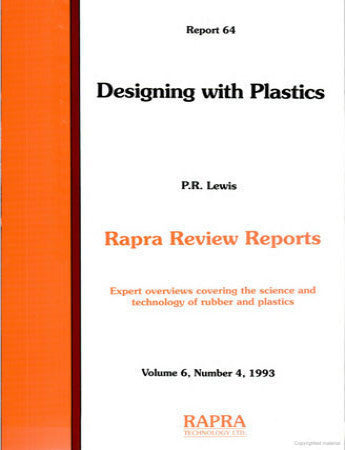
Designing with Plastics
$78.00
{"id":11242238084,"title":"Designing with Plastics","handle":"0-902348-75-2","description":"\u003ch5\u003eDescription\u003c\/h5\u003e\nAuthor: P.R. Lewis \u003cbr\u003eISBN 0-902348-75-2 \u003cbr\u003e\u003cbr\u003eThe Open University, Department of Materials\u003cbr\u003e\u003cbr\u003eReview Report\u003cbr\u003e\u003cbr\u003e\n\u003ch5\u003eSummary\u003c\/h5\u003e\nDr. Lewis surveys plastic design from the point of view of material properties and processing technology. Several are aspects are also included such as legal implications of intellectual property, product liability, ergonomic ans esthetic design, parts consolidation and recyclability.\n\u003ch5\u003eTable of Contents\u003c\/h5\u003e\n\u003cstrong\u003eTable of Contents:\u003c\/strong\u003e \u003cbr\u003eIndustrial and Engineering Design \u003cbr\u003eLegal Constraints \u003cbr\u003eMaterial Selection \u003cbr\u003eManufacturing with Plastics \u003cbr\u003eProcess selection \u003cbr\u003eProduct Design \u003cbr\u003eInvention in Plastic Products\u003cbr\u003e\u003cbr\u003e","published_at":"2017-06-22T21:14:37-04:00","created_at":"2017-06-22T21:14:37-04:00","vendor":"Chemtec Publishing","type":"Book","tags":["1993","book","design","engineering","industrial","invention","legal constraints","manufacturing","material selection","p-formulation","plastic","plastics","polymer","process","process selection","product design","products"],"price":7800,"price_min":7800,"price_max":7800,"available":true,"price_varies":false,"compare_at_price":null,"compare_at_price_min":0,"compare_at_price_max":0,"compare_at_price_varies":false,"variants":[{"id":43378426628,"title":"Default Title","option1":"Default Title","option2":null,"option3":null,"sku":"","requires_shipping":true,"taxable":true,"featured_image":null,"available":true,"name":"Designing with Plastics","public_title":null,"options":["Default Title"],"price":7800,"weight":1000,"compare_at_price":null,"inventory_quantity":1,"inventory_management":null,"inventory_policy":"continue","barcode":"0-902348-75-2","requires_selling_plan":false,"selling_plan_allocations":[],"quantity_rule":{"min":1,"max":null,"increment":1}}],"images":["\/\/chemtec.org\/cdn\/shop\/products\/0-902348-75-2.jpg?v=1499724387"],"featured_image":"\/\/chemtec.org\/cdn\/shop\/products\/0-902348-75-2.jpg?v=1499724387","options":["Title"],"media":[{"alt":null,"id":353971175517,"position":1,"preview_image":{"aspect_ratio":0.767,"height":450,"width":345,"src":"\/\/chemtec.org\/cdn\/shop\/products\/0-902348-75-2.jpg?v=1499724387"},"aspect_ratio":0.767,"height":450,"media_type":"image","src":"\/\/chemtec.org\/cdn\/shop\/products\/0-902348-75-2.jpg?v=1499724387","width":345}],"requires_selling_plan":false,"selling_plan_groups":[],"content":"\u003ch5\u003eDescription\u003c\/h5\u003e\nAuthor: P.R. Lewis \u003cbr\u003eISBN 0-902348-75-2 \u003cbr\u003e\u003cbr\u003eThe Open University, Department of Materials\u003cbr\u003e\u003cbr\u003eReview Report\u003cbr\u003e\u003cbr\u003e\n\u003ch5\u003eSummary\u003c\/h5\u003e\nDr. Lewis surveys plastic design from the point of view of material properties and processing technology. Several are aspects are also included such as legal implications of intellectual property, product liability, ergonomic ans esthetic design, parts consolidation and recyclability.\n\u003ch5\u003eTable of Contents\u003c\/h5\u003e\n\u003cstrong\u003eTable of Contents:\u003c\/strong\u003e \u003cbr\u003eIndustrial and Engineering Design \u003cbr\u003eLegal Constraints \u003cbr\u003eMaterial Selection \u003cbr\u003eManufacturing with Plastics \u003cbr\u003eProcess selection \u003cbr\u003eProduct Design \u003cbr\u003eInvention in Plastic Products\u003cbr\u003e\u003cbr\u003e"}

Developments in Colora...
$153.00
{"id":11242222212,"title":"Developments in Colorants for Plastics","handle":"978-1-85957-373-0","description":"\u003ch5\u003eDescription\u003c\/h5\u003e\nAuthor: I. Christensen \u003cbr\u003eISBN 978-1-85957-373-0 \u003cbr\u003e\u003cbr\u003eFirst Edition, Pages 120, Figures 4, Tables 2\u003cbr\u003e\u003cbr\u003e\n\u003ch5\u003eSummary\u003c\/h5\u003e\nThere are two types of colorants in use: dyes and pigments. Pigments are insoluble and must be adequately dispersed in the plastic to achieve a uniform color. This can be a problem in very thin moldings where particle agglomerates are highly visible. Dyes are soluble in plastics and give a more transparent finish. \u003cbr\u003e\u003cbr\u003eHealth, safety, and environmental issues have brought about changes in the marketplace as manufacturers strive to meet national and international regulations. Factors to consider in colorant selection include the presence of heavy metal compounds, migration of colorants into food or packaged goods (contamination issues), toxicity in the fire, etc. \u003cbr\u003e\u003cbr\u003eThere are many functional considerations when selecting colorants. For example, many plastics are processed at very high temperatures and shear, and products are exposed to heat and light. The colorants must tolerate these conditions to function adequately. The basic pigments and dyes used to achieve different color effects at different performance levels are described in this review. The economics of different colorant types are outlined. \u003cbr\u003e\u003cbr\u003eThere have been developments across the color spectrum and in the field of special effects. Manufacturers are looking at ways to eliminate cadmium and lead pigments and to improve existing products, for example by coating pigment particles to improve compatibility with plastics and aid dispersion. They are also experimenting with new chemicals as colorants and there is scope for an increased range of products particularly in the yellow region. \u003cbr\u003e\u003cbr\u003eSpecial effect colorants are being used to generate effects such as fluorescence, phosphorescence, pearlescence and holographics. These are relatively expensive products, are often difficult to process and many are used for specialist niche applications. These issues are discussed and referenced in this new review. \u003cbr\u003e\u003cbr\u003eOverall, this is a very well written, clear review of the subject of colorants for plastics. It is based on practical information for plastics processors with regard to colorant selection and the range of products and effects available. References are included throughout the review for further reading and key manufacturers of colorants are listed where relevant. \u003cbr\u003e\u003cbr\u003eThe review is accompanied by around 400 abstracts from the Rapra Polymer Library database, to facilitate further reading on this subject. \u003cbr\u003e\u003cbr\u003e\u003cstrong\u003eKey features\u003c\/strong\u003e\u003cbr\u003e\u003cbr\u003eCommon colorants \u003cbr\u003eDevelopments in colorants \u003cbr\u003eSpecial effects \u003cbr\u003ePractical information\u003cbr\u003e\u003cbr\u003e\n\u003ch5\u003eTable of Contents\u003c\/h5\u003e\n1. Introduction \u003cbr\u003e1.1 Definitions \u003cbr\u003e1.2 Pigments versus Dyes \u003cbr\u003e1.3 Organic versus Inorganic \u003cbr\u003e1.4 Environmental and Occupational Health and Safety (OHS) Issues \u003cbr\u003e1.5 Decision Factors in Selecting Colorants \u003cbr\u003e1.6 Hotter, Faster, Thinner \u003cbr\u003e1.7 Delivery Systems \u003cbr\u003e1.8 Easy Dispersing Pigments \u003cbr\u003e1.9 Non-Dusting, Free Flowing \u003cbr\u003e\u003cbr\u003e2. The Colorants \u003cbr\u003e2.1 Yellow Color \u003cbr\u003e2.1.1 Low Performance Applications \u003cbr\u003e2.1.2 Medium Performance Applications \u003cbr\u003e2.1.3 High Performance Applications \u003cbr\u003e2.2 Orange Color \u003cbr\u003e2.2.1 Low Performance Applications \u003cbr\u003e\u003cbr\u003e2.2.2 Medium Performance Applications \u003cbr\u003e2.2.3 High Performance Applications \u003cbr\u003e2.3 Brown Color \u003cbr\u003e2.4 Red Color \u003cbr\u003e2.4.1 Low Performance Applications \u003cbr\u003e2.4.2 Medium Performance Applications \u003cbr\u003e2.4.3 High Performance Applications \u003cbr\u003e2.5 Maroon and Violet Color \u003cbr\u003e2.5.1 Low Performance Applications \u003cbr\u003e2.5.2 Medium Performance Applications \u003cbr\u003e2.5.3 High Performance Applications \u003cbr\u003e2.6 Blue Color \u003cbr\u003e2.7 Green Color \u003cbr\u003e\u003cbr\u003e3. Special Effects \u003cbr\u003e3.1 Metallic \u003cbr\u003e3.2 Pearlescent \u003cbr\u003e3.3 Holographic \u003cbr\u003e3.4 Fluorescent \u003cbr\u003e3.5 Phosphorescent \u003cbr\u003e3.6 Thermochromic and Photochromic \u003cbr\u003e\u003cbr\u003e4. Summary and Conclusions \u003cbr\u003eAcknowledgments \u003cbr\u003eAdditional References\u003cbr\u003e\u003cbr\u003e\n\u003ch5\u003eAbout Author\u003c\/h5\u003e\nIan Christensen spent ten years working in colorant development, pigment marketing, and masterbatching with Ciba Specialty Chemicals in both technical and managerial roles. He recently changed continents and industries and is now involved in licensing intellectual property and some freelance technical writing. He has chemistry and MBA degrees.","published_at":"2017-06-22T21:13:49-04:00","created_at":"2017-06-22T21:13:49-04:00","vendor":"Chemtec Publishing","type":"Book","tags":["2003","agglomerates","applications","book","colorants","dispersing","dyes","fluorescence","fluorescent","food","holographic","holographics coloring","metallic","p-additives","pearlescence","pearlescent","phosphorescence","phosphorescent","photochromic","pigments","polymer","special effects","thermochromic"],"price":15300,"price_min":15300,"price_max":15300,"available":true,"price_varies":false,"compare_at_price":null,"compare_at_price_min":0,"compare_at_price_max":0,"compare_at_price_varies":false,"variants":[{"id":43378375364,"title":"Default Title","option1":"Default Title","option2":null,"option3":null,"sku":"","requires_shipping":true,"taxable":true,"featured_image":null,"available":true,"name":"Developments in Colorants for Plastics","public_title":null,"options":["Default Title"],"price":15300,"weight":1000,"compare_at_price":null,"inventory_quantity":1,"inventory_management":null,"inventory_policy":"continue","barcode":"978-1-85957-373-0","requires_selling_plan":false,"selling_plan_allocations":[],"quantity_rule":{"min":1,"max":null,"increment":1}}],"images":["\/\/chemtec.org\/cdn\/shop\/products\/978-1-85957-373-0.jpg?v=1499213315"],"featured_image":"\/\/chemtec.org\/cdn\/shop\/products\/978-1-85957-373-0.jpg?v=1499213315","options":["Title"],"media":[{"alt":null,"id":353972650077,"position":1,"preview_image":{"aspect_ratio":0.767,"height":450,"width":345,"src":"\/\/chemtec.org\/cdn\/shop\/products\/978-1-85957-373-0.jpg?v=1499213315"},"aspect_ratio":0.767,"height":450,"media_type":"image","src":"\/\/chemtec.org\/cdn\/shop\/products\/978-1-85957-373-0.jpg?v=1499213315","width":345}],"requires_selling_plan":false,"selling_plan_groups":[],"content":"\u003ch5\u003eDescription\u003c\/h5\u003e\nAuthor: I. Christensen \u003cbr\u003eISBN 978-1-85957-373-0 \u003cbr\u003e\u003cbr\u003eFirst Edition, Pages 120, Figures 4, Tables 2\u003cbr\u003e\u003cbr\u003e\n\u003ch5\u003eSummary\u003c\/h5\u003e\nThere are two types of colorants in use: dyes and pigments. Pigments are insoluble and must be adequately dispersed in the plastic to achieve a uniform color. This can be a problem in very thin moldings where particle agglomerates are highly visible. Dyes are soluble in plastics and give a more transparent finish. \u003cbr\u003e\u003cbr\u003eHealth, safety, and environmental issues have brought about changes in the marketplace as manufacturers strive to meet national and international regulations. Factors to consider in colorant selection include the presence of heavy metal compounds, migration of colorants into food or packaged goods (contamination issues), toxicity in the fire, etc. \u003cbr\u003e\u003cbr\u003eThere are many functional considerations when selecting colorants. For example, many plastics are processed at very high temperatures and shear, and products are exposed to heat and light. The colorants must tolerate these conditions to function adequately. The basic pigments and dyes used to achieve different color effects at different performance levels are described in this review. The economics of different colorant types are outlined. \u003cbr\u003e\u003cbr\u003eThere have been developments across the color spectrum and in the field of special effects. Manufacturers are looking at ways to eliminate cadmium and lead pigments and to improve existing products, for example by coating pigment particles to improve compatibility with plastics and aid dispersion. They are also experimenting with new chemicals as colorants and there is scope for an increased range of products particularly in the yellow region. \u003cbr\u003e\u003cbr\u003eSpecial effect colorants are being used to generate effects such as fluorescence, phosphorescence, pearlescence and holographics. These are relatively expensive products, are often difficult to process and many are used for specialist niche applications. These issues are discussed and referenced in this new review. \u003cbr\u003e\u003cbr\u003eOverall, this is a very well written, clear review of the subject of colorants for plastics. It is based on practical information for plastics processors with regard to colorant selection and the range of products and effects available. References are included throughout the review for further reading and key manufacturers of colorants are listed where relevant. \u003cbr\u003e\u003cbr\u003eThe review is accompanied by around 400 abstracts from the Rapra Polymer Library database, to facilitate further reading on this subject. \u003cbr\u003e\u003cbr\u003e\u003cstrong\u003eKey features\u003c\/strong\u003e\u003cbr\u003e\u003cbr\u003eCommon colorants \u003cbr\u003eDevelopments in colorants \u003cbr\u003eSpecial effects \u003cbr\u003ePractical information\u003cbr\u003e\u003cbr\u003e\n\u003ch5\u003eTable of Contents\u003c\/h5\u003e\n1. Introduction \u003cbr\u003e1.1 Definitions \u003cbr\u003e1.2 Pigments versus Dyes \u003cbr\u003e1.3 Organic versus Inorganic \u003cbr\u003e1.4 Environmental and Occupational Health and Safety (OHS) Issues \u003cbr\u003e1.5 Decision Factors in Selecting Colorants \u003cbr\u003e1.6 Hotter, Faster, Thinner \u003cbr\u003e1.7 Delivery Systems \u003cbr\u003e1.8 Easy Dispersing Pigments \u003cbr\u003e1.9 Non-Dusting, Free Flowing \u003cbr\u003e\u003cbr\u003e2. The Colorants \u003cbr\u003e2.1 Yellow Color \u003cbr\u003e2.1.1 Low Performance Applications \u003cbr\u003e2.1.2 Medium Performance Applications \u003cbr\u003e2.1.3 High Performance Applications \u003cbr\u003e2.2 Orange Color \u003cbr\u003e2.2.1 Low Performance Applications \u003cbr\u003e\u003cbr\u003e2.2.2 Medium Performance Applications \u003cbr\u003e2.2.3 High Performance Applications \u003cbr\u003e2.3 Brown Color \u003cbr\u003e2.4 Red Color \u003cbr\u003e2.4.1 Low Performance Applications \u003cbr\u003e2.4.2 Medium Performance Applications \u003cbr\u003e2.4.3 High Performance Applications \u003cbr\u003e2.5 Maroon and Violet Color \u003cbr\u003e2.5.1 Low Performance Applications \u003cbr\u003e2.5.2 Medium Performance Applications \u003cbr\u003e2.5.3 High Performance Applications \u003cbr\u003e2.6 Blue Color \u003cbr\u003e2.7 Green Color \u003cbr\u003e\u003cbr\u003e3. Special Effects \u003cbr\u003e3.1 Metallic \u003cbr\u003e3.2 Pearlescent \u003cbr\u003e3.3 Holographic \u003cbr\u003e3.4 Fluorescent \u003cbr\u003e3.5 Phosphorescent \u003cbr\u003e3.6 Thermochromic and Photochromic \u003cbr\u003e\u003cbr\u003e4. Summary and Conclusions \u003cbr\u003eAcknowledgments \u003cbr\u003eAdditional References\u003cbr\u003e\u003cbr\u003e\n\u003ch5\u003eAbout Author\u003c\/h5\u003e\nIan Christensen spent ten years working in colorant development, pigment marketing, and masterbatching with Ciba Specialty Chemicals in both technical and managerial roles. He recently changed continents and industries and is now involved in licensing intellectual property and some freelance technical writing. He has chemistry and MBA degrees."}

Developments in Surfac...
$220.00
{"id":11242201220,"title":"Developments in Surface Contamination and Cleaning, Vol. 3 Methods for Removal of Particle Contaminants","handle":"978-1-4377-7885-4","description":"\u003ch5\u003eDescription\u003c\/h5\u003e\nAuthor: Rajiv Kohli and Kashmiri L. Mittal \u003cbr\u003eISBN 978-1-4377-7885-4 \u003cbr\u003eVolume 3\u003cbr\u003e264 pages\n\u003ch5\u003eSummary\u003c\/h5\u003e\nThe contributions in this volume cover methods for removal of particle contaminants on surfaces. Several of these methods are well established and have been employed in industrial applications for a long time. However, the ever- higher demand for removal of smaller particles on newer substrate materials is driving continuous development of the established cleaning methods and alternative innovative methods for particle removal. This book provides information on the latest developments in this topic area. Feature: Comprehensive coverage of innovations in surface contamination and cleaning Benefit: One-stop series where a wide range of readers will be sure to find a solution to their cleaning problem, saving the time involved in consulting a range of disparate sources. Feature: Written by established experts in the contamination and cleaning field Benefit: Provides an authoritative resource Feature: Each chapter is a comprehensive review of the state of the art. Benefit: Can be relied on to provide insight, clarity and real expertise on up-to-the-minute innovations. Feature: Case studies included Benefit: Case studies help the reader see theory applied to the solution of real-world practical cleaning and contamination problems.\n\u003ch5\u003eTable of Contents\u003c\/h5\u003e\nAqueous Methods;\u003cbr\u003eMegasonic Cleaning; Hydrodynamic Removal of Particles; \u003cbr\u003eBrush Cleaning; Laser Methods for Cleaning; \u003cbr\u003eCO2 Pellet Cleaning; Cleaning Using Acoustic Fields; \u003cbr\u003ePrecision Cleaning Using Cluster Beams; Electrostatic Methods for Cleaning; Wipers for Cleaning; \u003cbr\u003eProjectile Cleaning\n\u003ch5\u003eAbout Author\u003c\/h5\u003e\n\u003cb\u003eRajiv Kohli\u003c\/b\u003e is a leading expert with The Aerospace Corporation in contaminant particle behavior, surface cleaning, and contamination control. At the NASA Johnson Space Center in Houston, Texas, he provides technical support for contamination control related to ground-based and manned spaceflight hardware for the Space Shuttle, the International Space Station, and the new Constellation Program that is designed to meet the United States Vision for Space Exploration.\u003cbr\u003e\u003cb\u003eKashmiri Lal \";Kash\"\u003c\/b\u003e; Mittal was associated with IBM from 1972 to 1994. Currently, he is teaching and consulting in the areas of surface contamination and cleaning, and in adhesion science and technology. He is the Editor-in-Chief of the Journal of Adhesion Science and Technology and is the editor of 98 published books, many of them dealing with surface contamination and cleaning.\u003cbr\u003e\u003cbr\u003e\u003cbr\u003e","published_at":"2017-06-22T21:12:41-04:00","created_at":"2017-06-22T21:12:41-04:00","vendor":"Chemtec Publishing","type":"Book","tags":["2011","book","cleaning methods","general","laser methods for cleaning","removal of particle contaminants"],"price":22000,"price_min":22000,"price_max":22000,"available":true,"price_varies":false,"compare_at_price":null,"compare_at_price_min":0,"compare_at_price_max":0,"compare_at_price_varies":false,"variants":[{"id":43378308548,"title":"Default Title","option1":"Default Title","option2":null,"option3":null,"sku":"","requires_shipping":true,"taxable":true,"featured_image":null,"available":true,"name":"Developments in Surface Contamination and Cleaning, Vol. 3 Methods for Removal of Particle Contaminants","public_title":null,"options":["Default Title"],"price":22000,"weight":1000,"compare_at_price":null,"inventory_quantity":1,"inventory_management":null,"inventory_policy":"continue","barcode":"978-1-4377-7885-4","requires_selling_plan":false,"selling_plan_allocations":[],"quantity_rule":{"min":1,"max":null,"increment":1}}],"images":["\/\/chemtec.org\/cdn\/shop\/products\/978-1-4377-7885-4.jpg?v=1499913627"],"featured_image":"\/\/chemtec.org\/cdn\/shop\/products\/978-1-4377-7885-4.jpg?v=1499913627","options":["Title"],"media":[{"alt":null,"id":353973600349,"position":1,"preview_image":{"aspect_ratio":0.767,"height":450,"width":345,"src":"\/\/chemtec.org\/cdn\/shop\/products\/978-1-4377-7885-4.jpg?v=1499913627"},"aspect_ratio":0.767,"height":450,"media_type":"image","src":"\/\/chemtec.org\/cdn\/shop\/products\/978-1-4377-7885-4.jpg?v=1499913627","width":345}],"requires_selling_plan":false,"selling_plan_groups":[],"content":"\u003ch5\u003eDescription\u003c\/h5\u003e\nAuthor: Rajiv Kohli and Kashmiri L. Mittal \u003cbr\u003eISBN 978-1-4377-7885-4 \u003cbr\u003eVolume 3\u003cbr\u003e264 pages\n\u003ch5\u003eSummary\u003c\/h5\u003e\nThe contributions in this volume cover methods for removal of particle contaminants on surfaces. Several of these methods are well established and have been employed in industrial applications for a long time. However, the ever- higher demand for removal of smaller particles on newer substrate materials is driving continuous development of the established cleaning methods and alternative innovative methods for particle removal. This book provides information on the latest developments in this topic area. Feature: Comprehensive coverage of innovations in surface contamination and cleaning Benefit: One-stop series where a wide range of readers will be sure to find a solution to their cleaning problem, saving the time involved in consulting a range of disparate sources. Feature: Written by established experts in the contamination and cleaning field Benefit: Provides an authoritative resource Feature: Each chapter is a comprehensive review of the state of the art. Benefit: Can be relied on to provide insight, clarity and real expertise on up-to-the-minute innovations. Feature: Case studies included Benefit: Case studies help the reader see theory applied to the solution of real-world practical cleaning and contamination problems.\n\u003ch5\u003eTable of Contents\u003c\/h5\u003e\nAqueous Methods;\u003cbr\u003eMegasonic Cleaning; Hydrodynamic Removal of Particles; \u003cbr\u003eBrush Cleaning; Laser Methods for Cleaning; \u003cbr\u003eCO2 Pellet Cleaning; Cleaning Using Acoustic Fields; \u003cbr\u003ePrecision Cleaning Using Cluster Beams; Electrostatic Methods for Cleaning; Wipers for Cleaning; \u003cbr\u003eProjectile Cleaning\n\u003ch5\u003eAbout Author\u003c\/h5\u003e\n\u003cb\u003eRajiv Kohli\u003c\/b\u003e is a leading expert with The Aerospace Corporation in contaminant particle behavior, surface cleaning, and contamination control. At the NASA Johnson Space Center in Houston, Texas, he provides technical support for contamination control related to ground-based and manned spaceflight hardware for the Space Shuttle, the International Space Station, and the new Constellation Program that is designed to meet the United States Vision for Space Exploration.\u003cbr\u003e\u003cb\u003eKashmiri Lal \";Kash\"\u003c\/b\u003e; Mittal was associated with IBM from 1972 to 1994. Currently, he is teaching and consulting in the areas of surface contamination and cleaning, and in adhesion science and technology. He is the Editor-in-Chief of the Journal of Adhesion Science and Technology and is the editor of 98 published books, many of them dealing with surface contamination and cleaning.\u003cbr\u003e\u003cbr\u003e\u003cbr\u003e"}
Developments in the Th...
$260.00
{"id":11242226500,"title":"Developments in the Theory of Cationoid Polymerisations","handle":"978-1-85957-270-2","description":"\u003ch5\u003eDescription\u003c\/h5\u003e\nAuthor: Professor P.H. Plesch \u003cbr\u003eISBN 978-1-85957-270-2 \u003cbr\u003e\u003cbr\u003epages: 772\n\u003ch5\u003eSummary\u003c\/h5\u003e\nThe interest in what were known at first as Friedel-Crafts polymerisations started in the 1930s and grew rapidly from the 1940s under the influence of the US Synthetic Rubber Programme and from the 1950s as a result of the Ziegler-Natta and related polymer developments. From 1944 Professor Plesch has spent most of his academic life, studying the nature of what were later called cationic and, more recently still, cationoid polymerisations. The change of generic title reflects the growing insight into these reactions, much of which is due to Professor Plesch and his research group. \u003cbr\u003e\u003cbr\u003eBecause of his interest in the fundamentals of the reactions, these researches spawned the new areas of Binary Ionogenic Equilibria and the Polarography of carbenium and oxonium ions in his laboratory. \u003cbr\u003e\u003cbr\u003eHowever it is only the publications on the mechanisms of the cationoid polymerisations that are collected together in this present volume. Each paper or group of papers is preceded by an introductory prologue in which the authors assesses the current relevance of his work and indicates why even the oldest findings are still worth keeping in mind when facing new work. \u003cbr\u003e\u003cbr\u003eProfessor Plesch directs the ruthless critical scrutiny, for which he became well-known, to his own work, pointing out errors revealed by hindsight. \u003cbr\u003e\u003cbr\u003eThe eight Sections, each consisting of several thematically related papers, are followed by a complete list of Professor Plesch's chemical publications. \u003cbr\u003e\u003cbr\u003eThis book is an appropriate sequel to the two books on Cationic Polymerisations edited by Professor Plesch in 1953 and 1963. Like its predecessors, this book will be indispensable to anyone who intends to study the subject and also to those who use the reactions concerned to make rubbers and resins in a chemical plant. Because of the Author's acute sense of continuity and his awareness of 'prior art', these papers will be a useful resource for historians of chemical ideas.\u003cbr\u003e\u003cbr\u003e\u003cbr\u003e\n\u003ch5\u003eTable of Contents\u003c\/h5\u003e\n1. General Introduction \u003cbr\u003e2. Developments in the Cationic Polymerisation of Alkenes - A Personal View \u003cbr\u003e3. Reviews \u003cbr\u003e4. Theorising About Reaction Mechanisms \u003cbr\u003e5. About Propagating Species and Propagation Rate Constants in Cationic Polymerisations \u003cbr\u003e6. Pseudocationic Polymerisation (?-cat), renamed circa 1998 'Cationoid Insertion Polymerisation (CIP)' \u003cbr\u003e7. The Polymerisation of 1,3-Dioxacycloalkanes \u003cbr\u003e8. The Chemical Publications of P.H. Plesch in Chronological Order, 1946-2001\u003cbr\u003e\u003cbr\u003e\n\u003ch5\u003eAbout Author\u003c\/h5\u003e\nProfessor Plesch was born in 1918, educated at the College Française in Berlin and Harrow School, Middlesex. He graduated from the University of Cambridge (MA) and the University of Manchester (PhD) and was awarded the DSc by the University of Cambridge in 1978. From 1940 he was the colloid chemist at the British Pottery Research Association; he then worked in the alginate industry, and his last War-related assignment was as a Research Assistant at Manchester University. After four years there as Assistant Lecturer he became a founder-member of the University College of North Staffordshire (later Keele University) in 1951There he stayed, retiring in 1985 from the Chair of Physical Chemistry; as Professor Emeritus he still enjoys the hospitality of his old Department. \u003cbr\u003e\u003cbr\u003eProfessor Plesch has published three books and over 150 chemical papers, the latest appearing in February 2001.\u003cbr\u003e\u003cbr\u003e","published_at":"2017-06-22T21:14:02-04:00","created_at":"2017-06-22T21:14:02-04:00","vendor":"Chemtec Publishing","type":"Book","tags":["1","2002","3-Dioxacycloalkanes","book","cationic polymerisations","cationoid","Cationoid Insertion","CIP","p-chemistry","polymer","polymer synthesis","polymerisation","polymerization","pseudocationic polymerisation","reaction mechanisms"],"price":26000,"price_min":26000,"price_max":26000,"available":true,"price_varies":false,"compare_at_price":null,"compare_at_price_min":0,"compare_at_price_max":0,"compare_at_price_varies":false,"variants":[{"id":43378393668,"title":"Default Title","option1":"Default Title","option2":null,"option3":null,"sku":"","requires_shipping":true,"taxable":true,"featured_image":null,"available":true,"name":"Developments in the Theory of Cationoid Polymerisations","public_title":null,"options":["Default Title"],"price":26000,"weight":1000,"compare_at_price":null,"inventory_quantity":1,"inventory_management":null,"inventory_policy":"continue","barcode":"978-1-85957-270-2","requires_selling_plan":false,"selling_plan_allocations":[],"quantity_rule":{"min":1,"max":null,"increment":1}}],"images":["\/\/chemtec.org\/cdn\/shop\/products\/978-1-85957-270-2.jpg?v=1499213613"],"featured_image":"\/\/chemtec.org\/cdn\/shop\/products\/978-1-85957-270-2.jpg?v=1499213613","options":["Title"],"media":[{"alt":null,"id":353974157405,"position":1,"preview_image":{"aspect_ratio":0.767,"height":450,"width":345,"src":"\/\/chemtec.org\/cdn\/shop\/products\/978-1-85957-270-2.jpg?v=1499213613"},"aspect_ratio":0.767,"height":450,"media_type":"image","src":"\/\/chemtec.org\/cdn\/shop\/products\/978-1-85957-270-2.jpg?v=1499213613","width":345}],"requires_selling_plan":false,"selling_plan_groups":[],"content":"\u003ch5\u003eDescription\u003c\/h5\u003e\nAuthor: Professor P.H. Plesch \u003cbr\u003eISBN 978-1-85957-270-2 \u003cbr\u003e\u003cbr\u003epages: 772\n\u003ch5\u003eSummary\u003c\/h5\u003e\nThe interest in what were known at first as Friedel-Crafts polymerisations started in the 1930s and grew rapidly from the 1940s under the influence of the US Synthetic Rubber Programme and from the 1950s as a result of the Ziegler-Natta and related polymer developments. From 1944 Professor Plesch has spent most of his academic life, studying the nature of what were later called cationic and, more recently still, cationoid polymerisations. The change of generic title reflects the growing insight into these reactions, much of which is due to Professor Plesch and his research group. \u003cbr\u003e\u003cbr\u003eBecause of his interest in the fundamentals of the reactions, these researches spawned the new areas of Binary Ionogenic Equilibria and the Polarography of carbenium and oxonium ions in his laboratory. \u003cbr\u003e\u003cbr\u003eHowever it is only the publications on the mechanisms of the cationoid polymerisations that are collected together in this present volume. Each paper or group of papers is preceded by an introductory prologue in which the authors assesses the current relevance of his work and indicates why even the oldest findings are still worth keeping in mind when facing new work. \u003cbr\u003e\u003cbr\u003eProfessor Plesch directs the ruthless critical scrutiny, for which he became well-known, to his own work, pointing out errors revealed by hindsight. \u003cbr\u003e\u003cbr\u003eThe eight Sections, each consisting of several thematically related papers, are followed by a complete list of Professor Plesch's chemical publications. \u003cbr\u003e\u003cbr\u003eThis book is an appropriate sequel to the two books on Cationic Polymerisations edited by Professor Plesch in 1953 and 1963. Like its predecessors, this book will be indispensable to anyone who intends to study the subject and also to those who use the reactions concerned to make rubbers and resins in a chemical plant. Because of the Author's acute sense of continuity and his awareness of 'prior art', these papers will be a useful resource for historians of chemical ideas.\u003cbr\u003e\u003cbr\u003e\u003cbr\u003e\n\u003ch5\u003eTable of Contents\u003c\/h5\u003e\n1. General Introduction \u003cbr\u003e2. Developments in the Cationic Polymerisation of Alkenes - A Personal View \u003cbr\u003e3. Reviews \u003cbr\u003e4. Theorising About Reaction Mechanisms \u003cbr\u003e5. About Propagating Species and Propagation Rate Constants in Cationic Polymerisations \u003cbr\u003e6. Pseudocationic Polymerisation (?-cat), renamed circa 1998 'Cationoid Insertion Polymerisation (CIP)' \u003cbr\u003e7. The Polymerisation of 1,3-Dioxacycloalkanes \u003cbr\u003e8. The Chemical Publications of P.H. Plesch in Chronological Order, 1946-2001\u003cbr\u003e\u003cbr\u003e\n\u003ch5\u003eAbout Author\u003c\/h5\u003e\nProfessor Plesch was born in 1918, educated at the College Française in Berlin and Harrow School, Middlesex. He graduated from the University of Cambridge (MA) and the University of Manchester (PhD) and was awarded the DSc by the University of Cambridge in 1978. From 1940 he was the colloid chemist at the British Pottery Research Association; he then worked in the alginate industry, and his last War-related assignment was as a Research Assistant at Manchester University. After four years there as Assistant Lecturer he became a founder-member of the University College of North Staffordshire (later Keele University) in 1951There he stayed, retiring in 1985 from the Chair of Physical Chemistry; as Professor Emeritus he still enjoys the hospitality of his old Department. \u003cbr\u003e\u003cbr\u003eProfessor Plesch has published three books and over 150 chemical papers, the latest appearing in February 2001.\u003cbr\u003e\u003cbr\u003e"}

Dielectric Polymer Nan...
$219.00
{"id":11242243844,"title":"Dielectric Polymer Nanocomposites","handle":"978-1-4419-1590-0","description":"\u003ch5\u003eDescription\u003c\/h5\u003e\nAuthor: Nelson, J. Keith (Ed.) \u003cbr\u003eISBN 978-1-4419-1590-0 \u003cbr\u003e\u003cbr\u003e1st Edition., 380 p., Hardcover\n\u003ch5\u003eSummary\u003c\/h5\u003e\nDielectric Polymer Nanocomposites provides the first in-depth discussion of nano-dielectrics, an emerging and fast moving topic in electrical insulation. The book provides an overview of the background, principles and promise of nanodielectrics, as well as a discussion of the processing of nanocomposites. Special considerations are also given to clay based processes, mechanical, thermal and electric properties and surface properties, as well as erosion resistance. Carbon nanotubes are discussed as a means of creation of nonlinear conductivity. Editor J. Keith Nelson brings together the leading minds in the field, whose contributions to the book also:\u003cbr\u003e\n\u003cul\u003e\n\u003cli\u003eDiscusses the background, principles and importance of nano-dielectric composites\u003c\/li\u003e\n\u003cli\u003eIncludes complete coverage of nanodielectric composites such as cryogenic applications, high voltage stress grading materials and applications in the capacitor industry\u003c\/li\u003e\n\u003cli\u003eProvides detailed coverage on the processing of nanocomposites\u003c\/li\u003e\n\u003c\/ul\u003e\n\u003cbr\u003eDielectric Polymer Nanocomposites is perfect for academics and researchers working in or interested in learning more about this growing field.\u003cbr\u003e\u003cbr\u003e\n\u003ch5\u003eTable of Contents\u003c\/h5\u003e\nBackground principles and promise of nanodielectrics.- The processing of nanocomposites.- Special considerations for clay-based materials.- The chemistry of the interface region and functionalization.- Mechanical and thermal properties.- Electrical properties.- Surface properties and erosion resistance.- Carbon nanotubes and the creation of non-linear conductivity.- The emerging mechanistic picture.- The industrial applications perspective.","published_at":"2017-06-22T21:14:55-04:00","created_at":"2017-06-22T21:14:55-04:00","vendor":"Chemtec Publishing","type":"Book","tags":["2010","book","carbon nanotubes","clay-based materials","cryogenic applications","mechanical and thermal properties","nano","nanocomposites","nanodielectrics","non-linear conductivity","polymers","processing of nanocomposites"],"price":21900,"price_min":21900,"price_max":21900,"available":true,"price_varies":false,"compare_at_price":null,"compare_at_price_min":0,"compare_at_price_max":0,"compare_at_price_varies":false,"variants":[{"id":43378445252,"title":"Default Title","option1":"Default Title","option2":null,"option3":null,"sku":"","requires_shipping":true,"taxable":true,"featured_image":null,"available":true,"name":"Dielectric Polymer Nanocomposites","public_title":null,"options":["Default Title"],"price":21900,"weight":1000,"compare_at_price":null,"inventory_quantity":1,"inventory_management":null,"inventory_policy":"continue","barcode":"978-1-4419-1590-0","requires_selling_plan":false,"selling_plan_allocations":[],"quantity_rule":{"min":1,"max":null,"increment":1}}],"images":[],"featured_image":null,"options":["Title"],"requires_selling_plan":false,"selling_plan_groups":[],"content":"\u003ch5\u003eDescription\u003c\/h5\u003e\nAuthor: Nelson, J. Keith (Ed.) \u003cbr\u003eISBN 978-1-4419-1590-0 \u003cbr\u003e\u003cbr\u003e1st Edition., 380 p., Hardcover\n\u003ch5\u003eSummary\u003c\/h5\u003e\nDielectric Polymer Nanocomposites provides the first in-depth discussion of nano-dielectrics, an emerging and fast moving topic in electrical insulation. The book provides an overview of the background, principles and promise of nanodielectrics, as well as a discussion of the processing of nanocomposites. Special considerations are also given to clay based processes, mechanical, thermal and electric properties and surface properties, as well as erosion resistance. Carbon nanotubes are discussed as a means of creation of nonlinear conductivity. Editor J. Keith Nelson brings together the leading minds in the field, whose contributions to the book also:\u003cbr\u003e\n\u003cul\u003e\n\u003cli\u003eDiscusses the background, principles and importance of nano-dielectric composites\u003c\/li\u003e\n\u003cli\u003eIncludes complete coverage of nanodielectric composites such as cryogenic applications, high voltage stress grading materials and applications in the capacitor industry\u003c\/li\u003e\n\u003cli\u003eProvides detailed coverage on the processing of nanocomposites\u003c\/li\u003e\n\u003c\/ul\u003e\n\u003cbr\u003eDielectric Polymer Nanocomposites is perfect for academics and researchers working in or interested in learning more about this growing field.\u003cbr\u003e\u003cbr\u003e\n\u003ch5\u003eTable of Contents\u003c\/h5\u003e\nBackground principles and promise of nanodielectrics.- The processing of nanocomposites.- Special considerations for clay-based materials.- The chemistry of the interface region and functionalization.- Mechanical and thermal properties.- Electrical properties.- Surface properties and erosion resistance.- Carbon nanotubes and the creation of non-linear conductivity.- The emerging mechanistic picture.- The industrial applications perspective."}
Easy Identification of...
$125.00
{"id":11242227332,"title":"Easy Identification of Plastics and Rubbers","handle":"978-1-85957-268-9","description":"\u003ch5\u003eDescription\u003c\/h5\u003e\nAuthor: G.A.L. Verleye, N.P.G. Roeges and M.O. De Moor \u003cbr\u003eISBN 978-1-85957-268-9 \u003cbr\u003e\u003cbr\u003epages 174\n\u003ch5\u003eSummary\u003c\/h5\u003e\nPolymers are found in every aspect of our daily lives. Materials must be carefully selected to ensure that properties match performance requirements. \u003cbr\u003e\u003cbr\u003eIt is often necessary to understand the chemical nature of a material to determine whether it is suitable for a particular application. This book gives guidance on the simple identification of different polymeric materials. Flow charts describe a step-by-step approach to determining the chemical nature of an unknown specimen, starting with simple studies of behaviour on heating and ranging to preparing samples for infrared spectroscopy. The infrared spectra of standard polymers are included for reference. \u003cbr\u003e\u003cbr\u003eThe book contains sections on: \u003cbr\u003e-Test methods \u003cbr\u003e-Interpreting infrared spectra \u003cbr\u003e-Flow charts for the identification of unknown samples \u003cbr\u003e-Thermoplastics \u003cbr\u003e-Thermosets \u003cbr\u003e-Elastomers \u003cbr\u003eCharacteristics of individual polymeric materials are described, including chemical structures, behaviour in tests, common applications and trade names. The infrared spectrum for each polymer is included together with an interpretation of the peaks seen. \u003cbr\u003e\u003cbr\u003eThe authors of this book are experts in the field of polymer identification. Professor De Moor has been working in industrial organic chemistry since 1979. Noel Roeges has published a renowned book on the interpretation of infrared spectra of organic structures. Verleye Guenaelle is a chemical engineer working in the polymer industry. \u003cbr\u003e\u003cbr\u003ePolymer technologists, researchers, scientists, technicians, and students of polymer science will all find this a useful text. It is written in a very practical, easy to follow style. Undergraduate students tested the methodology, bringing samples from waste to identify in the laboratories.\u003cbr\u003e\u003cbr\u003e\n\u003ch5\u003eTable of Contents\u003c\/h5\u003e\n1. Introduction \u003cbr\u003e\u003cbr\u003e2. Tests for the Identification of Plastics and Rubbers\u003cbr\u003e2.1 Simple tests\u003cbr\u003e2.2 Recording an IR spectrum\u003cbr\u003e2.3 The identification flow charts \u003cbr\u003e\u003cbr\u003e3. Thermoplastics\u003cbr\u003e3.1 What is a thermoplastic?\u003cbr\u003e3.2 Thermoplastic homopolymers\u003cbr\u003e3.3 Thermoplastic copolymers\u003cbr\u003e3.4 Characteristics of individual thermoplastic materials \u003cbr\u003e\u003cbr\u003e4. Cellulose and Starch\u003cbr\u003e4.1 Introduction to biopolymers\u003cbr\u003e4.2 Characteristics of individual biopolymers \u003cbr\u003e5. Thermosets\u003cbr\u003e5.1 What is a thermoset?\u003cbr\u003e5.2 Sample preparation for recording an IR-spectrum\u003cbr\u003e5.3 Thermoset materials\u003cbr\u003e5.4 Characteristics of individual thermoset materials \u003cbr\u003e\u003cbr\u003e6. Elastomers\u003cbr\u003e6.1 What is an elastomer?\u003cbr\u003e6.2 Recording an IR-spectrum\u003cbr\u003e6.3 The Burchfield colour reaction\u003cbr\u003e6.4 The Liebermann-Storch-Morawski reaction\u003cbr\u003e6.5 Elastomeric materials\u003cbr\u003e6.6 Characteristics of individual elastomers\u003cbr\u003e\u003cbr\u003e7. Chemical Products Required \u003cbr\u003e7.1 Introduction\u003cbr\u003e7.2 Organic solvents and reagents\u003cbr\u003e7.3 Inorganic products, acids and bases\u003cbr\u003e\u003cbr\u003e\n\u003ch5\u003eAbout Author\u003c\/h5\u003e\nRoger Brown is an internationally acknowledged expert on physical testing and quality assurance of polymers. He has published more than 70 technical papers and three standard textbooks on testing. In addition, he is editor of the journal Polymer Testing and co-editor of the newsletter The Test Report. He has over 25 years experience of running the testing laboratories and services at Rapra. Roger is active on many Standards committees.","published_at":"2017-06-22T21:14:04-04:00","created_at":"2017-06-22T21:14:04-04:00","vendor":"Chemtec Publishing","type":"Book","tags":["2001","acids","bases","biopolymers","book","cellulose","elastomers","flow charts","health","IR spectrum","p-testing","plastics","polymer","rubber","safety","solvents","starch","thermoplastic","toxicity"],"price":12500,"price_min":12500,"price_max":12500,"available":true,"price_varies":false,"compare_at_price":null,"compare_at_price_min":0,"compare_at_price_max":0,"compare_at_price_varies":false,"variants":[{"id":43378394820,"title":"Default Title","option1":"Default Title","option2":null,"option3":null,"sku":"","requires_shipping":true,"taxable":true,"featured_image":null,"available":true,"name":"Easy Identification of Plastics and Rubbers","public_title":null,"options":["Default Title"],"price":12500,"weight":1000,"compare_at_price":null,"inventory_quantity":1,"inventory_management":null,"inventory_policy":"continue","barcode":"978-1-85957-268-9","requires_selling_plan":false,"selling_plan_allocations":[],"quantity_rule":{"min":1,"max":null,"increment":1}}],"images":["\/\/chemtec.org\/cdn\/shop\/products\/978-1-85957-268-9.jpg?v=1499281031"],"featured_image":"\/\/chemtec.org\/cdn\/shop\/products\/978-1-85957-268-9.jpg?v=1499281031","options":["Title"],"media":[{"alt":null,"id":354453684317,"position":1,"preview_image":{"aspect_ratio":0.767,"height":450,"width":345,"src":"\/\/chemtec.org\/cdn\/shop\/products\/978-1-85957-268-9.jpg?v=1499281031"},"aspect_ratio":0.767,"height":450,"media_type":"image","src":"\/\/chemtec.org\/cdn\/shop\/products\/978-1-85957-268-9.jpg?v=1499281031","width":345}],"requires_selling_plan":false,"selling_plan_groups":[],"content":"\u003ch5\u003eDescription\u003c\/h5\u003e\nAuthor: G.A.L. Verleye, N.P.G. Roeges and M.O. De Moor \u003cbr\u003eISBN 978-1-85957-268-9 \u003cbr\u003e\u003cbr\u003epages 174\n\u003ch5\u003eSummary\u003c\/h5\u003e\nPolymers are found in every aspect of our daily lives. Materials must be carefully selected to ensure that properties match performance requirements. \u003cbr\u003e\u003cbr\u003eIt is often necessary to understand the chemical nature of a material to determine whether it is suitable for a particular application. This book gives guidance on the simple identification of different polymeric materials. Flow charts describe a step-by-step approach to determining the chemical nature of an unknown specimen, starting with simple studies of behaviour on heating and ranging to preparing samples for infrared spectroscopy. The infrared spectra of standard polymers are included for reference. \u003cbr\u003e\u003cbr\u003eThe book contains sections on: \u003cbr\u003e-Test methods \u003cbr\u003e-Interpreting infrared spectra \u003cbr\u003e-Flow charts for the identification of unknown samples \u003cbr\u003e-Thermoplastics \u003cbr\u003e-Thermosets \u003cbr\u003e-Elastomers \u003cbr\u003eCharacteristics of individual polymeric materials are described, including chemical structures, behaviour in tests, common applications and trade names. The infrared spectrum for each polymer is included together with an interpretation of the peaks seen. \u003cbr\u003e\u003cbr\u003eThe authors of this book are experts in the field of polymer identification. Professor De Moor has been working in industrial organic chemistry since 1979. Noel Roeges has published a renowned book on the interpretation of infrared spectra of organic structures. Verleye Guenaelle is a chemical engineer working in the polymer industry. \u003cbr\u003e\u003cbr\u003ePolymer technologists, researchers, scientists, technicians, and students of polymer science will all find this a useful text. It is written in a very practical, easy to follow style. Undergraduate students tested the methodology, bringing samples from waste to identify in the laboratories.\u003cbr\u003e\u003cbr\u003e\n\u003ch5\u003eTable of Contents\u003c\/h5\u003e\n1. Introduction \u003cbr\u003e\u003cbr\u003e2. Tests for the Identification of Plastics and Rubbers\u003cbr\u003e2.1 Simple tests\u003cbr\u003e2.2 Recording an IR spectrum\u003cbr\u003e2.3 The identification flow charts \u003cbr\u003e\u003cbr\u003e3. Thermoplastics\u003cbr\u003e3.1 What is a thermoplastic?\u003cbr\u003e3.2 Thermoplastic homopolymers\u003cbr\u003e3.3 Thermoplastic copolymers\u003cbr\u003e3.4 Characteristics of individual thermoplastic materials \u003cbr\u003e\u003cbr\u003e4. Cellulose and Starch\u003cbr\u003e4.1 Introduction to biopolymers\u003cbr\u003e4.2 Characteristics of individual biopolymers \u003cbr\u003e5. Thermosets\u003cbr\u003e5.1 What is a thermoset?\u003cbr\u003e5.2 Sample preparation for recording an IR-spectrum\u003cbr\u003e5.3 Thermoset materials\u003cbr\u003e5.4 Characteristics of individual thermoset materials \u003cbr\u003e\u003cbr\u003e6. Elastomers\u003cbr\u003e6.1 What is an elastomer?\u003cbr\u003e6.2 Recording an IR-spectrum\u003cbr\u003e6.3 The Burchfield colour reaction\u003cbr\u003e6.4 The Liebermann-Storch-Morawski reaction\u003cbr\u003e6.5 Elastomeric materials\u003cbr\u003e6.6 Characteristics of individual elastomers\u003cbr\u003e\u003cbr\u003e7. Chemical Products Required \u003cbr\u003e7.1 Introduction\u003cbr\u003e7.2 Organic solvents and reagents\u003cbr\u003e7.3 Inorganic products, acids and bases\u003cbr\u003e\u003cbr\u003e\n\u003ch5\u003eAbout Author\u003c\/h5\u003e\nRoger Brown is an internationally acknowledged expert on physical testing and quality assurance of polymers. He has published more than 70 technical papers and three standard textbooks on testing. In addition, he is editor of the journal Polymer Testing and co-editor of the newsletter The Test Report. He has over 25 years experience of running the testing laboratories and services at Rapra. Roger is active on many Standards committees."}
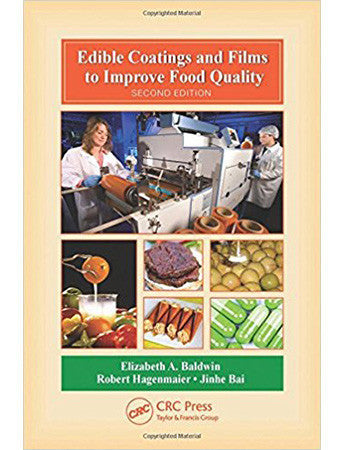
Edible Coatings and Fi...
$210.00
{"id":11242201924,"title":"Edible Coatings and Films to Improve Food Quality, 2nd Edition","handle":"978-1-42-005962-5","description":"\u003ch5\u003eDescription\u003c\/h5\u003e\nAuthor: Edited by Elizabeth A. Baldwin, Robert Hagenmaier, Jinhe Bai \u003cbr\u003eISBN \u003cspan\u003e9781138198937 \u003c\/span\u003e\u003cbr\u003eHard cover\u003cbr\u003eNumber of pages 460\n\u003ch5\u003eSummary\u003c\/h5\u003e\nSince the publication of the first edition of this text, ever-increasing coatings research has led to many developments in the field. Updated and completely revised with the latest discoveries, Edible Coatings and Films to Improve Food Quality, Second Edition is a critical resource for all those involved in buying, selling, regulating, developing, or using coatings to improve the quality and safety of foods. Topics discussed in this volume include:\u003cbr\u003e\u003cbr\u003e• The materials used in edible coatings and films\u003cbr\u003e• The chemical and physical properties of coatings and how the coating or film ingredients affect these properties\u003cbr\u003e• How coatings and films present barriers to gases and water vapors\u003cbr\u003e• How coatings and films can improve appearance, or conversely, result in discoloration and cause other visual defects, as well as how to avoid these problems\u003cbr\u003e• The use of coatings and films on fresh fruit and vegetables, fresh-cut produce, and processed foods\u003cbr\u003e• How to apply coatings to various commodities\u003cbr\u003e• How coatings can function as carriers of useful additives, including color, antioxidants, and flavorings\u003cbr\u003e• Regulation of coatings and coating ingredients by various governing bodies\u003cbr\u003eThe information contained in this volume is destined to encourage further advances in this field for food and pharmaceutical products. Aggressive research into these products can help to reduce plastic waste, improve applications, lead to greater efficacy, and make regulatory decisions easier in a global climate—ultimately resulting in economical, heightened quality of food and pharmaceutical products.\n\u003ch5\u003eTable of Contents\u003c\/h5\u003e\nIntroduction; Elizabeth Baldwin and Robert Hagenmaier\u003cbr\u003e\u003cbr\u003eProtein-based films and coatings; Maria B. Pérez-Gago\u003cbr\u003e\u003cbr\u003eEdible coatings from lipids, waxes, and resins; David J. Hall\u003cbr\u003e\u003cbr\u003ePolysaccharide coatings; Robert Soliva-Fortuny, María Alejandra Rojas-Graü, and Olga Martín-Belloso\u003cbr\u003e\u003cbr\u003eGas-exchange properties of edible films and coatings; Robert D. Hagenmaier\u003cbr\u003e\u003cbr\u003eRole of edible film and coating additives; Roberto de Jesús Avena-Bustillos and Tara H. McHugh\u003cbr\u003e\u003cbr\u003eCoatings for fresh fruits and vegetables; Jinhe Bai and Anne Plotto\u003cbr\u003e\u003cbr\u003eCoatings for minimally processed fruits and vegetables; Sharon Dea, Christian Ghidelli, Maria B. Pérez-Gago, and Anne Plotto\u003cbr\u003e\u003cbr\u003eApplications of edible films and coatings to processed foods; Tara H. McHugh and Roberto de Jesús Avena-Bustillos\u003cbr\u003e\u003cbr\u003eApplication of commercial coatings; Yanyun Zhao\u003cbr\u003e\u003cbr\u003eEncapsulation of flavors, nutraceuticals, and antibacterials; Stéphane Desobry and Frédéric Debeaufort\u003cbr\u003e\u003cbr\u003eOverview of pharmaceutical coatings; Anthony Palmieri\u003cbr\u003e\u003cbr\u003eRegulatory aspects of coatings; Guiwen A. Cheng and Elizabeth A. Baldwin\n\u003ch5\u003eAbout Author\u003c\/h5\u003e\n\u003cdiv\u003e\n\u003cb\u003eElizabeth E. Baldwin\u003c\/b\u003e is currently research leader and research horticulturist of the U.S. Department of Agriculture, Agricultural Research Service (USDA\/ARS), Citrus and Subtropical Products Laboratory in Winter Haven, Florida. Her research interests include postharvest physiology and overall quality of fresh, fresh-cut, and processed fruits and vegetables, with an emphasis on the use of edible coatings and flavor quality of citrus, tomatoes, and tropical\/subtropical products. She received a BA in anthropology from Hunter College, City University of New York; a BS in plant and soil science from Middle Tennessee State University, and a MS and PhD in horticulture from the University of Florida.\u003c\/div\u003e\n\u003cdiv\u003e\u003c\/div\u003e\n\u003cdiv\u003e\n\u003cb\u003eRobert D. Hagenmaier\u003c\/b\u003e worked until retirement as a research chemist for USDA\/ARS, Citrus and Subtropical Products Laboratory at Winter Haven, Florida. He holds a PhD in physical chemistry from Purdue University. His research interests focused first on coconut food products and later on how the quality of fresh fruit depends on permeability properties of coatings.\u003c\/div\u003e\n\u003cdiv\u003e\u003c\/div\u003e\n\u003cdiv\u003e\n\u003cb\u003eJinhe Bai\u003c\/b\u003e is a food technologist at USDA\/ARS, Citrus and Subtropical Products Laboratory at Winter Haven, Florida. He received a BS from Shanxi Agriculture University, China; MS from Northwest Agriculture University, China; and a PhD from Osaka Prefecture University, Japan, on the effects of modified atmosphere (MA) packaging on volatile production of fruits. His current research interests are focused on development of controlled atmosphere (CA) storage, MA packaging and edible coating technologies, and discovery of how internal and environmental factors influence metabolism and further impact flavor and nutritional quality of fruits and vegetables.\u003c\/div\u003e","published_at":"2017-06-22T21:12:43-04:00","created_at":"2017-06-22T21:12:43-04:00","vendor":"Chemtec Publishing","type":"Book","tags":["2011","applications of coatings","book","edible coatings","edible films","fresh fruits and vegetables","p-applications","pharmaceutical coatings","Polysaccharide coatings","protein-based films and coatings"],"price":21000,"price_min":21000,"price_max":21000,"available":true,"price_varies":false,"compare_at_price":null,"compare_at_price_min":0,"compare_at_price_max":0,"compare_at_price_varies":false,"variants":[{"id":43378309892,"title":"Default Title","option1":"Default Title","option2":null,"option3":null,"sku":"","requires_shipping":true,"taxable":true,"featured_image":null,"available":true,"name":"Edible Coatings and Films to Improve Food Quality, 2nd Edition","public_title":null,"options":["Default Title"],"price":21000,"weight":1000,"compare_at_price":null,"inventory_quantity":1,"inventory_management":null,"inventory_policy":"continue","barcode":"978-1-42-005962-5","requires_selling_plan":false,"selling_plan_allocations":[],"quantity_rule":{"min":1,"max":null,"increment":1}}],"images":["\/\/chemtec.org\/cdn\/shop\/products\/978-1-42-005962-5.jpg?v=1499281104"],"featured_image":"\/\/chemtec.org\/cdn\/shop\/products\/978-1-42-005962-5.jpg?v=1499281104","options":["Title"],"media":[{"alt":null,"id":354453717085,"position":1,"preview_image":{"aspect_ratio":0.767,"height":450,"width":345,"src":"\/\/chemtec.org\/cdn\/shop\/products\/978-1-42-005962-5.jpg?v=1499281104"},"aspect_ratio":0.767,"height":450,"media_type":"image","src":"\/\/chemtec.org\/cdn\/shop\/products\/978-1-42-005962-5.jpg?v=1499281104","width":345}],"requires_selling_plan":false,"selling_plan_groups":[],"content":"\u003ch5\u003eDescription\u003c\/h5\u003e\nAuthor: Edited by Elizabeth A. Baldwin, Robert Hagenmaier, Jinhe Bai \u003cbr\u003eISBN \u003cspan\u003e9781138198937 \u003c\/span\u003e\u003cbr\u003eHard cover\u003cbr\u003eNumber of pages 460\n\u003ch5\u003eSummary\u003c\/h5\u003e\nSince the publication of the first edition of this text, ever-increasing coatings research has led to many developments in the field. Updated and completely revised with the latest discoveries, Edible Coatings and Films to Improve Food Quality, Second Edition is a critical resource for all those involved in buying, selling, regulating, developing, or using coatings to improve the quality and safety of foods. Topics discussed in this volume include:\u003cbr\u003e\u003cbr\u003e• The materials used in edible coatings and films\u003cbr\u003e• The chemical and physical properties of coatings and how the coating or film ingredients affect these properties\u003cbr\u003e• How coatings and films present barriers to gases and water vapors\u003cbr\u003e• How coatings and films can improve appearance, or conversely, result in discoloration and cause other visual defects, as well as how to avoid these problems\u003cbr\u003e• The use of coatings and films on fresh fruit and vegetables, fresh-cut produce, and processed foods\u003cbr\u003e• How to apply coatings to various commodities\u003cbr\u003e• How coatings can function as carriers of useful additives, including color, antioxidants, and flavorings\u003cbr\u003e• Regulation of coatings and coating ingredients by various governing bodies\u003cbr\u003eThe information contained in this volume is destined to encourage further advances in this field for food and pharmaceutical products. Aggressive research into these products can help to reduce plastic waste, improve applications, lead to greater efficacy, and make regulatory decisions easier in a global climate—ultimately resulting in economical, heightened quality of food and pharmaceutical products.\n\u003ch5\u003eTable of Contents\u003c\/h5\u003e\nIntroduction; Elizabeth Baldwin and Robert Hagenmaier\u003cbr\u003e\u003cbr\u003eProtein-based films and coatings; Maria B. Pérez-Gago\u003cbr\u003e\u003cbr\u003eEdible coatings from lipids, waxes, and resins; David J. Hall\u003cbr\u003e\u003cbr\u003ePolysaccharide coatings; Robert Soliva-Fortuny, María Alejandra Rojas-Graü, and Olga Martín-Belloso\u003cbr\u003e\u003cbr\u003eGas-exchange properties of edible films and coatings; Robert D. Hagenmaier\u003cbr\u003e\u003cbr\u003eRole of edible film and coating additives; Roberto de Jesús Avena-Bustillos and Tara H. McHugh\u003cbr\u003e\u003cbr\u003eCoatings for fresh fruits and vegetables; Jinhe Bai and Anne Plotto\u003cbr\u003e\u003cbr\u003eCoatings for minimally processed fruits and vegetables; Sharon Dea, Christian Ghidelli, Maria B. Pérez-Gago, and Anne Plotto\u003cbr\u003e\u003cbr\u003eApplications of edible films and coatings to processed foods; Tara H. McHugh and Roberto de Jesús Avena-Bustillos\u003cbr\u003e\u003cbr\u003eApplication of commercial coatings; Yanyun Zhao\u003cbr\u003e\u003cbr\u003eEncapsulation of flavors, nutraceuticals, and antibacterials; Stéphane Desobry and Frédéric Debeaufort\u003cbr\u003e\u003cbr\u003eOverview of pharmaceutical coatings; Anthony Palmieri\u003cbr\u003e\u003cbr\u003eRegulatory aspects of coatings; Guiwen A. Cheng and Elizabeth A. Baldwin\n\u003ch5\u003eAbout Author\u003c\/h5\u003e\n\u003cdiv\u003e\n\u003cb\u003eElizabeth E. Baldwin\u003c\/b\u003e is currently research leader and research horticulturist of the U.S. Department of Agriculture, Agricultural Research Service (USDA\/ARS), Citrus and Subtropical Products Laboratory in Winter Haven, Florida. Her research interests include postharvest physiology and overall quality of fresh, fresh-cut, and processed fruits and vegetables, with an emphasis on the use of edible coatings and flavor quality of citrus, tomatoes, and tropical\/subtropical products. She received a BA in anthropology from Hunter College, City University of New York; a BS in plant and soil science from Middle Tennessee State University, and a MS and PhD in horticulture from the University of Florida.\u003c\/div\u003e\n\u003cdiv\u003e\u003c\/div\u003e\n\u003cdiv\u003e\n\u003cb\u003eRobert D. Hagenmaier\u003c\/b\u003e worked until retirement as a research chemist for USDA\/ARS, Citrus and Subtropical Products Laboratory at Winter Haven, Florida. He holds a PhD in physical chemistry from Purdue University. His research interests focused first on coconut food products and later on how the quality of fresh fruit depends on permeability properties of coatings.\u003c\/div\u003e\n\u003cdiv\u003e\u003c\/div\u003e\n\u003cdiv\u003e\n\u003cb\u003eJinhe Bai\u003c\/b\u003e is a food technologist at USDA\/ARS, Citrus and Subtropical Products Laboratory at Winter Haven, Florida. He received a BS from Shanxi Agriculture University, China; MS from Northwest Agriculture University, China; and a PhD from Osaka Prefecture University, Japan, on the effects of modified atmosphere (MA) packaging on volatile production of fruits. His current research interests are focused on development of controlled atmosphere (CA) storage, MA packaging and edible coating technologies, and discovery of how internal and environmental factors influence metabolism and further impact flavor and nutritional quality of fruits and vegetables.\u003c\/div\u003e"}
Electrical Properties ...
$229.00
{"id":11242238788,"title":"Electrical Properties of Polymers","handle":"978-0-824753467","description":"\u003ch5\u003eDescription\u003c\/h5\u003e\nAuthor: E. Riande and R. Diaz-Calleja \u003cbr\u003eISBN 978-0-824753467 \u003cbr\u003e\u003cbr\u003epages 600\n\u003ch5\u003eSummary\u003c\/h5\u003e\nThe authors explore the properties of quasi-static dipoles, reviewing Brownian motion, Debye theory, Langevin and Smoluchowski equations, and the Onsager model. This reference displays Maxwell and entropy equations, along with several others, that depict the thermodynamics of dielectric relaxation. Featuring end-of-chapter problems and useful appendices, the book reviews molecular dynamics simulations of dynamic dielectric properties and inspects mean-square dipole moments of gases, liquids, polymers, and fixed conformations.\n\u003ch5\u003eTable of Contents\u003c\/h5\u003e\n\u003cul\u003e\n\u003cli\u003eOutlines the principles of electric birefringence under static fields and clarifies birefringence dynamics\u003c\/li\u003e\n\u003cli\u003eExplains molecular dynamics simulations of dynamic dielectric properties, including arrival at the time-dipole correlation coefficient\u003c\/li\u003e\n\u003cli\u003eDiscusses temperature dependence and long- and short-range relaxation dynamics of relaxation processes above glass transition temperature (Tg) or in the glassy state\u003c\/li\u003e\n\u003cli\u003eConsiders experimental approaches to studying dielectric polymers such as immitance analysis and thermostimulated currents\u003c\/li\u003e\n\u003c\/ul\u003e","published_at":"2017-06-22T21:14:39-04:00","created_at":"2017-06-22T21:14:39-04:00","vendor":"Chemtec Publishing","type":"Book","tags":["2004","birefringence dynamics","book","Brownian motion","coefficient","currents","Debye theory","dielectric","dielectric properties","electric birefringence","entropy equations","glass transition","glassy state","Langevin","material","Maxwell","molecular dynamics","Onsager model","polymers","quasi-static dipoles","relaxation dynamics","relaxation processes","Smoluchowski equations","static fields","temperature","Tg","time-dipole"],"price":22900,"price_min":22900,"price_max":22900,"available":true,"price_varies":false,"compare_at_price":null,"compare_at_price_min":0,"compare_at_price_max":0,"compare_at_price_varies":false,"variants":[{"id":43378431684,"title":"Default Title","option1":"Default Title","option2":null,"option3":null,"sku":"","requires_shipping":true,"taxable":true,"featured_image":null,"available":true,"name":"Electrical Properties of Polymers","public_title":null,"options":["Default Title"],"price":22900,"weight":1000,"compare_at_price":null,"inventory_quantity":1,"inventory_management":null,"inventory_policy":"continue","barcode":"978-0-824753467","requires_selling_plan":false,"selling_plan_allocations":[],"quantity_rule":{"min":1,"max":null,"increment":1}}],"images":["\/\/chemtec.org\/cdn\/shop\/products\/978-0-824753467.jpg?v=1499913798"],"featured_image":"\/\/chemtec.org\/cdn\/shop\/products\/978-0-824753467.jpg?v=1499913798","options":["Title"],"media":[{"alt":null,"id":354453815389,"position":1,"preview_image":{"aspect_ratio":0.767,"height":450,"width":345,"src":"\/\/chemtec.org\/cdn\/shop\/products\/978-0-824753467.jpg?v=1499913798"},"aspect_ratio":0.767,"height":450,"media_type":"image","src":"\/\/chemtec.org\/cdn\/shop\/products\/978-0-824753467.jpg?v=1499913798","width":345}],"requires_selling_plan":false,"selling_plan_groups":[],"content":"\u003ch5\u003eDescription\u003c\/h5\u003e\nAuthor: E. Riande and R. Diaz-Calleja \u003cbr\u003eISBN 978-0-824753467 \u003cbr\u003e\u003cbr\u003epages 600\n\u003ch5\u003eSummary\u003c\/h5\u003e\nThe authors explore the properties of quasi-static dipoles, reviewing Brownian motion, Debye theory, Langevin and Smoluchowski equations, and the Onsager model. This reference displays Maxwell and entropy equations, along with several others, that depict the thermodynamics of dielectric relaxation. Featuring end-of-chapter problems and useful appendices, the book reviews molecular dynamics simulations of dynamic dielectric properties and inspects mean-square dipole moments of gases, liquids, polymers, and fixed conformations.\n\u003ch5\u003eTable of Contents\u003c\/h5\u003e\n\u003cul\u003e\n\u003cli\u003eOutlines the principles of electric birefringence under static fields and clarifies birefringence dynamics\u003c\/li\u003e\n\u003cli\u003eExplains molecular dynamics simulations of dynamic dielectric properties, including arrival at the time-dipole correlation coefficient\u003c\/li\u003e\n\u003cli\u003eDiscusses temperature dependence and long- and short-range relaxation dynamics of relaxation processes above glass transition temperature (Tg) or in the glassy state\u003c\/li\u003e\n\u003cli\u003eConsiders experimental approaches to studying dielectric polymers such as immitance analysis and thermostimulated currents\u003c\/li\u003e\n\u003c\/ul\u003e"}
Electrical Safety in F...
$220.00
{"id":11242230020,"title":"Electrical Safety in Flammable Gas\/Vapor Laden Atmospheres","handle":"0-8155-1449-2","description":"\u003ch5\u003eDescription\u003c\/h5\u003e\nAuthor: W.O.E. Korver \u003cbr\u003eISBN 0-8155-1449-2 \u003cbr\u003e\u003cbr\u003ePages:442, Figures: 113, Tables: 34\u003cbr\u003e\u003cbr\u003e\n\u003ch5\u003eSummary\u003c\/h5\u003e\nThe purpose of this publication is to make readers aware of the explosion danger that may exist when they are involved in the use of flammable gases and liquids that are stored, processed, or transported in facilities with electrical wiring and equipment. Compliance with the electrical power recommendations in here will essentially provide a safe environment, which is a fundamental prerequisite in controlling injuries and damage to properties.\u003cbr\u003eOne intent of this publication is to provide an in-depth understanding of the factors that influence the classification of a hazardous location. One factor, in combination with one or more other factors, will have an impact on the level of danger and its hazardous boundaries. These factors and their influences are explained in detail in this publication, and once their impact is understood, the classification of a hazardous location becomes a straightforward procedure. The purpose of classification of a hazardous location is to provide safety for personnel and equipment. Another intent of this book is to achieve an electrical installation that will provide an acceptable level of safety for personnel and equipment at the lowest possible cost. To accomplish this, it is necessary to analyze in detail the environmental conditions of the location and the characteristics of the source of hazard.\u003cbr\u003eThe engineer who is involved in preparing the area classification must understand all of the details that will impact on his decision to classify the area Division 1, Division 2, or non-hazardous. Without a knowledge of the environmental conditions and the characteristics of the source of hazard, he, most certainly, will give the location a safety level much too high, which is not economically justifiable, or a level too low, which is unsafe. It is this approach that must be avoided.\u003cbr\u003eIn nine out often cases, a hazardous location is classified much too conservatively. The reasons for this conservative approach are a lack of knowledge and a misunderstanding of the actual concept of safety and danger. In the majority of cases, hazardous areas are classified Division I when the location could have been classified Division 2, and areas which are classified Division 2 could have been classified non-hazardous. In other cases, the location is classified non-hazardous when it should have been classified Division 1 or Division 2. It must be kept in mind that a location classified Division 1 requires explosion-proof equipment, which ranges in price from two to four times the cost of general-purpose electrical equipment, some of which are allowed in Division 2 locations. Therefore, it is important to strive to achieve a classification of a lower yet acceptable level of safety, which is commensurate with an acceptable risk and reduces the cost of electrical installations.\u003cbr\u003eTo establish such a point, it is necessary to evaluate the characteristics of the flammable products, along with the conditions under which the product must operate. By listing this information on appropriate forms, the evaluation of the degree of hazard and its boundaries can be correctly performed, and, as a result, the proper electrical equipment can be selected under the provisions of the NEC.\u003cbr\u003eA total of 126 tables and illustrations have been developed to assist the engineer in establishing the degree of danger and its boundaries for locations with flammable products.\u003cbr\u003eThis publication is divided into three parts with an appendix. Part I discusses the flammable and combustible principles of hazardous products and other pertinent information associated with an area classification. Part 2 discusses the environmental conditions in hazardous locations. A number of specific illustrations are included in this section. Part 3 discusses the application procedure for classifying NEC Class I locations. Examples are also included in this section. Following these sections is an appendix listing properties of flammable liquids, gases, and vapors.\u003cbr\u003eThe application of the information explained herein is mainly for flammable liquids, vapors, and gases that are processed, handled, stored, and\/or transported. A small portion of this publication explains the classification of coal handling facilities.\u003cbr\u003e\n\u003ch5\u003eTable of Contents\u003c\/h5\u003e\n\u003cb\u003eCONTENTS\u003c\/b\u003e\u003cbr\u003eFlammable and Combustible Principles of Hazardous Products\u003cbr\u003eClassifying Sources of Hazard\u003cbr\u003eThe Extent of Explosion Danger for NEC Class I Locations\u003cbr\u003eSpatial Considerations\u003cbr\u003eThe Degree of Explosion Danger for NEC Class II Locations\u003cbr\u003eVentilation Requirements\u003cbr\u003eElectrical Equipment for NEC Class I Locations\u003cbr\u003eElectrical Equipment for NEC Class II, Group F Locations\u003cbr\u003eIntrinsically Safe Equipment and Wiring\u003cbr\u003eInstallation of Electrical Instruments in Hazardous Locations\u003cbr\u003eHydrogen Gas\u003cbr\u003eCathodic Protection\u003cbr\u003eStatic Electricity\u003cbr\u003eGrounding of Tanks, Pipelines, and Tank Cars\u003cbr\u003eGrounding Requirements for Electrical Equipment\u003cbr\u003eApplication of Seals in NEC Class I Locations\u003cbr\u003eApplication of Seals in NEC Class II Locations\u003cbr\u003eApplication of Fundamentals (General Requirements for Groups A-K)\u003cbr\u003eExamples\u003cbr\u003eProperties of Flammable Liquids, Gases and Vapor\u003cbr\u003e\n\u003ch5\u003eAbout Author\u003c\/h5\u003e\nWith a Master's Degree in electrical power engineering, W.O.E. Korver has over 15 years experience in construction and electrical installation design for chemical, petrochemical, fossil fuel and nuclear power plants, and has over 30 years experience in classifying hazardous areas. He is Senior Safety Engineer, Jet Propulsion Laboratory, California Institute of Technology.","published_at":"2017-06-22T21:14:13-04:00","created_at":"2017-06-22T21:14:13-04:00","vendor":"Chemtec Publishing","type":"Book","tags":["2001","book","cathodic protection","combustible principals","electrical","environment","equipment","explosion","flammable gase","flammable liquid","gas","hazard","hydrogen gas","installation","intrinsically safe equipment","NEC class","pipelines","polymer","static electricity","tank cars","tanks","vapor"],"price":22000,"price_min":22000,"price_max":22000,"available":true,"price_varies":false,"compare_at_price":null,"compare_at_price_min":0,"compare_at_price_max":0,"compare_at_price_varies":false,"variants":[{"id":43378399556,"title":"Default Title","option1":"Default Title","option2":null,"option3":null,"sku":"","requires_shipping":true,"taxable":true,"featured_image":null,"available":true,"name":"Electrical Safety in Flammable Gas\/Vapor Laden Atmospheres","public_title":null,"options":["Default Title"],"price":22000,"weight":1000,"compare_at_price":null,"inventory_quantity":1,"inventory_management":null,"inventory_policy":"continue","barcode":"0-8155-1449-2","requires_selling_plan":false,"selling_plan_allocations":[],"quantity_rule":{"min":1,"max":null,"increment":1}}],"images":["\/\/chemtec.org\/cdn\/shop\/products\/0-8155-1449-2.jpg?v=1499281236"],"featured_image":"\/\/chemtec.org\/cdn\/shop\/products\/0-8155-1449-2.jpg?v=1499281236","options":["Title"],"media":[{"alt":null,"id":354453880925,"position":1,"preview_image":{"aspect_ratio":0.767,"height":450,"width":345,"src":"\/\/chemtec.org\/cdn\/shop\/products\/0-8155-1449-2.jpg?v=1499281236"},"aspect_ratio":0.767,"height":450,"media_type":"image","src":"\/\/chemtec.org\/cdn\/shop\/products\/0-8155-1449-2.jpg?v=1499281236","width":345}],"requires_selling_plan":false,"selling_plan_groups":[],"content":"\u003ch5\u003eDescription\u003c\/h5\u003e\nAuthor: W.O.E. Korver \u003cbr\u003eISBN 0-8155-1449-2 \u003cbr\u003e\u003cbr\u003ePages:442, Figures: 113, Tables: 34\u003cbr\u003e\u003cbr\u003e\n\u003ch5\u003eSummary\u003c\/h5\u003e\nThe purpose of this publication is to make readers aware of the explosion danger that may exist when they are involved in the use of flammable gases and liquids that are stored, processed, or transported in facilities with electrical wiring and equipment. Compliance with the electrical power recommendations in here will essentially provide a safe environment, which is a fundamental prerequisite in controlling injuries and damage to properties.\u003cbr\u003eOne intent of this publication is to provide an in-depth understanding of the factors that influence the classification of a hazardous location. One factor, in combination with one or more other factors, will have an impact on the level of danger and its hazardous boundaries. These factors and their influences are explained in detail in this publication, and once their impact is understood, the classification of a hazardous location becomes a straightforward procedure. The purpose of classification of a hazardous location is to provide safety for personnel and equipment. Another intent of this book is to achieve an electrical installation that will provide an acceptable level of safety for personnel and equipment at the lowest possible cost. To accomplish this, it is necessary to analyze in detail the environmental conditions of the location and the characteristics of the source of hazard.\u003cbr\u003eThe engineer who is involved in preparing the area classification must understand all of the details that will impact on his decision to classify the area Division 1, Division 2, or non-hazardous. Without a knowledge of the environmental conditions and the characteristics of the source of hazard, he, most certainly, will give the location a safety level much too high, which is not economically justifiable, or a level too low, which is unsafe. It is this approach that must be avoided.\u003cbr\u003eIn nine out often cases, a hazardous location is classified much too conservatively. The reasons for this conservative approach are a lack of knowledge and a misunderstanding of the actual concept of safety and danger. In the majority of cases, hazardous areas are classified Division I when the location could have been classified Division 2, and areas which are classified Division 2 could have been classified non-hazardous. In other cases, the location is classified non-hazardous when it should have been classified Division 1 or Division 2. It must be kept in mind that a location classified Division 1 requires explosion-proof equipment, which ranges in price from two to four times the cost of general-purpose electrical equipment, some of which are allowed in Division 2 locations. Therefore, it is important to strive to achieve a classification of a lower yet acceptable level of safety, which is commensurate with an acceptable risk and reduces the cost of electrical installations.\u003cbr\u003eTo establish such a point, it is necessary to evaluate the characteristics of the flammable products, along with the conditions under which the product must operate. By listing this information on appropriate forms, the evaluation of the degree of hazard and its boundaries can be correctly performed, and, as a result, the proper electrical equipment can be selected under the provisions of the NEC.\u003cbr\u003eA total of 126 tables and illustrations have been developed to assist the engineer in establishing the degree of danger and its boundaries for locations with flammable products.\u003cbr\u003eThis publication is divided into three parts with an appendix. Part I discusses the flammable and combustible principles of hazardous products and other pertinent information associated with an area classification. Part 2 discusses the environmental conditions in hazardous locations. A number of specific illustrations are included in this section. Part 3 discusses the application procedure for classifying NEC Class I locations. Examples are also included in this section. Following these sections is an appendix listing properties of flammable liquids, gases, and vapors.\u003cbr\u003eThe application of the information explained herein is mainly for flammable liquids, vapors, and gases that are processed, handled, stored, and\/or transported. A small portion of this publication explains the classification of coal handling facilities.\u003cbr\u003e\n\u003ch5\u003eTable of Contents\u003c\/h5\u003e\n\u003cb\u003eCONTENTS\u003c\/b\u003e\u003cbr\u003eFlammable and Combustible Principles of Hazardous Products\u003cbr\u003eClassifying Sources of Hazard\u003cbr\u003eThe Extent of Explosion Danger for NEC Class I Locations\u003cbr\u003eSpatial Considerations\u003cbr\u003eThe Degree of Explosion Danger for NEC Class II Locations\u003cbr\u003eVentilation Requirements\u003cbr\u003eElectrical Equipment for NEC Class I Locations\u003cbr\u003eElectrical Equipment for NEC Class II, Group F Locations\u003cbr\u003eIntrinsically Safe Equipment and Wiring\u003cbr\u003eInstallation of Electrical Instruments in Hazardous Locations\u003cbr\u003eHydrogen Gas\u003cbr\u003eCathodic Protection\u003cbr\u003eStatic Electricity\u003cbr\u003eGrounding of Tanks, Pipelines, and Tank Cars\u003cbr\u003eGrounding Requirements for Electrical Equipment\u003cbr\u003eApplication of Seals in NEC Class I Locations\u003cbr\u003eApplication of Seals in NEC Class II Locations\u003cbr\u003eApplication of Fundamentals (General Requirements for Groups A-K)\u003cbr\u003eExamples\u003cbr\u003eProperties of Flammable Liquids, Gases and Vapor\u003cbr\u003e\n\u003ch5\u003eAbout Author\u003c\/h5\u003e\nWith a Master's Degree in electrical power engineering, W.O.E. Korver has over 15 years experience in construction and electrical installation design for chemical, petrochemical, fossil fuel and nuclear power plants, and has over 30 years experience in classifying hazardous areas. He is Senior Safety Engineer, Jet Propulsion Laboratory, California Institute of Technology."}

Electrospun Nanofibres...
$135.00
{"id":11242230532,"title":"Electrospun Nanofibres and Their Applications","handle":"978-1-84735-145-6","description":"\u003ch5\u003eDescription\u003c\/h5\u003e\nAuthor: Ji-Huan He \u003cbr\u003eISBN 978-1-84735-145-6 \u003cbr\u003e\u003cbr\u003eSmithers Rapra Updates\u003cbr\u003eSoft-backed, 152x229mm, 257 pages\u003cbr\u003e\n\u003ch5\u003eSummary\u003c\/h5\u003e\nThis Update covers all aspects of electrospinning as used to produce Nanofibres. It contains an array of colour diagrams, mathematical models, equations and detailed references. It will be invaluable to anyone who is interested in using this technique and also to those interested in finding out more about the subject. \u003cbr\u003e\u003cbr\u003eElectrospinning is the cheapest and the most straightforward way to produce nanomaterials. Electrospun Nanofibres are very important for the scientific and economic revival of developing countries. Electrospinning was developed from electrostatic spraying and now represents an attractive approach for polymer biomaterials processing, with the opportunity for control over morphology, porosity, and composition using simple equipment. Because electrospinning is one of the few techniques to prepare long fibres of nano- to micrometre diameter, great progress has been made in recent years. \u003cbr\u003e\u003cbr\u003eIt is now possible to produce a low-cost, high-value, high-strength fibre from a biodegradable and renewable waste product for easing environmental concerns. For example, electrospun nanofibres can be used in wound dressings, filtration applications, bone tissue engineering, catalyst supports, non-woven fabrics, reinforced fibres, support for enzymes, drug delivery systems, fuel cells, conducting polymers and composites, photonics, medicine, pharmacy, fibre mats serving as reinforcing component in composite systems, and fibre templates for the preparation of functional nanotubes.\u003cbr\u003e\u003cbr\u003e\n\u003ch5\u003eTable of Contents\u003c\/h5\u003e\n\u003cb\u003e1. Introduction\u003c\/b\u003e \u003cbr\u003e1.1 What is nanotechnology? \u003cbr\u003e1.2 What is electrospinning? \u003cbr\u003e1.3 What affects electrospinning? \u003cbr\u003e1.4 Applications \u003cbr\u003e1.5 Global Interest in the field of Electrospinning \u003cbr\u003e\u003cbr\u003e\u003cb\u003e2. Mathematical Models for Electrospinning Process\u003c\/b\u003e \u003cbr\u003e2.1 One-dimensional Model \u003cbr\u003e2.2 Spivak-Dzenis model \u003cbr\u003e2.3 Wan-Guo-Pan Model \u003cbr\u003e2.4 Modified One-Dimensional Model \u003cbr\u003e2.5 Modified Conservation of Charge \u003cbr\u003e2.6 Reneker's model \u003cbr\u003e2.7 E-Infinity theory \u003cbr\u003e\u003cbr\u003e\u003cb\u003e3. Allometric Scaling in Electrospinning\u003c\/b\u003e \u003cbr\u003e3.1 Allometric Scaling in Nature \u003cbr\u003e3.2 Allometrical Scaling Laws in Electrospinning \u003cbr\u003e3.2.1 Relationship between radius r of jet and the axial distance z \u003cbr\u003e3.2.2 Allometric scaling relationship between current and voltage \u003cbr\u003e3.2.3 Allometric scaling relation between solution flow rate and current \u003cbr\u003e3.2.4 Effect of concentration on electrospun polyacrylonitrile (PAN) nanofibres \u003cbr\u003e3.2.5 Allometric Scaling Law between Average Polymer Molecular Weight and Electrospun Nanofibre Diameter \u003cbr\u003e3.2.6 Effect of voltage on morphology and diameter of electrospun nanofibres \u003cbr\u003e3.2.7 Enlarging Electrospinability by Nonionic Surfactants \u003cbr\u003e3.3 Allometric Scaling Law for Static Fiction of Fibrous Materials \u003cbr\u003e3.4 Allometric scaling in Biology \u003cbr\u003e\u003cbr\u003e\u003cb\u003e4. Application of Vibration Technology to Electrospinning\u003c\/b\u003e \u003cbr\u003e4.1 Effect of viscosity on diameter of electrospun fibre \u003cbr\u003e4.2 Effect of Vibration on Viscosity \u003cbr\u003e4.3 Application of vibration technology to polymer electrospinning \u003cbr\u003e4.4 Effect of solution viscosity on mechanical characters of Electrospun Fibres \u003cbr\u003e4.5 Carbon Nanotube Reinforced Polyacrylonitrile Nanofibres by Vibration-Electrospinning \u003cbr\u003e\u003cbr\u003e\u003cb\u003e5. Magneto-electrospinning: Control of the instability\u003c\/b\u003e \u003cbr\u003e5.1 Critical Length of Straight Jet in Electrospinning \u003cbr\u003e5.2 Controlling Stability by Magnetic Field \u003cbr\u003e5.3 Controlling Stability by Temperature \u003cbr\u003e5.4 Siro-electrospinning \u003cbr\u003e\u003cbr\u003e\u003cb\u003e6. BioMimic Fabrication of Electrospun Nanofibres with High-throughput\u003c\/b\u003e \u003cbr\u003e6.1 Spider-spinning \u003cbr\u003e6.2 Electrospinning of silk fibroin nanofibres \u003cbr\u003e6.3 Mystery in spider-spinning process \u003cbr\u003e6.4 Bubble-electrospinning \u003cbr\u003e\u003cbr\u003e\u003cb\u003e7. Controlling Numbers and Sizes of Beads in Electrospun nanofibres\u003c\/b\u003e \u003cbr\u003e7.1 Experiment Observation \u003cbr\u003e7.2 Effects of different solvents \u003cbr\u003e7.3 Effect of the polymer concentration \u003cbr\u003e7.4 Effect of salt additive \u003cbr\u003e\u003cbr\u003e\u003cb\u003e8. Electrospun Nanoporous Microspheres for Nanotechnology\u003c\/b\u003e \u003cbr\u003e8.1 Electrospun nanoporous spheres with Chinese drug \u003cbr\u003e8.2 Electrospinning-dilation \u003cbr\u003e8.3 Single Nanoporous Fibre by Electrospinning \u003cbr\u003e8.4 Micro sphere with nano-porosity \u003cbr\u003e8.5 Micro-composite fibres by electrospinning \u003cbr\u003e\u003cbr\u003e\u003cb\u003e9. Super-carbon Nanotubes: An E-infinity Approach\u003c\/b\u003e \u003cbr\u003e9.1 E-infinity Nanotechnology \u003cbr\u003e9.2 Application of E-Infinity to Electrospinning \u003cbr\u003e9.3 Super-carbon Nanotubes: An E-infinity Approach \u003cbr\u003e\u003cbr\u003e\u003cb\u003e10. Mechanics in Nano-textile Science\u003c\/b\u003e \u003cbr\u003e10.1 Jet-vortex spinning and Cyclone model \u003cbr\u003e10.2 Two-phase flow of Yarn Motion in High-Speed Air and Micropolar Model \u003cbr\u003e10.3 Mathematical Model for Yarn motion in Tube \u003cbr\u003e10.4 Nano-hydrodynamics \u003cbr\u003e10.5 A New Resistance Formulation for Carbon Nanotubes and Nerve Fibres \u003cbr\u003e10.6 Differential-difference Model for Nanotechnology \u003cbr\u003e\u003cbr\u003e\u003cb\u003e11. Nonlinear Dynamics in Sirofil\/Sirospun Yarn Spinning\u003c\/b\u003e \u003cbr\u003e11.1 Convergent point \u003cbr\u003e11.2 Linear Dynamical Model \u003cbr\u003e11.3 Nonlinear Dynamical Model \u003cbr\u003e11.4 Stable Working Condition for Three-strand Yarn Spinning \u003cbr\u003e11.5 Nano-sirospinning\u003cbr\u003e\u003cbr\u003e","published_at":"2017-06-22T21:14:14-04:00","created_at":"2017-06-22T21:14:15-04:00","vendor":"Chemtec Publishing","type":"Book","tags":["2008","book","electrospinning","electrospun","nano","nanofibers","nanotechnology","polymer biomaterials","vibrational technology"],"price":13500,"price_min":13500,"price_max":13500,"available":true,"price_varies":false,"compare_at_price":null,"compare_at_price_min":0,"compare_at_price_max":0,"compare_at_price_varies":false,"variants":[{"id":43378401540,"title":"Default Title","option1":"Default Title","option2":null,"option3":null,"sku":"","requires_shipping":true,"taxable":true,"featured_image":null,"available":true,"name":"Electrospun Nanofibres and Their Applications","public_title":null,"options":["Default Title"],"price":13500,"weight":1000,"compare_at_price":null,"inventory_quantity":1,"inventory_management":null,"inventory_policy":"continue","barcode":"978-1-84735-145-6","requires_selling_plan":false,"selling_plan_allocations":[],"quantity_rule":{"min":1,"max":null,"increment":1}}],"images":["\/\/chemtec.org\/cdn\/shop\/products\/978-1-84735-145-6.jpg?v=1499281323"],"featured_image":"\/\/chemtec.org\/cdn\/shop\/products\/978-1-84735-145-6.jpg?v=1499281323","options":["Title"],"media":[{"alt":null,"id":354454405213,"position":1,"preview_image":{"aspect_ratio":0.767,"height":450,"width":345,"src":"\/\/chemtec.org\/cdn\/shop\/products\/978-1-84735-145-6.jpg?v=1499281323"},"aspect_ratio":0.767,"height":450,"media_type":"image","src":"\/\/chemtec.org\/cdn\/shop\/products\/978-1-84735-145-6.jpg?v=1499281323","width":345}],"requires_selling_plan":false,"selling_plan_groups":[],"content":"\u003ch5\u003eDescription\u003c\/h5\u003e\nAuthor: Ji-Huan He \u003cbr\u003eISBN 978-1-84735-145-6 \u003cbr\u003e\u003cbr\u003eSmithers Rapra Updates\u003cbr\u003eSoft-backed, 152x229mm, 257 pages\u003cbr\u003e\n\u003ch5\u003eSummary\u003c\/h5\u003e\nThis Update covers all aspects of electrospinning as used to produce Nanofibres. It contains an array of colour diagrams, mathematical models, equations and detailed references. It will be invaluable to anyone who is interested in using this technique and also to those interested in finding out more about the subject. \u003cbr\u003e\u003cbr\u003eElectrospinning is the cheapest and the most straightforward way to produce nanomaterials. Electrospun Nanofibres are very important for the scientific and economic revival of developing countries. Electrospinning was developed from electrostatic spraying and now represents an attractive approach for polymer biomaterials processing, with the opportunity for control over morphology, porosity, and composition using simple equipment. Because electrospinning is one of the few techniques to prepare long fibres of nano- to micrometre diameter, great progress has been made in recent years. \u003cbr\u003e\u003cbr\u003eIt is now possible to produce a low-cost, high-value, high-strength fibre from a biodegradable and renewable waste product for easing environmental concerns. For example, electrospun nanofibres can be used in wound dressings, filtration applications, bone tissue engineering, catalyst supports, non-woven fabrics, reinforced fibres, support for enzymes, drug delivery systems, fuel cells, conducting polymers and composites, photonics, medicine, pharmacy, fibre mats serving as reinforcing component in composite systems, and fibre templates for the preparation of functional nanotubes.\u003cbr\u003e\u003cbr\u003e\n\u003ch5\u003eTable of Contents\u003c\/h5\u003e\n\u003cb\u003e1. Introduction\u003c\/b\u003e \u003cbr\u003e1.1 What is nanotechnology? \u003cbr\u003e1.2 What is electrospinning? \u003cbr\u003e1.3 What affects electrospinning? \u003cbr\u003e1.4 Applications \u003cbr\u003e1.5 Global Interest in the field of Electrospinning \u003cbr\u003e\u003cbr\u003e\u003cb\u003e2. Mathematical Models for Electrospinning Process\u003c\/b\u003e \u003cbr\u003e2.1 One-dimensional Model \u003cbr\u003e2.2 Spivak-Dzenis model \u003cbr\u003e2.3 Wan-Guo-Pan Model \u003cbr\u003e2.4 Modified One-Dimensional Model \u003cbr\u003e2.5 Modified Conservation of Charge \u003cbr\u003e2.6 Reneker's model \u003cbr\u003e2.7 E-Infinity theory \u003cbr\u003e\u003cbr\u003e\u003cb\u003e3. Allometric Scaling in Electrospinning\u003c\/b\u003e \u003cbr\u003e3.1 Allometric Scaling in Nature \u003cbr\u003e3.2 Allometrical Scaling Laws in Electrospinning \u003cbr\u003e3.2.1 Relationship between radius r of jet and the axial distance z \u003cbr\u003e3.2.2 Allometric scaling relationship between current and voltage \u003cbr\u003e3.2.3 Allometric scaling relation between solution flow rate and current \u003cbr\u003e3.2.4 Effect of concentration on electrospun polyacrylonitrile (PAN) nanofibres \u003cbr\u003e3.2.5 Allometric Scaling Law between Average Polymer Molecular Weight and Electrospun Nanofibre Diameter \u003cbr\u003e3.2.6 Effect of voltage on morphology and diameter of electrospun nanofibres \u003cbr\u003e3.2.7 Enlarging Electrospinability by Nonionic Surfactants \u003cbr\u003e3.3 Allometric Scaling Law for Static Fiction of Fibrous Materials \u003cbr\u003e3.4 Allometric scaling in Biology \u003cbr\u003e\u003cbr\u003e\u003cb\u003e4. Application of Vibration Technology to Electrospinning\u003c\/b\u003e \u003cbr\u003e4.1 Effect of viscosity on diameter of electrospun fibre \u003cbr\u003e4.2 Effect of Vibration on Viscosity \u003cbr\u003e4.3 Application of vibration technology to polymer electrospinning \u003cbr\u003e4.4 Effect of solution viscosity on mechanical characters of Electrospun Fibres \u003cbr\u003e4.5 Carbon Nanotube Reinforced Polyacrylonitrile Nanofibres by Vibration-Electrospinning \u003cbr\u003e\u003cbr\u003e\u003cb\u003e5. Magneto-electrospinning: Control of the instability\u003c\/b\u003e \u003cbr\u003e5.1 Critical Length of Straight Jet in Electrospinning \u003cbr\u003e5.2 Controlling Stability by Magnetic Field \u003cbr\u003e5.3 Controlling Stability by Temperature \u003cbr\u003e5.4 Siro-electrospinning \u003cbr\u003e\u003cbr\u003e\u003cb\u003e6. BioMimic Fabrication of Electrospun Nanofibres with High-throughput\u003c\/b\u003e \u003cbr\u003e6.1 Spider-spinning \u003cbr\u003e6.2 Electrospinning of silk fibroin nanofibres \u003cbr\u003e6.3 Mystery in spider-spinning process \u003cbr\u003e6.4 Bubble-electrospinning \u003cbr\u003e\u003cbr\u003e\u003cb\u003e7. Controlling Numbers and Sizes of Beads in Electrospun nanofibres\u003c\/b\u003e \u003cbr\u003e7.1 Experiment Observation \u003cbr\u003e7.2 Effects of different solvents \u003cbr\u003e7.3 Effect of the polymer concentration \u003cbr\u003e7.4 Effect of salt additive \u003cbr\u003e\u003cbr\u003e\u003cb\u003e8. Electrospun Nanoporous Microspheres for Nanotechnology\u003c\/b\u003e \u003cbr\u003e8.1 Electrospun nanoporous spheres with Chinese drug \u003cbr\u003e8.2 Electrospinning-dilation \u003cbr\u003e8.3 Single Nanoporous Fibre by Electrospinning \u003cbr\u003e8.4 Micro sphere with nano-porosity \u003cbr\u003e8.5 Micro-composite fibres by electrospinning \u003cbr\u003e\u003cbr\u003e\u003cb\u003e9. Super-carbon Nanotubes: An E-infinity Approach\u003c\/b\u003e \u003cbr\u003e9.1 E-infinity Nanotechnology \u003cbr\u003e9.2 Application of E-Infinity to Electrospinning \u003cbr\u003e9.3 Super-carbon Nanotubes: An E-infinity Approach \u003cbr\u003e\u003cbr\u003e\u003cb\u003e10. Mechanics in Nano-textile Science\u003c\/b\u003e \u003cbr\u003e10.1 Jet-vortex spinning and Cyclone model \u003cbr\u003e10.2 Two-phase flow of Yarn Motion in High-Speed Air and Micropolar Model \u003cbr\u003e10.3 Mathematical Model for Yarn motion in Tube \u003cbr\u003e10.4 Nano-hydrodynamics \u003cbr\u003e10.5 A New Resistance Formulation for Carbon Nanotubes and Nerve Fibres \u003cbr\u003e10.6 Differential-difference Model for Nanotechnology \u003cbr\u003e\u003cbr\u003e\u003cb\u003e11. Nonlinear Dynamics in Sirofil\/Sirospun Yarn Spinning\u003c\/b\u003e \u003cbr\u003e11.1 Convergent point \u003cbr\u003e11.2 Linear Dynamical Model \u003cbr\u003e11.3 Nonlinear Dynamical Model \u003cbr\u003e11.4 Stable Working Condition for Three-strand Yarn Spinning \u003cbr\u003e11.5 Nano-sirospinning\u003cbr\u003e\u003cbr\u003e"}
Emissions from Plastics
$125.00
{"id":11242212292,"title":"Emissions from Plastics","handle":"978-1-85957-386-0","description":"\u003ch5\u003eDescription\u003c\/h5\u003e\nAuthor: C. Henneuse and T. Pacary \u003cbr\u003eISBN 978-1-85957-386-0 \u003cbr\u003e\u003cbr\u003epages 148\n\u003ch5\u003eSummary\u003c\/h5\u003e\nPlastic materials, solvents, varnishes, coatings, insulating materials, glues, carpets, foams, textiles and other products may all emit volatile organic compounds that contribute to the deterioration of ambient air quality in terms of odors and pollutants. The emission may originate from the unreacted monomer, plasticizers, flame retardants, processing aids, biocides and decomposition products. These contaminants are of particular concern in confined spaces such as car interiors, houses, and offices. \u003cbr\u003e\u003cbr\u003eThis report outlines the key issues regarding emissions from plastics. It summarizes the published research on a wide variety of materials and settings. New methods of analysis and testing have been developed or adapted to examine these emissions. Environmental test chambers have been built in a wide variety of sizes. Variables in experiments include temperature, humidity, and air flow. There are standard quantities of materials to test depending on the application, for example, 0.4 m2\/m3 for floorings and 0.5 m2\/m3 for paint. Emission rates alter over time and it is important to know a product's profile. \u003cbr\u003e\u003cbr\u003eMany attempts have been made to classify odor. The various methods and descriptors are discussed in this review, from the categories in use by Toyota to the 'Champs des doers'. In some cases panels of volunteers are used, in other instances electronic sensors have been developed. Food flavor can also be affected by plastic packaging. \u003cbr\u003e\u003cbr\u003eData from analysis work on air quality and emissions from plastics are included in this report. \u003cbr\u003eThe review is accompanied by around 530 abstracts from papers and books. A subject index and a company index are included.\u003cbr\u003e\u003cbr\u003e\n\u003ch5\u003eTable of Contents\u003c\/h5\u003e\n1 Introduction \u003cbr\u003e\u003cbr\u003e2 Analysis of Emissions\u003cbr\u003e2.1 Sampling of Emissions\u003cbr\u003e2.1.1 Headspace Analysis\u003cbr\u003e2.1.2 Direct Thermal Extraction\u003cbr\u003e2.1.3 Environmental Test Chambers and Cells\u003cbr\u003e2.1.3.1 Environmental Test Chambers\u003cbr\u003e2.1.3.2 Emission Test Cell\u003cbr\u003e2.2 Analysis of Emissions\u003cbr\u003e2.2.1 Chemical Analysis\u003cbr\u003e2.2.2 Sensory Analysis \u003cbr\u003e\u003cbr\u003e3 Emissions from Plastics\u003cbr\u003e3.1 Emissions During Processing\u003cbr\u003e3.2 Emissions During Treatment\u003cbr\u003e3.3 Emissions During Storage\u003cbr\u003e3.4 Emissions During End-Use\u003cbr\u003e3.4.1 Building Applications\u003cbr\u003e3.4.1.1 PVC Wall and Floor Coverings\u003cbr\u003e3.4.1.2 Carpets\u003cbr\u003e3.4.1.3 Particleboard and Medium Density Fibreboard (MDF) Products\u003cbr\u003e3.4.1.4 Latex Paints\u003cbr\u003e3.4.1.5 Evaluation of the Effects of VOC Emissions on Human Health\u003cbr\u003e3.4.2 Automotive Applications\u003cbr\u003e3.4.2.1 Small Part Testing\u003cbr\u003e3.4.2.2 Parts Testing\u003cbr\u003e3.4.2.3 Vehicle Testing\u003cbr\u003e3.4.3 Packaging Applications \u003cbr\u003e\u003cbr\u003e4 Remediation \u003cbr\u003e\u003cbr\u003e5 Conclusion\u003cbr\u003eReferences\u003cbr\u003eAbbreviations and Acronyms\u003cbr\u003e\u003cbr\u003e\n\u003ch5\u003eAbout Author\u003c\/h5\u003e\nCatherine Henneuse and Tiphaine Pacary are experienced researchers in the field of emissions from plastics. \u003cbr\u003eCatherine Henneuse studied at the Université Catholique de Louvain (B). She obtained her bachelor's degree in chemistry in 1994 and then her PhD. in organic chemistry in 1999. She took a Post Doctoral Fellowship in 1999 in collaboration with Essilor group. Then she joined Certech as the research associate. At the moment she is a project manager in the field of emissions and odors from materials. \u003cbr\u003e\u003cbr\u003eTiphaine Pacary studied at the Polytechnic Institute of Lorraine (F) and graduated in 2001 from the European School for Material Engineering (EEIGM, Nancy). Since 2001 she has worked as a project manager at CERTECH where her basic interest is the study of Volatile Organic Compounds emitted from indoor materials.\u003cbr\u003e\u003cbr\u003e","published_at":"2017-06-22T21:13:15-04:00","created_at":"2017-06-22T21:13:15-04:00","vendor":"Chemtec Publishing","type":"Book","tags":["2003","analysis","book","carpets","cells","coatings","coverings","emissions","environment","environmenta","fibreboard","floor","foams","glues","health","insulating materials","latex","MDF","paints","plastic materials","PVC","safety","sensory","solvents","test chambers","textiles","varnishes","wall"],"price":12500,"price_min":12500,"price_max":12500,"available":true,"price_varies":false,"compare_at_price":null,"compare_at_price_min":0,"compare_at_price_max":0,"compare_at_price_varies":false,"variants":[{"id":43378340164,"title":"Default Title","option1":"Default Title","option2":null,"option3":null,"sku":"","requires_shipping":true,"taxable":true,"featured_image":null,"available":true,"name":"Emissions from Plastics","public_title":null,"options":["Default Title"],"price":12500,"weight":1000,"compare_at_price":null,"inventory_quantity":1,"inventory_management":null,"inventory_policy":"continue","barcode":"978-1-85957-386-0","requires_selling_plan":false,"selling_plan_allocations":[],"quantity_rule":{"min":1,"max":null,"increment":1}}],"images":["\/\/chemtec.org\/cdn\/shop\/products\/978-1-85957-386-0.jpg?v=1499725491"],"featured_image":"\/\/chemtec.org\/cdn\/shop\/products\/978-1-85957-386-0.jpg?v=1499725491","options":["Title"],"media":[{"alt":null,"id":354454536285,"position":1,"preview_image":{"aspect_ratio":0.767,"height":450,"width":345,"src":"\/\/chemtec.org\/cdn\/shop\/products\/978-1-85957-386-0.jpg?v=1499725491"},"aspect_ratio":0.767,"height":450,"media_type":"image","src":"\/\/chemtec.org\/cdn\/shop\/products\/978-1-85957-386-0.jpg?v=1499725491","width":345}],"requires_selling_plan":false,"selling_plan_groups":[],"content":"\u003ch5\u003eDescription\u003c\/h5\u003e\nAuthor: C. Henneuse and T. Pacary \u003cbr\u003eISBN 978-1-85957-386-0 \u003cbr\u003e\u003cbr\u003epages 148\n\u003ch5\u003eSummary\u003c\/h5\u003e\nPlastic materials, solvents, varnishes, coatings, insulating materials, glues, carpets, foams, textiles and other products may all emit volatile organic compounds that contribute to the deterioration of ambient air quality in terms of odors and pollutants. The emission may originate from the unreacted monomer, plasticizers, flame retardants, processing aids, biocides and decomposition products. These contaminants are of particular concern in confined spaces such as car interiors, houses, and offices. \u003cbr\u003e\u003cbr\u003eThis report outlines the key issues regarding emissions from plastics. It summarizes the published research on a wide variety of materials and settings. New methods of analysis and testing have been developed or adapted to examine these emissions. Environmental test chambers have been built in a wide variety of sizes. Variables in experiments include temperature, humidity, and air flow. There are standard quantities of materials to test depending on the application, for example, 0.4 m2\/m3 for floorings and 0.5 m2\/m3 for paint. Emission rates alter over time and it is important to know a product's profile. \u003cbr\u003e\u003cbr\u003eMany attempts have been made to classify odor. The various methods and descriptors are discussed in this review, from the categories in use by Toyota to the 'Champs des doers'. In some cases panels of volunteers are used, in other instances electronic sensors have been developed. Food flavor can also be affected by plastic packaging. \u003cbr\u003e\u003cbr\u003eData from analysis work on air quality and emissions from plastics are included in this report. \u003cbr\u003eThe review is accompanied by around 530 abstracts from papers and books. A subject index and a company index are included.\u003cbr\u003e\u003cbr\u003e\n\u003ch5\u003eTable of Contents\u003c\/h5\u003e\n1 Introduction \u003cbr\u003e\u003cbr\u003e2 Analysis of Emissions\u003cbr\u003e2.1 Sampling of Emissions\u003cbr\u003e2.1.1 Headspace Analysis\u003cbr\u003e2.1.2 Direct Thermal Extraction\u003cbr\u003e2.1.3 Environmental Test Chambers and Cells\u003cbr\u003e2.1.3.1 Environmental Test Chambers\u003cbr\u003e2.1.3.2 Emission Test Cell\u003cbr\u003e2.2 Analysis of Emissions\u003cbr\u003e2.2.1 Chemical Analysis\u003cbr\u003e2.2.2 Sensory Analysis \u003cbr\u003e\u003cbr\u003e3 Emissions from Plastics\u003cbr\u003e3.1 Emissions During Processing\u003cbr\u003e3.2 Emissions During Treatment\u003cbr\u003e3.3 Emissions During Storage\u003cbr\u003e3.4 Emissions During End-Use\u003cbr\u003e3.4.1 Building Applications\u003cbr\u003e3.4.1.1 PVC Wall and Floor Coverings\u003cbr\u003e3.4.1.2 Carpets\u003cbr\u003e3.4.1.3 Particleboard and Medium Density Fibreboard (MDF) Products\u003cbr\u003e3.4.1.4 Latex Paints\u003cbr\u003e3.4.1.5 Evaluation of the Effects of VOC Emissions on Human Health\u003cbr\u003e3.4.2 Automotive Applications\u003cbr\u003e3.4.2.1 Small Part Testing\u003cbr\u003e3.4.2.2 Parts Testing\u003cbr\u003e3.4.2.3 Vehicle Testing\u003cbr\u003e3.4.3 Packaging Applications \u003cbr\u003e\u003cbr\u003e4 Remediation \u003cbr\u003e\u003cbr\u003e5 Conclusion\u003cbr\u003eReferences\u003cbr\u003eAbbreviations and Acronyms\u003cbr\u003e\u003cbr\u003e\n\u003ch5\u003eAbout Author\u003c\/h5\u003e\nCatherine Henneuse and Tiphaine Pacary are experienced researchers in the field of emissions from plastics. \u003cbr\u003eCatherine Henneuse studied at the Université Catholique de Louvain (B). She obtained her bachelor's degree in chemistry in 1994 and then her PhD. in organic chemistry in 1999. She took a Post Doctoral Fellowship in 1999 in collaboration with Essilor group. Then she joined Certech as the research associate. At the moment she is a project manager in the field of emissions and odors from materials. \u003cbr\u003e\u003cbr\u003eTiphaine Pacary studied at the Polytechnic Institute of Lorraine (F) and graduated in 2001 from the European School for Material Engineering (EEIGM, Nancy). Since 2001 she has worked as a project manager at CERTECH where her basic interest is the study of Volatile Organic Compounds emitted from indoor materials.\u003cbr\u003e\u003cbr\u003e"}
Emissions from Process...
$190.00
{"id":11242256452,"title":"Emissions from Processing Thermoplastics","handle":"978-1-85957-041-8","description":"\u003ch5\u003eDescription\u003c\/h5\u003e\nAuthor: M.J. Forrest, A.M. Jolly, S.R. Holding, S. J. Richards \u003cbr\u003eISBN 978-1-85957-041-8 \u003cbr\u003e\u003cbr\u003e62 pages, softbound\n\u003ch5\u003eSummary\u003c\/h5\u003e\n\u003cp\u003eA broad range of bulk thermoplastic materials were studied by monitoring real processing situations (both moulding and extrusion). Materials studied included PVC, nylon 6, ABS, HIPS, LDPE and HDPE. Emissions collected during standard processing and purging operations were analysed by thermal desorption gas chromatography-mass spectrometry.\u003c\/p\u003e","published_at":"2017-06-22T21:15:33-04:00","created_at":"2017-06-22T21:15:33-04:00","vendor":"Chemtec Publishing","type":"Book","tags":["1995","ABS","blow molding","blown film","book","cable","chromatography","environment","extrusion","HDPE","HIPS","injection molding","LDPE","LDPE\/LLDPE","PA-6","PP","PVC","SA","sheet extrusion","spectrometry","tape"],"price":19000,"price_min":19000,"price_max":19000,"available":true,"price_varies":false,"compare_at_price":null,"compare_at_price_min":0,"compare_at_price_max":0,"compare_at_price_varies":false,"variants":[{"id":43378497412,"title":"Default Title","option1":"Default Title","option2":null,"option3":null,"sku":"","requires_shipping":true,"taxable":true,"featured_image":null,"available":true,"name":"Emissions from Processing Thermoplastics","public_title":null,"options":["Default Title"],"price":19000,"weight":1000,"compare_at_price":null,"inventory_quantity":1,"inventory_management":null,"inventory_policy":"continue","barcode":"978-1-85957-041-8","requires_selling_plan":false,"selling_plan_allocations":[],"quantity_rule":{"min":1,"max":null,"increment":1}}],"images":["\/\/chemtec.org\/cdn\/shop\/products\/978-1-85957-041-8.jpg?v=1499913691"],"featured_image":"\/\/chemtec.org\/cdn\/shop\/products\/978-1-85957-041-8.jpg?v=1499913691","options":["Title"],"media":[{"alt":null,"id":361594650717,"position":1,"preview_image":{"aspect_ratio":0.767,"height":450,"width":345,"src":"\/\/chemtec.org\/cdn\/shop\/products\/978-1-85957-041-8.jpg?v=1499913691"},"aspect_ratio":0.767,"height":450,"media_type":"image","src":"\/\/chemtec.org\/cdn\/shop\/products\/978-1-85957-041-8.jpg?v=1499913691","width":345}],"requires_selling_plan":false,"selling_plan_groups":[],"content":"\u003ch5\u003eDescription\u003c\/h5\u003e\nAuthor: M.J. Forrest, A.M. Jolly, S.R. Holding, S. J. Richards \u003cbr\u003eISBN 978-1-85957-041-8 \u003cbr\u003e\u003cbr\u003e62 pages, softbound\n\u003ch5\u003eSummary\u003c\/h5\u003e\n\u003cp\u003eA broad range of bulk thermoplastic materials were studied by monitoring real processing situations (both moulding and extrusion). Materials studied included PVC, nylon 6, ABS, HIPS, LDPE and HDPE. Emissions collected during standard processing and purging operations were analysed by thermal desorption gas chromatography-mass spectrometry.\u003c\/p\u003e"}

Encyclopedia of Polyme...
$450.00
{"id":8812018040989,"title":"Encyclopedia of Polymer and Rubber Additives","handle":"encyclopedia-of-polymer-and-rubber-additives","description":"\u003ch5\u003eDescription\u003c\/h5\u003e\n\u003cp\u003eAuthor: George Wypych \u003cbr\u003eISBN 978-1-77467-028-6\u003cbr\u003e\u003cbr\u003ePublished Jan. 2024\u003cbr\u003ePages: 572+vi\u003cbr\u003eTables: 88\u003cbr\u003eFigures: 261\u003cbr\u003eHardcover\u003cbr\u003e\u003cbr\u003e\u003cbr\u003e\u003c\/p\u003e\n\u003ch5\u003eSummary\u003c\/h5\u003e\n\u003cp\u003eThe Encyclopedia of Polymer and Rubber Additives is an invaluable reference for chemists, engineers, and other professionals. It provides a complete set of tables, classifications, and information related to a wide variety of commercially used additives for polymers and rubbers. The book details the characteristics of hundreds of additives that can improve performance in terms of physical properties, stability, and storage life; provide colorants; reduce cost; improve processing or assembly; extend shelf life; enhance purity and minimize environmental impact.\u003c\/p\u003e\n\u003cp\u003e\u003cbr\u003ePolymer additives are at the center of the development of new products, and the majority of existing technologies cannot be implemented without them. Future forecasts predict the further expansion of their production as follows.\u003c\/p\u003e\n\u003cp\u003e\u003cbr\u003e The plastic additives market is projected to be worth USD 65.85 billion by 2028, registering a CAGR of 6.12% during the forecast period (2021-2028). \u003cbr\u003e The plasticizer market will grow by 6% from the year 2022-2030, ending with global production of USD 29.77 billion. \u003cbr\u003e The global polymer market was valued at US$533.6 billion in 2019 and is projected to witness a CAGR of 5.1% during the forecast period (2020–2030), reaching $838.5 billion by 2030. This is majorly attributed to the increasing demand for the product in the packaging, automotive, and electronics industries. \u003cbr\u003eThe growth in polymer additives will be much faster than the growth of the population for this period, which is predicted to be ~0.9% per year. Also, the production of additives is expected to increase faster than the production of polymers, which by itself is a good testimony to the fact that the emphasis on additives gradually increased. That is not surprising since they, at small doses, influence many properties beyond the reach of polymers alone. It should also be noticed that less than 8% expenditure on additives (as compared with the cost of polymers) makes such a big difference in their performance. Usually, the incorporation of additives increases physicomechanical and chemical properties by tens (and sometimes hundreds) of percent. \u003cbr\u003eExisting handbooks on polymer additives usually concentrate on slightly more than 10 major additives, whereas the list is substantially longer, including 88 groups of additives used by all segments of the polymer and rubber industries. \u003cbr\u003eAll the above groups of additives are included in the Encyclopedia of Polymer and Rubber Additives. Each group of additives is discussed in a systematic manner to facilitate information retrieval and comparison. The contents of information on each group of additives have the following outline.\u003cbr\u003eTypical chemical structures\u003cbr\u003eTable including Name(s); CAS#; EC#; Origin; Main function(s); Outstanding features; Recommended for polymers; Recommended for products; Incorporation technology; Amounts required. The table includes the essential data on the range of products that belong to the group. This is followed by 3 subchapters entitled.\u003cbr\u003e Mechanism(s) of action, suitable features, and modifications\u003cbr\u003e Influences and interferences in complex formulations\u003cbr\u003e Evidence of performance from experimental studies.\u003cbr\u003eThe subchapters, having contents based on the most recent scientific research data and patent literature, illustrate and emphasize important features, performance characteristics, and benefits of the use of each group of additives, as well as provide a list of significant references. \u003c\/p\u003e\n\u003cp\u003e\u003cbr\u003eThe Encyclopedia of Polymer and Rubber Additives is the most comprehensive reference to the date on polymer engineering science. The book documents how polymer properties and performance can be improved through the use of additives, which are substances added during polymer production or processing to alter the physical and chemical properties of plastic products.\u003c\/p\u003e\n\u003cp\u003e\u003cbr\u003eIn today’s environment, the manufacturer of additives not only must provide a product that works and gives competitive benefits, but the product should not be harmful to people and the environment, and the manufacture of additives should not deplete existing resources; therefore, it should contain as much as possible of renewable content. With this in mind, a separate publication has been created, namely Databook of the Most Important Polymer and Rubber Additives, which contains technical data on essential additives used today. This book concentrates on providing data in tabular form for chemical compounds that prevail in the market. Information is organized into five sections. Three sections contain data important for the application of additives, such as the composition of additives, their physicomechanical properties, and many use and application data. The other two sections permit evaluation of the potential toxicity of products and their effect on the environment. \u003cbr\u003eBoth books supplement each other, and they were designed to be complementary sources of information on polymer additives.\u003c\/p\u003e\n\u003cp\u003e\u003cbr\u003eBoth books (Encyclopedia and Databook) are must-have references for public technical libraries, governmental bodies involved with rubber and plastics, university and departmental chemical libraries, and companies that have any involvement with plastics or rubber. It should be noticed from the Table of Contents below that both books contain an unprecedented number of groups of additives and are discussed in depth, never published before in any form of publication. In addition, the majority of groups contain The Encyclopedia of Polymer and Rubber Additives references to monographic sources which contain even more in-depth knowledge of the subject.\u003c\/p\u003e\n\u003ch5\u003eTable of Contents\u003c\/h5\u003e\n\u003cp\u003eIntroduction\u003cbr\u003eAccelerators\u003cbr\u003eAcid scavengers\u003cbr\u003eAdhesion promoters\u003cbr\u003eAir-release agents\u003cbr\u003eAntibacterial additives\u003cbr\u003eAntiblocking additives\u003cbr\u003eAnticaking agents\u003cbr\u003eAnticratering additives\u003cbr\u003eAntidegradants\u003cbr\u003eAntifriction additives\u003cbr\u003eAntifoaming agents\u003cbr\u003eAntifogging agents\u003cbr\u003eAntifreezing additives\u003cbr\u003eAntigassing additives\u003cbr\u003eAntigelling additives\u003cbr\u003eAntisettling additives\u003cbr\u003eAntistatics\u003cbr\u003eAntitack additives\u003cbr\u003eBiocides\u003cbr\u003eCatalysts\u003cbr\u003eCarbon black\u003cbr\u003eClarifying agents\u003cbr\u003eCoalescents\u003cbr\u003eCompatibilizers\u003cbr\u003eCrosslinkers\u003cbr\u003eCuratives\u003cbr\u003eDefoaming agents\u003cbr\u003eDispersing agents\u003cbr\u003eFactice\u003cbr\u003eFillers\u003cbr\u003e General purpose\u003cbr\u003e 2D\u003cbr\u003e Conductive\u003cbr\u003e Dielectric\u003cbr\u003e EMI shielding\u003cbr\u003e Fibers\u003cbr\u003e High density\u003cbr\u003e Insulating\u003cbr\u003e Magnetic\u003cbr\u003e Magnetodielectric\u003cbr\u003e Microwave absorption\u003cbr\u003e Nanoparticles\u003cbr\u003e Osteoconductive\u003cbr\u003e Piezoelectric\u003cbr\u003e Reinforcement\u003cbr\u003e Superlight\u003cbr\u003eFlame retardants\u003cbr\u003eFlattening additives\u003cbr\u003eFlexibilizers\u003cbr\u003eFoaming and blowing agents\u003cbr\u003eGloss enhancing additives\u003cbr\u003eHDT\/Vicat enhancers\u003cbr\u003eHydrolysis stabilizers\u003cbr\u003eIdentification additives\u003cbr\u003eImpact modifiers\u003cbr\u003eInsect repellents\u003cbr\u003eLeveling additives\u003cbr\u003eMoisture scavengers\u003cbr\u003eNucleating agents\u003cbr\u003eOptical brighteners\u003cbr\u003epH modifiers\u003cbr\u003ePigments\u003cbr\u003ePlasticizers\u003cbr\u003ePolymerization initiators\/inhibition catalysts\u003cbr\u003ePreservatives\u003cbr\u003eProcessing aids\u003cbr\u003eRelease additives\u003cbr\u003eRheological additives\u003cbr\u003e Antisag agents\u003cbr\u003e Inorganic thickeners\u003cbr\u003e Melt flow modifiers\u003cbr\u003e Lubricants\u003cbr\u003e Organic thickeners\u003cbr\u003eScratch and mar improvement additives\u003cbr\u003eSlip additives\u003cbr\u003eSolvents\u003cbr\u003eStabilizers\u003cbr\u003e Antioxidants\u003cbr\u003e Chelating agents (metal deactivators)\u003cbr\u003e HALS\u003cbr\u003e Phosphites\u003cbr\u003e Thermal stabilizers\u003cbr\u003e Acid scavengers\u003cbr\u003e Antiozonants\u003cbr\u003e Epoxidized compounds\u003cbr\u003e Multiketones\u003cbr\u003e Quenchers\u003cbr\u003e UV absorbers\u003cbr\u003eTackifiers\u003cbr\u003eTitanium dioxide\u003cbr\u003eVulcanizing agents\u003cbr\u003eWater-repelling agents\u003cbr\u003eWetting agents\u003c\/p\u003e\n\u003cp\u003e\u003cbr\u003e\u003cbr\u003e\u003c\/p\u003e","published_at":"2025-12-30T15:16:37-05:00","created_at":"2025-12-30T15:13:08-05:00","vendor":"Chemtec Publishing","type":"Book","tags":["2023","biodegradation","blends","chemical resistance","commercial polymers","environmental impact","flammability","material","mechanical and rheological properties","monomers","physical properties","polymeric materials","polymerization","processing","processing methods","structure","structures","synthesis","toxicity","weather stability"],"price":45000,"price_min":45000,"price_max":45000,"available":true,"price_varies":false,"compare_at_price":null,"compare_at_price_min":0,"compare_at_price_max":0,"compare_at_price_varies":false,"variants":[{"id":47521112195229,"title":"Default Title","option1":"Default Title","option2":null,"option3":null,"sku":null,"requires_shipping":true,"taxable":false,"featured_image":null,"available":true,"name":"Encyclopedia of Polymer and Rubber Additives","public_title":null,"options":["Default Title"],"price":45000,"weight":1000,"compare_at_price":null,"inventory_quantity":0,"inventory_management":null,"inventory_policy":"continue","barcode":"978-1-77467-028-6","requires_selling_plan":false,"selling_plan_allocations":[],"quantity_rule":{"min":1,"max":null,"increment":1}}],"images":["\/\/chemtec.org\/cdn\/shop\/files\/9781774670286.png?v=1767125790"],"featured_image":"\/\/chemtec.org\/cdn\/shop\/files\/9781774670286.png?v=1767125790","options":["Title"],"media":[{"alt":null,"id":32589486784669,"position":1,"preview_image":{"aspect_ratio":0.653,"height":450,"width":294,"src":"\/\/chemtec.org\/cdn\/shop\/files\/9781774670286.png?v=1767125790"},"aspect_ratio":0.653,"height":450,"media_type":"image","src":"\/\/chemtec.org\/cdn\/shop\/files\/9781774670286.png?v=1767125790","width":294}],"requires_selling_plan":false,"selling_plan_groups":[],"content":"\u003ch5\u003eDescription\u003c\/h5\u003e\n\u003cp\u003eAuthor: George Wypych \u003cbr\u003eISBN 978-1-77467-028-6\u003cbr\u003e\u003cbr\u003ePublished Jan. 2024\u003cbr\u003ePages: 572+vi\u003cbr\u003eTables: 88\u003cbr\u003eFigures: 261\u003cbr\u003eHardcover\u003cbr\u003e\u003cbr\u003e\u003cbr\u003e\u003c\/p\u003e\n\u003ch5\u003eSummary\u003c\/h5\u003e\n\u003cp\u003eThe Encyclopedia of Polymer and Rubber Additives is an invaluable reference for chemists, engineers, and other professionals. It provides a complete set of tables, classifications, and information related to a wide variety of commercially used additives for polymers and rubbers. The book details the characteristics of hundreds of additives that can improve performance in terms of physical properties, stability, and storage life; provide colorants; reduce cost; improve processing or assembly; extend shelf life; enhance purity and minimize environmental impact.\u003c\/p\u003e\n\u003cp\u003e\u003cbr\u003ePolymer additives are at the center of the development of new products, and the majority of existing technologies cannot be implemented without them. Future forecasts predict the further expansion of their production as follows.\u003c\/p\u003e\n\u003cp\u003e\u003cbr\u003e The plastic additives market is projected to be worth USD 65.85 billion by 2028, registering a CAGR of 6.12% during the forecast period (2021-2028). \u003cbr\u003e The plasticizer market will grow by 6% from the year 2022-2030, ending with global production of USD 29.77 billion. \u003cbr\u003e The global polymer market was valued at US$533.6 billion in 2019 and is projected to witness a CAGR of 5.1% during the forecast period (2020–2030), reaching $838.5 billion by 2030. This is majorly attributed to the increasing demand for the product in the packaging, automotive, and electronics industries. \u003cbr\u003eThe growth in polymer additives will be much faster than the growth of the population for this period, which is predicted to be ~0.9% per year. Also, the production of additives is expected to increase faster than the production of polymers, which by itself is a good testimony to the fact that the emphasis on additives gradually increased. That is not surprising since they, at small doses, influence many properties beyond the reach of polymers alone. It should also be noticed that less than 8% expenditure on additives (as compared with the cost of polymers) makes such a big difference in their performance. Usually, the incorporation of additives increases physicomechanical and chemical properties by tens (and sometimes hundreds) of percent. \u003cbr\u003eExisting handbooks on polymer additives usually concentrate on slightly more than 10 major additives, whereas the list is substantially longer, including 88 groups of additives used by all segments of the polymer and rubber industries. \u003cbr\u003eAll the above groups of additives are included in the Encyclopedia of Polymer and Rubber Additives. Each group of additives is discussed in a systematic manner to facilitate information retrieval and comparison. The contents of information on each group of additives have the following outline.\u003cbr\u003eTypical chemical structures\u003cbr\u003eTable including Name(s); CAS#; EC#; Origin; Main function(s); Outstanding features; Recommended for polymers; Recommended for products; Incorporation technology; Amounts required. The table includes the essential data on the range of products that belong to the group. This is followed by 3 subchapters entitled.\u003cbr\u003e Mechanism(s) of action, suitable features, and modifications\u003cbr\u003e Influences and interferences in complex formulations\u003cbr\u003e Evidence of performance from experimental studies.\u003cbr\u003eThe subchapters, having contents based on the most recent scientific research data and patent literature, illustrate and emphasize important features, performance characteristics, and benefits of the use of each group of additives, as well as provide a list of significant references. \u003c\/p\u003e\n\u003cp\u003e\u003cbr\u003eThe Encyclopedia of Polymer and Rubber Additives is the most comprehensive reference to the date on polymer engineering science. The book documents how polymer properties and performance can be improved through the use of additives, which are substances added during polymer production or processing to alter the physical and chemical properties of plastic products.\u003c\/p\u003e\n\u003cp\u003e\u003cbr\u003eIn today’s environment, the manufacturer of additives not only must provide a product that works and gives competitive benefits, but the product should not be harmful to people and the environment, and the manufacture of additives should not deplete existing resources; therefore, it should contain as much as possible of renewable content. With this in mind, a separate publication has been created, namely Databook of the Most Important Polymer and Rubber Additives, which contains technical data on essential additives used today. This book concentrates on providing data in tabular form for chemical compounds that prevail in the market. Information is organized into five sections. Three sections contain data important for the application of additives, such as the composition of additives, their physicomechanical properties, and many use and application data. The other two sections permit evaluation of the potential toxicity of products and their effect on the environment. \u003cbr\u003eBoth books supplement each other, and they were designed to be complementary sources of information on polymer additives.\u003c\/p\u003e\n\u003cp\u003e\u003cbr\u003eBoth books (Encyclopedia and Databook) are must-have references for public technical libraries, governmental bodies involved with rubber and plastics, university and departmental chemical libraries, and companies that have any involvement with plastics or rubber. It should be noticed from the Table of Contents below that both books contain an unprecedented number of groups of additives and are discussed in depth, never published before in any form of publication. In addition, the majority of groups contain The Encyclopedia of Polymer and Rubber Additives references to monographic sources which contain even more in-depth knowledge of the subject.\u003c\/p\u003e\n\u003ch5\u003eTable of Contents\u003c\/h5\u003e\n\u003cp\u003eIntroduction\u003cbr\u003eAccelerators\u003cbr\u003eAcid scavengers\u003cbr\u003eAdhesion promoters\u003cbr\u003eAir-release agents\u003cbr\u003eAntibacterial additives\u003cbr\u003eAntiblocking additives\u003cbr\u003eAnticaking agents\u003cbr\u003eAnticratering additives\u003cbr\u003eAntidegradants\u003cbr\u003eAntifriction additives\u003cbr\u003eAntifoaming agents\u003cbr\u003eAntifogging agents\u003cbr\u003eAntifreezing additives\u003cbr\u003eAntigassing additives\u003cbr\u003eAntigelling additives\u003cbr\u003eAntisettling additives\u003cbr\u003eAntistatics\u003cbr\u003eAntitack additives\u003cbr\u003eBiocides\u003cbr\u003eCatalysts\u003cbr\u003eCarbon black\u003cbr\u003eClarifying agents\u003cbr\u003eCoalescents\u003cbr\u003eCompatibilizers\u003cbr\u003eCrosslinkers\u003cbr\u003eCuratives\u003cbr\u003eDefoaming agents\u003cbr\u003eDispersing agents\u003cbr\u003eFactice\u003cbr\u003eFillers\u003cbr\u003e General purpose\u003cbr\u003e 2D\u003cbr\u003e Conductive\u003cbr\u003e Dielectric\u003cbr\u003e EMI shielding\u003cbr\u003e Fibers\u003cbr\u003e High density\u003cbr\u003e Insulating\u003cbr\u003e Magnetic\u003cbr\u003e Magnetodielectric\u003cbr\u003e Microwave absorption\u003cbr\u003e Nanoparticles\u003cbr\u003e Osteoconductive\u003cbr\u003e Piezoelectric\u003cbr\u003e Reinforcement\u003cbr\u003e Superlight\u003cbr\u003eFlame retardants\u003cbr\u003eFlattening additives\u003cbr\u003eFlexibilizers\u003cbr\u003eFoaming and blowing agents\u003cbr\u003eGloss enhancing additives\u003cbr\u003eHDT\/Vicat enhancers\u003cbr\u003eHydrolysis stabilizers\u003cbr\u003eIdentification additives\u003cbr\u003eImpact modifiers\u003cbr\u003eInsect repellents\u003cbr\u003eLeveling additives\u003cbr\u003eMoisture scavengers\u003cbr\u003eNucleating agents\u003cbr\u003eOptical brighteners\u003cbr\u003epH modifiers\u003cbr\u003ePigments\u003cbr\u003ePlasticizers\u003cbr\u003ePolymerization initiators\/inhibition catalysts\u003cbr\u003ePreservatives\u003cbr\u003eProcessing aids\u003cbr\u003eRelease additives\u003cbr\u003eRheological additives\u003cbr\u003e Antisag agents\u003cbr\u003e Inorganic thickeners\u003cbr\u003e Melt flow modifiers\u003cbr\u003e Lubricants\u003cbr\u003e Organic thickeners\u003cbr\u003eScratch and mar improvement additives\u003cbr\u003eSlip additives\u003cbr\u003eSolvents\u003cbr\u003eStabilizers\u003cbr\u003e Antioxidants\u003cbr\u003e Chelating agents (metal deactivators)\u003cbr\u003e HALS\u003cbr\u003e Phosphites\u003cbr\u003e Thermal stabilizers\u003cbr\u003e Acid scavengers\u003cbr\u003e Antiozonants\u003cbr\u003e Epoxidized compounds\u003cbr\u003e Multiketones\u003cbr\u003e Quenchers\u003cbr\u003e UV absorbers\u003cbr\u003eTackifiers\u003cbr\u003eTitanium dioxide\u003cbr\u003eVulcanizing agents\u003cbr\u003eWater-repelling agents\u003cbr\u003eWetting agents\u003c\/p\u003e\n\u003cp\u003e\u003cbr\u003e\u003cbr\u003e\u003c\/p\u003e"}

Encyclopedia of Polyme...
$350.00
{"id":8325682987165,"title":"Encyclopedia of Polymer Degradation","handle":"encyclopedia-of-polymer-degradation","description":"\u003ch5\u003eDescription\u003c\/h5\u003e\n\u003cp\u003eAuthor: George Wypych\u003cbr\u003eISBN 978-1-77467-048-4\u003cbr\u003e\u003cbr\u003eHard copy\u003cbr\u003ePages 240+viii\u003cbr\u003ePublished: Jan 2025\u003c\/p\u003e\n\u003ch5\u003eSummary\u003c\/h5\u003e\n\u003cp class=\"p1\"\u003eThe Encyclopedia takes a different approach to analyzing the effects of degradants on the degradation of materials as compared to the classical methods commonly used in weathering studies. Here are the key points:\u003c\/p\u003e\n\u003cp class=\"p1\"\u003e\u003cstrong\u003eLimitations of Typical Weathering Studies:\u003c\/strong\u003e Conventional weathering studies often take place in natural outdoor environments where weathering parameters are not controlled. This lack of control makes it difficult to separate and understand the individual effects of different degradants on the material. Moreover, exposure sites may be in locations that do not fully represent real-life performance (e.g., no exposure to certain degradants found in urban environments). The resulting sample condition after exposure depends on the combined effects of multiple degradants, and it is hard to repeat or precisely measure all these effects. Also, in many cases, samples are too contaminated to be studied by instrumental methods.\u003c\/p\u003e\n\u003cp class=\"p1\"\u003e\u003cstrong\u003eChallenges in Laboratory Weathering Studies: \u003c\/strong\u003eWeathering studies conducted in laboratory equipment often control specific factors such as UV energy, humidity, artificial rain, and temperature during exposure. However, the studied samples are still exposed to a combination of degradants, making it challenging to isolate the partial effects of individual degradants. The typical approach involves grading damage vs. duration and analyzing composition changes vs. duration of exposure, which does not provide a complete understanding of the mechanisms and interactions among different degradants.\u003c\/p\u003e\n\u003cp class=\"p1\"\u003e\u003cstrong\u003eImportance of Understanding Degradation Mechanisms: \u003c\/strong\u003eTo effectively use different polymeric materials, it is essential to understand the specific mechanisms caused by different degradants. This understanding permits the selection of the most resistant materials for specific applications and the development of effective stabilization strategies to protect materials against degradation. Degradation and stabilization should be described through chemical equations to identify the specific reactions involved and their sequence.\u003c\/p\u003e\n\u003cp class=\"p1\"\u003e\u003cstrong\u003eEncyclopedia's Approach: \u003c\/strong\u003eThe book aims to compile research results for the most important and commonly used polymers. The focus is on identifying the unitary degradative chemical reactions, including the fate of products resulting from primary degradation, which can influence further degradation mechanisms and rates. Based on these data, the book proposes potential mechanisms of reactions (chemical descriptions of the sequence of events) for each degradation mode.\u003c\/p\u003e\n\u003cp class=\"p1\"\u003e\u003cstrong\u003eTransition to Knowledge-Based Utilization:\u003c\/strong\u003e While complete answers may be difficult to provide, the book recognizes the need to start with available data. By shifting from comparative methods to knowledge-based utilization of existing resources, the book aims to facilitate more effective prevention of waste and environmental pollution caused by material failures.\u003c\/p\u003e\n\u003cp class=\"p1\"\u003eIn summary, the book aims to provide a more comprehensive and mechanistic understanding of material degradation caused by various degradants, helping researchers and professionals select suitable materials and develop effective strategies to prevent degradation and environmental pollution.\u003c\/p\u003e\n\u003cp\u003e\u003cbr\u003e\u003cbr\u003e\u003c\/p\u003e\n\u003ch5\u003eTable of Contents\u003c\/h5\u003e\n\u003cp\u003e1 Introduction. Outdoor stability of materials (life expectance)\u003cbr\u003e2 Testing according to standards. Methods of exposure\u003cbr\u003e3 Testing according to standards. Stability measures\u003cbr\u003e4 Real-life material damage. Typical examples\u003cbr\u003e5 Examples of a combination of degradants for some real materials (encountered degrading\u003cbr\u003e environments, typical polymers used for production, and examples of performance)\u003cbr\u003e5.1 Adhesives and sealants\u003cbr\u003e5.2 Aerospace\u003cbr\u003e5.3 Automotive coatings\u003cbr\u003e5.4 Composites\u003cbr\u003e5.5 Geosynthetics\u003cbr\u003e5.6 Paints and coatings\u003cbr\u003e5.7 Roofing\u003cbr\u003e5.8 Solar cells and collectors\u003cbr\u003e5.9 Textiles\u003cbr\u003e5.10 Wood\u003cbr\u003e6 Polymer degradation. Available data (important data characterizing each polymer, reactions of degradation caused by any degradant known for this particular polymer, sequence of events which is known to be part of degradation mechanism for each degradant affecting polymer, and the major results illustrating mechanisms of degradation, products of degradation, and results of testing.)\u003cbr\u003e6.1 Acrylic resins\u003cbr\u003e6.2 Cellulose \u003cbr\u003e6.3 Epoxy resins\u003cbr\u003e6.4 Ethylene-propylene diene monomer, EPDM\u003cbr\u003e6.5 Fluorinated ethylene-propylene copolymer, FEP\u003cbr\u003e6.6 Polybutadiene\u003cbr\u003e6.7 Polycarbonate\u003cbr\u003e6.8 Polydimethylsiloxane\u003cbr\u003e6.9 Polyethylene\u003cbr\u003e6.10 Poly(ethylene terephthalate)\u003cbr\u003e6.11 Poly(lactic acid)\u003cbr\u003e6.12 Polymethylmethacrylate\u003cbr\u003e6.13 Polyoxymethylene\u003cbr\u003e6.14 Polypropylene\u003cbr\u003e6.15 Polystyrene\u003cbr\u003e6.16 Polytetrafluorethylene\u003cbr\u003e6.17 Polyurethane\u003cbr\u003e6.18 Polyvinylchloride\u003cbr\u003e6.19 Poly(vinylidene chloride)\u003cbr\u003e6.20 Rubber\u003cbr\u003e7 General testing requirements\u003cbr\u003e7.1 What to test\u003cbr\u003e7.2 Methods of study of deterioration rate\u003cbr\u003e\u003cbr\u003e\u003c\/p\u003e\n\u003ch5\u003eAbout Author\u003c\/h5\u003e\n\u003cp\u003e\u003cmeta charset=\"utf-8\"\u003eGeorge Wypych has PhD Eng. The professional expertise includes university teaching (full professor) and research \u0026amp; development (university and corporate). He has published 56 books (PVC Plastisols, Wroclaw University Press; Polyvinylchloride Degradation, Elsevier; Polyvinylchloride Stabilization, Elsevier; Polymer Modified Textile Materials, Wiley \u0026amp; Sons; Handbook of Material Weathering, 1st, 2nd, 3rd, 4th, 5th, 6th Edition, ChemTec Publishing; Handbook of Fillers, 1st, 2nd, 3rd, 4th, and 5th Edition, ChemTec Publishing; Recycling of PVC, ChemTec Publishing; Weathering of Plastics. Testing to Mirror Real Life Performance, Plastics Design Library, Handbook of Solvents, Vol. 1. Properties 1st, 2nd, and 3rd Edition, ChemTec Publishing, Handbook of Solvents, Vol. 2. Health \u0026amp; Environment 1st, 2nd, and 3rd Edition, ChemTec Publishing, Handbook of Plasticizers, 1st, 2nd, 3rd, 4th Edition, ChemTec Publishing, Handbook of Antistatics, 1st and 2nd Edition, ChemTec Publishing, Databook of Antistatics, 1st and 2nd Edition, ChemTec Publishing, Handbook of Antiblocking, Release and Slip Additives, 1st , 2nd and 3rd Edition, ChemTec Publishing, Industrial Solvents in Kirk-Othmer Encyclopedia of Chemical Technology (two editions), John Wiley \u0026amp; Sons, PVC Degradation \u0026amp; Stabilization, 1st, 2nd, 3rd, and 4th Editions, ChemTec Publishing, The PVC Formulary, 1st, 2nd, and 3rd Editions, ChemTec Publishing, Handbook of Material Biodegradation, Biodeterioration, and Biostabilization, 1st and 2nd Editions, ChemTec Publishing, Handbook of UV Degradation and Stabilization, 1st, 2nd, and 3rd Editions, ChemTec Publishing, Handbook of Polymers, 1st, 2nd, and 3rd Editions, ChemTec Publishing, Atlas of Material Damage, 1st, 2nd, and 3rd Editions, ChemTec Publishing, Handbook of Odors in Plastic Materials, 1st, 2nd, and 3rd Editions, ChemTec Publishing, Databook of Solvents (two editions), ChemTec Publishing, Databook of Blowing and Auxiliary Agents, ChemTec Publishing, Handbook of Foaming and Blowing Agents (two editions), ChemTec Publishing, Databook of Green Solvents, ChemTec Publishing (two editions), Self-healing Products (two editions), ChemTec Publishing, Handbook of Adhesion Promoters (two editions), ChemTec Publishing, Databook of Surface Modification Additives (two editions), ChemTec Publishing, Handbook of Surface Improvement and Modification (two editions), ChemTec Publishing, Graphene – Important Results and Applications, ChemTec Publishing, Handbook of Curatives and Crosslinkers, ChemTec Publishing, Chain Mobility and Progress in Medicine, Pharmaceutical, Polymer Science and Technology, Impact of Award, ChemTec Publishing, Databook of Antioxidants, ChemTec Publishing, Handbook of Antioxidants, ChemTec Publishing, Databook of UV Stabilizers (two Editions), ChemTec Publishing, Databook of Flame Retardants, ChemTec Publishing, Databook of Nucleating Agents, ChemTec Publishing, Handbook of Flame Retardants, ChemTec Publishing, Handbook of Nucleating Agents, ChemTec Publishing, Handbook of Polymers in Electronics, ChemTec Publishing, Databook of Impact Modifiers, ChemTec Publishing, Databook of Rheological Additives, ChemTec Publishing, Handbook of Impact Modifiers, ChemTec Publishing, Handbook of Rheological Additives, ChemTec Publishing, Databook of Polymer Processing Additives, ChemTec Publishing, Handbook of Polymer Processing Additives, ChemTec Publishing, Functional Fillers (two editions), 2 databases (Solvents Database, 1st, 2nd, 3rd Edition and Database of Antistatics 1st and 2nd Edition, both by ChemTec Publishing), and 42 scientific papers and obtained 16 patents. He specializes in PVC, polymer additives, material durability, and the development of sealants and coatings. He was included in the Dictionary of International Biography, Who's Who in Plastics and Polymers, and Who's Who in Engineering, and was selected International Man of the Year 1996-1997 in recognition of services to education.\u003c\/p\u003e","published_at":"2024-06-12T09:31:49-04:00","created_at":"2024-06-12T09:06:23-04:00","vendor":"Chemtec Publishing","type":"Book","tags":["2025","additives","book","chromatography","extraction techniques","latex polymers","mass spectrometry","monomers","natural synthetic","p-testing","plasticisers","plastics","polymer","polymers","rubbers","scanning calorimetry","spectroscopy","stabilisers","testing"],"price":35000,"price_min":35000,"price_max":35000,"available":true,"price_varies":false,"compare_at_price":null,"compare_at_price_min":0,"compare_at_price_max":0,"compare_at_price_varies":false,"variants":[{"id":45528543592605,"title":"Default Title","option1":"Default Title","option2":null,"option3":null,"sku":null,"requires_shipping":true,"taxable":false,"featured_image":null,"available":true,"name":"Encyclopedia of Polymer Degradation","public_title":null,"options":["Default Title"],"price":35000,"weight":1000,"compare_at_price":null,"inventory_quantity":0,"inventory_management":null,"inventory_policy":"continue","barcode":"978-1-77467-048-4","requires_selling_plan":false,"selling_plan_allocations":[],"quantity_rule":{"min":1,"max":null,"increment":1}}],"images":["\/\/chemtec.org\/cdn\/shop\/files\/9781774670484-Case02.jpg?v=1718198209"],"featured_image":"\/\/chemtec.org\/cdn\/shop\/files\/9781774670484-Case02.jpg?v=1718198209","options":["Title"],"media":[{"alt":null,"id":29565439672477,"position":1,"preview_image":{"aspect_ratio":0.649,"height":450,"width":292,"src":"\/\/chemtec.org\/cdn\/shop\/files\/9781774670484-Case02.jpg?v=1718198209"},"aspect_ratio":0.649,"height":450,"media_type":"image","src":"\/\/chemtec.org\/cdn\/shop\/files\/9781774670484-Case02.jpg?v=1718198209","width":292}],"requires_selling_plan":false,"selling_plan_groups":[],"content":"\u003ch5\u003eDescription\u003c\/h5\u003e\n\u003cp\u003eAuthor: George Wypych\u003cbr\u003eISBN 978-1-77467-048-4\u003cbr\u003e\u003cbr\u003eHard copy\u003cbr\u003ePages 240+viii\u003cbr\u003ePublished: Jan 2025\u003c\/p\u003e\n\u003ch5\u003eSummary\u003c\/h5\u003e\n\u003cp class=\"p1\"\u003eThe Encyclopedia takes a different approach to analyzing the effects of degradants on the degradation of materials as compared to the classical methods commonly used in weathering studies. Here are the key points:\u003c\/p\u003e\n\u003cp class=\"p1\"\u003e\u003cstrong\u003eLimitations of Typical Weathering Studies:\u003c\/strong\u003e Conventional weathering studies often take place in natural outdoor environments where weathering parameters are not controlled. This lack of control makes it difficult to separate and understand the individual effects of different degradants on the material. Moreover, exposure sites may be in locations that do not fully represent real-life performance (e.g., no exposure to certain degradants found in urban environments). The resulting sample condition after exposure depends on the combined effects of multiple degradants, and it is hard to repeat or precisely measure all these effects. Also, in many cases, samples are too contaminated to be studied by instrumental methods.\u003c\/p\u003e\n\u003cp class=\"p1\"\u003e\u003cstrong\u003eChallenges in Laboratory Weathering Studies: \u003c\/strong\u003eWeathering studies conducted in laboratory equipment often control specific factors such as UV energy, humidity, artificial rain, and temperature during exposure. However, the studied samples are still exposed to a combination of degradants, making it challenging to isolate the partial effects of individual degradants. The typical approach involves grading damage vs. duration and analyzing composition changes vs. duration of exposure, which does not provide a complete understanding of the mechanisms and interactions among different degradants.\u003c\/p\u003e\n\u003cp class=\"p1\"\u003e\u003cstrong\u003eImportance of Understanding Degradation Mechanisms: \u003c\/strong\u003eTo effectively use different polymeric materials, it is essential to understand the specific mechanisms caused by different degradants. This understanding permits the selection of the most resistant materials for specific applications and the development of effective stabilization strategies to protect materials against degradation. Degradation and stabilization should be described through chemical equations to identify the specific reactions involved and their sequence.\u003c\/p\u003e\n\u003cp class=\"p1\"\u003e\u003cstrong\u003eEncyclopedia's Approach: \u003c\/strong\u003eThe book aims to compile research results for the most important and commonly used polymers. The focus is on identifying the unitary degradative chemical reactions, including the fate of products resulting from primary degradation, which can influence further degradation mechanisms and rates. Based on these data, the book proposes potential mechanisms of reactions (chemical descriptions of the sequence of events) for each degradation mode.\u003c\/p\u003e\n\u003cp class=\"p1\"\u003e\u003cstrong\u003eTransition to Knowledge-Based Utilization:\u003c\/strong\u003e While complete answers may be difficult to provide, the book recognizes the need to start with available data. By shifting from comparative methods to knowledge-based utilization of existing resources, the book aims to facilitate more effective prevention of waste and environmental pollution caused by material failures.\u003c\/p\u003e\n\u003cp class=\"p1\"\u003eIn summary, the book aims to provide a more comprehensive and mechanistic understanding of material degradation caused by various degradants, helping researchers and professionals select suitable materials and develop effective strategies to prevent degradation and environmental pollution.\u003c\/p\u003e\n\u003cp\u003e\u003cbr\u003e\u003cbr\u003e\u003c\/p\u003e\n\u003ch5\u003eTable of Contents\u003c\/h5\u003e\n\u003cp\u003e1 Introduction. Outdoor stability of materials (life expectance)\u003cbr\u003e2 Testing according to standards. Methods of exposure\u003cbr\u003e3 Testing according to standards. Stability measures\u003cbr\u003e4 Real-life material damage. Typical examples\u003cbr\u003e5 Examples of a combination of degradants for some real materials (encountered degrading\u003cbr\u003e environments, typical polymers used for production, and examples of performance)\u003cbr\u003e5.1 Adhesives and sealants\u003cbr\u003e5.2 Aerospace\u003cbr\u003e5.3 Automotive coatings\u003cbr\u003e5.4 Composites\u003cbr\u003e5.5 Geosynthetics\u003cbr\u003e5.6 Paints and coatings\u003cbr\u003e5.7 Roofing\u003cbr\u003e5.8 Solar cells and collectors\u003cbr\u003e5.9 Textiles\u003cbr\u003e5.10 Wood\u003cbr\u003e6 Polymer degradation. Available data (important data characterizing each polymer, reactions of degradation caused by any degradant known for this particular polymer, sequence of events which is known to be part of degradation mechanism for each degradant affecting polymer, and the major results illustrating mechanisms of degradation, products of degradation, and results of testing.)\u003cbr\u003e6.1 Acrylic resins\u003cbr\u003e6.2 Cellulose \u003cbr\u003e6.3 Epoxy resins\u003cbr\u003e6.4 Ethylene-propylene diene monomer, EPDM\u003cbr\u003e6.5 Fluorinated ethylene-propylene copolymer, FEP\u003cbr\u003e6.6 Polybutadiene\u003cbr\u003e6.7 Polycarbonate\u003cbr\u003e6.8 Polydimethylsiloxane\u003cbr\u003e6.9 Polyethylene\u003cbr\u003e6.10 Poly(ethylene terephthalate)\u003cbr\u003e6.11 Poly(lactic acid)\u003cbr\u003e6.12 Polymethylmethacrylate\u003cbr\u003e6.13 Polyoxymethylene\u003cbr\u003e6.14 Polypropylene\u003cbr\u003e6.15 Polystyrene\u003cbr\u003e6.16 Polytetrafluorethylene\u003cbr\u003e6.17 Polyurethane\u003cbr\u003e6.18 Polyvinylchloride\u003cbr\u003e6.19 Poly(vinylidene chloride)\u003cbr\u003e6.20 Rubber\u003cbr\u003e7 General testing requirements\u003cbr\u003e7.1 What to test\u003cbr\u003e7.2 Methods of study of deterioration rate\u003cbr\u003e\u003cbr\u003e\u003c\/p\u003e\n\u003ch5\u003eAbout Author\u003c\/h5\u003e\n\u003cp\u003e\u003cmeta charset=\"utf-8\"\u003eGeorge Wypych has PhD Eng. The professional expertise includes university teaching (full professor) and research \u0026amp; development (university and corporate). He has published 56 books (PVC Plastisols, Wroclaw University Press; Polyvinylchloride Degradation, Elsevier; Polyvinylchloride Stabilization, Elsevier; Polymer Modified Textile Materials, Wiley \u0026amp; Sons; Handbook of Material Weathering, 1st, 2nd, 3rd, 4th, 5th, 6th Edition, ChemTec Publishing; Handbook of Fillers, 1st, 2nd, 3rd, 4th, and 5th Edition, ChemTec Publishing; Recycling of PVC, ChemTec Publishing; Weathering of Plastics. Testing to Mirror Real Life Performance, Plastics Design Library, Handbook of Solvents, Vol. 1. Properties 1st, 2nd, and 3rd Edition, ChemTec Publishing, Handbook of Solvents, Vol. 2. Health \u0026amp; Environment 1st, 2nd, and 3rd Edition, ChemTec Publishing, Handbook of Plasticizers, 1st, 2nd, 3rd, 4th Edition, ChemTec Publishing, Handbook of Antistatics, 1st and 2nd Edition, ChemTec Publishing, Databook of Antistatics, 1st and 2nd Edition, ChemTec Publishing, Handbook of Antiblocking, Release and Slip Additives, 1st , 2nd and 3rd Edition, ChemTec Publishing, Industrial Solvents in Kirk-Othmer Encyclopedia of Chemical Technology (two editions), John Wiley \u0026amp; Sons, PVC Degradation \u0026amp; Stabilization, 1st, 2nd, 3rd, and 4th Editions, ChemTec Publishing, The PVC Formulary, 1st, 2nd, and 3rd Editions, ChemTec Publishing, Handbook of Material Biodegradation, Biodeterioration, and Biostabilization, 1st and 2nd Editions, ChemTec Publishing, Handbook of UV Degradation and Stabilization, 1st, 2nd, and 3rd Editions, ChemTec Publishing, Handbook of Polymers, 1st, 2nd, and 3rd Editions, ChemTec Publishing, Atlas of Material Damage, 1st, 2nd, and 3rd Editions, ChemTec Publishing, Handbook of Odors in Plastic Materials, 1st, 2nd, and 3rd Editions, ChemTec Publishing, Databook of Solvents (two editions), ChemTec Publishing, Databook of Blowing and Auxiliary Agents, ChemTec Publishing, Handbook of Foaming and Blowing Agents (two editions), ChemTec Publishing, Databook of Green Solvents, ChemTec Publishing (two editions), Self-healing Products (two editions), ChemTec Publishing, Handbook of Adhesion Promoters (two editions), ChemTec Publishing, Databook of Surface Modification Additives (two editions), ChemTec Publishing, Handbook of Surface Improvement and Modification (two editions), ChemTec Publishing, Graphene – Important Results and Applications, ChemTec Publishing, Handbook of Curatives and Crosslinkers, ChemTec Publishing, Chain Mobility and Progress in Medicine, Pharmaceutical, Polymer Science and Technology, Impact of Award, ChemTec Publishing, Databook of Antioxidants, ChemTec Publishing, Handbook of Antioxidants, ChemTec Publishing, Databook of UV Stabilizers (two Editions), ChemTec Publishing, Databook of Flame Retardants, ChemTec Publishing, Databook of Nucleating Agents, ChemTec Publishing, Handbook of Flame Retardants, ChemTec Publishing, Handbook of Nucleating Agents, ChemTec Publishing, Handbook of Polymers in Electronics, ChemTec Publishing, Databook of Impact Modifiers, ChemTec Publishing, Databook of Rheological Additives, ChemTec Publishing, Handbook of Impact Modifiers, ChemTec Publishing, Handbook of Rheological Additives, ChemTec Publishing, Databook of Polymer Processing Additives, ChemTec Publishing, Handbook of Polymer Processing Additives, ChemTec Publishing, Functional Fillers (two editions), 2 databases (Solvents Database, 1st, 2nd, 3rd Edition and Database of Antistatics 1st and 2nd Edition, both by ChemTec Publishing), and 42 scientific papers and obtained 16 patents. He specializes in PVC, polymer additives, material durability, and the development of sealants and coatings. He was included in the Dictionary of International Biography, Who's Who in Plastics and Polymers, and Who's Who in Engineering, and was selected International Man of the Year 1996-1997 in recognition of services to education.\u003c\/p\u003e"}
Encyclopedic Dictionar...
$199.00
{"id":11242252868,"title":"Encyclopedic Dictionary of Commercial Polymer Blends","handle":"1-895198-07-0","description":"\u003ch5\u003eDescription\u003c\/h5\u003e\n\u003cp\u003eAuthor: L. A. Utracki \u003cbr\u003e10-ISBN 1-895198-07-0\u003c\/p\u003e\n\u003cp\u003e13-ISBN 978-1-895198-07-2\u003c\/p\u003e\n\u003cp\u003e\u003cbr\u003einformation on 176 blends and 1009 grades. 654 pages (8.5x11 '), 62 figures and photographs, 563 tables, 514 references,\u003c\/p\u003e\n\u003ch5\u003eSummary\u003c\/h5\u003e\nPolymer blending is nearly as old as the polymers themselves. However, the literature dedicated to this technology is relatively recent, and primarily focused on the academic aspects of polymer blends. It seems that there is a dichotomy of efforts. On one hand, annually the industry generates about 30 million tons of blends, and on the other, academia produces over 10,000 publications dedicated mainly to studies of model systems. The only place where these two streams meet is a laboratory of industrial researcher. The Encyclopedic Dictionary discusses blends available in the world market. The information comes directly from manufacturers. To create this Baedeker of commercial polymer blends, the manufacturers were asked to prepare authorized texts containing non-confidential technical data in a standardized form or to provide literature containing required information according to the following outline:\u003cbr\u003eBlend Trade Name; Author's Name(s) and Company\u003cbr\u003e\n\u003col\u003e\n\u003cli\u003eIntroduction. Chemical composition, type of the resin, morphology, history of discovery and commercialization, general characteristics.\u003c\/li\u003e\n\u003cli\u003eBlending. Properties of neat ingredients, blending, compatibilization, and manufacturing methods, desired blend morphology, statistical quality control, available grades, forms, etc.\u003c\/li\u003e\n\u003cli\u003eBlend properties. Mechanical, thermal, optical, chemical, electrical, environmental, heat and flammability resistance, shrinkage, and others provided in a form of standard table(s). Advantages and disadvantages of the blend.\u003c\/li\u003e\n\u003cli\u003eProcessing. General processing difficulties and requirements, stressing the processing-sensitive aspects of the blend. The recommended conditions for blend processing such as extrusion, molding, thermoforming, etc. Discussion of the material preparation procedures, processability window, as well as the post-processing aspects (recyclability, annealing, machining, finishing, printing, etc.). Information on the standard design criteria.\u003c\/li\u003e\n\u003cli\u003eEconomic aspects. Discussion of the historical consumption and prices. List of the competitive materials, viz., metals, homopolymers, other blends, etc., given in the form of standard table. List of similar blends with their trade and manufacturer names, given in the form of standard table. Quality control specifications and standards, health and safety factors, and forecast of the blend evolution.\u003c\/li\u003e\n\u003cli\u003eUses and performance. Discussion of the principal blend applications, performance of the finished product (specific advantage of the blend), stressing the critical factors affecting blends' performance, weathering, and long-term performance.\u003c\/li\u003e\n\u003cli\u003eAdditional information.\u003c\/li\u003e\n\u003cli\u003eBibliography. List of pertinent patents, scientific references, trade brochures and articles, and recommended reading.\u003c\/li\u003e\n\u003c\/ol\u003e\n\u003cbr\u003eThe received responses varied from one manufacturer to the next. The texts were edited to preserve a consistent structure of the information and supplemented with data from other sources. In other cases, information from literature provided by manufacturer was processed according to the outline format (and frequently corrected by manufacturer). The blends described in the EDCPB provide a cross-section of commercial alloys available in Asia, Europe, and North America. Information included in the description of individual blends is analyzed and summarized in the Introductory Chapter contributed by the Editor, providing excellent overview of current state of the market, technology, future needs, and opportunities.\u003cbr\u003eThe book is the most comprehensive source on commercial polymer blends ever published. The other factor of importance is that the content is based on the current, updated information therefore products discussed in the book are currently available and used by industry. Until now, this type of information was provided, at very high cost, by specialized consulting companies. The limited edition volumes were available at fees ranging in thousands of dollars. By contrast, the Encyclopaedic Dictionary of Commercial Polymer Blends is much more comprehensive in scope and detail, as well as very competitively priced. The book is unique, highly pertinent source of information for students and researchers in the field of polymer science and technology, for formulators, inventors, as well as for processing and design engineers. Furthermore, since today most polymers are blended (even if not identified as such), the information is pertinent to anyone working with polymers.\u003cbr\u003e\u003cbr\u003e","published_at":"2017-06-22T21:15:23-04:00","created_at":"2017-06-22T21:15:23-04:00","vendor":"Chemtec Publishing","type":"Book","tags":["1994","blends","book","dictionary","encyclopedia","extrusion","increased miscibility polymer blends","ingredient","molding","moulding","p-chemistry","performance","plastics","polymers","resins. morphology","thermoforming","weathering"],"price":19900,"price_min":19900,"price_max":19900,"available":true,"price_varies":false,"compare_at_price":null,"compare_at_price_min":0,"compare_at_price_max":0,"compare_at_price_varies":false,"variants":[{"id":43378482500,"title":"Default Title","option1":"Default Title","option2":null,"option3":null,"sku":"","requires_shipping":true,"taxable":true,"featured_image":null,"available":true,"name":"Encyclopedic Dictionary of Commercial Polymer Blends","public_title":null,"options":["Default Title"],"price":19900,"weight":1000,"compare_at_price":null,"inventory_quantity":1,"inventory_management":null,"inventory_policy":"continue","barcode":"1-895198-07-0","requires_selling_plan":false,"selling_plan_allocations":[],"quantity_rule":{"min":1,"max":null,"increment":1}}],"images":[],"featured_image":null,"options":["Title"],"requires_selling_plan":false,"selling_plan_groups":[],"content":"\u003ch5\u003eDescription\u003c\/h5\u003e\n\u003cp\u003eAuthor: L. A. Utracki \u003cbr\u003e10-ISBN 1-895198-07-0\u003c\/p\u003e\n\u003cp\u003e13-ISBN 978-1-895198-07-2\u003c\/p\u003e\n\u003cp\u003e\u003cbr\u003einformation on 176 blends and 1009 grades. 654 pages (8.5x11 '), 62 figures and photographs, 563 tables, 514 references,\u003c\/p\u003e\n\u003ch5\u003eSummary\u003c\/h5\u003e\nPolymer blending is nearly as old as the polymers themselves. However, the literature dedicated to this technology is relatively recent, and primarily focused on the academic aspects of polymer blends. It seems that there is a dichotomy of efforts. On one hand, annually the industry generates about 30 million tons of blends, and on the other, academia produces over 10,000 publications dedicated mainly to studies of model systems. The only place where these two streams meet is a laboratory of industrial researcher. The Encyclopedic Dictionary discusses blends available in the world market. The information comes directly from manufacturers. To create this Baedeker of commercial polymer blends, the manufacturers were asked to prepare authorized texts containing non-confidential technical data in a standardized form or to provide literature containing required information according to the following outline:\u003cbr\u003eBlend Trade Name; Author's Name(s) and Company\u003cbr\u003e\n\u003col\u003e\n\u003cli\u003eIntroduction. Chemical composition, type of the resin, morphology, history of discovery and commercialization, general characteristics.\u003c\/li\u003e\n\u003cli\u003eBlending. Properties of neat ingredients, blending, compatibilization, and manufacturing methods, desired blend morphology, statistical quality control, available grades, forms, etc.\u003c\/li\u003e\n\u003cli\u003eBlend properties. Mechanical, thermal, optical, chemical, electrical, environmental, heat and flammability resistance, shrinkage, and others provided in a form of standard table(s). Advantages and disadvantages of the blend.\u003c\/li\u003e\n\u003cli\u003eProcessing. General processing difficulties and requirements, stressing the processing-sensitive aspects of the blend. The recommended conditions for blend processing such as extrusion, molding, thermoforming, etc. Discussion of the material preparation procedures, processability window, as well as the post-processing aspects (recyclability, annealing, machining, finishing, printing, etc.). Information on the standard design criteria.\u003c\/li\u003e\n\u003cli\u003eEconomic aspects. Discussion of the historical consumption and prices. List of the competitive materials, viz., metals, homopolymers, other blends, etc., given in the form of standard table. List of similar blends with their trade and manufacturer names, given in the form of standard table. Quality control specifications and standards, health and safety factors, and forecast of the blend evolution.\u003c\/li\u003e\n\u003cli\u003eUses and performance. Discussion of the principal blend applications, performance of the finished product (specific advantage of the blend), stressing the critical factors affecting blends' performance, weathering, and long-term performance.\u003c\/li\u003e\n\u003cli\u003eAdditional information.\u003c\/li\u003e\n\u003cli\u003eBibliography. List of pertinent patents, scientific references, trade brochures and articles, and recommended reading.\u003c\/li\u003e\n\u003c\/ol\u003e\n\u003cbr\u003eThe received responses varied from one manufacturer to the next. The texts were edited to preserve a consistent structure of the information and supplemented with data from other sources. In other cases, information from literature provided by manufacturer was processed according to the outline format (and frequently corrected by manufacturer). The blends described in the EDCPB provide a cross-section of commercial alloys available in Asia, Europe, and North America. Information included in the description of individual blends is analyzed and summarized in the Introductory Chapter contributed by the Editor, providing excellent overview of current state of the market, technology, future needs, and opportunities.\u003cbr\u003eThe book is the most comprehensive source on commercial polymer blends ever published. The other factor of importance is that the content is based on the current, updated information therefore products discussed in the book are currently available and used by industry. Until now, this type of information was provided, at very high cost, by specialized consulting companies. The limited edition volumes were available at fees ranging in thousands of dollars. By contrast, the Encyclopaedic Dictionary of Commercial Polymer Blends is much more comprehensive in scope and detail, as well as very competitively priced. The book is unique, highly pertinent source of information for students and researchers in the field of polymer science and technology, for formulators, inventors, as well as for processing and design engineers. Furthermore, since today most polymers are blended (even if not identified as such), the information is pertinent to anyone working with polymers.\u003cbr\u003e\u003cbr\u003e"}
Encyclopedic Dictionar...
$619.00
{"id":11242217284,"title":"Encyclopedic Dictionary of Polymers, 2nd Ed","handle":"978-1-4419-6246-1","description":"\u003ch5\u003eDescription\u003c\/h5\u003e\nAuthor: Gooch, Jan W. Editor \u003cbr\u003eISBN 978-1-4419-6246-1 \u003cbr\u003e\u003cbr\u003e2nd revised and updated edition, XXXII, 520 p. 390 illus.\n\u003ch5\u003eSummary\u003c\/h5\u003e\n- This 2nd edition expands on the first-ever book of polymer terminology published by introducing more than 450 new entries and more than 120 new illustrations\u003cbr\u003e-New interactive software provides easy access to innovative features, such as molecular imaging of chemical structures (2D\/3D-view), 1800 audio files for phonetic pronunciation\u003cbr\u003eIncludes polymer science equations\u003cbr\u003eFeatures a solubility parameter calculator\u003cbr\u003eAlso, contains an algebraic calculator\u003cbr\u003eInteractive periodic table and more\u003cbr\u003eThis reference, in its second edition, contains more than 7,500 polymeric material terms, including the names of chemicals, processes, formulae, and analytical methods that are used frequently in the polymer and engineering fields. In view of the evolving partnership between physical and life sciences, this title includes an appendix of biochemical and microbiological terms (thus offering previously unpublished material, distinct from all competitors.) Each succinct entry offers a broadly accessible definition as well as cross-references to related terms. Where appropriate to enhance clarity further, the volume's definitions may also offer equations, chemical structures, and other figures.\n\u003ch5\u003eAbout Author\u003c\/h5\u003e\nDr. Jan W. Gooch earned a Bachelor of Science Degree at Arkansas Polytechnic College and a Doctorate Degree of Philosophy in Polymer Science at the University of Southern Mississippi. Dr. Gooch is currently an Adjunct Professor of Chemical and Biomolecular Engineering at the Georgia Institute of Technology and an international consultant in the field of coatings technology, polymer science and engineering with twenty-seven years of research experience. Dr. Gooch was a Senior Engineer with Bechtel Group, Inc. and a Senior Scientist with Cook Paint \u0026amp; Varnish Company prior to joining the research faculty at the Georgia Institute of Technology. Dr. Gooch added biomedical materials and applications to his experience by serving as a National Research Council Associate from 2001 to 2004 years at the United States Army Institute of Surgical Research. Dr. Gooch has published one hundred and thirty-three journal papers and conference presentations, ten books and chapters, has been awarded fourteen patents and is affiliated with major national and international professional organizations. Dr. Gooch has assembled a comprehensive digest of scientific and engineering terms from a lengthy and successful career in polymeric materials and processing.","published_at":"2017-06-22T21:13:32-04:00","created_at":"2017-06-22T21:13:32-04:00","vendor":"Chemtec Publishing","type":"Book","tags":["2011","analytical methods","biochemical terms","book","chemical structures","equations","general","interactive","polymer","polymer science equations","polymeric materials terms","polymers","solubility parameter calculator"],"price":61900,"price_min":61900,"price_max":61900,"available":true,"price_varies":false,"compare_at_price":null,"compare_at_price_min":0,"compare_at_price_max":0,"compare_at_price_varies":false,"variants":[{"id":43378360452,"title":"Default Title","option1":"Default Title","option2":null,"option3":null,"sku":"","requires_shipping":true,"taxable":true,"featured_image":null,"available":true,"name":"Encyclopedic Dictionary of Polymers, 2nd Ed","public_title":null,"options":["Default Title"],"price":61900,"weight":1000,"compare_at_price":null,"inventory_quantity":1,"inventory_management":null,"inventory_policy":"continue","barcode":"978-1-4419-6246-1","requires_selling_plan":false,"selling_plan_allocations":[],"quantity_rule":{"min":1,"max":null,"increment":1}}],"images":["\/\/chemtec.org\/cdn\/shop\/products\/978-1-4419-6246-1.jpg?v=1499375214"],"featured_image":"\/\/chemtec.org\/cdn\/shop\/products\/978-1-4419-6246-1.jpg?v=1499375214","options":["Title"],"media":[{"alt":null,"id":354794471517,"position":1,"preview_image":{"aspect_ratio":0.767,"height":450,"width":345,"src":"\/\/chemtec.org\/cdn\/shop\/products\/978-1-4419-6246-1.jpg?v=1499375214"},"aspect_ratio":0.767,"height":450,"media_type":"image","src":"\/\/chemtec.org\/cdn\/shop\/products\/978-1-4419-6246-1.jpg?v=1499375214","width":345}],"requires_selling_plan":false,"selling_plan_groups":[],"content":"\u003ch5\u003eDescription\u003c\/h5\u003e\nAuthor: Gooch, Jan W. Editor \u003cbr\u003eISBN 978-1-4419-6246-1 \u003cbr\u003e\u003cbr\u003e2nd revised and updated edition, XXXII, 520 p. 390 illus.\n\u003ch5\u003eSummary\u003c\/h5\u003e\n- This 2nd edition expands on the first-ever book of polymer terminology published by introducing more than 450 new entries and more than 120 new illustrations\u003cbr\u003e-New interactive software provides easy access to innovative features, such as molecular imaging of chemical structures (2D\/3D-view), 1800 audio files for phonetic pronunciation\u003cbr\u003eIncludes polymer science equations\u003cbr\u003eFeatures a solubility parameter calculator\u003cbr\u003eAlso, contains an algebraic calculator\u003cbr\u003eInteractive periodic table and more\u003cbr\u003eThis reference, in its second edition, contains more than 7,500 polymeric material terms, including the names of chemicals, processes, formulae, and analytical methods that are used frequently in the polymer and engineering fields. In view of the evolving partnership between physical and life sciences, this title includes an appendix of biochemical and microbiological terms (thus offering previously unpublished material, distinct from all competitors.) Each succinct entry offers a broadly accessible definition as well as cross-references to related terms. Where appropriate to enhance clarity further, the volume's definitions may also offer equations, chemical structures, and other figures.\n\u003ch5\u003eAbout Author\u003c\/h5\u003e\nDr. Jan W. Gooch earned a Bachelor of Science Degree at Arkansas Polytechnic College and a Doctorate Degree of Philosophy in Polymer Science at the University of Southern Mississippi. Dr. Gooch is currently an Adjunct Professor of Chemical and Biomolecular Engineering at the Georgia Institute of Technology and an international consultant in the field of coatings technology, polymer science and engineering with twenty-seven years of research experience. Dr. Gooch was a Senior Engineer with Bechtel Group, Inc. and a Senior Scientist with Cook Paint \u0026amp; Varnish Company prior to joining the research faculty at the Georgia Institute of Technology. Dr. Gooch added biomedical materials and applications to his experience by serving as a National Research Council Associate from 2001 to 2004 years at the United States Army Institute of Surgical Research. Dr. Gooch has published one hundred and thirty-three journal papers and conference presentations, ten books and chapters, has been awarded fourteen patents and is affiliated with major national and international professional organizations. Dr. Gooch has assembled a comprehensive digest of scientific and engineering terms from a lengthy and successful career in polymeric materials and processing."}
End-of-Life Tyres-Expl...
$450.00
{"id":11242225092,"title":"End-of-Life Tyres-Exploiting their Value","handle":"978-1-85957-241-2","description":"\u003ch5\u003eDescription\u003c\/h5\u003e\nAuthor: P.W. Dufton \u003cbr\u003eISBN 978-1-85957-241-2 \u003cbr\u003e\u003cbr\u003ePages: 210, Figures: 7, Tables: 50\u003cbr\u003e\u003cbr\u003e\n\u003ch5\u003eSummary\u003c\/h5\u003e\nMuch has happened recently in the field of waste management and this has had a strong impact on the handling of used tires. This Rapra Industry Analysis Report provides up-to-date data and comment about the progress in the UK, Europe and North America in the handling of the problem of used tires once removed from vehicles. Legislation in Europe is concentrating the minds of authorities and operators alike, to provide sustainable solutions to the recovery and recycling of these tires and to maximize the benefit from such activity. \u003cbr\u003eThe report considers the various options for the recovery and recycling of used tires. A brief description of tire construction and design is accompanied by a discussion of trends in tire manufacturing and how these may affect subsequent recycling. After an analysis of the retread industry and its relevance to the recycling issues, the different routes that a non-retreadable tire may take are examined: rubber crumb production, pyrolysis, reclaim rubber and other chemical or thermal processes that yield a selection of end products. The processes involved and the applications of the resulting materials are discussed. Recovery of energy from used Tires by incineration and the techniques involved is also reviewed. \u003cbr\u003eThe regulatory initiatives and legislative pressures likely to affect the management of end-of-life tires are considered with discussion of the situation in Europe, North America and Japan. Estimates are provided\u003cbr\u003efor the quantities of tires involved. Analysis of these figures allows comparison between the various recycling activities and the emerging trends are discussed. \u003cbr\u003eThe report is of interest to a range of different sectors from those responsible for waste management, regulatory bodies and local authorities through retreaders and recyclers to those who make rubber-containing products or who plan to enhance value from the materials contained in end-of-life tires.\u003cbr\u003e\u003cbr\u003e\n\u003ch5\u003eAbout Author\u003c\/h5\u003e\nPeter W. Dufton graduated from Cambridge University in materials Science before taking a research degree for work on mechanical properties of high strength aircraft materials. He joined Dunlop in 1970 to work on tire reinforcement materials before moving within the company to technical support and product development in the Overseas Division. This was followed by a period as Overseas Business Development Manager in Dunlop Adhesives. Since joining Rapra in 1987, as a consultant in the business analysis and publishing areas, he has undertaken multi-client work in the field of market research on a range of topics. These include tires, fire-related matters, wire and cable and various other end-use sectors for the polymers, individual polymer materials development and compounding additives. He is also the author of several reports in the Rapra Industry Analysis Series.","published_at":"2017-06-22T21:13:58-04:00","created_at":"2017-06-22T21:13:58-04:00","vendor":"Chemtec Publishing","type":"Book","tags":["2001","acrylate rubber","book","crumb","incineration","plastics","pyrolysis","r-properties","recovery","recycling","rubber","tires","waste"],"price":45000,"price_min":45000,"price_max":45000,"available":true,"price_varies":false,"compare_at_price":null,"compare_at_price_min":0,"compare_at_price_max":0,"compare_at_price_varies":false,"variants":[{"id":43378390404,"title":"Default Title","option1":"Default Title","option2":null,"option3":null,"sku":"","requires_shipping":true,"taxable":true,"featured_image":null,"available":true,"name":"End-of-Life Tyres-Exploiting their Value","public_title":null,"options":["Default Title"],"price":45000,"weight":1000,"compare_at_price":null,"inventory_quantity":1,"inventory_management":null,"inventory_policy":"continue","barcode":"978-1-85957-241-2","requires_selling_plan":false,"selling_plan_allocations":[],"quantity_rule":{"min":1,"max":null,"increment":1}}],"images":["\/\/chemtec.org\/cdn\/shop\/products\/978-1-85957-241-2.jpg?v=1499727385"],"featured_image":"\/\/chemtec.org\/cdn\/shop\/products\/978-1-85957-241-2.jpg?v=1499727385","options":["Title"],"media":[{"alt":null,"id":354794504285,"position":1,"preview_image":{"aspect_ratio":0.767,"height":450,"width":345,"src":"\/\/chemtec.org\/cdn\/shop\/products\/978-1-85957-241-2.jpg?v=1499727385"},"aspect_ratio":0.767,"height":450,"media_type":"image","src":"\/\/chemtec.org\/cdn\/shop\/products\/978-1-85957-241-2.jpg?v=1499727385","width":345}],"requires_selling_plan":false,"selling_plan_groups":[],"content":"\u003ch5\u003eDescription\u003c\/h5\u003e\nAuthor: P.W. Dufton \u003cbr\u003eISBN 978-1-85957-241-2 \u003cbr\u003e\u003cbr\u003ePages: 210, Figures: 7, Tables: 50\u003cbr\u003e\u003cbr\u003e\n\u003ch5\u003eSummary\u003c\/h5\u003e\nMuch has happened recently in the field of waste management and this has had a strong impact on the handling of used tires. This Rapra Industry Analysis Report provides up-to-date data and comment about the progress in the UK, Europe and North America in the handling of the problem of used tires once removed from vehicles. Legislation in Europe is concentrating the minds of authorities and operators alike, to provide sustainable solutions to the recovery and recycling of these tires and to maximize the benefit from such activity. \u003cbr\u003eThe report considers the various options for the recovery and recycling of used tires. A brief description of tire construction and design is accompanied by a discussion of trends in tire manufacturing and how these may affect subsequent recycling. After an analysis of the retread industry and its relevance to the recycling issues, the different routes that a non-retreadable tire may take are examined: rubber crumb production, pyrolysis, reclaim rubber and other chemical or thermal processes that yield a selection of end products. The processes involved and the applications of the resulting materials are discussed. Recovery of energy from used Tires by incineration and the techniques involved is also reviewed. \u003cbr\u003eThe regulatory initiatives and legislative pressures likely to affect the management of end-of-life tires are considered with discussion of the situation in Europe, North America and Japan. Estimates are provided\u003cbr\u003efor the quantities of tires involved. Analysis of these figures allows comparison between the various recycling activities and the emerging trends are discussed. \u003cbr\u003eThe report is of interest to a range of different sectors from those responsible for waste management, regulatory bodies and local authorities through retreaders and recyclers to those who make rubber-containing products or who plan to enhance value from the materials contained in end-of-life tires.\u003cbr\u003e\u003cbr\u003e\n\u003ch5\u003eAbout Author\u003c\/h5\u003e\nPeter W. Dufton graduated from Cambridge University in materials Science before taking a research degree for work on mechanical properties of high strength aircraft materials. He joined Dunlop in 1970 to work on tire reinforcement materials before moving within the company to technical support and product development in the Overseas Division. This was followed by a period as Overseas Business Development Manager in Dunlop Adhesives. Since joining Rapra in 1987, as a consultant in the business analysis and publishing areas, he has undertaken multi-client work in the field of market research on a range of topics. These include tires, fire-related matters, wire and cable and various other end-use sectors for the polymers, individual polymer materials development and compounding additives. He is also the author of several reports in the Rapra Industry Analysis Series."}
Energy Management in P...
$150.00
{"id":11242248772,"title":"Energy Management in Plastics Processing: Strategies, Targets, Techniques and Tools","handle":"978-1-906479-03-9","description":"\u003ch5\u003eDescription\u003c\/h5\u003e\nAuthor: Kent \u003cbr\u003eISBN 978-1-906479-03-9 \u003cbr\u003e\u003cbr\u003eNumber of pages: 271 \u003cbr\u003eCover: Softback\u003cbr\u003e\u003cbr\u003e\n\u003ch5\u003eSummary\u003c\/h5\u003e\nThis unique book provides a structured approach to the techniques of energy management and covers the main topics of relevance to plastics processors. It is designed as a workbook for practical use, and it contains advice which can be applied within companies involved in all types of plastics processing, in order to reduce their energy usage and costs.\u003cbr\u003e\u003cbr\u003eThe main principle applied throughout the book is the reduction of the amount of energy used to process each kilogram of material, resulting in lasting savings. Benchmarking data is provided to enable companies to compare their performance with their competitors, and ‘Where are you now?’ charts indicate the best opportunities for improvements. Practical solutions are provided to manage and reduce energy usage across the entire manufacturing site, including general buildings and offices, as well as processing equipment, factory services, and related operations.\u003cbr\u003e\u003cbr\u003eThe author is a renowned expert in this field, and has extensive experience in carrying out energy surveys and designing energy management systems in plastics factories. This is a companion volume to his successful guide to Cost Management in Plastics Processing, second edition, which was published in 2007.\u003cbr\u003e\u003cbr\u003e\n\u003ch5\u003eTable of Contents\u003c\/h5\u003e\nPreface \u003cbr\u003eIntroduction to energy management \u003cbr\u003eEnergy benchmarking \u003cbr\u003eTargeting and controlling energy costs \u003cbr\u003eServices \u003cbr\u003eProcessing \u003cbr\u003eOperations \u003cbr\u003eBuildings and offices \u003cbr\u003eSite surveys \u003cbr\u003eAppendices \u003cbr\u003ePostscript \u003cbr\u003eAbbreviations and acronyms\u003cbr\u003e\u003cbr\u003e","published_at":"2017-06-22T21:15:11-04:00","created_at":"2017-06-22T21:15:11-04:00","vendor":"Chemtec Publishing","type":"Book","tags":["2008","book","energy costs","energy management","general","Plastics Information Direct","plastics processors","reduce energy usage reduce energy costs"],"price":15000,"price_min":15000,"price_max":15000,"available":true,"price_varies":false,"compare_at_price":null,"compare_at_price_min":0,"compare_at_price_max":0,"compare_at_price_varies":false,"variants":[{"id":43378467844,"title":"Default Title","option1":"Default Title","option2":null,"option3":null,"sku":"","requires_shipping":true,"taxable":true,"featured_image":null,"available":true,"name":"Energy Management in Plastics Processing: Strategies, Targets, Techniques and Tools","public_title":null,"options":["Default Title"],"price":15000,"weight":1000,"compare_at_price":null,"inventory_quantity":1,"inventory_management":null,"inventory_policy":"continue","barcode":"978-1-906479-03-9","requires_selling_plan":false,"selling_plan_allocations":[],"quantity_rule":{"min":1,"max":null,"increment":1}}],"images":["\/\/chemtec.org\/cdn\/shop\/products\/978-1-906479-03-9.jpg?v=1499375335"],"featured_image":"\/\/chemtec.org\/cdn\/shop\/products\/978-1-906479-03-9.jpg?v=1499375335","options":["Title"],"media":[{"alt":null,"id":354794569821,"position":1,"preview_image":{"aspect_ratio":0.767,"height":450,"width":345,"src":"\/\/chemtec.org\/cdn\/shop\/products\/978-1-906479-03-9.jpg?v=1499375335"},"aspect_ratio":0.767,"height":450,"media_type":"image","src":"\/\/chemtec.org\/cdn\/shop\/products\/978-1-906479-03-9.jpg?v=1499375335","width":345}],"requires_selling_plan":false,"selling_plan_groups":[],"content":"\u003ch5\u003eDescription\u003c\/h5\u003e\nAuthor: Kent \u003cbr\u003eISBN 978-1-906479-03-9 \u003cbr\u003e\u003cbr\u003eNumber of pages: 271 \u003cbr\u003eCover: Softback\u003cbr\u003e\u003cbr\u003e\n\u003ch5\u003eSummary\u003c\/h5\u003e\nThis unique book provides a structured approach to the techniques of energy management and covers the main topics of relevance to plastics processors. It is designed as a workbook for practical use, and it contains advice which can be applied within companies involved in all types of plastics processing, in order to reduce their energy usage and costs.\u003cbr\u003e\u003cbr\u003eThe main principle applied throughout the book is the reduction of the amount of energy used to process each kilogram of material, resulting in lasting savings. Benchmarking data is provided to enable companies to compare their performance with their competitors, and ‘Where are you now?’ charts indicate the best opportunities for improvements. Practical solutions are provided to manage and reduce energy usage across the entire manufacturing site, including general buildings and offices, as well as processing equipment, factory services, and related operations.\u003cbr\u003e\u003cbr\u003eThe author is a renowned expert in this field, and has extensive experience in carrying out energy surveys and designing energy management systems in plastics factories. This is a companion volume to his successful guide to Cost Management in Plastics Processing, second edition, which was published in 2007.\u003cbr\u003e\u003cbr\u003e\n\u003ch5\u003eTable of Contents\u003c\/h5\u003e\nPreface \u003cbr\u003eIntroduction to energy management \u003cbr\u003eEnergy benchmarking \u003cbr\u003eTargeting and controlling energy costs \u003cbr\u003eServices \u003cbr\u003eProcessing \u003cbr\u003eOperations \u003cbr\u003eBuildings and offices \u003cbr\u003eSite surveys \u003cbr\u003eAppendices \u003cbr\u003ePostscript \u003cbr\u003eAbbreviations and acronyms\u003cbr\u003e\u003cbr\u003e"}
Energy Management in P...
$175.00
{"id":11242204036,"title":"Energy Management in Plastics Processing: Strategies, Targets, Techniques and Tools, 2nd Edition","handle":"978-1906479107","description":"\u003ch5\u003eDescription\u003c\/h5\u003e\nAuthor: Robin Kent \u003cbr\u003eISBN 978-1906479107 \u003cbr\u003e\u003cbr\u003e\n\u003cp\u003epages 355\u003c\/p\u003e\n\u003cp\u003ePaperback \u003c\/p\u003e\n\u003ch5\u003eSummary\u003c\/h5\u003e\nThe second edition of a Plastics Information Direct best-seller.\u003cbr\u003e\u003cbr\u003eSince the first edition of this handbook, the issues of energy management and energy efficiency have moved considerably higher up the management agenda for most plastics processing companies. Many processors have started the journey towards energy management and those that have made the effort have been well rewarded by decreased energy use and, more importantly, by decreased energy costs.\u003cbr\u003e\u003cbr\u003eMachinery manufacturers have also recognized the importance of energy costs and most have improved machines and technologies to reduce energy use.\u003cbr\u003e\u003cbr\u003eThis practical workbook shows how to reduce energy consumption in all the major plastics shaping processes (moulding, extrusion, forming) as well as elsewhere in the plant (e.g. in factory services and non-manufacturing areas). It also addresses essential issues such as energy benchmarking and site surveys, understanding energy supplies and bills, measuring and managing energy usage and carbon footprinting.\u003cbr\u003e\u003cbr\u003eThe principle adopted throughout the book is to reduce the amount of energy used to process each kg of plastic, resulting in a permanent saving. Each topic is addressed in a simple two-page spread, providing a clear and well-structured route-map broken down into simple tasks and achievable goals.\n\u003ch5\u003eAbout Author\u003c\/h5\u003e\n\u003cdiv\u003eRobin Kent is widely known across the plastics processing industry for his expertise in energy and manufacturing efficiency which he communicates through his books, presentations, training, and consultancy. He was awarded a Personal Contribution award at the 2010 Plastics Industry Awards in the UK for his work as a champion of energy efficiency.\u003c\/div\u003e\n\u003cdiv\u003e\u003c\/div\u003e\n\u003cdiv\u003eHe has been involved with plastics processing in a variety of sectors including extrusion and injection moulding for 40 years. He has been technical director of several major European plastics processing companies but also understands the pressures on smaller businesses, having run his own plastics engineering consultancy since 1996.\u003c\/div\u003e\n\u003cdiv\u003e\u003c\/div\u003e\n\u003cdiv\u003eHe has published over 400 papers and articles and also written a companion volume: Cost Management in Plastics Processing: Strategies, targets, techniques and tools, the third edition of which was published in 2012 by Plastics Information Direct. \u003c\/div\u003e","published_at":"2017-06-22T21:12:50-04:00","created_at":"2017-06-22T21:12:50-04:00","vendor":"Chemtec Publishing","type":"Book","tags":["2013","book","energy consumption","energy cost","energy management","general","plastics"],"price":17500,"price_min":17500,"price_max":17500,"available":true,"price_varies":false,"compare_at_price":null,"compare_at_price_min":0,"compare_at_price_max":0,"compare_at_price_varies":false,"variants":[{"id":43378317188,"title":"Default Title","option1":"Default Title","option2":null,"option3":null,"sku":"","requires_shipping":true,"taxable":true,"featured_image":null,"available":true,"name":"Energy Management in Plastics Processing: Strategies, Targets, Techniques and Tools, 2nd Edition","public_title":null,"options":["Default Title"],"price":17500,"weight":1000,"compare_at_price":null,"inventory_quantity":1,"inventory_management":null,"inventory_policy":"continue","barcode":"978-1906479107","requires_selling_plan":false,"selling_plan_allocations":[],"quantity_rule":{"min":1,"max":null,"increment":1}}],"images":["\/\/chemtec.org\/cdn\/shop\/products\/978-1906479107.jpg?v=1499988050"],"featured_image":"\/\/chemtec.org\/cdn\/shop\/products\/978-1906479107.jpg?v=1499988050","options":["Title"],"media":[{"alt":null,"id":354794602589,"position":1,"preview_image":{"aspect_ratio":0.713,"height":450,"width":321,"src":"\/\/chemtec.org\/cdn\/shop\/products\/978-1906479107.jpg?v=1499988050"},"aspect_ratio":0.713,"height":450,"media_type":"image","src":"\/\/chemtec.org\/cdn\/shop\/products\/978-1906479107.jpg?v=1499988050","width":321}],"requires_selling_plan":false,"selling_plan_groups":[],"content":"\u003ch5\u003eDescription\u003c\/h5\u003e\nAuthor: Robin Kent \u003cbr\u003eISBN 978-1906479107 \u003cbr\u003e\u003cbr\u003e\n\u003cp\u003epages 355\u003c\/p\u003e\n\u003cp\u003ePaperback \u003c\/p\u003e\n\u003ch5\u003eSummary\u003c\/h5\u003e\nThe second edition of a Plastics Information Direct best-seller.\u003cbr\u003e\u003cbr\u003eSince the first edition of this handbook, the issues of energy management and energy efficiency have moved considerably higher up the management agenda for most plastics processing companies. Many processors have started the journey towards energy management and those that have made the effort have been well rewarded by decreased energy use and, more importantly, by decreased energy costs.\u003cbr\u003e\u003cbr\u003eMachinery manufacturers have also recognized the importance of energy costs and most have improved machines and technologies to reduce energy use.\u003cbr\u003e\u003cbr\u003eThis practical workbook shows how to reduce energy consumption in all the major plastics shaping processes (moulding, extrusion, forming) as well as elsewhere in the plant (e.g. in factory services and non-manufacturing areas). It also addresses essential issues such as energy benchmarking and site surveys, understanding energy supplies and bills, measuring and managing energy usage and carbon footprinting.\u003cbr\u003e\u003cbr\u003eThe principle adopted throughout the book is to reduce the amount of energy used to process each kg of plastic, resulting in a permanent saving. Each topic is addressed in a simple two-page spread, providing a clear and well-structured route-map broken down into simple tasks and achievable goals.\n\u003ch5\u003eAbout Author\u003c\/h5\u003e\n\u003cdiv\u003eRobin Kent is widely known across the plastics processing industry for his expertise in energy and manufacturing efficiency which he communicates through his books, presentations, training, and consultancy. He was awarded a Personal Contribution award at the 2010 Plastics Industry Awards in the UK for his work as a champion of energy efficiency.\u003c\/div\u003e\n\u003cdiv\u003e\u003c\/div\u003e\n\u003cdiv\u003eHe has been involved with plastics processing in a variety of sectors including extrusion and injection moulding for 40 years. He has been technical director of several major European plastics processing companies but also understands the pressures on smaller businesses, having run his own plastics engineering consultancy since 1996.\u003c\/div\u003e\n\u003cdiv\u003e\u003c\/div\u003e\n\u003cdiv\u003eHe has published over 400 papers and articles and also written a companion volume: Cost Management in Plastics Processing: Strategies, targets, techniques and tools, the third edition of which was published in 2012 by Plastics Information Direct. \u003c\/div\u003e"}
Engineering and High P...
$500.00
{"id":11242213700,"title":"Engineering and High Performance Plastics","handle":"978-1-85957-380-8","description":"\u003ch5\u003eDescription\u003c\/h5\u003e\nAuthor: D.K. Platt \u003cbr\u003eISBN 978-1-85957-380-8 \u003cbr\u003e\u003cbr\u003epages 188\n\u003ch5\u003eSummary\u003c\/h5\u003e\nEngineering and high performance polymers cover a wide spectrum of materials from well-established plastics such as nylon and ABS to developing polymers such as LCP and PEEK. They are valued, amongst other things, for their temperature resistance, strength, dimensional stability and chemical resistance in many demanding applications. Engineering and high performance polymers experienced high growth during the second half of the 1990s because of high demand for IT\/telecom products and automotive components. Product and applications development and substitution of traditional materials were also key drivers of growth. However, during the last two years consumption fell dramatically due to the downturn in key end user markets and lower world economic activity. \u003cbr\u003e\u003cbr\u003eThis report discusses the different types of engineering and high performance polymers, their key performance properties, applications and the trends in material developments. The principal polymer types covered are: polyamide, polybutylene terephthalate, polycarbonate, polymethyl methacrylate, acrylonitrile-butadiene-styrene terpolymer, polyetheretherketone, polyoxymethylene, polyphenylene sulfide, polyetherimide, polyphenylene oxide, polysulfone and liquid crystal polymer. \u003cbr\u003e\u003cbr\u003eFive end-use markets are analyzed: automotive, electrical \u0026amp; electronics, industrial, consumer and ‘other markets’, including medical. Each end-use section includes a detailed examination of consumption trends by polymer type for major world regions, current applications, plus market and technology developments. \u003cbr\u003e\u003cbr\u003eThe major world suppliers of engineering and high performance polymers, production capacities, geographic scope and corporate developments, are also examined in detail.\u003cbr\u003e\u003cbr\u003e\n\u003ch5\u003eTable of Contents\u003c\/h5\u003e\n1 Introduction\u003cbr\u003e1.1 Background\u003cbr\u003e1.2 The Report\u003cbr\u003e1.3 Methodology\u003cbr\u003e1.4 About the Author \u003cbr\u003e\u003cbr\u003e2 Executive Summary\u003cbr\u003e2.1 Global Market Forecasts\u003cbr\u003e2.2 Material Trends\u003cbr\u003e2.3 Regional Trends\u003cbr\u003e2.4 Technology Tends\u003cbr\u003e2.5 Market Trends\u003cbr\u003e2.6 Competitive Tends \u003cbr\u003e\u003cbr\u003e3 Overview of Engineering and High Performance Plastics\u003cbr\u003e3.1 Introduction\u003cbr\u003e3.2 Polyamide (PA)\u003cbr\u003e3.2.1 Properties\u003cbr\u003e3.2.2 Applications\u003cbr\u003e3.2.3 Processing\u003cbr\u003e3.2.4 Pricing Trends\u003cbr\u003e3.3 Polybutylene Terephthalate (PBT)\u003cbr\u003e3.3.1 Properties\u003cbr\u003e3.3.2 Applications\u003cbr\u003e3.3.3 Pricing Trends\u003cbr\u003e3.4 Acrylonitrile-Butadiene-Styrene (ABS)\u003cbr\u003e3.4.1 Properties\u003cbr\u003e3.4.2 Applications\u003cbr\u003e3.4.3 Pricing Trends\u003cbr\u003e3.5 Polycarbonate (PC)\u003cbr\u003e3.5.1 Properties\u003cbr\u003e3.5.2 Applications\u003cbr\u003e3.5.3 Pricing Trends\u003cbr\u003e3.6 Polyoxymethylene (POM)\u003cbr\u003e3.6.1 Properties\u003cbr\u003e3.6.2 Applications\u003cbr\u003e3.6.3 Pricing Trends\u003cbr\u003e3.7 Polymethylmethacrylate (PMMA)\u003cbr\u003e3.7.1 Properties\u003cbr\u003e3.7.2 Applications\u003cbr\u003e3.7.3 Pricing Trends\u003cbr\u003e3.8 Polyphenylene Oxide (Ether) Blends (PPO and PPE)\u003cbr\u003e3.8.1 Properties\u003cbr\u003e3.8.2 Applications\u003cbr\u003e3.8.3 Pricing Trends\u003cbr\u003e3.9 Polyphenylene Sulfide (PPS)\u003cbr\u003e3.9.1 Properties\u003cbr\u003e3.9.2 Applications\u003cbr\u003e3.9.3 Pricing Trends\u003cbr\u003e3.10 Polyetherimide (PEI)\u003cbr\u003e3.10.1 Properties\u003cbr\u003e3.10.2 Applications\u003cbr\u003e3.10.3 Pricing Trends\u003cbr\u003e3.11 Polysulfone (PSU), Polyethersulfone (PES)\u003cbr\u003e3.11.1 Properties\u003cbr\u003e3.11.2 Applications\u003cbr\u003e3.11.3 Pricing Trends\u003cbr\u003e3.12 Polyphenylene Sulfone (PPSU)\u003cbr\u003e3.12.1 Properties\u003cbr\u003e3.12.2 Applications\u003cbr\u003e3.13 Liquid Crystal Polymers (LCP)\u003cbr\u003e3.13.1 Properties\u003cbr\u003e3.13.2 Applications\u003cbr\u003e3.13.3 Pricing Trends\u003cbr\u003e3.14 Polyetheretherketone (PEEK)\u003cbr\u003e3.14.1 Properties\u003cbr\u003e3.14.2 Applications\u003cbr\u003e3.14.3 Pricing Trends\u003cbr\u003e3.15 Polyphthalamide (PPA)\u003cbr\u003e3.15.1 Properties\u003cbr\u003e3.15.2 Applications\u003cbr\u003e3.16 Polyarylamide\u003cbr\u003e3.16.1 Properties\u003cbr\u003e3.16.2 Applications\u003cbr\u003e3.17 Polyamide-imide (PAI)\u003cbr\u003e3.17.1 Properties\u003cbr\u003e3.17.2 Applications\u003cbr\u003e3.18 Developing Materials\u003cbr\u003e3.18.1 Cyclic Olefin Copolymers\u003cbr\u003e3.18.2 Syndiotactic Polystyrene\u003cbr\u003e3.18.3 Cyclic Butylene Terephthalate (CBT)\u003cbr\u003e3.18.4 Copolycarbonate \u003cbr\u003e\u003cbr\u003e4 Global Demand for Engineering and High Performance Plastics\u003cbr\u003e4.1 Total World Demand\u003cbr\u003e4.1.1 Economic Background\u003cbr\u003e4.1.2 The Total World Market\u003cbr\u003e4.2 Demand Trends by Polymer Type, 1999-2002\u003cbr\u003e4.2.1 Polyamide (PA)\u003cbr\u003e4.2.2 Polybutylene Terephthalate (PBT)\u003cbr\u003e4.2.3 Acrylonitrile-Butadiene-Styrene (ABS)\u003cbr\u003e4.2.4 Polycarbonate (PC)\u003cbr\u003e4.2.5 Polyoxymethylene (POM)\u003cbr\u003e4.2.6 Polymethyl Methacrylate (PMMA)\u003cbr\u003e4.2.7 Polyphenylene Oxide (Ether) Blends (PPO and PPE)\u003cbr\u003e4.2.8 Polyphenylene Sulfide (PPS)\u003cbr\u003e4.2.9 Polyetherimide (PEI)\u003cbr\u003e4.2.10 Polysulfone (PSU), Polyethersulfone (PES)\u003cbr\u003e4.2.11 Liquid Crystal Polymer (LCP)\u003cbr\u003e4.2.12 Polyetheretherketone (PEEK) \u003cbr\u003e\u003cbr\u003e5 Automotive Applications for Engineering and High Performance Plastics\u003cbr\u003e5.1 Introduction\u003cbr\u003e5.2 Future Prospects for the World Automotive Industry\u003cbr\u003e5.3 Future Trends for Engineering Polymers in Automotive Markets\u003cbr\u003e5.3.1 Recycling of End-of-Life-Vehicles EU Directive\u003cbr\u003e5.3.2 Proposed EU Legislation to Reduce Fuel Emissions\u003cbr\u003e5.3.3 Development of 'Mono-Material Systems'\u003cbr\u003e5.4 Polyamide\u003cbr\u003e5.4.1 Consumption Trends\u003cbr\u003e5.4.2 Current Applications\u003cbr\u003e5.4.3 Market Trends\u003cbr\u003e5.4.3.1 Inter-Polymer Substitution\u003cbr\u003e5.4.3.2 Competition from Metal\u003cbr\u003e5.4.3.3 Developments in Processing Technology\u003cbr\u003e5.4.3.4 Development of Hybrid Technology\u003cbr\u003e5.4.3.5 Development of In-Mould Painting Systems\u003cbr\u003e5.4.3.6 Development of the 42-Volt Electrical System\u003cbr\u003e5.4.3.7 New Applications Development\u003cbr\u003e5.5 Acrylonitrile-Butadiene-Styrene (ABS)\u003cbr\u003e5.5.1 Consumption Trends\u003cbr\u003e5.5.2 Current Applications\u003cbr\u003e5.5.3 Market Trends\u003cbr\u003e5.5.3.1 Replacement of Traditional Materials\u003cbr\u003e5.5.3.2 Inter-Polymer Substitution\u003cbr\u003e5.6 Polybutylene Terephthalate (PBT)\u003cbr\u003e5.6.1 Consumption Trends\u003cbr\u003e5.6.2 Current Applications\u003cbr\u003e5.6.3 Market Trends\u003cbr\u003e5.6.3.1 Growth in Electrical Applications\u003cbr\u003e5.6.3.2 Replacement of Metal Parts\u003cbr\u003e5.6.3.3 Inter-Polymer Substitution\u003cbr\u003e5.6.3.4 New Product Development\u003cbr\u003e5.7 Polycarbonate (PC)\u003cbr\u003e5.7.1 Consumption Trends\u003cbr\u003e5.7.2 Current Applications\u003cbr\u003e5.7.3 Market Trends\u003cbr\u003e5.7.3.1 Development of Automotive Glazing\u003cbr\u003e5.7.3.2 Replacement of Glass Lenses\u003cbr\u003e5.7.3.3 Inter-Polymer Substitution\u003cbr\u003e5.8 Polyoxymethylene (POM)\u003cbr\u003e5.8.1 Consumption Trends\u003cbr\u003e5.8.2 Current Applications\u003cbr\u003e5.8.3 Market Trends\u003cbr\u003e5.8.3.1 Inter-Polymer Substitution\u003cbr\u003e5.8.3.2 Product Developments\u003cbr\u003e5.8.3.3 Technology Development\u003cbr\u003e5.8.3.4 Growth in Electrical Systems\u003cbr\u003e5.8.3.5 Replacement of Metal\u003cbr\u003e5.9 Polymethyl Methacrylate (PMMA)\u003cbr\u003e5.9.1 Consumption Trends\u003cbr\u003e5.9.2 Current Applications\u003cbr\u003e5.9.3 Market Trends\u003cbr\u003e5.9.3.1 Replacement of Glass Car Headlamp Lenses\u003cbr\u003e5.9.3.2 New Applications Development\u003cbr\u003e5.9.3.3 Inter-Polymer Substitution\u003cbr\u003e5.10 Polyphenylene Oxide (Ether) Blends (PPO and PPE)\u003cbr\u003e5.10.1 Consumption Trends\u003cbr\u003e5.10.2 Current Applications\u003cbr\u003e5.10.3 Market Trends\u003cbr\u003e5.10.3.1 Inter-Polymer Substitution\u003cbr\u003e5.10.3.2 Development of New Applications\u003cbr\u003e5.10.3.3 New Product Development\u003cbr\u003e5.11 Polyphenylene Sulfide (PPS)\u003cbr\u003e5.11.1 Consumption Trends\u003cbr\u003e5.11.2 Current Applications\u003cbr\u003e5.11.3 Market Trends\u003cbr\u003e5.11.3.1 Replacement of Traditional Materials\u003cbr\u003e5.11.3.2 Inter-Polymer Substitution\u003cbr\u003e5.11.3.3 New Applications Development\u003cbr\u003e5.11.3.4 New Product Developments\u003cbr\u003e5.12 Polyetherimide (PEI)\u003cbr\u003e5.12.1 Consumption Trends\u003cbr\u003e5.12.2 Current Applications\u003cbr\u003e5.12.3 Market Trends\u003cbr\u003e5.12.3.1 Replacement of Traditional Materials\u003cbr\u003e5.12.3.2 Growth in Electrical Systems\u003cbr\u003e5.12.3.3 Inter-Polymer Substitution\u003cbr\u003e5.12.3.4 Product Development\u003cbr\u003e5.13 Polysulfone (PSU), Polyethersulfone (PES)\u003cbr\u003e5.13.1 Consumption Trends\u003cbr\u003e5.13.2 Current Applications\u003cbr\u003e5.13.3 Market Trends\u003cbr\u003e5.13.3.1 Replacement of Thermosets\u003cbr\u003e5.14 Liquid Crystal Polymers (LCP)\u003cbr\u003e5.14.1 Consumption Trends\u003cbr\u003e5.14.2 Current Applications\u003cbr\u003e5.14.3 Market Trends\u003cbr\u003e5.14.3.1 Lead-Free Soldering Methods\u003cbr\u003e5.14.3.2 Material Replacement\u003cbr\u003e5.15 Polyetheretherketone (PEEK)\u003cbr\u003e5.15.1 Consumption Trends\u003cbr\u003e5.15.2 Current Applications\u003cbr\u003e5.15.3 Market Trends\u003cbr\u003e5.15.3.1 New Applications\u003cbr\u003e5.16 Polyphthalamide (PPA)\u003cbr\u003e5.16.1 Consumption Trends\u003cbr\u003e5.16.2 Current Applications\u003cbr\u003e5.16.3 Market Trends\u003cbr\u003e5.16.3.1 New Applications \u003cbr\u003e\u003cbr\u003e6 Electrical and Electronics Applications for Engineering and High Performance Plastics\u003cbr\u003e6.1 Introduction\u003cbr\u003e6.2 Trends and Market Drivers\u003cbr\u003e6.3 Future Prospects for the World E\u0026amp;E Industry\u003cbr\u003e6.4 Developments in Industry Regulations and Standards\u003cbr\u003e6.4.1 The EU Directive on Electrical \u0026amp; Electronics Waste\u003cbr\u003e6.4.2 EU Directive (IEC-60335-1) on Unattended Domestic Appliances\u003cbr\u003e6.5 Polyamide\u003cbr\u003e6.5.1 Consumption Trends\u003cbr\u003e6.5.2 Current Applications\u003cbr\u003e6.5.3 Market Trends\u003cbr\u003e6.5.3.1 Product Developments\u003cbr\u003e6.5.3.2 Inter-Polymer Substitution\u003cbr\u003e6.6 Acrylonitrile-Butadiene-Styrene (ABS)\u003cbr\u003e6.6.1 Consumption Trends\u003cbr\u003e6.6.2 Current Applications\u003cbr\u003e6.6.3 Market Trends\u003cbr\u003e6.7 Polybutylene Terephthalate (PBT)\u003cbr\u003e6.7.1 Consumption Trends\u003cbr\u003e6.7.2 Current Applications\u003cbr\u003e6.7.3 Market Trends\u003cbr\u003e6.7.3.1 New Products\u003cbr\u003e6.7.3.2 Development of PBT Polymer Blends\u003cbr\u003e6.7.3.3 Lead-Free Soldering Methods\u003cbr\u003e6.8 Polycarbonate (PC)\u003cbr\u003e6.8.1 Consumption Trends\u003cbr\u003e6.8.2 Current Applications\u003cbr\u003e6.8.3 Market Trends\u003cbr\u003e6.9 Polyoxymethylene (POM)\u003cbr\u003e6.9.1 Consumption Trends\u003cbr\u003e6.9.2 Current Applications\u003cbr\u003e6.9.3 Market Trends\u003cbr\u003e6.10 Polymethyl Methacrylate (PMMA)\u003cbr\u003e6.10.1 Consumption Trends\u003cbr\u003e6.10.2 Current Applications\u003cbr\u003e6.10.3 Market Trends\u003cbr\u003e6.11 Polyphenylene Oxide (Ether) Blends (PPO and PPE)\u003cbr\u003e6.11.1 Consumption Trends\u003cbr\u003e6.11.2 Current Applications\u003cbr\u003e6.11.3 Market Trends\u003cbr\u003e6.12 Polyphenylene Sulfide (PPS)\u003cbr\u003e6.12.1 Consumption Trends\u003cbr\u003e6.12.2 Current Applications\u003cbr\u003e6.12.3 Market Trends\u003cbr\u003e6.13 Polyetherimide (PEI)\u003cbr\u003e6.13.1 Consumption Trends\u003cbr\u003e6.13.2 Current Applications\u003cbr\u003e6.13.3 Market Trends\u003cbr\u003e6.14 Polysulfone (PSU), Polyethersulfone (PES)\u003cbr\u003e6.14.1 Consumption Trends\u003cbr\u003e6.14.2 Current Applications\u003cbr\u003e6.14.3 Market Trends\u003cbr\u003e6.14.3.1 Inter-Polymer Substitution\u003cbr\u003e6.14.3.2 New Applications\u003cbr\u003e6.15 Liquid Crystal Polymers (LCP)\u003cbr\u003e6.15.1 Consumption Trends\u003cbr\u003e6.15.2 Current Applications\u003cbr\u003e6.15.3 Market Trends\u003cbr\u003e6.15.3.1 Inter-Polymer Substitution\u003cbr\u003e6.15.3.2 New Applications\u003cbr\u003e6.15.3.3 Lead-Free Soldering Methods\u003cbr\u003e6.16 Polyetheretherketone (PEEK)\u003cbr\u003e6.16.1 Consumption Trends\u003cbr\u003e6.16.2 Current Applications\u003cbr\u003e6.16.3 Market Trends\u003cbr\u003e6.17 Polyphthalamide (PPA)\u003cbr\u003e6.17.1 Current Applications\u003cbr\u003e6.17.2 Market Trends \u003cbr\u003e\u003cbr\u003e7 Industrial Applications for Engineering and High Performance Plastics\u003cbr\u003e7.1 Introduction\u003cbr\u003e7.2 Future Prospects for Industrial Markets\u003cbr\u003e7.3 Polyamide\u003cbr\u003e7.3.1 Consumption Trends\u003cbr\u003e7.3.2 Current Applications\u003cbr\u003e7.4 Acrylonitrile-Butadiene-Styrene (ABS)\u003cbr\u003e7.4.1 Consumption Trends\u003cbr\u003e7.4.2 Current Applications\u003cbr\u003e7.5 Polybutylene Terephthalate (PBT)\u003cbr\u003e7.5.1 Consumption Trends\u003cbr\u003e7.5.2 Current Applications\u003cbr\u003e7.6 Polyoxymethylene (POM)\u003cbr\u003e7.6.1 Consumption Trends\u003cbr\u003e7.6.2 Current Applications\u003cbr\u003e7.7 Polycarbonate (PC)\u003cbr\u003e7.7.1 Consumption Trends\u003cbr\u003e7.7.2 Current Applications\u003cbr\u003e7.8 Polymethyl methacrylate (PMMA)\u003cbr\u003e7.8.1 Consumption Trends\u003cbr\u003e7.8.2 Current Applications\u003cbr\u003e7.9 Polyphenylene Oxide (Ether) Blends (PPO and PPE)\u003cbr\u003e7.9.1 Consumption Trends\u003cbr\u003e7.9.2 Current Applications\u003cbr\u003e7.10 Polyphenylene Sulfide (PPS)\u003cbr\u003e7.10.1 Consumption Trends\u003cbr\u003e7.10.2 Current Applications\u003cbr\u003e7.11 Polyetherimide (PEI)\u003cbr\u003e7.11.1 Consumption Trends\u003cbr\u003e7.11.2 Current Applications\u003cbr\u003e7.12 Polysulfone (PSU), Polyethersulfone (PES)\u003cbr\u003e7.12.1 Consumption Trends\u003cbr\u003e7.12.2 Current Applications\u003cbr\u003e7.13 Liquid Crystal Polymers (LCP)\u003cbr\u003e7.13.1 Consumption Trends\u003cbr\u003e7.13.2 Current Applications\u003cbr\u003e7.14 Polyetheretherketone (PEEK)\u003cbr\u003e7.14.1 Consumption Trends\u003cbr\u003e7.14.2 Current Applications \u003cbr\u003e\u003cbr\u003e8 Consumer Product Markets for Engineering and High Performance Plastics\u003cbr\u003e8.1 Introduction\u003cbr\u003e8.1.1 Washing Machines\u003cbr\u003e8.1.2 Vacuum Cleaners\u003cbr\u003e8.1.3 Cookers\u003cbr\u003e8.1.4 Fridges\u003cbr\u003e8.1.5 Microwave Ovens\u003cbr\u003e8.1.6 Food Containers\u003cbr\u003e8.1.7 Lawnmowers\u003cbr\u003e8.1.8 Electric Irons\u003cbr\u003e8.1.9 Shavers\u003cbr\u003e8.1.10 Fryers\u003cbr\u003e8.1.11 Personal Hygiene\u003cbr\u003e8.1.12 Food Mixers\u003cbr\u003e8.2 Future Prospects for the Consumer Products Market\u003cbr\u003e8.3 Market Trends\u003cbr\u003e8.3.1 Growing Use of Special Effects Resins\u003cbr\u003e8.4 Polyamide\u003cbr\u003e8.4.1 Consumption Trends\u003cbr\u003e8.4.2 Current Applications\u003cbr\u003e8.5 Acrylonitrile-Butadiene-Styrene (ABS)\u003cbr\u003e8.5.1 Consumption Trends\u003cbr\u003e8.5.2 Current Applications\u003cbr\u003e8.6 Polybutylene Terephthalate (PBT)\u003cbr\u003e8.6.1 Consumption Trends\u003cbr\u003e8.6.2 Current Applications\u003cbr\u003e8.7 Polycarbonate (PC)\u003cbr\u003e8.7.1 Consumption Trends\u003cbr\u003e8.7.2 Current Applications\u003cbr\u003e8.8 Polyoxymethylene (POM)\u003cbr\u003e8.8.1 Consumption Trends\u003cbr\u003e8.8.2 Current Applications\u003cbr\u003e8.9 Polymethyl Methacrylate (PMMA)\u003cbr\u003e8.9.1 Consumption Trends\u003cbr\u003e8.9.2 Current Applications\u003cbr\u003e8.10 Polyphenylene Oxide (Ether) Blends (PPO and PPE)\u003cbr\u003e8.10.1 Consumption Trends\u003cbr\u003e8.10.2 Current Applications\u003cbr\u003e8.11 Polyphenylene Sulfide (PPS)\u003cbr\u003e8.11.1 Consumption Trends\u003cbr\u003e8.11.2 Current Applications\u003cbr\u003e8.12 Polyetherimide (PEI)\u003cbr\u003e8.12.1 Consumption Trends\u003cbr\u003e8.12.2 Current Applications\u003cbr\u003e8.13 Polysulfone (PSU), Polyethersulfone (PES)\u003cbr\u003e8.13.1 Consumption Trends\u003cbr\u003e8.13.2 Current Applications\u003cbr\u003e8.14 Liquid Crystal Polymers (LCP)\u003cbr\u003e8.14.1 Consumption Trends\u003cbr\u003e8.14.2 Current Applications \u003cbr\u003e\u003cbr\u003e9 Other Markets for Engineering and High Performance Plastics\u003cbr\u003e9.1 Introduction\u003cbr\u003e9.2 Future Prospects for the Medical Devices Market\u003cbr\u003e9.3 Polyamide\u003cbr\u003e9.3.1 Consumption Trends\u003cbr\u003e9.3.2 Current Applications\u003cbr\u003e9.3.2.1 Film and Sheet\u003cbr\u003e9.3.2.2 Stock Shapes\u003cbr\u003e9.3.2.3 Other Markets\u003cbr\u003e9.4 Acrylonitrile-Butadiene-Styrene (ABS)\u003cbr\u003e9.4.1 Consumption Trends\u003cbr\u003e9.4.2 Current Applications\u003cbr\u003e9.5 Polybutylene Terephthalate (PBT)\u003cbr\u003e9.5.1 Consumption Trends\u003cbr\u003e9.5.2 Current Applications\u003cbr\u003e9.6 Polycarbonate (PC)\u003cbr\u003e9.6.1 Consumption Trends\u003cbr\u003e9.6.2 Current Applications\u003cbr\u003e9.7 Polyoxymethylene (POM)\u003cbr\u003e9.7.1 Consumption Trends\u003cbr\u003e9.7.2 Current Applications\u003cbr\u003e9.8 Polymethyl Methacrylate (PMMA)\u003cbr\u003e9.8.1 Consumption Trends\u003cbr\u003e9.8.2 Current Applications\u003cbr\u003e9.8.2.1 Optical Media\u003cbr\u003e9.8.2.2 Medical Devices\u003cbr\u003e9.8.2.3 Packaging\u003cbr\u003e9.9 Polyphenylene Oxide (Ether) Blends (PPO and PPE)\u003cbr\u003e9.9.1 Consumption Trends\u003cbr\u003e9.9.2 Current Applications\u003cbr\u003e9.10 Polyphenylene Sulfide (PPS)\u003cbr\u003e9.10.1 Consumption Trends\u003cbr\u003e9.10.2 Current Applications\u003cbr\u003e9.11 Polyetherimide (PEI)\u003cbr\u003e9.11.1 Consumption Trends\u003cbr\u003e9.11.2 Current Applications\u003cbr\u003e9.12 Polysulfone (PSU), Polyethersulfone (PES)\u003cbr\u003e9.12.1 Consumption Trends\u003cbr\u003e9.12.2 Current Applications\u003cbr\u003e9.13 Liquid Crystal Polymers (LCP)\u003cbr\u003e9.13.1 Consumption Trends\u003cbr\u003e9.13.2 Current Applications\u003cbr\u003e9.14 Polyetheretherketone (PEEK)\u003cbr\u003e9.14.1 Consumption Trends\u003cbr\u003e9.14.2 Current Applications \u003cbr\u003e\u003cbr\u003e10 Leading World Suppliers of Engineering and High Performance Plastics\u003cbr\u003e10.1 Overview\u003cbr\u003e10.2 Polyamide (PA)\u003cbr\u003e10.2.1 Major Suppliers\u003cbr\u003e10.2.2 Products\u003cbr\u003e10.3 Polybutylene Terephthalate (PBT)\u003cbr\u003e10.3.1 Major Suppliers\u003cbr\u003e10.3.2 Products\u003cbr\u003e10.4 Acrylonitrile-Butadiene-Styrene (ABS)\u003cbr\u003e10.4.1 Major Suppliers\u003cbr\u003e10.4.2 Products\u003cbr\u003e10.5 Polycarbonate (PC)\u003cbr\u003e10.5.1 Major Suppliers\u003cbr\u003e10.5.2 Products\u003cbr\u003e10.6 Polyoxymethylene (POM)\u003cbr\u003e10.6.1 Major Suppliers\u003cbr\u003e10.6.2 Products\u003cbr\u003e10.7 Polymethyl Methacrylate (PMMA)\u003cbr\u003e10.7.1 Major Suppliers\u003cbr\u003e10.7.2 Products\u003cbr\u003e10.8 Polyphenylene Oxide (Ether) Blends (PPO and PPE)\u003cbr\u003e10.8.1 Major Suppliers\u003cbr\u003e10.8.2 Products\u003cbr\u003e10.9 Polyphenylene Sulfide (PPS)\u003cbr\u003e10.9.1 Major Suppliers\u003cbr\u003e10.9.2 Products\u003cbr\u003e10.10 Polyetherimide (PEI)\u003cbr\u003e10.10.1 Major Suppliers\u003cbr\u003e10.10.2 Products\u003cbr\u003e10.11 Polysulfone (PSU), Polyethersulfone (PES)\u003cbr\u003e10.11.1 Major Suppliers\u003cbr\u003e10.11.2 Products\u003cbr\u003e10.12 Liquid Crystal Polymers (LCP)\u003cbr\u003e10.12.1 Major Suppliers\u003cbr\u003e10.12.2 Products\u003cbr\u003e10.13 Polyetheretherketone (PEEK)\u003cbr\u003e10.13.1 Major Suppliers\u003cbr\u003e10.13.2 Products\u003cbr\u003e10.14 Polyphthalamide (PPA)\u003cbr\u003e10.14.1 Major Suppliers\u003cbr\u003e10.14.2 Products\u003cbr\u003eDirectory of Major Suppliers\u003cbr\u003eAbbreviations and Acronyms\u003cbr\u003e\u003cbr\u003e\n\u003ch5\u003eAbout Author\u003c\/h5\u003e\nDavid Platt graduated from the University of Nottingham with an Economics degree before completing an MBA at the University of Bradford. He joined a leading international market consultancy where he specialized in plastics sector research. He conducted a wide range of multi-client and single-client studies covering a wide range of materials, from standard thermoplastics, engineering and high performance polymers for conductive polymers and thermoplastic elastomers. He also completed market studies on plastics in automotive, packaging, wire \u0026amp; cable, pipe, and medical devices.","published_at":"2017-06-22T21:13:19-04:00","created_at":"2017-06-22T21:13:19-04:00","vendor":"Chemtec Publishing","type":"Book","tags":["2003","acrylonitrile-butadiene-styrene terpolymer","automotive market","book","electrical and electronics market","engineering","general","liquid crystal polymer","medical market","polyamide","polybutylene terephthalate","polycarbonate","polyetheretherketone","polyetherimide","polymethyl methacrylate","polyoxymethylene","polyphenylene oxide","polyphenylene sulfide","polysulfone"],"price":50000,"price_min":50000,"price_max":50000,"available":true,"price_varies":false,"compare_at_price":null,"compare_at_price_min":0,"compare_at_price_max":0,"compare_at_price_varies":false,"variants":[{"id":43378350788,"title":"Default Title","option1":"Default Title","option2":null,"option3":null,"sku":"","requires_shipping":true,"taxable":true,"featured_image":null,"available":true,"name":"Engineering and High Performance Plastics","public_title":null,"options":["Default Title"],"price":50000,"weight":1000,"compare_at_price":null,"inventory_quantity":1,"inventory_management":null,"inventory_policy":"continue","barcode":"978-1-85957-380-8","requires_selling_plan":false,"selling_plan_allocations":[],"quantity_rule":{"min":1,"max":null,"increment":1}}],"images":["\/\/chemtec.org\/cdn\/shop\/products\/978-1-85957-380-8.jpg?v=1499375418"],"featured_image":"\/\/chemtec.org\/cdn\/shop\/products\/978-1-85957-380-8.jpg?v=1499375418","options":["Title"],"media":[{"alt":null,"id":354794635357,"position":1,"preview_image":{"aspect_ratio":0.767,"height":450,"width":345,"src":"\/\/chemtec.org\/cdn\/shop\/products\/978-1-85957-380-8.jpg?v=1499375418"},"aspect_ratio":0.767,"height":450,"media_type":"image","src":"\/\/chemtec.org\/cdn\/shop\/products\/978-1-85957-380-8.jpg?v=1499375418","width":345}],"requires_selling_plan":false,"selling_plan_groups":[],"content":"\u003ch5\u003eDescription\u003c\/h5\u003e\nAuthor: D.K. Platt \u003cbr\u003eISBN 978-1-85957-380-8 \u003cbr\u003e\u003cbr\u003epages 188\n\u003ch5\u003eSummary\u003c\/h5\u003e\nEngineering and high performance polymers cover a wide spectrum of materials from well-established plastics such as nylon and ABS to developing polymers such as LCP and PEEK. They are valued, amongst other things, for their temperature resistance, strength, dimensional stability and chemical resistance in many demanding applications. Engineering and high performance polymers experienced high growth during the second half of the 1990s because of high demand for IT\/telecom products and automotive components. Product and applications development and substitution of traditional materials were also key drivers of growth. However, during the last two years consumption fell dramatically due to the downturn in key end user markets and lower world economic activity. \u003cbr\u003e\u003cbr\u003eThis report discusses the different types of engineering and high performance polymers, their key performance properties, applications and the trends in material developments. The principal polymer types covered are: polyamide, polybutylene terephthalate, polycarbonate, polymethyl methacrylate, acrylonitrile-butadiene-styrene terpolymer, polyetheretherketone, polyoxymethylene, polyphenylene sulfide, polyetherimide, polyphenylene oxide, polysulfone and liquid crystal polymer. \u003cbr\u003e\u003cbr\u003eFive end-use markets are analyzed: automotive, electrical \u0026amp; electronics, industrial, consumer and ‘other markets’, including medical. Each end-use section includes a detailed examination of consumption trends by polymer type for major world regions, current applications, plus market and technology developments. \u003cbr\u003e\u003cbr\u003eThe major world suppliers of engineering and high performance polymers, production capacities, geographic scope and corporate developments, are also examined in detail.\u003cbr\u003e\u003cbr\u003e\n\u003ch5\u003eTable of Contents\u003c\/h5\u003e\n1 Introduction\u003cbr\u003e1.1 Background\u003cbr\u003e1.2 The Report\u003cbr\u003e1.3 Methodology\u003cbr\u003e1.4 About the Author \u003cbr\u003e\u003cbr\u003e2 Executive Summary\u003cbr\u003e2.1 Global Market Forecasts\u003cbr\u003e2.2 Material Trends\u003cbr\u003e2.3 Regional Trends\u003cbr\u003e2.4 Technology Tends\u003cbr\u003e2.5 Market Trends\u003cbr\u003e2.6 Competitive Tends \u003cbr\u003e\u003cbr\u003e3 Overview of Engineering and High Performance Plastics\u003cbr\u003e3.1 Introduction\u003cbr\u003e3.2 Polyamide (PA)\u003cbr\u003e3.2.1 Properties\u003cbr\u003e3.2.2 Applications\u003cbr\u003e3.2.3 Processing\u003cbr\u003e3.2.4 Pricing Trends\u003cbr\u003e3.3 Polybutylene Terephthalate (PBT)\u003cbr\u003e3.3.1 Properties\u003cbr\u003e3.3.2 Applications\u003cbr\u003e3.3.3 Pricing Trends\u003cbr\u003e3.4 Acrylonitrile-Butadiene-Styrene (ABS)\u003cbr\u003e3.4.1 Properties\u003cbr\u003e3.4.2 Applications\u003cbr\u003e3.4.3 Pricing Trends\u003cbr\u003e3.5 Polycarbonate (PC)\u003cbr\u003e3.5.1 Properties\u003cbr\u003e3.5.2 Applications\u003cbr\u003e3.5.3 Pricing Trends\u003cbr\u003e3.6 Polyoxymethylene (POM)\u003cbr\u003e3.6.1 Properties\u003cbr\u003e3.6.2 Applications\u003cbr\u003e3.6.3 Pricing Trends\u003cbr\u003e3.7 Polymethylmethacrylate (PMMA)\u003cbr\u003e3.7.1 Properties\u003cbr\u003e3.7.2 Applications\u003cbr\u003e3.7.3 Pricing Trends\u003cbr\u003e3.8 Polyphenylene Oxide (Ether) Blends (PPO and PPE)\u003cbr\u003e3.8.1 Properties\u003cbr\u003e3.8.2 Applications\u003cbr\u003e3.8.3 Pricing Trends\u003cbr\u003e3.9 Polyphenylene Sulfide (PPS)\u003cbr\u003e3.9.1 Properties\u003cbr\u003e3.9.2 Applications\u003cbr\u003e3.9.3 Pricing Trends\u003cbr\u003e3.10 Polyetherimide (PEI)\u003cbr\u003e3.10.1 Properties\u003cbr\u003e3.10.2 Applications\u003cbr\u003e3.10.3 Pricing Trends\u003cbr\u003e3.11 Polysulfone (PSU), Polyethersulfone (PES)\u003cbr\u003e3.11.1 Properties\u003cbr\u003e3.11.2 Applications\u003cbr\u003e3.11.3 Pricing Trends\u003cbr\u003e3.12 Polyphenylene Sulfone (PPSU)\u003cbr\u003e3.12.1 Properties\u003cbr\u003e3.12.2 Applications\u003cbr\u003e3.13 Liquid Crystal Polymers (LCP)\u003cbr\u003e3.13.1 Properties\u003cbr\u003e3.13.2 Applications\u003cbr\u003e3.13.3 Pricing Trends\u003cbr\u003e3.14 Polyetheretherketone (PEEK)\u003cbr\u003e3.14.1 Properties\u003cbr\u003e3.14.2 Applications\u003cbr\u003e3.14.3 Pricing Trends\u003cbr\u003e3.15 Polyphthalamide (PPA)\u003cbr\u003e3.15.1 Properties\u003cbr\u003e3.15.2 Applications\u003cbr\u003e3.16 Polyarylamide\u003cbr\u003e3.16.1 Properties\u003cbr\u003e3.16.2 Applications\u003cbr\u003e3.17 Polyamide-imide (PAI)\u003cbr\u003e3.17.1 Properties\u003cbr\u003e3.17.2 Applications\u003cbr\u003e3.18 Developing Materials\u003cbr\u003e3.18.1 Cyclic Olefin Copolymers\u003cbr\u003e3.18.2 Syndiotactic Polystyrene\u003cbr\u003e3.18.3 Cyclic Butylene Terephthalate (CBT)\u003cbr\u003e3.18.4 Copolycarbonate \u003cbr\u003e\u003cbr\u003e4 Global Demand for Engineering and High Performance Plastics\u003cbr\u003e4.1 Total World Demand\u003cbr\u003e4.1.1 Economic Background\u003cbr\u003e4.1.2 The Total World Market\u003cbr\u003e4.2 Demand Trends by Polymer Type, 1999-2002\u003cbr\u003e4.2.1 Polyamide (PA)\u003cbr\u003e4.2.2 Polybutylene Terephthalate (PBT)\u003cbr\u003e4.2.3 Acrylonitrile-Butadiene-Styrene (ABS)\u003cbr\u003e4.2.4 Polycarbonate (PC)\u003cbr\u003e4.2.5 Polyoxymethylene (POM)\u003cbr\u003e4.2.6 Polymethyl Methacrylate (PMMA)\u003cbr\u003e4.2.7 Polyphenylene Oxide (Ether) Blends (PPO and PPE)\u003cbr\u003e4.2.8 Polyphenylene Sulfide (PPS)\u003cbr\u003e4.2.9 Polyetherimide (PEI)\u003cbr\u003e4.2.10 Polysulfone (PSU), Polyethersulfone (PES)\u003cbr\u003e4.2.11 Liquid Crystal Polymer (LCP)\u003cbr\u003e4.2.12 Polyetheretherketone (PEEK) \u003cbr\u003e\u003cbr\u003e5 Automotive Applications for Engineering and High Performance Plastics\u003cbr\u003e5.1 Introduction\u003cbr\u003e5.2 Future Prospects for the World Automotive Industry\u003cbr\u003e5.3 Future Trends for Engineering Polymers in Automotive Markets\u003cbr\u003e5.3.1 Recycling of End-of-Life-Vehicles EU Directive\u003cbr\u003e5.3.2 Proposed EU Legislation to Reduce Fuel Emissions\u003cbr\u003e5.3.3 Development of 'Mono-Material Systems'\u003cbr\u003e5.4 Polyamide\u003cbr\u003e5.4.1 Consumption Trends\u003cbr\u003e5.4.2 Current Applications\u003cbr\u003e5.4.3 Market Trends\u003cbr\u003e5.4.3.1 Inter-Polymer Substitution\u003cbr\u003e5.4.3.2 Competition from Metal\u003cbr\u003e5.4.3.3 Developments in Processing Technology\u003cbr\u003e5.4.3.4 Development of Hybrid Technology\u003cbr\u003e5.4.3.5 Development of In-Mould Painting Systems\u003cbr\u003e5.4.3.6 Development of the 42-Volt Electrical System\u003cbr\u003e5.4.3.7 New Applications Development\u003cbr\u003e5.5 Acrylonitrile-Butadiene-Styrene (ABS)\u003cbr\u003e5.5.1 Consumption Trends\u003cbr\u003e5.5.2 Current Applications\u003cbr\u003e5.5.3 Market Trends\u003cbr\u003e5.5.3.1 Replacement of Traditional Materials\u003cbr\u003e5.5.3.2 Inter-Polymer Substitution\u003cbr\u003e5.6 Polybutylene Terephthalate (PBT)\u003cbr\u003e5.6.1 Consumption Trends\u003cbr\u003e5.6.2 Current Applications\u003cbr\u003e5.6.3 Market Trends\u003cbr\u003e5.6.3.1 Growth in Electrical Applications\u003cbr\u003e5.6.3.2 Replacement of Metal Parts\u003cbr\u003e5.6.3.3 Inter-Polymer Substitution\u003cbr\u003e5.6.3.4 New Product Development\u003cbr\u003e5.7 Polycarbonate (PC)\u003cbr\u003e5.7.1 Consumption Trends\u003cbr\u003e5.7.2 Current Applications\u003cbr\u003e5.7.3 Market Trends\u003cbr\u003e5.7.3.1 Development of Automotive Glazing\u003cbr\u003e5.7.3.2 Replacement of Glass Lenses\u003cbr\u003e5.7.3.3 Inter-Polymer Substitution\u003cbr\u003e5.8 Polyoxymethylene (POM)\u003cbr\u003e5.8.1 Consumption Trends\u003cbr\u003e5.8.2 Current Applications\u003cbr\u003e5.8.3 Market Trends\u003cbr\u003e5.8.3.1 Inter-Polymer Substitution\u003cbr\u003e5.8.3.2 Product Developments\u003cbr\u003e5.8.3.3 Technology Development\u003cbr\u003e5.8.3.4 Growth in Electrical Systems\u003cbr\u003e5.8.3.5 Replacement of Metal\u003cbr\u003e5.9 Polymethyl Methacrylate (PMMA)\u003cbr\u003e5.9.1 Consumption Trends\u003cbr\u003e5.9.2 Current Applications\u003cbr\u003e5.9.3 Market Trends\u003cbr\u003e5.9.3.1 Replacement of Glass Car Headlamp Lenses\u003cbr\u003e5.9.3.2 New Applications Development\u003cbr\u003e5.9.3.3 Inter-Polymer Substitution\u003cbr\u003e5.10 Polyphenylene Oxide (Ether) Blends (PPO and PPE)\u003cbr\u003e5.10.1 Consumption Trends\u003cbr\u003e5.10.2 Current Applications\u003cbr\u003e5.10.3 Market Trends\u003cbr\u003e5.10.3.1 Inter-Polymer Substitution\u003cbr\u003e5.10.3.2 Development of New Applications\u003cbr\u003e5.10.3.3 New Product Development\u003cbr\u003e5.11 Polyphenylene Sulfide (PPS)\u003cbr\u003e5.11.1 Consumption Trends\u003cbr\u003e5.11.2 Current Applications\u003cbr\u003e5.11.3 Market Trends\u003cbr\u003e5.11.3.1 Replacement of Traditional Materials\u003cbr\u003e5.11.3.2 Inter-Polymer Substitution\u003cbr\u003e5.11.3.3 New Applications Development\u003cbr\u003e5.11.3.4 New Product Developments\u003cbr\u003e5.12 Polyetherimide (PEI)\u003cbr\u003e5.12.1 Consumption Trends\u003cbr\u003e5.12.2 Current Applications\u003cbr\u003e5.12.3 Market Trends\u003cbr\u003e5.12.3.1 Replacement of Traditional Materials\u003cbr\u003e5.12.3.2 Growth in Electrical Systems\u003cbr\u003e5.12.3.3 Inter-Polymer Substitution\u003cbr\u003e5.12.3.4 Product Development\u003cbr\u003e5.13 Polysulfone (PSU), Polyethersulfone (PES)\u003cbr\u003e5.13.1 Consumption Trends\u003cbr\u003e5.13.2 Current Applications\u003cbr\u003e5.13.3 Market Trends\u003cbr\u003e5.13.3.1 Replacement of Thermosets\u003cbr\u003e5.14 Liquid Crystal Polymers (LCP)\u003cbr\u003e5.14.1 Consumption Trends\u003cbr\u003e5.14.2 Current Applications\u003cbr\u003e5.14.3 Market Trends\u003cbr\u003e5.14.3.1 Lead-Free Soldering Methods\u003cbr\u003e5.14.3.2 Material Replacement\u003cbr\u003e5.15 Polyetheretherketone (PEEK)\u003cbr\u003e5.15.1 Consumption Trends\u003cbr\u003e5.15.2 Current Applications\u003cbr\u003e5.15.3 Market Trends\u003cbr\u003e5.15.3.1 New Applications\u003cbr\u003e5.16 Polyphthalamide (PPA)\u003cbr\u003e5.16.1 Consumption Trends\u003cbr\u003e5.16.2 Current Applications\u003cbr\u003e5.16.3 Market Trends\u003cbr\u003e5.16.3.1 New Applications \u003cbr\u003e\u003cbr\u003e6 Electrical and Electronics Applications for Engineering and High Performance Plastics\u003cbr\u003e6.1 Introduction\u003cbr\u003e6.2 Trends and Market Drivers\u003cbr\u003e6.3 Future Prospects for the World E\u0026amp;E Industry\u003cbr\u003e6.4 Developments in Industry Regulations and Standards\u003cbr\u003e6.4.1 The EU Directive on Electrical \u0026amp; Electronics Waste\u003cbr\u003e6.4.2 EU Directive (IEC-60335-1) on Unattended Domestic Appliances\u003cbr\u003e6.5 Polyamide\u003cbr\u003e6.5.1 Consumption Trends\u003cbr\u003e6.5.2 Current Applications\u003cbr\u003e6.5.3 Market Trends\u003cbr\u003e6.5.3.1 Product Developments\u003cbr\u003e6.5.3.2 Inter-Polymer Substitution\u003cbr\u003e6.6 Acrylonitrile-Butadiene-Styrene (ABS)\u003cbr\u003e6.6.1 Consumption Trends\u003cbr\u003e6.6.2 Current Applications\u003cbr\u003e6.6.3 Market Trends\u003cbr\u003e6.7 Polybutylene Terephthalate (PBT)\u003cbr\u003e6.7.1 Consumption Trends\u003cbr\u003e6.7.2 Current Applications\u003cbr\u003e6.7.3 Market Trends\u003cbr\u003e6.7.3.1 New Products\u003cbr\u003e6.7.3.2 Development of PBT Polymer Blends\u003cbr\u003e6.7.3.3 Lead-Free Soldering Methods\u003cbr\u003e6.8 Polycarbonate (PC)\u003cbr\u003e6.8.1 Consumption Trends\u003cbr\u003e6.8.2 Current Applications\u003cbr\u003e6.8.3 Market Trends\u003cbr\u003e6.9 Polyoxymethylene (POM)\u003cbr\u003e6.9.1 Consumption Trends\u003cbr\u003e6.9.2 Current Applications\u003cbr\u003e6.9.3 Market Trends\u003cbr\u003e6.10 Polymethyl Methacrylate (PMMA)\u003cbr\u003e6.10.1 Consumption Trends\u003cbr\u003e6.10.2 Current Applications\u003cbr\u003e6.10.3 Market Trends\u003cbr\u003e6.11 Polyphenylene Oxide (Ether) Blends (PPO and PPE)\u003cbr\u003e6.11.1 Consumption Trends\u003cbr\u003e6.11.2 Current Applications\u003cbr\u003e6.11.3 Market Trends\u003cbr\u003e6.12 Polyphenylene Sulfide (PPS)\u003cbr\u003e6.12.1 Consumption Trends\u003cbr\u003e6.12.2 Current Applications\u003cbr\u003e6.12.3 Market Trends\u003cbr\u003e6.13 Polyetherimide (PEI)\u003cbr\u003e6.13.1 Consumption Trends\u003cbr\u003e6.13.2 Current Applications\u003cbr\u003e6.13.3 Market Trends\u003cbr\u003e6.14 Polysulfone (PSU), Polyethersulfone (PES)\u003cbr\u003e6.14.1 Consumption Trends\u003cbr\u003e6.14.2 Current Applications\u003cbr\u003e6.14.3 Market Trends\u003cbr\u003e6.14.3.1 Inter-Polymer Substitution\u003cbr\u003e6.14.3.2 New Applications\u003cbr\u003e6.15 Liquid Crystal Polymers (LCP)\u003cbr\u003e6.15.1 Consumption Trends\u003cbr\u003e6.15.2 Current Applications\u003cbr\u003e6.15.3 Market Trends\u003cbr\u003e6.15.3.1 Inter-Polymer Substitution\u003cbr\u003e6.15.3.2 New Applications\u003cbr\u003e6.15.3.3 Lead-Free Soldering Methods\u003cbr\u003e6.16 Polyetheretherketone (PEEK)\u003cbr\u003e6.16.1 Consumption Trends\u003cbr\u003e6.16.2 Current Applications\u003cbr\u003e6.16.3 Market Trends\u003cbr\u003e6.17 Polyphthalamide (PPA)\u003cbr\u003e6.17.1 Current Applications\u003cbr\u003e6.17.2 Market Trends \u003cbr\u003e\u003cbr\u003e7 Industrial Applications for Engineering and High Performance Plastics\u003cbr\u003e7.1 Introduction\u003cbr\u003e7.2 Future Prospects for Industrial Markets\u003cbr\u003e7.3 Polyamide\u003cbr\u003e7.3.1 Consumption Trends\u003cbr\u003e7.3.2 Current Applications\u003cbr\u003e7.4 Acrylonitrile-Butadiene-Styrene (ABS)\u003cbr\u003e7.4.1 Consumption Trends\u003cbr\u003e7.4.2 Current Applications\u003cbr\u003e7.5 Polybutylene Terephthalate (PBT)\u003cbr\u003e7.5.1 Consumption Trends\u003cbr\u003e7.5.2 Current Applications\u003cbr\u003e7.6 Polyoxymethylene (POM)\u003cbr\u003e7.6.1 Consumption Trends\u003cbr\u003e7.6.2 Current Applications\u003cbr\u003e7.7 Polycarbonate (PC)\u003cbr\u003e7.7.1 Consumption Trends\u003cbr\u003e7.7.2 Current Applications\u003cbr\u003e7.8 Polymethyl methacrylate (PMMA)\u003cbr\u003e7.8.1 Consumption Trends\u003cbr\u003e7.8.2 Current Applications\u003cbr\u003e7.9 Polyphenylene Oxide (Ether) Blends (PPO and PPE)\u003cbr\u003e7.9.1 Consumption Trends\u003cbr\u003e7.9.2 Current Applications\u003cbr\u003e7.10 Polyphenylene Sulfide (PPS)\u003cbr\u003e7.10.1 Consumption Trends\u003cbr\u003e7.10.2 Current Applications\u003cbr\u003e7.11 Polyetherimide (PEI)\u003cbr\u003e7.11.1 Consumption Trends\u003cbr\u003e7.11.2 Current Applications\u003cbr\u003e7.12 Polysulfone (PSU), Polyethersulfone (PES)\u003cbr\u003e7.12.1 Consumption Trends\u003cbr\u003e7.12.2 Current Applications\u003cbr\u003e7.13 Liquid Crystal Polymers (LCP)\u003cbr\u003e7.13.1 Consumption Trends\u003cbr\u003e7.13.2 Current Applications\u003cbr\u003e7.14 Polyetheretherketone (PEEK)\u003cbr\u003e7.14.1 Consumption Trends\u003cbr\u003e7.14.2 Current Applications \u003cbr\u003e\u003cbr\u003e8 Consumer Product Markets for Engineering and High Performance Plastics\u003cbr\u003e8.1 Introduction\u003cbr\u003e8.1.1 Washing Machines\u003cbr\u003e8.1.2 Vacuum Cleaners\u003cbr\u003e8.1.3 Cookers\u003cbr\u003e8.1.4 Fridges\u003cbr\u003e8.1.5 Microwave Ovens\u003cbr\u003e8.1.6 Food Containers\u003cbr\u003e8.1.7 Lawnmowers\u003cbr\u003e8.1.8 Electric Irons\u003cbr\u003e8.1.9 Shavers\u003cbr\u003e8.1.10 Fryers\u003cbr\u003e8.1.11 Personal Hygiene\u003cbr\u003e8.1.12 Food Mixers\u003cbr\u003e8.2 Future Prospects for the Consumer Products Market\u003cbr\u003e8.3 Market Trends\u003cbr\u003e8.3.1 Growing Use of Special Effects Resins\u003cbr\u003e8.4 Polyamide\u003cbr\u003e8.4.1 Consumption Trends\u003cbr\u003e8.4.2 Current Applications\u003cbr\u003e8.5 Acrylonitrile-Butadiene-Styrene (ABS)\u003cbr\u003e8.5.1 Consumption Trends\u003cbr\u003e8.5.2 Current Applications\u003cbr\u003e8.6 Polybutylene Terephthalate (PBT)\u003cbr\u003e8.6.1 Consumption Trends\u003cbr\u003e8.6.2 Current Applications\u003cbr\u003e8.7 Polycarbonate (PC)\u003cbr\u003e8.7.1 Consumption Trends\u003cbr\u003e8.7.2 Current Applications\u003cbr\u003e8.8 Polyoxymethylene (POM)\u003cbr\u003e8.8.1 Consumption Trends\u003cbr\u003e8.8.2 Current Applications\u003cbr\u003e8.9 Polymethyl Methacrylate (PMMA)\u003cbr\u003e8.9.1 Consumption Trends\u003cbr\u003e8.9.2 Current Applications\u003cbr\u003e8.10 Polyphenylene Oxide (Ether) Blends (PPO and PPE)\u003cbr\u003e8.10.1 Consumption Trends\u003cbr\u003e8.10.2 Current Applications\u003cbr\u003e8.11 Polyphenylene Sulfide (PPS)\u003cbr\u003e8.11.1 Consumption Trends\u003cbr\u003e8.11.2 Current Applications\u003cbr\u003e8.12 Polyetherimide (PEI)\u003cbr\u003e8.12.1 Consumption Trends\u003cbr\u003e8.12.2 Current Applications\u003cbr\u003e8.13 Polysulfone (PSU), Polyethersulfone (PES)\u003cbr\u003e8.13.1 Consumption Trends\u003cbr\u003e8.13.2 Current Applications\u003cbr\u003e8.14 Liquid Crystal Polymers (LCP)\u003cbr\u003e8.14.1 Consumption Trends\u003cbr\u003e8.14.2 Current Applications \u003cbr\u003e\u003cbr\u003e9 Other Markets for Engineering and High Performance Plastics\u003cbr\u003e9.1 Introduction\u003cbr\u003e9.2 Future Prospects for the Medical Devices Market\u003cbr\u003e9.3 Polyamide\u003cbr\u003e9.3.1 Consumption Trends\u003cbr\u003e9.3.2 Current Applications\u003cbr\u003e9.3.2.1 Film and Sheet\u003cbr\u003e9.3.2.2 Stock Shapes\u003cbr\u003e9.3.2.3 Other Markets\u003cbr\u003e9.4 Acrylonitrile-Butadiene-Styrene (ABS)\u003cbr\u003e9.4.1 Consumption Trends\u003cbr\u003e9.4.2 Current Applications\u003cbr\u003e9.5 Polybutylene Terephthalate (PBT)\u003cbr\u003e9.5.1 Consumption Trends\u003cbr\u003e9.5.2 Current Applications\u003cbr\u003e9.6 Polycarbonate (PC)\u003cbr\u003e9.6.1 Consumption Trends\u003cbr\u003e9.6.2 Current Applications\u003cbr\u003e9.7 Polyoxymethylene (POM)\u003cbr\u003e9.7.1 Consumption Trends\u003cbr\u003e9.7.2 Current Applications\u003cbr\u003e9.8 Polymethyl Methacrylate (PMMA)\u003cbr\u003e9.8.1 Consumption Trends\u003cbr\u003e9.8.2 Current Applications\u003cbr\u003e9.8.2.1 Optical Media\u003cbr\u003e9.8.2.2 Medical Devices\u003cbr\u003e9.8.2.3 Packaging\u003cbr\u003e9.9 Polyphenylene Oxide (Ether) Blends (PPO and PPE)\u003cbr\u003e9.9.1 Consumption Trends\u003cbr\u003e9.9.2 Current Applications\u003cbr\u003e9.10 Polyphenylene Sulfide (PPS)\u003cbr\u003e9.10.1 Consumption Trends\u003cbr\u003e9.10.2 Current Applications\u003cbr\u003e9.11 Polyetherimide (PEI)\u003cbr\u003e9.11.1 Consumption Trends\u003cbr\u003e9.11.2 Current Applications\u003cbr\u003e9.12 Polysulfone (PSU), Polyethersulfone (PES)\u003cbr\u003e9.12.1 Consumption Trends\u003cbr\u003e9.12.2 Current Applications\u003cbr\u003e9.13 Liquid Crystal Polymers (LCP)\u003cbr\u003e9.13.1 Consumption Trends\u003cbr\u003e9.13.2 Current Applications\u003cbr\u003e9.14 Polyetheretherketone (PEEK)\u003cbr\u003e9.14.1 Consumption Trends\u003cbr\u003e9.14.2 Current Applications \u003cbr\u003e\u003cbr\u003e10 Leading World Suppliers of Engineering and High Performance Plastics\u003cbr\u003e10.1 Overview\u003cbr\u003e10.2 Polyamide (PA)\u003cbr\u003e10.2.1 Major Suppliers\u003cbr\u003e10.2.2 Products\u003cbr\u003e10.3 Polybutylene Terephthalate (PBT)\u003cbr\u003e10.3.1 Major Suppliers\u003cbr\u003e10.3.2 Products\u003cbr\u003e10.4 Acrylonitrile-Butadiene-Styrene (ABS)\u003cbr\u003e10.4.1 Major Suppliers\u003cbr\u003e10.4.2 Products\u003cbr\u003e10.5 Polycarbonate (PC)\u003cbr\u003e10.5.1 Major Suppliers\u003cbr\u003e10.5.2 Products\u003cbr\u003e10.6 Polyoxymethylene (POM)\u003cbr\u003e10.6.1 Major Suppliers\u003cbr\u003e10.6.2 Products\u003cbr\u003e10.7 Polymethyl Methacrylate (PMMA)\u003cbr\u003e10.7.1 Major Suppliers\u003cbr\u003e10.7.2 Products\u003cbr\u003e10.8 Polyphenylene Oxide (Ether) Blends (PPO and PPE)\u003cbr\u003e10.8.1 Major Suppliers\u003cbr\u003e10.8.2 Products\u003cbr\u003e10.9 Polyphenylene Sulfide (PPS)\u003cbr\u003e10.9.1 Major Suppliers\u003cbr\u003e10.9.2 Products\u003cbr\u003e10.10 Polyetherimide (PEI)\u003cbr\u003e10.10.1 Major Suppliers\u003cbr\u003e10.10.2 Products\u003cbr\u003e10.11 Polysulfone (PSU), Polyethersulfone (PES)\u003cbr\u003e10.11.1 Major Suppliers\u003cbr\u003e10.11.2 Products\u003cbr\u003e10.12 Liquid Crystal Polymers (LCP)\u003cbr\u003e10.12.1 Major Suppliers\u003cbr\u003e10.12.2 Products\u003cbr\u003e10.13 Polyetheretherketone (PEEK)\u003cbr\u003e10.13.1 Major Suppliers\u003cbr\u003e10.13.2 Products\u003cbr\u003e10.14 Polyphthalamide (PPA)\u003cbr\u003e10.14.1 Major Suppliers\u003cbr\u003e10.14.2 Products\u003cbr\u003eDirectory of Major Suppliers\u003cbr\u003eAbbreviations and Acronyms\u003cbr\u003e\u003cbr\u003e\n\u003ch5\u003eAbout Author\u003c\/h5\u003e\nDavid Platt graduated from the University of Nottingham with an Economics degree before completing an MBA at the University of Bradford. He joined a leading international market consultancy where he specialized in plastics sector research. He conducted a wide range of multi-client and single-client studies covering a wide range of materials, from standard thermoplastics, engineering and high performance polymers for conductive polymers and thermoplastic elastomers. He also completed market studies on plastics in automotive, packaging, wire \u0026amp; cable, pipe, and medical devices."}